Door Closer Replacement: Restoring Fire Safety Compliance with a Heavy-Duty Unit at a Residential Flat in Wapping

Case Study
Wapping, London E1
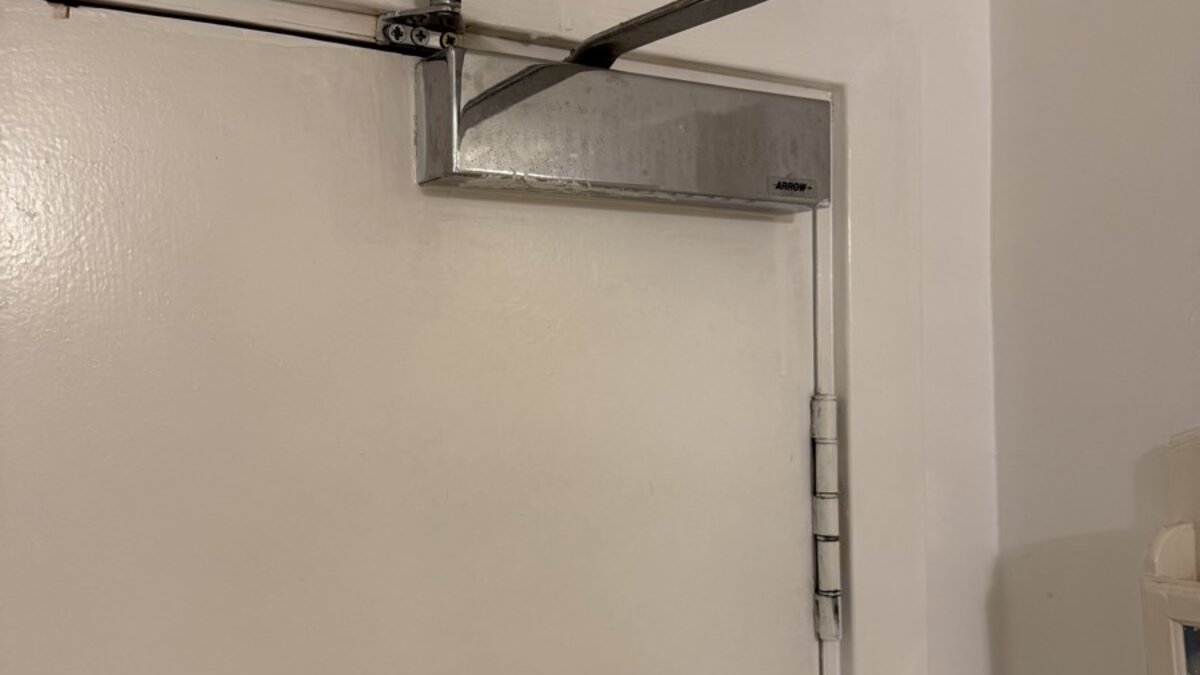
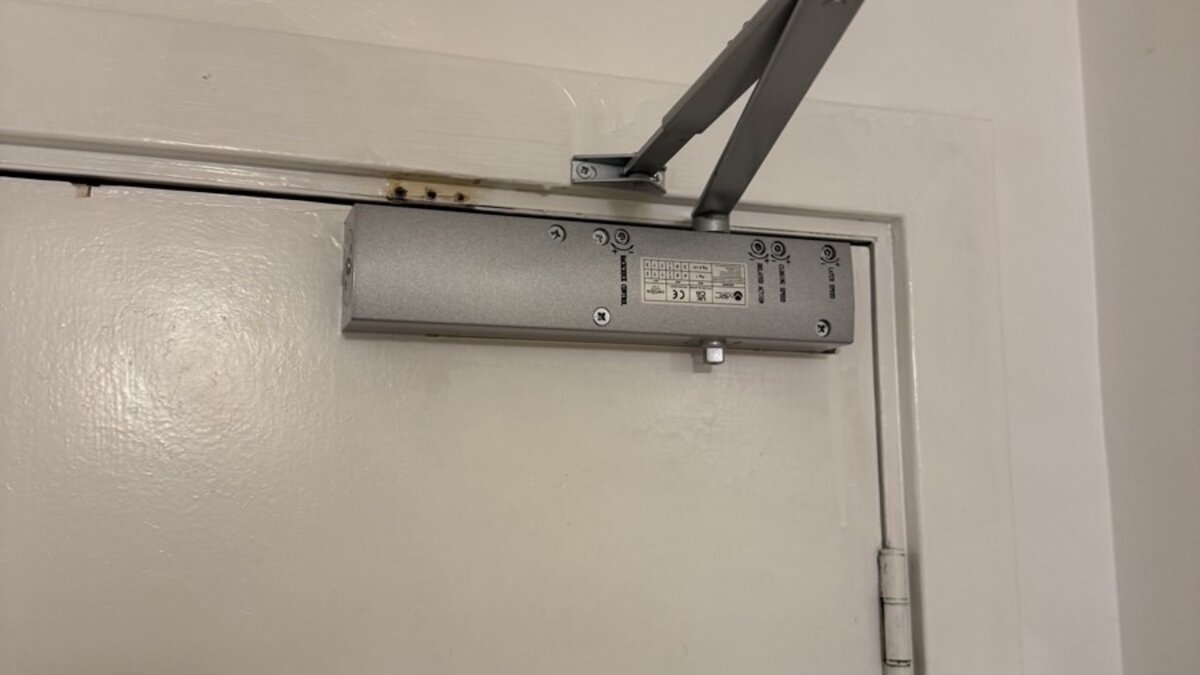
A door closer that fails to operate is never merely an inconvenience. On communal entrance doors and fire doors within residential buildings, the door closer is a regulated safety component — part of the passive fire protection system that prevents smoke and flame from spreading between compartments. When the door closer at a flat in Wapping failed, the door could no longer self-close, leaving the property non-compliant with fire safety requirements and potentially compromising the safety of every occupant in the building. All Services 4U attended promptly, removed the failed unit, and installed a new heavy-duty door closer that restored controlled, reliable self-closing to the door.
Door Closer Replacement: Restoring Fire Safety Compliance with a Heavy-Duty Unit at a Residential Flat in Wapping - image-03.jpeg

Understanding the Risk: Why Door Closers Matter

Door closers are mechanical devices mounted at the top of a door that control the speed and force with which the door closes. In residential and communal settings, their role extends well beyond convenience. Under the Regulatory Reform (Fire Safety) Order 2005, the “responsible person” for a building — typically the landlord, freeholder, or managing agent — must ensure that fire safety measures remain functional at all times. A fire door that does not self-close is, in regulatory terms, a fire door that has failed.

The function of a fire door assembly depends on every component working together: the door leaf, the frame, the intumescent strips, the smoke seals, the hinges, and the door closer. BS 8214:2016 (Installation of fire door assemblies) makes clear that the door closer is integral to the assembly’s performance. Without it, the door cannot fulfil its compartmentation role. In a fire scenario, a door that remains open allows smoke — the primary cause of fire-related fatalities in the UK — to travel freely between floors and compartments.

Building Regulations Approved Document B (Fire Safety) sets out the requirements for self-closing devices on fire doors within residential buildings. The specific standard governing the closer itself is BS EN 1154:1997 (Building hardware — Controlled door closing devices), which classifies door closers by power size (from Size 1 for lightweight internal doors up to Size 6 for heavy external doors) and sets performance requirements for controlled closing, latching action, and durability.

In social housing, where All Services 4U frequently operates, the obligations are particularly clear. Following the Grenfell Tower fire and the subsequent Building Safety Act 2022, the regulatory scrutiny applied to fire door components — including door closers — has intensified. Housing providers must demonstrate that every fire door assembly is complete, functional, and maintained.

The Reported Issue

The housing provider, operating through the Plentific platform, instructed a door closer replacement at a residential flat on Gowers Walk, Wapping. The existing closer had been reported as faulty, and the door was no longer self-closing. The instruction was straightforward: attend, assess, and replace.

The Works: Step-by-Step

Step 1 — Initial Assessment: Our engineer attended and confirmed that the existing door closer had failed. The arm mechanism was no longer providing controlled closure — the door swung freely with no resistance or return action. The unit was identified as end-of-life rather than adjustable.

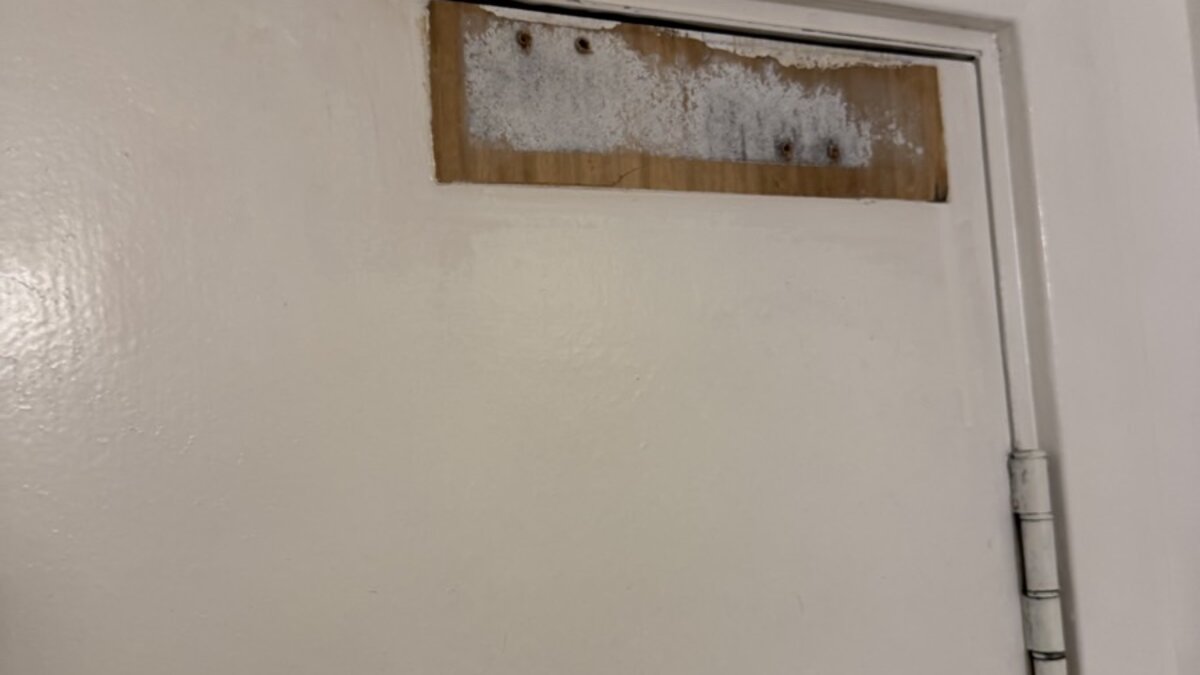
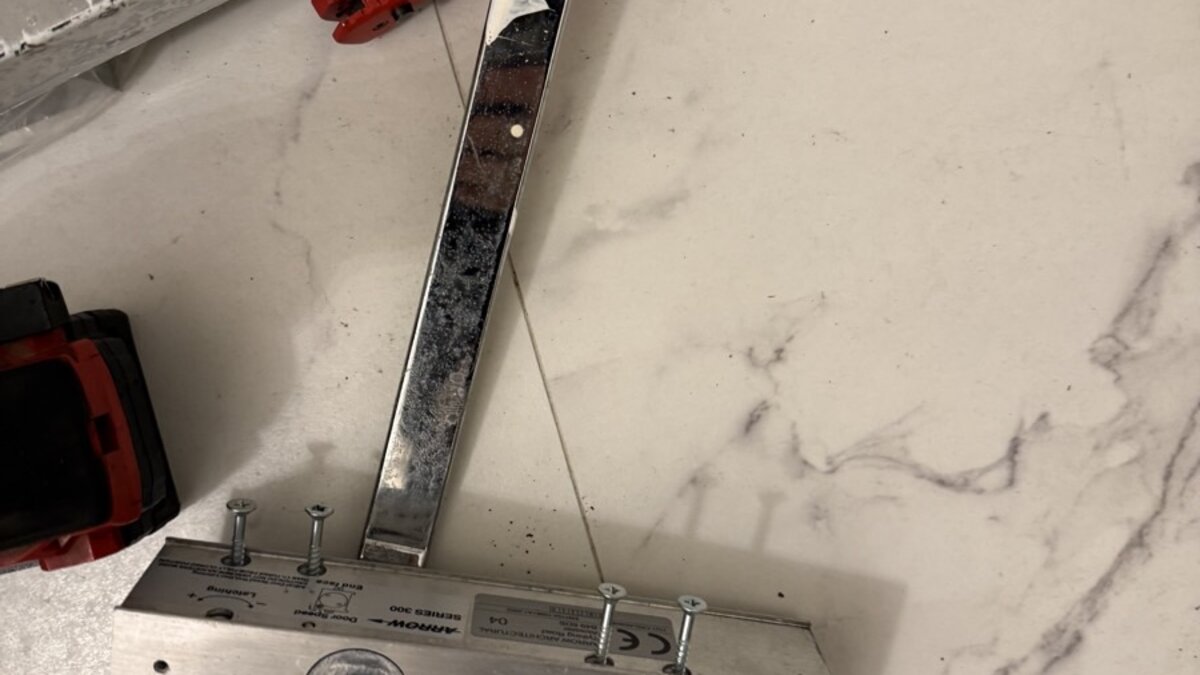
Step 2 — Removal of Faulty Unit: The failed door closer was removed from the door and frame, taking care to minimise damage to the door leaf and surrounding paintwork. The mounting holes and fixing points were inspected for integrity.

Step 3 — Selection and Fitting of Replacement: A new heavy-duty door closer was selected to suit the door’s weight, width, and application. The unit was mounted, and the arm was connected to the track or bracket on the frame. All fixings were secured to the manufacturer’s torque specifications.

Step 4 — Adjustment and Calibration: The closing speed was adjusted using the hydraulic control valves on the closer body. The latching action — the final burst of speed that ensures the door fully engages the latch — was set separately. Both were calibrated to achieve smooth, controlled closure without slamming.

Step 5 — Testing and Sign-Off: The door was opened and released multiple times from various angles to confirm consistent, reliable self-closing. The latch engaged securely on every test. The resident confirmed satisfaction and signed off the completed work.

Common Door Closer Failure Modes

Understanding how door closers fail helps property managers and housing providers identify problems before they create compliance gaps.

Failure Mode Cause Warning Signs
Hydraulic fluid leak Seal degradation, age, or damage Oil stains on door or frame, door slams or closes too fast
Arm mechanism failure Worn pivot points, bent arm Door does not return, closer arm hangs loose
Spring fatigue Age and cycle count Door closes very slowly, fails to latch
Incorrect power rating Undersized closer for door weight Closer struggles to close door, frequent adjustment needed
Mounting failure Screws pulling from substrate, incorrect fixings Closer body shifts when door operates, visible gap at mount
Valve blockage Contamination or corrosion in hydraulic circuit Uneven closing speed, door sticks at certain points

Compliance and Documentation

The regulatory framework governing door closers in residential buildings is comprehensive and carries enforcement consequences for non-compliance.

Requirement Regulation / Standard Application
Fire doors must self-close Regulatory Reform (Fire Safety) Order 2005 All fire doors in communal and residential buildings
Door closer performance BS EN 1154:1997 Controlled closing devices — power size, durability, latching
Fire door assembly integrity BS 8214:2016 Installation, maintenance, and inspection of fire door assemblies
Fire safety in dwellings Building Regulations Approved Document B Self-closing requirements for fire doors
Building safety obligations Building Safety Act 2022 Enhanced duties for higher-risk residential buildings
Social housing fire safety Housing Act 2004 (HHSRS) Fire hazard assessment in rented dwellings

The Broader Context: Fire Door Maintenance

A door closer replacement is a single intervention within a wider fire door maintenance programme. Responsible persons should ensure that fire doors are inspected regularly — quarterly inspections are considered good practice, and BS 8214 recommends that fire door assemblies be checked at intervals appropriate to the building’s risk assessment.

During these inspections, every component should be verified: the door leaf for damage or delamination, the intumescent strips and smoke seals for continuity, the hinges for wear, and the closer for correct operation. A common error is to focus solely on the door leaf while neglecting the ironmongery — yet a fire door with a failed closer is as non-compliant as a fire door with a damaged leaf.

For housing providers managing large portfolios, planned preventive maintenance (PPM) of fire door assemblies reduces the likelihood of emergency replacements and demonstrates the proactive approach that regulators expect. All Services 4U works with housing providers to deliver these programmes at scale, covering door closers, locks, hinges, and seals as part of a single, coordinated service.

This project reflects the responsive maintenance capability that All Services 4U provides to social housing providers and managing agents across London and the South East:

Platform Integration: We operate through Plentific and other housing platforms, accepting instructions, providing job updates, and delivering completion evidence through the channels that housing providers use.

Stocked Engineers: Our engineers carry a range of door closers — including heavy-duty units rated for fire doors — enabling same-visit completion for the majority of closer replacements without the delay of return visits.

Fire Safety Awareness: Every door closer replacement is treated as a fire safety intervention. Our engineers assess the closer in the context of the door assembly, not in isolation.

Documented Completion: Timestamped photographs and engineer notes provide the compliance evidence that housing providers need for their fire safety records.

When to Act: Warning Signs and Next Steps

Facilities managers, housing officers, and property managers should arrange a door closer inspection or replacement if any of the following apply:

  • The door does not self-close when released from any open position
  • The door slams rather than closing in a controlled manner
  • Oil staining is visible on the door face, frame, or floor beneath the closer
  • The closer arm is loose, bent, or disconnected
  • The door has been reported as difficult to open (may indicate incorrect power setting)
  • A fire risk assessment has flagged door closer deficiencies

If a fire door in your property is not self-closing, it requires immediate attention. All Services 4U provides door closer replacement and fire door hardware services for housing providers, managing agents, and commercial clients. Contact us to arrange an assessment or to discuss a planned maintenance programme for your door hardware portfolio.


Service Category: Locksmith / Door Hardware — Fire Safety
Location: Wapping, London E1
Sector: Social Housing
Scope: Faulty door closer removal and heavy-duty replacement
Compliance Tags: BS EN 1154, BS 8214, RR(FS)O 2005, Building Regulations Part B, Building Safety Act 2022
Resolution: Faulty door closer replaced with heavy-duty unit; door self-closing correctly
Reference: L4L-806114

All Service 4U Limited | Company Number: 07565878