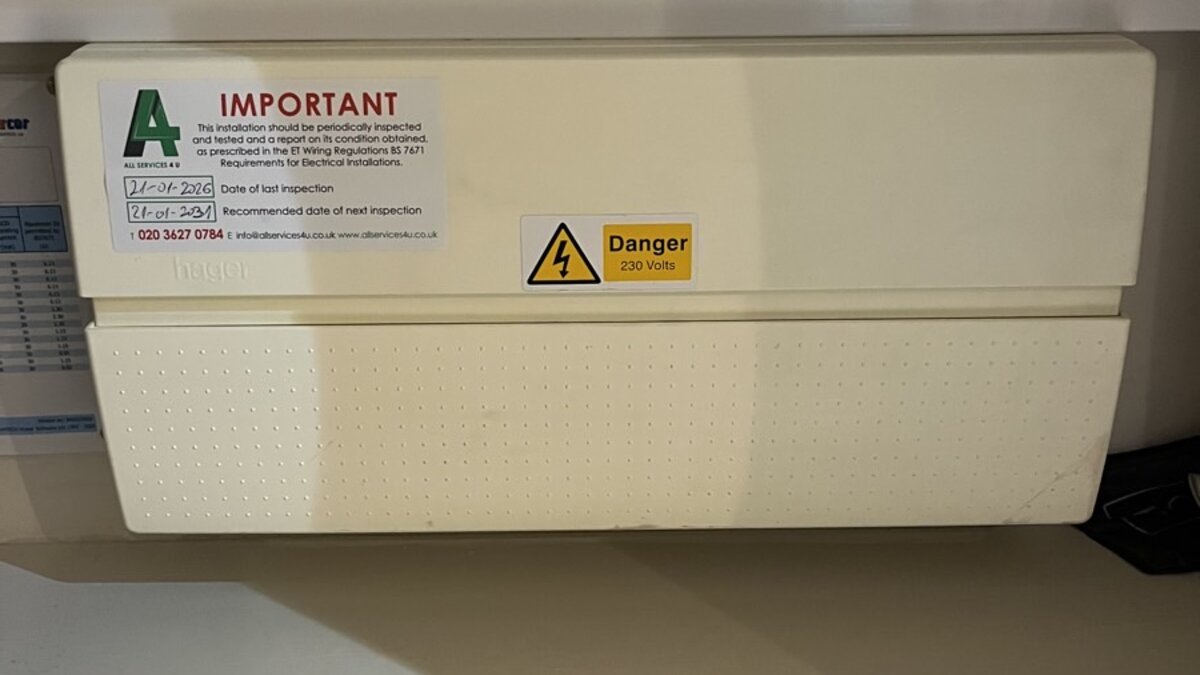
The Electrical Safety Standards in the Private Rented Sector (England) Regulations 2020 transformed electrical testing from best practice into statutory obligation. Since 1 April 2021, every private landlord in England must ensure that the electrical installations in their rented properties are inspected and tested by a qualified person at intervals of no more than five years. The regulations require that a copy of the EICR be provided to existing tenants within 28 days, to new tenants before occupation, and to the local housing authority within seven days of a request.
Failure to comply carries serious consequences. Local authorities have the power to arrange remedial work themselves and recover costs from the landlord, and can impose financial penalties of up to 30,000 pounds per breach. Beyond the regulatory risk, an outdated or missing EICR can invalidate landlord insurance, complicate property sales, and — in the event of an electrical incident — expose the landlord to criminal prosecution under the Electricity at Work Regulations 1989.
For letting agents managing portfolios on behalf of landlords, maintaining EICR compliance across multiple properties is a critical administrative and operational challenge. Deadlines must be tracked, access must be coordinated with tenants, and qualified contractors must be available within the required timeframe.
The Instruction
The letting agent instructed an EICR for a residential flat at Gower House, Gower Road, Weybridge, specifying completion on or before 29 January 2026. The property was described as a studio or one-bedroom flat, with tenant contact details provided for access coordination. The agent also requested that any remedial works identified during the inspection be quoted separately, allowing them to obtain client approval before committing to further expenditure.
This is a typical instruction pattern: the EICR itself is commissioned at a fixed price, with any necessary remedial works quoted and approved as a separate scope. It ensures transparency for the landlord and prevents unexpected costs.
The Inspection Process
Our qualified electrician arrived on site at 09:05 and completed the inspection by 11:08 — a duration consistent with a thorough assessment of a studio or one-bedroom flat. The EICR process follows the methodology set out in BS 7671 (the IET Wiring Regulations, 18th Edition) and the IET Guidance Note 3 (Inspection & Testing). It is not a superficial visual check. A compliant EICR involves a systematic examination of every accessible part of the fixed electrical installation.
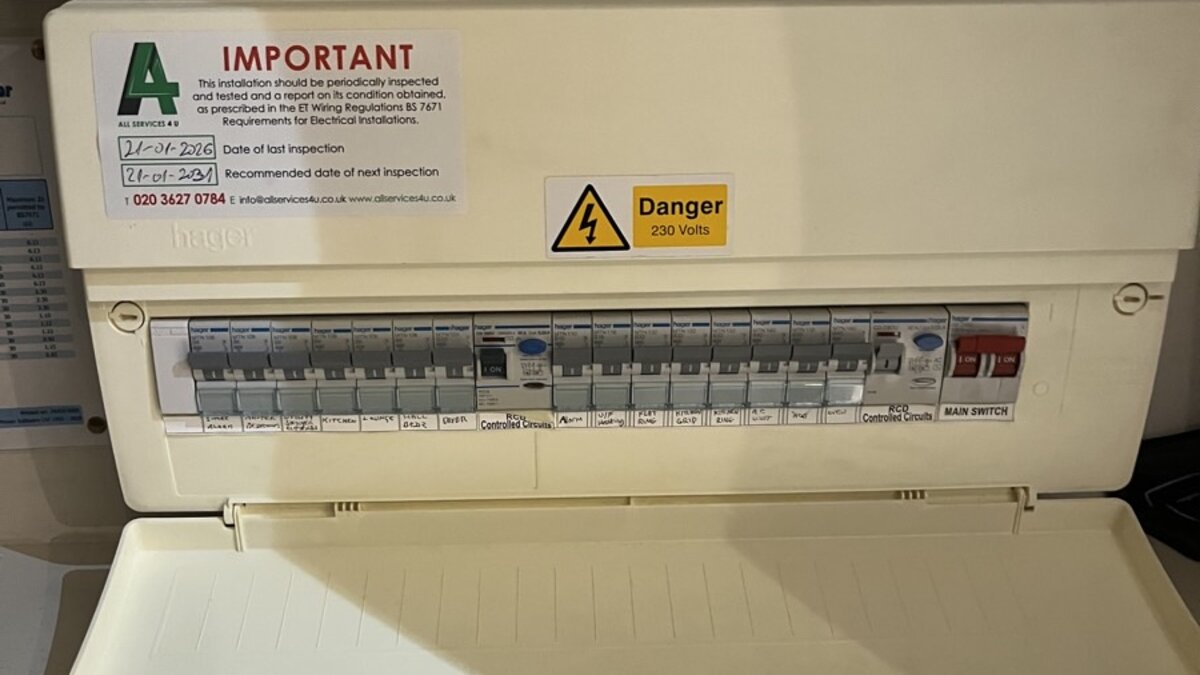
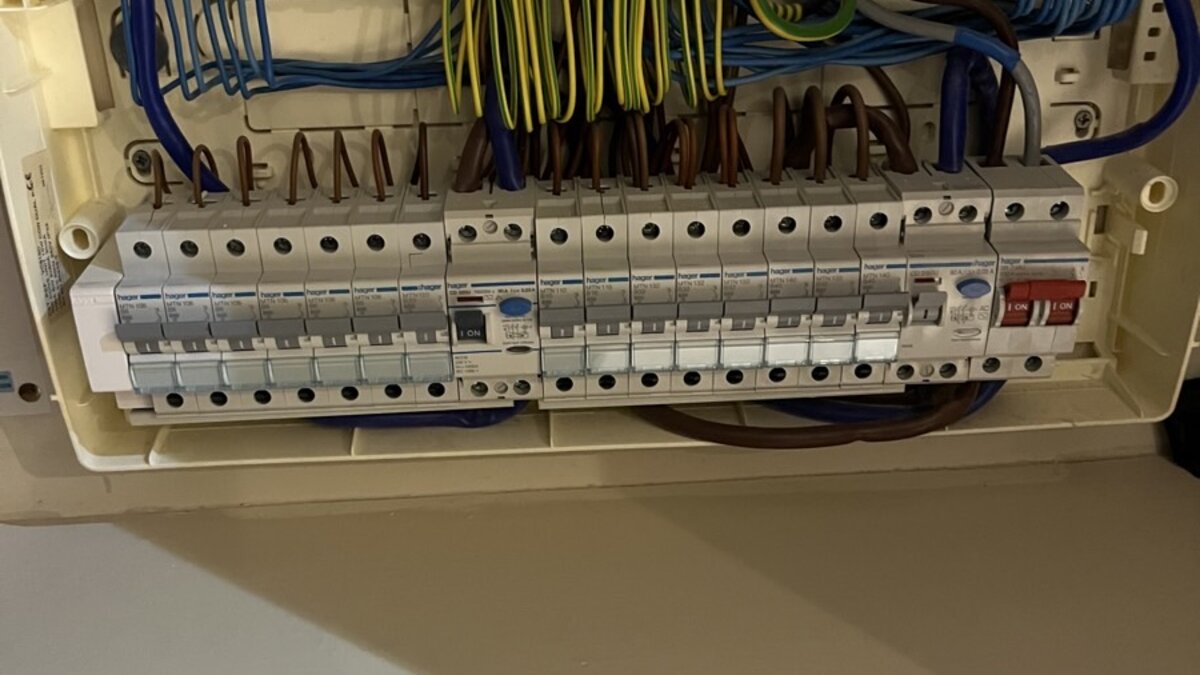
Visual Inspection: Before any testing equipment is connected, the electrician conducts a detailed visual examination of the installation. This covers the consumer unit and its protective devices (checking for correct ratings, clear labelling, and signs of overheating), the condition of accessible wiring and cable routes, the security and condition of socket outlets, light switches, and other accessories, earthing and bonding arrangements, and the presence and condition of RCDs (Residual Current Devices).
Dead Testing: With circuits isolated, the electrician performs a series of measurements including continuity of protective conductors (confirming that earth paths are intact throughout the installation), insulation resistance (verifying that current-carrying conductors are properly insulated from each other and from earth), and polarity checks (confirming that line, neutral, and earth conductors are correctly connected throughout).
Live Testing: With circuits re-energised, the electrician measures earth fault loop impedance (confirming that in the event of a fault, protective devices will operate within the required disconnection times), RCD operation (testing that each RCD trips at the correct current and within the required time — typically 300ms at rated current and 40ms at five times rated current), and prospective fault current (confirming that the installation’s protective devices are capable of safely interrupting the maximum available fault current).
Findings and Outcome
| Component Assessed | Finding |
|---|---|
| Consumer unit and protective devices | Satisfactory — correct ratings, no overheating |
| Circuit identification and labelling | Satisfactory — clear and accurate |
| Earthing and bonding arrangements | Satisfactory — verified and compliant |
| Socket outlets and lighting circuits | Satisfactory — no defects identified |
| RCD operation | Satisfactory — operating within required parameters |
| Insulation resistance | Satisfactory — within acceptable limits |
| Overall installation condition | Satisfactory |
The installation was assessed as satisfactory, meaning no observations were coded as C1 (danger present), C2 (potentially dangerous), or C3 (improvement recommended). The completed EICR provides the landlord with documented evidence of compliance valid for the next five years, subject to no material alterations being made to the installation in the interim.
EICR Observation Codes Explained
Understanding what EICR codes mean helps landlords and managing agents interpret reports and prioritise any required actions. The coding system is standardised across the industry.
| Code | Classification | Meaning | Required Action |
|---|---|---|---|
| C1 | Danger Present | Risk of injury exists now | Immediate remedial action required |
| C2 | Potentially Dangerous | Risk of injury likely to arise | Urgent remedial action required |
| C3 | Improvement Recommended | Does not meet current standard but not dangerous | Recommended but not mandatory |
| FI | Further Investigation | Cannot determine condition without further work | Investigation required to classify |
| N/A | Not Applicable | Item not present or not relevant | No action |
A satisfactory overall result — as achieved at this property — means that no C1 or C2 observations were recorded. This is the outcome that landlords, agents, and tenants should expect from a well-maintained installation.