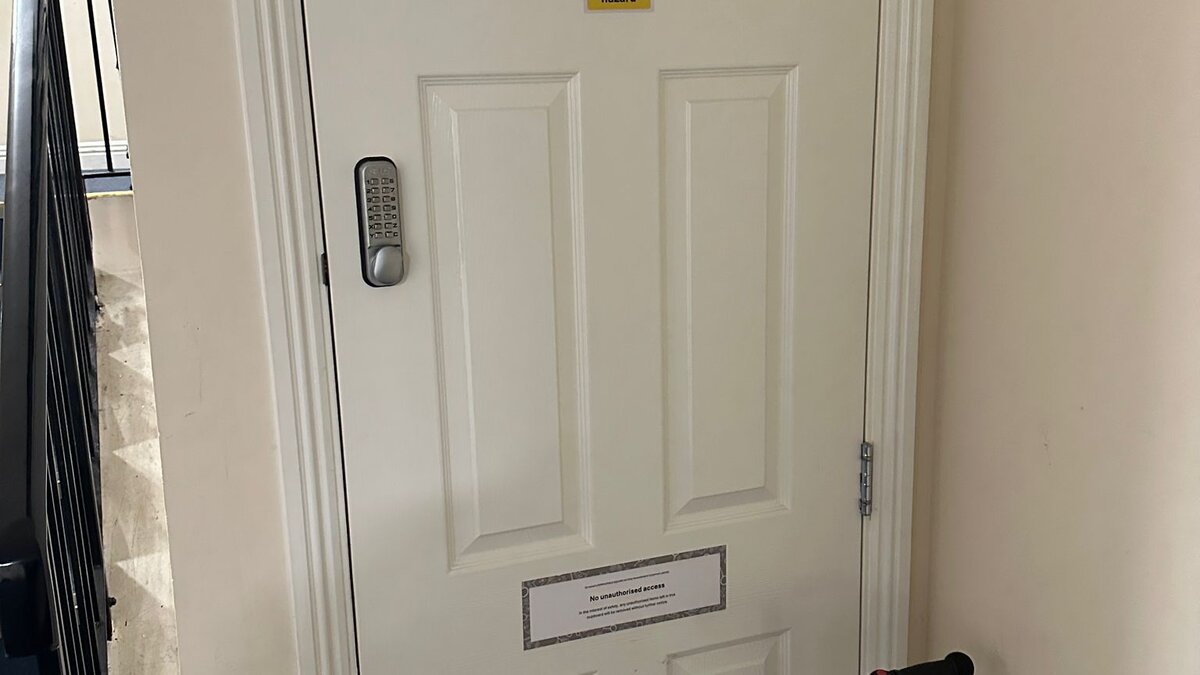
Intercom-controlled door entry systems use a chain of components to achieve remote door release: the intercom handset in the flat, the wiring between the handset and the door panel, the door panel itself, and the electric strike lock mounted in the door frame. When a resident presses the release button, an electrical signal travels through this chain and momentarily powers the strike lock, which retracts or releases a keeper plate to allow the door to open.
A failure at any point in this chain produces the same symptom — the door does not release — but the cause and the required repair are entirely different. An intercom handset fault requires an intercom engineer. A wiring fault requires cable testing and possible rewiring. A panel fault may require reprogramming or replacement. But a strike lock fault is a mechanical or electro-mechanical issue that can often be resolved with adjustment rather than component replacement.
Strike locks on communal doors are subject to continuous mechanical stress. Every time the door closes, the latch impacts the strike plate. Over thousands of cycles, the strike can drift out of alignment with the latch, particularly on doors where the closer is poorly adjusted or where the door has dropped on its hinges. When the misalignment reaches a critical point, the electric release can no longer disengage the latch reliably — the geometry no longer works.
The consequences of a failed door release extend beyond inconvenience. Under the Regulatory Reform (Fire Safety) Order 2005, communal entrance doors on residential blocks must be maintainable as part of the means of escape. While the primary fire safety concern is whether the door can be opened from the inside without a key (egress direction), a malfunctioning access control system may also affect the fire brigade’s ability to gain rapid access to the building in an emergency. BS EN 50133 provides the standard for access control systems in security applications, covering design, installation, and maintenance requirements. Building Regulations Approved Document Part B addresses fire safety in residential buildings, including requirements for communal areas and entrance doors. Approved Document Part M requires accessible entry provisions for residents and visitors with mobility requirements — a door that can only be opened by physically attending the entrance may not meet this standard for residents who cannot easily travel to the ground floor.
The Reported Issue
The managing agent — David English — instructed an engineer attendance at the block on Grasgarth Close, W3. A leaseholder in Flat 29 had reported that they could not remotely release the communal door to the public street using the intercom system. Critically, the door to the car park was operating normally, which immediately suggested that the fault was localised to the street entrance door hardware rather than a systemic intercom failure.
The Investigation — Step by Step
Our engineer attended and carried out a systematic investigation, working through the signal chain from intercom to lock.
Intercom system check. The intercom handset in the flat was tested. The call function operated correctly — the resident could communicate with visitors at the door panel. The release button was pressed and the system sent the release signal. This confirmed that the handset, wiring, and door panel were all functioning correctly.
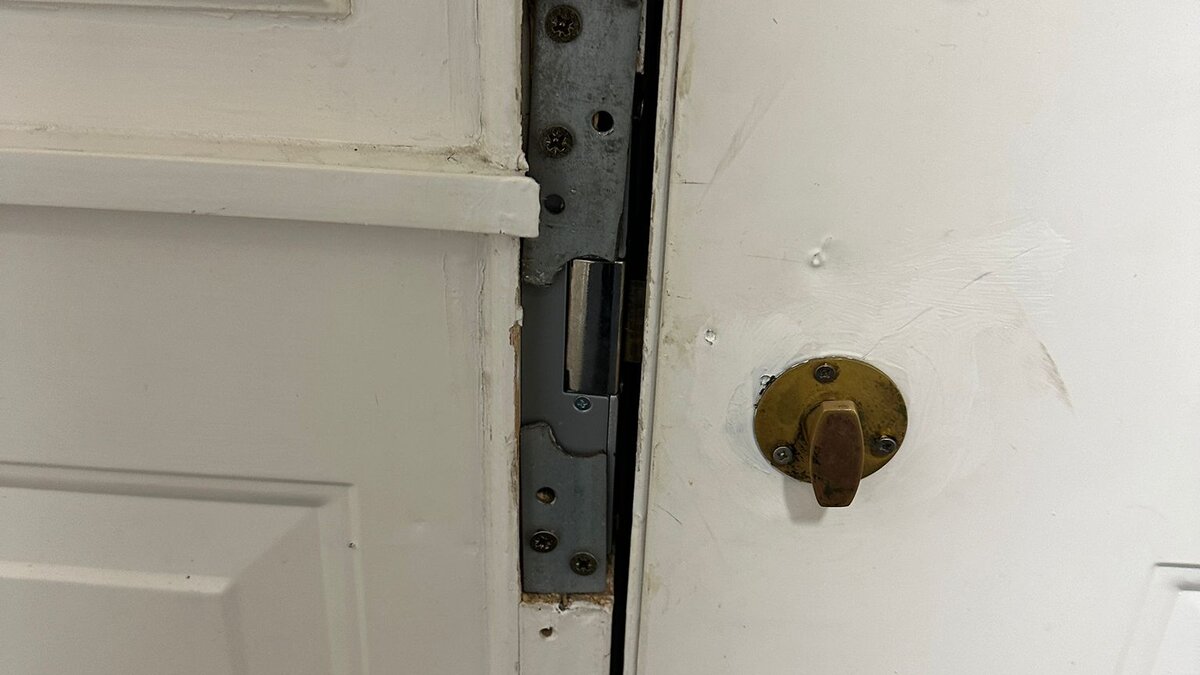
Strike lock inspection. At the street entrance door, the engineer inspected the electric strike lock. The lock was receiving the electrical release signal — it was not a power or wiring issue. However, the strike had drifted out of alignment with the door latch, meaning that even when the electric release activated, the keeper plate could not fully disengage from the latch due to mechanical binding.
Alignment assessment. The engineer assessed the degree of misalignment and determined that the strike could be adjusted in situ without replacement. The fixings were loosened, the strike repositioned to achieve correct alignment with the latch, and the fixings re-secured.
Functional testing. The intercom release was tested from the flat. The door released correctly on button press, the latch retracted, the door opened freely, and the lock re-engaged on door close. The system was confirmed fully operational.
Completion Summary
| Component | Assessment | Action |
|---|---|---|
| Intercom handset (Flat 29) | Functioning correctly | No action required |
| Intercom wiring | Signal path intact | No action required |
| Door panel | Operating normally | No action required |
| Electric strike lock | Misaligned with door latch | Adjusted and re-secured |
| Remote release function | Restored | Tested and confirmed |
| Parts required | None | Mechanical adjustment only |
Common Door Entry System Failure Modes
| Symptom | Possible Cause | Diagnostic Approach |
|---|---|---|
| No release from any flat | Power supply failure to strike lock | Check transformer and fused spur |
| Release works intermittently | Strike partially misaligned; works when door is pushed | Test under load; inspect alignment |
| No dial tone or communication | Intercom wiring fault or handset failure | Test handset; check wiring at panel |
| Release works but door does not open | Door closer too strong for strike release; or latch worn | Adjust closer tension; inspect latch |
| Release sounds but door stays locked | Strike solenoid firing but keeper not retracting | Strike mechanism seized; clean or replace |
| Works from some flats but not others | Specific handset fault or wiring break to that flat | Isolate to individual handset circuit |
| Buzzing at door panel but no release | Low voltage at strike; transformer output degraded | Check transformer output voltage |