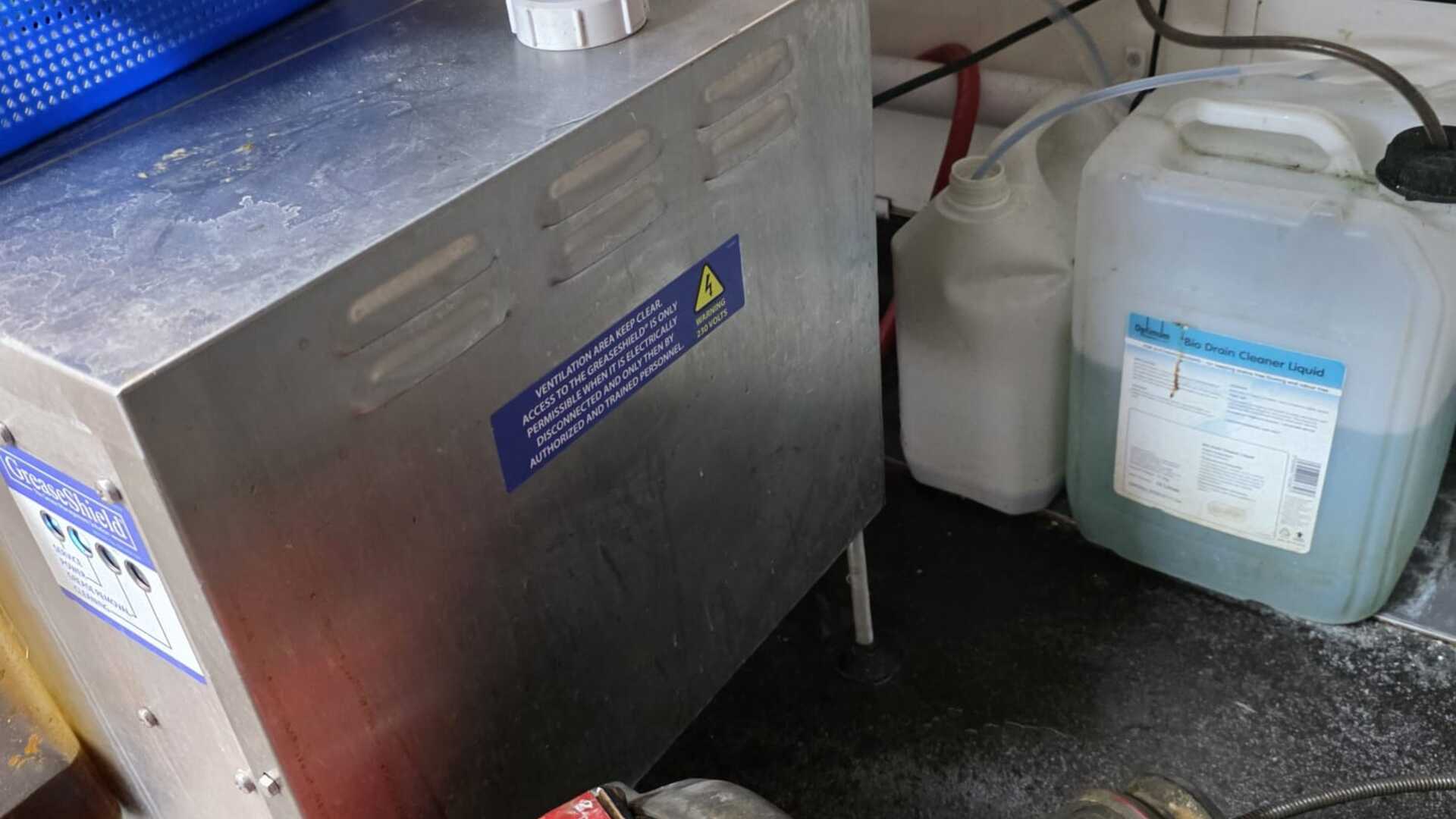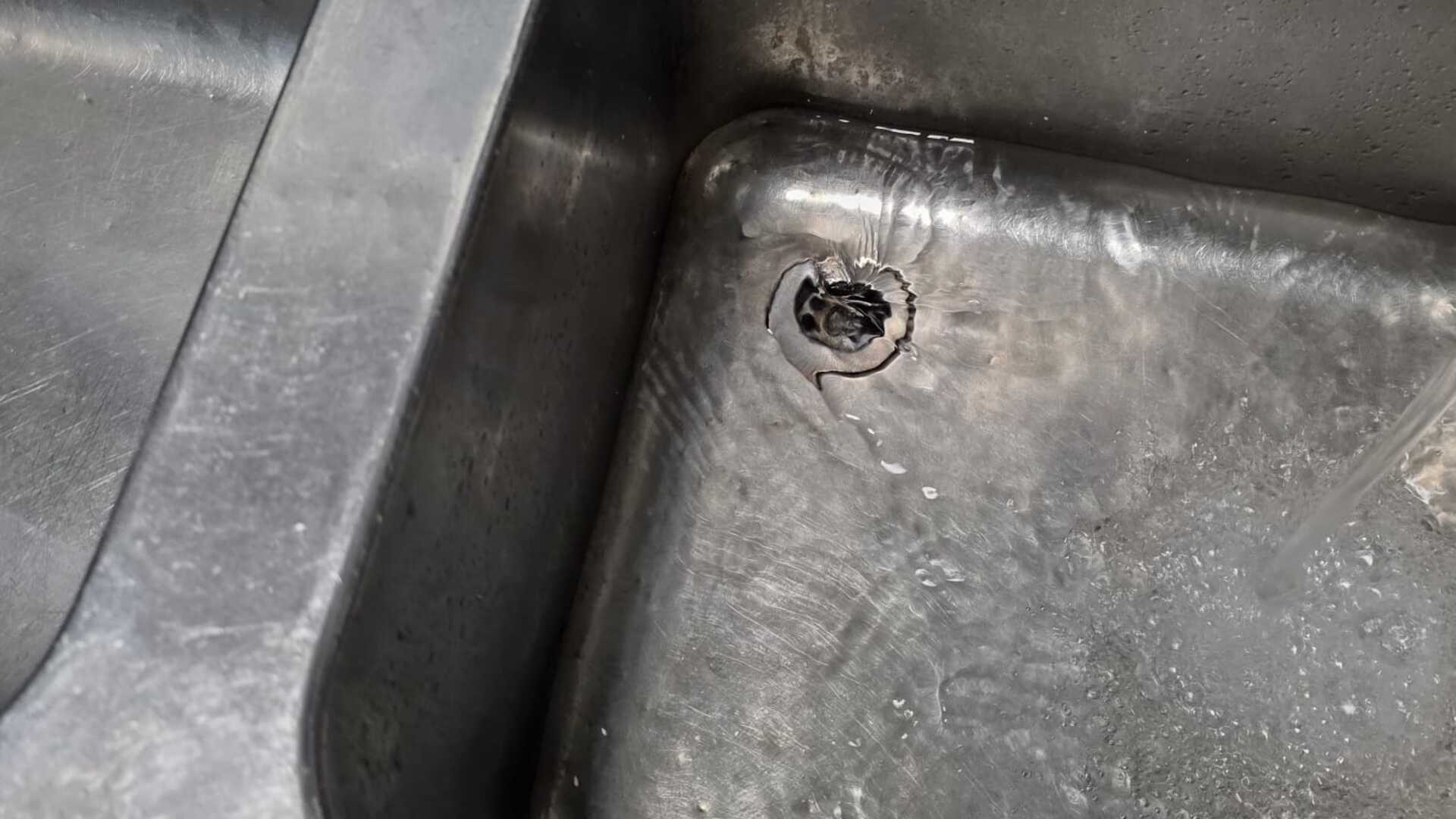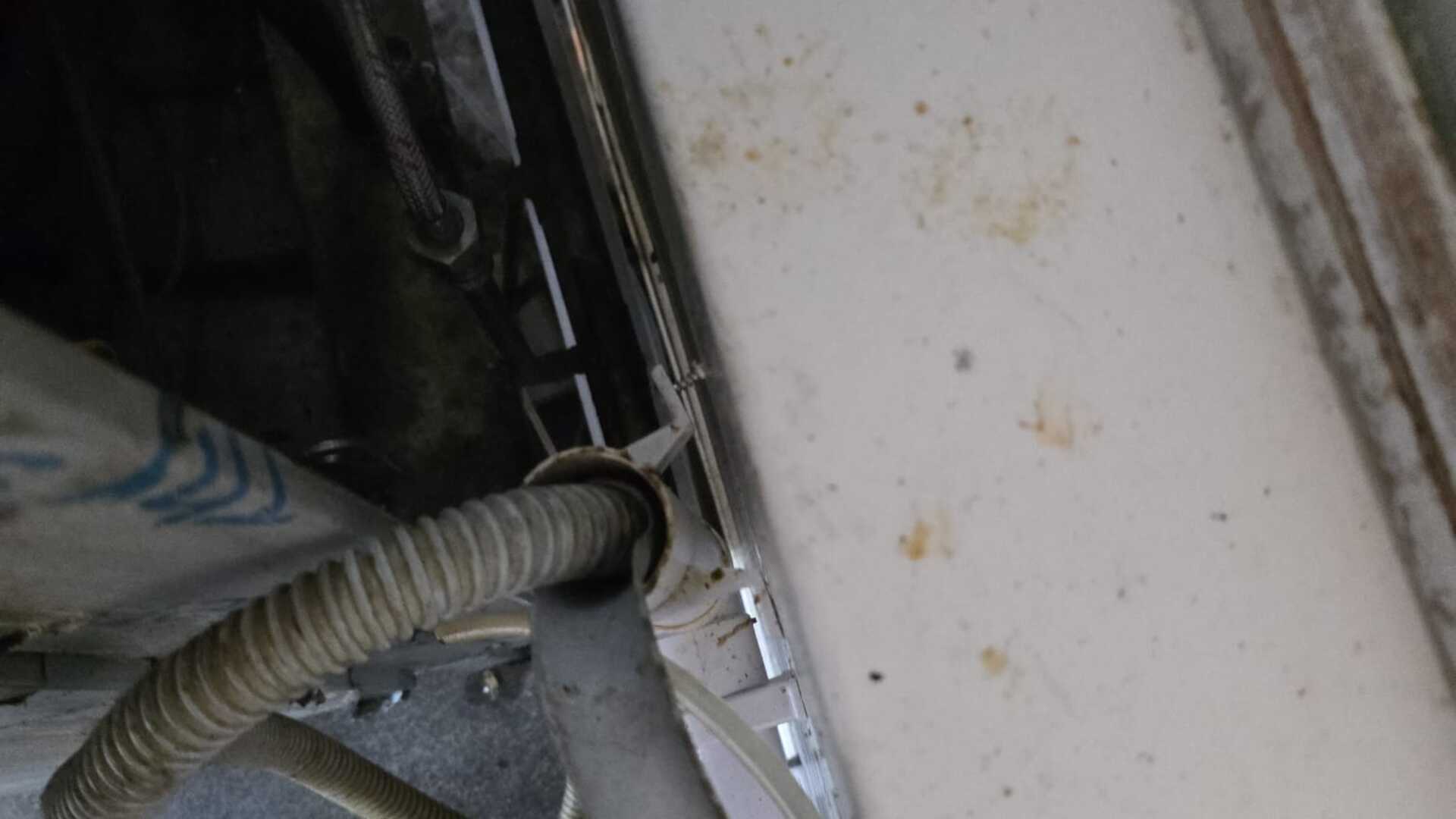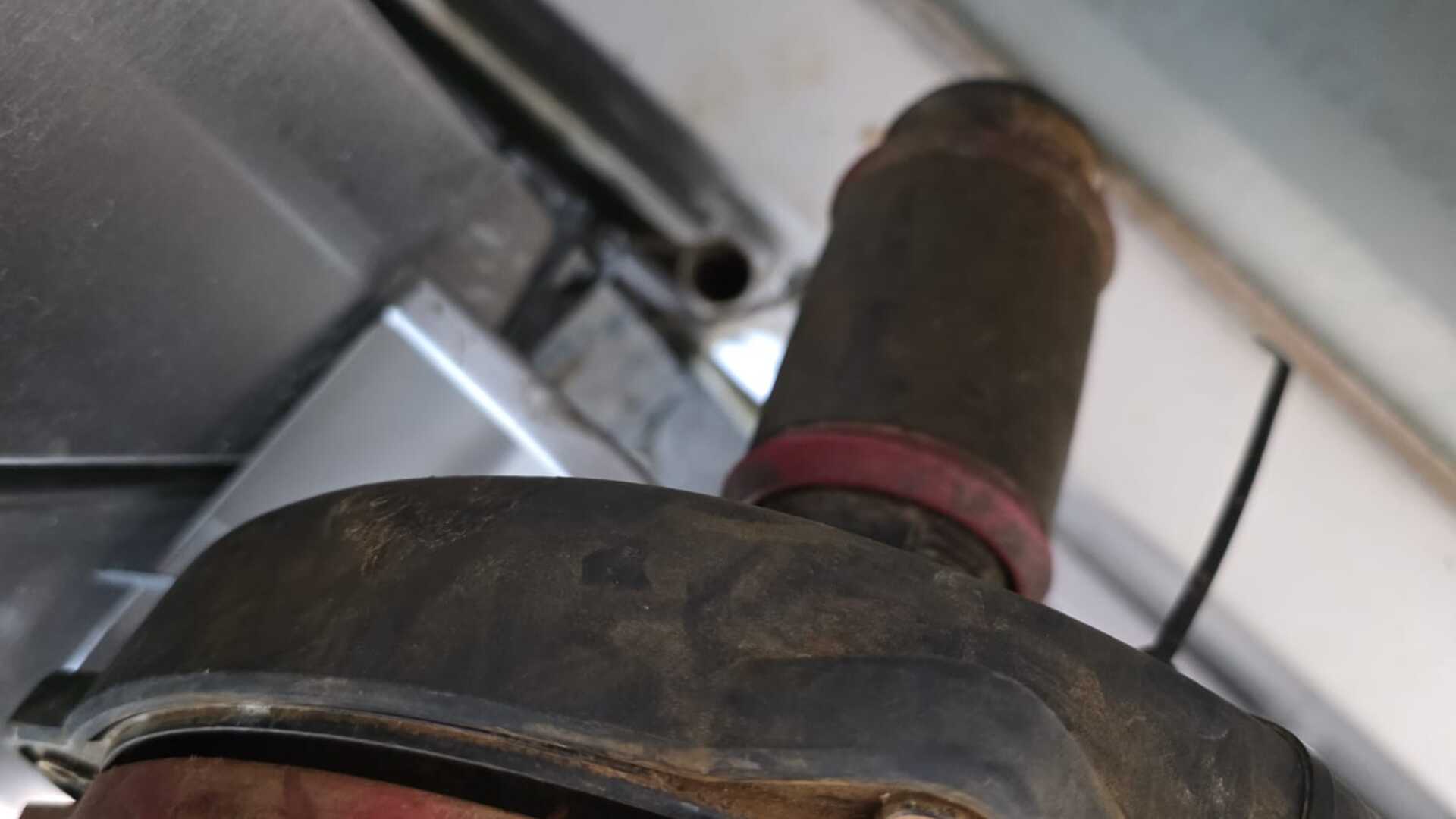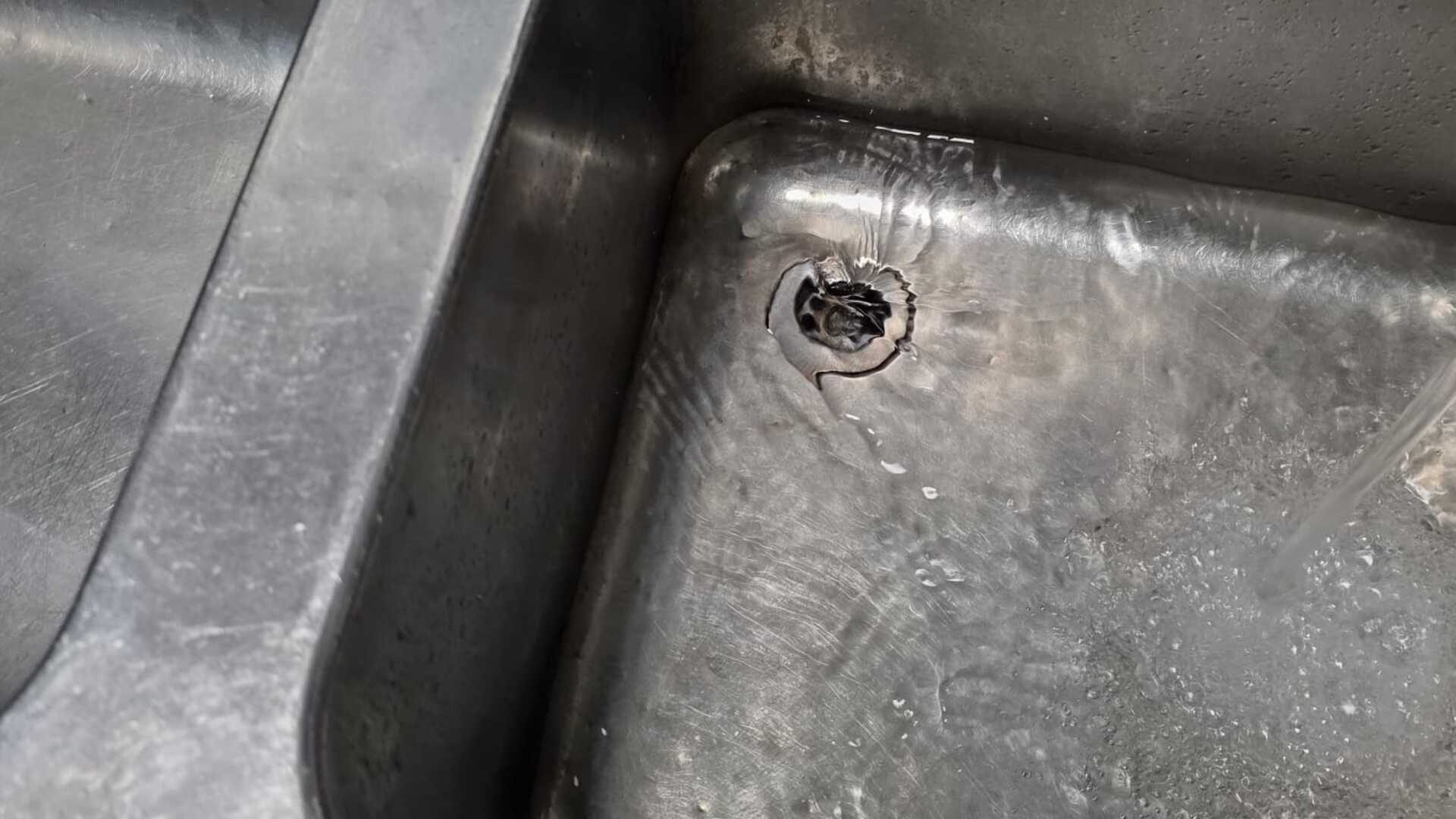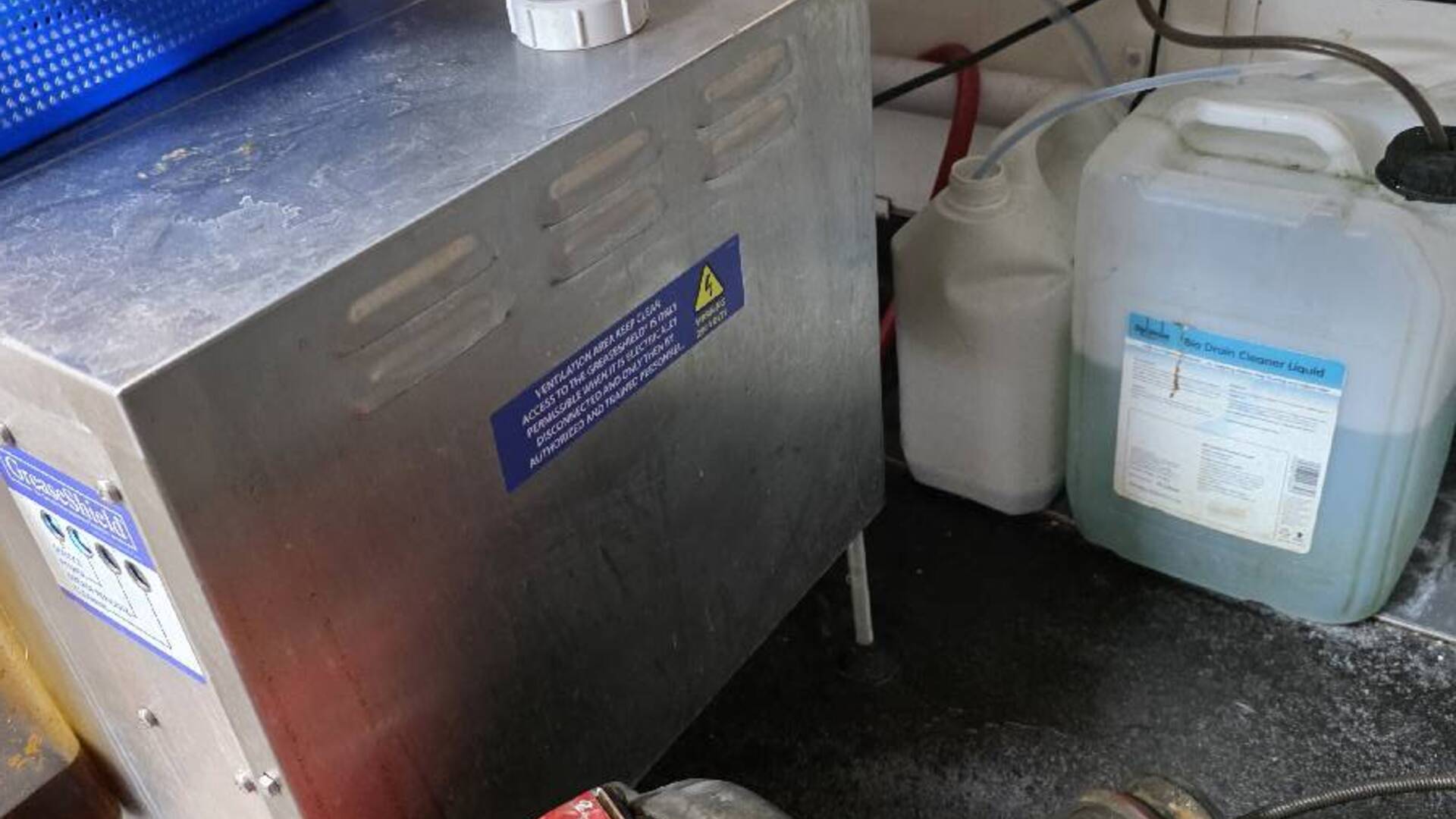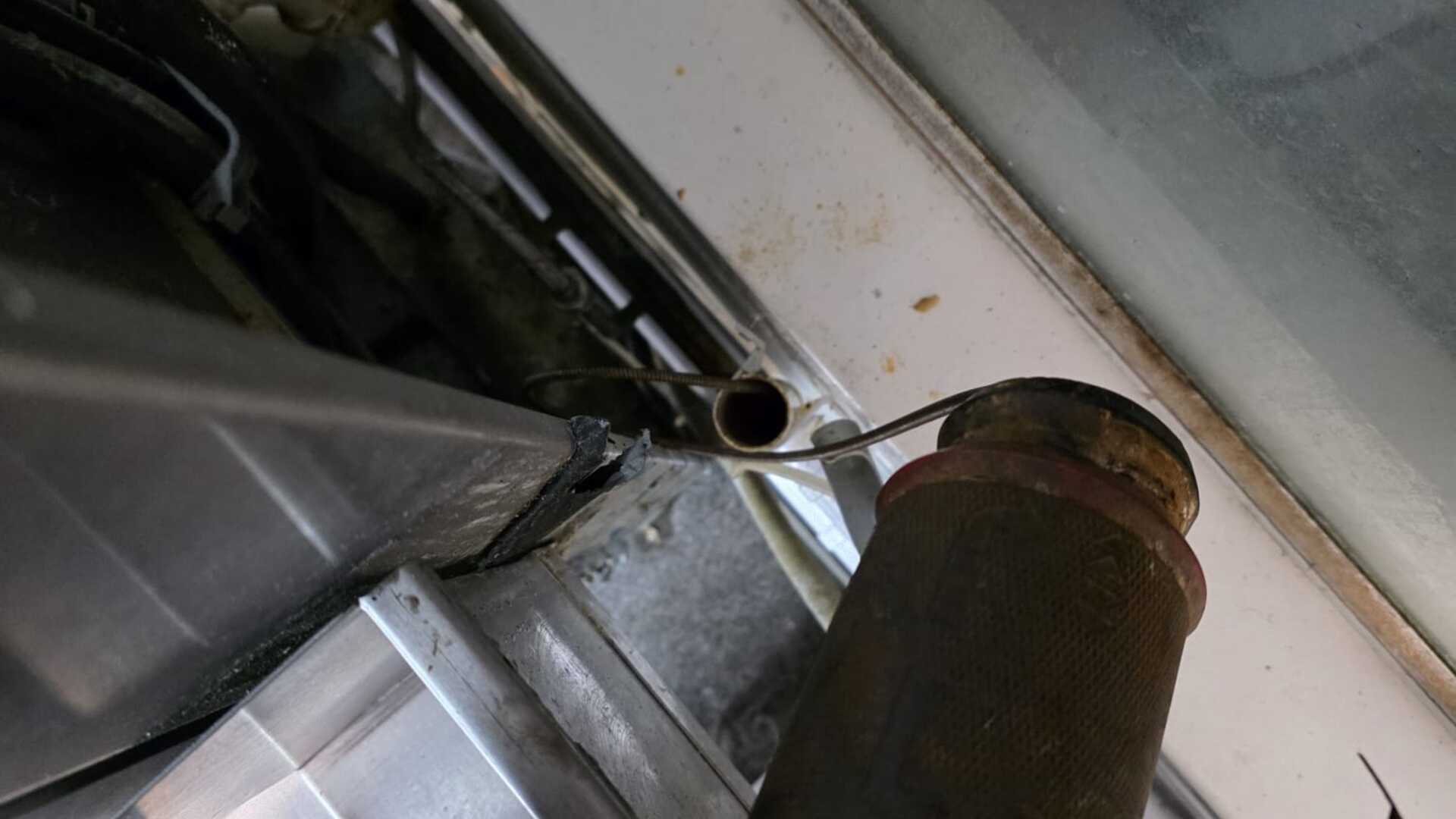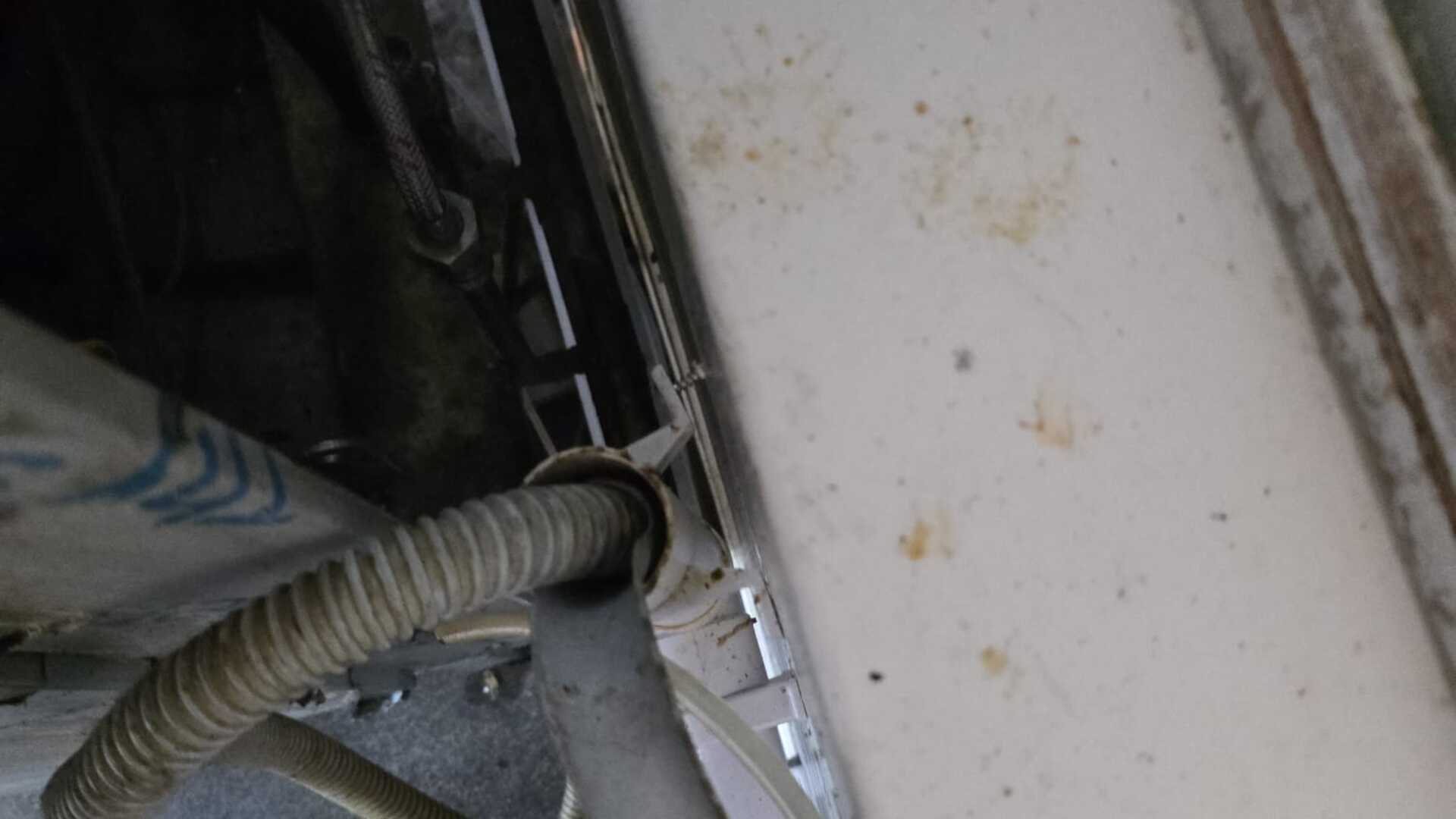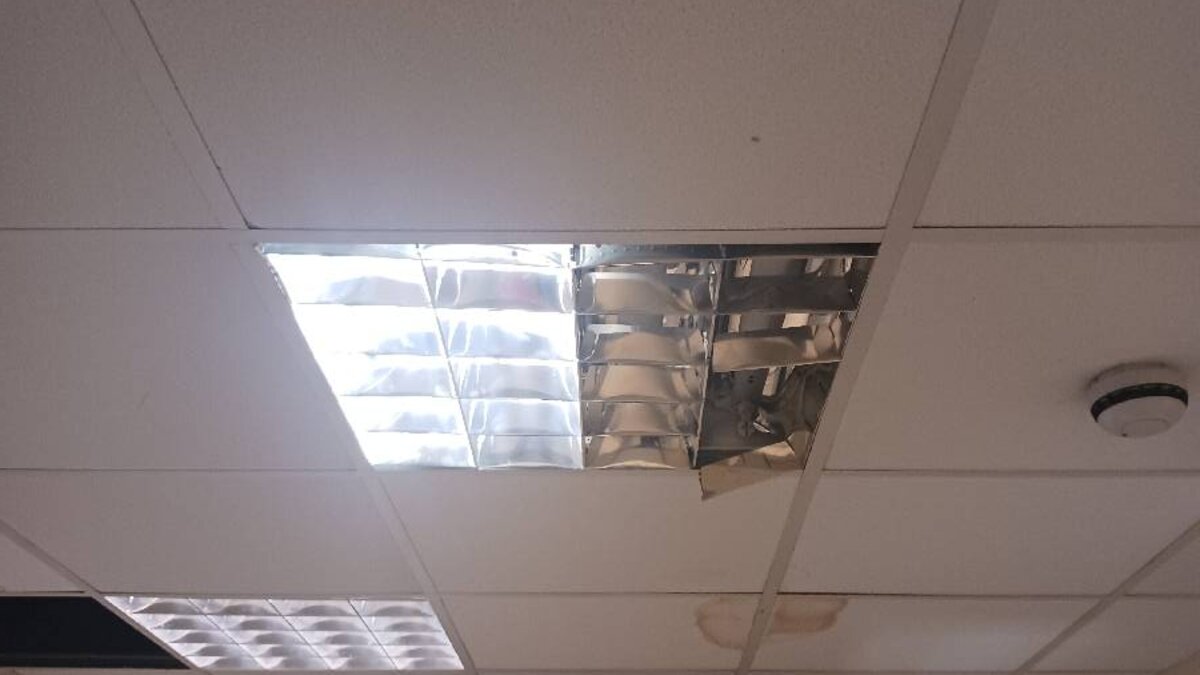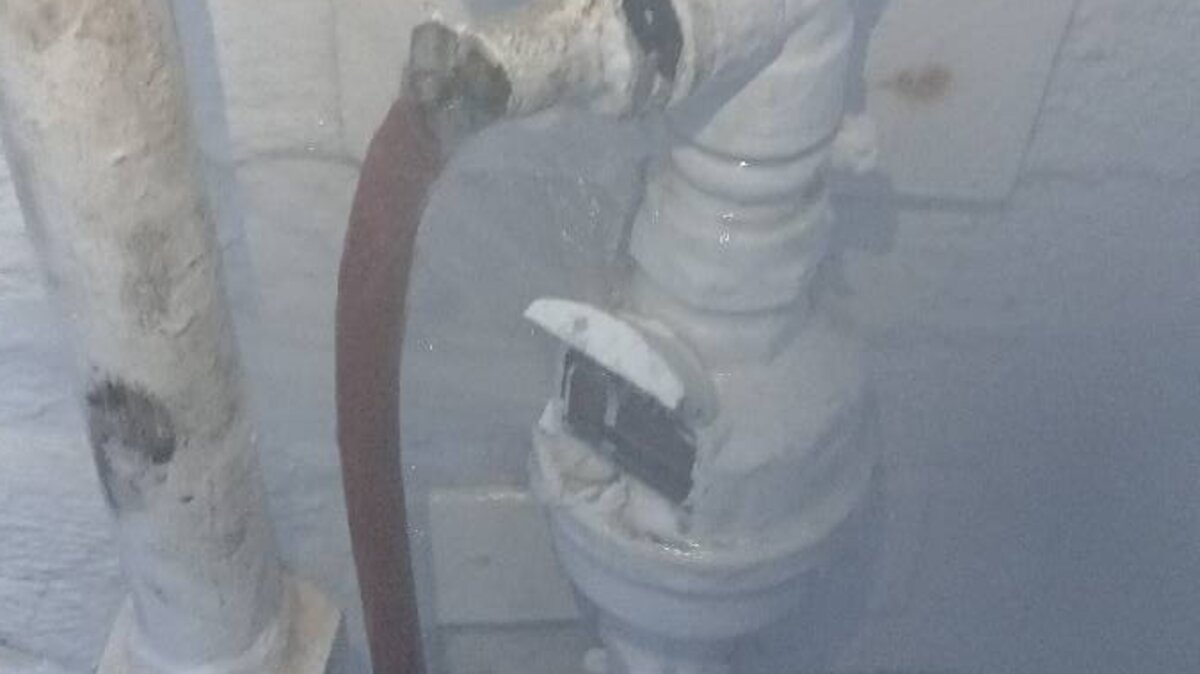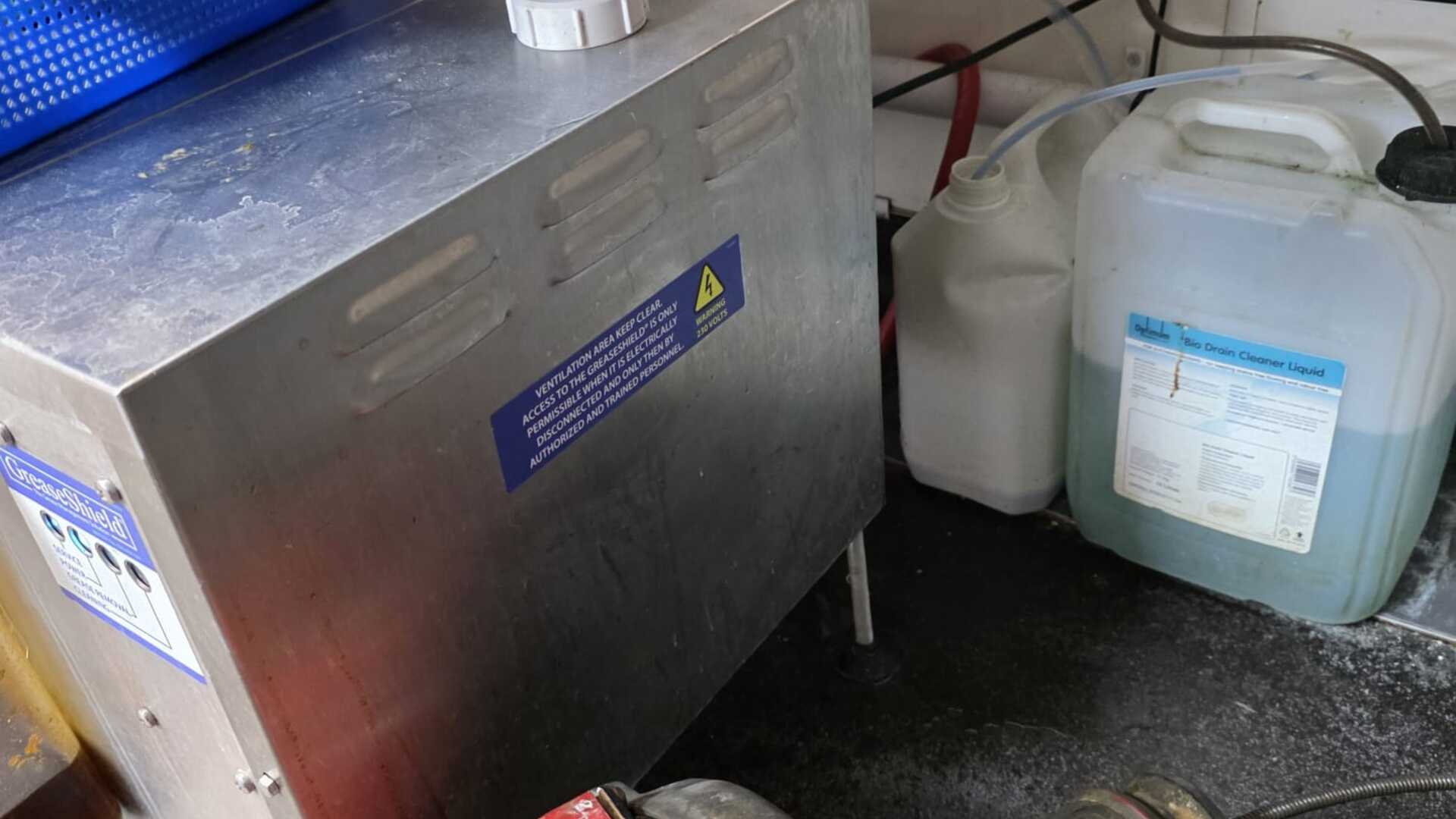
The client reported a blocked pipe in the kitchen porter area, where the double bowl sink connects to the grease trap before joining the main drainage system. The commercial dishwasher also feeds into this same drainage run. When this critical pathway becomes obstructed, wastewater has nowhere to go—creating immediate hygiene concerns and potentially forcing kitchen closure.
Diagnostic Approach
Commercial kitchen drainage operates under demanding conditions. Hot water laden with food particles, cleaning chemicals, and—critically—fats, oils, and grease (FOG) passes through these systems continuously during service. Grease traps are designed to intercept FOG before it enters the main drainage network, but they require regular maintenance and can themselves become the source of flow restrictions.
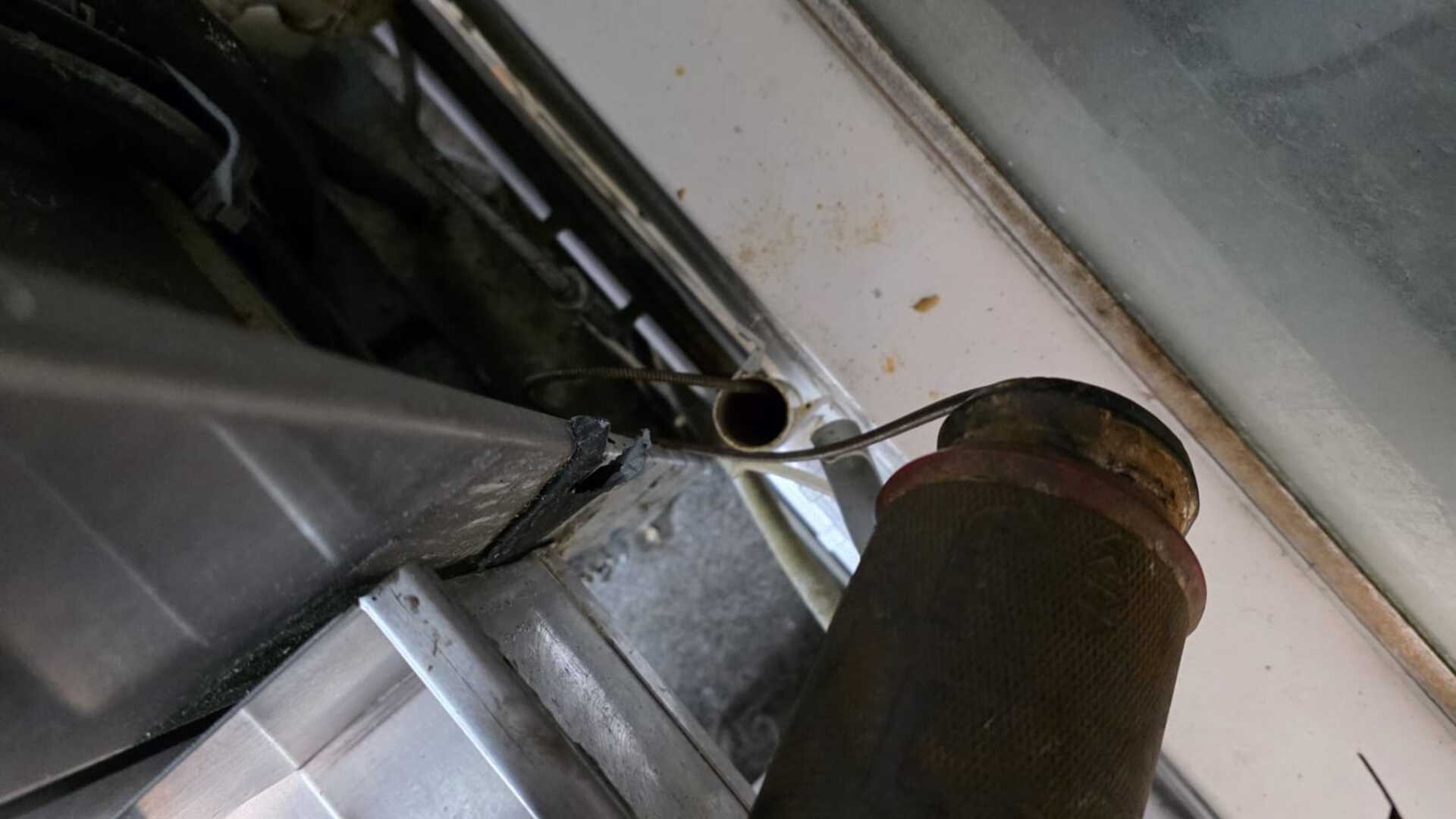
Our drainage engineer attended site and conducted a systematic investigation of the reported flow issues. The blockage was affecting system performance significantly, preventing normal drainage from both the sink and dishwasher.
Using mechanical clearing equipment, the engineer machined the blockage from both ends of the affected section. This dual-approach ensures the obstruction is fully cleared rather than simply pushed further along the line where it might cause problems elsewhere.