Heat Interface Units sit at the boundary between a building’s communal heating distribution network and the individual dwelling. They function as compact heat exchangers, transferring thermal energy from the primary circuit — which carries heated water from a central plant room — into the flat’s domestic hot water and heating circuits. Unlike a conventional boiler, an HIU contains no combustion process. Instead, it relies on plate heat exchangers, motorised valves, pressure management components, and electronic controls to regulate temperature and flow.
This complexity means HIU failures require specialist knowledge. The units operate at pressures and temperatures dictated by the communal system, not by the individual flat’s settings. A pressure management (PM) valve, for instance, regulates the differential between the primary and secondary circuits. When that valve fails, the leak may appear minor, but the underlying pressure imbalance can stress every other sealing surface in the unit.
CIBSE CP1 (Heat Networks: Code of Practice for the UK) provides the industry standard for the design, installation, and maintenance of district heating systems, including the interface units that serve individual dwellings. The code emphasises that HIUs should be maintained on a planned schedule and that end-of-life replacement should be factored into lifecycle costing rather than deferred until catastrophic failure.
Under the Housing Health and Safety Rating System (HHSRS), loss of heating constitutes the “excess cold” hazard — one that local authorities can enforce as a Category 1 hazard requiring urgent remediation. Building Regulations Approved Document L (Conservation of Fuel and Power) also applies, as a deteriorated HIU operating inefficiently wastes energy from the communal system and increases costs for the building as a whole.
The Investigation
Our specialist HIU engineer attended the property at 1 Rick Roberts Way, Stratford, on instruction from Livco Homes. The reported issue was straightforward: “HIU leaking, please attend to investigate and repair.”
On arrival, the engineer opened the HIU cupboard and immediately identified conditions that indicated a long-standing moisture problem rather than a recent leak. The cupboard interior was covered in mould and damp. This environmental evidence was significant — it confirmed that moisture had been present for a considerable period, likely weeks or months, before the leak became severe enough to trigger the repair report.
Detailed Assessment Findings
The engineer conducted a systematic inspection of the unit, component by component.
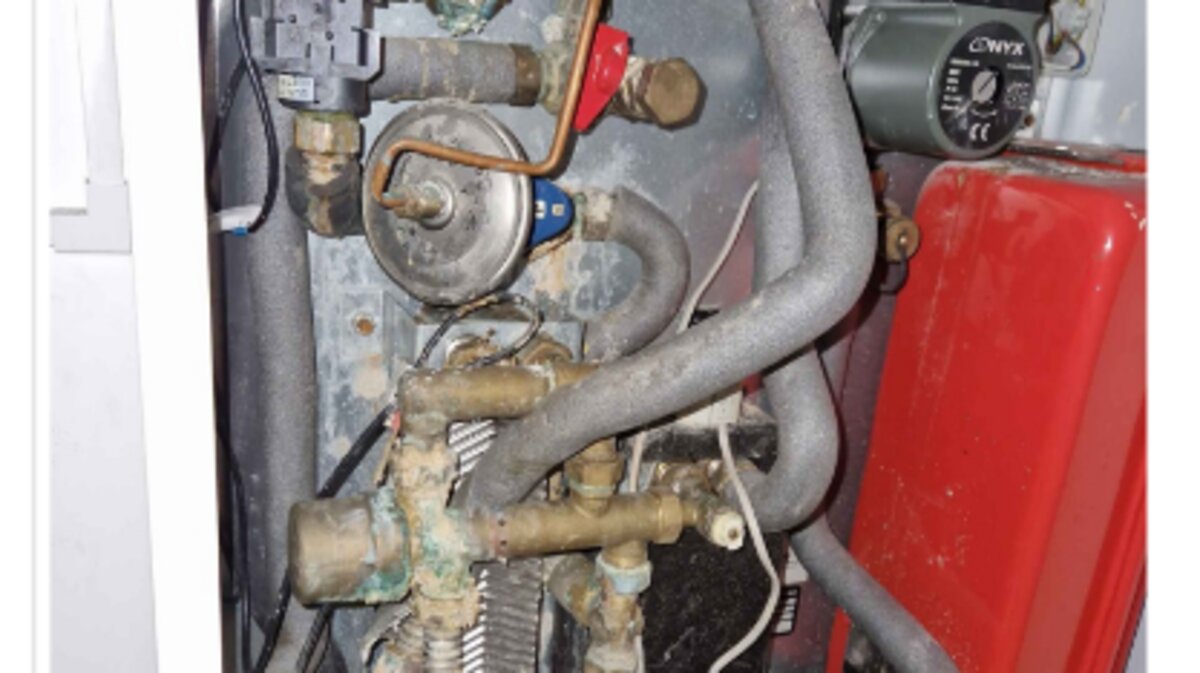
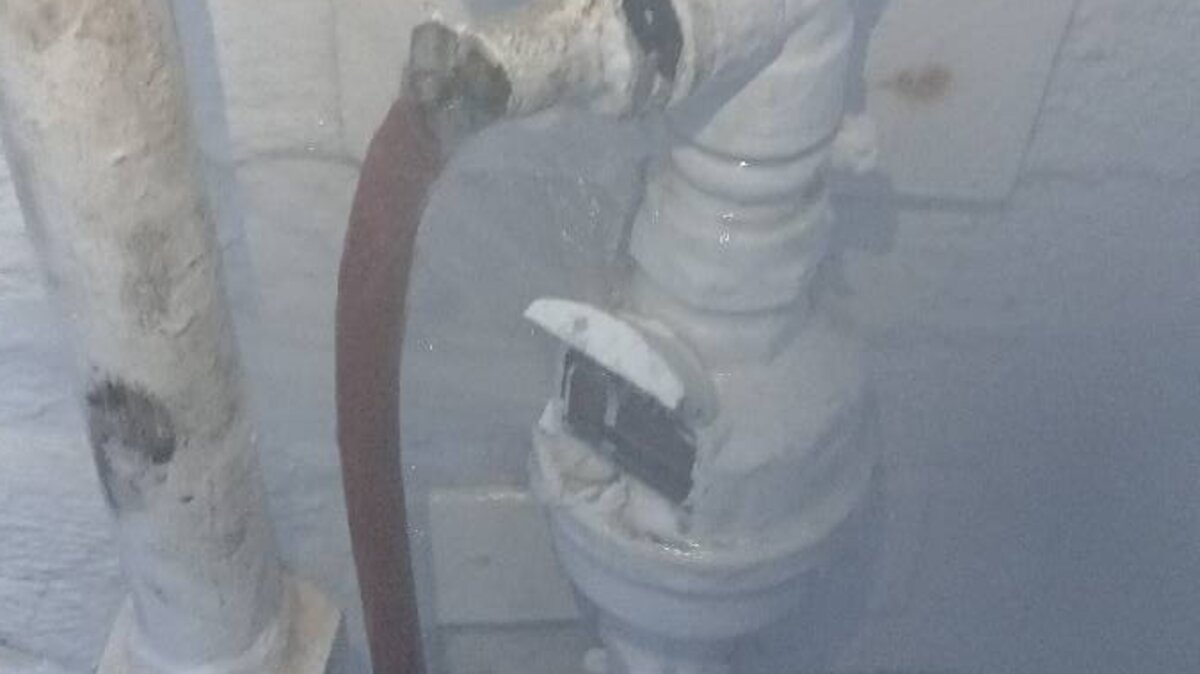
Pressure Management Valve: Identified as the active source of the current leak. The PM valve was dripping continuously and required replacement. This is the component that regulates pressure between the primary (communal) and secondary (flat) circuits. PM valve failure is a known wear item on HIUs, but in isolation it is a straightforward repair.
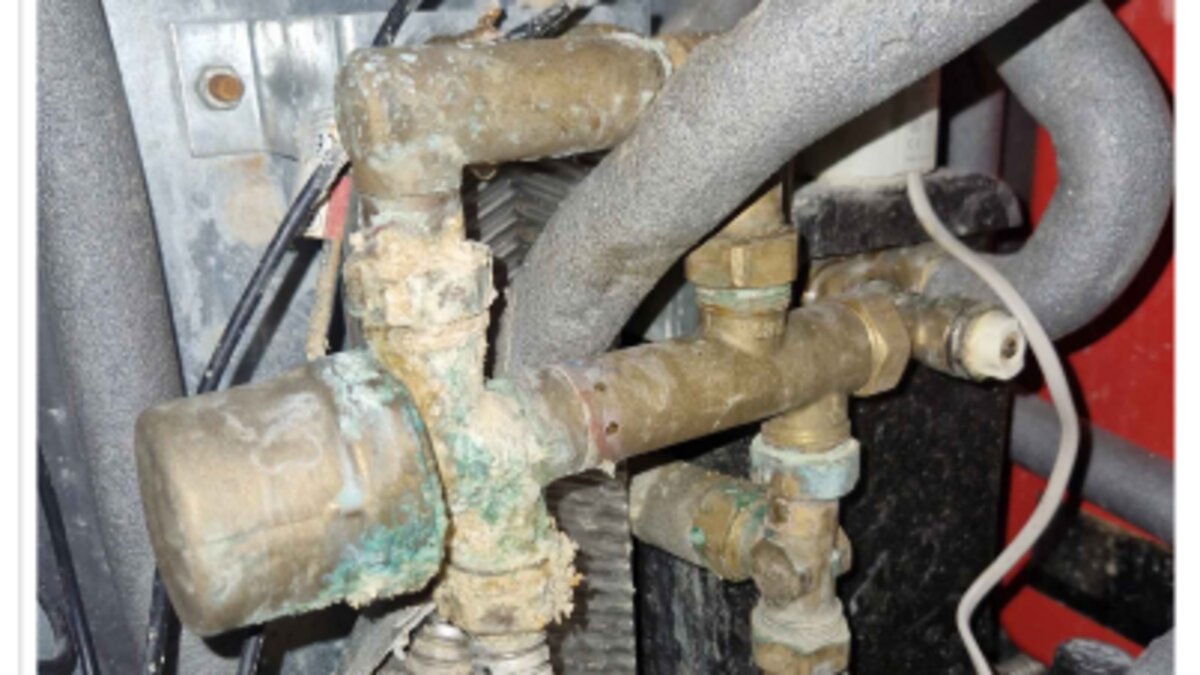
Unit Body and Connections: Multiple corroded parts were identified across the unit. Corrosion on an HIU typically indicates prolonged exposure to moisture — exactly consistent with the mould and damp found in the cupboard. Once corrosion takes hold of brazed connections, compression fittings, and valve bodies, the structural integrity of every joint is compromised.
Overall Condition Assessment: The engineer assessed the unit as being in very poor condition overall, consistent with a unit that has reached or exceeded its serviceable life. The combination of active leaking, widespread corrosion, and environmental damage to the cupboard indicated systemic deterioration rather than isolated component failure.
| Component | Condition | Significance |
|---|---|---|
| HIU cupboard | Covered in mould and damp | Long-standing moisture exposure confirmed |
| PM valve | Actively leaking | Immediate cause of current report |
| Unit body | Multiple corroded parts | Widespread deterioration beyond single-component failure |
| Brazed connections | Corroded | Risk of secondary leaks if disturbed during repair |
| Overall unit | Very poor — end of serviceable life | Full replacement recommended over piecemeal repair |
Immediate Actions Taken
The engineer isolated the HIU to stop the active leak and prevent further water damage to the cupboard and surrounding structure. Critically, the engineer then showed the resident how to temporarily reopen the supply when heating or hot water was required, ensuring the flat was not left without essential services while the management company arranged the next steps.
This interim arrangement balanced two competing priorities: stopping ongoing water damage while maintaining habitability. The resident was given clear instructions and understood the temporary nature of the arrangement.
The Repair-vs-Replace Decision
The engineer provided two options, with a clear professional recommendation.
| Option | Scope | Estimated Cost | Engineer Assessment |
|---|---|---|---|
| PM valve replacement only | Minimum intervention — replace leaking valve | Labour £289 + VAT; PM Valve £512.80 + VAT | Not recommended due to cascade risk |
| Full HIU replacement | Remove and replace entire unit | Separate quotation required | Strongly recommended |
The reasoning behind the replacement recommendation was documented explicitly. Replacing the PM valve on a unit in this condition carries a significant risk of triggering secondary leaks. Disturbing corroded connections and fittings during the valve replacement could break seals elsewhere in the unit, creating new leak points that did not exist before the repair. The engineer would effectively be working on a unit where every joint is compromised, making the repair unpredictable in both scope and outcome.
This is a pattern well understood in HIU maintenance: once corrosion becomes widespread, the cost of sequential repairs quickly exceeds the cost of planned replacement, while each repair introduces new failure risks.
Common HIU Failure Modes
Property managers responsible for buildings served by district heating should be aware of the following common failure patterns in Heat Interface Units.
| Failure Mode | Warning Signs | Risk if Deferred | Typical Lifecycle Position |
|---|---|---|---|
| PM valve leak | Dripping from valve, damp in cupboard | Water damage, mould, secondary corrosion | Mid-life wear item (5-8 years) |
| Plate heat exchanger fouling | Reduced hot water temperature, slow recovery | Energy waste, tenant complaints | Ongoing — requires descaling |
| Motorised valve seizure | Heating or hot water permanently on/off | Energy waste, no temperature control | Mid to end of life |
| Electrical control failure | Unit non-responsive, error codes | Complete loss of heating/hot water | Variable — often linked to moisture ingress |
| Widespread corrosion | Visible rust, multiple damp patches, mould | Cascade failure, uncontrolled leak | End of life — replacement required |
| Expansion vessel failure | Pressure fluctuations, relief valve discharge | System instability, water damage | Mid-life — replaceable component |