Door locks on commercial and industrial premises serve two competing objectives: they must keep unauthorised people out while allowing authorised occupants to exit quickly in an emergency. A lock that requires a key on both sides creates an inherent conflict with this second objective. If a fire breaks out, occupants under stress may not be able to locate the key, may drop it, or may find the lock difficult to operate in smoke-filled conditions.
The Regulatory Reform (Fire Safety) Order 2005 (RRO) places a duty on the “responsible person” — typically the employer or premises controller — to ensure that escape routes can be used safely and effectively at all times. Article 14 specifically requires that routes to emergency exits and the exits themselves are kept clear and free from obstruction at all times during use. Where a locked door forms part of an escape route, the locking arrangement must allow occupants to escape without needing a key or any special knowledge.
Building Regulations Approved Document B (Fire Safety) reinforces this requirement, stipulating that doors on escape routes should be openable from the direction of escape without the use of a key. BS EN 179 (emergency exit devices) and BS EN 1125 (panic exit devices) provide the technical specifications for hardware on escape routes, though a thumbturn cylinder represents a proportionate solution for many commercial and industrial doors that do not require full panic hardware.
Beyond fire safety, the lock hardware itself must meet appropriate security standards. BS EN 12209 governs mechanically operated locks and latches, setting requirements for durability, strength, and security grading. BS EN 1303 covers cylinder locks, including thumb-turn variants, specifying resistance to drilling, picking, and other forms of attack.
The Requirement
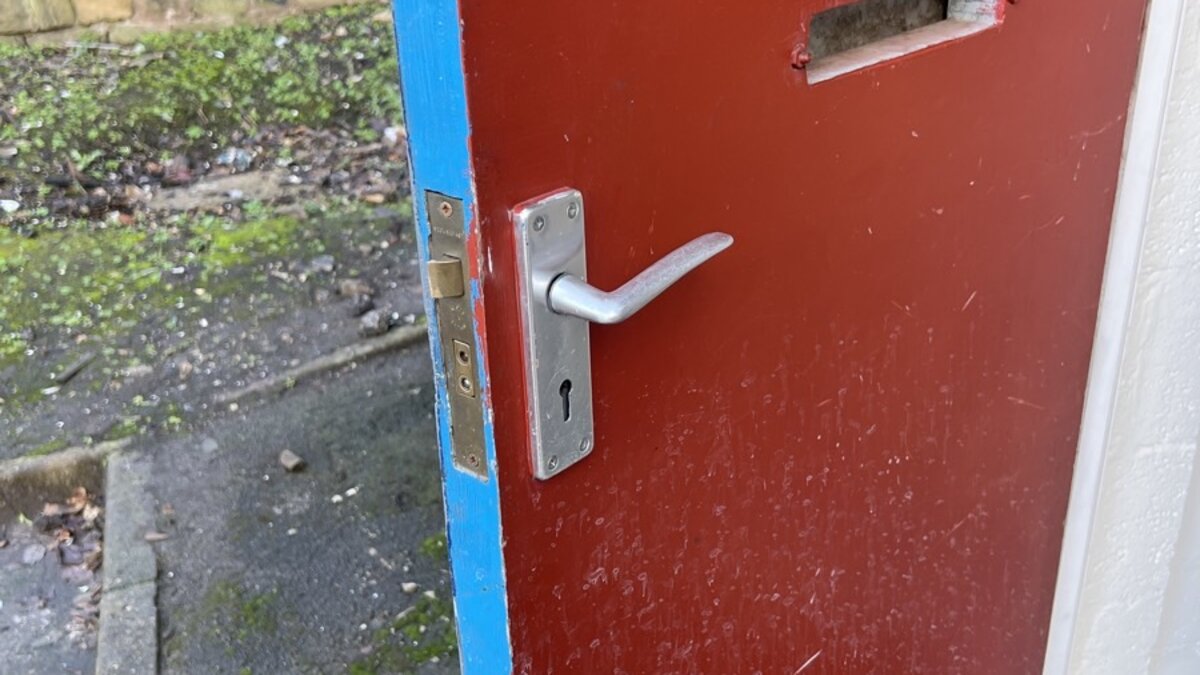
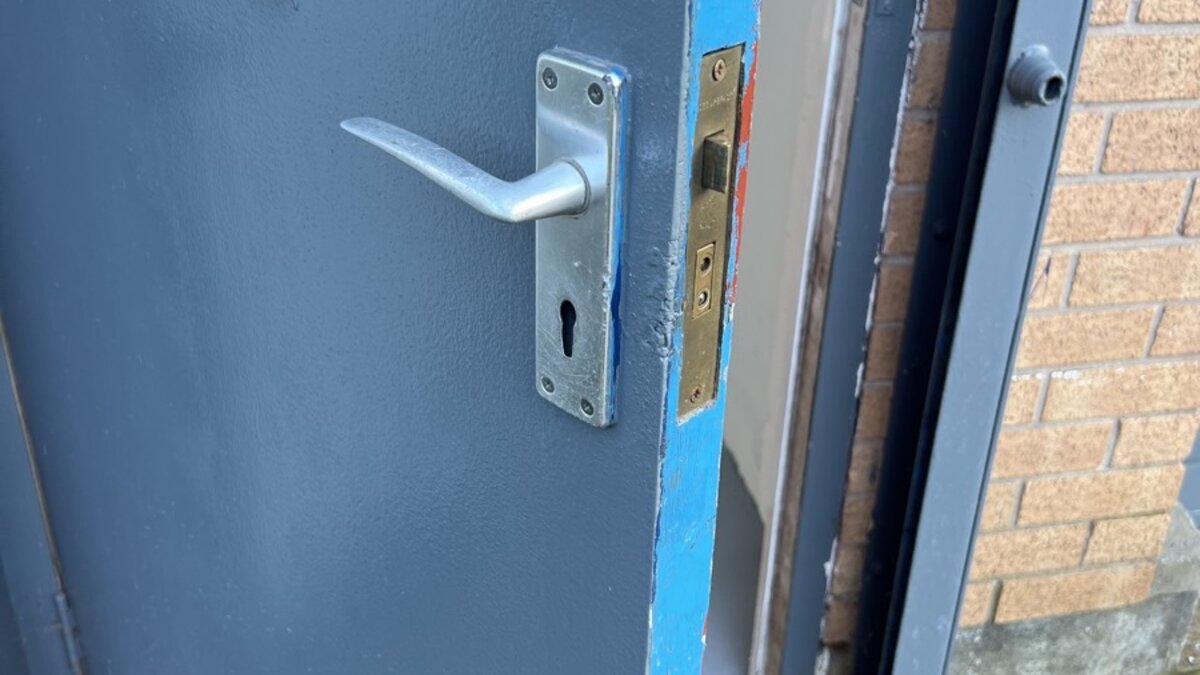
The FM company — Oltec Group Facilities Management — instructed a lock upgrade on a wooden door at Unit 79, Mountheath Trading Estate. The client’s specification was clear: keyed entry from the outside for security, thumbturn operation from the inside for convenience and emergency egress, with no requirement for a key on the interior side. The existing handle and euro sashlock both needed replacing to accommodate the new euro thumbturn cylinder.
The Works — Step by Step
Our locksmith attended at 11:00 and completed the full installation by 12:43 — a total of one hour and forty-three minutes including assessment, installation, and testing.
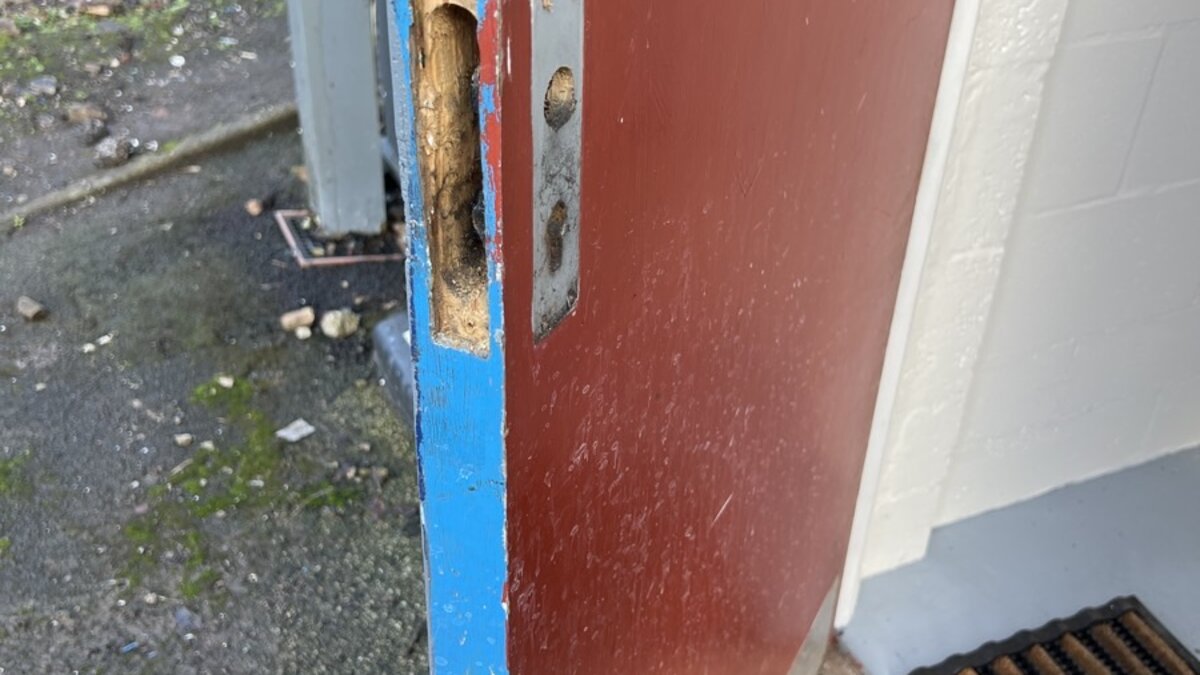
Assessment of existing hardware. The locksmith inspected the existing door, frame, lock, and handle configuration. The door was timber, in serviceable condition, and compatible with the proposed upgrade. The existing mortice pocket and handle bore positions were assessed for compatibility with the new sashcase dimensions.
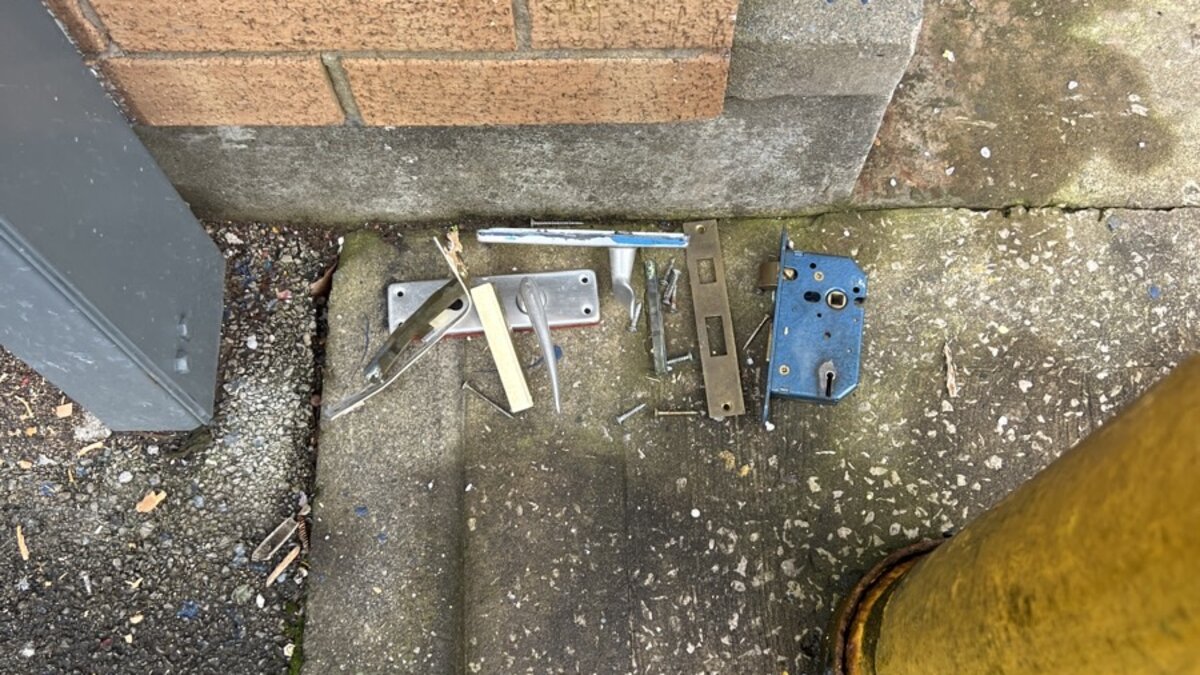
Removal of existing hardware. The old lock, cylinder, and handle set were removed. The mortice pocket was inspected for any damage or wear that could affect the fit of the new sashcase.
Euro sashcase installation. A new euro sashcase was fitted into the mortice pocket. The sashcase provides the locking action — the deadbolt and latch that engage with the strike plate on the frame. The sashcase was aligned to ensure smooth bolt throw and correct engagement with the keep.
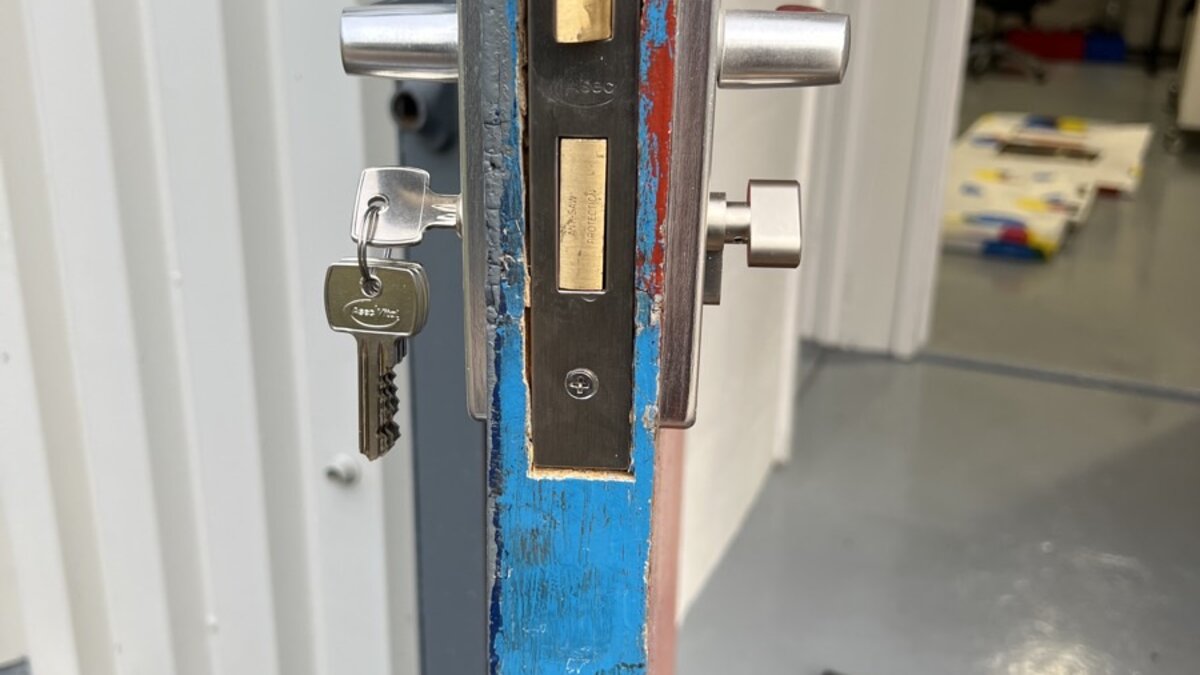
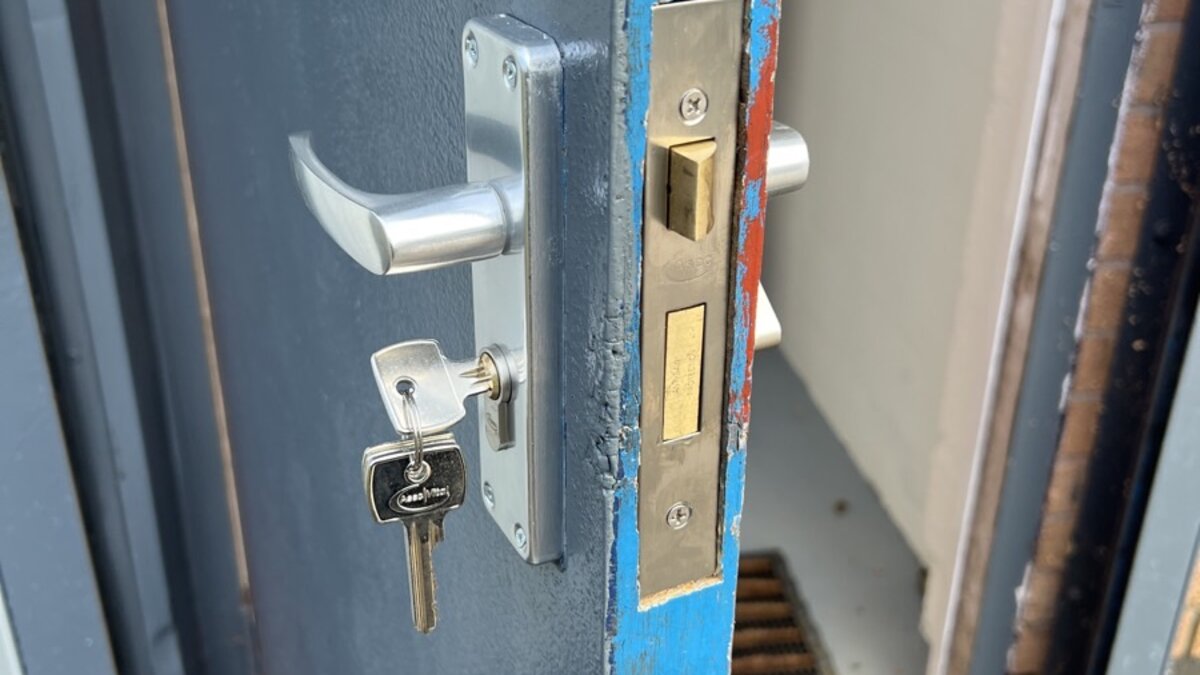
Euro thumbturn cylinder fitting. A new euro thumbturn cylinder was installed. This cylinder has a standard key profile on the exterior face and a thumbturn lever on the interior face. The cylinder was cut to the correct length for the door thickness, fixed with the retaining screw through the sashcase faceplate, and tested for smooth key and thumbturn operation.
Handle set installation. A new compatible handle set was fitted, with the lever action correctly engaging the sashcase latch. The handles were tested in both directions to confirm smooth, reliable operation.
Testing and handover. The complete assembly was tested for all operating modes: key locking and unlocking from outside, thumbturn locking and unlocking from inside, handle-operated latch retraction from both sides, and deadbolt throw and retraction. All functions operated correctly.
Common Lock Upgrade Failure Modes
| Issue | Cause | Warning Signs |
|---|---|---|
| Thumbturn stiff or binding | Cylinder too long for door thickness, not cut correctly | Resistance when turning; thumbturn does not snap back |
| Deadbolt not engaging keep | Sashcase misaligned with strike plate | Door does not feel secure when locked |
| Handle drooping | Incorrect spring cassette or worn return spring | Handle does not return to horizontal after use |
| Key difficult to insert or turn | Cylinder quality issue or incorrect profile | Requires force; key feels rough in barrel |
| Door not latching on close | Latch not aligned with strike plate recess | Door swings open after closing |
| Cylinder spinning freely | Retaining screw not secured or snapped | Cylinder rotates without engaging deadbolt |