In a sealed central heating system, the circulation pump (sometimes called a circulator) is the component responsible for moving heated water from the boiler through the pipework network and radiators, then returning it to the boiler for reheating. Without it, the system is static — the boiler heats water that sits in the heat exchanger and immediate pipework, but that heat never reaches the living space.
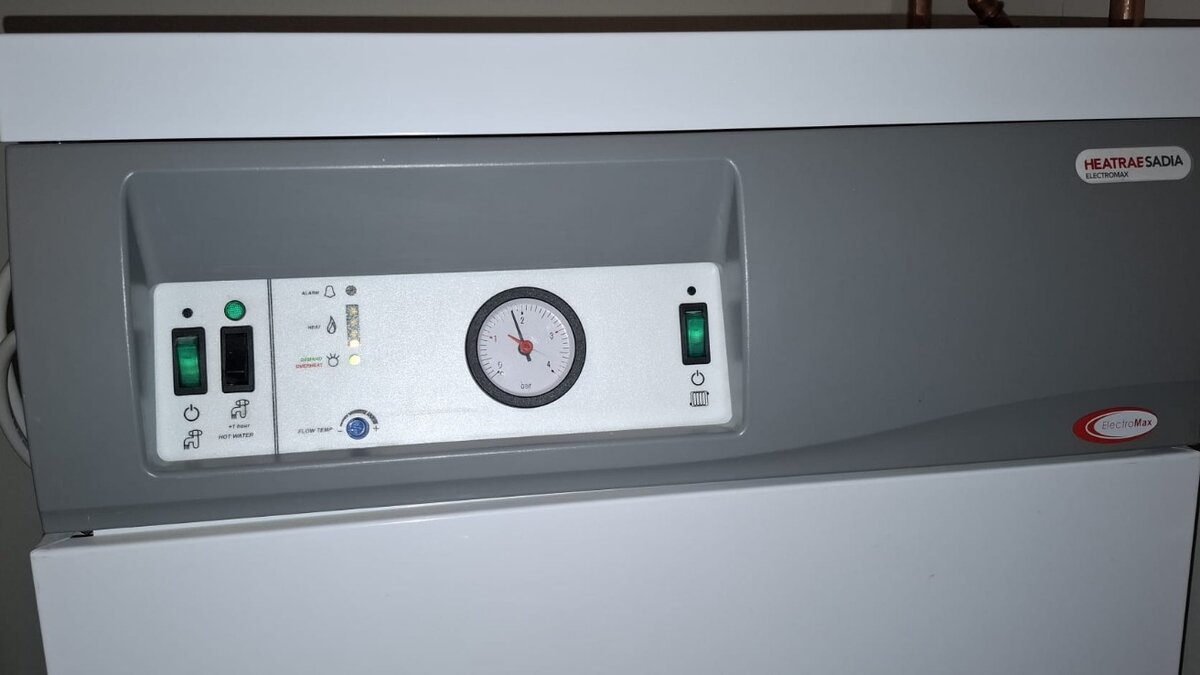
The Heatrae Sadia Electromax is an electric boiler commonly found in flats where a gas supply is not available or not practical. It combines a direct-acting thermal store with an electric immersion element and relies on a circulation pump to distribute heat. When the pump fails, the system behaves in a characteristic way: the boiler fires and cycles normally, pipework at the boiler casing is hot, but all downstream pipework and radiators remain stone cold. This pattern is a strong diagnostic indicator that points directly to the pump.
Building Regulations Approved Document L (Conservation of Fuel and Power) requires that heating systems operate efficiently. A failed pump means zero efficiency — the boiler consumes electricity to heat water that goes nowhere. Beyond energy waste, the Landlord and Tenant Act 1985, Section 11, places a statutory obligation on landlords to keep in repair and proper working order the installations in the dwelling for space heating and heating water. In temporary accommodation, where tenants may be placed by local authorities, the duty to restore heating rapidly carries additional weight.
The Electricity at Work Regulations 1989 govern the electrical aspects of the repair. The Heatrae Sadia Electromax is an electrically powered appliance, and any work on the pump — which is electrically connected — must follow safe isolation procedures in accordance with Regulation 12 (working on equipment made dead) and Regulation 13 (precautions for work on live equipment, to be avoided wherever possible).
The Emergency Call
Tempstay Ltd, a temporary accommodation provider, reported an emergency at Flat 7, Royston House, Bath. The tenant — described by the client as a woman living alone — had no heating and no hot water. The client’s instruction was clear: attend as soon as possible and resolve the issue. The system was identified as the same boiler model that had caused issues in a neighbouring flat, suggesting a systemic concern within the building.
The Investigation: Step-by-Step Diagnosis
Step 1 — Boiler Status Check: The engineer confirmed that the boiler was firing and cycling on and off repeatedly. The cycling indicated that the boiler was reaching its set temperature at the heat exchanger, shutting down, cooling locally, and firing again — a classic symptom of heat not being removed from the boiler by circulation.
Step 2 — Pipework Temperature Assessment: Pipework within the boiler casing was confirmed as hot, verifying that the heating element was functioning correctly and generating heat as designed.
Step 3 — Distribution Assessment: Pipework beyond the boiler, throughout the flat, remained cold. All radiators were tested and confirmed cold. The heat was being generated but not distributed — the system was effectively dead from the boiler outlet onwards.
Step 4 — Pump Inspection: The circulation pump was identified as failed or failing. It was not operating correctly, confirming it as the single point of failure preventing heat distribution.
Step 5 — Root Cause Confirmation: The engineer concluded that the complete loss of heating and hot water was attributable to a failed circulation pump. The boiler itself, the heating element, and the electrical supply were all functioning correctly. Only the pump required replacement.
Scope of Recommended Works
The engineer prepared a detailed scope of works for client authorisation, covering every stage of the repair to ensure full transparency.
| Work Stage | Detail |
|---|---|
| Safe isolation | Isolate electrical supply to boiler and heating system |
| System draindown | Drain the heating system to a level permitting safe pump removal |
| Controlled water capture | Capture and dispose of system water responsibly |
| Pump removal | Remove the existing faulty circulation pump |
| New pump installation | Supply and install a compatible replacement for the Heatrae Sadia Electromax |
| Connection integrity | Ensure all connections, seals, and fixings are secure and leak-free |
| System refill | Refill the heating system with treated water |
| Venting | Vent all radiators and pipework to remove trapped air |
| Pressurisation | Pressurise the system to the manufacturer’s recommended operating pressure |
| Electrical reconnection | Restore electrical supply to the boiler |
| Commissioning | Test boiler operation for correct heating and hot water performance |
| Distribution verification | Confirm heat circulation to all radiators |
| Leak check | Check all connections for leaks and confirm stable system operation |
| Handover | Leave system fully operational; clear work area and remove waste |
Estimated Cost: Labour £378 + VAT; Materials £278.50 + VAT
Common Heating System Failure Modes
The table below outlines the most common reasons a boiler may fire but fail to deliver heat, helping landlords and property managers understand the diagnostic process.
| Symptom | Likely Cause | Diagnostic Indicator |
|---|---|---|
| Boiler fires, all radiators cold | Circulation pump failure | Hot pipework at boiler, cold beyond |
| Boiler fires, some radiators cold | Air locks or sludge | Individual radiators cold at top or throughout |
| Boiler fires and locks out | Overheat thermostat tripped | Error code displayed, manual reset required |
| Boiler fires, hot water works, heating does not | Diverter valve or motorised valve fault | Hot water available but no central heating |
| Boiler does not fire | Electrical supply, PCB, or ignition failure | No flame, no cycling, possible error code |
| Boiler short-cycles | Failed pump, blocked heat exchanger, or thermostat fault | Rapid on-off cycling at boiler |