

Awaab’s Law Compliance Policy
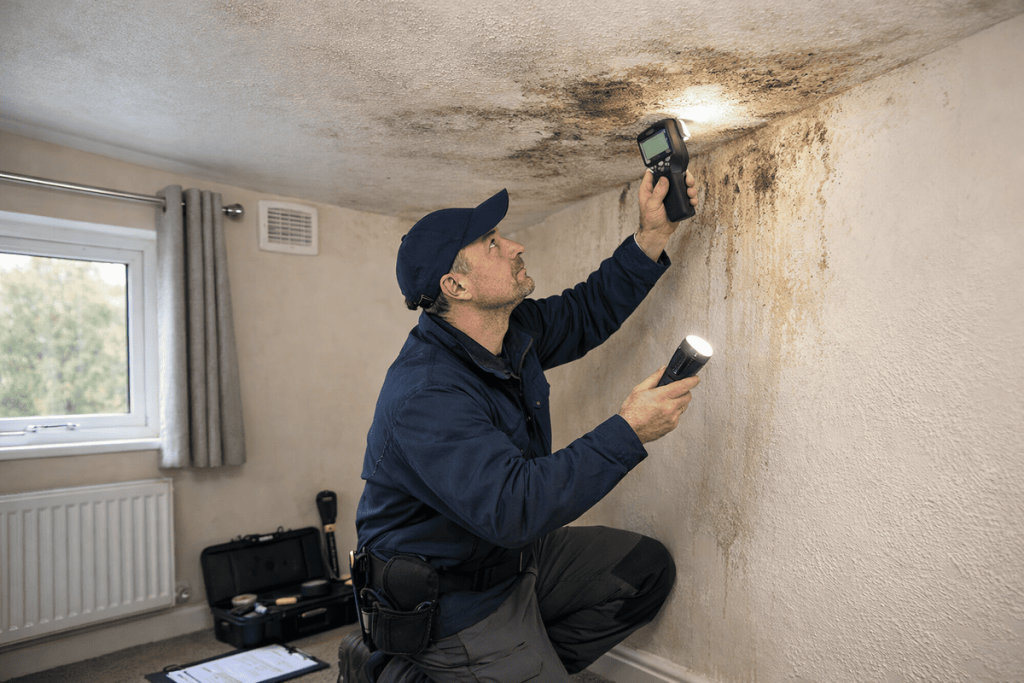
Protecting Residents from Damp and Mould All Services 4U is committed to protecting residents from the health hazards caused by damp and mould. Following the tragic death of Awaab Ishak in 2020, the UK Government introduced Awaab's Law to ensure that landlords respond promptly and effectively to damp and mould hazards. This policy sets out our procedures for identifying, assessing, and remediating damp and mould in compliance with the legal requirements. This policy applies to all damp and mould related work undertaken by All Services 4U on behalf of our clients.
Our Commitment
We are committed to:
- Rapid Response — Meeting all statutory timescales for investigation and remediation
- Root Cause Analysis — Identifying and addressing the underlying causes of damp and mould
- Effective Remediation — Delivering lasting solutions, not temporary fixes
- Resident Safety — Prioritising the health and wellbeing of residents
- Evidence-Based Approach — Documenting all findings and actions thoroughly
- Clear Communication — Keeping residents informed throughout the process
- Continuous Improvement — Learning from cases to prevent future occurrences
Legal Framework
Awaab’s Law
Awaab’s Law is the informal name for amendments to the Social Housing (Regulation) Act 2023, introduced following the death of two-year-old Awaab Ishak from a respiratory condition caused by mould in his family’s housing association flat in Rochdale.
The law requires social housing landlords to:
- Investigate hazards within specified timescales
- Provide written summaries of investigations
- Begin remediation within specified timescales
- Complete emergency repairs within specified timescales
- Ensure repairs are completed within a reasonable time
Statutory Timescales
| Requirement | Timescale |
| Acknowledge hazard report | Within 24 hours |
| Investigate reported hazard | Within 14 calendar days |
| Provide written summary of investigation | Within 14 calendar days |
| Begin repair works | Within 7 calendar days of investigation |
| Complete emergency repairs | Within 24 hours |
| Complete non-emergency repairs | Within a reasonable period |
Related Legislation
| Legislation | Relevance |
| Social Housing (Regulation) Act 2023 | Awaab’s Law provisions |
| Homes (Fitness for Human Habitation) Act 2018 | Landlord duty to ensure fitness |
| Landlord and Tenant Act 1985 | Repair obligations |
| Housing Act 2004 | HHSRS hazard assessment |
| Defective Premises Act 1972 | Duty of care in construction/repair |
| Environmental Protection Act 1990 | Statutory nuisance |
| Building Regulations Part F | Ventilation requirements |
| Building Regulations Part C | Resistance to moisture |
Housing Health and Safety Rating System (HHSRS)
Under HHSRS, damp and mould growth is a prescribed hazard that can be classified as:
| Category | Description | Enforcement |
| Category 1 | Serious hazard posing imminent risk | Local authority must take action |
| Category 2 | Less serious hazard | Local authority may take action |
Our procedures aim to identify and remediate damp and mould before it becomes a Category 1 hazard.
Scope
This policy covers:
- All residential properties where we provide maintenance services
- Social housing, private rented, and leasehold properties
- All types of damp (rising, penetrating, condensation)
- All mould growth regardless of cause
- Associated works (ventilation, insulation, heating)
Our Role
As a maintenance contractor, we:
- Respond to damp and mould reports on behalf of our clients
- Investigate and diagnose the cause
- Carry out remediation works
- Provide evidence and documentation
- Advise clients on property-level and resident-level factors
- Support clients to meet their statutory obligations
The landlord (our client) retains overall responsibility for compliance with Awaab’s Law. We support them by delivering compliant services.
Definitions
Types of Damp
| Type | Cause | Characteristics |
| Condensation | Excess moisture in air condensing on cold surfaces | Most common; linked to ventilation, heating, lifestyle |
| Rising Damp | Groundwater rising through walls due to failed/absent DPC | Tide marks, salt deposits, low-level damage |
| Penetrating Damp | Water ingress through building fabric | Linked to rain, defects, leaks; localised to ingress point |
| Traumatic Damp | One-off water event | Flood, burst pipe, leak |
Mould
Mould is a fungal growth that thrives in damp conditions. It can:
- Cause respiratory conditions, allergies, and infections
- Exacerbate asthma and other health conditions
- Be particularly dangerous for children, elderly, and immunocompromised residents
- Indicate underlying damp problems requiring investigation
Hazard
A hazard is any condition that poses a risk to health and safety. Under HHSRS, damp and mould growth is a specific hazard category.
Vulnerable Residents
Residents who may be at increased risk from damp and mould, including:
- Children (especially under 5)
- Elderly residents
- Pregnant women
- Residents with respiratory conditions (asthma, COPD)
- Immunocompromised residents
- Residents with other chronic health conditions
Response Timescales
We comply with Awaab’s Law timescales and apply them across all housing sectors.
Standard Timescales
| Stage | Timescale | Our Commitment |
| Acknowledge report | Within 24 hours | Same working day where possible |
| Investigation appointment | Within 14 calendar days | Target within 7 calendar days |
| Written investigation summary | Within 14 calendar days | Provided at or after inspection |
| Begin remediation | Within 7 calendar days of investigation | Immediate for emergency works |
| Complete emergency works | Within 24 hours | Same day where life/safety risk |
| Complete non-emergency works | Reasonable period | Target within 28 calendar days |
Emergency Situations
The following require emergency response (within 24 hours):
- Severe mould affecting vulnerable residents
- Mould in bedrooms of children or vulnerable residents
- Widespread mould covering large areas
- Mould with visible health impact on residents
- Any situation where residents cannot safely remain
- Category 1 HHSRS hazards
Priority Matrix
| Severity | Vulnerability | Priority | Target Response |
| Severe mould | Vulnerable resident | Emergency | Within 24 hours |
| Severe mould | Standard resident | Urgent | Within 48 hours |
| Moderate mould | Vulnerable resident | Urgent | Within 48 hours |
| Moderate mould | Standard resident | Standard | Within 7 days |
| Minor mould | Any resident | Routine | Within 14 days |
Identification and Reporting
How Damp and Mould is Identified
| Source | Description |
| Resident report | Direct report via landlord or our contact centre |
| Routine inspection | Identified during other maintenance visits |
| Planned survey | Stock condition or cyclical inspection |
| Compliance visit | Gas, electrical, or fire safety visit |
| Complaint | Escalated through complaints process |
| Third party | Report from carer, family member, agency |
Operative Responsibilities
All operatives visiting properties must:
- Be alert to signs of damp and mould
- Report any damp or mould observed, regardless of reason for visit
- Complete a damp and mould observation form
- Take photographs as evidence
- Inform the resident that the issue has been noted
- Raise a follow-up job or escalate as appropriate
Signs to Look For
| Location | Signs |
| Walls and ceilings | Mould growth, staining, peeling paint/wallpaper, tide marks |
| Windows | Condensation, mould on frames and seals, water pooling |
| Corners and edges | Black mould spots, particularly at external wall junctions |
| Behind furniture | Mould on walls behind wardrobes, beds, sofas |
| Bathrooms | Mould on grout, sealant, ceiling; lack of ventilation |
| Kitchens | Mould around cooker, sink, windows; extract fan issues |
| Smell | Musty, damp odour |
| Health indicators | Resident mentions respiratory issues, allergies |
Investigation Process
Stage 1: Initial Assessment
Timescale: Within 14 calendar days of report (target 7 days)
Actions:
- Contact resident to arrange inspection
- Confirm vulnerability status and any health concerns
- Review property history (previous damp reports, repairs, complaints)
- Attend property with appropriate equipment
- Conduct thorough inspection
- Document findings with photographs and measurements
- Identify likely cause(s)
- Provide initial advice to resident
- Complete investigation report
Investigation Checklist
External Inspection:
| Item | Check |
| Roof condition | Missing/damaged tiles, flashing, pointing |
| Gutters and downpipes | Blockages, leaks, overflow |
| External walls | Cracks, pointing failures, render damage |
| DPC visibility | Present, bridged, covered |
| Ground levels | Soil/paving above DPC |
| Ventilation | Air bricks clear, adequate provision |
| Windows and doors | Seals, frames, drainage |
Internal Inspection:
| Item | Check |
| Location of damp/mould | Room, wall, height, extent |
| Pattern of damp | Tide marks, patches, widespread |
| Moisture readings | Using calibrated moisture meter |
| Relative humidity | Using hygrometer |
| Ventilation | Extract fans, trickle vents, windows |
| Heating | Adequacy, use, thermostat settings |
| Insulation | Cold bridging, external wall insulation |
| Lifestyle factors | Drying clothes, cooking, showering |
| Resident health | Any reported health impacts |
Diagnostic Tools
| Tool | Purpose |
| Moisture meter | Measure moisture content in walls, floors, timber |
| Hygrometer | Measure relative humidity |
| Thermal imaging camera | Identify cold spots and thermal bridging |
| Borescope | Inspect cavities and concealed areas |
| Damp survey equipment | Calcium carbide test, BRE method |
Root Cause Analysis
We identify the root cause, not just the symptoms.
| Symptom | Possible Root Causes |
| Mould on external wall | Cold bridging, lack of insulation, penetrating damp |
| Mould around windows | Condensation, poor ventilation, failed seals |
| Mould in bathroom | Inadequate extract, no window, resident not using fan |
| Mould in bedroom | Furniture against external walls, insufficient heating |
| Mould on ceiling | Roof leak, cold loft, condensation |
| Rising tide mark | Rising damp, failed DPC, high external ground |
| Localised damp patch | Penetrating damp, leak, plumbing issue |
Investigation Report
The investigation report includes:
- Date and time of inspection
- Property details and resident contact
- Description of damp/mould observed
- Photographs with annotations
- Moisture readings and locations
- Root cause determination
- Property factors identified
- Lifestyle factors identified (sensitively recorded)
- Recommended remediation works
- Priority and timescale
- Resident advice provided
- Follow-up actions required
Remediation
Remediation Principles
- Address the root cause — Not just the mould
- Lasting solution — Not temporary fixes
- Proportionate response — Appropriate to severity
- Resident-centred — Minimise disruption, ensure safety
- Evidence-based — Document before, during, and after
Remediation Options
| Cause | Remediation |
| Condensation – ventilation | Install/repair extract fans, trickle vents, PIV/MEV |
| Condensation – heating | Repair heating system, radiator sizing, controls |
| Condensation – insulation | External/internal wall insulation, loft insulation |
| Condensation – lifestyle | Resident advice, support, monitoring |
| Rising damp | DPC injection/installation, replastering, ground levels |
| Penetrating damp – roof | Roof repairs, flashing, pointing, gutters |
| Penetrating damp – walls | Repointing, render repairs, crack repairs |
| Penetrating damp – windows | Seal replacement, frame repairs, drainage |
| Mould treatment | Wash with fungicidal solution, anti-mould paint |
| Severe mould | Professional mould remediation, protective equipment |
Works Timescales
| Works Type | Timescale |
| Emergency (health risk, vulnerable resident) | Within 24 hours |
| Urgent (significant mould, moderate risk) | Within 48 hours |
| Standard remediation | Begin within 7 days, complete within 28 days |
| Major works (insulation, DPC, roof) | Agree programme with client, complete ASAP |
Quality Standards
All remediation works must:
- Address the identified root cause
- Meet relevant Building Regulations (Part C, F, L)
- Use appropriate materials (anti-mould paint, treated plaster)
- Be completed by competent operatives
- Be signed off with photographic evidence
- Include follow-up inspection where required
Mould Treatment Protocol
For surface mould:
- Protect resident belongings
- Wear appropriate PPE (mask, gloves, goggles)
- Apply fungicidal wash and allow to dry
- Repeat application if required
- Apply anti-mould paint/treatment
- Address underlying cause
- Advise resident on prevention
For severe mould:
- Assess need for decant (resident relocation)
- Isolate affected area
- Professional remediation with HEPA filtration
- Remove affected materials (plasterboard, timber) if required
- Treat remaining surfaces
- Address root cause
- Reinstate finishes
- Clearance inspection before re-occupation
Resident Communication
Communication Principles
- Clear, jargon-free language
- Empathetic and non-judgmental
- Timely updates at each stage
- Written confirmation of key information
- Signposting to support where needed
Communication Touchpoints
| Stage | Communication |
| Report received | Acknowledgement within 24 hours |
| Inspection booked | Confirmation of date/time |
| After inspection | Written summary within 14 days |
| Works scheduled | Confirmation of what, when, duration |
| During works | Updates on progress, any delays |
| Works complete | Confirmation and advice on prevention |
| Follow-up | Check-in after 4-6 weeks |
Written Investigation Summary
As required by Awaab’s Law, we provide a written summary including:
- What was found during the investigation
- The identified cause of the damp/mould
- What action will be taken
- Timescales for works
- What the resident can do to help
- Contact details for queries
- How to escalate if not satisfied
Resident Advice
We provide advice on:
| Topic | Advice |
| Ventilation | Open windows, use extract fans, trickle vents |
| Heating | Maintain consistent temperature, avoid cold rooms |
| Moisture reduction | Lids on pans, dry clothes outside/in ventilated area |
| Furniture placement | Gap between furniture and external walls |
| Mould cleaning | Safe cleaning methods for minor mould |
| Reporting | How to report if problem returns |
Important: We never blame residents for damp and mould. While lifestyle factors may contribute, the landlord has a duty to provide a property capable of being maintained free from hazards.
Vulnerable Residents
For vulnerable residents:
- Prioritise response (emergency/urgent)
- Consider need for decant during works
- Provide additional support and communication
- Liaise with support services if appropriate
- Follow safeguarding procedures if concerns arise
- Document vulnerability and actions taken
Documentation and Evidence
Why Documentation Matters
- Demonstrates compliance with Awaab’s Law
- Supports landlord in regulatory inspections
- Provides evidence for Housing Ombudsman cases
- Enables pattern identification across stock
- Protects against claims
- Supports continuous improvement
Documentation Requirements
| Stage | Documentation |
| Report | Date, source, description, resident details, vulnerability |
| Acknowledgement | Date/time of acknowledgement, method |
| Investigation | Full report, photos, readings, root cause |
| Written summary | Copy of summary provided to resident |
| Works order | Scope, priority, timescales |
| Works completion | Before/after photos, materials used, sign-off |
| Follow-up | Return visit findings, resident feedback |
Photographic Evidence
All inspections and works require photographs:
| Stage | Photos Required |
| Investigation | Overview, close-up of mould, moisture meter readings, external factors |
| Before works | Condition before starting |
| During works | Key stages, hidden issues revealed |
| After works | Completed remediation |
| Follow-up | Condition at follow-up visit |
Photos must be:
- Date and time stamped
- Clearly labelled with location
- Stored against the property record
- Retained for minimum 6 years
Record Retention
| Record | Retention Period |
| Investigation reports | 6 years minimum |
| Photographs | 6 years minimum |
| Resident communication | 6 years minimum |
| Works records | 6 years minimum |
| Complaints related to damp/mould | 6 years minimum |
Escalation and Complex Cases
When to Escalate
Escalate to client and/or senior management when:
- Emergency decant may be required
- Vulnerable resident with severe mould
- Resident has reported health impacts
- Multiple previous reports at same property
- Root cause requires major works (roof, insulation, DPC)
- Resident is not engaging or refusing access
- Timescales cannot be met
- Complaint received or Ombudsman involved
- Potential Category 1 HHSRS hazard
- Media or political involvement
Complex Cases
Some cases require additional expertise:
| Scenario | Action |
| Unclear diagnosis | Commission specialist damp survey |
| Structural issues | Involve structural engineer |
| Major works required | Capital works programme |
| Resident factors significant | Tenancy support, welfare referral |
| Health impacts reported | Document, advise GP visit, inform client |
| Repeat failures | Root cause review, alternative approach |
Multi-Agency Involvement
We may need to work with:
- Environmental Health (local authority)
- Housing Ombudsman
- Tenancy support services
- Social services (safeguarding)
- Health services (occupational health referral)
- Building surveyors and specialists
Prevention
Proactive Identification
- Train all operatives to spot and report damp/mould
- Include damp/mould checks in all property visits
- Annual property MOT inspections
- Stock condition surveys
- Data analysis to identify at-risk properties
Property-Level Prevention
| Measure | Purpose |
| Adequate ventilation | Extract fans, PIV, trickle vents |
| Efficient heating | Sized correctly, controllable, affordable |
| Insulation | Reduce cold bridging and condensation risk |
| Building fabric | Maintain roofs, walls, windows, DPC |
| Drainage | Clear gutters, downpipes, ground drainage |
Resident Engagement
- Provide advice at sign-up
- Annual reminders on condensation prevention
- Respond promptly to early reports
- Non-judgmental approach to lifestyle factors
- Support for vulnerable residents
Data and Trends
We provide clients with:
- Monthly damp and mould reports
- Trend analysis by property type, age, area
- Repeat cases identification
- Timescale compliance reporting
- Recommendations for stock investment
Training and Competence
Training Requirements
| Role | Training |
| All operatives | Damp and mould awareness (spotting and reporting) |
| Inspectors/surveyors | Damp diagnosis and investigation |
| Remediation operatives | Mould treatment, ventilation installation |
| Customer service | Handling damp/mould reports, vulnerability identification |
| Supervisors/managers | Awaab’s Law requirements, escalation |
Competence Standards
| Activity | Competence |
| Damp survey | Qualified surveyor or trained inspector |
| Mould treatment | Trained operative, PPE competent |
| Ventilation installation | Electrician (for powered ventilation) |
| Plastering | Skilled plasterer, anti-mould materials |
| Roofing repairs | Qualified roofer |
| DPC works | Specialist damp proofing contractor |
Roles and Responsibilities
All Services 4U
| Role | Responsibilities |
| Managing Director | Overall accountability for policy and compliance |
| Operations Director | Service delivery, resource allocation |
| Contract Managers | Client liaison, performance monitoring |
| Supervisors | Quality assurance, escalation |
| Inspectors | Investigation, diagnosis, reporting |
| Operatives | Remediation works, reporting observations |
| Customer Service | Logging reports, booking inspections, communication |
Our Clients (Landlords)
Our clients retain overall responsibility for:
- Receiving and logging initial resident reports
- Meeting statutory timescales
- Decisions on major works and investment
- Resident communication and support
- Complaint handling
- Regulatory reporting
We support clients to meet these obligations through our services.
Performance Monitoring
Key Performance Indicators
| KPI | Target |
| Reports acknowledged within 24 hours | 100% |
| Investigations completed within 14 days | 100% |
| Emergency works completed within 24 hours | 100% |
| Remediation started within 7 days | 100% |
| Routine remediation completed within 28 days | 95% |
| Follow-up inspection completed | 100% |
| Repeat reports within 12 months | <5% |
| Resident satisfaction | ≥4.0/5 |
Reporting
We provide clients with:
| Report | Frequency |
| Individual case updates | Ongoing |
| Compliance dashboard | Weekly |
| Performance report | Monthly |
| Trend analysis | Quarterly |
| Annual review | Annually |
Audit
- Internal quality audits of damp and mould cases
- File reviews for documentation compliance
- Post-completion inspections
- Client audits as required
Complaints
Resident Complaints
If a resident is dissatisfied with our response:
- Log complaint through our Complaints Policy
- Acknowledge within 2 working days
- Investigate and respond within 10 working days
- Escalate to Stage 2 if not resolved
- Inform client of complaint and outcome
Housing Ombudsman
Residents of social housing can escalate to the Housing Ombudsman if:
- They have completed the landlord’s complaints process
- They remain dissatisfied with the outcome
We support clients in responding to Ombudsman enquiries by providing:
- Full case documentation
- Timeline of events
- Evidence of actions taken
- Lessons learned and improvements
Continuous Improvement
Learning from Cases
- Review all damp and mould cases monthly
- Identify common causes and failures
- Share learning across teams
- Update procedures based on findings
- Feed into client stock investment advice
Staying Current
- Monitor regulatory updates and guidance
- Attend industry training and conferences
- Review Housing Ombudsman decisions
- Implement best practice developments
Related Policies and Procedures
This policy should be read in conjunction with:
- Health and Safety Policy
- Quality Policy
- Safeguarding Policy
- Complaints Policy
- Environmental Policy
- Resident Communication Procedures
- PPE Policy
Approval
This Awaab’s Law Compliance Policy has been approved by the Managing Director.
Signed:
[Name] Managing Director All Services 4U
Date: [Date]
Review Date: [Date + 1 year]
Contact
Damp and Mould Enquiries Email: dampandmould@allservices4u.co.uk Phone: [Phone number]
Emergency Response (24-hour) Phone: [Emergency number]
Complaints Email: complaints@allservices4u.co.uk
Quick Reference
Timescales
| Action | Timescale |
| Acknowledge report | Within 24 hours |
| Investigate | Within 14 days |
| Written summary | Within 14 days |
| Begin works | Within 7 days of investigation |
| Emergency works | Within 24 hours |
Emergency Triggers
- Severe mould + vulnerable resident
- Mould in child’s bedroom
- Resident reports health impacts
- Category 1 HHSRS hazard
Report Damp and Mould
Phone: [Phone number] Email: dampandmould@allservices4u.co.uk Out of hours: [Emergency number]
Key Principle
Address the root cause, not just the mould.
All Services 4U is committed to protecting residents from damp and mould hazards. We support our clients to meet their obligations under Awaab’s Law through rapid response, thorough investigation, and effective remediation.
- Our Commitment
- Legal Framework
- Scope
- Definitions
- Response Timescales
- Identification and Reporting
- Investigation Process
- Remediation
- Resident Communication
- Documentation and Evidence
- Escalation and Complex Cases
- Prevention
- Training and Competence
- Roles and Responsibilities
- Performance Monitoring
- Complaints
- Continuous Improvement
- Related Policies and Procedures
- Approval
- Contact
- Quick Reference