PPM Services for Office Buildings UK – Commercial Workspace Compliance, Uptime & Energy Efficiency
Facilities leaders and managing agents for UK office buildings need PPM services that keep them compliant, protect uptime and control energy spend. A compliance‑first regime builds from a clean asset register into risk‑based task schedules, OEM criteria and statutory inspections, depending on constraints. When every task, competence requirement and record is tied to a specific asset and duty, you gain auditable evidence, fewer repeat faults and clearer landlord‑tenant boundaries. It becomes easier to defend decisions and move toward a single, joined‑up maintenance system.


Author
Izzy Schulman

Compliance‑First PPM for UK Office Buildings Explained
For UK office owners, managing agents and facilities teams, a loose calendar of engineer visits is no longer enough. Regulators, insurers and occupiers expect safe, available systems backed by clear evidence, not just job counts or ad‑hoc call‑outs.

A compliance‑first PPM programme turns an accurate asset register into risk‑based schedules, OEM‑driven job plans and integrated statutory inspections. Instead of scattered records and repeat faults, you work to a single, defendable system that supports audits, uptime and energy performance without relying on informal judgement.
- Cut repeat faults and disruptive Monday‑morning failures
- Prove compliance with clear, audit‑ready maintenance records
- Align tasks, roles and frequencies with legal duties
Need Help Fast?
Locked out, leak at home, or electrical issue? All Services 4 U provides 24/7 UK locksmith, plumbing, electrical.
Testimonial & Clients Who Trust Us
With 5 Star Google Reviews, Trusted Trader, Trust Pilot endorsements, and 25+ years of experience, we set industry standards for excellence. From Dominoes to Mears Group, our expertise is trusted by diverse sectors, earning us long-term partnerships and glowing testimonials.
Worcester Boilers

Glow Worm Boilers

Valliant Boilers

Baxi Boilers

Ideal Boilers

Compliance‑First PPM for UK Office Buildings: Uptime, Audit Readiness and Lower Reactive Spend
A compliance‑first PPM regime gives you a controlled system, not a loose calendar of engineer visits.
In a modern UK office, you are judged on whether critical services are safe, available, properly documented and supporting Energy Efficiency, not on the number of jobs raised. A robust programme starts with a clean asset register, turns that into risk‑based task schedules, uses competent people to deliver the work, and then proves what was done with audit‑ready records and closed defects. When that loop runs properly, you see fewer Monday‑morning failures, fewer urgent call‑outs and far less anxiety when an auditor, insurer or lender asks to see the evidence behind your assurances.
A compliance‑first approach also controls cost. When you separate statutory obligations from performance and comfort tasks, you can show stakeholders why each line is in your PPM calendar and how it protects income and lifecycle plans. When philtres, sensors, setpoints and controls are maintained properly, plant runs closer to design efficiency, cutting wasted kWh without gambling with stability or occupant comfort.
All Services 4U designs and runs PPM programmes for office buildings so you have one joined‑up system for compliance, uptime and energy, rather than a patchwork of contractors, portals and spreadsheets you have to hold together by hand.
Why “Good Enough” Maintenance Fails in Audits (and on Monday Morning)
Most “good enough” maintenance regimes fail exactly where auditors and occupants look first.
On the compliance side, gaps usually show up as missing, inconsistent or scattered records: fire alarm and emergency lighting tests split across logbooks and portals, lift examinations not clearly tied to assets, or water hygiene tasks completed but not traceable to a written scheme. When an incident, survey or valuation lands, you may know work happened, but you cannot easily show who did what, to which asset, under which standard, and how defects were closed.
Operationally, you feel it as repeat faults and constant low‑level disruption. Fire alarms generate unwanted activations, emergency lights fail duration tests, and the same lifts or AHUs trigger call‑outs because underlying causes are never analysed and removed. Landlord and tenant responsibilities blur, so gaps appear around supplementary cooling, small power and systems in comms rooms that nobody fully owns.
The thread running through these issues is governance, not effort. You avoid them when you tie every task to a clear owner, competence requirement and evidence expectation, and when defects are graded, tracked and closed rather than buried in email chains. A structured PPM programme is how you close that gap and create a step change in both assurance and uptime.
What a Compliant UK Office PPM Programme Includes (SFG20 + OEM + Statutory)
![[ALTTOKEN]](https://allservices4u.co.uk/app/uploads/2026/01/01-PPM-Services-for-Office-Buildings-UK-Commercial-Workspace-Compliance-Uptime-Energy-Efficiency.jpg)
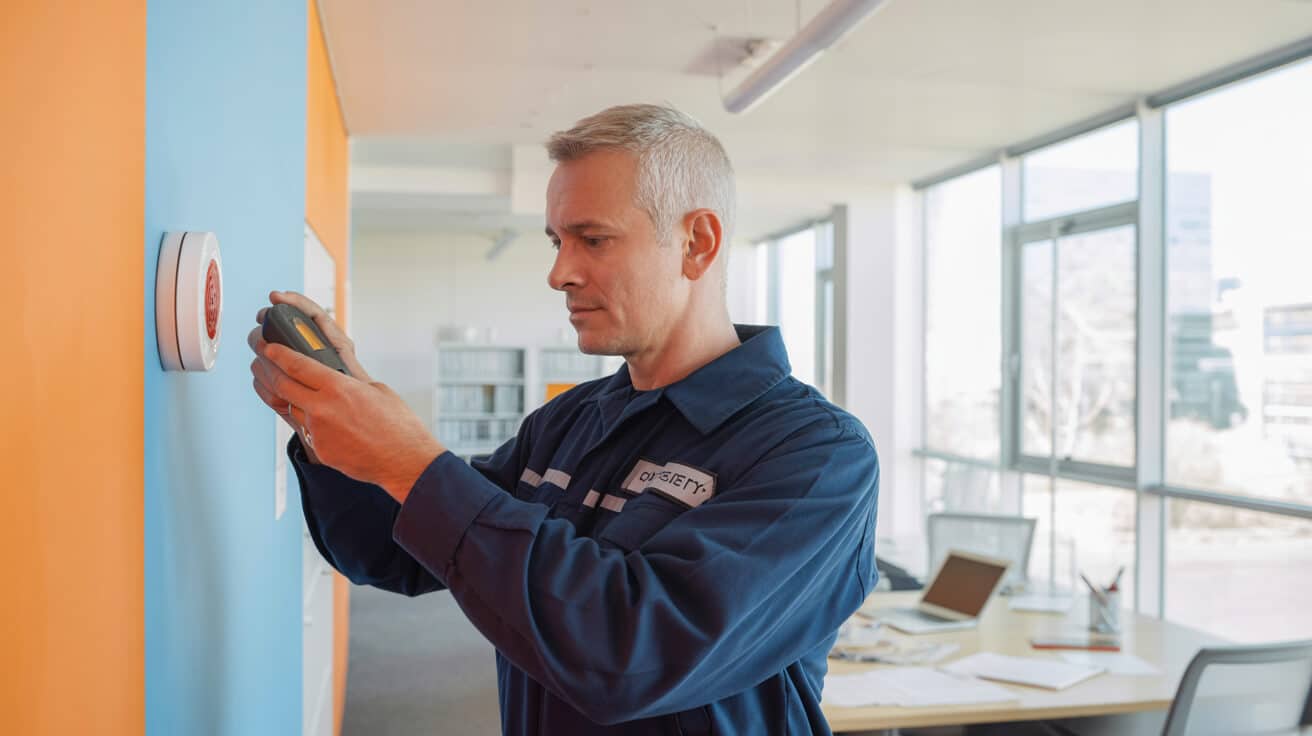
A compliant office PPM programme combines a standard task library, OEM instructions and statutory inspections into one coherent plan.
The foundation is an asset register that is accurate enough to schedule against. Each maintainable item needs a unique ID, location, function, criticality rating and statutory category. Without that, you cannot be confident all relevant systems are covered, especially in multi‑tenant buildings with shared plant, risers and demised areas where responsibilities split.
You then need a task library that sets out what to do, how often, what skill level is needed and what evidence must be captured. In practice, you probably lean on SFG20 or similar schedules as the baseline “what and how often”, then tailor them to your building risk, occupancy and usage. That tailoring should be written down, not left to informal judgement, so you can explain why a task is more or less frequent than the default when someone challenges it.
Manufacturer information is the second layer. OEM manuals and service bulletins specify readings, tolerances, consumables and warranty‑critical actions for specific models. Those requirements should sit in job plans as acceptance criteria, not in a folder that nobody opens until something fails.
The third layer is statutory inspection and testing. Electrical reports, fire alarm and emergency lighting testing, lift examinations, pressure systems inspections, gas safety checks and water hygiene controls all have their own expectations. A compliant programme brings them into the same calendar and work‑order flow, so deadlines are not missed and results do not sit unreviewed in a shared drive.
All Services 4U pulls these strands together into a single schedule and delivery model, so your programme is complete, defendable and workable for the engineers who have to deliver it.
The Legal & Regulatory Duties That Drive Office PPM (and How They Become Tasks)
Behind your PPM calendar sit legal duties that have to be translated into practical work packs you can stand behind.
Health and safety law requires you to provide and maintain safe plant and workplaces, and to plan, organise, control and monitor that maintenance. Fire safety law places duties on the Responsible Person to maintain fire precautions, including detection, warning, lighting and escape systems, and to keep suitable records. Electrical, gas, water hygiene, lifting equipment and pressure systems regimes all expect you to maintain systems, use competent persons and retain evidence that work was done properly.
A practical way to manage this is to build a duty‑to‑task matrix. For each regulation or guidance area, you define which systems are in scope, what inspections, tests or servicing are required, how often they are typically carried out in offices, and what a satisfactory record looks like. You also name who is responsible for commissioning the work, who delivers it, and who reviews and signs off results so nothing falls between roles.
In multi‑let offices you must draw clear lines between landlord, managing agent and occupiers. For example, you may control base‑build fire systems, lifts and common water systems, while occupiers control small power and supplementary cooling. Your matrix should reflect those boundaries and state who owns which evidence, so you do not carry risk that rightly belongs elsewhere.
Risk‑based decisions also need governance. If you change frequencies, defer work or vary scope, the rationale, approvals and compensating controls should be recorded. That way you can show that decisions were made consciously and proportionately, not by drift or short‑term budget pressure, when you are questioned later.
Accreditations & Certifications








Typical UK Frequencies for Key Systems (and the Failure Points Auditors and Occupants Notice)
![[ALTTOKEN]](https://allservices4u.co.uk/app/uploads/2026/01/03-PPM-Services-for-Office-Buildings-UK-Commercial-Workspace-Compliance-Uptime-Energy-Efficiency.jpg)
Common UK office frequencies are shaped by standards and guidance, but they remain risk‑based rather than rigid rules.
For fire alarms, typical practice is daily visual checks of the panel, weekly activation of a different manual call point, and inspection and servicing at least every six months. Failure points that draw attention include disabled zones, missing log entries, devices left in fault for extended periods and poorly‑managed battery issues.
Emergency lighting is often function‑tested monthly and run for full rated duration annually, with defects rectified promptly. Gaps appear where fittings are inaccessible, signage is unlit, or failed luminaires are left unrepaired until an inspection is already underway.
Fixed‑wiring inspections in normal office environments are commonly carried out on a five‑year cycle, or more frequently where risk or previous findings justify it. The real test is whether you act on significant observations within agreed timescales and can evidence close‑out. Lifts used to carry people are usually examined at least every six months, with clear defect management and communication where assets need to be taken out of service.
Water hygiene control typically includes regular temperature monitoring, flushing of low‑use outlets, inspection of tanks and calorifiers, valve and TMV maintenance and, where indicated, cleaning and disinfection. Failures often stem from poor temperature control, stagnant pipework and incomplete or inconsistent records that make patterns hard to see.
HVAC plant is usually serviced at least seasonally, with more frequent philtre and hygiene tasks in busy offices, and refrigeration systems are leak‑checked in line with their refrigerant charge and usage. Setting these frequencies explicitly, and linking each to clear evidence and defect workflows, makes the programme more resilient under scrutiny and easier to explain to stakeholders who want to know “how often” and “why”.
Audit‑Ready Evidence: What to Keep, How Long and How to Retrieve It Under Pressure
Your PPM is only as strong as the evidence you can put on the table when someone asks a direct question.
An audit‑ready regime starts with a clear evidence index. For each building you should be able to see which certificates, reports, logs and work orders exist for each major regime, when they were last updated and where they are stored. That index should align with how insurers, lenders and regulators ask questions: by system, by period and by risk, not by internal job numbers only your team understand.
At job level, every planned activity needs enough information to be verifiable. That usually means an asset ID and location, date and time, engineer identity, competence reference, readings or observations, pass/fail decision, parts used and next due date. Where photos or commissioning sheets are relevant, they should be attached and easy to retrieve while you are on a call with a broker, valuer or surveyor.
You also need to control how evidence is created and changed. Basic document control, versioning and audit‑log principles help ensure that records cannot be edited without trace and that you know who approved what and when. Sensible naming conventions, permissions and retention rules prevent information disappearing during staff changes, system migrations or contractor transitions.
Defects and variations belong in the same system, not in personal notes. If a task fails, the defect should be risk‑graded, assigned, given a target close date and tracked through to completion with proof. If you change scope or frequency, the reason and approval should be stored alongside, so context is not lost and you can justify decisions when challenged later.
All Services 4U builds these expectations into the delivery model, so you are not trying to retrofit evidence when an incident, audit or renewal raises the stakes.
Designing PPM for Uptime: Criticality, Condition‑Based Triggers, Run‑Hours and Spares
A PPM programme designed for uptime focuses effort where failure hurts you most.
The first step is criticality scoring. You rank assets and systems based on safety impact, business impact, redundancy, failure history and time to restore. High‑criticality items such as main LV boards, server‑room cooling, primary air‑handling units and passenger lifts then receive deeper, more frequent maintenance and stronger response cover than low‑impact assets that can tolerate a slower or simpler approach.
Where data is available, you can move selected assets from purely calendar‑based maintenance to condition‑based or usage‑based triggers. Building management systems, smart metres and local sensors can flag unusual temperatures, pressures, currents, vibration or run‑hours. When thresholds are breached, work orders are raised before a failure becomes an outage, and low‑usage equipment is not over‑maintained just to meet a calendar date.
Spares strategy is the third leg. Rather than holding everything “just in case”, you identify parts whose lead time and failure profile make them genuine risks to availability. You then set sensible holdings for those items and ensure storage, identification and rotation practices support reliability instead of quietly creating obsolescence on the shelf.
Reactive work should be treated as a signal for improvement. By analysing which systems generate the most call‑outs, which faults repeat and how long restoration takes, you can adjust tasks, frequencies and designs to reduce future incidents and steadily bend the reactive curve down.
All Services 4U can help you apply this reliability lens to your existing PPM, so you preserve compliance while pushing down unplanned downtime and the noise that distracts your team.
Reliable Property Maintenance You Can Trust
From routine upkeep to urgent repairs, our certified team delivers dependable property maintenance services 24/7 across the UK. Fast response, skilled professionals, and fully insured support to keep your property running smoothly.

Book Your Free Consultation With All Services 4U Today
A short consultation is often the simplest way to see where your current PPM programme is strong and where it quietly leaves you exposed.
In a typical introductory session, you walk through the basics of your portfolio or building: how duties are split between landlord, managing agent and occupier, what asset data and certificates you already hold, where you see the most reactive pain and which audits or renewals are on the horizon. Our team explains how we would structure the asset register, task library, statutory calendar, evidence model and defect workflow for a building like yours, and highlights any obvious gaps or quick wins.
From there, you can decide whether you need immediate compliance stabilisation, a fuller PPM build, or optimisation of an existing regime. Each route comes with clear deliverables, governance points and reporting so you retain control of strategy while shifting the operational burden to a specialist partner.
If you want your office buildings to be easier to defend in audits, less prone to disruptive failures and on a clearer path to better energy performance, book a free consultation with All Services 4U and agree the next steps that let you stop worrying about the basics and focus on the portfolio decisions that really move the needle.
Frequently Asked Questions
Explore our FAQs to find answers to planned preventative maintenance questions you may have.
How should a UK office PPM schedule be structured so you’re not stuck in a permanent P1 queue?
A UK office PPM schedule genuinely works when it’s built from a clean asset register, risk‑based frequencies and a defect loop that keeps adjusting the plan. You start by listing every maintainable asset with a unique ID, location and criticality rating, then group tasks into life‑safety, statutory compliance, Energy Efficiency and performance/comfort. High‑criticality items like main LV boards, server‑room cooling, lifts and fire systems get deeper maintenance and tighter coverage than low‑impact assets. Each task needs a clear method, required competence, and evidence fields (readings, photos, pass/fail, next due). Finally, reactive jobs become data: if the same AHU, lift or zone keeps failing, you adjust task content, frequency or design until the pattern disappears. Over a few cycles, a well‑designed office PPM schedule stabilises critical services and gives you fewer nasty surprises.
What does a practical UK office PPM structure look like day to day?
Day to day, a usable office PPM plan hangs off five anchor categories: life‑safety systems, statutory compliance, core HVAC, power distribution and office electrical safety, alongside fabric/finishes. Life‑safety and statutory duties sit on fixed cadences driven by the Fire Safety Order, Building Regulations and sector guidance; performance and comfort tasks flex with criticality and runtime.
In a typical CAFM or CMMS view, your team should see one calendar showing what’s due this week across those groups, which engineer or contractor is competent to deliver it, and which jobs are blocking others. That single picture stops everyone living in email threads and text messages with different suppliers.
How can you design PPM intervals that fit a live office, not a textbook?
Intervals work best when you blend standards with what the building is actually doing. Fixed statutory duties stay put: weekly fire alarm tests to BS 5839, monthly emergency lighting checks to BS 5266, annual CP12s where you have gas, and risk‑based EICR intervals under BS 7671 and PRS regulations. Around that, you design office‑specific frequencies.
For example, you might run quarterly inspections on AHUs serving dense trading floors, but only six‑monthly on lightly used meeting‑room plant. You can use runtime from the BMS, hours metres or even simple “hours per week” estimates to choose “x run‑hours or y months, whichever comes first” for plant that really matters. That gives your board, insurers and asset managers a credible storey: this isn’t arbitrary, it’s tied to the way your offices actually run.
How do you turn “planned vs reactive” from a report into a control lever?
The shift happens when you stop treating reactive calls as random noise and start treating them as feedback on your PPM design. Every unplanned job is tagged against asset, system, cause, priority and time to restore. Monthly, you look at “top ten offenders” by asset or system and ask simple questions: do we need deeper inspections, a design change, better spares on site, or a different contractor?
If a particular fan coil, lift group or AHU is always on the list, you change the task content or inspection depth for that asset instead of globally cranking up frequencies everywhere. Over time, your planned‑versus‑reactive ratio, first‑time‑fix rate and downtime hours for lifts, HVAC and critical power become a scoreboard that tells you whether your office PPM is earning its keep, not just “being done”.
What does this change for different roles around the same office?
For a Head of Compliance or Building Safety Manager, a structured PPM schedule means fewer late‑night questions about whether you have kept up with BS 5839, BS 5266, BS 7671 or ACoP L8 in a particular building. For a Property Manager, it means fewer emergency call‑outs in the same risers and plant rooms every quarter, and more predictable diaries for planned works. For an RTM director or institutional asset manager, it means you can point to a clear connection between your office maintenance regime, downtime trends and insurance outcomes, instead of apologising for endless “unavoidable” breakdowns.
If you want to be the person who walks into the next board or lender meeting with a clear PPM story instead of defending firefighting, hand one office to All Services 4U as a pilot. We’ll rebuild the schedule around asset criticality, real failure patterns, audit‑ready evidence and office HVAC maintenance so you can show, in hard numbers, that reactive noise is dropping and your offices are under control.
Which UK compliance regimes should always be visible in my office PPM calendar?
A UK office PPM calendar earns trust when life-safety, statutory regimes and office electrical safety are impossible to miss: fire safety under the Fire Safety Order and Part B, fixed-wiring under BS 7671 and PRS regulations, gas safety where boilers exist, water hygiene PPM under ACoP L8 and HSG274, lift thorough examinations under LOLER, and any pressure systems duties. In practice that means recurring entries for fire alarm tests and servicing to BS 5839, emergency lighting checks to BS 5266, fire door and compartmentation inspections to BS 8214 and EN 1634, EICRs, CP12 gas safety checks, written-scheme legionella controls, and scheduled examinations for lifts and pressure vessels. Each line in your office maintenance calendar should name the regime, expected frequency, competent person type and evidence required, so you can answer “who did what, when, to which standard?” in seconds.
How do you translate abstract duties into clear, maintainable tasks?
You start with the legal and standards layer, then break it into tasks engineers recognise. Fire safety becomes weekly panel and call‑point tests, six‑ or twelve‑monthly alarm servicing, monthly function tests and annual duration tests for emergency lighting, and cyclical fire door inspections with recorded gaps, hardware condition and closer operation. Electrical safety becomes an EICR at a justified interval, follow‑up remedials logged and closed, plus any thermographic surveys you use on switchgear.
Water hygiene becomes a written scheme with temperature checks, flushing, cleaning and TMV servicing mapped to people and skill sets. Lifts and pressure systems become clearly scheduled thorough examinations under LOLER and pressure systems regulations, with maintenance visits and defect close‑out sitting alongside so you are not trying to stitch together evidence when a surveyor turns up.
Which compliance regimes matter most for different decision‑makers?
For a Building Safety Manager or Accountable Person, fire and structure are non‑negotiable: FRA actions, alarms, emergency lighting, compartmentation and any HRB‑related gateways under the Building Safety Act are the first things they are challenged on. For a Head of Compliance in a registered provider, gas safety, PRS‑driven electrical checks and water hygiene under ACoP L8 often sit alongside damp and mould expectations under HFHH as priority items.
Insurance brokers and risk surveyors focus heavily on the condition precedent layer: FRA status, fire and emergency lighting logs, roof and gutter inspections, lock standards and any flagged water risks. Lenders and valuers look for evidence packs showing EWS1 where relevant, FRA closures, EICR and CP12 currency and a realistic plan to keep EPC and MEES on the right side of their lending criteria. When all of those regimes live visibly in one office compliance calendar, each persona can see the part that matters most to them without you running parallel spreadsheets.
How can you present this in a way boards, insurers and lenders understand quickly?
The simplest pattern is to treat compliance as a live calendar and dashboard rather than a pile of PDFs. For each building, you should be able to show, on one screen, which life‑safety and statutory tasks are due, which are completed on time, and which high‑risk actions remain open and for how long. Underneath that view, a digital binder holds the underlying records.
That makes conversations with boards, insurers, risk surveyors and valuers easier. You can talk in terms of BS 5839 tests, BS 5266 logs, EICR currency, CP12s, L8 records, LOLER reports and water hygiene logs, instead of hoping everyone believes “we think it was done”. When your evidence lines up cleanly with statute, standards and insurer expectations, you stop spending meetings defending the basics and start talking about forward plans.
If you want to be the person who can pull up a live UK office compliance calendar on demand instead of asking people to “wait while we check with the contractor”, our team at All Services 4U can design and run that calendar for one trial office or a wider portfolio. You keep the accountability; we handle the cadence, the contractor instructions and the proof.
How do I keep my office maintenance evidence “audit‑ready” instead of digging through inboxes every time someone asks a question?
An audit‑ready evidence system for office maintenance lets you answer “show me” in minutes instead of losing days to emails and portals. The simplest pattern is a digital binder per building that mirrors how auditors, surveyors and lawyers think: sections for fire, electrical, gas, water hygiene, lifts, structure, HVAC and other key systems, each tagged by period and risk level. Under each heading you list certificates, reports, logs and work orders with references back to your CAFM or document store.
At work‑order level, every planned or reactive job on the office PPM schedule captures enough detail to stand up to scrutiny: asset ID and location, date and time, engineer identity and competence reference, readings or observations, pass/fail decisions, parts used, photos and next due date. Defects and variations sit in the same system, tagged with risk and target close date, with proof of completion attached. When an insurer, regulator, lender or tribunal asks questions, you open the index, drill into the relevant section and talk from evidence, not recollection.
What rules stop your evidence trail collapsing under pressure?
A few hard rules change everything. “No evidence, no close” means a job cannot be marked complete without mandatory fields, and, where relevant, photos or test sheets. “One place of truth” means certificates and logs live in a controlled repository, not in personal inboxes, contractor portals or shared drives no one really owns. Clear naming and retention rules mean anyone can see, for example, that a file is the EICR for a particular office floor covering a specific period, or the BS 5839 service cert for the last twelve months.
These disciplines line up neatly with ISO 9001‑style record keeping and, for higher‑risk buildings, the “golden thread” expectations under the Building Safety Act. They also reduce your exposure under HFHH and other housing quality regimes; you are not just saying issues were tackled, you are showing when they were identified, how quickly they were closed and what changed on site.
How does this play out when someone challenges you in the real world?
If you are the person being questioned in front of a board, a building safety regulator, an insurance loss adjuster, a lender’s valuer or a legal team, your credibility is tested the moment they say “can you show us the last year’s fire, electrical and water hygiene records for this office?”. When evidence retrieval still depends on forwarded email chains and phone calls to contractors, you look like you are scrambling, even if everyone has worked hard.
With a well‑structured binder, you can answer calmly: here is the index, here is the FRA and action tracker, here are the alarm and emergency lighting logs, here are the EICR and CP12s, here are the L8 logs and lift reports, all mapped to dates and responsibilities. That shift—from stories to structured proof—is what protects your reputation when something serious happens.
If you want to be recognised internally as the person who brings order to the evidence problem, All Services 4U can build and maintain digital compliance binders alongside your office maintenance contracts. You keep the decisions and the oversight; we make sure every job, test and inspection turns into organised, retrievable evidence.
How can condition‑based and run‑hours triggers be used sensibly in a normal office PPM plan?
Condition‑based and run‑hours maintenance add real value in normal offices when they are applied sparingly to the assets that justify extra attention. Most multi‑let offices already have the basics in place, including a building management system with trend logs and alarms, utility metre data, and plant with hour counters or runtime estimates, which supports Services for monitoring and control. You then select a short list of high‑criticality assets—an AHU feeding dense office floors, a chiller, critical pumps, smoke extract fans, UPS or power distribution for trading halls—and define simple triggers: abnormal temperatures, pressures, currents, vibration levels or run‑hours that should prompt an inspection before the next scheduled visit. Maintenance tasks are then raised when those thresholds are crossed, not only when a date appears in the diary.
Where does this really shift outcomes in a UK office environment?
Condition‑based monitoring pays for itself where failure creates safety risk, high disruption or cost. An AHU serving call centres or trading floors, chilled water plant for a data‑heavy site, a limited‑redundancy pump set, critical extract fans or UPS equipment are classic candidates. You can set “x run‑hours or y months, whichever comes first” rules, and use BMS trend alarms to flag issues like fans running out of hours, valves stuck open, supply temperatures drifting, or philtre pressures creeping up.
This approach stops you over‑servicing lightly used plant while under‑servicing assets that are hammered day and night. It also gives your Board, Head of Compliance and asset managers a better answer when they ask why you are doing more on certain assets: because runtime and failure patterns support that decision, not just because “we always inspect it quarterly”.
How do you keep condition‑based ideas simple enough for your team and suppliers?
You do not need a full predictive analytics platform or data science team. You need a handful of clearly documented rules that your office PPM schedule and contractors can actually run. For example, you might:
- Add a runtime field into work orders for selected fans and pumps so engineers record approximate hours at each visit.
- Set a threshold per asset type (for example, “every 2,000 run‑hours or 6 months”).
- Add simple response steps: inspect belts, bearings and philtres when the threshold is crossed; flag potential capex if repeated issues appear.
A short condition‑based appendix to your task packs, with thresholds and next‑step instructions, is often enough. Your BMS team, contractors and in‑house engineers can then see, in plain language, when they should dig deeper rather than just resetting alarms.
If you want to add a light-touch condition-based layer to office HVAC maintenance without turning your wider office maintenance into a science experiment, All Services 4U can help you identify the right assets, set sensible thresholds and build this into your existing PPM. You keep control of strategy; we help you capture the extra uptime and risk reduction without overwhelming the team with data.
What’s the best way to stop landlord–tenant gaps from quietly turning into compliance problems in offices?
You stop landlord–tenant gaps from turning into hidden compliance problems by making responsibility visible in writing and tying it to who owns the evidence. The most practical tool is a clear responsibility matrix listing systems down one side—base‑build fire alarms and detection, common water services, lifts, landlord HVAC, tenant‑installed AC, demised small power, risers, plant rooms, comms spaces—and parties across the top: landlord, managing agent, occupiers and key service partners. For each cell, you agree who controls the system, who procures and manages maintenance, and who must retain and share records.
That matrix then feeds your office PPM scope, your access planning and the instructions you give to tenant contractors. When supplementary systems, fit‑outs or tenant moves occur, you update the matrix and restate minimum standards, so base‑build compliance is not quietly undermined by uncoordinated change in risers and ceiling voids.
How does this reduce real‑world risk for boards, managers and safety leads?
In UK commercial offices, many of the ugly incidents and disputes do not come from obvious gaps; they come from grey zones. A tenant‑installed split unit dripping into a riser, non‑compliant small power in demised areas, a fire shutter interface never properly tested after a fit‑out—each one sits between landlord and occupier unless somebody has written it down.
When a surveyor, regulator, insurer or solicitor asks “who was responsible for this system on this date?”, a responsibility matrix plus an evidence trail gives you an answer that is better than finger‑pointing. It helps RTM directors, building safety managers, property managers and asset owners show that they took reasonable steps to define and discharge their duties, which matters under the Fire Safety Order, the Building Safety Act and common landlord and tenant law.
How do you turn a matrix into a living part of your office maintenance model?
You embed it everywhere you can. Management agreements, leases, licences to alter and tenant handbooks all reference the matrix. Occupiers are required to share key certificates—small power EICRs, local AC servicing, water hygiene reports and fire alarm interface tests—where their systems interact with base‑build plant. Joint walk‑rounds between managing agents, key tenants and your fire or water specialists validate that what is on paper matches what is in risers, plant rooms and ceiling voids.
The office PPM schedule then follows that map. Base‑build tasks cover everything the landlord is accountable for; tenant obligations are recorded, chased and, where necessary, escalated. That way you are not silently carrying risk for areas you never agreed to maintain, and tenants are not left assuming “the landlord has it” where they in fact do not.
If you want to move from informal understandings to a structure you can defend in boardrooms and hearings, All Services 4U can run a landlord–tenant responsibility mapping exercise across one or more offices, then align the maintenance, access and evidence regimes so everyone knows what they own and how they prove it.
How should I measure whether my office PPM is actually working, not just being ticked off?
You measure whether your office PPM is working by tying it to uptime, risk and cost, not just completion percentages. On the compliance side, you track on‑time completion for statutory and life‑safety tasks and the number and age of open high‑risk findings from FRAs, EICRs, water risk assessments and other surveys. Operationally, you monitor the ratio of planned to reactive work, first‑time‑fix rate, unplanned downtime hours for lifts, primary HVAC and critical power, and the volume and pattern of comfort complaints.
Financially, you look at emergency spend versus planned spend, how often you have to pull capex forward because assets fail early, and what that does to your service charge or OPEX profile. When those numbers start shifting in the right direction—fewer unplanned incidents, shorter outages, cleaner closure on serious findings—you know your office PPM schedule is creating value, not just generating paperwork.
Which KPIs actually carry weight with boards, insurers and lenders?
Most senior stakeholders and external parties care about a small set of hard numbers. For boards, RTM directors and non‑executive members, statutory on‑time completion for fire, electrical, gas, water hygiene and lifts, combined with an evidence‑completeness percentage, shows whether you have your legal duties under control. Planned versus reactive hours and repeat‑fault rate by system reveal whether your office maintenance regime is focused on the right plant or just chasing the loudest problem.
For insurers and risk surveyors, evidence that conditions precedent are consistently met—FRA action closure rates, BS 5839 and BS 5266 logging, EICR and CP12 currency, L8 and roof inspection records—feeds directly into how they view your risk. For lenders and valuers, how quickly you can produce a clean evidence pack for an office, and how current those certificates are, can make the difference between a straightforward valuation and weeks of follow‑up questions.
How can you use these measures to win support for bringing in additional help?
If your dashboards keep telling the same storey—high reactive load, persistent repeat faults, long lead‑times to produce evidence packs—it is not that you lack information; it is that your current operating model and capacity cannot keep up with the risk profile of your offices. Boards, landlords, RTM directors, heads of compliance and asset managers respond well when you can say, with data: “here is where our office PPM is under‑performing, here is the operational and financial impact, and here is how we propose to address it”.
That might be a pilot with a specialist partner who rebuilds the office maintenance and evidence regime on a subset of buildings and commits to shifting key measures—planned versus reactive ratios, FRA closure rates, evidence completeness, downtime hours—within an agreed period. Once those improvements are visible in your numbers, you have a much easier time expanding the model to the rest of the portfolio.
If you want to be measured on outcomes rather than excuses, All Services 4U can take a pilot building or group of offices and re‑engineer the PPM, emergency response and evidence systems around the metrics you are judged on, including Building Management Systems Services for offices where relevant. You keep control of policy and budget; we take ownership of the day‑to‑day levers that change the charts you present to your stakeholders.
- Compliance‑First PPM for UK Office Buildings Explained
- Compliance‑First PPM for UK Office Buildings: Uptime, Audit Readiness and Lower Reactive Spend
- Why “Good Enough” Maintenance Fails in Audits (and on Monday Morning)
- What a Compliant UK Office PPM Programme Includes (SFG20 + OEM + Statutory)
- The Legal & Regulatory Duties That Drive Office PPM (and How They Become Tasks)
- Typical UK Frequencies for Key Systems (and the Failure Points Auditors and Occupants Notice)
- Audit‑Ready Evidence: What to Keep, How Long and How to Retrieve It Under Pressure
- Designing PPM for Uptime: Criticality, Condition‑Based Triggers, Run‑Hours and Spares
- Book Your Free Consultation With All Services 4U Today
- Frequently Asked Questions
- Related PPM Services
Related PPM Services
- By Building Type
- BMS Optimisation
- Cleaning Hygiene
- Electrical Safety PPM
- Energy Efficiency PPM
- Fire Safety PPM
- HVAC Maintenance
- Lift Maintenance
- Security PPM
- Water Hygiene PPM
- Build To Rent BTR
- Care Homes Healthcare
- Education Schools Universities
- Heritage Listed
- Hospitality Hotels
- Higher Risk Buildings
- Industrial Warehouses
- Mixed Use
- Public Buildings
- Residential Blocks
- Retail Properties
- Sheltered Housing
Case Studies


Related Articles

Your Guide To Identifying And Treating Minor Mould Outbreaks
Why Planned Preventative Maintenance (Ppm) Saves Money And Ensures Compliance