Fire Safety PPM Services UK – Alarms, EL, Doors & FRA Actions
Fire safety leads, managing agents and dutyholders for UK blocks and mixed-use schemes use Fire Safety PPM services to keep alarms, emergency lighting, fire doors and FRA actions under one controlled, defensible programme. A single contract coordinates asset registers, testing frequencies, access planning and evidence packs across your portfolio, based on your situation. By the end, you have live schedules, traceable logs and reusable documentation that align with BS 5839, BS 5266 and current fire door guidance, with responsibilities and records clearly assigned. Exploring a joined-up PPM approach can put you back in control of compliance conversations and spend.



Author
Izzy Schulman

Build a Defensible Fire Safety PPM Programme Across Your Portfolio
If you are responsible for common parts in blocks of flats or mixed-use schemes, keeping alarms, emergency lighting, fire doors and FRA actions aligned can feel fragmented and risky. Separate contractors, scattered certificates and unclear responsibilities make it hard to prove that fire precautions are maintained in practice.

A structured Fire Safety PPM contract brings those elements, including fire extinguisher service, into one coordinated programme, tied to real assets, clear frequencies and usable evidence. Instead of chasing reports, you gain a single schedule, log and evidence pack per building, so you can answer boards, residents, insurers and regulators with calm, factual records.
- One coordinated schedule for alarms, EL, doors and FRA actions
- Clear asset registers, testing frequencies and access planning per building
- Reusable evidence packs that stand up to audits and board scrutiny
Need Help Fast?
Locked out, leak at home, or electrical issue? All Services 4 U provides 24/7 UK locksmith, plumbing, electrical.
Testimonial & Clients Who Trust Us
With 5 Star Google Reviews, Trusted Trader, Trust Pilot endorsements, and 25+ years of experience, we set industry standards for excellence. From Dominoes to Mears Group, our expertise is trusted by diverse sectors, earning us long-term partnerships and glowing testimonials.
Worcester Boilers

Glow Worm Boilers

Valliant Boilers

Baxi Boilers

Ideal Boilers

What You Get From a Fire Safety PPM Contract (and Who It’s Built For)
You get one joined‑up fire safety maintenance programme you can defend in front of a board, insurer or regulator, with a single calendar, a single reporting format and one evidence pack per building instead of certificates scattered across inboxes and portals.
Instead of juggling separate alarm, emergency lighting, fire door and FRA contractors, you move to one coordinated schedule that keeps all four moving together. You see what is due, what was tested, what failed, what was fixed and who signed it off, so conversations with boards, freeholders and residents stay factual and calm.
This contract is built for you if you carry responsibility for common parts in blocks of flats or mixed‑use schemes and need predictable visits, resident‑aware access planning and a clear split between routine PPM, minor remedials and larger project work, so decisions and spend remain under your control.
Under a Fire Safety PPM contract with All Services 4U, you keep control of decisions and budgets; we take ownership of day‑to‑day testing, servicing, defect management and documentation, then package everything into evidence you can reuse whenever it matters.
Your Duties and the Standards Auditors Ask About
You stay compliant by maintaining fire precautions in practice and being able to show, quickly and calmly, that you do so with clear records.
Dutyholders in real life
On each building, you have someone acting as the fire safety dutyholder for the common parts, even if the job title changes from scheme to scheme. For higher‑risk buildings in England, you may also have Accountable Person and Principal Accountable Person roles. Your PPM programme needs to line up with those responsibilities, including who is arranging tests, any fire extinguisher service, closing actions and holding the records, so there is no doubt about accountability.
Residents, leaseholders and boards now expect clarity as standard. They want to know who is responsible, how often checks happen and what happens when access is refused or defects are found. A good PPM contract gives you a simple way to explain that chain in plain English and allows you to point to a live schedule and log when you are challenged.
Behind the contract, you need a clear link back to the frameworks you are judged against, typically:
- the general maintenance duty under fire safety law for common parts
- BS 5839‑1 and BS 5839‑6 for fire alarm testing and servicing
- BS 5266‑1 for emergency lighting testing and logbooks
- current fire door and compartmentation guidance for your building type and height
Your programme does not need to quote clause numbers at residents. It does need to state that alarms, lighting and passive measures are maintained to recognised codes of practice, on a sensible cadence, with records you can produce quickly if an enforcing authority, insurer or lender asks.
How to Build a PPM Programme That Doesn’t Fall Apart (Registers, Frequencies, Access, Evidence)
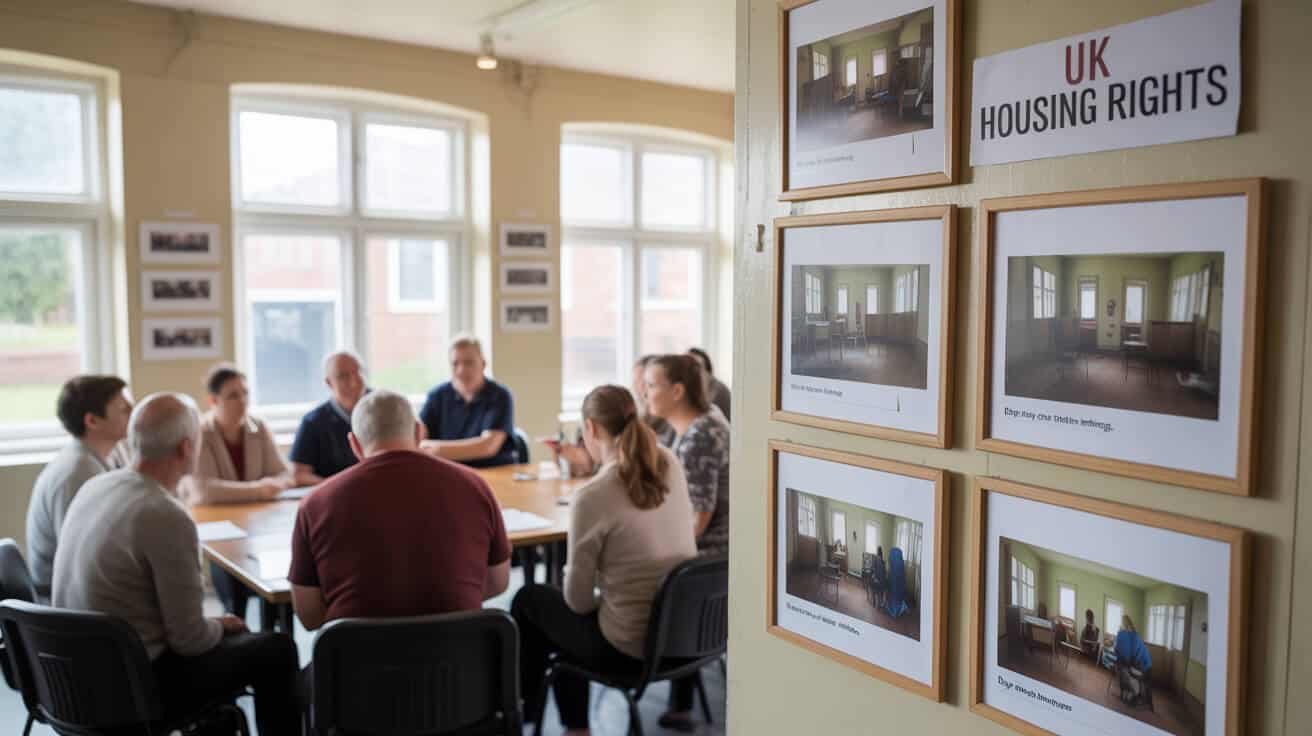
![[ALTTOKEN]](https://allservices4u.co.uk/app/uploads/2026/01/01-Fire-Safety-PPM-Services-UK-Alarms-EL-Doors-FRA-Actions.png)
You keep real control when you know what you have, how often it is touched, and exactly where the proof lives across your portfolio.
Registers and asset data
A workable fire safety PPM plan starts with a clean asset picture. You need a register that tells you, per building:
- what alarm panels, devices and zones exist
- where emergency luminaires and exit signs are located
- which doors are fire doors and their ratings
- where key compartment lines, risers and service penetrations are
All Services 4U can create or tidy that register during mobilisation, so tests, inspections and remedials are tied to real assets rather than vague descriptions. You stop paying for “visit to block” and start seeing work recorded against named panels, fittings and doors.
Frequencies and access planning
Once assets are known, you set testing and servicing frequencies by standard and risk. Typical patterns include weekly alarm user tests, six‑monthly engineer servicing, monthly emergency lighting function tests, AOV smoke vent testing at six‑monthly intervals, annual duration tests and door or compartmentation inspections at intervals appropriate to the building and guidance.
Access is often where programmes quietly fail. We help you plan resident communications, booked appointments for flat entrance doors and clear re‑attendance rules so “no access” is managed, costed and recorded instead of slowly eroding compliance in the background.
Evidence and reporting
Every visit should generate evidence you can reuse: service sheets, logbook entries, defect lists, photographs where relevant and updated next‑due dates. These are structured into simple summaries you can drop into board packs or upload to your document system, so you respond once from a single pack instead of chasing multiple contractors.
Fire Alarm PPM (BS 5839): Testing, Servicing, Fault Rectification and Traceable Logs
You keep your alarm system defensible by combining disciplined weekly checks with competent servicing and clear fault trails on a predictable, standards‑aligned schedule.
Weekly user checks you control
Weekly user tests are the part you and your onsite team can own. One manual call point is activated in rotation during normal hours, the panel and sounders are confirmed as operating, and the test is recorded, including any monitoring centre contact where applicable.
We give you a simple, building‑specific routine and log template so your staff can test confidently, capture the result and escalate anomalies as actionable defects. You keep the quick, predictable task in‑house; we support the structure and follow‑up.
Six‑monthly servicing by competent engineers
At least twice per year, a competent fire alarm engineer should carry out a structured service. That covers a planned sample or full set of devices over the year, battery and power supply checks, interface checks and a review of cause‑and‑effect against what you expect to happen on site.
Under a Fire Safety PPM contract, you see what was checked, what was found, what was rectified on the visit and what remains open. Servicing is aligned to recognised BS 5839‑1 practice so you can point to a familiar benchmark if questions arise and show that any backlogs are known, prioritised and being worked through.
Logbook, faults and false alarms
Every test, fault, investigation and repair should appear in the alarm log. We keep that log complete and legible, whether it sits in a physical book on site, a digital portal, or both. Repeated false alarms are flagged and analysed so you can address root causes rather than tolerate constant disruption.
If a serious defect is found, we move straight from identified to isolated if needed, quoted, repaired, re‑tested and signed off, with documentation to show that sequence. You are not left joining dots between separate contractors to explain how a critical fault was handled.
Accreditations & Certifications






Emergency Lighting PPM (BS 5266): Monthly Checks, Annual Duration Tests, and Clean Certification
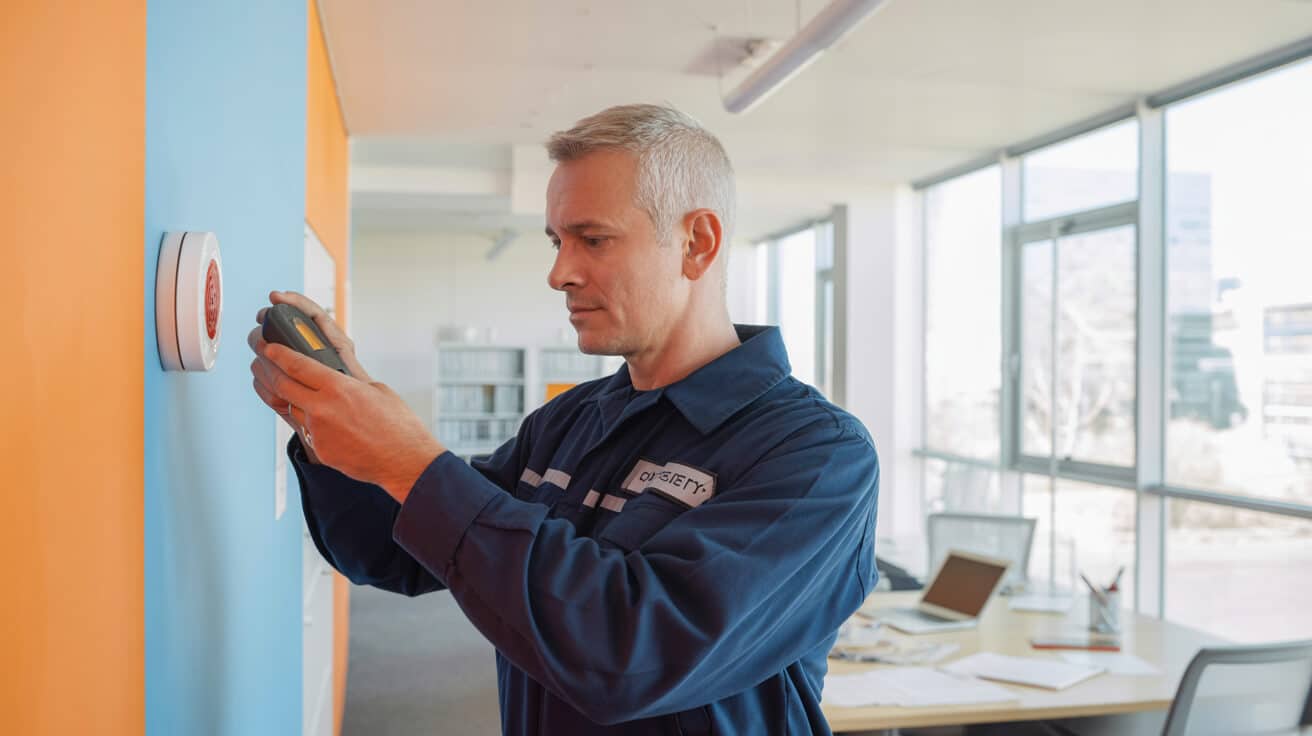
![[ALTTOKEN]](https://allservices4u.co.uk/app/uploads/2026/01/04-Fire-Safety-PPM-Services-UK-Alarms-EL-Doors-FRA-Actions.jpg)
You stay on top of emergency lighting by pairing short monthly checks with well‑planned annual duration tests and tidy records, so it becomes a predictable routine alongside alarms and fire doors.
Monthly functional checks
Monthly tests simulate mains failure to confirm that each emergency luminaire and internally illuminated exit sign comes on and appears healthy. The key is location‑specific recording: which fittings passed, which did not and what follow‑up is required.
We provide a register and template so your team or our engineers can record those checks clearly. Any failure becomes a tracked defect with a target date, not a note that is forgotten until someone stands in the dark during an evacuation or drill.
Annual duration tests
Once per year, each fitting should run on its emergency supply for its rated duration. That needs careful timing to avoid leaving residents in the dark and to allow recharge before the next night.
We help you plan these tests building by building, including resident communications, temporary measures where needed and consolidation with other visits where possible. The outcome is a pass/fail record per fitting, a list of remedials and a current certificate or report you can show to auditors, insurers or lenders, even if you took over a building mid‑year with weak records.
Certificates, logs and portfolio view
For each building, you end up with an emergency lighting logbook, current test certificates and a defect closure record. Across a portfolio, we can give you a view of completion rates, open defects and next‑due dates so you see where attention is needed before renewal or audit cycles.
Fire Doors & Compartmentation: Inspections, Remedials, and Controlling Change On Site
You protect residents and asset value by keeping door and compartment lines intact, and by being able to prove what has been inspected and repaired at any point in time.
Fire door inspections and reporting
For most blocks, you now need a structured approach to communal fire doors and, in many cases, flat entrance doors that open onto common parts. That starts with a door schedule: unique IDs, locations, type and required rating, tied back to your FRA and, for higher‑risk buildings, your safety case.
Inspections then record gaps, seals, closers, hinges, glazing, damage and signage against each door. We provide door‑by‑door reports you can read and philtre, so you know which doors are acceptable, which need adjustment, and which require more significant remedial work or replacement.
Remedials aligned to test evidence
When remedials are carried out, you need confidence that the door set, components and installation method remain within the scope of the original test evidence and product certification. We work with competent installers where required and document work in a way that can be traced later and stood up to audit.
A close‑out pack for doors typically includes before/after photos where useful, details of any new doorsets or hardware, confirmation of ratings, and sign‑off by a competent person. That gives you a clear line from FRA action to completed, evidenced work.
Controlling change in risers and service routes
Compartmentation is often undermined by everyday works: new cables, pipes or minor alterations in risers, ceiling voids, lofts and basements. A robust PPM programme includes a simple management‑of‑change rule, so any works that breach fire‑resisting construction include appropriate firestopping and inspection, with products and installers recorded.
We can build this into your day‑to‑day processes so small jobs do not quietly create large passive fire defects over time, and you can show how compartments are protected between surveys.
Turning FRA Findings Into Closed Actions (Without Blurring PPM vs Remedial Projects)
You keep control of risk when every FRA finding becomes a trackable action with clear ownership, dates, costs and evidence instead of a static list that never quite closes.
Turning the FRA into an action register
An FRA is only useful if its actions are turned into a live register. For each item, you should see a short description, location, risk rating, reference to any relevant standard, an owner and a target completion date that matches your risk appetite and resources.
Under a Fire Safety PPM contract, we can set that register up, load existing FRAs and link items to PPM tasks, remedials or larger projects as appropriate. That avoids both duplication and blind spots and gives you one view of what remains open.
Governance, prioritisation and budgets
Life‑safety and statutory material non‑compliances should be prioritised, with clear justification where dates need to move. Lower‑risk items can be scheduled without being ignored. We help you apply simple, documented rules so you can show how decisions were made if you are ever questioned.
At the same time, actions should carry estimated cost bands, variation rules and a reporting cadence so boards, finance and asset teams can see how risk is being reduced relative to spend. You can evidence why higher‑risk items were brought forward while minor issues were scheduled later.
Closure evidence you can stand behind
An action is only truly closed when you can point to objective evidence: photographs, test sheets, commissioning certificates, door or firestopping reports and confirmation from a competent person that acceptance criteria have been met.
We make closure evidence part of the process, not an afterthought. That reduces disputes, helps with future FRAs and supports insurer, lender or regulator queries that arise later, so your FRA list moves steadily from open to closed with proof.
Reliable Property Maintenance You Can Trust
From routine upkeep to urgent repairs, our certified team delivers dependable property maintenance services 24/7 across the UK. Fast response, skilled professionals, and fully insured support to keep your property running smoothly.

Book Your Free Consultation With All Services 4U Today
You reduce risk and noise fastest when you start with a clear picture and a realistic plan you trust.
On a short consultation call, you can walk through your current position: which buildings fall under your control, where you sit in the dutyholder chain, what FRAs and certificates you already hold and where the gaps are. The discussion is focused on outcomes: what good would look like for you in the next ninety days and over the next year.
From there, All Services 4U can outline a practical mobilisation: building or tidying asset registers, agreeing alarm and emergency lighting cadences, setting up door and compartmentation inspections and converting existing FRA actions into a manageable register. You see how routine PPM, minor remedials and larger projects will be separated, costed and reported, so nobody is surprised later.
You also see what you will receive after each visit: logs, service sheets, defect lists, photographs where appropriate and a simple summary you can drop into board papers or share with residents at the right level of detail.
You can stabilise one building or a pilot group first and expand once you are comfortable. Book a free consultation with All Services 4U to map your buildings, clarify responsibilities and design a fire safety PPM programme you can stand behind when it matters most.
Frequently Asked Questions
Explore our FAQs to find answers to planned preventative maintenance questions you may have.
How is fire safety PPM different from just collecting certificates for my building?
Fire safety PPM is a live maintenance and evidence system that keeps your building safer and more defensible than a pile of expired certificates.
Instead of chasing one‑off visits and PDFs, a proper fire safety planned preventative maintenance programme gives you an asset register, a clear testing and servicing cadence for alarms, emergency lighting, fire doors and AOV smoke vent testing, and an action register fed by your fire risk assessment (FRA). Every visit produces traceable outputs: what was tested, what failed, what was fixed and who signed it off. That means when a board member, insurer or enforcing officer asks “are we on top of this?”, you are not forwarding random attachments—you are opening a single, current, audit‑ready fire safety evidence pack. Under the Regulatory Reform (Fire Safety) Order 2005, that shift from scattered paperwork to structured fire safety PPM is what turns “I think we’re compliant” into “here’s the proof your insurer and regulator will recognise.”
Why “certificate‑only” thinking quietly increases your risk
If you only ever ask “have we got a certificate?” you stay reactive. Certificates expire, scopes vary, and no one can see how fire alarm maintenance, emergency lighting checks, fire door inspections and FRA actions actually connect over the year. That is when you get caught by missing logs, half‑done remedials and gaps in the storey when something goes wrong.
Fire safety PPM flips the question. You work from a single schedule and standardised reporting, so there is always a current view of what is in date, what is booked and what is outstanding. You are building a long‑term, audit‑ready fire safety planned preventative maintenance regime, not firefighting every time someone asks for proof.
All Services 4U builds that structure around your portfolio so your team can stop relying on “certificate hunting” and start running a predictable maintenance and evidence machine that feels solid in front of boards, insurers and regulators.
What does joined‑up fire safety PPM for blocks of flats usually include?
- Fire alarm user tests and engineer servicing aligned with BS 5839
- Emergency lighting monthly checks and annual duration tests under BS 5266
- Fire door inspections and remedials aligned with BS 8214 and EN 1634
- Compartmentation and firestopping checks where they are in scope
- FRA action tracking with closure evidence attached to each item
- Asset registers, logbooks and visit reports for all of the above
When you look at it this way, you are not buying “more tests”; you are buying a system that keeps your fire safety compliance, evidence and reputational risk under control across the life of the building.
Who is actually responsible for fire safety PPM in a block of flats?
You stay responsible for fire safety PPM as the dutyholder; your contractors execute the work but never carry your legal duties.
In most blocks that will be the freeholder, landlord or resident‑led company acting through a managing agent; in higher‑risk residential buildings in England you may also have named Accountable Persons under the Building Safety Act. Contractors like All Services 4U carry out fire alarm maintenance, emergency lighting checks, fire door maintenance and repairs, and other fire safety PPM tasks, often organised as PPM by trade, but they do not remove the duties the Fire Safety Order places on the responsible person. Your job is to make sure there is a clear maintenance plan, competent providers and usable records; our job is to execute that plan, surface risks early and package the evidence so you can show you have taken reasonable steps if an enforcing authority, insurer or lender ever tests your position.
The people who look calm in enforcement meetings are the ones who decided to own the evidence months earlier.
If you want to be seen by your board and residents as the person who has this under control, you cannot outsource responsibility—you can only outsource execution and documentation.
How can you tell if your fire safety responsibilities are actually clear?
- Can you name the person or role that signs off the FRA and actions?
- Do you know who authorises spend on fire safety remedials versus routine PPM?
- Is it obvious who keeps the master fire safety file and digital binder up to date?
- Would everyone on your board give the same answer to those three questions?
If the honest answer to any of those is “no” or “it depends who you ask”, it is worth mapping the duty chain with us on a short call. Getting that clarity first makes every other decision about fire safety planned preventative maintenance faster, cleaner and easier to defend when a regulator, insurer or valuer asks hard questions.
How often should fire alarms and emergency lighting be tested and serviced in practice?
Fire alarm and emergency lighting systems should be tested weekly or monthly on site and serviced by competent engineers several times a year to keep you compliant and audit‑ready.
For communal fire alarms, that usually means a weekly user test on a manual call point in rotation, with any issues raised as defects, plus engineer servicing at least twice a year aligned with BS 5839. Emergency lighting is normally checked monthly with a brief functional test and once a year with a full duration test to its rated period, in line with BS 5266 guidance. The important part is not just the interval; it is that every fire alarm test and emergency lighting check is tied to a real asset, recorded properly and linked to follow‑up actions where something fails. Under a fire safety planned preventative maintenance contract, All Services 4U can take the heavy lifting on the technical servicing and help your team own the weekly and monthly routines with simple scripts, logs and training so those checks actually happen instead of just sitting in a policy.
What basics should be captured every time you test a system?
A short, consistent data set is enough to turn basic testing into audit‑grade evidence:
- Date, time and person carrying out the test
- Exact device or fitting tested and its location
- Pass/fail outcome and any observed issues
- What was done next if something failed (isolation, call‑out, quote)
- Link back to the asset register and any open FRA actions
Once that discipline is in place, you are no longer hoping individual engineers remember what they did. You have a usable fire safety evidence trail that stands up in front of an auditor, insurer, valuer or in‑house risk committee and shows that your fire safety PPM for blocks of flats is real, repeatable and under control.
If you want your team to move from “we think the weekly tests are being done” to “we can show every test for the last twelve months in two clicks”, letting us design that regime and log format with you is usually the quickest way to get there.
What does “good” FRA action management look like, and how do you know when something is really closed?
Good FRA action management turns each finding into a trackable, risk‑rated action with clear ownership, a realistic date and hard closure evidence.
Instead of a static PDF revisited once a year, a strong process builds an FRA action register where each line includes a risk rating, location, reference to the relevant standard (for example BS 5839, BS 5266, BS 8214 or ACoP L8 where water is involved) and a planned route to resolution—whether through PPM by trade, a minor remedial or a project. “Closed” should only mean “we have objective proof”: photos, test sheets, commissioning reports or fire door and firestopping records, plus competent sign-off. With All Services 4U, closure evidence is built into the workflow, not bolted on later, so your fire safety PPM and FRA actions move steadily from red and amber to green with documentation you can show to insurers, lenders or regulators without scrambling.
What are the warning signs your FRA actions are drifting instead of closing?
- The same issues reappear in every new FRA, often flagged as “previously raised”
- Actions have no named owner, realistic date or agreed route (PPM vs project)
- You cannot quickly show proof of what was done for a specific FRA item
- Spend on “urgent” works keeps spiking without a clear pattern or forward view
When you see those patterns, it is not just admin untidiness; it is a signal that your fire risk assessment is not properly wired into your planned preventative maintenance. Starting with one high‑risk building and letting us rebuild the register, link each item to specific works and embed closure evidence is often the cleanest way to show your board, your building safety manager and your insurer that you are now running FRA action management as a live, auditable system rather than a yearly paper exercise.
Being the director who can answer “show me exactly what we did about that FRA finding” in seconds, not weeks, is a very different place to sit when scrutiny arrives.
How should fire door inspections and remedials be evidenced so you can defend them later?
Each fire door needs an identity, a condition history and clear proof of any remedials, so you can defend it years later if someone challenges it.
A strong fire door compliance regime starts with a schedule that gives every communal and relevant flat entrance door an ID, location and required rating, aligned with BS 8214 and EN 1634. Inspections then log gaps, seals, closers, hinges, glazing and damage against that ID, using clear defect categories and severity. When remedials or replacements happen, you should receive a close‑out pack showing before/after condition where useful, details of any new doorsets or hardware, confirmation of ratings and who carried out the work. That way, if a future FRA, insurer, resident or Building Safety Regulator questions a door, you are not guessing; you are opening a file. All Services 4U can own that data model and reporting for you, so your board sees fire door compliance as a clear, managed line of defence instead of a vague line in the FRA.
Future arguments are won in minutes when you can pull up clean, door‑by‑door evidence without hesitation.
What minimum information should every fire door record contain?
- Door ID and exact location
- Required rating/type and any certification details
- Inspection date, inspector name and competence
- Defects found, severity and recommended actions
- Remedial works completed and final pass/fail status with photos
Once each door has that level of record behind it, fire door inspections stop being a nervous, anecdotal conversation in committees and become one of the most defensible parts of your fire safety planned preventative maintenance portfolio. You look like the accountable person or managing agent who can calmly walk a regulator, insurer or tribunal through door compliance, rather than scrambling for emails and memory.
Joined‑up fire safety PPM gives insurers, lenders and regulators the consistent, audit‑ready evidence they expect, instead of promises, gaps and guesswork.
Insurers increasingly look for condition‑precedent proof around fire alarms, emergency lighting tests, fire door maintenance and roof inspections before they are comfortable paying claims or holding premiums. Lenders and valuers want to see current FRAs, EICRs, gas safety records and, for relevant buildings, external wall assessments such as EWS1 and developing Safety Case material under the Building Safety Act. When your fire safety PPM, electrical testing, gas checks and water hygiene are all running off one calendar and feeding one evidence binder, you can produce an insurer dossier or lender pack in hours rather than weeks. All Services 4U designs those fire safety and wider compliance regimes so the same set of visits and logs work for the Fire Safety Order, Building Regulations, Building Safety Act duties and the financial gatekeepers who decide what your asset is worth.
What external questions should your PPM and evidence be able to answer in seconds?
- Can you show the last twelve months of BS 5839 and BS 5266 tests and services for each relevant building?
- Can you evidence BS 8214‑aligned fire door inspections and remedials, with photos for high‑risk items?
- Is there a single place where your FRA, EICR, CP12, L8 and roof survey evidence lives for each site?
- For HRBs, can you point to the Golden Thread and Safety Case inputs for fire safety without trawling inboxes?
If you can genuinely say “yes” to those, you are the kind of dutyholder insurers, brokers, lenders and valuers like dealing with. If the answer is closer to “give us a few weeks to piece it together”, that is exactly the gap a structured fire safety planned preventative maintenance contract is designed to close.
You do not have to boil the ocean on day one. Often the smartest move is to pick one asset that matters to your insurer or lender, let us align the fire safety PPM and evidence around that building, and then use that as the model you roll out across the rest of your portfolio.
How can All Services 4U help you stabilise a messy portfolio and get to an audit‑ready state?
All Services 4U helps you turn a messy mix of FRAs, certificates and emails into a single, predictable fire safety maintenance and evidence system you can put in front of any stakeholder.
The first step is usually a quick gap‑check on one building: what FRAs and certificates exist, what is missing, which tests are overdue and how clear the fire alarm, emergency lighting and fire door registers are. From there, we sketch a ninety‑day fire safety planned preventative maintenance plan to stabilise the basics—weekly alarm tests, monthly emergency lighting checks, clear access plans and a simple FRA action register—while scheduling in the engineer servicing and inspections you need next. You see, in plain English, how routine PPM, minor remedials and larger projects will be separated, costed and reported. If you like the way that feels on a pilot block, you roll the same model across your wider portfolio, with All Services 4U handling the coordination and evidence while you stay in charge of priorities, budgets and board messaging.
The quickest way to change how people see you is to be the one person in the room who arrives with proof, not stories.
What practical shifts should you expect in the first three months?
- A live, shareable fire safety PPM calendar you can put in front of boards, residents and insurers
- Tidy, building‑specific logs for alarms, emergency lighting, fire doors and FRA actions instead of scattered spreadsheets
- A single evidence folder or digital binder per site instead of emails, paper files and peoples’ memories
- A shorter, clearer FRA action list with visible progress and fewer repeat findings across surveys
- Clearer insurer and lender conversations because you have one coherent fire safety storey, not twenty partial ones
If you want to be the property owner, RTM director, accountable person or asset manager who can calmly open one clean fire safety evidence pack when the questions come, starting with a single pilot building and letting us prove the model is usually the lowest‑risk move you can make. From there, you are not just “getting compliant”; you are building a disciplined, audit‑ready fire safety PPM regime that protects your residents, your reputation and your asset value for the long haul.
- Build a Defensible Fire Safety PPM Programme Across Your Portfolio
- What You Get From a Fire Safety PPM Contract (and Who It’s Built For)
- Your Duties and the Standards Auditors Ask About
- How to Build a PPM Programme That Doesn’t Fall Apart (Registers, Frequencies, Access, Evidence)
- Fire Alarm PPM (BS 5839): Testing, Servicing, Fault Rectification and Traceable Logs
- Emergency Lighting PPM (BS 5266): Monthly Checks, Annual Duration Tests, and Clean Certification
- Fire Doors & Compartmentation: Inspections, Remedials, and Controlling Change On Site
- Turning FRA Findings Into Closed Actions (Without Blurring PPM vs Remedial Projects)
- Book Your Free Consultation With All Services 4U Today
- Frequently Asked Questions
- Related PPM Services
Case Studies


Related Articles

Your Guide To Identifying And Treating Minor Mould Outbreaks
Why Planned Preventative Maintenance (Ppm) Saves Money And Ensures Compliance