Legionella Expert Witness Services UK – L8 & Water Hygiene Claims
For solicitors, insurers, landlords and dutyholders facing legionella, L8 or water hygiene disputes in the UK, independent expert witness input helps clarify what really happened and what the evidence supports. We analyse risk management, monitoring, records and system history against ACOP L8, HSG274 and related duties, based on your situation. By the end you have a clearer view of breach, causation, responsibility and present-day risk, with the scope of expert input aligned to the proportional needs of the dispute. You can move before positions harden, with a defined next step on evidence and instruction.




Author
Izzy Schulman

Legionella and water hygiene disputes often turn on technical details that ordinary factual evidence cannot resolve. Solicitors, insurers, landlords and dutyholders need to understand how a water system was assessed, managed and monitored against ACOP L8, HSG274 and wider legal duties.
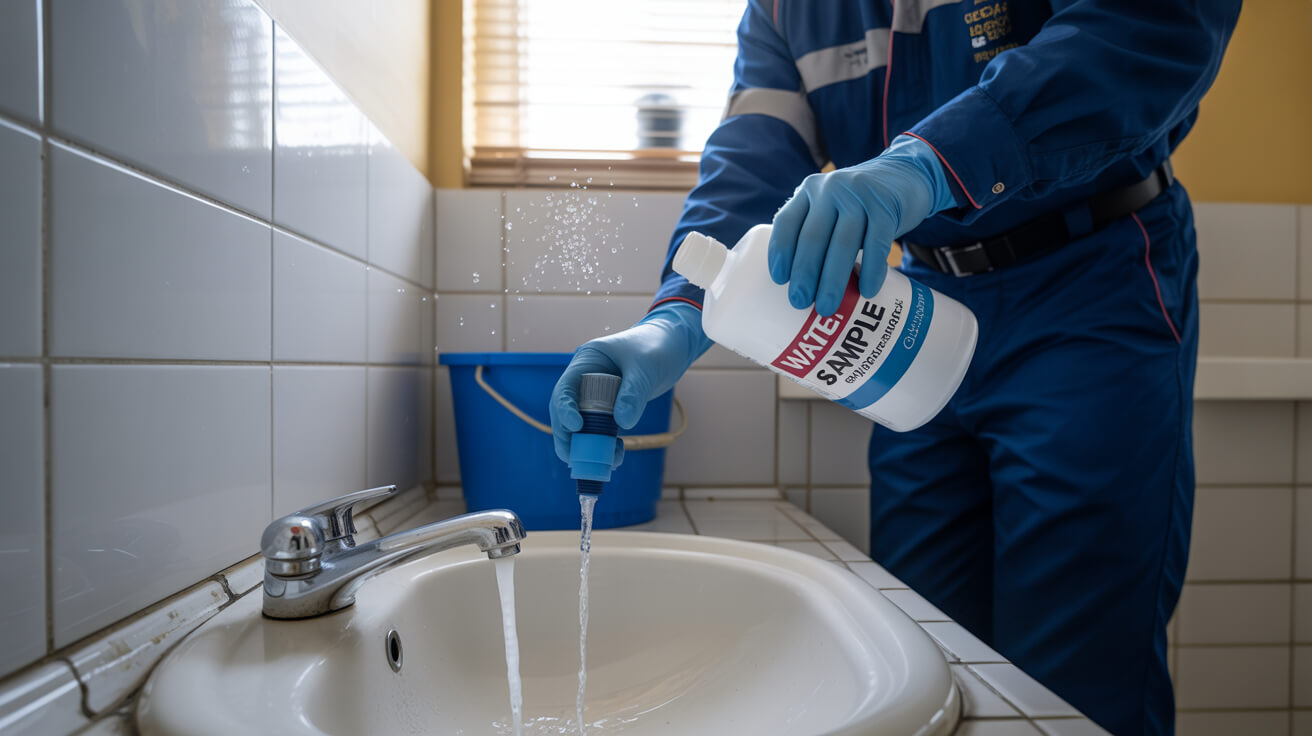
Independent expert witness input helps separate breach, causation, governance failures and simple record gaps so you can judge the real strength of a file. Proportionate reviews, from desktop screening to full opinions, give you a structured way to test allegations and decide whether full court-facing evidence is justified.
- Clarify whether breach, causation or governance is the real issue
- Decide if a desktop review or full opinion is proportionate
- Move early with evidence-led insight before positions harden</p>
Need Help Fast?
Locked out, leak at home, or electrical issue? All Services 4 U provides 24/7 UK locksmith, plumbing, electrical.
Testimonial & Clients Who Trust Us
With 5 Star Google Reviews, Trusted Trader, Trust Pilot endorsements, and 25+ years of experience, we set industry standards for excellence. From Dominoes to Mears Group, our expertise is trusted by diverse sectors, earning us long-term partnerships and glowing testimonials.
Super prompt service. Not taking financial advantage of an absent landlord. Kept being updated on what was going on and when. Was briefed by the engineer after the problem was fixed. Engineer was p...
Thomas who came out was honest, helpful - set my expectations and above all - did a fantastic job. What an easy service to use and would recommend. Told me the price upfront as well so no hidden su...
Had someone available to sort the lock out within the timeframe specified and the price was notified up front, the locksmith texted to confirm appointment and arrived when he said he would after co...
Our boiler stopped working, leaving us without heat and hot water. We reached out to All Service 4 UK, and they sent Kai, an engineer, who arrived promptly. Kai was professional and friendly, quick...
Locksmith came out within half an hour of inquiry. Took less than a 5 mins getting us back in. Great service & allot cheaper than a few other places I called.
Had a plumber come out yesterday to fix temperature bar but couldn’t be done so came back out today to install a new one after re-reporting was fast and effective service got the issue fixed happ...
Great customer service. The plumber came within 2 hours of me calling. The plumber Marcus had a very hard working temperament and did his upmost to help and find the route of the problem by carryin...
Called out plumber as noticed water draining from exterior waste pipe. Plumber came along to carry out checks to ascertain if there was a problem. It was found that water tank was malfunctioning an...
We used this service to get into the house when we locked ourselves out. Very timely, polite and had us back in our house all within half hour of phoning them. Very reasonable priced too. I recomme...
Renato the electrician was very patient polite quick to do the work and went above and beyond. He was attentive to our needs and took care of everything right away.
Very prompt service, was visited within an hour of calling and was back in my house within 5 minutes of the guy arriving. He was upfront about any possible damage, of which there was none. Very hap...
We are extremely happy with the service provided. Communication was good at all times and our electrician did a 5 star job. He was fair and very honest, and did a brilliant job. Highly recommend Pa...
Came on time, a very happy chapie called before to give an ETA and was very efficient. Kitchen taps where changed without to much drama. Thank you
Excellent service ! Lock smith there in 15 minutes and was able to gain access to my house and change the barrel with new keys.
Highly recommend this service 10/10
Thank you very much for your service when I needed it , I was locked out of the house with 2 young children in not very nice weather , took a little longer than originally said to get to us but sti...
The gentleman arrived promptly and was very professional explaining what he was going to do. He managed to get me back into my home in no time at all. I would recommend the service highly
Amazing service, answered the phone straight away, locksmith arrived in an hour as stated on the phone. He was polite and professional and managed to sort the issue within minutes and quoted a very...
Really pleased with the service ... I was expecting to get my locks smashed in but was met with a professional who carried out the re-entry with no fuss, great speed and reasonable price.
Called for a repair went out same day - job sorted with no hassle. Friendly, efficient and knowledgeable. Will use again if required in the future.
Even after 8pm Alex arrived within half an hour. He was very polite, explained his reasons for trying different attempts, took my preferences into account and put me at my ease at a rather stressfu...
The plumber arrived on time, was very friendly and fixed the problem quickly. Booking the appointment was very efficient and a plumber visited next day
Worcester Boilers

Glow Worm Boilers

Valliant Boilers

Baxi Boilers

Ideal Boilers

Decide Whether Independent Expert Evidence Is Needed Now
You need expert evidence when your dispute turns on specialist water hygiene issues that ordinary factual evidence cannot resolve.
If you are dealing with a disease claim, housing dispute, insurer query, contractor conflict, or governance challenge, the real issue is rarely whether Legionella exists in principle. It is whether your water system was assessed, managed, monitored, and reviewed to the standard expected under ACOP L8, HSG274, and the wider legal duties behind them.
In England and Wales, court-facing expert evidence is normally controlled by CPR Part 35. That matters because the expert’s job is not to argue your case. The job is to provide an independent opinion on breach, causation, source attribution, responsibility, or present-day risk, and to keep those issues separate where the evidence requires it.
We support that process with evidence-led legionella expert witness input for solicitors, insurers, landlords, managing agents, employers, and dutyholders who need clarity before positions harden. You leave with a clearer view of what your records show, what they do not show, and what decision makes sense next.
If your file already turns on breach, causation, or responsibility, move early and scope it properly.
Decide When Expert Witness Input Is Proportionate to the Dispute
You need proportionate expert input when the technical question is clear but the level of instruction still needs controlling.
That decision is less about whether expert input is needed at all and more about how far the instruction should go now. In some matters, a short merits-led desktop review is enough to test the file. In others, the dispute has moved far enough that you need a full opinion on standard of care, causation, or responsibility.
What usually triggers instruction
A proportionate instruction usually starts once one of four things happens: illness is alleged, compliance failure is alleged, responsibility is disputed, or your records are too technical or fragmented for your legal team to interpret safely. At that point, the live question becomes practical: what was the required standard, who controlled the risk, and what does your evidence actually support?
When a desktop review is enough
You do not always need a full report at the outset. A screened desktop review is often enough when you need to test viability, identify missing documents, or decide whether your real issue is breach, causation, governance failure, or simple record disorder. A fuller report becomes proportionate once proceedings, insurer reserve decisions, or contested factual positions make a court-ready opinion necessary.
When delay stops being neutral
Delay usually stops being neutral once records are incomplete, personnel have changed, or site conditions are moving on. If you wait too long, you can lose the chance to assess the real system against the documents that existed at the material time.
If you need a fast view on whether the matter justifies full expert evidence, start with a scoped preliminary review.
Clarify What the L8 or Water Hygiene Allegation Actually Says
You need the allegation defined precisely before you can test whether it is technically or legally sound.
Too many legionella disputes are argued at the wrong level. One side says there was “non-compliance”. The other says there was “a risk assessment in place”. Neither answer helps unless the alleged failure is matched to the actual control history of the system.
Breach is not one single question
Your allegation may relate to an unsuitable risk assessment, a weak written scheme, poor monitoring, missed flushing, inadequate temperature control, delayed remedial works, poor contractor supervision, or missing review arrangements. Those are different failures. They create different evidential questions and carry different weight when you assess standard of care.
If your site had a current-looking assessment but the plant, dead legs, low-use outlets, or occupancy profile had changed without review, the issue is not simply whether paperwork existed. The issue is whether the control regime still matched the real system being managed.
Missing logs do not answer everything
A missing temperature log may support an argument that records governance was weak. It may also suggest the control scheme was not being implemented as described. What it does not do, on its own, is prove exposure or that illness was caused by that system.
That distinction matters in both claimant and defence work. You need to keep breach and causation separate, even when both are being argued in the same file.
Responsibility has to be mapped, not guessed
Your file may involve a landlord, tenant, managing agent, employer, facilities provider, contractor, trust, or board. A defensible opinion has to map those relationships against contracts, instructions, approval routes, and day-to-day control rather than relying on job titles alone.
If the managing agent instructed the contractor, but the landlord retained budget control and sign-off on remedials, responsibility may not sit neatly with one party. You need the contractual route and operational reality aligned before you can form a reliable view.
Benchmark Compliance Against L8, HSG274, and Site Reality
You need compliance tested against both the governing framework and the real system it was supposed to control.
ACOP L8 and HSG274 matter less as box-ticking documents and more as the framework for testing whether your chosen controls were suitable, implemented, verified, and reviewed for the actual asset in question.
The benchmark is legal and technical
Your review usually needs to ask whether there was a suitable risk assessment, a workable written control scheme, clear dutyholder and responsible person arrangements, competent delivery, meaningful monitoring, corrective action when controls drifted, and records reflecting what was actually happening. That is why a file can look organised on paper and still fall short in practice.
The real system matters more than the template
A generic risk assessment is weak if it does not match your real asset, occupancy pattern, water usage, storage arrangement, outlet profile, dead legs, TMVs, low-use areas, or vulnerable occupants. A sampling result is only part of the picture. The larger question is whether your management regime suited the system and whether it was followed.
Good paperwork is not the same as good control
A report, policy, or contractor visit does not automatically prove effective management. Your opinion has to test whether the written regime translated into actual controls on site, and whether known defects were closed out rather than merely recorded.
That is where many files turn. You do not resolve this kind of dispute with tidy wording. You resolve it by showing that control on paper matched control in practice, or by showing clearly where it did not.
Assemble the Evidence That Usually Proves or Defends the Case Theory

You need chronology, control records, and source evidence tested together if you want your case theory to hold up.
The records show how the system was supposed to operate, how it was managed, and how the parties responded when risk or incident emerged across breach, causation, responsibility, and loss.
What usually matters most
The core record set often includes:
- risk assessments and schematics
- written schemes and monitoring logs
- flushing, cleaning, and remedial records
- contracts, instructions, complaints, and incident chronology
Those documents need to be read together rather than in isolation. A clean-looking risk assessment with no matching monitoring history can be weaker than a modest file with clear evidence of live control and follow-up.
Causation needs more than a positive sample
If illness is alleged, your causation case will usually depend on a package of evidence rather than one decisive document. Clinical confirmation, exposure history, timing, engineering plausibility, environmental investigation, and source attribution all need to align closely enough to support a balanced opinion.
Poor management may support breach. It does not remove the need to prove or challenge causation.
Preservation matters once dispute is foreseeable
If your system is being altered, cleaned, recommissioned, or handed between contractors, evidence can disappear quickly. Site photographs, portal exports, dated records, maintenance histories, and communication trails often need securing early if later opinion is going to rest on more than reconstruction.
If you want to know whether your file supports breach, causation, or neither, get the core bundle under review before the record gets worse.
Prepare a Court-Ready Expert Report That Answers the Right Issues

You need a report that answers the instructed issues clearly, independently, and within the limits of the evidence.
A court-ready report should reflect the duties governing expert evidence rather than the commercial pressure behind the dispute. That discipline is what gives the opinion weight.
What goes into the report
A robust report usually sets out the instructions received, the documents reviewed, the material facts and assumptions relied on, the technical framework applied, any inspection or chronology analysis undertaken, and the opinions reached on the defined issues. It should also make clear where the opinion stops, where another discipline is needed, and where the evidence is incomplete.
What changes with the type of dispute
Your report structure may stay broadly similar, but the emphasis changes with the dispute. In an L8 non-compliance matter, the report may centre on governance, control measures, and records. In an outbreak or illness claim, causation and source attribution become far more important. In a negligence or civil liability dispute, the report often has to separate historic breach analysis from current remedial priorities.
What weakens a report
Your report loses force when it slips into advocacy, hides assumptions, over-reads sampling, ignores missing records, or expresses opinions outside the author’s expertise. The strongest reports explain not only what is concluded, but why a different conclusion is not supported on the same material.
That is what decision-makers trust: a disciplined opinion that stays in lane and tells you what the evidence can genuinely carry.
Accreditations & Certifications








How Instruction, Scope, Timescales, and Cost Control Should Work
You need the instruction shaped around the real issue before cost and timescale begin to drift.
A proportionate instruction controls cost by answering the right questions in the right order. That means defining your issues tightly, staging the work sensibly, and avoiding unnecessary overlap between technical review, legal analysis, and current-site management.
Start with scope, not volume
Your first decision is what you need answered now. That may be a merits screen, a records review, a responsibility map, a causation-led opinion, or a full CPR-ready report. Once that point is fixed, the document request becomes easier and the work stops expanding to fill the entire history of the premises.
Keep the instruction phased where that helps
A phased route often works best. Stage one may be a desktop review of your chronology, risk assessments, written scheme, contracts, monitoring, and remedials. Stage two may involve targeted clarification or inspection if the file justifies it. Stage three is the full report, joint discussion, or court attendance only if the matter genuinely needs that level of expert input.
Understand what actually drives cost and timing
Your cost and timing are usually driven by file size, number of sites, quality of the document trail, whether inspection is needed, whether causation and source attribution are in issue, and whether the expert is being asked to address one issue or several. Clear scope keeps those drivers visible from the start and makes reserve or budget decisions easier.
You do not need more material than the dispute requires. You need the right issue, the right records, and the right sequence.
Reliable Property Maintenance You Can Trust
From routine upkeep to urgent repairs, our certified team delivers dependable property maintenance services 24/7 across the UK. Fast response, skilled professionals, and fully insured support to keep your property running smoothly.

Book Your Free Consultation With All Services 4U Today
You need a next step that fits the evidence you already have and the decision you need to make.
If you are dealing with a claimant file, insurer review, landlord dispute, housing complaint, or internal governance concern, bring the matter into focus first. We review the issue through the lens that matters: breach, causation, responsibility, present-day risk, or a scoped combination of those questions.
When you contact All Services 4U, send the material that lets us work efficiently: your chronology, key correspondence, risk assessments, written scheme, contracts, monitoring records, sampling data, and any incident or illness information already available. We then help you define whether you need a scoping review, a more detailed desktop opinion, or a full expert witness pathway.
Book your consultation and define the right scope.
Frequently Asked Questions
When should you instruct a legionella expert witness rather than a general water hygiene consultant?
You should instruct a legionella expert witness when the issue is no longer only about improving water hygiene control, but about proving whether control was adequate, whether a duty was missed, and whether that failure materially shaped the dispute in front of you.
A general water hygiene consultant helps you manage a live system. A water hygiene expert witness examines whether the historic regime, the documented controls, and the decision chain would withstand legal, insurance, regulatory, or governance scrutiny. That distinction sounds subtle until money, liability, and reputation are on the table. Once a matter moves into a legionella claim, a serious insurer review, a lender review, a pre-action exchange, or a board-level challenge, you are not simply asking how to improve a regime. You are asking whether the regime was good enough, whether the records support that position, and whether an independent technical opinion will help you defend or challenge it.
For a landlord, RTM chair, housing provider, asset manager, or Building Safety Manager, the commercial risk sits in choosing the wrong level of support too late. A routine consultancy review may tell you what should be improved next month. It may not tell you whether the file you already hold can support your position next week. If your next meeting involves reserves, liability, insurance posture, lender comfort, or solicitor instructions, you are usually beyond ordinary advisory territory.
A competent service regime and a defensible dispute position are not the same thing.
When does routine water hygiene support stop being enough?
Routine consultancy stops being enough when the central question changes from management to accountability. If you are simply updating a written scheme, reviewing temperatures, redesigning flushing routes, or correcting outlet risk, consultant support may still be appropriate. If you are testing historic compliance against ACOP L8 compliance expectations, rebuilding chronology, examining causation, or assessing who controlled the risk when decisions were missed, that is expert territory.
That shift often happens in a few predictable scenarios. A resident, patient, visitor, or worker alleges exposure. A solicitor asks for an independent view. An insurer tests whether the file shows proper control. A lender or valuer asks whether risk management was credible enough to protect mortgageability or refinance confidence. A board wants to know whether the issue is a management lapse, a contractor lapse, or a deeper governance problem. At that point, the wrong instruction wastes time. You do not need a broad service recommendation. You need an opinion that can trace standard of care, responsibility, chronology, and technical strength.
For non-legal readers, one term is worth defining plainly. Causation means the link between the alleged management failure and the alleged outcome. In a legionella dispute, that link matters because poor records do not automatically prove exposure, and a positive sample does not automatically prove who failed. A strong legionella expert witness opinion helps separate assumption from evidence.
Which trigger points usually justify expert witness input?
Some trigger points nearly always justify at least a preliminary review by a legionella expert witness rather than another round of ordinary consultancy:
- a formal allegation, Letter of Claim, or threatened proceedings
- a serious illness, death, or alleged exposure event
- a disputed responsibility chain between landlord, agent, employer, or contractor
- missing, inconsistent, or obviously reconstructed HSG274 records
- an insurer challenge on reserve exposure or claim defensibility
- a lender review focused on governance, compliance history, or risk management
- a board request for an independent opinion rather than an operational recommendation
The practical test is simple. If your next decision changes legal position, settlement leverage, reserve pressure, insurer confidence, or stakeholder trust, you need evidence-led independence. That does not always mean a full formal report on day one. Often the better commercial route is a preliminary review that identifies whether the file is technically strong, technically weak, or technically unclear because the evidence base is incomplete.
That staged approach usually serves the buyer best. A solicitor may need a first view before committing to full pleadings. An insurer may need a technical screen before setting a reserve. A landlord or housing provider may need to know whether the issue is operational repair, governance failure, or expert evidence risk. A lender-facing owner may need confidence that the water hygiene file will not unravel under deeper scrutiny. In each of those situations, the first smart move is not always a full report. It is often the right question, asked early, with the evidence sorted properly.
Which failure modes show you have waited too long?
The common failure mode is drift. The issue begins as an operational concern. People swap emails. A contractor comments informally. Someone asks for “a quick technical view.” Weeks pass. Meanwhile, no one has defined the issue precisely, the chronology remains loose, and the key documents are still scattered across inboxes, portals, and PDF folders. By the time proper expert input is considered, positions have hardened and cost has climbed.
Another failure mode is role confusion. A managing agent assumes the water hygiene contractor will answer every challenge. The contractor assumes the landlord held approval authority. The board assumes the agent controlled the regime fully. The insurer then asks one blunt question: who actually controlled the risk, and where is the proof? If your answer is still mostly verbal, you are late.
For a Head of Compliance, the better trigger is earlier than most teams think. If the internal conversation has shifted from “how do we improve this?” to “how do we defend or explain this?”, that is usually enough to justify expert triage. For an Insurance Broker or Risk Surveyor, the trigger may come even sooner. If there is any chance the issue touches conditions precedent, liability allocation, or material non-disclosure concerns, an independent technical screen protects the whole file.
A good early review gives you control back. It tells you whether the available material is enough, what is missing, what matters most, and whether a full expert report would add value now or simply cost money before the file is ready. If you are the person who will have to explain the decision later, that is usually the moment to act. A scoped technical review with All Services 4U is often the lowest-friction way to test the file before a renewal meeting, board session, or legal instruction turns a manageable issue into a costly one.
How does a legionella expert witness assess compliance with ACOP L8 and HSG274 in a live dispute?
A legionella expert witness assesses ACOP L8 compliance and HSG274 records by testing whether the actual system, the actual management regime, and the actual response trail matched what reasonable control required in that building at that time.
That sounds straightforward until you open the file. Most disputed files contain some familiar ingredients: a risk assessment, a written scheme, a run of temperature logs, service notes, and one or two recommendations that may or may not have been closed out. On first reading, that can look reassuring. In a live dispute, though, the real question is sharper. Did the paperwork describe the real system? Did the regime suit the building? Were failures acted on? Did the people in control respond when risk indicators appeared? A proper water hygiene expert witness review goes beyond whether documents exist. It asks whether the documents prove live control.
The strongest analysis does not start from the template. It starts from the building. That means understanding water storage, distribution complexity, outlet use, little-used areas, high-risk populations, historic alterations, vacancy patterns, contractor interfaces, and who actually approved remedials. A file can look polished and still fail if it describes a system that no longer exists in practice.
How does the technical review work in practice?
In practice, the review usually runs on three tracks at once: system understanding, management adequacy, and response discipline.
The first track is system understanding. Was the risk assessment built on a current and accurate view of the water system? Were dead legs, redundant outlets, stored water conditions, mixed-use areas, or vulnerable users addressed properly? Did the written scheme reflect the real asset, not a generic version copied from another site?
The second track is management adequacy. Did the regime under ACOP L8 and HSG274 fit the building type and risk profile? Were temperatures, flushing, inspections, descaling, sampling, and review intervals sensible for that environment? Were roles clear between landlord, agent, employer, and contractor?
The third track is response discipline. When readings failed or anomalies appeared, what happened next? Did someone escalate, investigate, re-test, isolate, flush, disinfect, repair, or review the risk assessment? Or did the same exception simply appear again in next month’s sheet with no meaningful action?
That is why experienced reviewers spend less time admiring neat folders and more time comparing one document against another. They check whether attendance notes match remedial close-out. They compare logs against the actual outlet profile. They test whether altered areas remained on flushing schedules or disappeared without any formal revision. They examine whether contractor recommendations led to approvals, and whether approvals led to real completion.
Which records usually carry the most weight?
Some records carry more weight than others because they reveal whether control was active rather than cosmetic.
| Record set | What it proves | What it often exposes |
|---|---|---|
| Risk assessment and schematic | Whether the system was understood properly | Outdated scope, missing outlets, poor risk capture |
| Written scheme | Whether control was planned clearly | Weak role allocation or unrealistic frequencies |
| Temperature and flushing logs | Whether routine control happened in real life | Gaps, copied entries, repeated failures |
| Remedial records | Whether defects were acted on promptly | Drift, delay, or unresolved recommendations |
| Emails and approval trails | Whether warnings reached decision-makers | Stalled approvals or blurred accountability |
Named authorities help shape the framework, but they do not answer the facts on their own. Health and Safety Executive guidance gives the standard. ACOP L8 sets the expectation around dutyholder control. HSG274 supports practical interpretation. In some disputes, UK Health Security Agency outbreak logic becomes relevant because it reinforces chronology, exposure context, and source comparison. Where lender confidence or asset value enters the conversation, RICS guidance can matter because governance quality and technical assurance can influence risk perception beyond the immediate health issue.
What does a good file look like under pressure?
A good file usually has a few visible traits. The schematic is current. The written scheme looks site-specific. The logs show action, not just data entry. Exceptions are visible and closed. The risk assessment evolves after material changes. Recommendations move through approval and completion with dates, names, and evidence. If sampling is present, it is contextualised rather than waved around as a magic answer.
A weak file often fails in quieter ways. Logs are regular but hollow. Recommendations are repeated month after month. The same poor reading appears without escalation. Outlet references no longer match the site. The written scheme names duties that no contract or approval process ever supported. The contractor flagged issues, but no one can show who owned the decision to fix them. That kind of file is not always indefensible, but it is vulnerable.
For a Property Manager, this assessment tells you whether the operational trail is strong enough before a dispute deepens. For a Head of Compliance, it tells you whether the issue is documentation, execution, or governance. For an Insurance Broker, it tells you whether the account is renewal-ready or likely to invite awkward questions. For a Lender or Valuer, it may shape confidence in wider asset management discipline. For a Legal or Tribunal Advisor, it identifies whether the technical theory matches the available evidence.
The commercial value of this work is not just in finding fault. It is in reducing waste. If the file is sound, you know early. If it is weak, you know where. If it is incomplete, you can stop pretending it is ready and build the evidence properly. If you are the person signing off risk, this is the point to test the file before a board pack, insurer review, or legal timetable forces a faster and more expensive decision. All Services 4U can start with a scoped preliminary review so you can see whether you need a short technical note, a deeper causation analysis, or a full expert report.
Which records matter most when you need to prove or defend a legionella claim?
The records that matter most in a legionella claim are the ones that let you rebuild a reliable chronology of system control, warning signs, response decisions, and responsibility.
No single document usually wins or loses the case. A positive sample does not automatically prove source. An old risk assessment does not prove current compliance. A missing flush sheet does not automatically prove breach. The value sits in how the records work together. You are trying to answer a disciplined set of questions: what system existed, what risks were known, what controls were planned, what controls actually happened, what failures emerged, who knew, who could act, and what happened next. If your records cannot answer those questions in sequence, the file weakens quickly.
That is why broad evidence triage matters. The strongest legionella expert witness instructions often begin with less confidence and more sorting. Instead of assuming the key issue is one missing log or one awkward reading, the review maps the full record ecology around the event. In practice, complaint logs, work orders, email chains, contractor notes, approval trails, meeting minutes, and handover records can matter as much as the formal HSG274 records.
Which evidence usually gets reviewed first?
The first pass usually focuses on records that establish baseline, chronology, and control:
- risk assessments and current or historic schematics
- written schemes and monitoring schedules
- temperature, flushing, inspection, and sampling records
- contractor attendance notes and recommendations
- remedial approvals, work orders, and close-out evidence
- contracts, appointments, and responsibility documents
- complaints, incidents, emails, and escalation records
That bundle matters because it lets the expert test both planning and execution. A good risk assessment with no real operational follow-through may be weak evidence. A patchy-looking file can sometimes improve if the chronology shows genuine intervention, sensible escalation, and practical control despite imperfect administration.
The Health and Safety Executive approach under ACOP L8 and HSG274 rewards reality over appearance. The same is true in dispute work. Reviewers look for signs that the regime was alive. Did failed readings trigger action? Did the system change after building works? Did flushing routes still reflect the actual outlet map? Did remedials close before the next cycle, or did they drift while the risk persisted?
Which details usually decide whether the file holds up?
Small details often decide whether the file stabilises or falls apart. The problem is that they rarely look dramatic when viewed in isolation.
Examples include repeated temperature failures with no documented escalation, logs continuing for outlets that no longer exist, inconsistent outlet naming across months, a written scheme that was never updated after alterations, sampling results with no useful context, and contractor recommendations that sat unapproved while the same issue reappeared. Even a simple email trail can matter. One message asking for approval, one delayed response, and one missed follow-up may explain far more than a polished monthly report.
This is where landlord legionella liability analysis often sharpens. The technical issue is not only whether risk existed. It is whether the relevant parties had enough visibility and authority to act, and whether they did. For a landlord, board, or agent, records that show ownership of decisions often matter more than the existence of generic policy statements.
A short matrix helps show what each evidence class usually does:
| Evidence group | Core question it answers | Common weakness |
|---|---|---|
| Risk documents | Was the system understood properly? | Outdated scope or weak system mapping |
| Routine logs | Was control delivered consistently? | Gaps, repetition, no action trail |
| Remedial trail | Were defects resolved in time? | Open actions with no close-out |
| Responsibility records | Who could approve and instruct action? | Blurred roles and delegated ambiguity |
| Incident chronology | Were warning signs visible and ignored? | Fragmented emails and missing context |
What do strong and weak evidence bundles usually look like?
A strong bundle tends to feel consistent across multiple layers. The system description matches the site. The written scheme maps to the logs. The logs map to attendance notes. The attendance notes map to remedials. The remedials map to approvals and completion. The chronology remains coherent even when you test it against complaints, occupancy patterns, shutdowns, or refurbishment periods.
A weak bundle often has surface order but deeper contradiction. The template is there, but the outlet profile is wrong. The logs are complete, but no one can explain repeated failures. The contractor said action was required, but authority sat elsewhere and stalled. The approval path exists, but the close-out proof is thin. In those files, the technical opinion cannot be stronger than the record base beneath it.
Different buyers care about different consequences. A solicitor may care about disclosure strategy and whether the theory of breach is sustainable. An insurer review may care about whether reserves are set against genuine exposure or just poor presentation. A lender review may care whether governance weakness hints at wider asset management risk. A Resident Services Manager may care whether the complaint history shows missed warning signs. A Building Safety Manager may care whether the issue points to a local lapse or a systemic failure.
If your next decision depends on whether the file can prove control rather than merely suggest it, start with evidence triage, not argument. A structured review by All Services 4U can show which records matter, which are missing, and which support or undermine the position before legal spend, reserve creep, or stakeholder pressure takes over the strategy.
What should a UK legionella expert witness report contain if it needs to withstand scrutiny?
A defensible legionella expert witness report should show exactly what was reviewed, which standards were applied, how the reasoning moved from evidence to opinion, and where the opinion is limited by missing facts.
That sounds basic, but it is where weaker reports get exposed. A report is not there to sound confident. It is there to make the reasoning inspectable. If a court, insurer, landlord, board, lender, or solicitor cannot trace the path from documents and site facts to the final opinion, the report becomes easier to dismiss. In serious disputes, certainty alone is not persuasive. Method is.
A proper report should separate the issues that clients often blur together. Standard of care is one issue. Causation is another. Responsibility and duty allocation are another. Source identification may sit on another branch again. Where medical questions arise, the report should also stay within technical remit and avoid drifting into clinical territory unless the instruction and competence clearly support that. A disciplined report is useful because it helps decision-makers understand what the expert can say, what the expert cannot say, and what remains uncertain.
What core sections make the report genuinely usable?
A report that can withstand scrutiny usually includes these elements:
- clear instructions and defined questions
- a schedule of documents and information reviewed
- the factual assumptions made
- the technical and regulatory framework applied
- a chronology of relevant events
- issue-by-issue opinions with reasons
- a limitations section dealing with missing material
- a statement of independence and duty
The Civil Procedure Rules and Ministry of Justice guidance matter here because they reinforce neutrality, transparency, and independence. In practical terms, that means the report should never read like an extended closing speech for the instructing party. It should read like a technical explanation grounded in evidence.
For a legionella claim, the report often becomes more useful when it is tighter, not longer. A sprawling document that mixes fact summary, advocacy, technical opinion, and speculation can create more attack points. A stronger report moves carefully. It says what the file supports. It explains why. It marks what is missing. It stops where the evidence stops.
What usually makes a report vulnerable to challenge?
Reports usually become vulnerable for predictable reasons:
- they assume a standard without relating it to the actual system
- they fail to test whether the documents matched the site
- they gloss over contradictions or missing records
- they treat ACOP L8 compliance as a checklist rather than a context-sensitive control regime
- they move beyond technical competence into legal or medical advocacy
- they use certainty where only probability is justified
A useful belief inversion sits here: the report that sounds strongest is not always the report that survives. The report that survives is the one that shows its working. If the file is incomplete, a good report says so. If chronology is weak, a good report identifies the gap. If causation is plausible but not firmly established, a good report does not overreach.
That discipline matters commercially, not just legally. A board may rely on the report when deciding reserves or disclosure posture. An insurer may use it when testing liability strength. A lender or valuer may use it as part of a wider risk picture. A report that overstates the position can create false confidence early and sharper cost later.
What does a strong report do for different stakeholders?
For a solicitor, a strong report narrows the real issues. It tells you whether the technical case is worth pursuing, resisting, or settling around. For an insurer, it turns a vague exposure story into an evidence-led reserve question. For a landlord or RTM board, it gives a defensible explanation of whether management systems were fit for purpose or whether the issue points to a more structural governance weakness. For a Head of Compliance, it identifies whether the failure was in assessment, monitoring, escalation, approval, or record control. For a Building Safety Manager, it may indicate whether the issue is isolated or whether Golden Thread discipline and wider safety assurance need strengthening.
This is also where proof variety matters. Technical reports should not rely only on regulatory references. Good reports use chronology, site facts, documentary contradiction, management logic, and practical controls to support conclusions. Named authority anchors still matter: Health and Safety Executive, ACOP L8, HSG274, Civil Procedure Rules, Ministry of Justice, and, where relevant, RICS guidance or housing governance expectations can all shape the frame. But the report lives or dies on how well those standards are connected to the actual facts.
If your board, insurer, or legal team needs something that can carry weight rather than merely fill a gap, define the question before drafting starts. That keeps the report proportionate and useful. All Services 4U can help you do that through a low-friction scoping review, so you start with the right question, the right file, and the right report route instead of paying for a full opinion before the evidence is ready.
Who is usually legally responsible in a legionella claim involving landlords, agents, employers, or contractors?
Legal responsibility in a legionella claim usually follows practical control of the water hygiene risk, not just the job title, contract header, or name that appears most often in correspondence.
That point is where many files become expensive. A landlord may assume the managing agent handled the system. The managing agent may assume the specialist contractor carried the duty because it performed monitoring. The contractor may say it flagged defects but could not approve remedials. An employer or occupier may control parts of the building that change use patterns and exposure. In other words, several parties may have a role, but not the same role. The expert task is to rebuild who controlled the risk in practice, at each point in time, and with what authority.
This matters because landlord legionella liability is rarely determined by ownership alone. Ownership matters. So do contracts. But control in operation matters just as much. Who knew the condition of the system? Who had authority to approve work? Who received warnings? Who decided to delay or defer? Who controlled access, use, and occupancy in ways that shaped exposure?
The expensive part is rarely the first failure. It is the months spent assuming somebody else owned the decision.
Who is usually examined first in that responsibility chain?
The first pass usually looks at four broad groups:
- landlords, freeholders, or asset owners
- managing agents, facilities managers, or internal operational teams
- specialist water hygiene contractors and maintenance contractors
- employers or occupiers who influence building use and system exposure
That list is not there to force a quick answer. It is there to stop premature blame. A contractor may have monitored temperatures and reported issues, but lacked authority to commission remedials. A managing agent may have controlled day-to-day instructions, but lacked funding discretion above a certain threshold. A landlord may have held strategic authority, but delegated routine control through contract. An employer may have created usage patterns that materially changed risk. Proper responsibility mapping tests each link in the chain.
The Health and Safety Executive framing is helpful here because it repeatedly pushes analysis back to management reality and dutyholder control, not branding or assumption. That is why contracts, appointment letters, approval trails, meeting minutes, complaint escalations, and work-order permissions matter so much.
Which records usually reveal who really controlled the risk?
A strong responsibility review often turns on ordinary management records rather than headline technical reports.
The most useful records tend to be:
- contracts, service scopes, and appointment letters
- authority thresholds and approval procedures
- escalation emails and meeting minutes
- work-order approvals and deferred remedial records
- complaint logs and operational warnings
- records showing who held budgets and who could release them
- handover records after changes in manager, contractor, or ownership
That material matters because the paper duty and the practical duty do not always match. A contractor may have been tasked to inspect but not to decide. A managing agent may have held the operational gate but not the strategic budget. A landlord may have signed off major works slowly enough to leave known issues unresolved. A board may have been aware of recurring risk but lacked clear escalation discipline.
A simple matrix shows the usual questions:
| Party | What needs testing | Why it matters |
|---|---|---|
| Landlord or owner | Strategic control, funding, final authority | May own key decisions and long-term risk |
| Managing agent | Day-to-day management and approvals | May control delivery in practice |
| Contractor | Monitoring, reporting, escalation discipline | May identify risks without power to fix them |
| Employer or occupier | Building use, access, and exposure pattern | May influence actual risk conditions |
What usually changes the picture once chronology is mapped?
Chronology often changes everything. At first glance, a contract may make one party look central. Once the timeline is rebuilt, another party may emerge as the true control point. For example, the contractor identified repeated failures, but the managing agent delayed instruction. Or the managing agent recommended works, but the owner refused budget approval. Or the landlord delegated duties broadly, but no one ever verified that the delegated regime actually worked.
This is why legal responsibility is rarely well-served by immediate argument. Early argument can freeze the wrong theory in place. An independent review is usually more valuable at the start because it helps a solicitor, insurer, board, or compliance lead understand where the evidence of control actually sits. That influences disclosure strategy, reserve-setting, settlement posture, and who should be in the frame at all.
For a Legal or Tribunal Advisor, the key benefit is sharper targeting. For an Insurance Broker, it is better reserve discipline. For a Lender or Valuer, it is clarity on whether the issue is isolated or signals wider governance weakness. For a RTM Board Director or RMC Chair, it is often the first clear map of what the board controlled, what it delegated, and where evidence of oversight is thin.
A good responsibility review also balances risk with control. A weak chain can often be clarified before positions harden. A strong chain can be defended more confidently when the records are ordered properly. If your board needs a defensible position, or your insurer wants to know whether the wrong party is carrying the exposure, this is the moment to start with a scoped technical review rather than a blunt assumption. All Services 4U can help map the actual control trail before legal spend replaces technical clarity.
How much do legionella expert witness services usually cost, and how can you start without ordering a full report?
The cost of legionella expert witness services usually depends on scope, file quality, number of systems or sites, and whether the work stops at technical review or extends into causation, reporting, conference support, and formal proceedings.
There is no honest flat fee answer because the spread is wide. A single-site desktop review with an organised bundle and a clear question is one level of work. A fragmented multi-site file involving missing records, disputed control, alleged exposure, insurer pressure, and a developing legal claim is another. The commercial mistake is asking for a broad figure before defining what you actually need. In most water hygiene expert witness matters, the first cost saving comes from scope discipline, not bargaining.
For a landlord, insurer, solicitor, Building Safety Manager, or compliance lead, the better question is often this: what is the least expensive first step that still gives a defensible decision base? In many files, that is not a full expert report. It is a staged instruction.
Which factors usually drive cost up or down?
A few factors influence price more than anything else:
- the volume and condition of the records
- whether the issue concerns one site or several
- whether chronology is already organised
- whether there is a simple compliance question or a broader legionella claim
- whether site inspection is needed
- whether the instruction is internal, insurer-facing, lender-facing, or court-facing
- whether the work includes conference support, rebuttal, or formal reporting
A clean bundle lowers cost because less time is spent rebuilding basic chronology. A muddy file increases cost because time disappears into sorting documents, reconciling contradictions, and identifying what is missing. A narrow issue also helps. If the real question is whether the HSG274 records show credible control over a specific period, that is cheaper than a wider instruction testing breach, causation, source, and responsibility across multiple parties.
For finance-minded readers, reserve exposure simply means likely cost pressure once the technical picture becomes clearer. A poor early estimate based on a fuzzy technical picture can distort both settlement and budgeting. That is why staged technical triage often saves money even when it adds a first piece of work.
How can you start without ordering a full report?
In many matters, the best entry route is one of three narrower steps.
First, a scoping call or issue-definition note. This helps clarify whether the matter is really about compliance, responsibility, causation, or all three. It sounds small, but it prevents expensive misdirection.
Second, a document checklist and evidence triage. This stage identifies what a useful file would actually need. It tells you whether the current bundle is report-ready, whether critical documents are missing, and whether the chronology is coherent enough for deeper opinion.
Third, a preliminary review. This usually gives an initial view on technical strengths, weaknesses, and material gaps without the cost of a full formal report. For many insurer review and lender review situations, that is enough to support the next decision.
A staged route is commercially safer because it protects budget while preserving momentum. It also aligns with how real buying decisions happen. A solicitor may need a first technical steer before formal expert instruction. A board may need a confidence check before committing reserve. An insurer may need to know whether the file looks structurally weak or merely administratively messy. A lender-facing owner may need to know whether the evidence base is enough before presenting the asset as stable and well managed.
This approach also helps avoid a common failure mode: commissioning a full report before the file is ready. That creates a poor result twice over. The first draft is weaker because key material is missing. Then further cost is incurred updating or reworking the opinion once the missing evidence appears. It is much cheaper to define the question, sort the documents, and then escalate only if the matter genuinely requires formal expert evidence.
There is a confidence angle here too. A staged approach does not signal uncertainty. It signals control. It shows that you are treating the issue proportionately, protecting spend, and making decisions from evidence rather than pressure. For a Finance Director, that means less waste. For a Legal Advisor, it means a better instruction path. For an Insurance Broker, it means earlier technical clarity. For a RTM board or landlord, it means you can test the file before a renewal, refinance, or claim discussion starts shaping your options for you.
If you need a low-friction next step, begin with a scoped review rather than jumping straight to a full report. All Services 4U can help define the issue, identify the records that matter most, and show whether your next move should be a short technical screen, a deeper preliminary review, or a full legionella expert witness report. If you are the person expected to sign off risk with confidence, that is usually the smartest place to start.
- Decide Whether Independent Expert Evidence Is Needed Now
- Decide When Expert Witness Input Is Proportionate to the Dispute
- Clarify What the L8 or Water Hygiene Allegation Actually Says
- Benchmark Compliance Against L8, HSG274, and Site Reality
- Assemble the Evidence That Usually Proves or Defends the Case Theory
- Prepare a Court-Ready Expert Report That Answers the Right Issues
- How Instruction, Scope, Timescales, and Cost Control Should Work
- Book Your Free Consultation With All Services 4U Today
- Frequently Asked Questions
Case Studies


Related Articles

Your Guide To Identifying And Treating Minor Mould Outbreaks

Why Planned Preventative Maintenance (Ppm) Saves Money And Ensures Compliance