

Roof Lifecycle Management PPM Services for Asset Directors – Bi-Annual Surveys & Replacement Planning
Asset directors and portfolio leads use roof lifecycle management PPM to turn scattered leaks into a planned, capital-aligned strategy for every roof they manage. Bi-annual surveys, structured condition data and replacement planning convert reactive repairs into evidence-led decisions, based on your situation. You finish with a comparable view of risk across blocks, clearer renewal timing and a documented inspection trail your asset, finance and compliance teams can stand behind. It’s a practical way to stop roof failures ambushing your residents and your budget.



Author
Izzy Schulman

For asset directors and housing portfolio leads, roofs are a capital risk as much as a maintenance line. Unplanned failures drive damp, resident complaints, insurance pressure and budget shocks that a simple leak log cannot control.

Bi-annual, portfolio-wide roof surveys and structured condition reporting turn that uncertainty into a repeatable process. By ranking roofs by risk, mapping defects and feeding findings into replacement planning, you gain clearer timing, stronger governance and fewer decisions made on incomplete records.
- Rank roofs by risk instead of reacting to leaks
- Feed condition data directly into replacement planning cycles
- Strengthen damp, insurance and governance positions with repeatable evidence</p>
Need Help Fast?
Locked out, leak at home, or electrical issue? All Services 4 U provides 24/7 UK locksmith, plumbing, electrical.
Testimonial & Clients Who Trust Us
With 5 Star Google Reviews, Trusted Trader, Trust Pilot endorsements, and 25+ years of experience, we set industry standards for excellence. From Dominoes to Mears Group, our expertise is trusted by diverse sectors, earning us long-term partnerships and glowing testimonials.





Worcester Boilers

Glow Worm Boilers

Valliant Boilers

Baxi Boilers

Ideal Boilers

Why Roof Asset Management Belongs In Portfolio Strategy, Not Just Maintenance Logs
Your roof portfolio needs a capital strategy, not a leak diary.
If you are responsible for residential assets, roof lifecycle management PPM means managing each roof through planned inspection, maintenance, repair and renewal instead of waiting for failure. That matters because your exposure is not usually one leak. It is hidden deterioration, resident impact, insurance friction and poorly timed capital decisions.
Across UK property and asset-management guidance, planned preventative maintenance is an evidence-led process, not a reactive add-on. Applied properly to roofs, it gives you a comparable view across blocks, roof types and risk levels. You can then rank what needs a minor repair, what needs closer monitoring, and what should move into replacement planning.
We bring that together in one practical model: bi-annual roof surveys, condition-led reporting and replacement planning your asset, finance, compliance and operations teams can use. You get clearer timing, stronger governance and fewer decisions made on incomplete records.
If you want to stop roof spend ambushing your budget cycle, start with a portfolio review rather than another patch repair.
What A Bi-Annual Portfolio Roof Survey Should Capture To Be Decision-Useful
A useful roof survey gives you decisions, not just observations.
What gets inspected
A bi-annual roof survey is often strongest in spring and autumn, when you can see winter damage, drainage issues and pre-winter vulnerabilities in time to act. The inspection scope should cover the roof covering, flashings, abutments, penetrations, outlets, gutters, downpipes, parapets and edge details, with attention on the points where small failures become water ingress.
Roofs rarely fail in one dramatic moment. Deterioration usually starts at junctions, drainage points, exposed details or repeat weak spots. A survey that only says “general condition” will not help you prioritise risk.
What gets recorded
For trend data to mean anything six months later, each finding needs a consistent structure. You need the building or block reference, the roof system reference, the roof area or zone, the defect type, likely cause, extent, urgency and recommended next action.
Photographs should support the record, not replace it. Marked-up plans, dated images and clear condition logic make it easier to compare one survey cycle against the next. That is how you move from anecdote to evidence.
What changes between low- and high-risk roofs
Not every roof needs the same depth of follow-up on every visit. A stable roof may only need confirmation that condition has held, drainage remains clear and no new deterioration has appeared. A roof with recurring leaks, ageing membranes, drainage problems or repeated flashing defects needs closer mapping and a sharper action plan.
The point is not to inspect more for the sake of it. The point is to inspect in a way that helps you decide what to do next.
How Bi-Annual Condition Assessments Reduce Damp, Claims Friction, And Hidden Risk
Early roof evidence stops bigger problems maturing out of sight.
Damp and mould risk
When small roof defects are found early, you have a chance to stop moisture getting into the building fabric before it becomes damp, mould and resident distress. In occupied residential stock, that matters because roof defects rarely stay as roof defects. They turn into internal complaints, health concerns and repair backlogs.
A slipped covering, failed flashing or blocked outlet may look minor on the roof. Inside the building, it can become staining, mould growth, damaged finishes and repeated access appointments. Early intervention reduces the spread, disruption and chance that the issue becomes a wider housing-condition problem.
Insurance and claims defensibility
Bi-annual surveys also strengthen your position when insurers or brokers ask what you knew, when you knew it and what you did about it. A dated inspection record, defect history and remedial trail help show that you took reasonable steps to inspect and maintain the roof over time.
That does not guarantee an outcome in every case. It does give you a cleaner evidential position than vague site memory or incomplete contractor notes. In practice, that can shape claim defensibility, underwriting confidence and renewal discussions.
Hidden risk across the portfolio
The biggest value is often not the defect you find. It is the uncertainty you remove. A roof that has not failed visibly may still be moving towards a more expensive problem through trapped moisture, drainage weakness or systemic deterioration.
That is why “no major leak this year” is a weak comfort signal. A repeatable survey cycle gives you earlier warning, better prioritisation and a clearer view of what is quietly moving towards capital attention.
When Repair Stops Being Value And Replacement Planning Should Begin
Repeated patching is often a timing problem disguised as maintenance.
The warning signs
A roof should move towards replacement planning when defect patterns point to system decline rather than isolated damage. Common signals include repeat failures in the same mechanism, shorter repair life, widening affected areas, recurring drainage issues and growing consequences of failure.
You do not need to wait for a roof-wide collapse in condition. That is usually the point where your timing options are weakest.
Why patching distorts cost
Reactive repairs often look efficient only when you view them one invoice at a time. Once you account for emergency attendance, temporary protection, internal making-good, repeated access, contractor inefficiency and complaint handling, the picture changes.
Water also travels. The symptom you repair may not be the source of the failure. That is one reason why “we already fixed that leak” becomes a recurring line item instead of a resolved issue.
What replacement triggers look like
Replacement planning becomes the better option when the evidence shows that further repair is buying less certainty, not more value. If the same roof keeps returning to the urgent list, or if defect recurrence is starting to threaten resident impact, insurance position or budget stability, you are no longer choosing between repair and replacement in abstract terms. You are choosing between planned renewal and unmanaged escalation.
That is where clear roof lifecycle management PPM services for asset directors create value: they make the timing defensible before the decision becomes forced.
How Survey Data Turns Into 5-, 10-, And 20-Year Roof Capital Planning
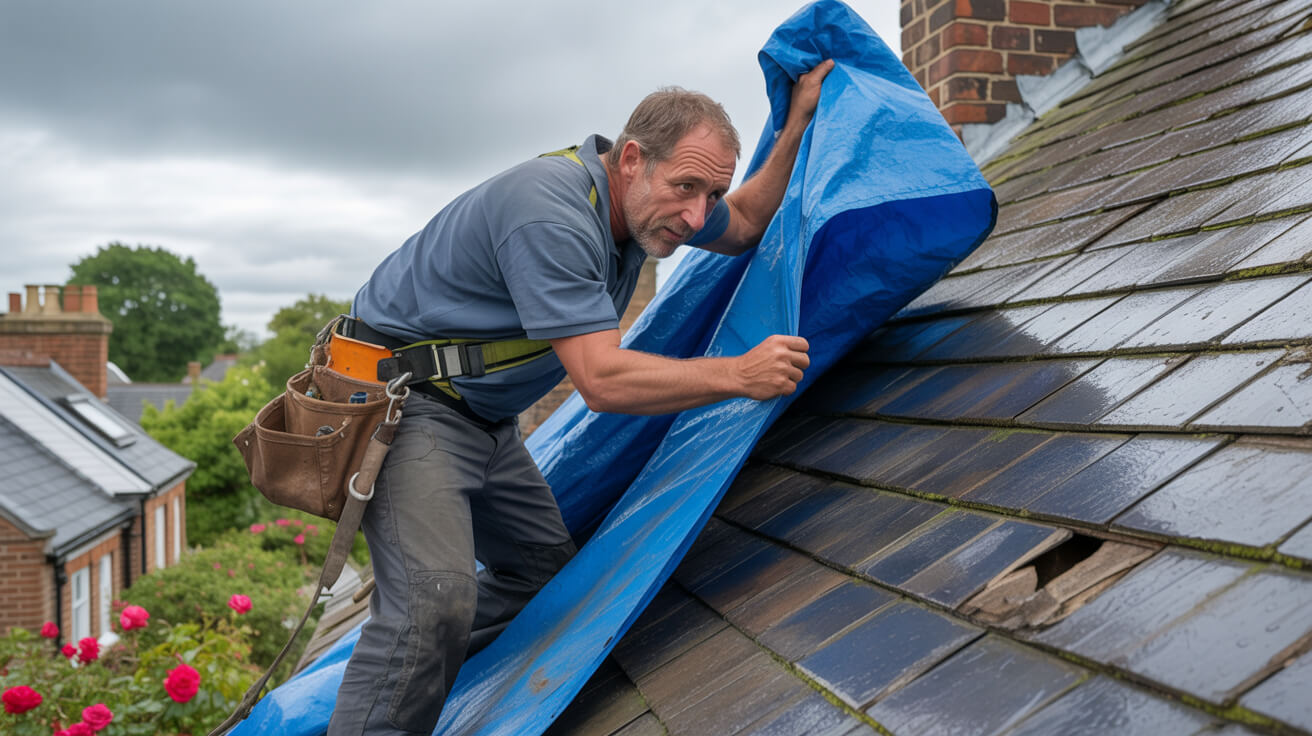
Capital planning works better when roof timing comes from condition, not guesswork.
Five years: urgent and procurement-ready decisions
Your five-year horizon should capture roofs with urgent remedial needs, clearly shortening remaining life, or a strong case for early planned replacement. This is the window where survey evidence should convert into funded action, specification development and approval-ready decisions.
Ten and twenty years: sequencing, reserves and strategic timing
The 10-year horizon is where phased replacement logic becomes useful across the wider estate. You are looking at likely renewal bands, grouping works where sensible, and avoiding a pattern where several roofs hit capital need at once without preparation.
The 20-year horizon is not about pretending you can predict perfectly. It is about creating a reserve and replacement framework that is continuously improved by fresh survey evidence, defect history and updated cost assumptions.
This simple view keeps the planning logic clear.
| Horizon | Main purpose | Typical decision use |
|---|---|---|
| Five years | urgent risk and near-term renewal | approve, scope and phase live projects |
| 10 years | planned replacement sequencing | smooth capital demand across the estate |
| 20 years | reserve direction and strategic options | test longer-term funding and upgrade choices |
Reserve forecasting that reflects condition, not age alone
Age-only planning is weak because roofs of similar age can perform very differently. Design, exposure, drainage, maintenance history and past repairs all affect remaining life. Reserve forecasting becomes more useful when it is driven by current condition and calibrated by actual defect recurrence.
That also creates room for better timing decisions. You can align roof renewal with insulation upgrades, access efficiencies, wider estate works or decarbonisation opportunities instead of treating the roof as a standalone emergency each time.
If you want your next budget cycle to reflect live roof evidence rather than inherited assumptions, ask for a phased roof planning review before the next capital lock-in.
What Board-, Lender-, And Insurer-Ready Roof Reporting Should Look Like

Decision-ready reporting shows risk, timing and action in one line of sight.
What the pack must show
A credible roof evidence pack should bring together your asset register, current condition, defect schedule, dated photographs, repair history, remaining-life assumptions, risk flags and forecast intervention timing. You do not need more paper. You need a structure that makes roofs comparable and decisions traceable.
A short assurance summary for each asset or roof zone is often the most useful starting point. That lets you surface overall condition, top risks, immediate actions and likely renewal timing without losing the supporting detail underneath.
What lenders look for before planned replacement
If roof replacement may feed into lender review or technical due diligence, your evidence needs to answer four questions: what exists, what is wrong, how long it is likely to remain serviceable, and whether the proposed replacement is costed and deliverable.
That means your reporting should not stop at defect description. It should show the consequence of delay, the likely intervention route, the budget effect and the state of readiness for the next stage.
Why traceability matters more than volume
A glossy report is not an audit trail. What matters is whether findings were identified clearly, prioritised properly, instructed where necessary and closed out with evidence. That is the difference between documentation that looks complete and documentation that stands up under board, insurer or lender scrutiny.
We structure reporting around that traceability, so you can move from survey finding to action, from action to assurance, and from assurance to capital planning without rebuilding the evidence chain each time.
Accreditations & Certifications








How To Procure, Govern, And Scale Roof Lifecycle Management Across Occupied Portfolios

A scalable roof programme needs ownership, repeatability and a clear update rule.
Start with the right pilot
If your estate is large or your records are inconsistent, begin with the blocks carrying the highest risk, the highest complaint load or the weakest evidence base. That gives you a fast test of whether the survey outputs improve prioritisation, forecasting and decision quality.
A pilot works best when it is chosen for decision value, not convenience. Pick the roofs that expose the real problem.
Assign ownership and review cadence
Your roof lifecycle plan needs one named owner. That may sit with asset management, technical services or a designated programme lead, but it must be clear who maintains the pack, updates the assumptions and escalates changes that affect cost, scope or timing.
Without that discipline, even a good survey programme drifts into a stack of disconnected reports. With it, each survey cycle becomes a formal refresh of risk, budget and intervention timing.
Build a repeatable delivery cycle
The most useful service model is a simple loop: inspect, prioritise, act, update, review. Urgent repairs, maintainable defects and likely replacement candidates should be separated because they follow different approval and procurement routes.
In occupied residential portfolios, that cycle also has to account for access, resident communication and programme sequencing. The better your governance, the less likely late scope changes are to create avoidable cost and disruption elsewhere.
Reliable Property Maintenance You Can Trust
From routine upkeep to urgent repairs, our certified team delivers dependable property maintenance services 24/7 across the UK. Fast response, skilled professionals, and fully insured support to keep your property running smoothly.

Book Your Free Consultation With All Services 4U Today
You need a clearer roof plan before the next leak or budget shock makes the decision for you.
When capital timing is the main pressure, we will review your current roof records, repeat failure history and replacement assumptions so you can see where your plan is strong and where it is still running on guesswork. You leave with a clearer view of what should stay in maintenance, what should move into monitoring, and what should enter replacement planning.
Where resident complaints, damp, mould or seasonal callouts are driving urgency, we will focus on the blocks where roof issues are already creating service risk. We will map the evidence gaps, likely failure patterns and the shortest route to a more controlled programme.
For board, insurer or lender assurance, we will show you what a decision-ready roof evidence pack should contain and how to structure it for future reviews. That gives you a practical standard to work to before you scale anything across the estate.
Book your free consultation with All Services 4U today.
Frequently Asked Questions
What should roof lifecycle management PPM change for you as an asset director?
Roof lifecycle management PPM should turn roof decisions into planned asset choices, not reactive repair admin.
If you oversee multiple buildings, that shift matters because your roof strategy affects reserves, approvals, procurement timing, and stakeholder confidence. Roof asset management gives you a way to rank each roof by condition, recurring defect type, consequence of delay, and likely intervention window. Instead of reacting to the loudest leak, you can decide which roof needs maintenance, which one needs closer monitoring, and which one now belongs in roof replacement planning.
ISO 55000 is useful here because it frames asset management as value realisation, not defect logging. RICS planned maintenance guidance also supports this discipline: the purpose is not to collect surveys for their own sake, but to improve timing, funding, and accountability. In practice, that means your planned preventative maintenance for roofs should support budget decisions, not just technical records.
Good roof planning is less about predicting failure and more about avoiding rushed capital decisions.
That matters to an asset director because the first visible leak is rarely the first real problem. More often, the problem is that roof condition surveys, repair history, and capital planning have never been joined into one decision trail. When that happens, every approval note becomes harder to defend, and every reserve movement feels more subjective than it should.
A portfolio review is often the cleanest first move. It gives you a consistent evidence base before the next budget review, insurance discussion, or tender cycle forces urgency into the process. If you want your next decision to feel measured rather than hurried, a roof lifecycle planning session is usually the safer place to start.
How does a lifecycle model change the way you manage roof spend?
It changes roof spend from recurring interruption into a structured funding sequence.
A lifecycle model lets you compare roofs on the same basis. You can see where local repairs still represent value and where repeated patching is simply delaying a larger decision. That improves roof capital planning because you are no longer relying on age alone.
A practical model often tracks:
- roof type and area
- current condition band
- repeat defect history
- drainage performance
- likely remaining life range
- intervention window
- budget effect
That gives boards and finance teams clearer answers to the questions they actually ask. Which roofs are stable? Which ones are drifting? Which ones are consuming budget without extending useful performance? Which ones should move onto a renewal watchlist before the next reserve review?
Which signals show you still do not have true roof asset management?
You probably do not have it if your roof data cannot support a funding decision.
Typical warning signs include:
- survey reports stored separately with no portfolio ranking
- reactive repairs logged without linking to future works timing
- reserve discussions driven by age more than condition
- repeated roof defects with no recurrence analysis
- board approval notes built on urgency rather than evidence
Those issues make roof condition surveys look busy without making them commercially useful. The real improvement comes when survey findings, defect trends, and cost assumptions sit in one place and support one recommendation.
Where does the value show up first for boards and finance teams?
It usually appears first in approvals, reserves, and sequencing.
Boards get a clearer rationale for why one block stays in planned maintenance while another moves into roof replacement planning. Finance teams get stronger reserve forecasting for roofs because the programme is based on condition movement rather than rough age assumptions. Property managers get fewer emergency escalations because weak areas are identified earlier.
If you want a low-friction next step, the most useful one is usually a portfolio roof review that separates maintainable roofs from emerging renewal candidates. That kind of review helps responsible asset leaders make decisions that are easier to fund, explain, and defend.
How do bi-annual roof surveys reduce emergency repairs across a portfolio?
Bi-annual roof surveys reduce emergency repairs by catching deterioration before it becomes internal disruption.
Spring and autumn roof condition surveys work because they test the roof after different types of stress. Spring often exposes winter damage, failed details, and blocked drainage routes. Autumn helps you identify vulnerabilities before colder weather and heavier rainfall increase the load. That seasonal rhythm is widely reflected in insurer expectations and practical estate maintenance guidance because roofs usually fail progressively, even when the emergency itself feels sudden.
For a property manager or asset team, the commercial benefit is simple. You move the intervention point from the occupied space below back to the roof surface above. That means fewer resident complaints, fewer internal making-good costs, fewer rushed callouts, and fewer repeated visits before the root cause is understood.
Which survey method actually cuts emergency callouts?
The useful method is one that turns observations into action thresholds.
A survey only reduces emergency pressure if it does more than describe defects. It needs to classify urgency, identify whether the issue is isolated or recurring, and convert findings into timed remedial actions. That is what gives you planned preventative maintenance for roofs rather than a growing archive of reports.
A strong inspection record usually captures:
- roof area and covering type
- defect location and likely cause
- drainage condition
- spread of deterioration
- urgency band
- recommended next action
- review date
That structure matters because many roof emergencies are not random. They are repeat mechanisms that were visible earlier but were never classified clearly enough to trigger intervention.
Which defects are often visible before they turn into emergency repairs?
Several common failures give you warning if you are looking for pattern, not just damage.
- blocked outlets during moderate rainfall
- local flashing breakdown at penetrations
- membrane fatigue around upstands
- ponding that accelerates surface decline
- recurrent gutter overflow at the same elevation
- short-life patch repairs reopening after weather change
These are the kinds of defects that increase emergency repair pressure because they rarely stay local for long. Once internal staining appears, the cost is no longer only about the roof. It includes access, complaints, drying, reinstatement, and time.
What does a useful survey output look like for decision-makers?
It should show whether the roof stays in maintenance, moves to closer review, or enters roof replacement planning.
A simple decision matrix makes that easier to use.
| Condition band | What it means | Typical next step |
|---|---|---|
| Green | serviceable with local defects | routine maintenance |
| Amber | deterioration trend visible | planned remedials and review |
| Red | repair value weakening | replacement scope or major works planning |
That kind of output helps finance teams, boards, and property managers see what changed since the last inspection cycle. It also gives you stronger insurer-ready roof evidence because the survey trail shows active management, not passive observation.
If your winter leak pattern keeps returning to the same areas, a generic annual inspection is rarely enough. A bi-annual survey regime tied to remedial thresholds is usually the safer next move, especially if you want fewer emergency repairs rather than simply better documentation.
When should you move from roof maintenance into roof replacement planning?
You should move into roof replacement planning when repairs stop extending confidence and start only delaying the next failure.
That decision is often missed because many roofs remain technically repairable long after they stop being commercially sensible to maintain. RICS service life thinking helps here: the real test is not whether a roof can still be patched, but whether further spend is preserving reliable service at a proportionate cost. Once the answer starts weakening, you are already close to a planning decision.
For boards and finance teams, this is less about technical perfection and more about governance discipline. If each new repair buys less certainty, reduces confidence in timing, or complicates future procurement, then the roof is no longer sitting comfortably in a maintenance-only category. It belongs on a renewal pathway.
Which patterns usually show that repair value is weakening?
The strongest trigger is repetition with declining durability.
Common signs include:
- shorter intervals between failures
- repeat defects from the same mechanism
- wider spread of deterioration
- increasing internal damage from smaller roof faults
- higher spend with shorter repair life
- growing resident disruption from the same building
- insurer concern about visible unmanaged decline
That pattern matters more than age in isolation. Two roofs installed in the same year can be in completely different positions if one has poor drainage, more complex detailing, or a worse history of recurring repairs.
Why is replacement planning a control decision, not just a cost decision?
Because planned timing protects quality, approvals, and procurement.
When you move early enough, you can scope works properly, compare options, align funding, coordinate access, and reduce disruption. When you move late, weather and repeated defects choose the timing for you. That often leads to compressed approvals, less considered tendering, and a weaker commercial outcome.
The Building Safety Act 2022 also makes governance quality more visible in higher-risk contexts. Even where a roof issue is not directly a safety case matter, the same discipline applies: visible deterioration should feed a reasoned action trail, not sit in the background until it becomes urgent.
Which threshold helps if the answer still feels uncertain?
A useful threshold is this: if the next repair round is unlikely to carry the roof reliably to your preferred works window, planning should already have started.
That does not mean immediate replacement. It means you start scope definition, cost modelling, and sequencing now, while you still have options.
A simple review matrix can help.
| Trigger pattern | What it suggests | Response |
|---|---|---|
| isolated fault | maintainable roof | repair and monitor |
| repeat local recurrence | declining repair value | targeted review |
| multi-point deterioration | wider system decline | option appraisal |
| repeated ingress with higher consequence | weakening asset control | start replacement planning |
If one or two roofs in your estate are already showing those patterns, the safest next step is often a roof replacement planning review rather than another round of loosely connected repairs. That gives finance teams a clearer reserve signal and gives boards a calmer basis for approval.
How should a 5-, 10-, and 20-year roof capital plan be structured?
A roof capital plan should separate immediate action, medium-term sequencing, and long-range reserve direction.
That structure matters because each horizon answers a different commercial question. The first five years should identify roofs that already need approvals, scoping, or procurement preparation. The 6-to-10-year range should show sequencing and grouping logic. The 11-to-20-year range should support reserve forecasting for roofs and wider asset strategy, not pretend to predict exact intervention dates with false precision.
UK government estate planning guidance supports this kind of multi-year evidence-led approach because large capital shocks usually emerge from weak visibility, not complete technical surprise. For roof asset management, that means your programme should show where confidence is strong, where it is emerging, and where it remains directional.
What should sit inside each planning horizon?
Each horizon needs a different degree of certainty.
The 0-to-5-year period is the live action horizon. It should include roofs with stronger evidence of declining repair value, meaningful operational consequence, or known procurement need. The 6-to-10-year period should focus on timing logic, grouped works, and reserve smoothing. The 11-to-20-year period should indicate strategic exposure, not fixed promises.
A simple structure looks like this.
| Horizon | Main job | Typical output |
|---|---|---|
| 0–5 years | action and approval | scope, budget, procurement readiness |
| 6–10 years | sequencing and grouping | phased renewals and funding shape |
| 11–20 years | strategic reserve direction | long-range exposure and planning assumptions |
That structure is more useful than a flat age-based list because it reflects confidence levels instead of hiding them.
Which factors should drive the plan beyond installation date?
Age should support the plan, not control it.
A stronger roof capital planning model also considers:
- condition band and trend
- recurrence history
- drainage performance
- detailing complexity
- roof type and material behaviour
- occupancy consequence
- previous repair durability
- procurement grouping opportunities
- overlap with façade, insulation, or access works
Those factors matter because roofs age differently in practice. Two roofs installed in the same year can justifiably sit in different windows if one is stable and the other is showing repeat deterioration.
How do you avoid false precision in a long-range roof programme?
By showing confidence bands instead of pretending every future year is equally firm.
A practical plan usually classifies roofs as:
- committed
- emerging
- monitored
- strategic watchlist
That language helps boards and finance teams understand what is funded, what is being prepared, and what still needs another survey cycle before timing is fixed. It also makes reserve discussions more credible because you are distinguishing live capital need from directional exposure.
If your current programme still treats ageing roofs as one broad future problem, a phased roof capital planning review is often the cleanest next step. It gives you something more useful than a long list: it gives you a programme that can support approvals, tenders, and reserve conversations without relying on guesswork.
Which roof evidence do boards, insurers, and lenders actually trust?
Boards, insurers, and lenders trust roof evidence that is current, traceable, and clearly linked to action.
That trust does not come from longer reports. It comes from a clean line between what was found, what it means, what happened next, and what remains open. RICS technical due diligence principles support that approach because decision-makers need evidence that changes decisions, not simply files that prove activity happened.
For a responsible landlord, managing agent, or asset director, insurer-ready roof evidence should help three audiences at once. Boards need decision clarity. Insurers need proof of active management. Lenders and valuers need visibility over future capital exposure. One joined-up pack is usually far more effective than three separate reporting styles built from the same raw information.
What do boards normally need from roof planning evidence?
Boards need roof information translated into timing, funding, and decision language.
That usually includes:
- roof asset register by block and area
- current condition bands
- repeat defect trends
- intervention timing
- budget range
- decisions needed now
- actions being monitored
They rarely need every technical detail. They need enough clarity to understand whether the estate is under control and whether the proposed timing is reasonable.
What do insurers and lenders usually look for instead?
Insurers want proof that visible deterioration has been inspected, recorded, and acted on. Lenders and valuers want to know whether foreseeable spend is visible and manageable.
A comparison helps.
| Stakeholder | Main concern | Evidence they look for |
|---|---|---|
| Board | timing and approval confidence | condition, intervention window, cost range |
| Insurer | active deterioration management | survey trail, dated photos, remedial history |
| Lender | foreseeable capital exposure | remaining life, planned works horizon, cost visibility |
That is why roof condition surveys, remedial logs, and capital assumptions need to sit in the same chain. If they live separately, each stakeholder sees only part of the picture.
Which documents make the evidence pack more credible?
The strongest roof evidence pack usually includes:
- roof asset register
- dated survey records
- photographic history
- remedial and recurrence log
- remaining life assumptions
- intervention timing
- cost range
- action status summary
The quality of traceability matters more than the volume of paper. A slimmer pack with visible ownership, dates, and action history usually creates more confidence than a larger one with no clear route from issue to decision.
If your next board pack, insurance renewal, or refinancing discussion depends on cleaner roof evidence, a focused evidence audit is often the most practical next step. It gives you a clearer submission now and a stronger reporting baseline later.
Why do boards and finance teams trust roof planning more when it is tied to bi-annual evidence?
Boards and finance teams trust roof planning more when every funding move can be traced to updated roof evidence.
That trust grows because repeated evidence creates trend. Trend is what turns roof planning from opinion into governance. When each survey cycle refreshes condition, recurrence, likely remaining life, and intervention timing, your programme stops depending on anecdote or memory. It becomes easier to explain why a roof stayed where it was, why another moved forward, and why reserve assumptions changed.
That matters to finance teams because reserve forecasting for roofs is only as credible as the evidence behind it. A one-off urgent report can support a single decision, but it rarely creates lasting confidence. A bi-annual pattern gives you movement, comparison, and justification. It shows whether a roof remained stable, deteriorated gradually, or crossed a threshold earlier than expected.
Confidence comes from seeing change clearly, not from sounding certain without evidence.
For boards, the gain is simpler approval. They can see what changed since the last cycle and why the next step now makes sense. That reduces low-quality debate and keeps attention on priorities rather than on whether the recommendation itself feels subjective.
What practical benefits show up when evidence is refreshed twice a year?
You usually see better reserve logic, cleaner approval notes, and fewer avoidable surprises.
More specifically, bi-annual evidence often leads to:
- clearer reserve movements
- fewer unexplained changes in capital timing
- stronger links between roof condition and budget requests
- earlier visibility of declining repair value
- faster answers to insurer and lender questions
That makes roof replacement planning easier to defend because the planning trail is visible before urgency enters the conversation.
Why do finance teams respond better to repeated evidence than to one urgent report?
Because repeated evidence supports funding logic, not just funding reaction.
Finance teams are usually comfortable with measured change. They are less comfortable with major roof cost emerging suddenly from a single report, especially when prior records did not point clearly in the same direction. Bi-annual roof condition surveys reduce that problem by showing trend over time.
That trend supports more practical questions:
- Has the roof worsened since the last cycle?
- Are repairs lasting as expected?
- Is the intervention year moving forward?
- Does the reserve assumption still hold?
Those are useful finance questions because they connect technical change to budget movement.
What is the quickest way to test whether your current roof planning will be trusted?
Ask whether your next board paper can explain what changed, why it changed, and what decision now follows.
If it cannot, confidence will usually stay weak. If it can show condition movement, recurring defect behaviour, likely cost effect, and a reasoned next step, approval becomes easier and calmer.
That is why bi-annual evidence matters. It improves governance quality, not just roof maintenance. If your next reserve review or capital approval needs stronger confidence, a roof evidence review or lifecycle diagnostic is often the safest next move for a team that wants control rather than reaction.
- Why Roof Asset Management Belongs In Portfolio Strategy, Not Just Maintenance Logs
- What A Bi-Annual Portfolio Roof Survey Should Capture To Be Decision-Useful
- How Bi-Annual Condition Assessments Reduce Damp, Claims Friction, And Hidden Risk
- When Repair Stops Being Value And Replacement Planning Should Begin
- How Survey Data Turns Into 5-, 10-, And 20-Year Roof Capital Planning
- What Board-, Lender-, And Insurer-Ready Roof Reporting Should Look Like
- How To Procure, Govern, And Scale Roof Lifecycle Management Across Occupied Portfolios
- Book Your Free Consultation With All Services 4U Today
- Frequently Asked Questions
- Related PPM Services
Case Studies


Related Articles

Your Guide To Identifying And Treating Minor Mould Outbreaks

Why Planned Preventative Maintenance (Ppm) Saves Money And Ensures Compliance