Compartmentation Survey & Repair PPM Services for BSMs – Fire Stopping & FRA Compliance
BSMs, APs and PAPs use this compartmentation survey and repair PPM service to turn open fire stopping actions into defensible close-out and cleaner FRA compliance. Surveys, risk-based prioritisation, repairs, QA checks and reinspection are delivered as one managed route, depending on constraints. You leave with clear defect records, verified repairs, audit-ready updates and a stronger evidence chain your compliance team can stand behind. A short conversation can confirm whether this route fits your current compartmentation programme.



Author
Izzy Schulman

Building safety managers, accountable persons and compliance teams often inherit open compartmentation actions, weak records and ageing fire stopping defects that never quite close. The risk is not just the gaps in the building but the broken evidence chain behind them.

A structured survey-to-close-out service helps you move from scattered findings and tracker updates to prioritised risk, practical repairs, QA checks and reinspection supported by clear records. Instead of another static report, you gain a managed route that supports accountable decisions and strengthens your FRA and Golden Thread.
- Risk-based survey, repair, QA and reinspection in one route
- Clear, audit-ready defect records for FRA closure and review
- Practical support aligned to BSM, AP and PAP responsibilities</p>
Need Help Fast?
Locked out, leak at home, or electrical issue? All Services 4 U provides 24/7 UK locksmith, plumbing, electrical.
Testimonial & Clients Who Trust Us
With 5 Star Google Reviews, Trusted Trader, Trust Pilot endorsements, and 25+ years of experience, we set industry standards for excellence. From Dominoes to Mears Group, our expertise is trusted by diverse sectors, earning us long-term partnerships and glowing testimonials.
Worcester Boilers

Glow Worm Boilers

Valliant Boilers

Baxi Boilers

Ideal Boilers

You need a survey-to-close-out service, not another static report.
If you are carrying ageing compartmentation actions, the gap is rarely awareness. It is control. You need a service that finds defects, prioritises them, repairs them, checks them, and leaves a record your AP, PAP, compliance team, insurer, lender, and residents can trust. We structure that work as a managed route from survey through repair, QA, reinspection, and record updates, so you leave with clearer defect visibility, a cleaner FRA closure path, and a stronger Golden Thread for future review.
In England, the day-to-day building safety function is often described as the BSM role, but the core legal duties still sit with the Accountable Person and, where relevant, the Principal Accountable Person. That means your compartmentation programme needs to support accountable decisions, not hide them behind contractor language or tracker updates.
If you need a practical route from open findings to verified close-out, start with a programme review.
Open compartmentation actions usually mean your evidence chain is broken.
A compartmentation action only closes properly when the original risk has been reduced and the proof still stands up later.
Tracker movement is not the same as closure
You can show progress on a spreadsheet and still carry a live risk in the building. If the record only shows that a defect was logged, allocated, or visited, you still do not know whether the compartment line now performs as intended.
That is why closure standards matter. A defensible close-out links the original defect, the chosen repair method, the installed condition, the verification step, and the final sign-off.
Hidden breaches sit where later works happen most
The weak points are often not the obvious ones. Risers, roof spaces, service penetrations, shafts, voids, and common parts are where repeated maintenance, upgrades, and contractor access can quietly undo the barrier the building relies on.
If your block has seen electrical upgrades, pipework changes, door replacements, or repeated fit-out activity, those interfaces deserve early attention. A tidy surface finish does not prove the hidden detail behind it is still sound.
Change creates fresh defects unless you plan for it
There is no single universal inspection interval that suits every residential building. In practice, the right cadence is risk-based and shaped by your fire risk assessment, building use, defect history, and the amount of change work taking place.
That matters because compartmentation is not a one-off survey issue. It is an ongoing control issue. If later works can reopen the same pathways, your programme needs planned review points, not just reactive call-outs.
A good compartmentation survey shows you what is wrong, where it is, and what happens next.
The value of the survey sits in what it lets you do after the site visit, not in how many pages it produces.
What we inspect
You need the survey to follow the fire-resisting lines that should contain fire and smoke spread through the building. In practice, that usually means checking:
- compartment walls and floors
- risers, shafts, and service cupboards
- roof spaces, ceiling voids, and hidden cavities
- service penetrations for pipes, cables, ducts, and trays
- interfaces around doors, dampers, barriers, and seals
That system view matters because defects rarely sit neatly inside one trade package. One opening can involve passive fire protection, mechanical services, electrical services, access issues, and future maintenance risk at the same time.
What we record
A usable survey record does more than describe a problem in general terms. It should show exact location, what was inspected, what was not accessible, the apparent defect type, the likely spread implication, and enough visual and written evidence for another reviewer to find the same point later.
That normally means marked-up plans, location references, dated site notes, photographs, dimensions where relevant, and a clear note of any limitations. If access was partial, that limitation becomes part of the live risk record and part of the next-step decision.
How we prioritise defects
Not every defect belongs in the same delivery phase. A practical programme uses a simple risk rating and then turns that into a priority decision based on life safety, spread potential, occupancy impact, and regulatory significance.
You leave with a list that helps your team decide what must be repaired now, what can be phased, what needs further opening up, and what interim controls are needed in the meantime.
Repairs need to match the opening, the substrate, and the fire strategy.
A repair only helps you if it is suitable for the exact condition found on site.
Product substitution is not a repair strategy
A gap filled with the wrong material is still a defect. The repair method has to match the construction, the penetrant, the annular space, the backing detail, movement conditions, and the tested or assessed basis for that exact application.
That is why we do not treat “sealed” as a meaningful completion word on its own. You need system-based selection, not cosmetic closure.
Sequencing must follow risk, not convenience
In occupied buildings, the fastest-looking route is often the least reliable one. Good sequencing starts with higher-risk breaches and the locations where one failure can compromise a wider assumption about fire spread.
That often means prioritising risers, shafts, escape-related interfaces, repeated breach zones, and areas affected by later contractor activity before moving to lower-consequence items. Your budget works harder when the order reflects building risk rather than mobilisation convenience.
Interim controls must be written down
Sometimes you cannot close every item at once. Access, opening-up requirements, resident constraints, and budget phasing can all affect the order of work.
That is still manageable if the residual risk is explicit. You need a record that shows what remains open, why it remains open, what temporary control is in place, who owns the next step, and when it returns for review.
Planned reinspection keeps good repairs from drifting back into doubt.

A repair campaign without reinspection logic usually creates tomorrow’s repeat findings.
There is no one-size-fits-all interval
Your inspection cycle should be justified by building risk, not copied from a generic timetable. A higher-risk building with frequent contractor activity, older records, and a history of compartmentation failures needs a tighter review regime than a stable building with strong evidence and controlled change.
That approach is more defensible because it reflects the actual risk picture rather than pretending every site behaves the same way.
Re-survey triggers should be set in advance
The cleanest programmes define the triggers before the next defect appears. In practice, that usually includes:
- remedial works completed and ready for verification
- new penetrations or alteration works
- repeat defects in the same zones
- inaccessible areas now made available
- insurer, auditor, or lender scrutiny approaching
This stops reinspection decisions becoming ad hoc. Your team already knows when the building moves back into review.
PPM gives FRA actions a reliable closure route
A planned programme turns compartmentation into a managed cycle: inspect, classify, repair, verify, update, and revisit when change occurs. That is far more reliable than waiting for the next FRA to rediscover the same problem in slightly different wording. If you want fewer ageing actions and stronger assurance, PPM is what turns compartmentation from a recurring defect list into a control system.
Your evidence pack should answer audit, insurer, and lender questions without reconstruction.
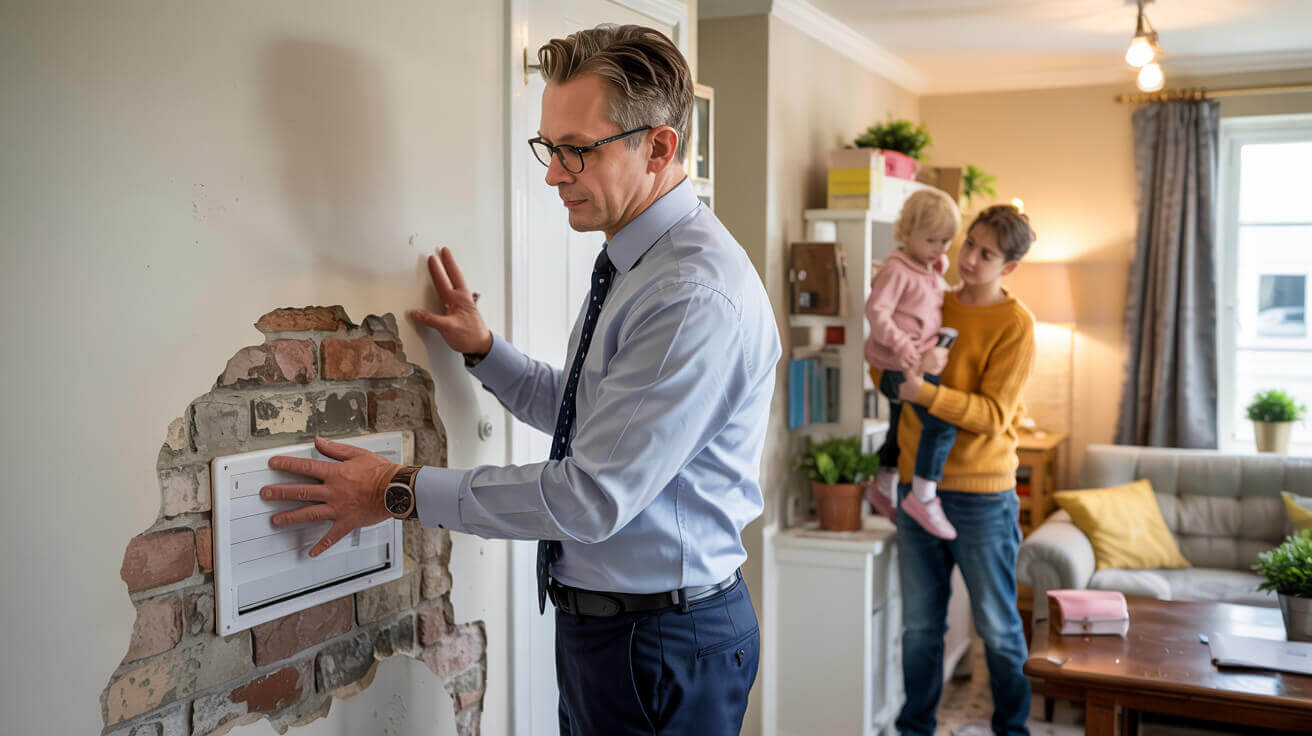
The strongest handover pack is the one another reviewer can follow quickly and confidently.
What the pack must contain
You should expect a structured evidence set that shows scope, suitability, installation quality, and handover. In practical terms, that means:
- marked-up locations and defect references
- pre- and post-repair photographs
- product and system details for the exact application
- installer competence and assurance records
- QA inspections before concealment
- completion records, exclusions, and sign-off
That is the difference between “works were done” and “works can be defended”.
How the record should be structured
The easiest packs to audit follow one simple line: requirement, survey, install, inspect, certify, sign-off. When every repair can be traced back to the original finding, later review becomes faster and far less contentious.
This is also the most useful format for Golden Thread updates. If someone reviews the building months or years later, they should be able to see what changed, where it changed, who installed it, what basis was used, and who accepted the result.
What actually closes an action
An FRA action is ready for closure when the original defect is fixed, the chosen system suits the opening, the installed detail has been verified, and the evidence is complete enough for later scrutiny.
If one of those elements is missing, the item may be progressed, but it is not truly closed. If you want a cleaner portfolio position, that distinction matters.
If you want to test your current evidence standard against what insurers, lenders, and auditors usually expect, request a pack review before the next scrutiny point.
Accreditations & Certifications







You need delivery that works in occupied buildings and reporting that holds up at board level.

The right technical method still fails if the building cannot absorb the process around it.
How we work with your team
We build the programme around your actual operating structure. That means clear roles for the day-to-day building safety function, visible decision points for AP or PAP oversight, and practical coordination with property, compliance, and resident-facing teams.
You do not need another isolated specialist report. You need one route that joins survey findings, repair phases, QA checks, and reporting into something your organisation can actually manage.
How we reduce disruption for residents
Compartmentation work often sits behind access challenges, repeat visits, and understandable resident frustration. We plan around occupied-building realities by phasing works, tightening scopes, and making sure access attempts, exclusions, and follow-on requirements are captured properly.
That protects more than convenience. It protects evidence quality. A missed access window or undocumented exclusion can weaken your closure standard just as quickly as a poor repair.
How reporting stays decision-ready
Board-level reporting should not drown the issue in jargon or strip out the technical basis. You need both: a plain-English summary of risk, progress, and next decisions, backed by a traceable technical record underneath.
We keep that link clear between site evidence and management assurance, so your reporting stays calm, accurate, and useful when residents, insurers, auditors, or lenders ask harder questions.
Reliable Property Maintenance You Can Trust
From routine upkeep to urgent repairs, our certified team delivers dependable property maintenance services 24/7 across the UK. Fast response, skilled professionals, and fully insured support to keep your property running smoothly.

Book Your Free Consultation With All Services 4U Today
You can use the first conversation to test whether your current FRA actions, surveys, and repair records genuinely support close-out, or simply show activity. You leave with a clearer view of where uncertainty sits and what needs to happen next.
Bring your latest FRA actions, any compartmentation survey reports, a sample of completed repair records, and any recurring access or contractor coordination issues. We will review what you have, show where the evidence chain is strong, and identify where it breaks.
If budget pressure is slowing progress, we will help you separate urgent life-safety priorities from items that need further opening up, phasing, or stronger verification. That gives you a more defensible route to action without forcing everything into one reactive burst.
Book your free consultation with All Services 4U. You get a sharper view of what is open, what is defensible, and what your next step should be.
Frequently Asked Questions
How should you turn a compartmentation survey into a PPM programme that actually closes FRA actions?
A compartmentation PPM programme works when every defect moves from survey to verified close-out through one controlled route.
Most backlog does not build because defects were missed. It builds because survey findings, remedial works, quality checks, and FRA updates sit in different systems, with different naming rules, different owners, and different standards. That is when passive fire protection stops being a safety control and becomes an ageing list.
If you want compartmentation survey and repair PPM services to support real FRA action closure, you need to manage passive fire protection as part of property maintenance, not as a one-off fire report. Each breach needs a unique ID, a precise location, a risk band, a repair route, a verification point, and a rule for what counts as closed.
A defect is not closed because someone attended. It is closed because the evidence proves the barrier is back.
That distinction matters to your board, your insurer, and your residents. It also matters to your own team, because a weak workflow creates repeat visits, open actions, and avoidable disputes over whether a job was ever properly finished.
The cleanest model is direct, but it has to be enforced.
The survey should identify the exact breach and record enough detail for another person to relocate it later without guesswork. The issue should then be risk-ranked, matched to a suitable repair method, assigned to a contractor with the right passive fire protection competence, checked before concealment where needed, and verified after completion. Only then should the linked FRA action move to closed status.
If one stage breaks, your compartmentation survey and repair PPM services will start leaking value. A broad survey note becomes a vague work order. A vague work order becomes a generic repair. A generic repair produces weak evidence. Weak evidence leaves the FRA action stuck open.
That is why evidence-led close-out matters so much in property maintenance. It stops the same opening being rediscovered every review cycle under slightly different wording.
Which closure gates stop FRA actions drifting for months?
The highest-value gates are often simple, but they stop most failure.
You need:
- one defect ID from survey through sign-off
- a location reference that survives handover
- a repair method matched to the actual substrate and opening
- pre-concealment checks where work will later be hidden
- post-repair photos tied to the original defect
- a named verifier
- an FRA tracker update
- a note explaining any residual risk, meaning anything still open or partly unresolved
PAS 8673 is useful here because it reinforces structured decision-making, competence, and information control in building safety management. The point is not to create paperwork for its own sake. The point is to stop important fire safety decisions turning into informal assumptions.
A simple comparison shows the difference:
| Stage | Weak approach | Controlled approach |
|---|---|---|
| Survey | Broad defect note | Defect ID, plan reference, photos |
| Repair | Generic instruction | Method matched to substrate and opening |
| Closure | Contractor says complete | Verified evidence linked to FRA action |
If your current property maintenance process cannot show that chain cleanly, the weakness is managerial as well as technical.
Where do good programmes usually stall in practice?
They usually stall at the handoff points.
The surveyor records the breach one way. The contractor reads it another way. The managing agent logs it in a third format. Then the next FRA review tries to work out whether the original issue was fixed, partly fixed, moved, or simply relabelled. That is how FRA action closure drifts, even when people are working hard.
A stronger route is to test the workflow itself, not just the workmanship. If your action list keeps ageing, the issue may be less about repair speed and more about the survey-to-remedial handoff, the verification standard, or the evidence-led close-out rule. That is often where All Services 4U can add value quickly: by tightening the route from finding to defensible closure, so your property maintenance programme stands up under board review and insurer scrutiny.
If you want a low-friction next step, a closure audit can show where your current compartmentation survey and repair PPM services are breaking down before the next review cycle makes the problem more expensive.
What should a compartmentation survey include if you want repair priorities you can actually use?
A useful compartmentation survey tells your team what failed, where it failed, how serious it is, and what happens next.
That sounds obvious, but many reports stop one step too early. They identify defects without producing repair-ready information. The result is familiar in property maintenance: procurement slows down, priorities blur, and later sign-off becomes harder because the original record was never precise enough to control the repair route.
If you want compartmentation survey and repair PPM services to support FRA action closure rather than create another long report, the survey has to support action as well as observation. In residential buildings, that means following the fire-resisting line through risers, service penetrations, voids, shafts, roof spaces, and common parts, then recording each breach with enough detail for later repair and verification.
What information should the survey capture on site?
The survey needs to record the opening condition, not just the broad problem.
A repair-ready record should usually include the location reference, the compartment line affected, the construction type, the service penetrant or opening condition, the likely defect mechanism, any access limit, and enough photographs for future re-identification. Marked-up plans, riser references, and floor or zone tags all help because they reduce later argument about where the issue actually sat.
If your team cannot reliably find the same defect later, it cannot control the repair route now.
That matters because passive fire protection failures often sit in awkward spaces touched by multiple trades over time. A note saying “fire stopping damaged in riser” may be true, but it is weak. It does not give your contractor a workable scope, your compliance lead a clean record, or your board a strong route to evidence-led close-out.
How do you make a survey repair-ready instead of just descriptive?
A repair-ready survey links observation to consequence and consequence to next action.
It should separate at least four categories:
- urgent defects needing accelerated action
- planned defects suitable for phased remedials
- inaccessible areas needing opening-up
- items needing another specialist before final scope is set
BS 9991 is helpful here because it keeps the focus on how compartmentation supports the wider fire strategy, rather than treating every breach as an isolated snag. In real buildings, the same defect size can carry very different weight depending on whether it sits in a riser, near an escape route, or within an area with heavy service density.
A small breach in the wrong place can matter more than a larger one in a lower-risk zone.
That is why repair priorities should not be based on who can attend first. They should be based on spread potential, occupancy impact, location, access constraints, and the chance that repeated work by other trades has weakened the area more widely.
Which survey fields make procurement and sign-off easier later?
This is where a lot of programme value is won or lost.
Useful fields often include:
- defect ID
- building, floor, area, and riser or zone reference
- barrier type or compartment line
- penetrant type or opening condition
- access limitations
- recommended next step
- priority band
- need for pre-concealment inspection
- linked FRA action number, where one exists
Regulation 38 is relevant in principle because it reinforces the value of organised fire safety information at handover and through later building management. In practical property maintenance terms, that means your survey output should help another person act without having to reconstruct the original issue from memory.
A compact test helps:
| Survey output | Weak result | Useful result |
|---|---|---|
| Narrative only | Re-scoping later | Delay and interpretation risk |
| Tagged, photo-linked defect record | Direct work package | Faster remedials and cleaner sign-off |
If your current surveys still force your team to rewrite, interpret, and re-scope defects before work begins, a survey-output review is often the fastest commercial fix. It tightens compartmentation survey and repair PPM services at the front end, which usually shortens the whole FRA action closure cycle.
When should you re-inspect compartmentation in common parts, risers, roof spaces, and service penetrations?
Compartmentation should be re-inspected on a risk basis and after events that commonly damage fire-resisting lines.
There is no single inspection interval that fits every building. A stable block with tight contractor control and low levels of intrusive work does not carry the same integrity risk as a more active building where electrical, plumbing, ventilation, roofing, or access-control changes happen regularly.
The better question is not “what is the standard number of months?” It is “what makes this building likely to lose compartment integrity between formal reviews?” That is the mindset that makes compartmentation survey and repair PPM services useful in live property maintenance, rather than passive and backward-looking.
Which events should trigger a fresh compartmentation check?
The strongest trigger is usually change.
Reinspection is often justified after:
- electrical upgrades and containment changes
- plumbing alterations and rerouted services
- ventilation replacements
- security or access-control installations
- repeated riser access by several trades
- roof-space works
- opening-up investigations
- remedials that will later be concealed
These are the moments when passive fire protection is most likely to be damaged quietly. If your building depends on the next FRA alone to rediscover whether recent works have broken compartment lines, your control model is too passive.
That matters commercially as well as technically. When defects sit unnoticed after change events, the cost usually appears later as repeat surveys, repeat remedials, insurer questions, or board frustration over why actions keep returning.
What inspection cadence works better than a blanket timetable?
A hybrid cadence usually works better.
That means one planned review of known risk zones and historical breach areas, then targeted reinspection after change events. The value is simple. Your team keeps a PPM rhythm without pretending every area of the building carries the same risk at all times.
National Fire Chiefs Council guidance supports a risk-led, evidence-led approach to fire safety management. In practice, that means a heavily used riser with frequent contractor access may justify tighter checks than a low-change area elsewhere in the same building. A block with repeat breach history should tighten review frequency around that pattern rather than spreading effort thinly across the estate.
Which locations deserve tighter repeat attention?
Some areas repeatedly create hidden failures.
Common examples include risers, service cupboards, roof voids, meter cupboards, above-ceiling runs, and common-part zones where several trades work over time. These spaces matter because they collect small changes from different workstreams. Each change may look minor on its own. Together, they can weaken the fire strategy.
That is why your property maintenance plan should not only ask where defects were found last time. It should also ask where future disturbance is most likely.
If you want a simple operational rule, inspect more often where access is frequent, visibility is poor, and service density is high.
How should you explain the reinspection approach to decision-makers?
Each audience needs a different answer.
Boards want to know the cadence is proportionate and controlled. Insurers want confidence that spread-risk defects are not being left to drift between formal reviews. Property managers want a trigger matrix they can use without debate every time a contractor opens a riser. Lenders care less about the exact interval and more about whether the asset appears actively controlled.
A trigger matrix can help:
| Trigger | Reinspection response | Why it matters |
|---|---|---|
| M&E alterations | Local targeted check | Frequent source of breaches |
| Roof-space works | Zone review | Hidden spread paths |
| Repeat defect pattern | Tighter local cadence | Pattern risk |
| Concealed remedials | Pre- or post-close check | Stops weak assumptions |
If your current programme still relies on fixed dates alone, a reinspection trigger review is often the safer next move. It can help All Services 4U or your internal team strengthen compartmentation survey and repair PPM services before the next insurer query, FRA review, or governance challenge exposes the gap.
Which evidence pack should you demand from compartmentation repair contractors before you sign anything off?
You should demand an evidence pack that proves the right defect was repaired in the right place, using the right method, and checked properly.
This is where many compartmentation programmes either become defensible or stay fragile. A contractor saying the works are complete is not enough. A generic completion sheet is not enough either. If the record cannot connect the original defect to the repaired condition clearly, your team is left relying on memory and verbal reassurance instead of proof.
That is a weak position for a managing agent, a compliance lead, or a board. It is even weaker when an insurer, lender, or future fire risk assessor asks for the file.
What should the minimum close-out pack contain?
The minimum pack should let someone unfamiliar with the job understand what was found, what was done, what was checked, and what remains open.
That usually means:
- defect IDs matching the survey and tracker
- clear location references
- pre-repair photographs
- post-repair photographs
- repair method or system used
- product details
- installer competence evidence
- pre-concealment checks where relevant
- sign-off records
- exceptions or access limits still outstanding
The point is traceability. If a service penetration was repaired in a level-three riser, the file should show that plainly without needing the contractor to explain it later.
What separates strong evidence from weak evidence?
Strong evidence is building-specific, traceable, and readable by somebody who was not there.
Weak evidence is usually scattered across email chains, generic certificates, unlabeled photos, and broad statements that only make sense to the original team. That may feel manageable in the moment, but it falls apart when your property maintenance records are tested externally.
Third-party assurance such as BM TRADA Q-Mark can support confidence in competence and process. It does not replace job-specific QA. A product name alone does not prove the installed solution suited the substrate, opening size, penetrant type, or local arrangement.
This is where the EN 1366 test family and BS 476 context matter conceptually. Tested systems depend on matching the installed condition to an appropriate tested application or assessed solution. If your evidence pack cannot show what was actually present on site, it becomes harder to defend the repair logic later.
Which sign-off sequence keeps evidence-led close-out clean?
A strong sign-off route is sequential.
A practical order is:
- confirm the repair addresses the correct defect ID
- verify location and compartment line
- review the method and products used
- check pre-concealment evidence where needed
- review completed-condition photos
- note any exclusions or unresolved areas
- update the live tracker
- decide whether the linked FRA action can close
That last stage matters. A completed repair does not always justify immediate FRA action closure. If linked openings remain inaccessible, if grouped defects were treated together, or if another survey is still needed, the file should say so plainly.
Why does this matter commercially as well as technically?
Because weak evidence slows every later decision.
It delays payment approvals. It creates quality disputes. It weakens insurer conversations. It makes board reporting feel vague. It increases the chance that future reviews reopen issues your team thought were settled.
For a BOFU reader, this is one of the clearest points where All Services 4U can reduce delivery risk. If your current evidence-led close-out file would not survive outside scrutiny, the safer move is a close-out audit, a defect-log reconciliation, or a targeted binder review. That gives your compartmentation survey and repair PPM services a stronger proof chain before someone else tests it for you.
Why does compartmentation evidence matter to insurers, lenders, and boards if the repairs are already done?
Compartmentation evidence matters because repairs without proof still leave uncertainty around risk, governance, and asset value.
The physical work may be complete, but if the record is weak, senior stakeholders still face the same question: can they rely on the improvement? That uncertainty affects each group differently, but the underlying issue stays the same. When the file is thin, the risk is hard to measure and harder to defend.
This is where many building teams get caught. They focus on whether the contractor attended and whether the defect appears fixed. Boards, insurers, and lenders are asking something slightly different. They want to know what changed, why it should be trusted, and what remains unresolved.
How do insurers, lenders, and boards read the same evidence differently?
Boards want governed clarity. They need to see what was found, what was fixed, what remains open, and what now needs approval or oversight.
Insurers read the same file through a condition-precedent and loss-control lens. They want to see disciplined improvement where passive fire protection affects claim defensibility or underwriting confidence.
Lenders and valuers read it through transaction stability. If the evidence suggests unresolved fire safety uncertainty, the effect can show up as delay, conditions, valuation caution, or refinance friction.
RICS technical due diligence thinking is useful here because it reflects how incomplete records create drag long before a dispute exists.
Why does weak evidence become more expensive over time?
Because rebuilding the record later is slow and expensive.
Pressure usually arrives suddenly. It may be an insurer renewal, a refinance, a board challenge, a resident escalation, or a wider building safety review. At that point, nobody wants a verbal summary. They want a reliable file. If the pack is incomplete, your team has to chase old photographs, reconstruct locations, test whether closure assumptions were justified, and explain gaps that should have been solved during delivery.
That cost shows up in time, confidence, and decision speed.
A useful rule is simple: if the answer to a serious stakeholder question still depends on who remembers the job, your evidence standard is not strong enough.
What should a strong evidence file help each stakeholder decide?
It should make the next decision easier.
For a board, that may mean approving the next remedial phase or accepting a partial-risk position. For an insurer, it may mean deciding whether policy conditions have been satisfied. For a lender, it may mean deciding whether uncertainty is narrowing or widening. For a property manager, it may simply mean reporting an FRA action as closed with confidence.
That is why management clarity and technical proof both matter. A technically dense file that nobody can follow still creates friction. A neat summary with no underlying proof creates the same problem.
What is the practical next step if your current file feels weak?
Do not wait for outside scrutiny to reveal that weakness.
If your current pack would force your team to explain key gaps verbally, an evidence reconciliation review is usually the most practical next move. It gives you time to clean up the record while context is still recoverable. For many clients, All Services 4U adds value here by turning passive fire protection records into an operationally usable file, not just a folder of attachments.
If you are the kind of owner or manager who wants your buildings to be easy to govern, insure, and refinance, this is where evidence-led close-out stops being admin and starts being asset protection.
Who should own decisions, sign-off, and reporting when the building safety lead is coordinating compartmentation work?
The building safety lead may coordinate the work, but formal ownership of risk, approval, and closure still needs to stay explicit.
This is one of the most important distinctions in compartmentation management. In many live buildings, the day-to-day building safety lead, fire compliance manager, or similar operational role becomes the practical centre of gravity. They brief surveyors, arrange access, chase contractors, track defects, and assemble the evidence file. That is normal. It is often necessary.
But coordination is not the same as legal accountability.
Under the Building Safety Act framework, core duties sit with the Accountable Person and, where relevant, the Principal Accountable Person. If those lines blur, your programme can look active while governance quietly weakens. Work gets done, but nobody is fully clear on who approved the priorities, who accepted the remaining risk, and who had authority to say an issue was truly closed.
How should the ownership split work in practice?
The coordinator should own operational movement. The formal duty-holder or delegated governance route should own key acceptance points.
That means the building safety lead can usually manage tracking, contractor follow-up, evidence assembly, and escalation of delay. The AP, PAP, or delegated governance body should usually own the closure standard, significant budget decisions, acceptance of any remaining risk, and formal reporting that carries organisational assurance.
Residual risk simply means anything important that remains unresolved after the work, whether because access was limited, scope is still incomplete, or linked defects remain open.
A compact split looks like this:
| Function | Operational owner | Formal owner |
|---|---|---|
| Defect tracking | Building safety lead | Governance oversight |
| Repair coordination | Building safety lead or PM | Within approved authority |
| Residual-risk decision | Technical lead informs | AP, PAP, or delegate accepts |
| Final reporting | Coordinator prepares | Governance route approves |
This structure does not slow delivery. It makes property maintenance and FRA action closure easier to defend.
How should sign-off work so no one relies on memory?
Sign-off should show who found the issue, who approved the route, who verified the outcome, and who accepted the final status.
Many organisations still rely on habits instead of rules: a contractor email, a verbal update, a meeting note, or a tracker that says “complete” without showing who checked what. That creates avoidable governance risk because job progress and accountable approval are not the same event.
A better model is procedural. Set closure gates in advance. Name the verifier role. Define when items stay open. Record who accepted that position and on what evidence.
If your current compartmentation survey and repair PPM services still depend heavily on one experienced person holding everything together through memory and judgement, the weakness is structural, not personal.
Why do AP teams and boards care so much about that distinction?
Because unclear ownership turns delivery risk into governance risk.
Boards and AP teams are not only asking whether work happened. They are asking whether the organisation can show control. That distinction matters even more in higher-risk residential buildings, where residents, regulators, insurers, and lenders may all test how responsibilities were assigned and evidenced.
For a property manager, the concern is often pace and coordination. For an AP or board, the concern is whether the right person accepted the right position with the right information. Related, yes. The same question, no.
When should you tighten the governance model?
Usually when the process starts relying on trust in individuals instead of trust in the system.
Warning signs include:
- actions marked complete without a named verifier
- blurred responsibility between technical and governance roles
- open issues left undocumented
- reports that describe progress without ownership
- board papers that summarise without linking back to evidence
If that sounds familiar, the right next step is often a governance mapping session or sign-off audit rather than another round of reactive chasing. All Services 4U can help by reviewing role splits, closure gates, reporting routes, and evidence-led close-out standards, so your passive fire protection programme is easier to manage and easier to defend.
If you want your building to look controlled because it is controlled, not because somebody is working heroically behind the scenes, this is the point to tighten ownership before the next challenge tests it for you.
- You need a survey-to-close-out service, not another static report.
- Open compartmentation actions usually mean your evidence chain is broken.
- A good compartmentation survey shows you what is wrong, where it is, and what happens next.
- Repairs need to match the opening, the substrate, and the fire strategy.
- Planned reinspection keeps good repairs from drifting back into doubt.
- Your evidence pack should answer audit, insurer, and lender questions without reconstruction.
- You need delivery that works in occupied buildings and reporting that holds up at board level.
- Book Your Free Consultation With All Services 4U Today
- Frequently Asked Questions
- Related PPM Services
Related PPM Services
Case Studies


Related Articles

Your Guide To Identifying And Treating Minor Mould Outbreaks
Why Planned Preventative Maintenance (Ppm) Saves Money And Ensures Compliance