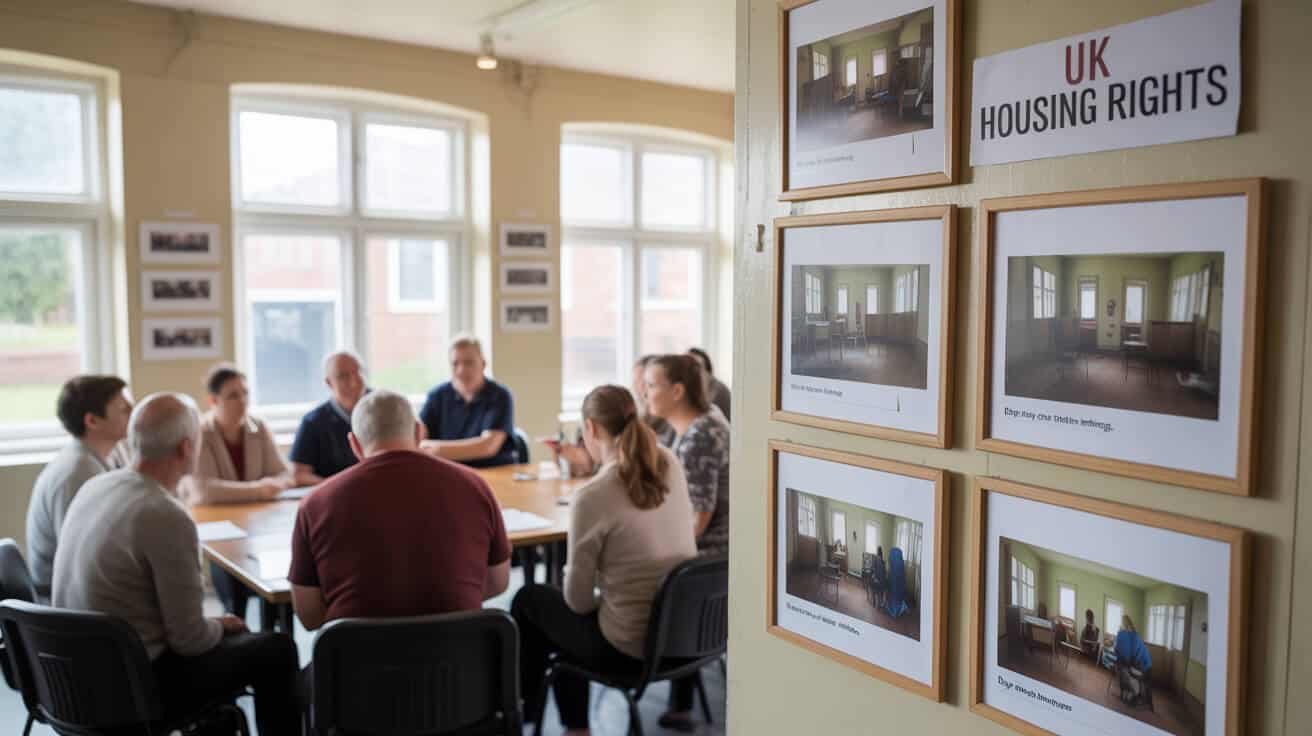
Mandatory Occurrence Reporting Support PPM Services for BSMs – MOR Triggers & Documentation
BSMs, APs, PAPs, managing agents, and PPM teams in occupied higher-risk buildings need a MOR process that catches real fire and structural risks without drowning in noise. All Services 4U helps you define clear triggers, escalation routes, and evidence standards based on your situation. You leave with an accountable route from detection to submission, defensible records, and decision rights written down before a live event tests your team. When you are ready for a calmer, workable MOR process, you can talk it through with us.



Author
Izzy Schulman

If you manage an occupied higher-risk building, the real exposure often starts after a defect is found, not when it appears. Unclear MOR triggers, weak escalation, and patchy records leave BSMs, APs, PAPs, and PPM teams carrying risk they cannot easily explain or defend.

A workable Mandatory Occurrence Reporting route gives your operational team one accountable path from detection to submission, focused on significant fire and structural risks. With clearer thresholds, first-hour records, and written decision rights, your engineers, supervisors, and dutyholders can act faster and document what matters with more confidence.
- Clarify MOR thresholds for significant fire and structural risks
- Map ownership from first detection through to submission
- Strengthen evidence capture so records stand up under scrutiny</p>
Need Help Fast?
Locked out, leak at home, or electrical issue? All Services 4 U provides 24/7 UK locksmith, plumbing, electrical.
Testimonial & Clients Who Trust Us
With 5 Star Google Reviews, Trusted Trader, Trust Pilot endorsements, and 25+ years of experience, we set industry standards for excellence. From Dominoes to Mears Group, our expertise is trusted by diverse sectors, earning us long-term partnerships and glowing testimonials.
Worcester Boilers

Glow Worm Boilers

Valliant Boilers

Baxi Boilers

Ideal Boilers

Get a workable MOR process in place before a live event tests your team.
If you manage an occupied higher-risk building, you do not need more policy language. You need a process your engineers can follow, your building safety lead can coordinate, and your AP or PAP can defend. The real risk is rarely the first defect. It is the gap between detection, decision, documentation, and action.
Mandatory Occurrence Reporting is not a holding pen for every fault your team finds. It is a reporting route for serious building safety information linked to fire spread or structural failure. When a finding crosses that line, you need a fast make-safe response, a clean escalation path, and a record that supports both the regulator-facing process and your building’s live safety position.
If you run a BSM-style operational team, act as an AP or PAP, or oversee managing agents and PPM contractors, you need a route that works on a live site. We help you make that duty usable. You get clearer trigger recognition, stronger evidence capture, tighter handoffs, and documentation that supports the next decision instead of slowing it down.
If you want a calm, practical review of your current process, book a consultation with All Services 4U and leave with a clearer route from trigger to report.
You need one accountable route from detection to submission.
You need a route that makes ownership obvious before a serious event forces the issue.
The legal duty does not sit with the contractor
In occupied higher-risk buildings, the legal reporting framework sits with the AP and, where relevant, the PAP. Your contractor, site supervisor, managing agent, or operational building safety lead may spot the problem first, but that does not move the statutory duty. It changes the handoff.
Your operational team still controls the first signal
Your BSM-style lead, FM team, and PPM contractor still shape the outcome because they are often first on the scene. If they miss the threshold, delay escalation, or record the issue badly, your AP inherits uncertainty instead of evidence. That is why the operational route matters just as much as the legal one.
Decision rights must be written down in advance
You need clear ownership for five moments: who detects, who makes safe, who reviews significance, who submits or approves submission, and who updates the controlled record. If those roles only live in people’s heads, your process will fail under pressure. A short escalation map usually does more for you than a long policy nobody opens during a live event.
Not every defect is a reportable occurrence.
You need a threshold your team can use without turning routine defects into noise.
The threshold is about significant fire or structural risk
The practical test is easy to say and harder to apply well. Ask whether the incident or condition relates to fire spread or structural failure, and whether it creates a significant risk that could lead to death or serious injury for a significant number of people in the building. You assess that risk in light of the controls already in place, not in a vacuum.
Routine defects stay in normal maintenance workflows
A failed fitting, a one-off snag, minor wear, or a standard remedial issue does not become reportable just because it is inconvenient or overdue. Your normal defect, compliance, and reactive maintenance routes still matter. MOR is not there to replace them. It is there to catch the smaller set of conditions that point to a much more serious building safety risk.
Borderline cases need formal triage, not guesswork
The biggest failure is usually not bad intent. It is informal judgement. You can end up over-reporting because your team does not trust the threshold, or under-reporting because nobody wants to escalate too early. If your PPM contractor opens a riser and finds repeated fire-stopping failures across several penetrations, you may not yet know whether the threshold is met. You still treat that as a triage event: record the facts, apply interim controls where needed, escalate quickly, and require a dated rationale for the decision that follows.
Your PPM team is often the first detection layer.
You get your best chance to catch a real threshold event during routine planned maintenance.
Fire and compartmentation findings
Repeated failures in fire stopping, compartmentation, fire doors, penetrations, dampers, smoke-control interfaces, or alarm cause-and-effect should not sit as isolated defects. One issue may stay within a remedial workflow. A repeated pattern across risers, floors, or blocks may point to a building-level risk that needs accountable review.
Structural and façade findings
Cracking, movement, deformation, spalling, anchor concerns, or signs that water ingress is affecting structural elements all need disciplined escalation logic. The question is not whether the defect looks dramatic in one photo. The question is whether the condition suggests weakening structural reliability, progressive deterioration, or a credible pathway to wider harm.
Safety-critical service failures
Not every lift, electrical, or water defect is a MOR trigger. Some are still ordinary maintenance issues. The risk rises when the failure affects life-safety systems or weakens fire or structural controls. That includes faults that compromise smoke control, firefighting lift reliability, safety-critical power, or water-related conditions that threaten structural integrity or fire performance.
The first hour matters more than the later paperwork.

You reduce risk fastest when your first response is disciplined, not perfect.
Make safe before you debate the threshold
You do not wait for a perfect classification before acting. If the condition suggests immediate risk, stop work where needed, isolate the hazard if that is safe and within competence, restrict access, protect residents, and apply temporary controls. That response should be proportionate, recorded, and tied to a named decision-maker.
Escalate on the same day
Potential reportable occurrences should leave your normal job-closing rhythm straight away. Your engineer or supervisor should notify the agreed escalation route on the same day through one standard path, not an improvised mix of calls, texts, and emails. That gives you speed, ownership, and traceability when the pressure rises.
Preserve source evidence before the scene changes
Your first record needs to support a later decision, not just prove attendance.
- Exact building, area, level, asset, and affected element
- Time found, discoverer, and who was notified
- Photos, readings, test results, and temporary controls applied
That core record gives your AP or PAP something usable. Without it, later review depends on memory, partial images, and guesswork. That weakens both the safety decision and your governance position.
A mid-process review with All Services 4U can show you whether your current site records would stand up in that first-hour window.
Your dossier must support a fast decision and a defensible record.

You need a file that helps you decide quickly and still stands up afterwards.
What the incident dossier should contain
Your dossier should capture what happened, where, when, who found it, what the issue affects, what immediate controls were applied, who reviewed it, what decision was made, and what actions followed. It should also preserve the technical basis for that decision, including readings, reports, images, marked-up locations, and any specialist input.
How the golden thread should be updated
Your occurrence file should not sit outside the building’s controlled safety information. If the event changes your building’s current safety truth, the golden thread needs to reflect that quickly. That means version control, approval trails, change history, and a clear record of what changed, why it changed, and who authorised the update.
When other reporting routes may also apply
A serious event can trigger more than one reporting route. MOR does not automatically replace other duties. Depending on the facts, you may also need to consider related fire safety, incident, or RIDDOR obligations. Your workflow should force that cross-check rather than assume one form solves everything.
Current government guidance expects a notice as soon as possible once the AP becomes aware of a reportable occurrence, followed by a fuller report within 10 days. Your dossier should make those timescales easier to meet, not harder.
Accreditations & Certifications



Good support reduces uncertainty without adding bureaucracy.

You need controls that fit your building, your contractors, and your record systems.
What we review first
We review your trigger logic, escalation path, evidence standards, and current handoffs between engineers, supervisors, managing agents, and dutyholders. That shows you where uncertainty is most likely to appear when a live event lands.
We help you create trigger matrices, evidence fields, handover templates, escalation maps, and dossier structures that match your operating model. That includes the link between site capture, accountable review, notice-and-report timing, and golden thread updates.
What live support looks like
If a live issue appears, we help you organise the facts, structure the handoff, and tighten the record so your AP or PAP can make a faster, better-supported decision. You keep control of the duty. We help you remove confusion at the point where confusion creates risk.
If you want to start smaller, we can scope one building, one contractor stream, or one workflow gap instead of launching a broad transformation programme.
Reliable Property Maintenance You Can Trust
From routine upkeep to urgent repairs, our certified team delivers dependable property maintenance services 24/7 across the UK. Fast response, skilled professionals, and fully insured support to keep your property running smoothly.

Book Your Free Consultation With All Services 4U Today
You need a process that works when your team is under pressure, not one that only sounds good in a policy review. We will look at your trigger recognition, escalation path, evidence capture, and golden thread handoffs through the lens of a live occupied higher-risk building.
When you speak with us, we review how your engineers flag concerns, how your operational team makes safe and escalates, and how your AP or PAP receives the information needed to decide. You leave with a clearer view of the gaps most likely to slow, weaken, or complicate a real MOR decision.
If you want, we then scope the next step around one building, one contractor group, or one portfolio workflow. That keeps the work proportionate and helps you fix the highest-risk weakness first.
Book your free consultation with All Services 4U today.
Frequently Asked Questions
When should a routine PPM finding move out of normal maintenance and into a possible reporting support pathway?
A routine planned preventive maintenance finding should move out of normal maintenance when it suggests a wider fire or structural safety issue, not just a local defect.
That is the line that protects your building, your board, and your record. A failed door closer, one damaged seal, or a single service fault may stay in a normal remedial route if the defect is isolated, understood, and contained. The position changes when the same finding starts to point beyond the item in front of your engineer. If the defect raises doubt about the wider safety condition of the building, it no longer belongs in a routine close-out mindset.
For most higher-risk residential settings, the first test is simple. Ask whether the finding could mean people are less protected than your current records suggest. If the answer may be yes, the issue should move into a more structured internal review. Building Safety Regulator guidance is useful here because it keeps the focus on serious fire and structural safety risk, not on cosmetic defects or everyday wear. In practice, that means your field process should be able to recognise signals early without expecting engineers to make the legal decision themselves.
A defect becomes more serious the moment it makes your existing record less trustworthy.
The safest threshold test usually sits on three points: pattern, consequence, and uncertainty. Pattern asks whether the issue is isolated or repeated. Consequence asks what happens if the same condition exists elsewhere. Uncertainty asks whether prior sign-off, surveys, or closure records can still be relied on. If any of those start to move against you, the finding should be escalated for formal internal assessment.
This is where many portfolios either create too much noise or too little action. If every defect is treated as a major event, your review route becomes clogged. If repeated life-safety defects are treated as housekeeping, your accountable decision-makers receive weak information too late. Good property maintenance support means recognising the moment when a defect stops being local and starts becoming strategic.
What signs usually justify an immediate internal threshold review?
Some findings are more likely to justify rapid review because they sit close to fire spread, structural stability, or system dependency.
- Repeated fire-stopping defects: across several risers or service penetrations
- Progressive cracking, movement, or distortion: in structural elements
- Façade defects: with possible fire spread or falling risk
- Failures across linked life-safety systems: rather than a single component
- Conflicts between site conditions and earlier sign-off records:
- Recurring defects in the same safety-critical area: after prior closure
A practical example makes the distinction clearer. One damaged fire collar found during intrusive work may still be a contained remedial issue. The same defect found in multiple risers, especially where prior records show completion, creates a broader question about whether the fire-stopping record is still reliable. Approved Document B helps frame that shift because it brings the focus back to fire spread and compartmentation rather than simple snagging.
Which route is usually right for different kinds of findings?
A compact route guide helps your team stay consistent under pressure.
| Finding pattern | Usual operational route | Escalation view |
|---|---|---|
| Single minor defect | Normal remedial workflow | Monitor for pattern |
| Repeated life-safety defect | Structured technical review | Escalate promptly |
| Progressive structural concern | Specialist assessment | Escalate immediately |
| Record conflict on critical element | Verification and hold | Escalate for decision |
The point is not to turn your engineers into lawyers. The point is to stop a job being closed as routine when it may have changed the safety position of the building. If your current workflow cannot reliably distinguish between isolated faults and broader warning signs, that is not a site issue alone. It is a governance weakness.
For a board director, compliance lead, or accountable person, a short threshold review of your current PPM findings route is usually a sensible next step. It shows whether your maintenance process is genuinely capable of surfacing serious signals before they harden into board-level risk.
Who should act first, who should decide next, and who should own the record when a possible reportable issue is found?
The site team should detect and preserve the facts first, the safety lead should coordinate next, and the accountable decision-maker should decide from a complete evidence trail.
That handoff is where many otherwise capable organisations lose control. Your engineer or specialist is often the first person to see the problem, but that does not make them the person who decides whether a formal reporting threshold may have been reached. Their role is narrower and more valuable than that. They need to identify the condition, protect people if competent to do so, capture the evidence, and notify the agreed route. The next layer then reviews significance, checks whether the issue may affect wider fire or structural safety, and places the matter in front of the accountable decision-maker quickly and clearly.
In plain English, the AP is the accountable person and the PAP is the principal accountable person where that role exists. They need structured evidence, not fragments. If the first internal note is vague, late, or detached from the building record, the decision will either be delayed or made on assumptions. That is why role clarity matters so much. A building does not usually fail because nobody attended. It fails because nobody clearly owned the next step.
HSE guidance is a useful anchor here because it consistently rewards clear responsibility, competent action, and traceable decisions. The strongest operational model is the one that lets each person stay in their lane without becoming passive. Your contractors should not improvise legal judgments. Your compliance manager should not have to reconstruct the issue from half-complete emails. Your AP or PAP should not be left choosing between underreaction and overreaction because the evidence came in scattered.
Who should own each stage of the handoff?
Every building or portfolio should define five ownership points in advance.
- Who detects: the issue on site
- Who authorises immediate controls: or make-safe action
- Who reviews significance: against the internal threshold
- Who decides: whether the matter may require the formal route
- Who updates: the live building record and action tracker
Most risk sits in the handover gap, not in the first sighting.
Those roles can sit across different people. That is not the problem. The real weakness appears when they are split but undocumented. A property manager may coordinate. A compliance manager may review the finding. The AP or PAP may make the accountable call. A document controller or safety lead may update the record. That is a sound model if everyone knows the sequence.
What should the first same-day handoff include?
A same-day handoff should be short, factual, and sufficient for a rapid technical review.
It should usually cover the exact location, the affected element, what was observed, whether the issue appears isolated or repeated, what interim controls were applied, who was told, and what immediate next step is recommended. If the issue conflicts with a prior survey, previous closure note, or a known fire or structural record, that conflict should be stated clearly. BS 8214 and EN 1634 become helpful references in door-related cases because they let later reviewers quickly place the observation in a recognised technical context.
A weak note says there is “damage to fire stopping”. A useful note says there are open penetrations in three riser cupboards, marked and photographed, inconsistent with earlier closure records, with temporary access restriction applied and supervisor notified at a stated time. One proves attendance. The other supports a real decision.
Why should the contractor brief stay deliberately narrow?
Because disciplined support is stronger than overreach.
Your field teams are most valuable when they observe accurately, act competently within scope, and leave a reliable evidence trail. If they are pushed into making final legal interpretations they do not own, hesitation increases and quality drops. Strong support means they know exactly what to capture, what not to close, who to notify, and when the matter has moved beyond routine maintenance.
If you are responsible for operational control, a role-map review is a low-friction next step worth taking. It shows whether your handoff model would still hold up on a difficult day, which is the standard that actually matters to residents, boards, and accountable leaders.
How fast should a potential issue be escalated, and what should happen in the first few hours?
A credible trigger should be escalated the same day, with people protected and evidence preserved before the narrative is refined.
The first few hours shape both safety and defensibility. When a finding points toward serious fire or structural risk, the organisation does not need a polished report first. It needs immediate control, a stable evidence trail, and a clear route into accountable review. If your process waits until tomorrow so someone can write a better summary, you are already losing ground. Temporary measures drift, scenes change, and recollections get thinner.
That is why same-day internal escalation should be the default for any finding that may change the known safety position of the building. The Building Safety Regulator expects prompt attention where serious building safety concerns arise. In practical terms, that means your internal route has to treat early notice as part of risk control, not as an administrative preference. The best first-hours response is not complicated. It is disciplined.
For fire safety concerns, that may mean logging an impairment, restricting access, or adjusting interim arrangements while technical review happens. For structural concerns, it may mean exclusion zones, temporary works advice, or urgent engineering input. For façade issues, it may mean area protection and rapid specialist attendance. The detail changes by incident type. The sequence should not.
What should happen first when the issue is found?
Your first-hours response should be simple enough to work under pressure.
- Protect people: in and around the affected area
- Apply safe interim controls: within competence
- Notify the agreed escalation route: immediately
- Capture the original condition: before it changes
- Keep the job open: pending review
- Route the matter to the decision-maker: with facts, not guesswork
That is the operational discipline. The complex judgment belongs later in the review process, not in the first few minutes at the point of discovery.
Which evidence matters most in the first hours?
The most useful early evidence is usually the evidence that disappears fastest.
| Record item | Why it matters | First-hours standard |
|---|---|---|
| Exact location | Supports verification and pattern checking | Capture immediately |
| Photos and readings | Preserves original condition | Before disturbance |
| Temporary controls | Shows proportionate response | Log same day |
| Notification trail | Proves who knew what and when | Record at source |
| Job status | Prevents accidental closure | Hold under review |
A practical example makes this concrete. A maintenance team opens a riser during planned work and finds compromised fire stopping on multiple levels despite earlier closure records showing completion. If the team photographs the openings, marks the locations, restricts access, notifies the review route, and leaves the work order open, the organisation has a stable starting point. If the team patches one area, closes the job, and mentions it later in an email, the strongest evidence may already be gone.
BS 5839 and BS 5266 are especially useful in fire systems contexts because they help anchor whether an impairment affects detection, alerting, or emergency escape support. That technical clarity matters when the accountable person needs to understand not just what failed, but what the building was relying on at the time.
Why do early delays create bigger problems later?
Because the condition changes faster than the record does.
Photos remain on personal devices. Temporary restrictions are forgotten. Other contractors alter the scene. Residents continue using spaces under assumptions that may no longer be safe. By the time the review begins, the cleanest evidence may have vanished and the organisation is now trying to rebuild the situation from memory.
If you oversee compliance, asset risk, or building safety, a first-hours escalation review is a sensible next step. It gives you confidence that the route from site discovery to accountable decision is fast enough to protect both residents and the record without creating unnecessary delay.
Which records should sit in the incident dossier so the accountable person can make a sound decision and the live building record stays accurate?
The incident dossier should combine discovery, control, review, decision, and closure in one traceable chain.
A good dossier is not impressive because it is long. It is useful because it allows an accountable reader to see what happened, what changed, what was done, and what still needs action without rebuilding the incident from separate systems. That matters because once an issue may affect the current safety position of the building, fragmented records create uncertainty for everyone who follows: the AP, the PAP, the board, insurers, lenders, and sometimes legal advisers.
In plain terms, the golden thread is the live, reliable record of safety-relevant information for the building. It is not just a folder. It is a controlled record that should stay accurate, traceable, and usable. NBS guidance on the golden thread is useful because it keeps the emphasis on current, retrievable information rather than static document storage. That distinction matters. A polished PDF saved in the wrong place may look complete and still fail the practical test.
The core file should start with the original finding. That includes the building reference, asset or element reference, exact location, discoverer, date and time, photographs, readings, and a short factual description of the condition. It should then show the immediate response, including temporary controls, resident impact where relevant, and the notification route. After that, it needs to capture review and governance: who assessed it, what evidence they considered, what they concluded at that stage, and what further investigation or remedial action followed.
What should sit in the core dossier every time?
A decision-ready file usually contains these components.
- Discovery record: with chronology and location
- Photographs, marked images, and readings:
- Temporary controls and resident protection steps:
- Notification trail and named reviewers:
- Technical input or specialist reports:
- Decision log with rationale:
- Action tracker and current status:
- Closure evidence and controlled record update:
That file should then link back to your building record, not sit outside it as an orphan document.
What makes a decision log actually useful?
The decision log is often the difference between an orderly review and a confused one.
A usable log should state who reviewed the issue, when they reviewed it, what evidence they looked at, what interim conclusion they reached, what remains uncertain, what temporary controls stay in place, and when the next decision point is due. It should also note whether the live safety record or safety case inputs needed updating.
“Reviewed and noted” is not enough. “Reviewed by compliance lead and AP delegate at a stated time, based on marked photos, repeat-location evidence, and conflict with prior closure record; temporary access restriction remains pending specialist review” is enough to support the next step.
Which records matter commercially as well as technically?
Insurers, lenders, and boards often judge management quality by record quality.
If the dossier is coherent, the organisation looks in control. If it is fragmented, confidence falls quickly. That is why strong incident records support more than internal safety decisions. They help with insurer queries, refinancing scrutiny, board assurance, and tribunal readiness if wider disputes follow.
For a compliance lead, building safety manager, or board member, a dossier template review is a practical next step that carries little disruption and high value. It tells you whether your current record set would actually support a fast, defensible decision or whether it still depends on inboxes, screenshots, and memory.
Why do documentation mistakes turn manageable incidents into bigger governance, insurance, and lender problems?
Documentation mistakes multiply risk because they force later decisions to rest on weak, slow, and incomplete evidence.
Most serious downstream problems do not begin with a lack of attendance. They begin with poor record quality. A blurred photo, an unclear location, a vague job note, or a closed work order with no link to the wider issue weakens every later review. The AP or PAP loses time. The board receives uncertainty instead of clarity. The insurer sees management weakness rather than a controlled event. The lender or valuer sees unresolved doubt around the asset.
That is why record design matters so much. If your evidence chain cannot show chronology, location, interim measures, review points, and closure status, it becomes harder to prove that the organisation acted proportionately and quickly. It also becomes harder to spot patterns. A repeated life-safety issue may sit across five closed jobs and still never look like one building-level problem if the records are poorly tagged.
One of the most common failures is under-recording interim controls. Temporary actions often tell the most important part of the story. If an area was restricted, a system was impaired, a fire watch was considered, or a specialist review was accelerated, that belongs in the record. It shows how the organisation controlled risk while the issue was still being understood.
Weak records do not stay small. They travel through every board paper, claim, and review that follows.
Another major failure point is poor indexing. The material may exist across your CAFM system, engineer device, supervisor email, and compliance folder, but unless it is linked properly, it never becomes a reliable evidence trail. That is why many organisations do not need more systems first. They need stricter minimum standards for naming, location references, linkage, and supervisor review.
Which mistakes usually cause the most trouble?
Certain documentation failures reappear in audits, insurer queries, and escalation reviews.
- Closing the job too early: before internal review is complete
- Using vague labels: without asset or area reference
- Saving photos without context: or identifiable markers
- Leaving temporary measures off the formal record:
- Keeping chronology in email chains: instead of the controlled file
- Treating repeat findings as isolated jobs:
- Failing to reconnect the incident: to the live building record
BS 8214, BS 5839, BS 5266, and EN 1634 are useful anchors here because they help tie technical observations to recognised standards instead of loose descriptions. That does not turn every note into a legal submission. It simply makes later review quicker and more credible.
What does a stronger field standard look like?
A stronger standard is usually shorter, not longer.
Every potential threshold event should leave site with a usable trail: where it was, what was found, what was done, who was told, and what happens next. If your supervisor cannot understand the issue without calling the engineer back, the standard is still too weak. If your compliance lead cannot connect the issue to prior findings, the standard is still too weak. If your AP or PAP cannot see why temporary controls were applied and when the next review point lands, the standard is still too weak.
If you hold operational or governance responsibility, an evidence-standard review is a sensible status-protecting next step. It shows stakeholders that your process is not just active, but controlled enough to withstand scrutiny from insurers, lenders, and board colleagues when pressure rises.
What can you change now to strengthen support without adding another layer of bureaucracy?
You can strengthen support quickly by simplifying trigger recognition, tightening handoffs, and making records usable at first touch.
The best improvement is rarely a thicker procedure. It is a cleaner operating model. Most property teams already have the ingredients: PPM sheets, emergency scripts, supervisor routes, compliance folders, work orders, and board reporting. The problem is that those pieces often use different language, different ownership rules, and different evidence standards. Under pressure, that fragmentation shows.
A stronger model does not need to be heavy. It needs to be repeatable. Your engineers need a one-page trigger guide by issue type. Your supervisors need a same-day review rule for repeated life-safety findings. Your work orders need mandatory asset and location references. Your governance route needs a short decision log. Your document control route needs a clear rule for when the live building record must be updated. That is not bureaucracy. It is what stops uncertainty from moving uphill.
This is also a commercial decision. Better support reduces wasted time, reduces repeated review work, improves insurer confidence, and gives boards a cleaner line of sight over whether safety is being governed well. In a higher-risk residential portfolio, those gains matter because they protect not only residents but asset value, refinancing confidence, and organisational credibility.
Which low-friction changes usually work first?
These are often the fastest practical improvements.
| Improvement | Why it helps | Typical outcome |
|---|---|---|
| One-page trigger guide | Improves recognition on site | Faster internal escalation |
| No-close rule on flagged jobs | Prevents accidental loss of control | Cleaner review chain |
| Dossier template linked to assets | Improves consistency | Better board and insurer confidence |
| Named owner for record updates | Removes ambiguity | Stronger live record |
That kind of structure improves consistency without turning everyday maintenance into paperwork theatre.
What should you pilot first if your estate is complex?
Start with one building, one contractor stream, or one defect family.
Fire door findings, repeat compartmentation issues, recurring roof ingress, or repeated life-safety system faults usually make good pilot routes because the stakes are real and the workflow is visible. Map the path from discovery to accountable decision and see where time, evidence, or ownership breaks down. The result is usually more useful than a wholesale rewrite of every policy because it shows exactly where the weak links sit.
Why is a measured review often the best next move?
Because it gives you confidence without forcing a large programme too early.
If you are a board chair, compliance lead, building safety manager, managing agent, or risk-exposed owner, a targeted workflow diagnostic is a proportionate next step. It lets your team test threshold recognition, first-hours response, role ownership, and evidence quality against a real route rather than a theoretical one. It also gives you a more credible basis for wider change if the pilot proves the case.
That is where All Services 4U can add value in a way that feels practical rather than performative. A focused review of one route, one building, or one evidence chain can show whether your current process is ready for real scrutiny or still depends too much on memory, goodwill, and informal fixes.
What should your next move say about you as a responsible decision-maker?
It should show that you do not wait for a live failure to test a high-risk process.
That matters because stakeholders notice the difference between a team that has procedures and a team that has rehearsed, evidence-led control. If you want the safest low-friction option, start with a workflow review, a building-specific assessment, or an evidence-standard check. That step protects your position because it shows you are acting like someone who governs risk early, not someone who explains it late.
- Get a workable MOR process in place before a live event tests your team.
- You need one accountable route from detection to submission.
- Not every defect is a reportable occurrence.
- Your PPM team is often the first detection layer.
- The first hour matters more than the later paperwork.
- Your dossier must support a fast decision and a defensible record.
- Good support reduces uncertainty without adding bureaucracy.
- Book Your Free Consultation With All Services 4U Today
- Frequently Asked Questions
- Related PPM Services
Case Studies


Related Articles

Your Guide To Identifying And Treating Minor Mould Outbreaks
Why Planned Preventative Maintenance (Ppm) Saves Money And Ensures Compliance