Electrical Thermal Imaging Surveys PPM Services UK – Infrared Fault Detection & Hot Spot Analysis
Facilities teams, landlords and duty holders use electrical thermal imaging surveys to spot developing hot spots before they become failures, shutdowns or fire concerns. Infrared thermography under live load reveals abnormal heating across critical switchgear, boards and terminations, depending on constraints. You finish with a clear report showing what was inspected, where faults sit, how severe they appear and what actions to prioritise, with scope and safety controls agreed in advance. It becomes easier to protect operations and plan targeted maintenance with confidence.



Author
Izzy Schulman

If you manage electrical infrastructure, unseen faults can turn into shutdowns, fire concerns or insurer questions long before there is visible damage. Relying only on periodic inspection leaves you exposed to hidden hot spots across switchgear, distribution boards and other high-consequence assets.

Electrical thermal imaging adds a live-load, infrared layer to your planned preventative maintenance so you can see where abnormal heat is building and act sooner. By focusing on the assets that matter most and delivering clear, actionable reports, it helps you prioritise remedial work and defend your maintenance decisions.
- Reveal hidden hot spots under real operating load
- Prioritise remedial work using clear, graded findings
- Support insurers, boards and stakeholders with defensible evidence</p>
Need Help Fast?
Locked out, leak at home, or electrical issue? All Services 4 U provides 24/7 UK locksmith, plumbing, electrical.
Testimonial & Clients Who Trust Us
With 5 Star Google Reviews, Trusted Trader, Trust Pilot endorsements, and 25+ years of experience, we set industry standards for excellence. From Dominoes to Mears Group, our expertise is trusted by diverse sectors, earning us long-term partnerships and glowing testimonials.
Worcester Boilers

Glow Worm Boilers

Valliant Boilers

Baxi Boilers

Ideal Boilers

Find Hidden Electrical Hot Spots Before They Become Failures
You need live-load evidence before a hidden fault becomes a shutdown, a fire concern, or an insurer problem.
An electrical thermal imaging survey shows how your electrical assets behave while energised and carrying load. Instead of waiting for nuisance trips, burning smells, shutdowns, or visible damage, you can see where abnormal heat is building across switchgear, distribution boards, breakers, busbars, terminations, and other critical components.
We use infrared thermography as a condition-monitoring layer within planned preventative maintenance. It does not replace formal electrical inspection and testing. It helps you identify developing risk earlier, prioritise defects with more confidence, and plan intervention before a minor issue becomes a larger failure.
One overheating component can affect far more than one circuit, disrupting landlord supplies, communal services, plant, trading operations, or resident confidence.
If you want to begin with the assets that carry the highest consequence, we can scope the first survey around those priorities and give you a practical route into a wider programme.
What You Get From an Electrical Thermal Imaging Survey
You need more than images; you need findings you can act on.
A useful survey should help you make maintenance decisions faster and defend them more easily. You should be able to see what was inspected, what was found, how serious it appears under load, and what should happen next.
Survey scope and site preparation
You get better findings when the scope, load condition, and safe access are right from the start.
We focus on the live assets that matter most to your operation, not a vague sweep of whatever happens to be accessible on the day. We confirm the inspection scope, likely operating conditions, available access, and the safe working controls required before the visit begins. That gives you a cleaner survey, a stronger record, and a result you can trust.
For most sites, first priority sits with the equipment that would cause the greatest disruption if it failed. That often includes main switchgear, landlord supplies, distribution boards, plant room panels, busbar connections, control panels, and high-load final distribution points.
Report outputs and next actions
You need reporting that tells you what matters, where it is, and what happens next.
A useful report normally includes:
- asset references and locations
- thermal and visual images
- load or operating context
- anomaly descriptions and severity
- recommended next actions
You are not left with a folder of thermal images that still needs translating before anyone can raise a work order, brief a contractor, update a board, or answer an insurer query.
Which Faults Infrared Hot Spot Analysis Helps You Find
Thermal imaging is most useful where an electrical problem creates abnormal heat under live conditions.
That makes it especially valuable for hidden deterioration, connection issues, and stressed components that may not look unusual during a standard visual check.
Loose connections and high-resistance joints
A localised hot spot often points to a defect that looks small but carries a bigger consequence.
A common finding is overheating at a lug, joint, breaker connection, fuse carrier, cable termination, or busbar interface. That pattern can indicate a loose, under-torqued, oxidised, contaminated, or deteriorating connection. The physical defect may appear minor, but the risk is not. Resistance at one point creates concentrated heat, and concentrated heat is where avoidable failures start.
This is where infrared fault detection earns its place in PPM. The connection may not look visibly defective, but the thermal pattern can show it is no longer behaving like comparable components nearby.
Overload, phase issues, and overheating components
You need to know whether you are seeing one failing point or a wider loading problem.
Overload often presents differently from a bad termination. Instead of a single concentrated hot spot, you may see broader heating across a conductor path, protective device, or phase-related group of components. Overheating breakers, fuses, isolators, contactors, transformers, UPS equipment, and cable terminations can all appear during a meaningful live-load survey.
Thermal patterns can also point towards uneven phase loading, but interpretation matters. A thermogram may show a condition consistent with imbalance or overload. It does not remove the need for electrical measurement where confirmation is needed before remedial work is specified. The sensible route is to use thermography to identify the suspect area, then verify the cause with the right follow-up checks.
If you already have nuisance tripping, intermittent heat concerns, or unexplained load behaviour, a targeted survey can become useful very quickly.
Where Thermal Imaging Fits Alongside EICR and Fire Risk Management
You need thermography in the right place: inside your maintenance evidence stack, not instead of formal inspection.
That distinction matters. Used correctly, it strengthens your maintenance trail. Used in place of something else, it creates a gap.
What it supports
It supports a more practical and defensible maintenance strategy.
In the UK, electrical thermal imaging is generally used as supporting evidence within a wider maintenance and risk-control approach. It helps you show that key live assets have been reviewed under operating conditions and that visible heat anomalies have been identified, prioritised, and fed into action. That gives you more than a certificate date. It gives you a better picture of actual condition between larger inspection events.
That can also help when you need to explain why an issue was prioritised, why a repair window was brought forward, or why a board, insurer, or client should treat a developing defect seriously.
What it does not replace
It does not replace formal inspection, testing, or wider fire risk assessment.
Thermal imaging is not a substitute for an EICR under BS 7671. It does not replace the measurements, testing, coding, documentation, or competent sign-off that come with formal electrical inspection and testing. It also does not replace a fire risk assessment, because a fire risk assessment considers a much wider range of hazards, controls, building factors, and management arrangements.
The role is straightforward. Thermography shows you live-load heat behaviour. Formal inspection and fire risk management do the jobs they are designed to do. Used together, they give you stronger decision-making and a maintenance position that is easier to defend.
When insurers and auditors care
You may not face a blanket legal duty to survey, but you may still need better evidence.
There is no universal statutory rule requiring every UK site to carry out electrical thermal imaging surveys at fixed intervals. The legal anchor is usually the wider duty to maintain electrical systems so they do not create danger. In practice, insurers may recommend thermography after a risk survey, and some sites may face risk-improvement actions or policy expectations depending on occupancy, load, criticality, and exposure.
That is why the report format matters. If you need outputs that sit cleanly alongside EICR records, fire-risk evidence, insurer reviews, or maintenance audits, we can agree that structure before the survey is carried out.
How Often You Should Schedule Surveys in the UK
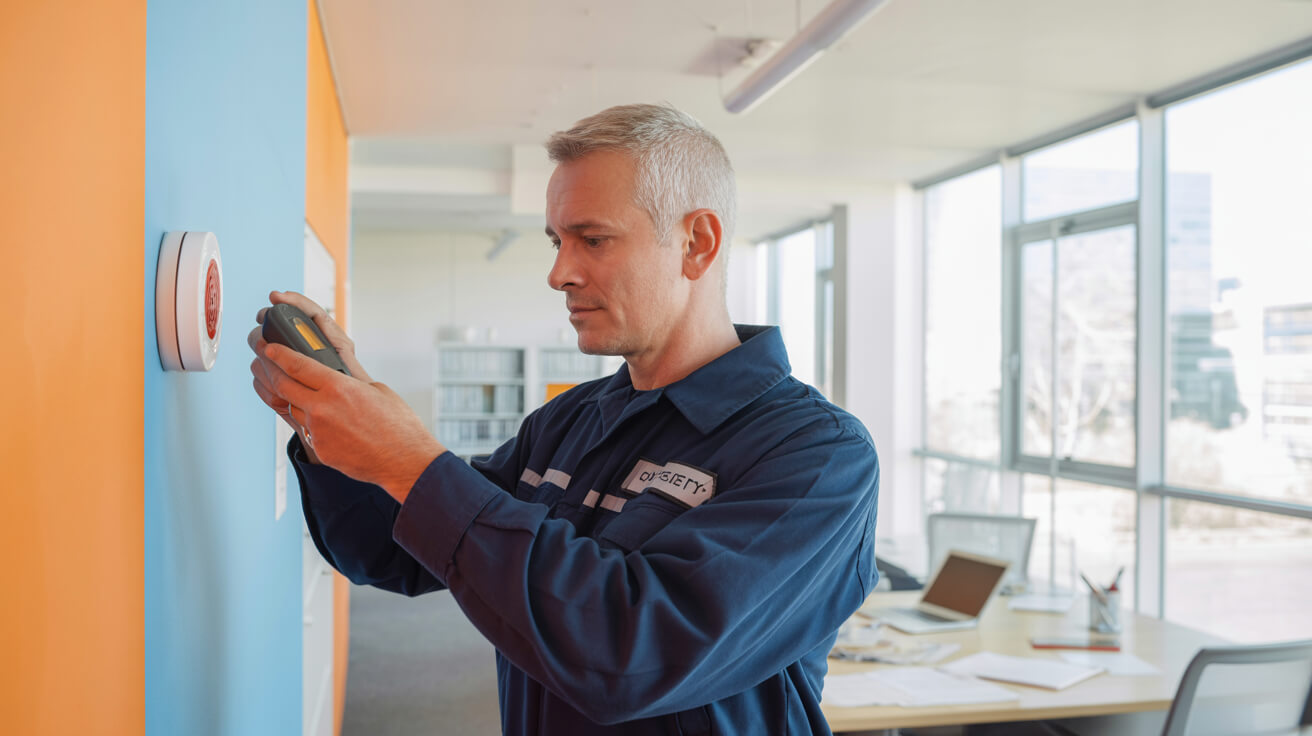
Survey frequency should follow risk, not habit.
A fixed diary date is easy to manage. It is not always the best way to manage electrical risk. The better approach is to link survey timing to consequence, condition, and change.
A sensible baseline for higher-risk assets
Higher-consequence assets usually justify a more regular view under load.
There is no single UK-wide statutory interval for electrical thermal imaging surveys. In practice, higher-risk commercial sites, operationally critical assets, ageing switchgear, and heavily loaded distribution equipment often justify annual review as a sensible baseline. That becomes more important where failure would affect multiple occupiers, essential plant, trading activity, or life-safety systems.
For residential portfolios, the use case is usually more targeted. Thermography often sits between formal EICR cycles and focuses on Residential blocks, common supplies and shared electrical infrastructure such as landlord supplies, risers, communal boards, plant rooms, and shared services rather than every private dwelling circuit.
What should bring the next survey forward
A change in risk should move the survey date, not wait for the calendar.
Bring the next survey forward when you see repeated tripping, unexplained heat, burning smells, known previous hot spots, occupancy change, plant upgrades, insurer attention, or weak asset history. The same applies where access is difficult and the consequence of missing a developing fault is high.
A risk-led cadence is easier to defend because it links timing and spend to exposure, not routine for its own sake.
How We Deliver Surveys With Minimal Disruption

You need a live survey that works around operations, not against them.
A thermal imaging survey is only useful if the right assets are under meaningful load and the visit does not create avoidable confusion, access problems, or unnecessary downtime.
Planning access and load conditions
Useful thermography depends on seeing equipment under conditions that actually tell you something.
We plan the survey around panel availability, access windows, occupancy constraints, and the practical load conditions needed to produce a reliable result. If a board is not meaningfully loaded, we say so. If access restrictions limit the scope, we record that clearly. You get a report that reflects what was genuinely observed, not one padded with false certainty.
Safe inspection and action-ready handover
You should be able to move from finding to action without another round of interpretation.
We treat the survey as part of a wider PPM and risk-control process. We inspect the agreed live assets, document the anomalies, and hand back findings in a format that supports remedial planning. That means clearer prioritisation, less internal rewriting, and a faster route from detection to decision.
If a loaded survey shows a hot termination on a landlord distribution board, we can flag it for urgent verification, help you plan an isolated repair window, and return a report that supports both the work order and the board update. If a finding needs urgent verification or planned shutdown work, you should know that immediately from the report.
Accreditations & Certifications







Who This Service Is Best Suited To
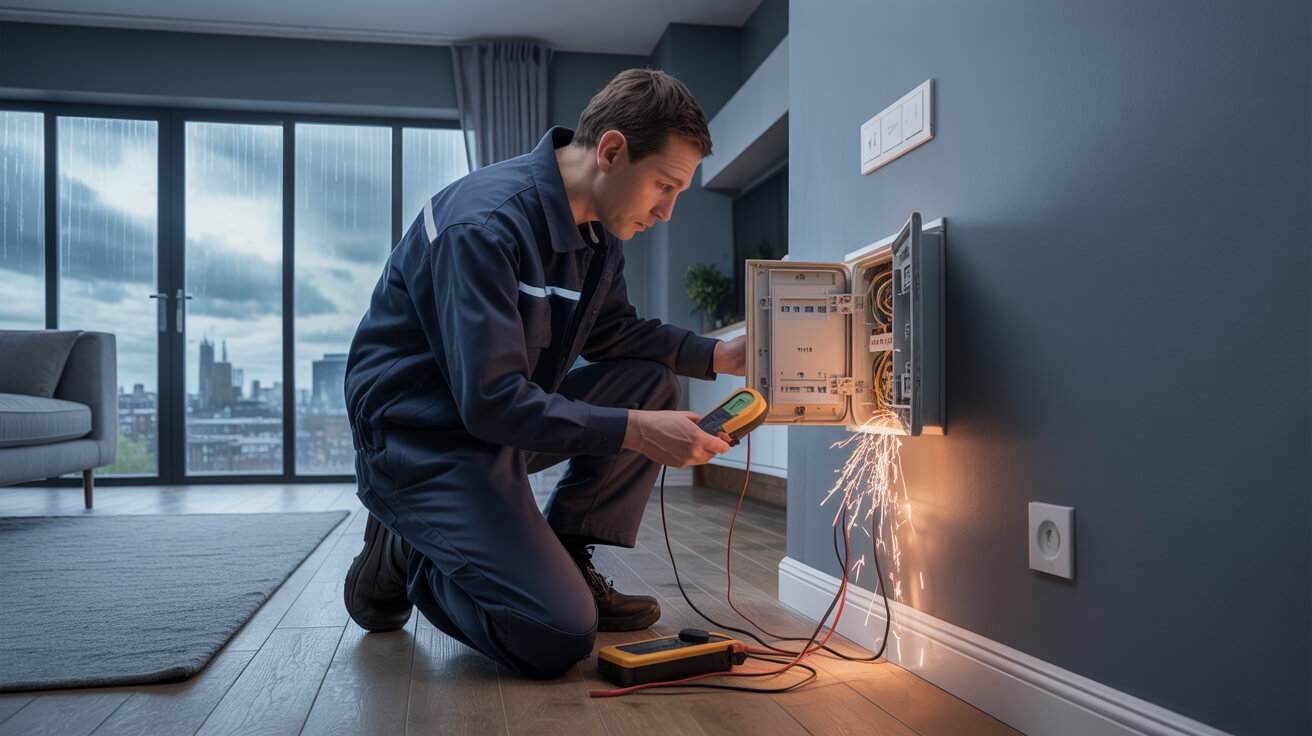
This service makes most sense where one electrical defect can affect more than one space, user, or critical process.
That usually means shared infrastructure, high-consequence assets, occupied environments, or portfolios where you need stronger evidence between formal inspections.
Commercial, mixed-use, and operationally critical sites
You are likely to benefit if your building depends on shared electrical assets staying reliable.
This suits commercial property, mixed-use developments, healthcare environments, education sites, logistics premises, industrial settings, business parks, and managed estates where one overheating component can create downtime, safety concerns, or a wider operational problem. It also fits where you already run planned maintenance and want a better live-condition view between major inspection events.
Residential blocks, common supplies, and portfolio risk
You usually get more value from targeted visibility than blanket surveying.
For landlords, managing agents, RTM companies, and housing teams, the strongest use case is often common electrical infrastructure rather than every private dwelling circuit. Plant rooms, risers, communal boards, landlord distribution, and shared services usually carry the greatest consequence if a hidden defect develops there.
If your portfolio is mixed or budget-sensitive, a phased first stage is often the right call. You can start with the highest-risk assets, review the evidence, and extend the programme only where the findings justify it.
Reliable Property Maintenance You Can Trust
From routine upkeep to urgent repairs, our certified team delivers dependable property maintenance services 24/7 across the UK. Fast response, skilled professionals, and fully insured support to keep your property running smoothly.

Book Your Free Consultation With All Services 4U Today
You can start with the highest-risk boards first and expand only where the evidence supports it.
Your first survey can focus on switchgear, panels, landlord supplies, or other critical distribution equipment where failure would create the greatest operational, compliance, or occupant impact.
Where you need a portfolio plan rather than a single visit, we can phase the work around access, load conditions, budget control, and remedial sequencing. Where you need findings that move directly into maintenance action, we can agree the reporting format, priority logic, and handover expectations before the survey is booked.
Book your free consultation with All Services 4U today and leave with a clear route from live inspection to planned intervention.
Frequently Asked Questions
What should you confirm before approving an electrical thermal imaging survey for your building?
An electrical thermal imaging survey is only useful when the scope, load conditions, and reporting standard are clear before the visit.
In practice, that is the difference between a survey that helps your team manage live electrical risk and one that simply produces a folder of coloured images. Before you approve any electrical thermal imaging survey, you need to confirm which assets will be inspected, under what operating conditions, how findings will be ranked, and what happens after an anomaly is identified. If those points stay vague, the survey may look impressive but add very little to maintenance planning, insurer discussions, or board oversight.
The first point is scope. A credible brief should identify the electrical assets that matter most to your building rather than rely on general wording like main plant areas or distribution infrastructure. In managed residential blocks, common supplies, mixed-use estates, and commercial property, that usually means main switchgear, landlord distribution boards, busbars, rising mains, plant room panels, lift supplies, extract systems, and motor control equipment. If a defect in one of those locations could interrupt communal services, tenant trading, or life-safety systems, it belongs in the first survey phase.
The second point is load. Thermal imaging only becomes meaningful when equipment is energised and carrying enough current for abnormal heat to become visible. A survey completed on lightly loaded equipment can create false comfort. You need the provider to confirm whether the equipment will be viewed while live and under representative operating demand, and to record where low load, limited access, or shutdown conditions prevented a full view. HSE-style maintenance thinking supports that wider principle: competent inspection depends on conditions that make the inspection worth relying on.
A survey only becomes valuable when the image leads cleanly to a decision.
The third point is reporting quality. Your thermal imaging report should do more than show heat. It should identify the asset precisely, include thermal and visual images, note the operating condition, describe the anomaly, explain likely causes, rank response priority, and recommend the next practical action. That may mean verification, planned shutdown work, monitoring, or no immediate action. Without that structure, your internal team still has to do the interpretation work the survey was meant to reduce.
The fourth point is traceability. If a board member, compliance lead, insurer surveyor, or managing agent asks what was inspected and what happened next, your team should be able to answer in one line and support it with the report. That makes the survey defensible. It also makes it easier to move findings into work orders, remedial planning, and audit trails.
The Electricity at Work Regulations 1989 remain the right background frame. They do not impose a fixed thermal imaging timetable, but they do reinforce the duty to maintain systems so danger is prevented. A disciplined electrical thermal imaging survey supports that duty because it creates live-condition evidence around assets where overheating may signal deterioration, overload, imbalance, or loose connections. A weakly scoped survey does not.
For a board director, this is about proving oversight. For a property manager, it is about getting a report that turns into action rather than another round of internal clarification. For a compliance lead, it is about showing that live electrical risk has been reviewed with a method your team can explain later. If you want your survey scope to stand up in a board pack, renewal review, or maintenance meeting, it helps to define the asset list, reporting logic, and escalation threshold before procurement starts. That is usually where avoidable mistakes are removed.
Which points should your survey brief define before the first visit?
A good survey brief should define assets, load conditions, reporting outputs, survey limits, and follow-on action before anyone arrives on site.
- Which boards, panels, landlord supplies, and plant room assets are included:
- Whether equipment will be surveyed live and under representative demand:
- What the thermal imaging report must include for each asset:
- How severity, urgency, and recommended action will be shown:
- How exclusions, access limits, or low-load conditions will be recorded:
That matters because the provider is not just attending to observe heat. Your team is commissioning a maintenance decision tool. If the brief does not specify how findings should be structured, different providers will interpret the same job in very different ways.
Why does representative electrical load matter more than most buyers expect?
A thermal image only tells part of the story unless the equipment is carrying enough demand for abnormal heat to show properly.
If a landlord board is barely loaded when the survey is completed, loose terminations, overloaded ways, or imbalance may not appear with the intensity you would see during normal operating conditions. That is one reason two thermal imaging surveys can look different even when the equipment has not changed much. Load, occupancy, and plant activity change what is visible.
For communal systems, that matters commercially as well as technically. A survey carried out during quiet conditions may understate risk on supplies that feed lifts, corridor lighting, smoke control, extract systems, or access control during busier periods. If your estate has clear demand peaks, the survey should reflect them. If that is not possible, the report should say so plainly rather than imply certainty it does not have.
Who should sign off the scope before the survey goes ahead?
The best sign-off route usually includes both the person responsible for operations and the person responsible for governance.
That often means one of the following combinations:
- Property manager plus compliance lead:
- Maintenance coordinator plus client-side approver:
- RTM chair or board representative plus managing agent:
- Building safety or technical lead plus asset manager:
The operational reviewer checks whether the right assets are included. The governance reviewer checks whether the report will support the decisions they may need to defend later. That simple split prevents a common failure: a technically interesting survey that still leaves the wrong stakeholders asking for a second pass.
If you need a survey scope your board, managing agent, or compliance lead can approve without reworking, All Services 4U can help define the asset list, reporting standard, and action logic before the first inspection date is set.
When should you treat a hot spot as urgent rather than leave it for planned remedial work?
A thermal imaging report becomes urgent when the heat pattern, asset role, and failure consequence point to a near-term risk your building cannot absorb.
That distinction matters because not every hot spot is an emergency, and not every mild-looking anomaly is safe to leave alone. The practical question is not whether something looks hot in isolation. It is what happens if that component fails before your team can get back to it under controlled conditions. That is the point where thermal imaging becomes a maintenance judgement rather than a colour chart.
In most buildings, urgency rises quickly when the anomaly sits on equipment feeding lifts, landlord lighting, smoke control, extract systems, communal pumps, access control, or tenant-serving infrastructure. A concentrated hot termination on a board serving those systems is not the same as a mild temperature differential on a less critical outgoing way. The image matters, but service consequence matters more.
BS 7671 and wider HSE maintenance thinking both support the same principle: evidence needs competent interpretation, and safe maintenance decisions depend on the role of the equipment as much as the appearance of the defect. A thermal image can suggest overheating. It cannot decide urgency on its own. That is why a report should explain where the anomaly is, what normal comparison looks like, what the asset serves, and what response band follows from that combination.
The pattern of heat matters too. A sharp, concentrated hot spot at one connection point often suggests local resistance, looseness, deterioration, or poor contact. More even heat across a device may indicate overload, imbalance, or wider stress. Both may require action, but not always on the same timetable. An experienced interpretation separates immediate verification from controlled planned shutdown work.
The operating context changes the answer as well. A defect on a board serving one back-of-house area may permit short-term planning if the consequence is contained. A similar defect on shared infrastructure in a mixed-use estate may justify immediate action because disruption crosses residents, occupiers, and service teams at once. The same thermal signature can become a different operational risk in a different building.
Heat points to the defect. Consequence decides the clock.
This is where a weak thermal imaging report creates avoidable confusion. If your team still has to argue about urgency after reading it, the report has not done enough. A useful report should sort findings into action bands that your operations team, compliance lead, or board can understand quickly. That turns thermal evidence into a practical response path.
For a managing agent, this means fewer debates and faster work orders. For an asset manager, it means protecting continuity and avoiding preventable occupier disruption. For a board, it means showing that maintenance decisions follow consequence and evidence, not instinct. If you need findings translated into usable urgency bands before they land in front of your team, that logic should be built into the survey brief from the start.
How should you sort thermal findings into action bands?
A practical thermal imaging report should divide findings into immediate verification, short-term planned repair, or monitored review.
| Priority band | What it usually means | Typical response |
|---|---|---|
| Immediate | High failure consequence or unstable anomaly | Verify quickly and plan urgent isolation or repair |
| Short-term | Credible defect with manageable timing | Schedule planned remedial work in the next window |
| Monitor | No immediate failure pattern is evident | Recheck, trend, and review on the next cycle |
That does not remove engineering judgement. It simply gives your team a structure for acting consistently.
Which signals usually move a finding up the queue?
The strongest urgency signals combine technical concern with operational consequence.
- The affected asset feeds communal, safety, or trading-critical systems:
- The heat is concentrated at one connection or component:
- Failure would interrupt residents, tenants, or compliance-dependent services:
- The board has a history of trips, faults, or unplanned attendance:
- Repair access is limited, which increases the cost of waiting:
A finding becomes more urgent when several of those signals appear together. That is particularly true in occupied buildings where even a short outage can create complaint, access, or safety pressure.
When should you isolate first and interpret second?
You should lean towards immediate isolation or controlled shutdown planning when the risk of waiting is higher than the disruption of acting.
That tends to apply where:
- Visible distress and thermal abnormality appear together:
- The affected equipment feeds life-safety or communal systems:
- The anomaly sits on ageing or poorly maintained equipment:
- Recent faults suggest the issue is not isolated:
- The building has narrow access windows for safe repair:
In those cases, the role of the report is not to delay action with more debate. It is to support a safer decision path. If your team needs a clearer threshold between immediate verification and planned repair, All Services 4U can help translate thermal findings into response bands that fit your building’s operational reality.
Why should survey frequency follow risk instead of a fixed annual cycle?
Thermal imaging works best when the survey cycle follows asset risk, load profile, and failure consequence rather than a generic annual rule.
There is no universal UK requirement saying every building must have an annual electrical thermal imaging survey. That is where many procurement decisions start to drift. Some estates genuinely benefit from annual review. Others need a tighter cycle on a few high-risk assets and a lighter programme elsewhere. The stronger approach is usually risk-led, asset-led, and consequence-led, not calendar-led for its own sake.
Annual review often makes sense where electrical failure would be expensive, disruptive, or hard to recover from. That can include older switchgear, heavily loaded landlord boards, plant-intensive commercial property, mixed-use estates with shared infrastructure, and residential blocks where one electrical fault can affect multiple residents at once. In those environments, the cost of missing a developing issue can outweigh the cost of regular thermography.
A more selective timetable can work where risk is concentrated in only part of the estate. A residential portfolio may not need blanket thermal review on every small board, but it may justify recurring surveys on risers, communal plant, landlord distribution, and equipment serving lifts or smoke control. A commercial site may need one cycle for critical plant and another for lower-consequence distribution. That is a more defensible schedule than treating every electrical asset as if it carries the same exposure.
Insurer risk-engineering guidance often points in the same direction. Insurers tend to see thermography as a practical control for higher-risk electrical overheating exposure, especially where interruption or fire risk could become material. That does not convert annual thermal imaging into a legal duty. It does make a risk-based survey cycle easier to defend at renewal if someone asks why some assets are inspected more often than others.
The timetable should also change when the building changes. If loads increase, occupier type changes, new plant is introduced, repeated faults begin appearing, or unresolved thermal anomalies remain under review, your survey interval should tighten. If equipment has been upgraded, monitored, and shown stable over time, some assets may justify a less intense cycle. The point is not to freeze the timetable. The point is to keep it aligned to real exposure.
RICS-style maintenance thinking is useful here because it supports the wider principle that inspection effort should follow condition, consequence, and decision value. In building operations, that means focusing survey effort where the result changes what your team does next.
Which changes usually justify bringing the next survey forward?
If building use, electrical demand, or failure history changes, the survey interval should move with it.
- Recent tripping, faults, or unexplained outages:
- New plant, tenant fit-out, or increased electrical demand:
- Earlier anomalies that were monitored rather than repaired:
- Ageing switchgear with limited maintenance history:
- Upcoming insurer, lender, or audit scrutiny:
Those are timing signals, not administrative details. They tell you when yesterday’s survey cycle no longer fits today’s risk.
Which types of building often justify a tighter survey cycle?
Some settings make a shorter review loop easier to justify because the consequence of electrical failure is broader or more expensive.
| Building type | Why a tighter cycle may fit | Where phasing may still apply |
|---|---|---|
| Plant-heavy commercial property | Interruption can affect multiple occupiers quickly | Lower-risk secondary boards can be grouped separately |
| Residential block with shared systems | One failure may affect many residents at once | Non-critical areas may sit on a longer cycle |
| Mixed-use estate | Shared infrastructure can disrupt several user groups | Start with common supplies and critical plant first |
Who should approve a tighter survey cycle when risk increases?
The strongest answer is usually a shared one between operations, compliance, and budget holders.
That may include:
- Property manager or facilities manager for operational impact:
- Compliance lead or building safety lead for risk framing:
- Asset manager or finance lead for budget control:
- Board or RTM representative where communal risk is material:
That shared approval matters because survey frequency is not only a technical choice. It is also a governance and spend decision. If you need to justify why one set of boards should move to annual review while another remains phased, your rationale should connect asset role, failure consequence, and recent evidence. All Services 4U can help structure that review so your timetable follows the exposure you actually carry.
Why does a thermal imaging report become hard to trust when the method, limits, or follow-up logic are weak?
A thermal imaging report loses credibility when the scope, operating conditions, asset references, and action logic are too vague to support decisions.
That is one of the most common reasons a well-presented report still feels unusable. The issue is rarely the image itself. The issue is that the report does not tell your team enough about what was inspected, what conditions existed, what the anomaly means, and what should happen next. When those parts are thin, the report becomes visually persuasive but operationally weak.
A frequent weakness is poor asset identification. If your thermal imaging report does not clearly reference the exact board, breaker, panel, riser, or connection point, the finding becomes harder to verify and harder to assign. Your maintenance team may know roughly where the image came from, but that is not enough for work order clarity, shutdown planning, or later governance review.
Another weakness is missing context. A thermal image without load condition, occupancy condition, or survey limitation can imply confidence that the underlying evidence does not justify. If the board was lightly loaded, if access was restricted, or if parts of the installation could not be viewed safely, the report should say so plainly. That is not a weakness. It is a trust signal. HSE-style recordkeeping logic supports that approach because clear limitations make maintenance records more defensible, not less.
A third failure is vague language. Phrases like elevated temperature observed or further attention may be required do not help a property manager, compliance lead, or board decide what to do next. A useful report should explain the location of the anomaly, the likely cause, the severity, the service consequence, and the recommended response band. That is what turns a thermal imaging report into a maintenance tool.
Overclaiming is another problem. Thermography is useful, but it is not an EICR, not a fire risk assessment, and not a universal declaration of electrical safety. It is one layer of live-condition evidence. When a provider presents it honestly, the report gains credibility. When it is sold as complete assurance, the document becomes harder to trust.
For managed property, that distinction matters because a report may be used beyond the maintenance team. It may reach an insurer surveyor, a board member, a lender, or legal advisers after an incident. At that point, clarity around method and limits becomes just as valuable as the image itself.
Which warning signs usually mean the report is too weak to rely on?
A weak thermal imaging report often fails on traceability, context, limitation reporting, or actionability.
- Assets are described loosely instead of referenced precisely:
- Operating demand is missing, unclear, or assumed:
- Severity logic is absent or inconsistent:
- Recommended action is too vague to assign:
- Access limits or exclusions are not stated clearly:
Those are not cosmetic faults. They are the reasons maintenance decisions become harder to defend later.
Why should limitation reporting increase trust instead of reduce it?
Because a report that admits what it could not prove is usually more reliable than one that pretends nothing was uncertain.
If a thermal imaging report says a board was carrying low load, that some areas were not accessible, or that confirmatory electrical testing remains necessary, it gives your team a clearer basis for the next decision. That may lead to a repeat visit, a planned shutdown inspection, or immediate remedial verification. What it should not do is hide those limits behind general wording.
During audits, insurer reviews, and post-incident scrutiny, honest limitation reporting often helps more than a polished report with implied certainty. It shows that the inspection method was used competently and that the report writer understood the boundary between observation and proof.
How should a stronger report differ in practice?
The report should help your team decide what to do next, not ask them to reconstruct the survey logic themselves.
| Weak report habit | Why it causes problems | Stronger reporting approach |
|---|---|---|
| Generic asset wording | Work orders become hard to assign | Use exact asset references and locations |
| Heat noted without operating context | Urgency becomes subjective | Record load, comparison point, and system role |
| Vague recommendations | Teams still debate next steps | State response band and recommended action |
| Hidden exclusions | The record becomes harder to defend | Declare limitations and survey constraints plainly |
If you need thermal imaging reports that can move directly into remedial planning, insurer files, or board discussions, All Services 4U can help define the reporting standard before the survey is commissioned, which is usually where trust is won or lost.
Where should thermal imaging start in a mixed portfolio of residential, commercial, and managed property?
Thermal imaging should start where one electrical fault could disrupt the greatest number of people, services, or decisions at once.
That is why the most effective first-stage programme is rarely the widest one. It is usually the one that removes the most uncertainty from the highest-consequence assets. In a mixed portfolio, blanket coverage may feel thorough, but consequence-led targeting is often more useful, easier to budget, and easier to justify to stakeholders.
In residential property, strong first-phase targets usually include landlord boards, risers, communal plant rooms, lighting supplies to common parts, lift feeds, extract systems, and access control infrastructure. A single overheating point in those locations can affect many residents at once. In commercial property, the starting point often shifts towards main switchgear, tenant-serving distribution, plant room panels, critical HVAC supplies, or equipment feeding revenue-sensitive space. In mixed-use estates, shared infrastructure often matters most because one fault can cross occupier types and create complaints, downtime, and governance pressure at the same time.
That is where thermal imaging supports decision value. It does not need to inspect every circuit to be useful. It needs to inspect the points where live-condition evidence changes what your team does next. RICS-aligned maintenance logic supports that broader prioritisation principle: inspection effort should follow consequence and operational dependency rather than equal spread across unequal assets.
At portfolio level, this is also a budget question. If your estate includes several low-risk sites and a smaller number of high-consequence sites, equal survey coverage may look neat on paper but still misallocate spend. A phased programme is often stronger because it directs attention to the assets where the downside of missing deterioration is most concentrated.
The best first survey is not the widest one. It is the one that removes the most risk fastest.
That distinction is especially important where communal systems serve more than one stakeholder group. A fault on a shared residential supply affects residents. A fault on plant supporting commercial occupancy affects tenant continuity. A fault on shared estate infrastructure affects both. Thermal imaging earns its place when it helps you see those cross-impacts before they turn into visible failure.
For a property manager, that means scoping by dependency rather than postcode. For an asset manager, it means focusing on assets where a minor defect could produce an outsized operational problem. For a board, it means being able to explain why those assets came first. That is usually easier to defend than a blanket survey that spreads effort evenly but reduces risk unevenly.
Which assets usually make strong first-phase targets?
The first survey phase should usually focus on shared infrastructure and building-critical electrical distribution.
| Property type | Strong first targets | Why those assets matter |
|---|---|---|
| Residential block | Landlord boards, risers, plant rooms | One issue can affect many residents |
| Commercial building | Main switchgear, tenant-serving boards, HVAC supplies | Failure can interrupt trading and occupancy |
| Mixed-use estate | Shared plant, access systems, common supplies | One fault can affect multiple user groups |
That kind of targeting gives your team a clearer first return on survey spend than low-consequence blanket coverage.
Why does a phased programme often outperform blanket coverage?
Because mixed portfolios rarely carry evenly distributed electrical consequence.
A building with stable, lightly used secondary services may not justify the same survey intensity as a site with ageing plant, shared landlord infrastructure, and heavy demand. If your estate includes a range of building types, maintenance histories, and occupier exposures, the more useful question is not how much can we inspect at once? It is where does one hidden defect hurt us most?
That is how phased targeting supports both operational judgement and financial discipline. It reduces the chance that higher-risk assets are treated the same as lower-risk ones simply because they sit in the same portfolio.
Who should help set the first-phase portfolio priority?
The strongest prioritisation usually comes from combining technical knowledge with commercial and governance context.
That may include:
- Property or facilities management for asset dependency:
- Compliance or safety leads for risk framing:
- Asset or finance leadership for spend discipline:
- Board or client-side stakeholders for consequence tolerance:
When those views are brought together early, the first survey phase becomes easier to approve and easier to defend later. If you need help ranking a mixed portfolio by electrical consequence rather than convenience, All Services 4U can help shape a first-stage programme around shared infrastructure, service exposure, and decision value.
How can a thermal imaging report support board, insurer, or lender conversations without pretending to replace formal compliance documents?
A thermal imaging report adds live-condition evidence to your maintenance record, but it should sit alongside formal compliance documents rather than replace them.
That distinction is where a lot of commercial value is either gained or lost. A board does not just want to know that a survey happened. It wants to know which live assets were reviewed, what abnormalities were found, what action has been assigned, what remains open, and how the position compares with the wider maintenance record. An insurer wants evidence that overheating exposure is being managed in a practical and documented way. A lender or valuer wants additional visibility on electrical condition between major inspections, particularly where the wider building condition already attracts scrutiny.
A well-structured thermal imaging report can support all of those conversations because it offers a dated condition snapshot under live operating conditions. It can show that selected boards, plant panels, or landlord supplies were inspected, that anomalies were ranked, and that follow-on action was identified. That makes it useful in governance papers, renewal discussions, and portfolio reviews.
But credibility depends on keeping the document in its proper place. A thermal imaging report is not an EICR. It is not a fire risk assessment. It is not a substitute for statutory gas, electrical, water, fire, or HRB documentation. The Electricity at Work Regulations 1989 still frame the broader duty to maintain electrical systems so danger is prevented. Thermography supports that duty by showing live-condition review and sensible follow-up, not by claiming to settle every electrical question.
That distinction actually strengthens the report in front of serious stakeholders. Boards tend to trust documents that describe their role accurately. Insurers tend to respond better when a report clearly supports an existing risk-control regime rather than overselling itself. Lenders and valuers are more likely to use it as supporting context when it is presented as part of a wider evidence trail.
In practice, the most useful governance-facing reports include asset references, survey conditions, anomaly rankings, recommended actions, limitation statements, and a clear link to the wider maintenance record. That makes them easier to lift into a board paper, renewal file, or lender pack without heavy rewriting.
What do board, insurer, and lender audiences usually want to see first?
Most decision-makers want a short, defensible summary of condition, action, and remaining exposure.
- Which assets were inspected:
- Which anomalies are highest priority:
- What remedial action has been assigned:
- What restrictions or exclusions remain:
- How the report supports the wider compliance record:
That summary matters because governance audiences usually read for consequence first and detail second.
It is most useful when it strengthens a live decision rather than appearing as an isolated attachment.
Typical trigger points include:
- Before an insurer renewal where electrical risk management may be queried:
- Ahead of refinance or valuation review where condition transparency matters:
- In board papers where major remedial spend or shutdown planning is proposed:
- After repeated trips, outages, or thermal anomalies on critical assets:
- During wider compliance reviews where live-condition evidence adds context:
Used at the right moment, thermography helps show that the building is not being managed by paperwork alone. It shows that live operating condition has been reviewed and translated into action.
Why does the report add most value when it stays in its lane?
Because governance credibility depends on accurate positioning, not inflated claims.
| Stakeholder | What they usually need | What a thermal imaging report can contribute |
|---|---|---|
| Board | Oversight and action visibility | A dated live-condition review with prioritised next steps |
| Insurer | Practical risk-management evidence | Proof that overheating exposure is being checked and tracked |
| Lender or valuer | Supporting condition context | Additional visibility between formal compliance reports |
If you want survey outputs that fit cleanly into a board pack, insurer review, or lender file without overstating what they do, All Services 4U can help structure the brief and reporting format around that purpose from the start. That gives your team something more useful than attendance proof. It gives you evidence that supports competent oversight.
- Find Hidden Electrical Hot Spots Before They Become Failures
- What You Get From an Electrical Thermal Imaging Survey
- Which Faults Infrared Hot Spot Analysis Helps You Find
- Where Thermal Imaging Fits Alongside EICR and Fire Risk Management
- How Often You Should Schedule Surveys in the UK
- How We Deliver Surveys With Minimal Disruption
- Who This Service Is Best Suited To
- Book Your Free Consultation With All Services 4U Today
- Frequently Asked Questions
- Related PPM Services
Case Studies


Related Articles

Your Guide To Identifying And Treating Minor Mould Outbreaks
Why Planned Preventative Maintenance (Ppm) Saves Money And Ensures Compliance