Shower Descaling PPM Services UK – Legionella Prevention
Facilities, housing and care managers across the UK use planned shower descaling PPM to keep outlets safe, available and compliant for legionella control. Descaling, disinfection and basic TMV checks are built into a repeatable programme that aligns with your risk assessment and written scheme, depending on constraints. Each visit leaves you with descaled and disinfected outlets, clear records at outlet level and documented defects ready for follow-up under your wider PPM. It’s a straightforward way to stay in control of aerosol‑generating outlets before inspections or incidents put you under pressure.


Author
Izzy Schulman

Planned shower descaling PPM for safer, compliant outlets
If you manage buildings with showers, you need them to stay safe, available and compliant without constant firefighting. Scale, biofilm and poor records quickly undermine legionella control and make conversations with regulators, insurers and boards harder than they need to be.

A planned shower descaling PPM service ties descaling, disinfection and basic TMV checks into your existing water risk assessment and written scheme. You gain predictable visits, outlet‑level records and a clear link to your wider PPM so you can evidence control instead of scrambling when questions are asked.
- Reduce biofilm, scale and stagnation at shower outlets
- Align descaling with ACoP L8, HSG274 and your scheme
- Leave each cycle with clear, outlet‑level water safety records
Need Help Fast?
Locked out, leak at home, or electrical issue? All Services 4 U provides 24/7 UK locksmith, plumbing, electrical.
Testimonial & Clients Who Trust Us
With 5 Star Google Reviews, Trusted Trader, Trust Pilot endorsements, and 25+ years of experience, we set industry standards for excellence. From Dominoes to Mears Group, our expertise is trusted by diverse sectors, earning us long-term partnerships and glowing testimonials.
Worcester Boilers

Glow Worm Boilers

Valliant Boilers

Baxi Boilers

Ideal Boilers

Keep your showers safe, compliant and in use with planned descaling and disinfection
You need showers to stay safe, available and compliant without constant firefighting. A planned descaling and disinfection programme removes one of the key conditions legionella bacteria need to grow and gives you evidence that control measures are in place.
All Services 4U designs shower descaling as part of your wider water safety and building risk picture, not a one‑off “deep clean”. You keep control of risk and decisions while our engineers handle technical work, records and integration with your existing planned preventative maintenance.
What you get from a shower descaling PPM service focused on legionella control
You want more than someone wiping a showerhead, taking a quick photo and ticking a box. You need a repeatable service that tackles biofilm and scale, looks after thermostatic mixing valves (TMVs) and leaves a defensible paper trail.
Showerheads, hoses and strainers
Your showers are descaled and disinfected in a way that disrupts biofilm, not just improves appearance. That typically means dismantling showerheads and hoses, cleaning strainers and inserts, removing scale and debris, and using appropriate descaling and disinfection agents in line with your water hygiene risk assessment.
Each outlet is returned to service with clear notes on what was found, what was cleaned or replaced, and any defects needing remedial work. If you manage multiple properties, the same standard is applied across sites so you are not guessing which blocks are under control.
Thermostatic mixing valves (TMVs) and blending points
You rely on TMVs to protect users from scalding, but they can create warm, slow‑moving zones where bacteria thrive if ignored. A robust descaling PPM includes basic functional checks on TMVs and blending points as part of the visit, following your written scheme of control.
You receive a record of which TMVs were checked, any adjustments made, and any units recommended for servicing or replacement under a separate TMV programme, so hot‑water safety and legionella control stay joined up.
Water safety records and documentation
You cannot prove control without records that make sense to insurers, regulators and your own board. After each visit you should expect outlet‑level entries tied back to your water risk assessment and written scheme, so you can show the rationale as well as the actions.
You leave each cycle with logs ready for your legionella file or digital binder: date, outlet ID and location, work done, defects observed and confirmation that outlets were returned to service or isolated.
How planned shower descaling supports ACoP L8 and HSG274
![[ALTTOKEN]](https://allservices4u.co.uk/app/uploads/2026/01/02-Shower-Descaling-PPM-Services-UK-Legionella-Prevention.jpg)
You are required to keep the risk from legionella “as low as is reasonably practicable”, and regular descaling is one of the practical controls that supports that duty. The detail sits in your risk assessment and written scheme, but the logic is consistent across sectors.
Biofilm, scale and stagnation control
You control legionella by managing temperature, nutrients, biofilm and stagnation. Scale and sludge in showerheads and hoses create rough surfaces and pockets of warm water where bacteria can anchor and multiply. Planned descaling removes those deposits and helps disinfectants reach the surfaces that matter instead of fighting through years of build‑up.
You put yourself in a stronger position when you can show that aerosol‑generating outlets such as showers are descaled and disinfected in line with recognised regimes and your own assessment, not only when there are complaints.
Alignment with your written scheme of control
You are expected to turn your water risk assessment into a written scheme that sets out who does what, how often and how it is recorded. Shower descaling PPM sits in that scheme alongside temperature checks, flushing and any sampling so everything aligns.
You gain most value when your descaling contractor works to the same outlet list and asset IDs you use for temperature and flushing logs, so you can show a joined‑up control regime rather than disconnected spreadsheets that are hard to reconcile under scrutiny.
Support for inspections and external scrutiny
You may face questions from health and safety teams, housing regulators, insurers or auditors about legionella control. When you can point to a clear descaling schedule and recent evidence for each outlet, those conversations become factual and short instead of defensive.
If you manage higher‑risk buildings such as care homes or high‑rise blocks, this level of clarity also supports your wider building safety case and shows that aerosol‑generating outlets are taken seriously.
How often you should descale showers in different building types
You are not looking for a generic promise; you need a regime that matches your risk assessment, system design and occupancy. Guidance stresses that frequency should be risk‑based, but typical patterns do emerge.
Social housing and blocks of flats
You may have a mix of occupied and void homes, irregular usage and residents who do not report minor issues quickly. In many schemes, showerheads and hoses are descaled on a planned basis, with additional attention where flats stand empty or low flow and staining appear.
You gain control when the descaling schedule is linked to your voids process and damp and mould response, so shower outlets are not forgotten when other urgent works compete for attention.
Care homes and higher‑risk settings
You face higher expectations where residents are older, immunocompromised or otherwise vulnerable. In these settings, you typically see more frequent outlet checks and a close link between shower descaling, TMV servicing and temperature monitoring, all driven by the risk assessment.
You reduce anxiety for managers, families and boards when you can show that resident and staff showers follow a clearly documented descaling and disinfection regime that reflects the higher risk profile.
Offices and commercial premises
You may find that showers in offices and mixed‑use sites are used less frequently, but that does not remove your duties. Risk assessments often focus on under‑used outlets, appropriate flushing routines and integrating descaling into wider PPM to avoid stagnation and dead‑legs.
You protect your organisation by making sure showers used by staff, contractors or gym users are included in your written scheme rather than treated as “nice to have” facilities outside water hygiene controls.
Accreditations & Certifications


What actually happens during a shower descaling visit
![[ALTTOKEN]](https://allservices4u.co.uk/app/uploads/2026/01/03-Shower-Descaling-PPM-Services-UK-Legionella-Prevention.jpg)
You reduce risk and disruption when you know what will happen on site and what your team needs to prepare. A well‑run visit follows a repeatable pattern that protects residents, assets and records.
On‑site preparation and safety checks
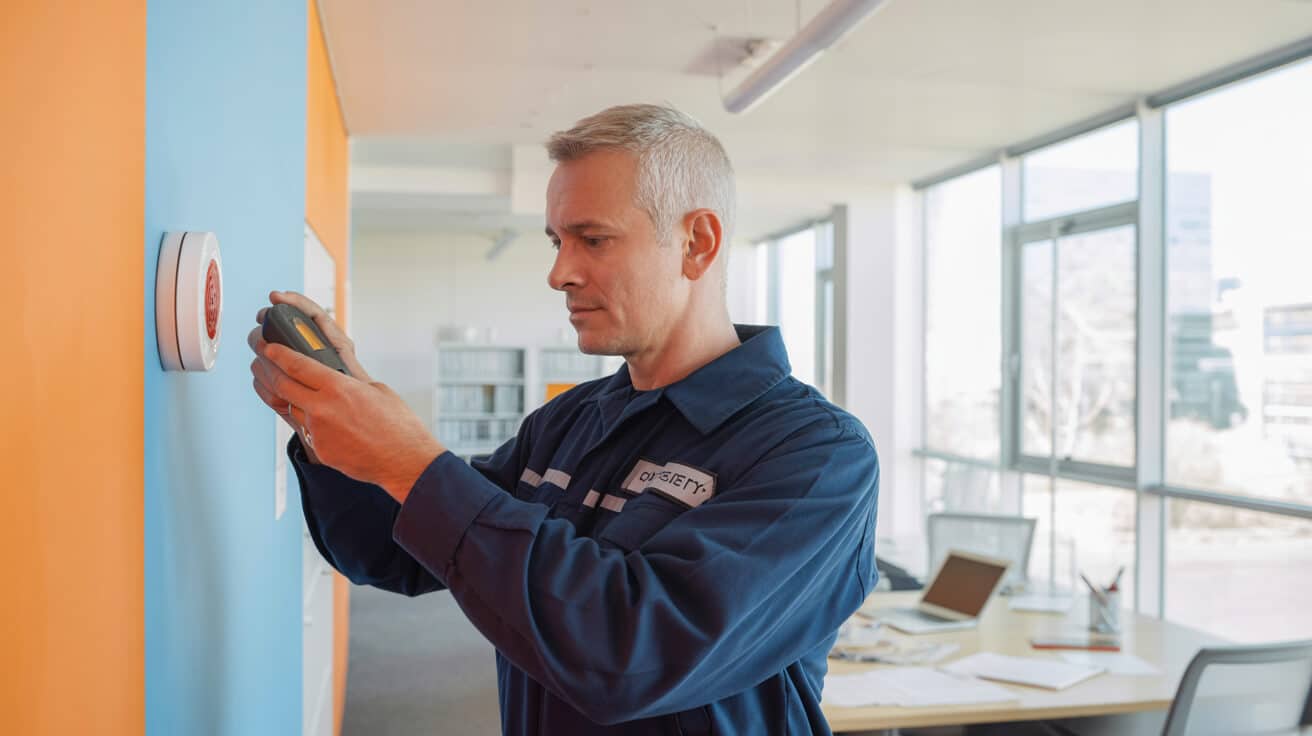
You start with clarity on which outlets are in scope, how access will be managed and what communication residents or staff need. On arrival, engineers sign in, review any site‑specific risks and confirm isolation or permit requirements so safety is covered from the start.
A short visual survey of the shower area captures obvious damage, leaks or access issues before work begins. This avoids surprises mid‑visit and keeps health and safety controls in place while descaling is carried out.
Physical cleaning and disinfection steps
During a planned visit you see showerheads and hoses dismantled in line with manufacturer instructions, with strainers and inserts removed rather than simply wiped in place. Scale and deposits are physically removed, followed by appropriate descaling and disinfection chemicals applied as set out in your procedures and COSHH assessments.
Outlets are then rinsed, reassembled and function‑checked so spray patterns, temperature and flow are acceptable and any unusual behaviour is recorded, with defects logged clearly and linked to follow‑on work orders.
Final checks, reinstatement and housekeeping
You benefit from a final pass through the area to confirm that showers are left clean, safe and clearly either “in service” or “isolated”, with no tools or debris left behind. Any immediate concerns about water quality, staining or odour are raised with your site contact so nothing is buried.
You reduce complaints and call‑backs when engineers treat each visit as both a technical task and a resident‑facing interaction, with clear explanations where showers must remain out of use pending separate repairs.
Evidence you should expect after every descaling visit
You remain responsible for the risk, so you need records you can stand behind in court, at tribunal or in front of a regulator. A short email saying “all done” is not enough for legionella control.
Outlet‑level records that match your asset list
You should expect a clear record for each shower outlet: an ID or location that matches your own registers, work done, findings and any follow‑on actions. That level of detail lets you see patterns such as recurring blockages, persistent staining or problem risers instead of treating every visit as a one‑off.
You gain the most value when those records can be imported into your CAFM or water safety system rather than sitting as a static document. That is how you turn descaling into live risk intelligence, not just archived paperwork.
Temperature observations and system notes
You already know that temperature is one of your main legionella control measures. Even if the main temperature regime is handled under a separate task, descaling visits are a useful opportunity to note outlets that run cool, take a long time to heat or behave unpredictably.
You can feed these observations back into your risk review and adjust flushing routines, TMV settings or sampling strategies where appropriate, rather than waiting for the next annual review to uncover issues.
Audit‑ready summaries for insurers and regulators
You should be able to lift a visit summary straight into an insurer or regulator pack when questions arise. That usually means a concise narrative of what was in scope, any limitations, headline findings and confirmation that records and photographs are held and indexed.
You are in a stronger position when you can show that descaling visits, temperature checks, flushing and any sampling all reference the same risk assessment and written scheme, rather than appearing as unrelated projects.
Answering common concerns about shower descaling and legionella
You may feel that you already “do something” with showers and do not want another contract, or you may be unsure how descaling fits with the rest of your water controls. It helps to surface those concerns and deal with them directly.
“We already flush outlets, isn’t that enough?”
You reduce risk by flushing, but flushing alone does not remove the scale and sludge that support biofilm. Descaling and disinfection work alongside flushing and temperature control; each measure tackles a different part of the risk picture.
You stay safer when flushing, temperature checks and descaling are all tied back to one written scheme, so you can show that you have considered the full set of control measures expected in recognised guidance.
“Our buildings are low‑risk, do we really need a formal PPM?”
You want a proportionate approach, and your risk assessment should reflect building use, system design and occupancy. Even in lower‑risk settings, showers still generate fine aerosols that reach users’ lungs, so they deserve specific consideration.
You can keep things lean by matching descaling frequency to actual usage and risk level, but a light‑touch PPM is usually more dependable than waiting for issues to appear and trying to retrofit records when someone is already asking questions.
“Residents and staff already complain about access and disruption”
You protect relationships when your contractor works to clear appointment windows, plain‑English notices and predictable routines. A planned visit keeps time in each property short and makes it obvious when a shower must temporarily stay out of use and why.
You can also reduce disruption by bundling descaling with other tasks such as TMV checks or visual bathroom inspections, so that you do more with one visit instead of repeatedly asking for access.
“I’m worried about cleaning chemicals and safety”
You are right to care about chemical safety, especially in homes and care settings. Descaling should use products appropriate for potable water systems, with risk assessments, method statements and COSHH controls in place rather than casual choices.
You keep risk low when engineers are trained on safe dilution, contact times, ventilation and thorough rinsing, and when any leftover product is removed from the dwelling rather than stored informally.
“How does pricing work when outlets and risk levels vary?”
You see pricing influenced by the number and type of outlets, ease of access, building uses, current system condition and whether you need additional tasks such as sampling or TMV servicing tied in. A portfolio with a few heavily used showers in higher‑risk settings looks very different to hundreds of low‑use outlets across mixed sites.
You get the best value when the proposal is built against your actual asset lists and risk assessment, so that you pay for work that genuinely reduces risk rather than an arbitrary bundle.
Reliable Property Maintenance You Can Trust
From routine upkeep to urgent repairs, our certified team delivers dependable property maintenance services 24/7 across the UK. Fast response, skilled professionals, and fully insured support to keep your property running smoothly.

Book a shower descaling and legionella prevention review
You want to know exactly where you stand before you commit to a full programme. A focused review of your showers, outlet lists and existing water controls gives you that clarity and shows how a descaling PPM would sit alongside your current ACoP L8 regime.
All Services 4U can walk one priority building with you, map showers to your written scheme, review existing records and highlight practical, evidence‑backed changes that would strengthen your position with regulators, insurers and residents. You leave that exercise with a clear view of gaps, quick wins and any longer‑term improvements that matter for your portfolio.
If you would like your showers to stop being a grey area in your legionella plan, now is the time to bring them into a structured, evidence‑led PPM. Arrange a shower descaling and legionella prevention review for your highest‑risk building and see exactly what a robust programme would look like for you.
Frequently Asked Questions
Explore our FAQs to find answers to planned preventative maintenance questions you may have.
How does shower descaling actually cut legionella risk and hold up when someone asks hard questions?
Shower descaling cuts legionella risk by stripping off the scale and sludge that shelter bacteria and block disinfectants from internal surfaces. In a joined‑up shower descaling regime, engineers dismantle showerheads and hoses, remove inserts and strainers, mechanically scrape and brush deposits, then apply descaling and disinfection chemicals that align with your site‑specific water risk assessment and COSHH controls. Once that armour of limescale is gone, biocide is no longer being wasted on rock; it can reach the plastic and metal where biofilm keeps trying to grow. Because showers throw fine aerosols straight into users’ breathing zone, outlet‑level cleaning and disinfection is a direct control for the duties described in ACoP L8 and HSG274 Part 2.
Most water schemes fail not from bad intent, but from people trusting we clean it without ever testing what that really means.
You look far more credible as an AP, RP or board when shower descaling is clearly written into the scheme of control and each outlet is tied back to the risk assessment. That is the difference between a vague line saying “showers cleaned regularly” and being able to hand a coroner, regulator or insurer a clean, outlet‑by‑outlet record of what was done, when, and what was found. When you ask a partner such as All Services 4U to treat every visit as both hygiene and building‑safety work, you are tightening a critical control rather than leaving it to a vague cleaning rota that will collapse under serious scrutiny.
What risks does descaling tackle that flushing and temperature checks simply cannot?
Flushing and temperature checks are still core parts of legionella control in showers, but neither one can change the physical geometry inside a scaled outlet. Descaling targets risks those checks miss:
- Rough, scaled internal surfaces that give biofilm more surface area and shelter.
- Narrowed bores and inserts that create low flow and stagnation right where aerosols form.
- Hidden sludge pockets inside hoses, strainers and heads that never see true scouring flow.
A risk‑weighted shower hygiene cycle that combines temperature control, flushing, shower descaling and appropriate sampling looks very different on paper to a bare minimum calendar. It is also much easier to defend as “reasonably practicable” under L8/HSG274 when someone is reading your logs line by line.
How should we document shower descaling so it stands up in an investigation?
For a real investigation, “all showers descaled” is meaningless. You want:
- A clear outlet ID that matches your asset register and water risk assessment.
- Date, time and named operatives for each visit.
- A short description of actions: dismantled, descaled, disinfected, reassembled, function‑tested.
- Observations on scale condition, flow, spray pattern and temperature behaviour.
- A flag if the outlet was returned to service or left isolated, with a reason.
All Services 4U builds this level of per‑shower log as standard, dropping it straight into your CAFM, digital binder or golden thread so you can show investigators how outlet‑level controls actually operate on your estate instead of hoping a generic cleaning schedule will carry the day.
How should we set shower descaling frequency for different buildings instead of copying a generic “every X months” rule?
Descaling frequency should flow from your risk assessment and written scheme, not from a number someone else wrote on a tender ten years ago. A serious shower descaling plan starts by mapping outlets by building type, usage and vulnerability: staff showers in a busy depot, little‑used office showers, en‑suites in supported housing, showers in HRBs, void flats that sit empty for months, changing rooms in seasonal facilities. HSG274 Part 2 points you toward risk‑based frequencies: many higher‑risk settings land on quarterly or six‑monthly descaling as a baseline, then tighten intervals where scale or sludge build quickly, temperatures misbehave or residents are clinically vulnerable.
Insurers, regulators and housing inspectors care far more about your reasoning than about a magic interval. You sound like a capable accountable person when you can show that high-risk outlets serving vulnerable users are descaled more often than low-risk office showers, and that changes in cadence are backed by objective findings. Sitting down once with your water risk assessor and All Services 4U’s plumbing services team to build a risk banding and frequency matrix for your portfolio is a fast way to move from “we inherited this schedule” to “we can explain this schedule”.
What signs tell you a building or stack needs tighter shower descaling than the base schedule?
The building will usually tell you when your current interval is too generous:
- Repeated heavy scale or sludge at the same riser, stack or floor, despite previous visits.
- Outlets in one core that stay cold or sluggish even after balancing and TMV work.
- Recurring complaints about poor spray pattern, staining or odour in the same area.
- Persistent non‑use: long voids, mothballed wings, seasonal gyms or changing areas.
Where those signals cluster, it is cheaper—and much more defensible—to create a “high‑attention” subset of outlets with tighter descaling and checks than to insist on a uniform frequency while your own logs are flagging higher risk.
How can frequency decisions be made defensible at board and insurer level?
You should be able to explain, in two or three sentences:
- How outlets are grouped by risk (building type, users, system complexity, temperature behaviour).
- What baseline interval you use for each group and why.
- Which findings cause you to shorten or lengthen that interval.
All Services 4U can help you codify that logic into a simple risk matrix and calendar that sits behind your CAFM, so when a board member, building safety manager or insurer asks “why this frequency?”, you are answering from a documented framework, not from habit.
What showers descaling evidence actually satisfies insurers, regulators and tribunals when things turn adversarial?
Evidence from shower descaling needs to be ready to drop into an insurer pack, regulator request or tribunal bundle without a single extra spreadsheet. That means per‑outlet records with the same discipline you expect for EICRs or gas safety work. Each entry should show:
- Outlet ID and precise location in the building.
- Date, time and operative.
- Actions performed: dismantled, descaled, disinfected, reassembled, tested.
- Condition notes: scale thickness, sludge, flow, spray pattern, temperature behaviour.
- Follow‑on actions raised: TMV service, balancing, isolation, fabric repair.
At a building level, a short narrative summary—scope, exclusions, recurring themes, defects raised, and confirmation that photographs and logs are stored and indexed—lets you tell a clear storey. ACoP L8 and HSG274 both expect a written scheme of control paired with evidence that it has been followed. A vague invoice line with “shower deep clean” and no outlet‑level audit trail will not persuade a claims handler or regulator that you had real controls on aerosol‑generating outlets.
When All Services 4U works off your asset list, risk assessment and CAFM fields, descaling data lands exactly where your temperature, flushing and TMV records already sit. That turns shower descaling from an isolated cleaning job into a water safety data stream your legal team can stand on.
What quick tests should you run on a sample descaling report before you pay for it?
Before your team signs off a descaling visit, you should be able to:
- Pick three showers at random and match their IDs back to your own registers.
- See, in one line per outlet, what was done, what was found and what follow‑on actions exist.
- Answer instantly whether any outlets were left out of use, why, and what the plan is to reinstate them.
- Feel comfortable that this page could sit in front of a regulator, ombudsman or claims handler without you having to apologise for it.
If you cannot pass those simple checks, your contractor is still treating shower descaling as surface‑level cleaning. Asking All Services 4U to align reports and IDs to your risk scheme, rather than theirs, is a straightforward way to lift the evidential value of every visit.
How do different types of evidence support different stakeholders?
Different audiences scan the same data for different signals:
- Insurers: want to see that conditions precedent around fire, water and hygiene have live, evidenced controls.
- Regulators and housing inspectors: look for a written scheme, risk‑based targeting and proof that actions actually happened.
- Boards and non‑executives: want a one‑page picture of risk movement and recurring problem areas.
- Residents and representatives: care less about clauses, more about whether issues were addressed and showers are safe.
A good shower descaling record set, integrated with your wider water safety plan, lets you answer all four of those audiences without rewriting the storey each time.
Where do thermostatic mixing valves really sit in shower descaling and legionella control, day to day?
Thermostatic mixing valves sit right on the fault line between scald protection and legionella risk: they blend hot and cold water to safe temperatures at the outlet, but if they are neglected they can become perfect low‑flow, warm reservoirs for bacteria. In practice, you cannot talk seriously about legionella control in showers without treating TMVs and blending points as part of the same control picture as the outlets themselves.
A smart approach makes every descaling visit a mini health‑check on the mixing valves feeding those showers. While outlets are dismantled and descaled, engineers can note how quickly water reaches the expected temperature, whether it holds steady, and whether any valves behave unpredictably. Outlets that are slow to warm up, drift in temperature or feel inconsistent between visits are quietly telling you that your scald protection and legionella strategy are out of sync. Those valves should be escalated into your TMV servicing programme, not left as a background irritation.
The TMVs that bite you later are usually the ones everyone assumes are fine because no one is listening to their behaviour.
In higher‑risk settings—care homes, supported housing, HRBs, healthcare, hostels—being able to join up shower descaling logs, temperature profiles and TMV servicing dates into one narrative is powerful. It lets you show the Building Safety Regulator, social housing inspectors or coroners that you are managing mixed‑temperature outlets as a system, not as disconnected jobs.
What warning signs show TMVs are quietly undermining your water safety plan?
Your logs, engineers and residents will usually highlight problem valves if you let them:
- Showers that swing between cold and hot or take a long time to stabilise.
- Valves that staff keep “tweaking” at the outlet to keep residents comfortable.
- Repeated notes from descaling visits pointing to the same valve, riser or stack.
- Mixed outlets in vulnerable areas that consistently miss your target temperatures.
Those are not minor comfort issues; they are evidence that your hot‑water and legionella controls are pulling in different directions at those points. When you bring those patterns to All Services 4U and bake TMV actions into your written scheme, you move from chasing complaints to running a coherent, risk‑based water hygiene PPM.
How can we practically link descaling and TMV servicing without overcomplicating the plan?
You do not need a separate universe of paperwork to make this work. Three practical moves go a long way:
- Add a simple “temperature behaviour” field to your descaling records: time to reach target, stability, any swings.
- Create a rule that repeated “poor behaviour” flags a valve for full TMV service or replacement within a set timeframe.
- Review descaling and TMV logs together at least quarterly, so valves that show up in both sets of data get attention first.
All Services 4U can help your team fold those steps into existing forms and routines, so TMV intelligence improves naturally every time someone is already in a bathroom for shower descaling.
How can we keep showers compliant without constant access fights and disruption across busy, sensitive buildings?
If shower descaling arrives as a surprise and feels like a one‑off “deep clean”, people will push back. Compliance is easier when descaling is just another visible, predictable part of your property maintenance plan. That starts well before anyone touches a showerhead: agree the exact outlet list, agree realistic durations and agree the run order for risers, cores or floors. Then tell people clearly what is coming, why it matters for legionella control and comfort, and when showers will be out of use and back again.
On the day, engineers should arrive properly briefed on site rules, vulnerabilities and preferences. A quick pre‑start visual check avoids discovering cracked tiles or fragile ceilings halfway through. You can cut perceived disruption dramatically by bundling tasks: linking descaling with TMV function checks, basic bathroom condition checks and any outstanding water safety work means fewer separate access requests. All Services 4U trains engineers to treat every visit as both technical work and a human interaction—explaining calmly when a shower must be left out of service, making sure residents, ward staff or facilities teams know how to track follow‑on jobs, and leaving spaces tidy. That is what “compliance without drama” looks like in real buildings.
What practical habits help your team manage disruption across a portfolio instead of firefighting?
Teams that stay ahead of disruption usually build a small set of disciplined habits into their shower descaling plan:
- Tie descaling into existing access patterns: gas safety visits, FRA follow‑ups, void inspections, planned bathroom works.
- Use a simple “out of use / reinstated” tagging system that residents, caretakers, ward staff and call‑centre teams all recognise.
- Record no‑access visits, refusals and vulnerable residents in your CAFM or housing system so they are visible at planning time, not rediscovered on the doorstep.
- Give extra notice and follow‑through to high‑impact areas—clinical spaces, sheltered schemes, HRBs, schools—where losing a shower even for a few hours has operational consequences.
Handled this way, you can tell your Resident Services team, Facilities Manager or ward matron that you are tightening water safety control while still respecting daily life. All Services 4U can co‑design those routines with your internal teams so compliance work feels organised rather than disruptive.
How does good disruption management influence regulators and residents?
Regulators, ombudsmen and housing inspectors listen carefully to how residents describe intrusive work. When people say “they warned us, they turned up on time, they explained why, they put it back how they found it”, it supports your storey that water safety is being managed thoughtfully. When they say “they just arrived and ripped the shower apart with no notice”, it undercuts every technical argument you have.
A partner who cares about access, communication and reinstatement as much as about limescale gives you more than clean showerheads—they give you social proof that your controls are being applied in a humane, organised way.
How do shower descaling records plug into building safety, damp and mould, and ESG reporting instead of sitting in a forgotten folder?
When shower descaling records live alongside your other building safety data, they stop being a niche hygiene log and start acting as a genuine risk signal. Outlet‑level logs quickly show which risers, cores or wings keep presenting heavy scale, poor flows, staining or sluggish temperature behaviour. Those hotspots often correlate with damp and mould cases, cold rooms, resident complaints about comfort or poor wellbeing scores. That gives you evidence to argue for targeted pipework, balancing, ventilation or fabric projects instead of throwing yet another reactive order at the same flats.
For HRBs and other higher‑risk assets, being able to show that aerosol‑generating outlets are inspected, descaled and recorded in line with your safety case makes conversations with the Building Safety Regulator and housing inspectors far less stressful. You are not just claiming that your water hygiene PPM exists; you are demonstrating that it is live, risk‑based and tied to specific outlets.
On the ESG side, consistent proof of safe, usable showers supports narratives around resident welfare, worker welfare and responsible asset stewardship—particularly for Build‑to‑Rent, PBSA and corporate portfolios where wellness, retention and reputation are commercial issues, not nice‑to‑haves.
What questions should joined‑up shower descaling data be able to answer within minutes?
If descaling data is wired into your CAFM, golden thread or digital binder, you should be able to answer, calmly and quickly:
- Which stacks, floors or wings produce the most recurring scale, flow or temperature issues?
- Where do those problem zones overlap with damp, mould or resident complaints?
- Which outlets serving vulnerable users (care, supported housing, HRBs, hostels) have the tightest descaling and TMV regimes?
- Can you show that every in‑use shower in an HRB sits on a live, risk‑based legionella control plan?
Those are exactly the kinds of questions boards, regulators, lenders and ESG analysts ask when judging whether your controls are real. All Services 4U can integrate shower descaling logs, TMV observations and access notes into the same datasets you already use for FRA actions, L8 logs and PPM so you are never scrambling across three systems to answer them.
How does this integration strengthen your position with lenders, investors and ESG stakeholders?
Lenders and investors increasingly ask “show us your building safety and wellbeing evidence, not just your policies”. When your water hygiene and shower descaling data can be sliced by building, risk band and user type, it feeds straight into:
- Building safety case submissions and ongoing duty reports.
- Damp and mould strategies tied to measurable interventions and outcomes.
- ESG reports that need specific, auditable examples of welfare controls and maintenance discipline.
That makes you look like an owner‑operator who treats shower descaling as part of asset stewardship, not as a cleaning footnote.
How should we brief and select a shower descaling contractor so they genuinely strengthen our legionella and building safety plan?
If you buy “shower deep cleans” as an anonymous line in a cleaning contract, you will get just that: cosmetic work and very little help with legionella risk. You want a contractor who understands that shower descaling is a control in your water safety scheme, a support for your ACoP L8 / HSG274 duties, and—in HRBs and sensitive assets—a contributor to your building safety case.
Start with the brief. Share your asset list, water risk assessment, written scheme, TMV strategy and any HRB or safety case context. Ask each bidder to explain, in plain language:
- How they dismantle, descale, disinfect and reassemble showers and hoses.
- Which descaling and disinfection products they use, and how they manage potable water and COSHH.
- How engineers will capture outlet‑level findings and feed them into your CAFM or water hygiene software.
- How they will treat TMV behaviour and access issues during visits.
Then ask for sample reports and read them the way an insurer, regulator or tribunal would. Can you identify each outlet? Are findings specific? Are follow‑on actions clear? Are the records obviously usable in your own systems and risk reviews?
All Services 4U builds shower descaling proposals directly from your asset register, water risk assessment and existing PPM, including related plumbing services, so you can see in one view how outlet-level work connects to temperature checks, flushing, TMV servicing and any sampling. That is what a risk partner sounds like compared to a supplier selling “limescale remover”.
What selection questions quickly separate surface‑level cleaners from genuine risk partners?
A short list of direct questions will tell you who belongs in your risk plan:
- “Can you show a redacted shower descaling report with per‑shower entries, condition notes and follow‑on actions?”
- “How does your method statement reflect our written scheme of control and ACoP L8 / HSG274 expectations, in plain English?”
- “How will engineers flag poor flow, unstable temperatures or TMV issues into our CAFM and risk review process?”
The partners who answer crisply and are happy to align with your outlet IDs, risk bands, TMV strategy and building safety duties are the ones who will support you when work is questioned. If you want that level of support without building a water hygiene team in‑house, handing the brief to All Services 4U is a straightforward way to move from generic “deep cleans” to outlet‑level controls you can stand behind.
What does a low‑friction first engagement with the right partner look like?
You do not need a massive mobilisation to get value. A good opening move is:
- A portfolio‑level review of your current risk assessment, schemes and records for showers.
- A pilot descaling round across one high‑risk block or representative sample of buildings.
- A short, honest debrief: where evidence is strong, where outlets or TMVs are undermining the plan, and what cadence and scope would make you comfortable in front of an insurer or regulator.
When you run that pilot with All Services 4U, you give your board, AP or RP a concrete, low‑risk way to see how shower descaling can move from a vague hygiene promise to a visible control that protects both people and asset value.
- Planned shower descaling PPM for safer, compliant outlets
- Keep your showers safe, compliant and in use with planned descaling and disinfection
- What you get from a shower descaling PPM service focused on legionella control
- How planned shower descaling supports ACoP L8 and HSG274
- How often you should descale showers in different building types
- What actually happens during a shower descaling visit
- Evidence you should expect after every descaling visit
- Answering common concerns about shower descaling and legionella
- Book a shower descaling and legionella prevention review
- Frequently Asked Questions
- Related PPM Services
Case Studies


Related Articles

Your Guide To Identifying And Treating Minor Mould Outbreaks
Why Planned Preventative Maintenance (Ppm) Saves Money And Ensures Compliance