TMV Servicing PPM Services UK – Thermostatic Mixing Valves
Facilities managers, landlords and duty‑holders use TMV servicing PPM to prove thermostatic mixing valves control scald and water hygiene risk across managed UK buildings. All Services 4U builds risk‑based programmes that define assets, tests, tolerances and records, then delivers compliant servicing and verification, based on your situation. You finish with asset‑linked reports, clear pass or fail decisions and a defensible audit trail for boards, residents, insurers and regulators. A short consultation can confirm whether this approach fits your portfolio and compliance goals.


Author
Izzy Schulman

Why TMV servicing belongs in your UK PPM plan
For UK landlords, housing providers and duty‑holders, thermostatic mixing valves are only useful controls if you can prove they work in service. Scald risk, vulnerable residents and water hygiene expectations make informal “it feels about right” checks a weak position when questions are asked.

Building TMV servicing into planned preventative maintenance turns each valve into a defined asset with scheduled tests, tolerances and records. With engineers who understand both plumbing and compliance, you gain repeatable checks, clear decisions and documentation you can stand over when dealing with boards, residents, insurers or regulators.
- Turn ad‑hoc TMV checks into structured, recorded testing
- Reduce scald, temperature shock and water hygiene complaints and call‑outs
- Build a defensible audit trail for landlords, boards and regulators
Need Help Fast?
Locked out, leak at home, or electrical issue? All Services 4 U provides 24/7 UK locksmith, plumbing, electrical.
Testimonial & Clients Who Trust Us
With 5 Star Google Reviews, Trusted Trader, Trust Pilot endorsements, and 25+ years of experience, we set industry standards for excellence. From Dominoes to Mears Group, our expertise is trusted by diverse sectors, earning us long-term partnerships and glowing testimonials.
Worcester Boilers

Glow Worm Boilers

Valliant Boilers

Baxi Boilers

Ideal Boilers

TMV servicing PPM for managed UK buildings
TMV servicing turns “we have thermostatic mixing valves fitted” into “we can prove they work and are being managed”.
Thermostatic mixing valves blend hot and cold water to a stable, pre‑set temperature at the outlet, exactly where scald risk is highest. Planned preventative maintenance (PPM) turns that from a one‑off instal into a repeatable control: defined assets, defined tests, defined tolerances and records you can stand over.
When TMV servicing sits in your PPM, you move away from ad‑hoc “it feels about right” checks. You gain logged readings and clear pass/fail decisions that make conversations with landlords, boards, residents, water‑safety groups, insurers and regulators simpler.
All Services 4U delivers that kind of programme across real‑world portfolios – HMOs, rental blocks, care and supported living, hotels, schools and mixed‑use buildings. You gain engineers who understand both the plumbing and the compliance context, and a service built around proofs you can file.
If you want TMV servicing to move from a vague line in a contract to a visible, auditable control, book a free consultation and we will scope a practical, building‑specific plan with you.
Why TMV servicing is a key PPM item
TMV servicing protects residents from scalding and temperature shock and supports your wider hot‑ and cold‑water safety strategy.
Scald risk and duty of care
Very hot water at the bath or shower can cause serious injury in seconds, especially for children, older residents and others who cannot move away quickly. Guidance highlights healthcare, care homes, supported housing and special schools as needing tighter bathing temperature controls, and you still carry landlord and health and safety duties in general housing.
A correctly selected and maintained TMV caps outlet temperature to a safe level while hot water is stored and distributed hot enough for Legionella control. Regular servicing and recorded checks show you have considered scald risk, chosen an appropriate control and verified that it works in use.
Water hygiene and system performance
TMVs sit inside the wider hot‑ and cold‑water system and deliberately create blended water, which can sit in a temperature range where Legionella may grow if water stagnates. Water‑safety guidance expects TMVs to be managed as part of a risk‑based control scheme, not in isolation.
Servicing removes scale and debris that restrict flow and disturb temperature control and confirms hot and cold supply temperatures. Upstream issues can be flagged early, so you refine flushing, balancing and other controls over time and reduce complaints and emergency call‑outs.
By treating TMV servicing as a core PPM line, you cut repeat “too hot/too cold” visits and build a defensible picture of how you manage both scalding and water‑hygiene risk.
What a compliant TMV service visit includes
![[ALTTOKEN]](https://allservices4u.co.uk/app/uploads/2026/01/02-TMV-Servicing-PPM-Services-UK-Thermostatic-Mixing-Valves.png)
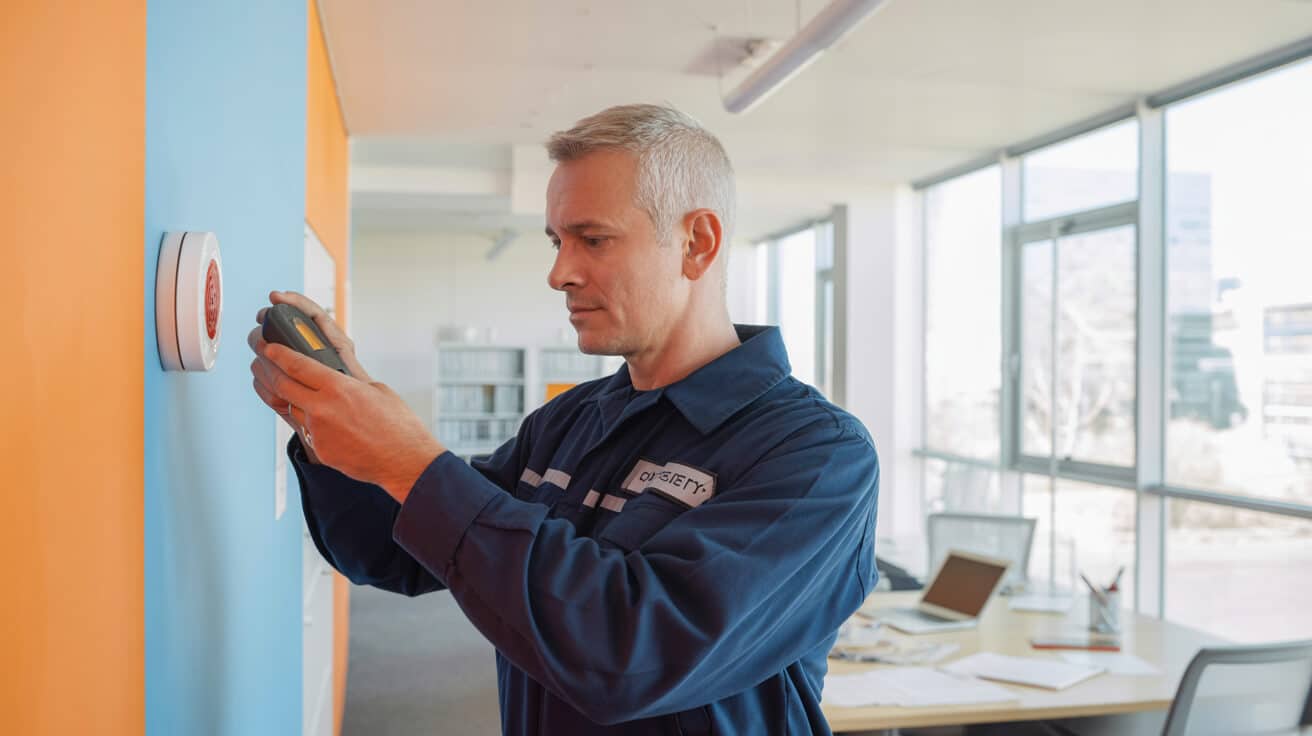
A compliant TMV service visit proves the valve still controls temperature within agreed limits and will respond safely if something changes.
Mechanical and hygiene checks
Each visit starts by confirming which valve is being worked on: asset ID, outlet, location and type. Engineers then isolate the valve, remove strainers and cartridges as required, clean scale and debris, and inspect internal components such as non‑return valves for wear or damage, replacing parts where condition or manufacturer’s instructions justify it.
Blocked strainers, worn thermostatic elements and tired seals are common causes of temperature drift and poor flow. Without opening the valve and addressing these faults, simple adjustments usually give only short‑lived improvements.
Temperature and failsafe testing
Once the valve is reassembled and back in service, engineers run hot and cold supplies to stable conditions, then measure and record:
- hot supply temperature upstream of the TMV
- cold supply temperature upstream of the TMV
- mixed outlet temperature at the tap, shower or bath under flow
They compare the mixed outlet temperature with the agreed set point and acceptance band and check it stays inside that band during normal flow and pressure changes.
A fail‑safe test then confirms behaviour under loss of one supply. With the outlet running, one supply is briefly isolated and the response observed. A correctly operating valve shuts down or quickly reduces flow so unsafe hot water is not discharged in a cold‑failure scenario. Results are recorded alongside the temperature readings.
Documentation you can defend
For each TMV, you should leave the visit with a clear audit trail: where the valve is, what type it is, what condition it was in when found, what was done, the measured results before and after the work, and whether it passed or failed against defined criteria.
All Services 4U structures TMV reports around that logic, so you have asset‑linked as‑found/as‑left data, defect grading and a clear view of what is safe, what needs monitoring and what needs remedial work. That makes it easier to evidence “what exactly was done and how you know it worked”.
If you would like to see this in practice, you can ask for a sample TMV service report pack during your consultation.
TMV2 vs TMV3 – and what that means for servicing
Different TMV schemes exist because not all outlets and user groups carry the same risk, and that choice affects how you manage PPM.
Where each type is typically used
TMV2 schemes broadly cover domestic and general applications, such as standard bathrooms in houses, flats and many commercial settings. TMV3 schemes are aimed at higher‑risk environments, particularly healthcare, care homes and other premises where vulnerable users rely on staff for bathing and washing.
Your water‑safety risk assessment and design standards should show where TMVs are fitted and which schemes apply. Servicing then follows that logic: the higher the risk and performance standard, the tighter and more structured your in‑service testing should be.
How scheme choice affects testing
Scheme certification shows that a TMV can meet specified performance criteria in the lab. It does not remove the need for commissioning checks at installation or regular in‑service verification.
In higher‑risk outlets, in‑service tests are often scheduled at shorter intervals to prove behaviour under real conditions, then extended if results remain stable or kept tight if the valve proves sensitive to local conditions. In general applications, annual or risk‑based checks are common but still need to be justified in your written scheme and backed by test results.
Once a scheme is chosen, you should be able to point to a servicing plan that matches it and to reports showing those tests happened as planned.
Accreditations & Certifications








UK compliance drivers and evidence expectations
![[ALTTOKEN]](https://allservices4u.co.uk/app/uploads/2026/01/01-TMV-Servicing-PPM-Services-UK-Thermostatic-Mixing-Valves.png)
TMV servicing sits inside a wider safety and compliance framework. Most scrutiny focuses on whether your controls are planned, competent and recorded.
Legal framework and guidance
Health and safety and water‑safety law requires you to assess risks, implement suitable controls and keep them under review. Legionella guidance and approved codes of practice describe what that looks like in hot‑ and cold‑water systems: a written scheme of control, clear responsibilities, competent people and records of what has been done and found.
Building Regulations for hot‑water safety add specific requirements, such as limiting bath outlet temperatures in defined dwellings. Sector guidance for healthcare, care and other regulated environments then layers on additional expectations for TMV use, validation and in‑service testing.
You are not given a single prescriptive TMV schedule. You are expected to apply a risk‑based approach and be able to explain and evidence your choices.
What auditors and insurers look for
When auditors, inspectors or insurers review TMV arrangements, they typically look for:
- a current risk assessment and written scheme explaining where TMVs are used and why
- an asset register that clearly identifies each valve and outlet
- a PPM schedule that matches the risk profile and is being followed
- service and test records with dates, readings, pass/fail decisions and actions
- evidence that measuring equipment is suitable and kept accurate
- a traceable link between defects, remedial work and re‑testing
If any of those links are missing, you may still be doing good work on site but struggle to demonstrate control. All Services 4U structures TMV servicing around those expectations so your evidence drops cleanly into your existing compliance file.
If you would like a light‑touch review of a sample of your TMV documentation, you can include that in your consultation and we will highlight obvious gaps.
Common failure modes and avoidable costs
Most TMV problems repeat once you have seen enough outlets, and much of the cost sits in repeat visits, complaints and disputes rather than in parts.
Typical technical faults
Blocked strainers, fouled non‑return valves and scale‑bound cartridges are frequent culprits. They restrict flow, upset the internal balance of the valve and cause the mixed temperature to drift or fluctuate. Over‑tightened isolating valves and poor commissioning can also leave TMVs fighting unstable supplies.
A quick adjustment at the head may bring the mixed temperature back into line for a short period, but if the underlying fault is not fixed the problem returns. Repeated tweaking without recorded tests can also hide the fact that the fail‑safe function is no longer behaving as designed.
Operational and commercial knock‑on effects
On the ground, unresolved TMV issues show up as a stream of “too hot/too cold” tickets, repeat access attempts to the same homes or rooms and staff time spent on work that does not stay fixed. That can drive higher call‑out costs, pressure on service‑charge budgets, dissatisfaction from landlord clients and awkward conversations if a scald incident or regulatory visit coincides with weak records.
Structured PPM reduces that noise. When you combine servicing with clear defect grading, sensible remedials and retesting where needed, you see fewer surprises and a more predictable pattern of work. You also build data to support decisions on when to repair and when to replace valves that generate disproportionate effort.
If you want to cut repeat TMV visits and turn them into planned, well‑evidenced tasks, you can ask us to map your current issues against a more structured PPM approach.
How All Services 4U runs TMV PPM across your estate
A TMV programme works best when it fits your buildings, residents and systems rather than a generic checklist.
Baseline and planning
We begin by understanding what you already hold: asset lists, drawings, previous reports and water‑safety documentation. Where information is thin, we help you build or refine a TMV register that fits your CAFM or compliance system, with clear locations and IDs.
From there, we agree a risk‑based testing and servicing cadence that reflects outlet type, user vulnerability, sector guidance and historic performance. High‑risk outlets such as baths in care settings can be given tighter intervals, while keeping the programme workable across the estate.
On‑site delivery
On site, engineers work to method statements that cover the technical steps and the realities of occupied buildings: access, safeguarding, infection‑control considerations and resident communication. They carry calibrated temperature‑measuring equipment, follow agreed test methods and complete mechanical service tasks as scoped.
Where problems are found, they record clear observations and, where within authority, carry out minor remedials on the spot. Larger works are flagged with the information you need: risk level, recommended action, likely impact and options.
Reporting and remedials
After the visit, you receive a structured pack rather than a loose bundle of PDFs. That typically includes an updated asset register extract, valve‑level service sheets with as‑found/as‑left readings and fail‑safe results, a summary of defects by severity and an action list with owners and suggested timescales.
We can also provide export formats that drop into your existing systems and dashboards, so TMV performance becomes part of normal reporting rather than a separate strand.
If you want to see how this would look for your portfolio, we can walk through a typical programme design and reporting set during your consultation.
Reliable Property Maintenance You Can Trust
From routine upkeep to urgent repairs, our certified team delivers dependable property maintenance services 24/7 across the UK. Fast response, skilled professionals, and fully insured support to keep your property running smoothly.

Book your free TMV PPM consultation with All Services 4U today
A short conversation is often enough to turn TMV servicing from a vague risk into a clear plan you can stand behind.
During your free consultation, you and All Services 4U will look at the essentials: the types of buildings you manage, the outlets and user groups you are responsible for, any existing TMV or water‑safety documentation, and the pain points you see today – from repeat temperature complaints to audit anxiety.
From there, we will suggest a practical starting point. That might be a pilot on a single block or floor, a high‑risk‑outlet sweep in care or supported housing, or a phased roll‑out across a wider portfolio. In each case, you will know in advance what we will test, what you will receive in terms of records, and how remedials and re‑testing will be handled.
You will also have a chance to ask about competence, insurances and governance, and to see the reporting structure we use, so you can brief your own boards and clients with confidence.
If you are ready to make TMV servicing a visible, auditable part of your PPM rather than a hidden assumption, book your free consultation with All Services 4U and start designing a programme that fits your estate, your duties and your residents.
Frequently Asked Questions
Explore our FAQs to find answers to planned preventative maintenance questions you may have.
What is TMV servicing in practice, and how is it different from a quick temperature check?
TMV servicing in practice is a structured mechanical and temperature test that proves each valve is safe, stable and failsafe over time – not just that the outlet feels comfortable on the day.
What actually happens during a proper TMV service visit?
On a real TMV service visit, an engineer should be able to answer three questions for every valve: which outlet is this, what condition is it in, and how did it perform when we left? That means:
- confirming the asset (unique ID, outlet, room/flat, valve type and duty)
- isolating and opening the valve to clean strainers and cartridges, remove scale and debris, and check non‑return valves
- inspecting for wear, damage or incorrect assembly that could affect temperature control or fail‑safe operation
- measuring hot and cold supply temperatures upstream, so results sit in proper context
- testing and recording mixed outlet temperature under flow, against your agreed set point and tolerance
- holding the outlet on long enough to confirm temperature stability, not just taking a single snapshot
- simulating loss of one supply briefly to see whether the valve reduces flow or shuts down (fail‑safe test)
Every step should be logged as‑found and as‑left, with clear pass/fail outcomes for temperature and fail‑safe behaviour.
By contrast, a quick in‑house temperature check often means “run the tap, read the gauge, move on”. It rarely tests fail‑safe behaviour, records tolerances, or proves mechanical condition. It gives a comfort check, not a control storey you can show to a water‑safety group, insurer or safety case team.
You do not get credit for what you meant to control; you only get credit for what you can prove you controlled.
All Services 4U treats TMV servicing as a compliance action, not a favour. Our engineers follow a repeatable method that lines up with water‑safety guidance such as HSE’s ACOP L8 and HSG 274 Part 2, using calibrated thermometers and documented procedures. That gives you outlet‑level evidence you can stand behind when a board member, regulator or resident asks how you keep people safe at the tap.
How does a quick in‑house check compare to a full TMV service?
A simple temperature check and a structured TMV service answer different questions when somebody asks, “how do you know this outlet was controlled on that date?”
| Aspect | Quick in‑house temperature check | Full TMV service visit |
|---|---|---|
| Scope | Outlet temperature only | Valve condition, supply temps, mixed temp and fail‑safe |
| Fail‑safe behaviour | Rarely tested | Simulated and recorded |
| Mechanical internals | Not inspected | Cleaned, descaled, checked for wear and debris |
| Evidence quality | Single reading, minimal context | As‑found/as‑left data with tolerances and engineer sign‑off |
If you want your organisation to be seen as the landlord or accountable person who can show calm, factual control rather than opinion, you need the right‑hand column. A short conversation with All Services 4U is usually enough to map where you sit on that spectrum today and what it would take to run TMV servicing at a level your board and insurers are genuinely comfortable with.
Where is TMV servicing most critical across my estate, and how do I prioritise outlets?
TMV servicing is most critical where a wrong temperature would genuinely harm a person or damage your position with regulators, insurers or boards, so you prioritise by vulnerability, exposure and scrutiny, not convenience.
Which buildings and outlets should be at the front of the queue?
Across a mixed portfolio, some TMV‑controlled outlets clearly sit in a different risk band to others. As a practical starting point, priority usually falls into these buckets:
- Care and health settings: – care homes, supported living, extra‑care, NHS or independent healthcare, special schools, therapy suites. Baths and showers used by people who cannot protect themselves from scalding sit at the top of the list.
- Blocks with high landlord exposure: – larger residential schemes, student blocks, build‑to‑rent, PBSA, HRBs. One TMV issue here can quickly become a portfolio storey if you cannot show control.
- Any building in your safety case or “red list”: – high‑rise, complex layouts, or buildings already under regulator, insurer or lender attention.
Inside those settings, focus first on assisted baths, communal showers, therapy rooms and any outlet used by children, older people or residents with reduced mobility or cognition. Standard apartments, offices and low‑risk spaces follow once the sharper exposures are under control.
A simple way to think about it is that TMV servicing is a safeguarding tool as much as a maintenance task. All Services 4U helps you turn that into a ranked list in plain language, then into a servicing programme that fits your real operating constraints.
How do you balance risk, disruption and budgets in real buildings?
You are not working in a textbook. You are working around care routines, school timetables, HRB access windows, staff capacity and tight budgets. Trying to do everything, everywhere, all at once is exactly how programmes stall.
In practice, a defendable sequence often looks like:
- focusing year one on care, healthcare and HRB stock, and the highest‑risk outlets within them
- grouping visits by block, floor or wing to cut down on repeated disturbance and travel
- building TMV servicing into existing water‑safety PPM windows where you already have access agreed
- using early data to identify stable, low‑risk outlets where intervals can safely stretch later, and those that should be moved onto a shorter cycle or replacement plan
All Services 4U works with your property team, resident liaison and local managers to design that phasing. You stay in charge of the order and spend, but you are no longer trying to hold the whole risk matrix in your head. A scoped pilot on a single care home, HRB or high‑profile block is often enough to give you a clear, evidence‑based picture of what a realistic roll‑out should look like.
If you want to be seen as the leader who moved TMV control from “we hope it’s fine” to “here is how we prioritise and why”, this is one of the cleanest places to start.
How often should TMVs be serviced, and what actually drives the right frequency for my sites?
TMV servicing frequency should follow your water‑safety risk assessment and written scheme, anchored in real use and vulnerability, rather than a single calendar rule copied across every building.
What does a defensible TMV servicing interval look like?
HSE’s ACOP L8 and HSG 274 Part 2 expect you to assess hot‑ and cold‑water risks, choose suitable controls and keep them under review. Where TMVs are part of that control, a defendable interval usually includes:
- clearly stating in your written scheme which outlets are controlled by TMVs and why
- setting a baseline in‑service testing and servicing interval for those outlets
- reviewing performance data, complaints, incidents and changes of use, then tightening or relaxing intervals with documented reasoning
In broad terms:
- many standard residential and commercial sites work with annual TMV servicing, backed by interim temperature checks for reassurance
- care, healthcare and higher‑risk environments often adopt shorter cycles for assisted baths, communal showers and therapy areas, especially where very young, very old or clinically vulnerable people use the outlets
From there, you earn the right to adjust. If a valve repeatedly holds its set temperature, passes fail‑safe tests and shows no mechanical issues, a longer gap can be justified in your risk assessment. If readings drift, fail‑safe behaviour is inconsistent, or the same outlets keep appearing in temperature complaints, tightening the interval or planning replacement is the professional response.
All Services 4U helps you write that logic down instead of relying on “that’s just our practice”. You end up with a risk‑based TMV servicing frequency you can explain calmly to auditors, water‑safety groups, insurers and, if necessary, a tribunal.
What happens if you simply “wait until something goes wrong”?
Relying on residents, ward staff or teachers to flag TMV issues before you act can look cheaper on paper, but it tends to cost more in every useful metric:
- more emergency call‑outs and out‑of‑hours disruption
- more returns to the same outlets because the underlying valve fault was never dealt with
- more noise in your CAFM as repeated “temperature complaint resolved” tickets pile up
- and a thin storey if someone asks what proactive control you had in place before the incident
A planned cadence flips that narrative. You will still see occasional issues – no estate is perfect – but you become the organisation that can say, “this is our scheme, these are our last service cycles, and here is how we responded when we saw problems.”
If you want your name on the safety case or risk register to signal calm control rather than constant firefighting, putting TMV servicing on a deliberate interval is one of the easiest wins you can bank this year.
What exactly should be tested and recorded at each TMV service to satisfy auditors, insurers and regulators?
At every TMV service you want a simple, repeatable pattern per outlet: what we found, what we did, and how it performed when we finished. That is the level of clarity external reviewers tend to look for.
What should engineers physically test on a TMV service?
A credible TMV service visit should give you mechanical, temperature and fail‑safe assurance in one pass. In practical terms that means:
- asset confirmation: – unique ID, precise location, valve type and duty (e.g. assisted bath, communal shower)
- mechanical condition: – strainers, cartridges and non‑return valves cleaned and inspected for wear, scale or debris
- supply context: – hot and cold temperatures measured upstream of the valve so you know what the valve was working with
- mixed outlet performance: – temperature under flow, tested and recorded against your agreed set point and tolerance band
- stability: – outlet held on for long enough to see whether temperature drifts outside tolerance or holds steady
- fail‑safe behaviour: – a controlled test confirming that the valve reduces flow or shuts down if there is a significant drop in hot or cold supply
Instruments should suit the temperature range and be checked or calibrated in line with manufacturer instructions or a recognised scheme such as UKAS. A number from an unverified thermometer does not carry the same weight as a checked reading when water‑safety or legal teams review your file.
All Services 4U bakes that pattern into our method statements. You get consistent testing from engineer to engineer and from building to building, so you can compare performance across your estate instead of interpreting a different style of notes on every job.
What should the TMV service record actually show?
For an internal audit, insurer query or legal review, people look for a clear line from risk to control to evidence. For TMVs that typically means each record should set out, in unambiguous terms:
- which outlet is being controlled and how it is identified in your systems
- the date of service and the engineer who attended
- as‑found hot, cold and mixed temperatures and how they sat against your tolerances
- as‑left temperatures after cleaning, adjustment or part replacement
- whether the fail‑safe test passed or failed, in plain, binary language
- any remedial recommendations or parts replaced, with references to follow‑on work orders
- when failures were closed out and, where relevant, which contractor or in‑house team did the remedial work
This does not need to be a long narrative for every valve. A structured, one‑line‑per‑valve log that sits in your CAFM or compliance system and exports cleanly into board packs, safety‑case evidence pools or lender/insurer binders is usually enough.
If your current TMV paperwork is missing fail‑safe results, uses vague locations, or does not link a fail to a dated fix, it is a signal to tighten the pattern before someone external asks you to. A focused sample review with All Services 4U on one care home, HRB or flagship block will give you a tangible before‑and‑after view of what “audit‑ready” looks like in your own context.
Which regulations and guidance make TMV servicing part of my duty, even if no one quotes an exact interval?
No single UK regulation prints a neat line saying “service every TMV every X months,” but several pieces of health, safety and building guidance combine to make regular TMV servicing the straightforward way to show you are controlling scald risk and water hygiene.
How do health and water‑safety duties pull TMV servicing into scope?
General health and safety law requires you to identify risks, put suitable controls in place and keep those controls under review. HSE’s ACOP L8 and HSG 274 Part 2 set expectations for hot‑ and cold‑water systems, including managing scalding and Legionella risk through a written scheme, temperature control and regular checks.
When you choose TMVs as part of that control strategy – particularly for vulnerable users – it is hard to argue you are “reviewing” the control if you never inspect or service the valves. Spot temperature checks alone do not prove that the mechanical fail‑safe still operates or that internal components have not degraded.
Building Regulations add more specific duties. Approved Document G addresses hot‑water safety and limiting bath outlet temperatures in certain dwellings and settings. Sector guidance for healthcare and social care then goes further, explaining how TMVs should be selected, commissioned and tested in‑service around people who cannot protect themselves.
In higher‑risk residential buildings, your approach to scald control now sits inside your wider Building Safety Act regime and safety case. Regulators increasingly want to see how you handle water temperature risk alongside fire, structure and other headline hazards.
All Services 4U designs TMV programmes to sit cleanly within that framework: risk assessment and written scheme on one side, targeted TMV servicing and records on the other. You are not chasing an arbitrary interval for every outlet; you are doing enough, in the right places, to back up your risk storey with evidence.
Do you still need TMV servicing if your water‑hygiene contractor takes outlet temperatures?
Bulk temperature monitoring under a water‑hygiene contract is valuable, but it is only one part of the picture. A contractor taking monthly outlet readings under your ACOP L8 scheme is checking that the system sits inside your temperature ranges on that day. They are not:
- opening valves to remove scale and debris from strainers and cartridges
- checking non‑return valves and isolators
- confirming that mechanical fail‑safe behaviour matches what you believe you installed
- validating the match between the valve in the wall and the duty you think it is performing in your risk assessment
A combined pattern – water‑hygiene monitoring plus TMV servicing at intervals justified by risk – gives you a much stronger position if you ever need to explain your approach to a regulator, coroner, insurer or ombudsman. If you already have the monitoring half in place, All Services 4U can bolt a TMV servicing layer onto it with minimal additional disruption, so you can present a single, joined‑up storey of how you control hot‑water risk.
For a building safety manager, head of compliance or RTM director, that joined‑up picture is often what separates “we thought it was fine” from “here is exactly how we manage this risk”.
What are the most common TMV failures you see, and how do they show up in operations and budgets?
The most common TMV failures are a small cluster of mechanical and installation issues, but they generate a lot of operational noise, repeat jobs and avoidable spend if you do not deal with them systematically.
Which TMV faults turn into constant site noise?
In residential portfolios, care homes and mixed‑use buildings, the same patterns appear again and again:
- Blocked strainers: – debris from the system or recent works clogs the strainer, starving the valve of flow and upsetting its internal balance.
- Scaled cartridges: – hard water builds up on moving parts, so the valve becomes slow to react or overshoots the set point.
- Sticking non‑return valves: – NRVs that no longer seat correctly allow cross‑flow or leave the valve in an unstable, half‑open state.
- Isolating valves left part‑closed: – often after other works, limiting flow and making the TMV look “temperamental” when the real issue is upstream.
On the ground, that shows up as lukewarm baths, cycling shower temperatures, poor flow or all three. In your CAFM, it reads like a rolling list of temperature complaints cleared on paper but never truly resolved.
When an inspection, complaint or incident cuts across that pattern, your history can easily look like repeated tweaks rather than deliberate control. That picture is harder to justify to a board, regulator or insurer than a smaller number of well‑documented interventions that actually fix the problem.
Financially, every repeat visit carries call‑out cost, coordination time, internal staff effort and reputational drag. In a care setting or HRB, you also add the risk of external scrutiny arriving at a time when your records look messy.
All Services 4U uses structured TMV servicing to break that loop. We clean, test and grade valves properly, highlight when repeated faults justify replacement rather than another adjustment, and give you options so you can choose between “fix”, “upgrade” or “planned replacement” based on risk and whole‑life value, not just the urgency of the latest complaint.
How can you spot “tick‑box” TMV servicing before it undermines you?
The paperwork often tells you more about the quality of TMV work than the invoice does. Warning signs that the service on paper is not doing the job you think it is include:
- reports that show outlet temperatures but no recorded fail‑safe results
- identical readings repeated across many valves, suggesting estimates rather than live measurements
- vague locations such as “level 2 bathroom” that you could not reliably find in an emergency
- no link between a failed outlet and a dated close‑out of the remedial work or replacement
- service sheets with no engineer name, no reference to instruments and no tolerances
When an insurer, regulator or legal team looks at files like that, the question very quickly becomes “how do we know any of this really happened?” rather than “what did you find and fix?”. It is much easier to tidy that pattern now, on your terms, than to rebuild it later under pressure.
Letting All Services 4U review and re‑baseline a sample building, care home or HRB gives you a practical benchmark. You see, in your own data, the difference between tick‑box and defensible TMV servicing, and you can decide how fast to move the rest of your stock towards the standard you want associated with your name and your organisation.
How can TMV servicing records be structured so they work day‑to‑day and still stand up in an audit, claim or tribunal?
Robust TMV servicing records are built so they are easy for your team to use every week and strong enough to support you when an auditor, insurer, regulator or legal adviser starts reading them line by line.
What does “audit‑ready” actually look like for TMV servicing?
Across internal audit, building safety reviews, insurance work and legal matters, the pattern is the same. Reviewers try to join up three things:
- the risk: – scalding, Legionella, vulnerable users, safety‑case context
- your control: – identified TMV‑controlled outlets, with an agreed set point, tolerance and frequency
- your evidence: – what was done, what was found, what was fixed, and how often you checked again
A TMV record set that stands up under that level of scrutiny usually has these traits:
- one structured line per valve, with a stable ID and precise location that match reality on site
- clear dates, named engineers and reference to your internal procedure or method statement
- as‑found and as‑left supply and mixed temperatures, with tolerances visible rather than implied
- explicit pass/fail results for fail‑safe tests, not just narrative comments
- live linkage from any failed outlet to a remedial work order and a dated closure
- fields that map cleanly into your CAFM, compliance platform or safety case repository so you can philtre by building, risk category or group of users
Somebody who has never visited the property should be able to understand that record without phoning the site or guessing which bathroom you meant.
All Services 4U designs TMV record templates to fit into the systems you already run – CAFM, water‑safety software, safety‑case tools – rather than handing you another spreadsheet to manage. That keeps day‑to‑day use simple while quietly hardening your position if something serious ever lands on your desk.
How can you move from your current state to that standard without rebuilding everything?
You do not have to scrap your existing systems to get TMV documentation to this level. A realistic path often looks like:
- choosing one representative building – a care home, an HRB, a complex multi‑storey block – as a pilot
- pulling together your current TMV records and water‑hygiene paperwork for that site
- agreeing a minimum data set that would make you and your senior stakeholders comfortable if it appeared in a claim, safety case review or Ombudsman file
- asking All Services 4U to run a TMV servicing cycle on that building to that standard, aligned with your formats and naming conventions
From there, you can decide how fast to roll the improved pattern across your estate and where to combine it with other upgrades such as PPM redesign or safety‑case work. For an RTM board director, building safety manager, asset manager or head of compliance, that kind of targeted pilot is an easy, visible win: it shows you are tightening control, not just talking about it.
If you want to be the person who can open a file in a difficult meeting and walk everyone through, “here is the risk, here is our control, here is the evidence,” then designing TMV servicing records to that standard is one of the most straightforward steps you can take – and All Services 4U is built to help you do it without derailing your day job.
- Why TMV servicing belongs in your UK PPM plan
- TMV servicing PPM for managed UK buildings
- Why TMV servicing is a key PPM item
- What a compliant TMV service visit includes
- TMV2 vs TMV3 – and what that means for servicing
- UK compliance drivers and evidence expectations
- Common failure modes and avoidable costs
- How All Services 4U runs TMV PPM across your estate
- Book your free TMV PPM consultation with All Services 4U today
- Frequently Asked Questions
- Related PPM Services
Case Studies


Related Articles

Your Guide To Identifying And Treating Minor Mould Outbreaks
Why Planned Preventative Maintenance (Ppm) Saves Money And Ensures Compliance