BS 5839 Fire Alarm Standard Explained – PPM Requirements UK
Duty holders, landlords and estate managers need BS 5839 to turn vague fire safety duties into a clear, defensible fire alarm maintenance regime across UK buildings. By mapping each system to the right BS 5839 part and setting structured PPM routines, you cut life-safety, enforcement and insurance risks based on your situation. Compliance looks like defined test intervals, credible records and engineer visits that stand up to fire officers, insurers and boards if something goes wrong. It’s a strong moment to align your current maintenance pattern with what BS 5839 actually expects.


Author
Izzy Schulman

How BS 5839 Turns Fire Alarm Duties Into PPM
If you are the duty holder for blocks, estates or mixed portfolios, BS 5839 is the benchmark most professionals assume you follow. It converts broad legal duties on fire detection and warning into practical fire alarm testing, servicing and record‑keeping you can plan, budget and defend.

When your planned preventive maintenance drifts from BS 5839, the impact shows up in faults, false alarms, resident frustration and tougher questions from regulators, insurers and lenders. Understanding how the standard frames your responsibilities helps you build a building‑by‑building PPM regime that is both credible and affordable.
- Map which BS 5839 part applies to each system
- Reduce life‑safety, enforcement and insurance risks from weak PPM
- Build a defensible, portfolio‑wide fire alarm maintenance pattern
Need Help Fast?
Locked out, leak at home, or electrical issue? All Services 4 U provides 24/7 UK locksmith, plumbing, electrical.
Testimonial & Clients Who Trust Us
With 5 Star Google Reviews, Trusted Trader, Trust Pilot endorsements, and 25+ years of experience, we set industry standards for excellence. From Dominoes to Mears Group, our expertise is trusted by diverse sectors, earning us long-term partnerships and glowing testimonials.
Worcester Boilers

Glow Worm Boilers

Valliant Boilers

Baxi Boilers

Ideal Boilers

What Does BS 5839 Mean For You As A Duty Holder?
BS 5839 turns your general fire safety duty into a clear, testable fire alarm maintenance regime you can plan and prove. It translates phrases like “keep the alarm in good repair” into specific checks, visits and records, so you can show fire authorities, insurers and boards that your systems are being managed in a sensible, defensible way across your buildings.
If you are responsible for a block, estate or portfolio, BS 5839 is the benchmark most professionals silently assume you are working to, even if they never name it.
What BS 5839 Actually Is
BS 5839 is a British Standard that sets out recognised good practice and gives best‑practice recommendations for designing, installing, commissioning and maintaining fire detection and alarm systems, rather than a law in its own right. In day‑to‑day management it acts as the technical manual behind your legal duties, spelling out how systems should be put in, looked after and recorded so you can show they are being managed competently. For day‑to‑day work, two parts matter most:
- BS 5839‑1: – non‑domestic and communal systems in offices, shops, schools, hospitals and shared areas of blocks.
- BS 5839‑6: – alarms inside dwellings such as houses, flats, maisonettes and many HMOs.
When someone says a system should be “BS 5839 compliant”, they are usually pointing to these parts, especially the sections on maintenance, testing and record‑keeping.
This information is general and does not constitute legal advice; for specific cases you should take advice from a qualified fire safety professional or lawyer.
How BS 5839 Fits With Your Legal Duties
BS 5839 is the practical yardstick many fire officers, risk assessors and courts use to decide whether you are meeting your legal fire safety duties. Laws such as the Regulatory Reform (Fire Safety) Order 2005 and wider housing legislation broadly expect you to:
- provide suitable detection and warning of fire, and
- maintain: that provision so it remains effective.
What the law does not do is spell out design details or exact test intervals. BS 5839 fills that gap by defining what “appropriate” and “well maintained” usually look like in real buildings, so you can show you have taken reasonably practicable steps.
Which Buildings and Alarms In Your Portfolio Are In Scope?
Different buildings and systems in your portfolio may sit under different parts of BS 5839, and mapping that split helps you avoid both overspending and under‑protection. In broad terms:
- Communal and commercial systems: – panel‑based alarms with call points and detectors in offices, shops, schools, warehouses, plant rooms and common parts of blocks: BS 5839‑1 applies.
- Alarms inside dwellings: – mains‑powered or battery‑backed smoke and heat alarms in houses, flats and smaller HMOs: BS 5839‑6 applies.
- Mixed‑use or complex sites: – for example, shops with flats above or student blocks over retail: you may need both parts.
Once you know which standard applies where, you can move from good intentions to a concrete, building‑by‑building maintenance regime that is both defensible and affordable.
Fire alarm compliance lives in simple routines you can prove, not memorised clauses.
Knowing how BS 5839 frames your responsibilities is the first step; the next is understanding the real‑world cost of letting maintenance drift.
What Happens If Your Fire Alarm PPM Falls Short Of BS 5839?
If your fire alarm maintenance slips away from BS 5839, problems usually show up first as faults, false alarms and awkward questions before they appear as legal or insurance trouble. Weak planned preventive maintenance (PPM) gradually turns a quiet safety net into a visible source of risk for you, your residents and your insurers.
From a landlord or owner’s perspective, poor PPM is not just a technical issue; it directly affects life safety, operations, claims and reputation.
Life‑Safety and Operational Risks For Your Building
Poor planned preventive maintenance (PPM) on your fire alarms increases the chance the system will misbehave when you most need it. As contamination, wear and unnoticed faults build up, the risk rises that detectors will not trigger, sounders will not operate or panels will sit in fault, leading to missed warnings, disruptive false alarms and residents gradually ignoring the signal altogether. Over time, lack of maintenance often results in:
- Detectors becoming contaminated or damaged and failing to trigger.
- Sounders, beacons or voice alarms failing silently between tests.
- Control equipment logging unresolved faults for long periods.
- Standby batteries and power supplies degrading unnoticed.
Any of these can mean occupants do not get timely warning. Even without injury, repeated unwanted alarms, night‑time evacuations and avoidable call‑outs disrupt teaching, trading and residents’ lives, and slowly train people to treat the alarm as background noise instead of a serious signal.
A steady BS 5839‑aligned maintenance pattern cuts these failures down by forcing short weekly checks and regular engineer visits that catch small issues early.
Legal and Enforcement Consequences For You
Fire and housing regulators judge you on the overall pattern of your maintenance, not just the snapshot they see on inspection day. When fire and rescue services or enforcement teams attend, they typically look for:
- a current fire risk assessment and what it says about detection and warning,
- your testing and servicing pattern, including weekly user tests and periodic engineer visits,
- logbooks and contractor reports that match that storey, and
- obvious faults left unaddressed for long periods.
Where a serious fire coincides with obviously poor maintenance, they can issue enforcement or prohibition notices or seek prosecution. In court, BS 5839 often features in arguments about what a reasonably competent duty holder should have done, especially when someone was responsible for leasehold blocks or social housing stock.
You may not personally face prosecution every time something is wrong, but you are firmly in the picture if your maintenance arrangements are clearly inadequate.
Insurance, Finance and Reputation Damage
Insurers and lenders expect you to maintain building fire precautions broadly in line with relevant British Standards, even if the policy wording is brief. After a fire or major incident, they may ask:
- whether recommended tests and services were actually carried out,
- how long known faults were left unresolved, and
- whether your records credibly support your storey.
If systems were not being tested at reasonable intervals, faults were ignored or the paper trail is thin, insurers may reduce a claim, load future premiums or, in serious cases, dispute cover. Lenders and valuers can take a more cautious view of risk, which affects refinancing and disposals.
Even without formal action, repeated fire alarm problems and visible poor maintenance quickly erode trust with leaseholders, tenants, RTM directors and investors. For many owners who come to All Services 4U after working with other contractors, that erosion of trust is the tipping point.
If you are unsure how your current planned preventive maintenance compares with BS 5839, a short review with a competent contractor can highlight weaknesses before an incident or inspection does.
Bringing your regime back towards BS 5839 is therefore not a box‑ticking exercise; it is a direct way to protect people, income and asset value.
How Do Domestic and Non‑Domestic BS 5839 Systems Differ In Practice?
![[ALTTOKEN]](https://allservices4u.co.uk/app/uploads/2026/01/03-BS-5839-Fire-Alarm-Standard-Explained-PPM-Requirements-UK.jpg)
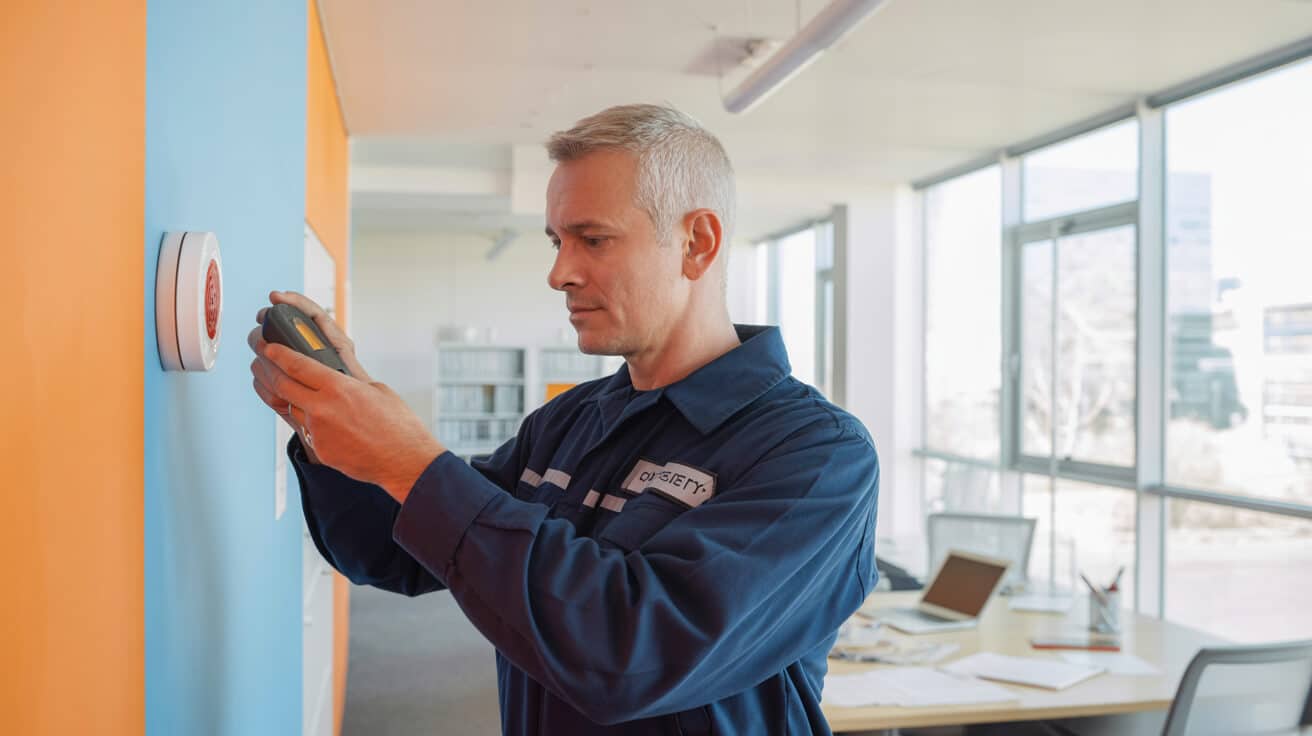
Domestic and non‑domestic fire alarm systems follow different parts of BS 5839, and confusing them is a common route to either over‑engineering simple stock or under‑protecting higher‑risk buildings. If you manage mixed portfolios, being clear about this split helps you brief contractors properly and set realistic expectations with residents and boards.
The starting point is separating communal or commercial systems from alarms inside dwellings, then handling the overlaps in mixed‑use sites.
Where BS 5839‑1 Applies In Your Portfolio
BS 5839‑1 applies wherever a fire alarm system protects non‑domestic areas or the communal parts of residential buildings, where a central panel and shared escape routes are involved. In practice, that covers most offices, shops, schools, warehouses, plant rooms and common corridors or stairwells in blocks, and it is the benchmark most fire officers and risk assessors use when judging those systems. Typical examples in your portfolio might include:
- an addressable system in an office, warehouse or retail unit,
- a panel serving corridors, stairwells and plant rooms in a block of flats,
- a fire alarm covering a school, college, hospital, care home or hotel.
These systems usually include a control panel, manual call points on escape routes, automatic detectors in appropriate areas and sounders or visual alarms. BS 5839‑1 assumes these will be tested regularly by the building user and inspected and serviced at defined intervals by a competent person.
Because the fire load, occupancy and escape distances in these buildings are very different from a single flat, the standard expects a more formal, documented PPM regime.
Where BS 5839‑6 Applies Inside Dwellings
BS 5839‑6 governs fire detection and alarm systems inside dwellings, and its recommendations are shaped around how people live with domestic alarms day to day. It defines:
- Grades of system: – from stand‑alone battery devices to full Grade A panel‑based systems.
- Categories of coverage: – from escape‑route‑only to full‑coverage protection.
Maintenance expectations for domestic systems emphasise regular testing with the test button, cleaning to reduce contamination and false alarms, replacing devices at end of life and, for panel‑based Grade A systems in larger HMOs or supported housing, periodic servicing similar to a non‑domestic panel.
If you are a landlord or HMO operator, BS 5839‑6 sits alongside licencing and housing enforcement practice, so your PPM regime needs to satisfy both the standard and local expectations.
What To Watch In Mixed‑Use and Blocks of Flats
Many buildings will not be purely commercial or purely domestic, and that is where gaps and arguments often start. A very common pattern is:
- a shop or commercial unit at ground floor,
- shared stairs and landings above, and
- self‑contained flats on upper floors.
In that case you might have:
- a BS 5839‑1 system for the shop and common parts, and
- separate BS 5839‑6 alarms inside each flat.
Your planned maintenance then has to reflect both standards: the communal panel, call points and detectors follow a non‑domestic PPM regime, while domestic alarms inside flats are tested, serviced or replaced in line with BS 5839‑6 and housing requirements.
Documenting that split once, clearly, reduces later friction over who is responsible for which alarms and at what frequency. When All Services 4U is asked to audit mixed‑use fire alarm regimes, this is often the first source of confusion we resolve.
What Does a BS 5839‑Aligned PPM Calendar Actually Look Like?
A BS 5839‑aligned PPM calendar converts your duties into a small set of predictable routines, some carried out by your own team and some by a contractor, with nothing left to memory. Once weekly tests, six‑monthly inspections and periodic replacements are laid out visually, you can manage budgets, assign responsibilities and answer auditors’ questions with much more confidence.
The aim is a repeatable pattern you can show to a fire officer, board or insurer without embarrassment.
Your Weekly Fire Alarm User Tests
Weekly tests are short, simple checks you or your on‑site team carry out to prove the fire alarm still operates between engineer visits and that people recognise the alarm signal. By triggering a different manual call point or device each week, confirming the signal is heard and recording the result, you build a continuous record that the system is alive, familiarise people with the tone and catch obvious faults early. A straightforward weekly routine for a BS 5839‑1 system might look like this.
Step 1 – Select a device to test
Choose a different manual call point or detector test location each week during normal occupancy.
Step 2 – Activate and observe
Activate the device, confirm that the alarm sounds and check the panel behaves as expected.
Step 3 – Reset and confirm status
Reset the system, confirm the panel shows normal operation and note any outstanding faults.
Step 4 – Record the test
Log the date, device and any issues in your fire logbook or CAFM system.
In larger buildings you rotate devices so each is tested over a defined cycle. For BS 5839‑6 domestic systems, users typically test alarms weekly or monthly using the test button, depending on risk and manufacturer guidance, with clear instructions on who is responsible.
Your Six‑Monthly Inspection and Service Visits
Six‑monthly engineer visits are your chance to have a competent person challenge whether the system is still in good condition and whether building changes have affected it. For non‑domestic and communal alarms, BS 5839‑1 recommends inspection and servicing by a competent person at least twice a year.
A typical six‑monthly visit includes the following steps.
Step 1 – Review history and documentation
Review the logbook for faults, activations, false alarms and previous recommendations.
Step 2 – Inspect and test equipment
Visually inspect devices, test panel functions, power supplies and a planned proportion of detectors and call points.
Step 3 – Check batteries and standby supplies
Test and, if needed, replace standby batteries and verify secondary supplies meet requirements.
Step 4 – Report findings and priorities
Issue a clear report listing tests performed, items passed, defects found and recommended timescales for remedials.
In higher‑risk or very complex sites you may opt for more frequent visits; in simpler premises, two per year is seen as the baseline. For BS 5839‑6 Grade A systems, a similar approach is taken; for simpler domestic grades, the focus is on testing, cleaning and end‑of‑life replacement.
Turning Tasks Into a Simple Yearly PPM Calendar
The most effective way to keep on top of these duties is to turn the standard’s expectations into a visible yearly calendar that everyone recognises. At minimum, your calendar should answer:
- What is being done – weekly test, detector cleaning, panel inspection, battery replacement and so on.
- Who is doing it – your team (user tests) or an external contractor (servicing and repairs).
- How often – weekly, monthly, six‑monthly, annually or triggered by specific events.
- Where you record it – logbook, CAFM or maintenance software, plus service reports.
Many organisations now embed these tasks into their CAFM or job management systems so that reminders, evidence capture and reporting are automatic. Once this is in place, you can see at a glance whether a particular block, office or RTM‑managed building is truly on track.
With the calendar set, the next step is making sure your documentation can prove what the calendar claims.
Accreditations & Certifications








How Do You Prove BS 5839 Compliance To Fire Authorities, Insurers and Lenders?
![[ALTTOKEN]](https://allservices4u.co.uk/app/uploads/2026/01/04-BS-5839-Fire-Alarm-Standard-Explained-PPM-Requirements-UK.jpg)
Proving that you follow BS 5839 is largely about having clear, consistent records ready before anyone asks, rather than pulling paperwork together in a rush. If you can quickly show risk assessments, logbooks, service reports and remedial records for each building, most conversations with fire authorities, insurers and lenders become more straightforward.
A strong contractor will design their visits and paperwork around making that proof easy for you.
What Fire Authorities Commonly Ask To See
Fire authorities are looking for evidence that you manage your fire alarm system in a planned, sensible way rather than reacting only after problems. When they visit, they expect to see a current risk assessment, regular weekly tests, periodic servicing by a competent contractor and a clear paper trail showing that identified faults and recommendations have been acted on within reasonable timescales.
When a fire officer visits after an incident, an unwanted alarm or for a routine inspection, they usually want to see a coherent pattern rather than one perfect document. Common requests include:
- the most recent fire risk assessment and any actions about detection and warning,
- fire alarm logbooks showing weekly tests and recorded faults,
- periodic service reports from a competent contractor,
- records that previous recommendations have been completed or are scheduled,
- evidence of how you manage and reduce false alarms.
If your records show regular testing, timely servicing and sensible follow‑up, you are generally seen as trying to manage risk properly. Where there are large gaps or no real storey at all, enforcement becomes more likely, particularly in higher‑risk blocks or social housing where residents have already raised concerns.
What Insurers and Lenders Expect In Your Files
Insurers and lenders are asking whether you are managing your buildings in a way that keeps their risk within acceptable bounds. For fire alarms, they often expect:
- confirmation that systems are designed and maintained to relevant standards,
- records of routine tests and defect clearance,
- evidence that critical components such as batteries are replaced on schedule,
- a clear link between inspection findings and invoices for remedial work.
In larger claims or complex portfolios, insurers may commission their own surveys or ask detailed questions about your maintenance regime. Lenders and valuers are increasingly influenced by the same evidence when deciding whether to support refinance, sales or acquisitions, especially for leasehold blocks with Section 20 exposures and HRBs with Safety Case duties.
How a Digital Binder Makes Your Life Easier
Trying to reconstruct this evidence trail from emails and filing cabinets every time someone asks is slow, stressful and error‑prone. A simple digital binder approach improves both control and credibility.
A practical binder typically includes:
- a consistent index (site → asset → system → job),
- copies of logbooks, service reports, certificates and photos,
- clear tagging for relevant standards and legal duties,
- cross‑references between recommendations, remedials and sign‑off.
When All Services 4U is brought in after a claim, inspection or audit, we often start by rebuilding this evidence spine so your existing good work is visible. Afterwards, each new test, service or remedial simply drops into place, giving you a living, shared view you can hand to boards, insurers or regulators without panic.
Once you can see and prove what is happening, it becomes much easier to judge whether your current contractor is really protecting you.
Why Your Current Contractor May Be Leaving You Exposed
If your current contractor delivers patchy testing, vague reports or poor evidence, the risk does not disappear – it sits squarely with you as the duty holder. BS 5839 gives you a practical way to test whether “good enough” is actually good enough before a serious fire, complaint or claim forces the issue.
Many owners only discover the weakness in their arrangements when a surveyor, insurer or solicitor starts asking questions that their contractor cannot answer clearly.
Typical Gaps We See In Fire Alarm PPM
Typical gaps in fire alarm planned preventive maintenance show up as things that are either not being done at all or are done without any real record. When we review existing regimes or are asked to take over contracts, the same failure modes appear repeatedly. Typical examples include:
- Weekly tests not done or not recorded, leaving no real proof of routine checks.
- Six‑monthly services slipping to annual, or missed entirely at some sites.
- Panels left in fault for long periods with no meaningful escalation.
- Detectors or call points only “inspected”, not functionally tested.
- Ageing batteries and devices left in service without a replacement plan.
Individually, some of these can look minor. Together, they paint a picture of a maintenance regime that would be difficult to defend under investigation or in a tribunal bundle.
Red Flags In Service Reports and Logbooks
Your existing paperwork often reveals more than any contract review. Red flags to watch for include:
- service reports with almost identical generic wording each visit,
- long‑running recommendations with no closure dates or reasons recorded,
- logbooks with months of missing weekly tests or fault records,
- invoices that do not clearly relate back to identified actions.
If you would be uncomfortable handing those documents straight to a fire officer, insurer or leasehold tribunal, they are not truly protecting you. A BS 5839‑aligned contractor should leave you with reports and logs that a third party can understand and cross‑check without your explanation.
Questions To Ask Your Fire Alarm Provider Today
You do not need to be a fire alarm engineer to challenge your provider constructively. A few clear questions can reveal how closely they are working to BS 5839 in practice:
- How do you plan test cycles so every device is exercised over time?
- How do you decide when batteries, detectors and panels should be replaced?
- For one chosen building, can you show the last six months of tests, services and remedials together?
- How do you help me comply across both BS 5839‑1 communal systems and BS 5839‑6 domestic alarms?
If those answers are vague, heavily caveated or require days of digging, your risk has not really been transferred. Many landlords, RTM boards and housing providers move to All Services 4U once they see that their current arrangements would struggle under enforcement or insurance scrutiny.
When you know where the gaps are, you can decide what sort of partner you want beside you when something goes wrong.
How All Services 4U Delivers BS 5839‑Aligned PPM
If you are worried about weak PPM and thin evidence, the safest next move is to convert BS 5839 into a clear calendar of tasks with proof attached, rather than relying on verbal assurances. All Services 4U is structured to do exactly that across fire, electrical, gas, water and general building fabric, with fire alarm compliance managed alongside your other critical systems and reflected in your wider compliance hub.
The focus is simple: reduce your risk by aligning routine work with BS 5839 and leaving you with documentation you would confidently share with a fire officer, insurer or lender.
Multi‑Trade Fire and Compliance Support
Multi‑trade fire and compliance support means you can address fire alarms, emergency lighting, electrical testing, gas safety, water hygiene and fire doors through one coordinated programme instead of juggling separate contractors. By bundling these disciplines together, visits are used more efficiently, evidence is captured consistently and you reduce both the risk of gaps between services and the overall disruption to buildings and residents.
Most owners and managers do not want to juggle separate contractors for every discipline in the same building. All Services 4U can wrap fire alarm PPM into a wider compliance hub and maintenance service covering:
- Fire alarms and emergency lighting: – BS 5839 and BS 5266 testing, servicing and remedials.
- Electrical testing: – EICR programmes, remedial works and coordination with fire alarm supplies.
- Gas safety: – annual CP12 checks, boiler servicing and related repairs.
- Water hygiene: – L8 regimes for temperature checks, flushing and remedial works.
- Fire doors and compartmentation: – inspection and repair of life‑safety fabric.
By treating each attendance as both a repair and a compliance action, your team can often reduce visits, consolidate evidence and close multiple risks in a single programme.
Our Fire Alarm PPM Service Model In Plain English
For fire alarms specifically, All Services 4U usually builds your regime around a small number of repeatable pillars:
- Onboarding survey: – review existing systems, paperwork and gaps against BS 5839‑1 and BS 5839‑6.
- PPM calendar build: – convert those findings into a clear weekly‑to‑annual schedule per building.
- User support: – help caretakers or site teams run weekly tests correctly and log them cleanly.
- Six‑monthly engineer visits: – thorough inspections and testing in line with BS 5839, with clear, building‑specific reports.
- Remedial planning: – risk‑based prioritisation of faults and upgrades, linked to realistic budgets.
- Evidence spine: – consistent digital filing so that tests, reports and works can be exported into insurer, lender or regulator packs quickly.
You stay in control of which works go ahead and when, but you do not have to design or police the technical detail of BS 5839 across every property yourself.
What It Feels Like To Work With All Services 4U
From your side, the real change is that fire alarm maintenance stops feeling like an opaque worry and starts to look like a known, managed process.
In practical terms, clients typically report:
- fewer last‑minute scrambles before audits, renewals or sales,
- clearer internal conversations with finance, RTM directors and boards,
- more confidence when regulators, insurers or solicitors ask for evidence.
Instead of hoping your existing contractor is “probably doing the right thing”, you have a partner who designs your PPM and paperwork around the same BS 5839 framework that fire authorities, insurers and auditors already recognise.
If that is the level of assurance you want, the next sensible step is to talk through your buildings and current regime with someone who lives in this detail every day.
Reliable Property Maintenance You Can Trust
From routine upkeep to urgent repairs, our certified team delivers dependable property maintenance services 24/7 across the UK. Fast response, skilled professionals, and fully insured support to keep your property running smoothly.

Book Your Free Consultation With All Services 4U Today
All Services 4U can help you turn BS 5839 from an abstract standard into a practical, affordable maintenance and evidence regime that reduces risk for you, your residents and your insurers. A short consultation is often enough to see whether your current arrangements would stand up to external scrutiny and what a better, BS 5839‑aligned pattern could look like.
The aim is not to sell you work you do not need; it is to give you a clear view of where you stand and what your options are.
What We Will Cover In Your Consultation
A consultation is a focused conversation where you and All Services 4U map your current fire alarm arrangements against what BS 5839 expects. In one session you can review the buildings you are responsible for, the systems they use, how tests and servicing are currently handled, and where the most important risks, gaps and easy wins sit across your portfolio.
In a typical free consultation, you and All Services 4U will look at:
- the types of buildings and fire alarm systems in your portfolio,
- which parts of BS 5839‑1 and BS 5839‑6 genuinely apply to each,
- what your current testing and servicing pattern looks like in practice,
- where the obvious gaps, risks and quick wins sit.
From there, you can decide whether you want standalone advice, a one‑off audit on a problem block, or a full PPM and evidence programme. You stay in control of pace, scope and budgets throughout.
Low‑Risk Ways To Get Started
If you are not ready to change contractor across your portfolio, you can still reduce risk with smaller, low‑commitment steps. Common starting points include:
- asking All Services 4U to audit a single building where you already have concerns,
- using a one‑off service visit to benchmark your current reports against BS 5839 expectations,
- running a short workshop with your team on weekly tests, logbooks and evidence.
Each step gives you more clarity without tying you into a long‑term contract. If you want fire alarm maintenance that lines up with BS 5839 and leaves you with insurer‑grade evidence instead of unanswered questions, now is a sensible time to start that conversation with All Services 4U.
Frequently Asked Questions
Explore our FAQs to find answers to planned preventative maintenance questions you may have.
How often should fire alarms really be tested and serviced under BS 5839 in the UK?
You’re on the right track: under BS 5839 you should test fire alarms every week and have them serviced by a competent contractor at least every six months.
What weekly fire alarm checks should look like on your sites
For BS 5839‑1 systems in non‑domestic or communal areas, the “responsible person” (landlord, agent, FM, RP/AP) should:
- Test at least one manual call point or device every week, rotating around zones so all areas are exercised over time.
- Confirm sounders or beacons operate and that the panel resets fully to “normal” after the test.
- Record the test, any faults and follow‑up actions in a logbook or digital system.
For domestic systems under BS 5839‑6 (alarms inside dwellings), the expectation is usually weekly or monthly tests using the integral test button. What really matters is that occupants (or your caretakers if you manage the stock) know when and how to test, and how to report issues so they don’t ignore beeping devices or tamper with them.
If you manage multiple buildings, turning BS 5839 into a simple pattern is what keeps it alive in the real world. For example:
- “Every Tuesday at 10:00 we test one call point on each block.”
- “Caretaker signs the log, reports any faults by noon, and your contractor gets a same‑day email for anything critical.”
That kind of routine is what reassuring compliance looks like to fire officers, insurers and boards.
What six‑monthly and annual servicing should actually cover
BS 5839‑1 recommends inspection and servicing at intervals not exceeding six months by a competent person. In practice, a credible regime means:
- Two planned service visits per year: per system, locked into your PPM calendar.
- A clear test plan so every detector, call point, interface, relay, sounder and visual alarm device is functionally tested over an agreed period (not just “we pressed a few things”).
- Tests of the mains supply, batteries, chargers, monitored circuits, cause‑and‑effect, and any network or graphics systems.
- A written report that doesn’t just say “serviced” but lists:
- devices checked,
- faults found,
- risk/urgency ratings,
- and clear remedial recommendations.
If your current model is “we call the contractor when the panel beeps” and you’d struggle to show the last 12 months of weekly tests and services for one flagship block, your regime is fragile. That’s where bringing in All Services 4U for one building, one BS 5839‑aligned maintenance calendar gives you proof that weekly and six‑monthly work can just happen, be evidenced, and stop being a recurring board‑level worry.
What fire alarm maintenance records do I need to keep to show BS 5839 compliance?
To show you’re aligning with BS 5839, you need a coherent record set per system: log of tests, faults and visits, plus the underlying design, installation and commissioning documents.
What a BS 5839 fire alarm logbook should actually contain
For each panel/system, a practical BS 5839‑style record set usually includes:
- System identity: – address, panel make/model, zones, loop or circuit layout, monitored links (e.g. ARC, BMS).
- User tests: – weekly test entries: date, device/zone tested, result, tester name, any notes or failures.
- Fault history: – date/time, panel indication, investigation findings, cause, and closure date.
- Unwanted alarms: – likely cause (cooking fumes, steam, dust, malicious, contractor works) plus any mitigation you introduced.
- Engineer visits: – reason (routine service, call‑out, modification), what was tested, readings and values, defects found, and recommendations.
- Alterations and upgrades: – devices added/removed, loop expansions, software or cause‑and‑effect changes, with authorisation records.
- Training logs: – who has been trained to test, silence, reset and isolate devices, with dates and providers.
You want to be able to reconstruct the “life storey” of the system over several years from these records. If you can’t, it’s hard to persuade a fire authority, insurer or tribunal that you were managing the risk rather than reacting to it.
How to manage digital vs paper records without creating a mess
BS 5839 doesn’t force you to use paper or digital, it just expects accurate, reliable, retrievable records. In practice:
- Paper logbooks still work for on‑site user tests, provided pages are filled in properly and not lost in a cupboard.
- Digital systems (CAFM, fire log portals, shared drives) are excellent if:
- events are time‑stamped and tamper‑evident,
- backed up,
- and easy to export for fire officers, insurers, lenders or lawyers.
A good working model many owners and agents now use is a “digital binder per building” that holds:
- Design, installation and commissioning certificates.
- Routine service reports and test schedules.
- FRA extracts that reference the alarm, plus closure evidence.
- Photos showing key works (panel replacements, major refurbishments).
- Exports of event logs around notable incidents.
If today it would take you longer than a few hours to assemble that picture for a single higher‑risk block, you’re exposed. A simple move is to ask All Services 4U to benchmark one building’s fire alarm records against BS 5839 and your FRA. That diagnostic shows exactly what’s missing and how to fix it before a fire officer, broker, lender or claimant forces the same exercise on less forgiving terms.
How do BS 5839‑1 and BS 5839‑6 differ for domestic and non‑domestic fire alarms?
BS 5839‑1 covers non‑domestic and communal fire alarm systems, while BS 5839‑6 covers domestic alarms inside individual dwellings such as houses, flats and many HMOs.
When BS 5839‑1 applies across your buildings
You’re in BS 5839‑1 territory whenever you’re dealing with a “proper” fire alarm panel protecting:
- Offices, shops, warehouses, schools and similar workplaces.
- Common parts of resi blocks – lobbies, corridors, stairwells, bin stores, plant rooms, underground car parks.
- Mixed‑use buildings where the panel looks after the shared structure (with or without tenant interfaces).
Under BS 5839‑1 you’re expected to:
- Run weekly user tests with a clear log.
- Schedule planned servicing at intervals not exceeding six months by competent people.
- Keep proper records of design, installation, commissioning and maintenance.
In higher‑risk buildings or those with vulnerable occupants, your FRA may justify going beyond the bare minimum (e.g. additional checks or more frequent visits).
When BS 5839‑6 is the right standard to use
BS 5839‑6 applies to domestic premises, including:
- Self‑contained dwellings (houses, bungalows, flats, maisonettes).
- Most small HMOs and shared houses, depending on layout and local guidance.
- Supported living and specialist housing where alarms are domestic‑type rather than full commercial panels.
Here the key lenses are grade and category – how the system is built and where detection is provided (e.g. Grade D1 LD2 = mains interlinked detectors with backup, in escape routes and high‑risk rooms). The standard is focused on:
- Getting detection into bedrooms, lounges, halls and escape routes in line with risk.
- Making sure alarms are loud enough to wake sleeping occupants.
- Keeping testing and maintenance simple enough that real people will actually do it.
Why you usually need both across a real‑world portfolio
Most portfolios don’t fall neatly into “all commercial” or “all domestic”. You will often have:
- BS 5839‑1 applying to communal areas and non‑domestic spaces, and
- BS 5839‑6 applying to the individual flats or houses attached to them.
If you try to treat everything as domestic, you under‑specify common systems and create obvious gaps in the FRA and for your insurer. If you treat every home like a commercial fire panel, you drown yourself in cost and complexity for no real gain.
A short mapping exercise per building with a competent contractor like All Services 4U – “these risers and corridors = 5839‑1, these flats = 5839‑6 Grade D1 LD2, this HMO = Grade A Category L2” – makes it much easier to:
- Brief surveyors and designers.
- Run tenders that compare like‑for‑like.
- Show boards, residents, insurers and regulators you know exactly which standard you’re following where, and why.
What are the real risks if my fire alarm maintenance doesn’t follow BS 5839?
If your fire alarm maintenance drifts away from BS 5839, you increase the chance of system failure, enforcement, insurance problems and difficult conversations with residents, boards and courts when something goes wrong.
How poor fire alarm maintenance shows up in your buildings
When you don’t have disciplined weekly tests and structured servicing:
- Detectors get painted, covered or moved, so they stop doing their job or give false assurance.
- Sounders, beacons and door releases quietly fail without anyone noticing, particularly in storage rooms and car parks.
- Standby batteries age out, so a minor power cut becomes a complete system outage.
- Unwanted alarms increase because detectors are in the wrong place, never reviewed, so staff and residents start to ignore them.
On paper that looks like “just a maintenance issue”. In reality it’s direct exposure under:
- The Regulatory Reform (Fire Safety) Order, which expects you to maintain fire precautions.
- HFHH/Awaab: and housing standards, where fire safety and damp/mould risk often intersect.
- The Building Safety Act for HRBs, where unmanaged fire alarm issues sit squarely in your Safety Case.
What regulators, insurers and lawyers look for after an incident
BS 5839 is not law, but it is accepted good practice. After a fire, serious incident, insurance claim or tribunal, you’re likely to be asked:
- “Show your fire alarm maintenance regime and explain how it reflects BS 5839 and your FRA.”
- “Provide weekly test records, fault logs, service reports and remedial invoices for the last 12–24 months.”
- “Explain why any overdue actions were not completed, and what interim controls were in place.”
If that storey is patchy or inconsistent, you may face:
- Enforcement notices or, in extreme cases, prosecution for breach of fire safety duties.
- Reduced cover, exclusions or outright refusal of claims from insurers.
- Damaging scrutiny in inquests, tribunals and resident meetings.
If your honest answer today is that you’d be stitching records together from email inboxes and memory, it’s a signal to change course before someone else forces it. One pragmatic way is to pick a single higher‑risk or politically sensitive building and let All Services 4U:
- Audit the current regime against BS 5839 and your FRA.
- Cost what it takes to close the gaps.
- Put a simple weekly‑to‑annual plan in place with clear evidence.
Once you’ve seen how that reduces noise from panels, residents, insurers and fire officers on that one site, scaling the model across the rest of your portfolio stops being an abstract “compliance upgrade” and becomes a risk‑reduction decision backed by data.
How can I tell if my current fire alarm contractor is really BS 5839‑competent?
A BS 5839‑competent contractor doesn’t just show up in a branded van – they can explain, plan and prove exactly how they keep each system aligned with the standard and your FRA.
Operational behaviours that show genuine BS 5839 competence
You should be able to see, quickly and without argument:
- A maintenance plan per site that sets out how weekly tests, six‑monthly services and full device coverage will be achieved.
- Service reports that list which devices/zones were tested on each visit, what failed, and risk‑based priorities for remedials.
- Proactive advice on end‑of‑life detectors, panels and batteries, instead of simply waiting until they fail.
- Engineers who can answer sensible questions from your team, fire officers and board members in plain language.
Third‑party approvals (for example BAFE SP203‑1), manufacturer training and membership of recognised industry bodies all help – but they don’t excuse thin paperwork, generic “system serviced OK” comments or slow responses when you need records.
Simple questions that reveal who is really carrying the risk
A quick way to test your current provider is to ask them to do a live walk‑through on one real building:
- “Show me, for this site, which devices and zones you tested on each visit in the last 12 months.”
- “Explain which parts of BS 5839‑1 or 5839‑6 you’ve applied here, and why.”
- “How do you decide when to replace detectors and batteries proactively rather than waiting for panel faults?”
- “Can you send me, by tomorrow, a single PDF or zip file with logs, service sheets and remedial invoices for the last year?”
If the answers are slow, vague or defensive, it’s a good sign that you are still carrying most of the compliance and insurer risk, even though you’re paying for “maintenance”.
A low‑risk way to sanity‑check this is to run All Services 4U in parallel on one higher‑risk or high‑complaint building. Let us audit the system, review the logs, run a BS 5839‑aligned service cycle and show you:
- The fault profile we see.
- The documentation we produce.
- How that compares to your incumbent.
That evidence helps you decide whether to demand better from your current provider, dual‑run for a while, or switch partner entirely with board‑ready justification.
How can All Services 4U help me move to a BS 5839‑aligned planned maintenance regime?
All Services 4U helps you turn BS 5839 from a dense standard into a practical, building‑by‑building maintenance regime that protects residents, satisfies regulators and gives you clean evidence for insurers, lenders and boards.
Start with one building: convert BS 5839 into a live picture
The most effective route isn’t to announce a portfolio‑wide overhaul; it’s to pick a single building that really matters:
- A block that’s had recent FRA findings or enforcement interest.
- A HRB where you’re developing or updating the Safety Case.
- A site that generates disproportionate resident complaints or panel call‑outs.
For that building, All Services 4U will typically:
- Confirm which standard(s) apply (BS 5839‑1, 5839‑6, or both) and write this up in plain language for your internal stakeholders.
- Review the last 12–24 months of tests, faults, services and FRA actions.
- Identify gaps – missed weekly tests, incomplete coverage, obsolete equipment, weak or missing records.
- Produce two deliverables:
- a short, decision‑ready summary for boards, lenders or insurers, and
- a technical appendix your compliance and FM teams can act on.
You end up with a clear risk picture and a costed plan for running that system on a BS 5839 footing instead of an ad‑hoc one.
Scale from one asset to a portfolio without losing control
Once you’ve proven the model on that first building, scaling becomes a structured exercise instead of a leap of faith. All Services 4U can:
- Build a weekly, monthly, six‑monthly and annual maintenance calendar per building and integrate it with your CAFM or PPM tools.
- Train caretakers, concierges and on‑site teams to run meaningful weekly tests and complete logbooks properly.
- Deliver six‑monthly inspections and services across your estate, making sure every device is covered over a rational cycle.
- Prioritise remedials portfolio‑wide based on risk (life safety, business continuity, insurer and lender impact), not just who complains loudest.
- Maintain digital binders so that, at any point, you can provide fire officers, insurers, lenders, regulators, boards or tribunals with a coherent evidence pack for each site.
If you want to be seen as the landlord, board, RP/AP or FM team who owns their fire safety responsibilities – not the one who gets dragged along by incidents and enforcement – the next move is simple: choose one building, let All Services 4U run it on a BS 5839‑aligned regime for 6–12 months, and compare:
- fault rates,
- resident concerns,
- insurer and fire‑officer feedback,
- and your own stress levels.
From there, deciding how far and how fast to extend that regime across your wider portfolio stops being a theoretical compliance discussion and becomes a practical choice about how much unmanaged risk you’re still willing to carry.
- How BS 5839 Turns Fire Alarm Duties Into PPM
- What Does BS 5839 Mean For You As A Duty Holder?
- What Happens If Your Fire Alarm PPM Falls Short Of BS 5839?
- How Do Domestic and Non‑Domestic BS 5839 Systems Differ In Practice?
- What Does a BS 5839‑Aligned PPM Calendar Actually Look Like?
- How Do You Prove BS 5839 Compliance To Fire Authorities, Insurers and Lenders?
- Why Your Current Contractor May Be Leaving You Exposed
- How All Services 4U Delivers BS 5839‑Aligned PPM
- Book Your Free Consultation With All Services 4U Today
- Frequently Asked Questions
- Related PPM Services
Related PPM Services
Case Studies


Related Articles

Your Guide To Identifying And Treating Minor Mould Outbreaks
Why Planned Preventative Maintenance (Ppm) Saves Money And Ensures Compliance