Security Lock Maintenance PPM Services for Insurers – BS 3621, PAS 24 & TS 007 Compliance
Insurers, managing agents and property teams need security locks that stay compliant, documented and defensible against BS 3621, PAS 24 and TS 007 requirements. A planned preventative maintenance programme brings high‑risk doors under structured inspections, minor remedials and asset records, depending on constraints across your estate. You end up with a clear door schedule, traceable maintenance history and evidence packs your underwriter, broker and adjuster can understand at a glance, with scope agreed to fit existing controls. It’s a practical way to see where your locks stand and what to prioritise next.


Author
Izzy Schulman

If you manage insured properties, worn locks, misaligned doors and missing records quickly turn from maintenance issues into security and claims problems. Insurers and adjusters expect doors to meet BS 3621, PAS 24 or TS 007 and be easy to evidence when a loss occurs.

A structured security lock PPM programme brings final exits, entrances and high‑risk doors under a clear schedule of inspections, adjustments and minor repairs, backed by asset records. Instead of scrambling for details after an incident, you have practical findings and traceable documentation ready for underwriting, surveys and claims.
- Reduce avoidable repudiation arguments and security condition disputes
- Keep high‑risk doors aligned with agreed lock standards over time
- Provide concise, defensible evidence packs for audits, renewals and claims</p>
Need Help Fast?
Locked out, leak at home, or electrical issue? All Services 4 U provides 24/7 UK locksmith, plumbing, electrical.
Testimonial & Clients Who Trust Us
With 5 Star Google Reviews, Trusted Trader, Trust Pilot endorsements, and 25+ years of experience, we set industry standards for excellence. From Dominoes to Mears Group, our expertise is trusted by diverse sectors, earning us long-term partnerships and glowing testimonials.
Worcester Boilers

Glow Worm Boilers

Valliant Boilers

Baxi Boilers

Ideal Boilers

Keep your locks compliant, working and provable over time
You cannot afford entrance doors that were “right once” but now sit worn, misaligned and impossible to evidence when an insurer starts asking questions.
A security lock planned preventative maintenance (PPM) programme stops every burglary, failure or misalignment turning into a one‑off drama. You put locks, doorsets and cylinders onto a simple, risk‑based schedule of inspections, adjustments, minor repairs and replacements. The result is an estate where each door is aligned with BS 3621, PAS 24 and TS 007 where you expect it to be, backed by a paper trail that shows what was fitted, what was checked and what changed over time.
All Services 4U can lift this off your internal to‑do list and turn it into a structured, repeatable service your underwriter, broker and claims handler can read at a glance. If you want a clear, reality‑based view of where your doors stand today, you can start with a focused consultation and a sample site review.
What security lock maintenance PPM actually covers
The assets you put under control
You get a defined scope rather than vague “lock checks”. Every relevant door is logged with a clear identity: building, location, door ID, door type, lock type, cylinder type and the standard you expect that opening to evidence. That typically includes:
- Final‑exit doors and flat entrance doors
- Communal entrance doors and high‑traffic lobbies
- uPVC and composite doors with euro cylinders
- Any other external door that features in policy security conditions
Once these doors sit on an asset register, you decide which standards apply where, instead of guessing from memory when a query lands.
The work done at each visit
On site, a PPM visit is far more than “does the key turn”. A locksmith or door specialist should:
- Check operation, alignment and closing
- Inspect lock cases, keeps, hinges and furniture for wear
- Confirm markings and hardware still match the intended BS 3621, PAS 24 or TS 007 position
- Lubricate and adjust where appropriate
- Flag defects and downgrades, and complete agreed minor repairs
Every attendance is then recorded against the correct door record with dates, observations, actions and the next review point.
How PPM fits your existing controls
You may already have fire‑door inspections, general building PPM and insurer surveys in place. A lock‑focused PPM layer, including insurer PPM support, plugs into that picture instead of duplicating it. You still decide the response priorities. The programme gives you structured findings, clear risk flags and an audit trail that looks and feels like the rest of your compliance documentation.
Why insurers price managed security differently
Fewer avoidable failures and repudiation arguments
When entrances are left to drift, burglary and attempted‑theft claims are more likely to reveal worn locks, misaligned keeps or outdated cylinders. That is exactly where policy wording about “effective working order”, “minimum standards” and “protective devices” starts to bite, which is why insurer PPM support matters. A regular PPM cycle cuts the chance that an incident is complicated by obvious, long‑running neglect.
For example, after a forced entry in a small block, an adjuster may walk the route and photograph a loose keep and a non‑standard cylinder on the main entrance. If you cannot show recent checks and a planned upgrade, the conversation moves quickly from “how do we put the loss right” to “why were those defects left so long”.
Cleaner underwriting and survey discussions
Underwriters and surveyors are far more confident when your placement or renewal file includes a current door schedule, inspection dates and plain notes on any exceptions. Instead of relying on generic phrases like “good quality locks”, you can point to specific doors, standards and recent maintenance. That makes it easier to agree realistic terms and avoid last‑minute conditions your stock cannot realistically meet.
Smoother, more defensible claims handling
At claim stage, the questions are simple but hard to answer if you do not have records: what was fitted, was it appropriate, and was it in good working order shortly before the loss. A documented maintenance history helps your broker, loss adjuster and insurer distinguish sudden external attack from gradual deterioration, and lets you challenge unfair assumptions without relying on recollection alone.
In a typical claim, you may be asked for “any evidence of recent lock maintenance” within a tight deadline. Being able to send a concise pack for the specific door – asset record, last inspection note and photos of the hardware – keeps the focus on the facts of the incident instead of on gaps in your controls.
BS 3621: locking hardware your policy can rely on
What BS 3621 really means on your doors
BS 3621 is about the lock assembly, not the whole door. It is the familiar “thief‑resistant” standard insurers often reference for key‑operated locks on final‑exit or external doors. In practice, that means:
- There is a tested, certified lock case (often a five‑lever mortice or equivalent)
- The lock is installed on the right doors in the right positions
- The lock still carries the expected markings and has not been swapped for an unknown unit
A PPM visit confirms that what is physically on the door still matches what you declare in proposals and schedules.
How a PPM programme maintains BS 3621 assurance
During inspections, the engineer checks markings on the faceplate where visible, confirms the lock type against your register and looks for signs of wear or tampering. If a past repair has replaced a compliant deadlock with a cheaper alternative, that is noted and escalated as a remedial, not quietly accepted.
You are left with a register that shows, door by door, which locks meet BS 3621, which require upgrade, and where there is uncertainty. That is the level of clarity insurers expect when they have written “locks to BS 3621 or equivalent” into their security conditions.
PAS 24: keeping the tested doorset intact
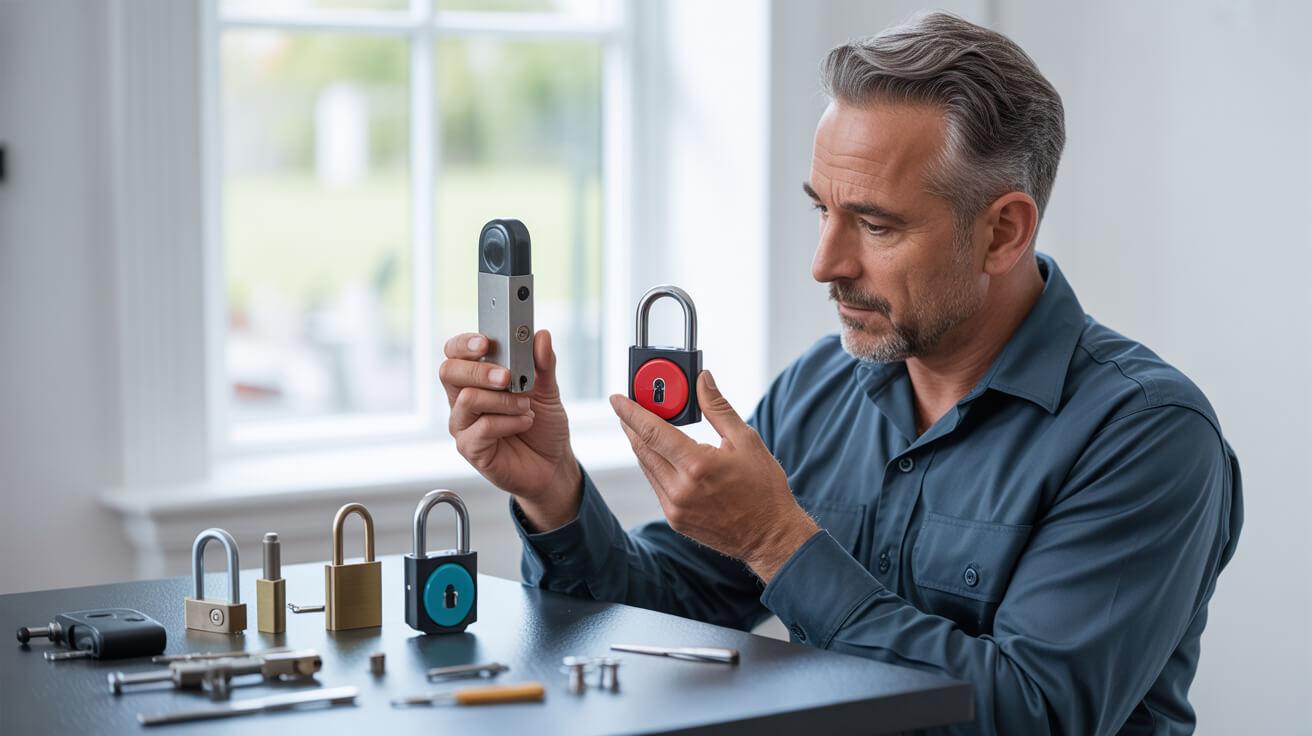
A doorset‑centred view of compliance
PAS 24 takes the focus beyond the lock and looks at the performance of the complete doorset under forced‑entry tests. For many newer residential buildings, especially where security regulations for dwellings apply, your entrance doors rely on a PAS 24‑tested configuration.
For you, that means the frame, leaf, glazing, hardware and locking arrangement form a single security proposition. If you change components without checking compatibility with the original certification, you can quietly step away from that tested performance even while the door still “seems fine”.
Preventing unintentional downgrades in use
A lock maintenance PPM programme helps by treating these doors as assemblies. When an engineer attends a PAS 24 door, the task is not only to free off a stiff latch or replace a handle; it is to:
- Note the doorset type and any certification or scheme labels
- Check that replacement cylinders, handles and other hardware are appropriate
- Flag when past works appear to have mixed components from different systems
Where needed, you then receive clear recommendations to restore or improve the doorset’s security position, not just keep it moving.
TS 007: anti‑snap protection at cylinder level

Why cylinders and furniture matter so much
TS 007 tackles a specific problem: forced entry by attacking euro profile cylinders. It uses a star‑rating system to describe how well a cylinder, or a combination of cylinder and protective hardware, resists common attack methods such as snapping. For many uPVC and composite doors, especially on ground and easily reached upper floors, this is your most important control point.
A door can still open and close normally while carrying a downgraded or poorly fitted cylinder that no longer offers the intended attack resistance. Without records, you may not know when that change took place.
Keeping TS 007 compliance stable over time
Within a TS 007‑aware PPM programme, every relevant door is checked for:
- The presence and rating of any cylinder and protective hardware
- Excessive cylinder projection that increases attack risk
- Signs of previous cylinder swaps that may have altered the security solution
If a three‑star cylinder has been replaced by an un‑rated part “because it fitted”, that is recorded as a downgrade and routed into your remedial plan. Over time, you get a clear picture of where anti‑snap protection is in place, where it has slipped, and where upgrades will make the biggest difference.
Accreditations & Certifications








Evidence packs and inspection frequency that stand up to scrutiny

What goes into an insurer‑ready evidence pack
An effective lock maintenance programme produces usable documentation, not just job sheets. For each priority door you should be able to pull, in minutes:
- Asset details: building, location, door ID and role
- Standard relied on: BS 3621, PAS 24, TS 007 or other basis
- Attendance history: dates of inspections and works
- Findings and actions: defects noted, works done, parts changed
- Supporting photos: whole door, hardware detail, markings and post‑work condition
That level of structure lets an underwriter, loss adjuster, auditor or board member understand the story without wading through unlabelled invoices.
Setting a defensible inspection rhythm
There is no single statutory UK interval for residential locks in the way there is for some life‑safety systems. A defensible schedule is risk‑based:
- High‑traffic communal entrances and vulnerable ground‑floor doors are checked more often
- Quieter, lower‑risk doors can sit on a longer cycle if findings stay clean
- Inspection frequency tightens after a burglary, repeated defects or significant hardware changes
Your schedule can also align with any fire‑door checks where the lock is part of a fire‑resisting doorset, so you are not making multiple visits to the same opening for different compliance reasons.
Reliable Property Maintenance You Can Trust
From routine upkeep to urgent repairs, our certified team delivers dependable property maintenance services 24/7 across the UK. Fast response, skilled professionals, and fully insured support to keep your property running smoothly.

Book your free consultation with All Services 4U today
You may already suspect that some doors, locks or cylinders are overdue attention, but you might not know where to start without creating noise or extra admin for your team. A short, structured conversation can turn that unease into a clear, practical plan.
In a free consultation, you can walk through your current stock profile, any survey recommendations, insurer or broker queries, and specific incidents that have raised concern. We listen first, then outline a pragmatic scope for a pilot: which buildings to start with, how many doors to sample, and what kind of reporting will be most useful to you and your stakeholders.
After a pilot assessment, you receive a clear set of findings: which entrances meet the expected standards today, where there are obvious downgrades or gaps, where evidence is missing, and what a risk‑based inspection and remedial plan could look like over the next period. You stay in control of what is implemented and at what pace. Our role is to give you reliable information, practical options and service that fits around occupied buildings.
If you want to move from “we think we are compliant” to “we can show it door by door”, book your free consultation with All Services 4U and see where a focused lock maintenance PPM programme could take you next.
Frequently Asked Questions
What do security lock maintenance PPM services actually give you beyond a reactive locksmith callout?
Security lock maintenance PPM services give you control, continuity and evidence that a reactive callout rarely leaves behind.
A reactive locksmith visit solves the immediate problem in front of you. A planned preventative maintenance programme gives you a structured way to inspect doors, record drift, classify defects, prioritise replacements and show stakeholders that key openings are not being managed by memory alone. For a property owner, RTM board, managing agent or compliance lead, that changes the conversation from “we dealt with it when it failed” to “we had a defined maintenance regime, a clear record and a reasoned basis for every intervention.”
The real cost of a failing door starts before the failure is obvious.
Why does a reactive-only approach create hidden exposure?
Because failure does not usually arrive as a dramatic event. It arrives as gradual decline.
A communal entrance can still open and close while already becoming unreliable. The closer may be losing control. The latch may not engage cleanly every time. The cylinder may still turn but show wear. The keep may already be misaligned. Residents start compensating without meaning to. They pull harder. They slam. They wedge. They complain informally rather than formally. On paper, nothing has failed yet. In reality, the opening is already moving out of a stable operating condition.
That matters in property maintenance because the issue is not just access. It is what failure interrupts. A communal entrance affects resident security, contractor access, complaint volume and, in some cases, insurer confidence. A plant-room opening affects service continuity. A final exit or controlled access point may connect to wider building safety expectations. If your process only reacts once the fault becomes disruptive, you are letting the estate tell you what matters after the risk has already matured.
A planned programme changes that sequence. You define the opening, classify its role, set an interval, inspect condition, record change and decide whether the answer is adjustment, monitoring or replacement. That is not bureaucracy for its own sake. It is how you reduce repeat failure and defend spend.
How do the first operational gains show up in day-to-day property maintenance?
They usually show up in fewer repeated surprises and cleaner decision-making.
| What improves | Reactive-only model | PPM-led model |
|---|---|---|
| Fault visibility | Seen after disruption | Seen during inspection |
| Spend pattern | Urgent and uneven | Planned and comparable |
| Reporting quality | Attendance-led | Door-led and time-stamped |
| Estate control | Person-dependent | Schedule-dependent |
For a managing agent, that often means fewer repeat callouts to the same communal entrance. For a maintenance coordinator, it means less time trying to work out whether the latest attendance is actually a new issue or the same unresolved one returning under a different description. For a board, it means you can show why money is being spent before residents start asking why the same entrance has failed again.
Take a typical example. A communal entrance has had three locksmith visits in five months. One for sticking, one for lockout, one for a closer issue. Without a PPM framework, those jobs can sit in the system as unrelated events. With a PPM structure, they become trend data. You can see whether the problem is wear, misuse, misalignment, poor prior replacement or a door that should no longer be treated as a minor reactive item.
That is where budgets become more defensible. You stop paying repeatedly for symptoms and start deciding against the condition of the opening itself.
Where do insurers, lenders and boards see the difference most clearly?
They see it when they ask simple questions and your file gives simple answers.
An insurer, broker, surveyor or board member is rarely impressed by volume alone. They want coherence. What was on the door. What happened to it. What changed. Why it was changed. Whether it was monitored before it failed. A credible PPM service helps you answer those questions with a sequence rather than an impression.
That becomes especially important at renewal, after attempted entry, during a compliance review or when a lender or valuer is already looking at wider estate risk. In those moments, reactive-only records can look thin even if the contractor attended quickly. An invoice saying “attended and repaired lock” is not useless, but it does not explain the security basis of the opening, whether the issue had history, or whether the chosen fix was proportionate.
A board-safe maintenance regime gives you something stronger: door reference, inspection dates, photos, visible defect progression, replacement rationale and a trail that shows your team did not just respond to noise. You managed the asset.
That difference also affects internal confidence. If you are the person presenting risk and spend to directors, leaseholders or client representatives, you want a system that helps you show control early. That is the kind of discipline serious operators prefer, because it reduces the number of awkward conversations later.
What should a credible service model actually leave behind?
It should leave behind a usable maintenance record, not just proof of attendance.
At minimum, you should expect a schedule of key openings, a risk-led inspection rhythm, a clear defect history, visible hardware detail where identifiable, before-and-after photos, a distinction between temporary and permanent work, and a reasoned handover when a door moves from adjustment into replacement territory.
You should also expect consistency in language. If one contractor writes “door adjusted”, another writes “lock fixed” and another writes “secured,” you may still have activity, but you do not yet have control. A mature service model standardises what gets recorded so another professional can understand the opening later without guessing.
That is the shift from labour purchase to estate assurance. If your portfolio includes communal entrances, final exits, repeated-fault doors or insurer-sensitive openings, a PPM review is usually the more reliable next step than waiting for the next urgent attendance to decide what matters. That is how careful property teams behave when they want fewer surprises and stronger proof, not just faster callouts.
How do BS 3621, PAS 24 and TS 007 differ in practical property maintenance terms?
BS 3621, PAS 24 and TS 007 deal with different parts of security performance, so maintenance decisions should not treat them as interchangeable.
This matters because many avoidable maintenance mistakes happen after someone assumes that “secure enough” is the same as “equivalent to what was there before.” It is not. In practical property maintenance, the problem is rarely a complete lack of action. The problem is imprecise replacement. A lock is changed, a cylinder is swapped, a doorset is adjusted, and the opening works again. What is less clear is whether the work preserved the original security basis of that opening.
BSI standards help because they force a better question. Not “does the door feel secure?” but “what exactly was this opening relying on before the work took place?”
What does each standard usually relate to?
They usually sit at different levels of the opening.
| Standard | What it commonly relates to | Common maintenance mistake |
|---|---|---|
| BS 3621 | Lock assembly | Assuming any replacement lock is equivalent |
| TS 007 | Cylinder and attack resistance | Replacing with a visually similar cylinder only |
| PAS 24 | Complete doorset performance | Assuming one upgraded component preserves whole-set performance |
In simple terms, BS 3621 is often relevant where a key-operated lock assembly is part of the intended security arrangement. TS 007 is commonly tied to cylinder performance, especially where anti-snap resistance matters. PAS 24 goes wider and concerns the tested performance of the complete doorset as a system rather than a single visible part.
That distinction matters on site. A stronger-looking cylinder does not prove the whole opening still aligns with a PAS 24-tested arrangement. A replacement lock case that appears robust does not automatically preserve the original security outcome. A quick out-of-hours substitution may solve access while weakening the claims or compliance position later.
Why does that distinction matter to property managers and RTM boards?
Because the commercial risk is not just technical mismatch. It is record mismatch.
If your file says “communal entrance lock replaced” but does not identify whether the opening depended on a lock standard, a cylinder standard or a tested doorset basis, the estate loses clarity. That makes later conversations with insurers, brokers, clerks of works, valuers and legal advisers slower and more uncertain.
A practical example helps. A resident entrance with a mortice lock may raise a BS 3621 question. A uPVC entrance with euro-cylinder hardware may be more closely tied to TS 007 logic. A recently replaced communal entrance set may carry a PAS 24 expectation at doorset level. If all three end up recorded simply as “lock repaired,” your maintenance record stops being a control tool and becomes a vague job history.
That is where operational drift starts. Teams continue to act, but the evidence becomes less able to explain what the asset is supposed to be.
How do these differences show up in routine maintenance failures?
Usually through ordinary jobs, not dramatic incidents.
A cylinder is worn and gets swapped for the fastest available option. A closer fails and gets replaced, but nobody reviews how the complete door performs afterwards. A resident reports difficulty locking up, an operative attends out of hours, and the close-out note contains no hardware identification at all. A communal entrance is adjusted repeatedly because the latch is inconsistent, but no one checks whether the underlying issue is misalignment affecting the wider security performance of the set.
This is where hardware identification guidance from bodies becomes genuinely useful. Clear product detail, visible markings and accurate door-level records make later maintenance safer and simpler. Without that, your team is not maintaining against a known basis. It is maintaining against guesswork.
That guesswork is expensive. It leads to repeated substitutions, mixed standards across similar openings and weaker positions when a claim, survey or board query asks for certainty.
How should your team respond when the standard basis is unclear?
By recording the uncertainty honestly and escalating intelligently.
If you do not know whether the opening relies on BS 3621, TS 007 or a PAS 24 arrangement, the safest move is not to invent confidence. It is to log the opening clearly, identify what is visible, record what was done, and flag that the standard basis needs confirmation.
That is not a weak note. It is a controlled note. It tells any later reviewer that your team understood the limit of what was known on the day and did not overstate the outcome. In high-trust property maintenance, that is a sign of competence.
For communal entrances, final exits and repeated-fault doors, this kind of clarification work usually belongs near the top of the review list. If your current records cannot show what those openings were meant to rely on, there is a gap worth closing before the next claim, tender review or insurer survey makes that uncertainty more expensive. That is the kind of step prudent landlords and property teams take when they want security maintenance to stand up to scrutiny, not just restore access for another week.
Why do insurers and loss adjusters ask for lock and door maintenance records after an incident or renewal review?
Insurers and loss adjusters ask because maintenance records help them test whether your security controls were real, recent and defensible before the loss occurred.
That is the key point. After a burglary, attempted entry, malicious damage event or renewal review, the discussion is rarely limited to whether a contractor turned up once. The underlying question is whether your estate had a credible control position before the incident. That means the quality of your maintenance records matters almost as much as the physical repair.
If your only evidence is an invoice saying “lock changed” or “door secured,” the file leaves too much open to interpretation. If the record shows the opening, the defect history, the hardware details, the chronology of maintenance and the remedial decisions taken before loss, the same conversation becomes clearer and faster.
What are claims teams and surveyors really trying to establish?
They are normally trying to establish four things.
- what security arrangement was in place
- whether it had been maintained with reasonable discipline
- whether deterioration or mismatch was already visible
- whether the post-incident explanation fits the pre-incident record
That is why evidence structure matters. FCA expectations around fair claims handling do not remove the need for clear chronology. They increase the value of a readable one. A broker or loss adjuster should not have to reconstruct the position from fragments across finance folders, operative phones and email threads. The stronger your chronology, the less room there is for friction.
A useful way to think about it is this: after loss, your file becomes the estate’s memory. If that memory is disorganised, your team may know more than it can prove.
Which records reduce friction fastest during claim or renewal scrutiny?
The most useful records answer practical questions quickly.
| Record | What it helps prove |
|---|---|
| Door-level maintenance notes | Ongoing attention, not one-off reaction |
| Time-stamped photos | Condition before and after work |
| Product detail or visible markings | What was actually fitted |
| Defect chronology | Whether decline was managed or ignored |
| Exception log | Whether uncertainty was recognised and escalated |
Insurer wording and broker expectations often focus on whether a security measure that mattered to the risk was present and maintained. That can include locks, doorsets, final exits, communal entrances and linked life-safety interfaces depending on the property and the policy context. If your estate has repeated faults at a key entrance and no one can show what was fitted or why it changed, that weakens your position.
By contrast, a file that shows inspection, escalation, interim action, replacement detail and follow-up can support a much cleaner conversation. It does not guarantee an outcome, but it reduces doubt.
Where do property teams usually lose control?
Usually at the point where information exists but cannot be retrieved as one story.
The photos are on a phone. The attendance note is in the contractor system. The part description sits on an invoice. The resident complaint is in another portal. The broker asks for the chronology, and the team starts building it after the event. That is where avoidable friction appears.
A strong maintenance process avoids that by organising the file around the opening rather than the attendance. That sounds minor, but it changes everything. A door-led record lets you answer what happened over time. An attendance-led record often only tells you who came out on one date.
That difference becomes expensive during a claim, because the risk is not just the loss event. It is the gap between operational knowledge and documentary proof.
What is the right low-friction next step if your records feel thin?
Start with the openings that matter most to underwriters, brokers and boards.
That usually means communal entrances, final exits, repeated-fault doors, doors affected by recent attempted entry, and any opening already linked to resident complaints or insurer queries. Review those first. Confirm whether the chronology is readable, whether hardware detail is visible, and whether the standard basis is clear or at least honestly marked as unconfirmed.
That kind of targeted review usually does two jobs at once. It improves the next renewal or claim discussion, and it shows whether your current reporting standard is strong enough for the estates you manage. If it is not, the correction is usually procedural rather than dramatic: clearer door references, better photo discipline, better product detail and cleaner binder structure. That is how risk-aware property teams protect claims, preserve confidence and show that security maintenance is being run as a control system rather than a string of isolated jobs.
Which evidence should property managers and landlords keep to support security hardware standards and defend maintenance decisions?
Property managers and landlords should keep a door-by-door evidence trail that links the opening, the maintenance event and the security basis being relied on.
The strongest files are not the longest. They are the easiest for another professional to understand. If a broker, valuer, board member, clerk of works or legal adviser can quickly see what the opening is, what changed, when it changed and what standard logic sat behind it, the estate looks controlled. If the same reviewer has to infer that story from invoices, detached photos and generic attendance notes, the estate looks less reliable even if the work itself was acceptable.
That is why evidence should be organised around the opening rather than the contractor visit.
What should a usable door-level evidence trail contain?
A useful record usually contains:
- a clear property and door reference
- the role of the opening, such as communal entrance, final exit or resident flat entrance
- product detail for locks, cylinders and doorsets where visible or confirmed
- the standard basis relied on, if known
- dated inspection or service notes
- before-and-after photographs
- replacement detail, including product description or SKU where possible
- notes on temporary measures, uncertainty and escalation
That structure supports more than compliance. It supports credibility. If an insurer asks what sat on the door before loss, or a valuer asks how a key entrance has been maintained, you are not trying to build the answer after the question arrives.
RICS-style valuation logic is useful here in a practical sense. Valuation confidence often improves when asset condition, safety-related maintenance and management discipline can be evidenced clearly. Weak records on key openings do not automatically trigger valuation trouble, but they do not help when wider estate concerns are already in play.
How should those records be organised so they work under pressure?
The simplest useful structure is property, opening, date, action, proof.
| File element | What it answers | Likely user |
|---|---|---|
| Opening reference | Which door is under review | PM, contractor, surveyor |
| Standard or security note | What basis is being relied on | compliance lead, broker |
| Maintenance chronology | What happened over time | board, insurer, legal adviser |
| Photo and replacement proof | What physically changed | valuer, adjuster, contractor |
This kind of structure matters because retrieval speed is part of evidence quality. If your team cannot find a door history quickly, the file is not yet doing its job. In practice, that usually means naming conventions, date discipline and a standard rule for attaching photos, reports and invoices to the relevant opening rather than a generic site folder.
Which evidence mistakes weaken the position fastest?
The same problems appear again and again.
- doors with no consistent naming
- photos with no date or context
- invoices with no product detail
- service notes that describe attendance but not the defect
- no distinction between temporary and permanent work
- no visible record of whether the original security basis was preserved
- no exception note where uncertainty existed
These gaps are not just admin flaws. They affect how convincing the estate looks under scrutiny. For legal advisers, they weaken dispute defence. For insurers, they slow survey follow-up. For lenders and valuers, they suggest that maintenance control may be weaker than the asset needs.
A stronger file does not remove every future problem, but it changes how the estate presents itself when questions arise.
How much evidence is enough before the process becomes overbuilt?
Enough means enough for another competent person to understand the opening without relying on your memory.
You do not need a technical essay every time a screw is tightened. You do need enough to show what the opening was, what happened, what standard context mattered and why the maintenance decision was reasonable at the time.
For many portfolios, the smartest next step is a sample audit rather than a full archive rebuild. Pull a handful of high-impact openings and test whether a third party could follow the story. If not, improve the process from this point forward and rebuild backwards only where risk, claims or lender exposure justify it. That is the approach disciplined property teams tend to take: not maximum paperwork, but maximum retrievability where it counts.
When should communal and residential locks be inspected under a risk-led PPM schedule?
Communal and residential locks should be inspected when traffic, failure history, exposure and consequence justify review, not according to a flat calendar alone.
That is the operational answer most portfolios need. A universal annual interval may feel tidy, but it often ignores how differently doors behave in real estates. One entrance is used constantly and absorbs resident, visitor and contractor traffic every day. Another is low use and stable. One opening has a history of repeated complaints. Another has gone quiet for months. Treating both identically is simple, but it is not risk-led.
In practical property maintenance, the better question is this: which doors would create the most disruption, complaint pressure, insurer concern or safety exposure if they became unreliable tomorrow?
What should drive the inspection rhythm in real life?
Usually four factors should drive it.
- traffic level
- misuse or abuse exposure
- recent defect or repeat-attendance history
- consequence of failure
A busy communal front entrance should normally sit on a tighter cycle than a low-use external store door. A final exit or key controlled access point deserves more attention than an opening that is rarely touched. A door that has just had a major component changed may justify a shorter follow-up interval than a similar door with stable history.
Fire safety guidance on communal fire doors and routine checks is a useful reminder that door condition is not always an isolated locksmith matter. Hardware reliability, closure and usage can connect directly to wider operational and safety outcomes. Even where a given opening is primarily a security asset, the consequences of failure can extend beyond convenience.
How does a practical schedule usually look across an estate?
A risk-led schedule often starts by separating doors by consequence and usage.
| Door type | Typical pressure | Inspection logic |
|---|---|---|
| Main communal entrance | High | Frequent planned review plus trend tracking |
| Final exit or key circulation point | Medium to high | Routine review and event-triggered checks |
| Standard residential entrance | Medium | Planned review based on history and use |
| Low-use external opening | Lower | Longer interval if stable and defect-free |
The point is not to create a rigid universal timetable. It is to stop pretending that wear occurs at the same speed everywhere. It does not. Repeated resident handling, slamming, weather exposure and mixed contractor history all accelerate deterioration differently.
A good schedule also changes when the evidence changes. If a door has had recent attempted entry, repeated complaints or multiple attendance notes in a short period, the interval should shorten. That is how a PPM programme learns from the estate rather than merely cycling through it.
Why does annual-only thinking miss the wrong doors?
Because annual-only planning often optimises administration rather than control.
It can look efficient in a spreadsheet while leaving your noisiest, highest-pressure openings largely unmanaged between visits. If the same communal entrance attracts reactive jobs every few months, the estate is already telling you that your current interval logic is too loose. Repeat attendance is not just inconvenience. It is maintenance intelligence.
That is where a belief shift helps. A repeated lock issue is not only a repair problem. It is evidence that the door should be reclassified, monitored more closely or moved toward planned replacement. Until that happens, your team can remain busy while control keeps slipping.
Where should you begin if there is no current inspection logic?
Begin with consequence, not completeness.
Identify the entrances that would cause the biggest operational problem if they failed: the main communal entrance, final exits, high-traffic shared doors, key restricted access points and any door already linked to complaints, repeat attendance or insurer interest. Build those into a visible schedule first. Then expand to lower-risk openings once your team has a system it can sustain.
That approach is usually easier to defend to boards and clients because it is based on risk rather than blanket ambition. It also gives you a clearer route into better records, better forecasting and fewer repeat surprises. Property teams that want dependable control usually start there: high-traffic first, high-consequence second, stable low-risk doors later.
How can you tell whether your current lock and door approach is already creating insurance or compliance risk without anyone noticing?
You can tell by testing whether the opening, the record, the standard and the repair history still line up.
That is the most useful self-audit question. Many estates do not become exposed because of one obviously poor decision. They drift into exposure because small inconsistencies build quietly. The opening on site no longer matches the assumptions in the file. The standard basis is unclear. The same entrance keeps failing, but every attendance note treats it like a fresh event. Replacements vary across similar doors with no reason recorded. Everyone feels busy, but no one can say with confidence whether the control system still holds.
That is where hidden insurance and compliance risk usually starts.
What red flags show up before the serious problem lands?
The warning signs are usually ordinary.
- the same entrance keeps generating emergency callouts
- a key door has no clear reference or hardware history
- invoices describe labour but not the opening or product
- replacement parts vary with no visible logic
- resident complaints repeat but the close-out notes stay vague
- your team cannot explain the standard basis of a high-risk opening
- broker, insurer or board questions are answered from memory rather than from file
These are not just admin irritations. They are signs that the estate may be operating with more assumption than proof.
A practical example is common. A communal entrance has had repeated lock, latch and closer work over the last year. Each visit solved the immediate issue. None of the records show whether the underlying alignment problem was ever resolved. None confirm whether the replacements preserved the intended security setup. If that entrance later becomes part of a claim or survey query, the operational weakness is no longer hidden. It is simply documented too late.
How should you test the current system without launching a full review?
Use a small sample and test it hard.
Pick five openings that matter: a main entrance, a final exit, a plant or riser cupboard door, a secondary shared entrance and one opening with messy history. Then ask direct questions.
| Audit question | Strong answer |
|---|---|
| Can the opening be identified clearly? | Unique reference, role and location |
| Is the security basis clear or honestly marked unknown? | Standard note or exception logged |
| Can the last maintenance event be understood fast? | Defect, action and replacement detail |
| Is the chronology readable? | Inspection, repair and follow-up sequence |
| Would a third party trust the file? | Yes, without hunting across systems |
If those questions are difficult to answer on a small sample, the issue is probably not isolated. It is process-wide. That does not mean the estate is failing. It means the proof layer is weaker than the people relying on it may realise.
Where do the biggest hidden costs usually come from?
Usually from three patterns.
First, repeated temporary fixes that become long-term practice. Second, undocumented substitutions that gradually move similar openings into inconsistent states. Third, false confidence in reporting, where uncertainty is concealed because nobody wants to show ambiguity to a client or board.
Those patterns create direct cost through repeat attendance, but they also create drag through slower claims, weaker renewals, harder board conversations and lower trust across the maintenance chain. Once stakeholders suspect that your record is looser than your assurances, they start questioning more than just the doors.
What does a sensible correction look like?
Usually a narrow, disciplined reset rather than a dramatic overhaul.
Start with a door schedule for the most exposed openings. Audit repeated-fault doors first. Confirm which records are retrieval-ready. Mark uncertainty instead of smoothing it over. Tighten product detail, photo rules and close-out standards. Then rebuild the inspection rhythm around actual use and consequence rather than inherited habit.
That kind of correction is commercially sensible because it produces visible control quickly. Boards see cleaner reporting. Brokers see stronger chronology. Residents experience fewer repeated failures. Your own team spends less time reconstructing history after the fact. That is the kind of maintenance culture serious property operators tend to want: one where stakeholders can see that the door, the standard, the repair history and the evidence now tell the same story.
- Keep your locks compliant, working and provable over time
- What security lock maintenance PPM actually covers
- Why insurers price managed security differently
- BS 3621: locking hardware your policy can rely on
- PAS 24: keeping the tested doorset intact
- TS 007: anti‑snap protection at cylinder level
- Evidence packs and inspection frequency that stand up to scrutiny
- Book your free consultation with All Services 4U today
- Frequently Asked Questions
- Related PPM Services
Case Studies


Related Articles

Your Guide To Identifying And Treating Minor Mould Outbreaks

Why Planned Preventative Maintenance (Ppm) Saves Money And Ensures Compliance