

Fire Safety Order 2005 Explained – Article 17 PPM Duties for Responsible Persons
Responsible Persons, landlords and managing agents need Article 17 turned into a clear, defendable maintenance regime for all fire safety measures in their buildings. This means mapping control, defining planned preventive maintenance, and setting an impairment process that goes beyond reactive repairs, based on your situation. You end up with a documented loop of asset registers, task schedules, evidence and defect closure that aligns with your fire strategy and stands up to enforcement scrutiny. It’s a good moment to check whether your current regime genuinely proves control.



Author
Izzy Schulman

Turning Article 17 into a defendable maintenance regime
If you are the Responsible Person, landlord or managing agent, Article 17 of the Fire Safety Order is more than a legal reference. It is the test of how you maintain alarms, doors, lighting, passive protection and other measures your fire strategy relies on.
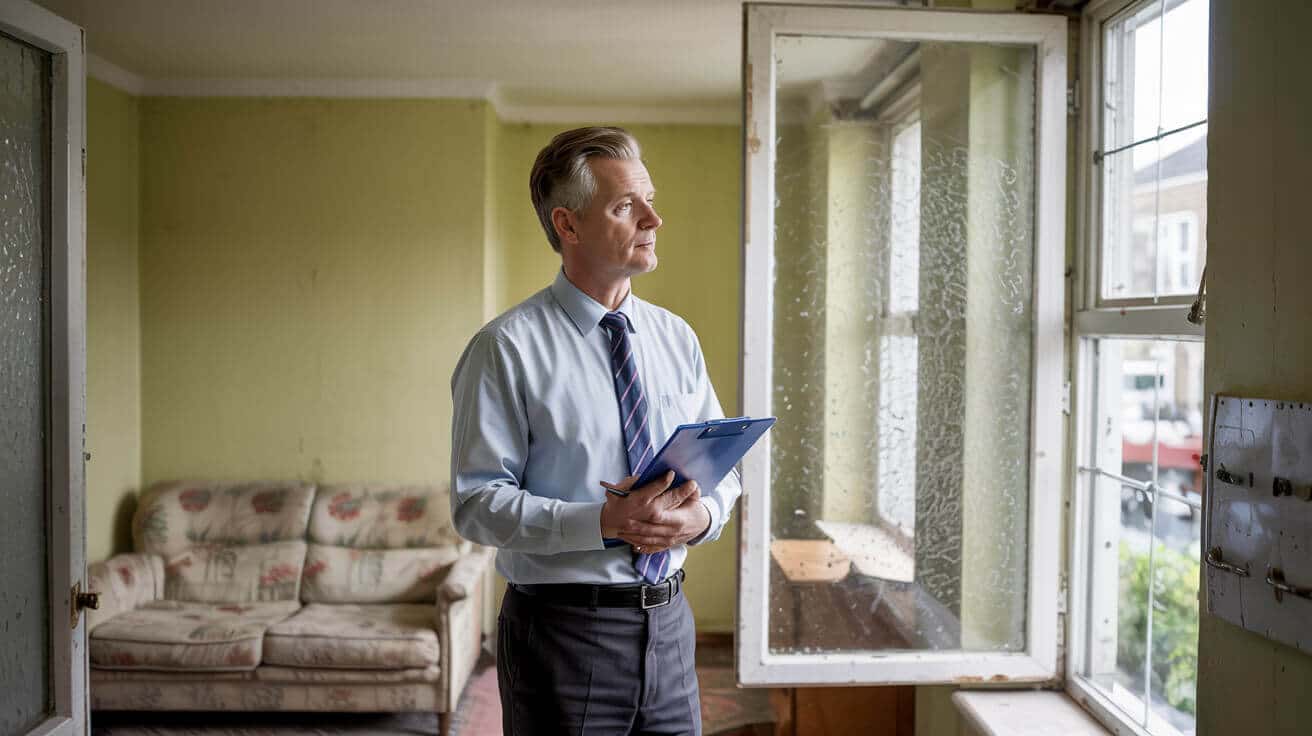
Inspectors look for a suitable system of maintenance, not a stack of invoices and ad hoc callouts. By mapping who controls each area and system, defining planned checks and impairment processes, you can show that you maintain function, prove control and fix defects before governance becomes the issue.
- Clarify who is responsible for each system and area
- Build a maintenance loop that matches your fire strategy
- Spot when reactive repairs signal loss of control over risk
Need Help Fast?
Locked out, leak at home, or electrical issue? All Services 4 U provides 24/7 UK locksmith, plumbing, electrical.
Testimonial & Clients Who Trust Us
With 5 Star Google Reviews, Trusted Trader, Trust Pilot endorsements, and 25+ years of experience, we set industry standards for excellence. From Dominoes to Mears Group, our expertise is trusted by diverse sectors, earning us long-term partnerships and glowing testimonials.





Worcester Boilers

Glow Worm Boilers

Valliant Boilers

Baxi Boilers

Ideal Boilers

1. What Article 17 actually says – and why “suitable system of maintenance” is the real test
Article 17 of the Regulatory Reform (Fire Safety) Order 2005 requires you, where necessary to safeguard relevant persons, to keep the premises and the fire‑safety measures under a suitable system of maintenance so they remain efficient, in efficient working order and in good repair.
The duty applies in England and Wales wherever the Fire Safety Order applies – generally non‑domestic premises and the common parts of blocks of flats and other multi‑occupied residential buildings. It is tested against the arrangements you rely on in your fire risk assessment, not against a generic checklist.
“Where necessary” links directly to your fire strategy. You are expected to maintain the measures that strategy relies on to control risk to those who live in, work in or visit the premises.
For Article 17, fire precautions go beyond alarms and extinguishers. They include detection and warning, emergency lighting, escape routes and doors, smoke control, fire‑resisting construction and fire‑stopping, risers and hydrants, firefighting access, signs and other measures that keep escape routes usable and intervention possible.
A purely reactive approach – calling someone when something fails – does not demonstrate a system. Article 17 is tested on how you plan, control and evidence maintenance over time, not on isolated repairs. In practice you must be able to show that you:
- Maintain function.
- Prove control.
- Fix defects promptly.
If one of those elements is missing, the maintenance system needs to change, not just the paperwork.
2. Who the Responsible Person is (Articles 3 and 5) – and why delegation does not erase duty
The Fire Safety Order uses a control‑based test to decide who sits under Article 17. For workplaces, the employer is the Responsible Person to the extent they control the workplace. For other premises, it is the person in control of the premises or, failing that, the owner.
In multi‑occupied premises, Article 5 spreads duties across those who control different parts. A freeholder, right‑to‑manage company, managing agent, commercial tenants and employers can all be Responsible Persons at the same time for different parts of the building. Common parts and shared plant normally sit with the landlord or their agent; demised areas usually sit with the employer or tenant.
In practice you should treat this as a mapping exercise, area by area and system by system. For each significant space and measure, identify who decides what happens, instructs works, approves budgets and controls access. Those control points are what an enforcing authority or court will examine.
Appointing a managing agent or maintenance contractor does not move the duty away from you. Tasks can be delegated; responsibility for there being a suitable system of maintenance cannot. You still need:
- A clear written schedule of who maintains what.
- Oversight of performance, not just invoices.
- The ability and willingness to change providers if standards are not met.
Where leases and service‑charge clauses create ambiguity, a responsibility schedule helps. Mapping, for each system and area, who is responsible, who is accountable, who must be consulted and who needs to be informed makes it far harder for gaps around risers, cores, roofs and plant rooms to persist unnoticed.
3. What a “suitable system of maintenance” looks like – PPM versus reactive repairs
![[ALTTOKEN]](https://allservices4u.co.uk/app/uploads/2026/01/02-Fire-Safety-Order-2005-Explained-Article-17-PPM-Duties-for-Responsible-Persons.jpg)
Once you know where the duty sits, you must turn “suitable system of maintenance” into something you can run and defend. A practical loop is:
Asset register → task library → schedule → evidence → defects and impairments → verification and review.
If you cannot sketch that loop for your building, the system is not yet complete.
Your fire risk assessment should define the scope. It identifies hazards, people at risk and the measures you rely on. Those measures belong in your maintenance regime. A contractor’s standard service list is useful input, but must be checked against the strategy for the specific building.
For each safety measure, separate and define:
- User checks (for example, weekly alarm tests, visual escape‑route checks).
- Formal inspections.
- Servicing and testing by a competent person.
- Repairs and replacements.
Clarify who does each layer, how often it happens and how each activity is recorded.
Because systems fail, you also need an impairment process for anything isolated, faulty or out of certification. That should set out how impairments are authorised and recorded, what temporary measures apply, who is informed, how and when the system will be restored and how restoration will be verified.
You can depart from typical intervals where your risk assessment supports it, but you should record the rationale and approval. Extending frequencies purely to save money, without a clear risk basis, is exactly the pattern inspectors look for.
If your regime is mostly reactive, decide where you draw the line for “loss of control”. Common warning signs are repeated overdue tests, assets of unknown condition, recurring faults and long‑running impairments with no end date. Once that pattern appears, Article 17 begins to turn from tasks to governance, and you need to be able to show that you have regained control.
4. What typically falls under Article 17 – systems, interfaces and passive protection
Article 17 applies to the premises and to any facilities, equipment and devices provided for fire safety, whether under the Fire Safety Order or under other legislation, so long as they are necessary to safeguard relevant persons.
In most buildings, that will include at least:
- Fire detection and alarm systems.
- Emergency lighting and illuminated signs.
- Escape route doors and hardware, including hold‑open and release devices.
- Portable extinguishers and hose reels, where provided.
- Smoke control systems, such as automatic opening vents, smoke extract and pressurisation.
- Dry and wet risers, hydrants and other firefighting facilities.
- Fire‑resisting construction and fire‑stopping that supports compartmentation.
- Fire doorsets, including flat entrance doors where they protect common escape routes.
You should also treat the interfaces between systems as in scope. In many buildings the alarm triggers smoke control equipment, releases doors, grounds lifts, signals monitoring centres and interacts with air‑handling plant. Those cause‑and‑effect links need to be tested and maintained, not assumed.
Passive fire protection is often where risk hides. Damaged or wedged fire doors, penetrations around services that have not been re‑sealed, and poor remedial work all undermine the strategy your assessment relies on. You need a way to find, record and close these defects.
Where sprinklers, dry risers or wet risers are installed, the maintenance regime must reflect the relevant standard and the split of responsibility between landlord and occupiers. Without a recorded split, nobody has full sight of compliance.
A straightforward rule helps decision‑making: if a measure is part of the chain that lets people escape or firefighters intervene, treat it as within Article 17 unless a competent fire risk assessor has clearly justified otherwise.
Accreditations & Certifications







5. Competence, contractors and procurement – what to ask for and what to refuse
![[ALTTOKEN]](https://allservices4u.co.uk/app/uploads/2026/01/03-Fire-Safety-Order-2005-Explained-Article-17-PPM-Duties-for-Responsible-Persons.jpg)
A maintenance system stands or falls on competence. Article 17 relies on the wider duty to use competent persons for fire‑safety work, and competence needs to be defined per task, not as a generic label.
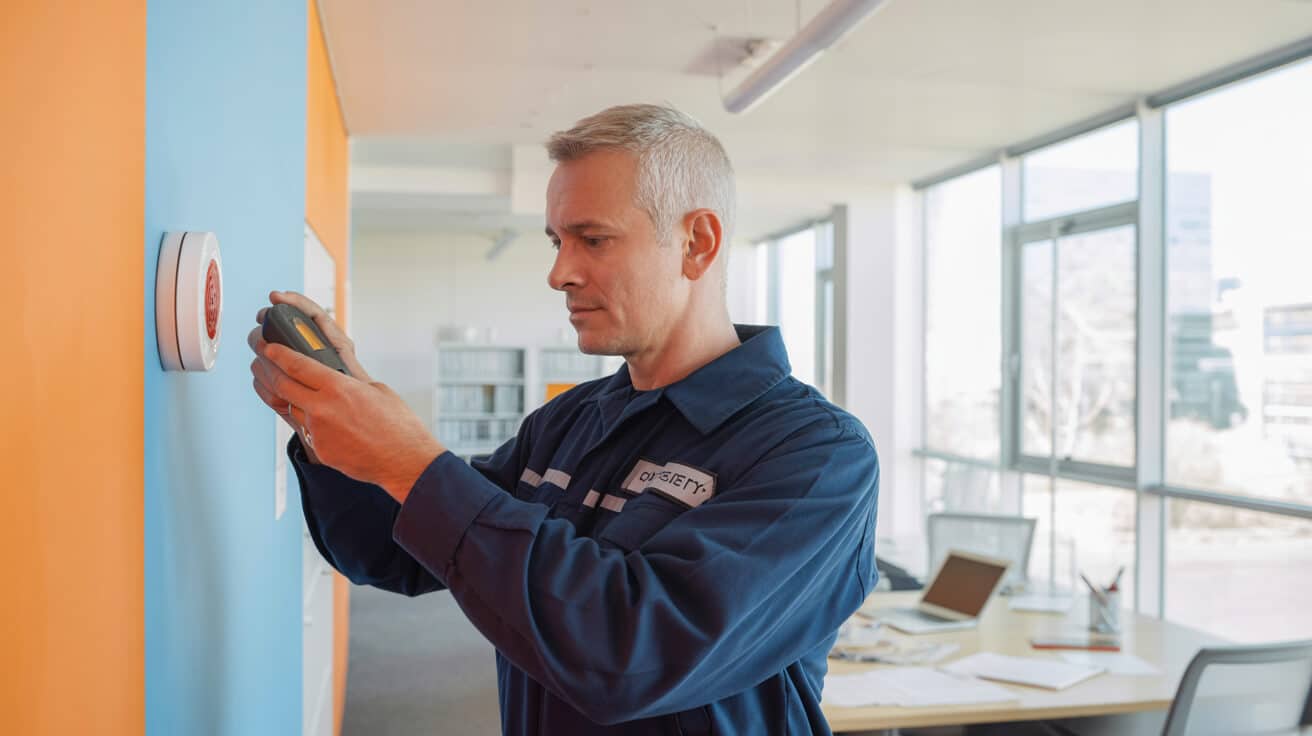
For each role, decide who is competent to carry out user checks, who can perform inspections and servicing, and who may design, commission or alter systems. Set out expected training, qualifications, experience and supervision. Third‑party certification is a strong indicator, but it must match the actual work.
Procurement should specify deliverables and evidence, not just “annual service”. As a minimum, expect:
- A report stating what was checked, against which standard, and with what results and limitations.
- A defect list with clear urgency bands.
- Confirmation of any interim measures.
- Retest evidence after remedial works where relevant.
If you use multiple contractors, standardise language: common defect codes, minimum photo standards, consistent pass/fail criteria and a single close‑out workflow. Without that, you cannot reliably see your position.
When contractors recommend additional works, insist on understanding the risk addressed, the standard or guidance being applied and the options, including interim measures and timescales. That keeps Article 17 decisions anchored in risk rather than sales pressure.
Plan for contractor change. Handover often causes loss of records and visibility. Contracts should require transfer of live asset lists, recent test histories, open defects and current impairments so your Article 17 system continues without blind spots.
6. Article 17 tools you can implement this week – checklist, schedule framework and role‑by‑asset matrix
You can begin strengthening Article 17 compliance with a compact toolkit rather than a full system overhaul.
A one‑page Article 17 checklist can confirm, for each building, whether you have:
- A current asset register for fire‑safety measures.
- Defined tasks and frequencies per asset.
- Scheduled, monitored tasks rather than ad‑hoc visits.
- Structured evidence storage.
- Logged defects and impairments with close‑out.
- A periodic review of the system.
Your asset register only needs to be complete and structured. A simple pattern is:
System → location → unique identifier → criticality → tasks.
That makes it harder to forget remote cores, plant areas, risers and rooftop equipment.
For service intervals, you can start from recognised technical guidance and adapt based on actual risk. Make it clear that you are using standards as good‑practice benchmarks, not relabelling them as law. Where you deviate, note why and who approved it.
A role‑by‑asset RACI matrix is very useful in multi‑party environments. For each system, define who is responsible (does the work), accountable (owns the outcome), consulted and informed. Align this with contracts and budgets so responsibilities on paper match how you operate.
You can also simplify defect triage by grouping findings into immediate, short‑term and planned bands, each with expected timescales and escalation routes. That keeps decisions consistent and easy to audit.
7. Proving compliance – evidence pack, retention, review cadence and how enforcement escalates
Article 17 is enforced by asking you to show how you comply, not simply to describe it. That makes an evidence pack essential.
At short notice, you should be able to produce:
- The current fire risk assessment and a short fire strategy summary.
- An asset list for fire‑safety measures.
- Maintenance schedules and service contracts.
- Test and service reports for key systems.
- Logs of user checks.
- Defect and impairment records with closure information.
- Internal review or audit findings and actions.
Organise records so that, for each safety measure, there is a single place to see current status and history. When, during an inspection, you can immediately show a year’s alarm tests for a block – including failures, interim measures and fixes – the discussion usually stays practical. If you need to trawl through inboxes and portals, confidence falls quickly.
Retention periods are not fixed in the Order. A typical approach is to align to civil limitation periods, regulatory expectations and asset life. That often means several years of test and maintenance history, and life‑of‑system records for design, commissioning and major alterations. Whatever you choose, apply it consistently.
Evidence must be credible. That means controlling who can view and edit records, keeping version histories, backing up data and being able to demonstrate when and how documents were created or changed.
Your board or senior team should see a regular, simple view of Article 17 performance, such as overdue tests or services, open defects and impairments, closure times by severity and key audit findings. Fire and rescue services, housing regulators and ombudsmen look for patterns that show loss of control: repeated overdues, patchy records, long‑running impairments and weak governance. You do not need perfection, but you do need to show that you understand your duties, have a structured system in place, know where your risks are and are acting on them in a timely, documented way.
Reliable Property Maintenance You Can Trust
From routine upkeep to urgent repairs, our certified team delivers dependable property maintenance services 24/7 across the UK. Fast response, skilled professionals, and fully insured support to keep your property running smoothly.

8. Book your free consultation with All Services 4U today
If you are unsure where you stand on Article 17, a short, structured review can turn uncertainty into a clear plan. Book a brief consultation now so you can test your position in a low‑risk way and decide your next moves with confidence.
In a control‑by‑area session, you walk through who really controls each system and part of the building, and where written coordination is missing. That exercise often surfaces hidden gaps between landlord, managing agent and occupiers that otherwise only appear after an incident or an inspection.
A focused PPM diagnostic then reconciles what you think you have with what is in place: asset lists, planned tasks, overdue items and whether reports genuinely evidence functional performance rather than just attendance. From that, you can build a clear, prioritised improvement plan rather than another generic to‑do list.
An evidence‑pack build plan helps you move from scattered documents to a coherent set you can produce on demand: what is installed, what was tested, what failed, what interim measures you used, what was done and how it was verified. You gain one place to point to when an inspector, insurer, lender or board member asks to see proof.
Resetting impairment controls is often one of the quickest gains. Clear rules around authorisation, interim measures, communications, monitoring and reinstatement can stop degraded states becoming the norm without adding heavy bureaucracy. You protect people and protect your position at the same time.
If you want to move from “we hope we are compliant” to “we can show we are in control”, book your free consultation now and make that shift deliberately, instead of waiting for the next enforcement letter or complaint to force it.
Frequently Asked Questions
Explore our FAQs to find answers to planned preventative maintenance questions you may have.
How do I know if I’m actually the Responsible Person under the Fire Safety Order?
You’re the Responsible Person under the Fire Safety Order when you control fire‑safety measures for a space and can decide, fund and instruct what happens to them. In reality, that’s the person or organisation that can say “yes” to works, hold the budget, and set or enforce the rules for how that part of the building is used.
What’s the quickest way to test if you’re the Responsible Person in a building?
Run a blunt, three‑question test for each area and system:
- Who can authorise the fire‑safety works and sign the order?
- Who actually pays for those works from their budget?
- Who can grant access and enforce rules in that space?
If the honest answer is “you” or your organisation, you’re the Responsible Person for that slice of the building and you carry Article 17 fire‑safety maintenance duties there.
In a workplace that’s usually the employer. In a block of flats it’s often the freeholder, RTM/RMC or managing agent for common parts, and each employer or business tenant for their demised units. In higher‑risk buildings, your building safety manager will often be the operational face of those duties, but the legal “Responsible Person” still sits with the organisation that controls the premises.
If you can’t point, in under 30 seconds, to a named Responsible Person for common parts, risers, plant rooms, shared systems and demised areas, you don’t have control yet – you have hope and good contractors. That gap is exactly what regulators and insurers notice when something goes wrong.
All Services 4U can turn that into a clear duty map for each building, so you can walk into any board, lender or fire‑authority meeting and state, without hesitation, who owns what.
How do Responsible Persons usually split in multi‑occupied buildings?
In multi‑occupied stock, it’s normal to have more than one Responsible Person under the Fire Safety Order:
- The freeholder or RTM/RMC for structure, common parts and shared systems.
- The managing agent where authority and budget are properly delegated.
- Commercial tenants for their own demise, staff and customers.
- Specialist duty‑holders such as building safety managers in higher‑risk buildings.
Overlap itself isn’t the problem. Unwritten overlap is the problem. When nobody has written down who maintains fire doors, smoke control or alarms, everyone subconsciously assumes “someone else has it”.
A one‑page “who maintains what” schedule, linked to your asset register and contracts, is often enough to stop that drift. If you want that schedule tied back to Building Regulations Parts A–Q and your existing service lines, All Services 4U can do the heavy lifting so your board and AP can focus on decisions, not document archaeology.
What happens if the Responsible Person role is unclear or disputed?
When the Responsible Person is unclear, you don’t just have a paperwork issue – you have a risk signal that shows up everywhere:
- Fire authorities see loss of control and start asking harder questions.
- Insurers see unmanaged conditions precedent on alarms, locks, roofs and testing.
- Lenders see noise around EWS1, FRAs and safety‑case evidence and quietly price that into valuations and covenants.
If you want to be the board, AP or landlord people trust, you don’t wait for an enforcement letter to “clarify roles”. You decide to be the one that owns the duty map and invites others to plug into it.
That’s exactly where a partner like All Services 4U is useful: we take your leases, contracts and building list, draw a clean duty map, align it with the Fire Safety Order and Building Safety Act expectations, and leave you with a document you can stand behind in front of regulators, insurers, lenders and residents.
What does a “suitable system of maintenance” under Article 17 look like in practice?
A suitable system of maintenance under Article 17 Fire Safety Order duties is a simple, repeatable loop: asset register → task list → calendar → evidence → defects and impairments → review and adjustment. If your current reality is “we call someone when it breaks” plus a loose pile of certificates, you’re still in reaction mode, not running a system of maintenance.
How do you turn Article 17 into a practical loop your team can actually run?
Start with what your fire strategy and fire risk assessment rely on: alarms, emergency lighting, smoke control and AOVs, dry and wet risers, firefighting lifts, fire doors and compartmentation, sprinklers, and essential controls like shutdowns and interfaces. For each category:
- Define what must happen and how often (user checks, inspections, servicing, testing) against standards such as BS 5839, BS 5266, BS 8214, BS EN 12845 or ACoP L8.
- Decide who does it (competent in‑house staff versus external specialists).
- Decide what proof is left behind (log entry with results, report with readings and limitations, photos, tags).
That’s the heart of a suitable system of maintenance for Article 17: a clear set of fire‑safety maintenance obligations that a regulator, insurer or lender can understand and you can run without heroics.
All Services 4U regularly builds that loop for Responsible Persons and Accountable Persons as a combined PPM and evidence engine: we map the assets, align them to the relevant British Standards, Building Regulations Parts B, G, J, P and Q, and other applicable laws and regulations, then hand you a calendar and job templates your coordinators and engineers will actually stick to.
How can you tell if your Article 17 maintenance regime would satisfy an inspector?
Picture a fire authority officer sitting across from you and asking three questions about your Article 17 system of maintenance:
- Can you show me an asset list for the fire‑safety systems your fire strategy depends on?
- Can you show me, for the last 12 months, who checked or serviced them, when, and what they found?
- Can you show me what happened when they failed – how you managed impairments and closed defects?
If answering those questions means three people, five inboxes and a week of digging, you’re still exposed. If you can answer in under a day with a clean pack that tells a joined‑up storey, you’re in the group of Responsible Persons enforcing authorities tend to trust.
That’s why many boards and APs ask All Services 4U to run a focused PPM and Article 17 maintenance diagnostic. We take your existing contracts, FRA and Building Regulations map, along with the relevant laws and regulations, design the maintenance loop, and either operate it for you or hand it back to your teams with training and templates.
How do you keep the Article 17 system simple enough that people stick to it?
Complexity is where “suitable” systems quietly die. Engineers and coordinators don’t need endless policy documents; they need a few unbreakable patterns:
- One standard job template per asset type with mandatory evidence fields before a job can be closed.
- A single, portfolio‑wide impairment log for alarms, emergency lighting, smoke control, risers and major passive issues.
- A monthly review where someone with authority looks at overdue tasks, long‑running faults and repeated failures – and actually acts.
You don’t win by buying the biggest CAFM or the flashiest dashboard; you win by making it impossible to claim a system is “maintained” without the evidence your fire authority, insurer or lender will ask for.
That’s the design principle behind All Services 4U’s Article 17 templates and binder exports: we keep the backbone brutally simple and hard to ignore, so your organisation can be seen as the one that quietly runs the basics properly, every week.
Which fire‑safety measures in a block of flats usually sit in my Article 17 “in‑scope” list?
In a block of flats, your Article 17 Fire Safety Order maintenance obligations usually cover the fire‑safety measures that keep escape routes tenable and support firefighting access, plus the building‑wide systems behind them. In practice that means alarms (where fitted), emergency lighting, smoke control and AOVs, dry and wet risers, firefighting lifts, fire doors on escape routes (including most flat entrance doors on those routes), and the compartmentation that keeps lobbies, stairs and corridors safe long enough for people to get out.
How do you decide what’s “in scope” for Article 17 in a specific block?
The clean way is to walk the building on paper with your fire strategy, FRA and Approved Document B in front of you, then test each element:
- Mark stairs, lobbies, corridors, plant rooms and external escape routes on a simple plan.
- List every measure that supports escape or firefighting – detectors, sounders, call points, doors, dampers, smoke vents, risers, firefighting lifts, signage.
- Map how systems interact – alarms to AOVs, door releases, lift grounding, plant shutdown.
If a failure in any component could quietly compromise the escape route or undermine your fire strategy, treat it as in scope for your Article 17 maintenance regime until a competent fire engineer tells you otherwise in writing.
That’s the approach we take at All Services 4U when we help freeholders, RTM/RMCs and housing providers build a block‑by‑block list of in‑scope Article 17 systems, then turn that list into a PPM calendar and job packs that match the building’s design, not just a generic contract.
How do responsibilities split between common parts and flats in a block?
In most residential blocks:
- The freeholder/RTM/RMC/managing agent is usually the Responsible Person for common parts and building‑wide systems under the Fire Safety Order.
- Individual leaseholders or tenants carry responsibilities inside flats through other legislation, but flat entrance doors on escape routes and some external wall elements effectively function as part of the common‑part protection.
- In higher‑risk residential buildings, the Accountable Person will expect that Article 17 common‑part maintenance dovetails with the safety‑case and Golden Thread duties.
You don’t need to own every component to stay compliant. You do need a credible, written‑down plan for how common‑part fire protection that crosses demised boundaries – especially flat entrance doors and shared systems – will be inspected, maintained and evidenced.
If your FRA lists measures, but your asset register, contracts and landlord–leaseholder arrangements don’t line up, you are carrying a predictable enforcement and valuation risk. All Services 4U can close that by building a unified “who maintains what” table for mixed‑tenure blocks, so you can show exactly where your Article 17 obligations begin and end, and who is plugged in alongside you.
How do you explain Article 17 scope clearly to boards, residents and contractors?
Different audiences need different slices of the same reality:
- Boards and investors: want the big picture: which measures protect the block, how they’re maintained, where the risks and spend are trending.
- Residents: want to know what is being done in their block, why access is needed, and whether their home is safe.
- Contractors: want crisp scopes, standards, access rules and acceptance criteria.
You don’t need three parallel systems. You need one clean Article 17 scope and evidence spine that can be presented three ways without losing control of the underlying duties.
That’s how we structure things at All Services 4U: we design a single fire‑safety maintenance spine for the block, then help you turn it into board slides, resident updates and contractor briefs that all match – so you look like the Responsible Person who has actually thought this through, not the one improvising in front of an inspector.
How should I manage impairments like alarm faults, isolated devices or failed emergency lighting?
An impairment is any period where a fire‑safety measure is not providing what your fire strategy and FRA assume it provides. Under Article 17, a Responsible Person is expected to spot impairments early, manage them deliberately, and close them out with proof – not just leave “panel in fault” on a job sheet for weeks.
What does a simple, defensible fire‑safety impairment process look like?
You don’t need a thick manual to manage impairments; you need one pattern your teams can follow in their sleep. For any significant alarm, emergency‑lighting, smoke‑control, riser or key door fault:
- Log it immediately – what is affected, where, when, and who found it.
- Rate the impact – does it affect detection, warning, lighting, containment or firefighting access?
- Put proportionate temporary measures in place – patrols, limiting use of an area, extra checks, temporary lighting, clearer resident messaging.
- Give it an owner and a deadline – who will fix it and by when, with a clear escalation path if that slips.
- Prove restoration – record test results, photos and engineer sign‑off, and capture the date/time the impairment ended.
If a fire‑authority officer or building safety regulator asks, “What happens when the fire alarm is down in this block?”, you want to be able to show that pattern in a single impairment log, not rely on memory and emails.
All Services 4U often implements this impairment framework as part of a wider Article 17 uplift: one shared log, clear thresholds, and simple rules your coordinators and engineers buy into because they can see how it protects them as well as your residents.
How do you decide what counts as a fire‑safety impairment versus a routine snag?
Not every snag deserves to go into the impairment log, but anything that meaningfully undermines your fire strategy usually does. A few quick tests:
- Does it reduce your ability to detect or warn? (zones, sounders, interfaces, call points)
- Does it reduce escape visibility or route lighting? (emergency lighting in stairs, lobbies or long corridors)
- Does it weaken the integrity of compartments or doors protecting escape routes? (doors that won’t latch, damaged self‑closers, failed seals)
- Does it limit firefighting access? (risers out of service, firefighting lifts unavailable, smoke control not operating as designed)
If the answer is yes, treat it as an impairment: log it, mitigate it, close it with proof. That language – “this is our impairment control for alarms, emergency‑lighting, smoke control and fire doors in line with Article 17 maintenance requirements” – is exactly what serious Responsible Persons use in interviews with enforcing authorities.
If you’d rather not design that framework from first principles, All Services 4U can give you a tested impairment model, train your team on it, and tune it to your blocks so you look and act like the organisation that owns its risks, not the one that discovers them in the fire‑authority letter.
What evidence should I hold to prove Article 17 fire‑safety maintenance, and how long should I keep it?
To prove Article 17 Fire Safety Order maintenance, you need to show that your fire‑safety measures are actively maintained and that defects and impairments are identified, controlled and resolved. That means being able to pull a structured evidence pack quickly for any building, not scrambling in email when the fire authority, insurer, lender or legal team calls.
What belongs in a credible Article 17 fire‑safety maintenance evidence pack?
At building level, a robust evidence pack will typically include:
- The current fire risk assessment and a short fire‑strategy summary.
- An asset list for every relevant fire‑safety measure in scope for Article 17 maintenance.
- Maintenance contracts and PPM schedules aligned to BS 5839, BS 5266, BS 8214, BS EN 12845, ACoP L8 and any relevant manufacturer instructions.
- Test and service reports with actual results and limitations, not just “attended” stamps.
- User‑check logbooks for weekly fire‑alarm tests, monthly emergency‑lighting checks and other routine inspections.
- A defect and impairment register that shows what you did, what temporary measures were in place, and when issues were closed.
- Any internal audits, spot checks, FRA reviews or safety‑case updates and the changes you made in response.
You want someone from the fire authority, building safety regulator, insurer or lender to be able to follow the storey in minutes: we know what we’ve got, we test and maintain it, we manage faults deliberately, and here’s the proof.
That’s the lens All Services 4U uses when we build Article 17 evidence packs and “digital binders” for clients: we don’t just file reports, we shape them into a narrative that makes you look like you are on top of your duties.
How long should you keep fire‑safety maintenance and impairment records?
The Fire Safety Order itself does not fix a single retention period, but Building Safety Act practice and sector guidance are moving in one direction:
- Day‑to‑day logs and test records: – often kept for at least several years so you can show patterns, not just snapshots. In higher‑risk buildings, many clients now align this with their safety‑case cycles.
- Design, commissioning and major change records: – normally kept for the life of the system, especially in higher‑risk residential buildings and where they form part of the Golden Thread.
- FRA reports, action trackers and close‑out evidence: – usually kept across multiple cycles so you can demonstrate that findings were addressed, not just identified and parked.
The key is that your retention schedule is documented, consistent and defensible. If challenged, you should be able to explain how long you keep each class of record, how that supports proving continuous control under Article 17, and how it ties into any BSA/HRB safety‑case obligations for the building.
If you want a retention and evidence‑pack standard you can drop across a mixed portfolio – from small RTM blocks to HRBs – All Services 4U can design it once, build it into your binders and systems, and train your teams so they can run it without turning into full‑time archivists.
What are the most common Article 17 failures that trigger enforcement – and how do you fix them before an inspector does?
The Article 17 maintenance failures that trigger enforcement are rarely exotic. They are simple, visible patterns that tell a regulator, insurer or lender “nobody is really in charge of fire‑safety maintenance here”. Typical themes include missed or unrecorded routine tests, “certificate‑only” servicing that doesn’t link to real assets or defects, unmanaged impairments, and muddled Responsible Person splits across landlords, RTM/RMCs, employers and agents.
How can you spot Article 17 problems before the fire authority, insurer or lender does?
A short, honest self‑check will usually reveal the same things enforcing authorities and risk surveyors see:
- Weekly fire‑alarm and monthly emergency‑lighting tests not actually happening, or happening with no usable log you would be willing to hand to the fire service.
- Fire‑safety service reports that talk about visits but say nothing about defects, remedials, pass/fail results or lingering impairments.
- Alarm, emergency‑lighting or smoke‑control faults that sit for weeks without an impairment log, temporary measures or escalation.
- Vague conversations like “we think the landlord/agent/tenant handles that” with no written split of Article 17 duties or maintenance responsibilities.
If you see more than one of those patterns in your buildings, the odds are that your Article 17 maintenance storey will not survive a hard look from a fire authority, insurer or lender. The good news is that the fixes are straightforward once you decide to own them.
Responsible Persons and Accountable Persons who stay off enforcement radars tend to do the same basic things: they stabilise routine testing, close the loudest FRA actions, put a simple impairment control in place, and get their duty map and evidence into a shape they can show without flinching.
That is exactly what All Services 4U’s Article 17 “first 30 days” recovery work is designed to do for your blocks – whether you are a small RTM board or running a national portfolio.
What does a realistic 30‑day Article 17 recovery plan look like?
You don’t have to fix every historical issue in a month; you do have to fix the order of attack:
- Stabilise testing: – make sure weekly alarm checks and monthly emergency‑lighting tests are happening now, against clear checklists, and being recorded in a way you’d be happy to email to the fire authority tomorrow.
- Normalise reports: – take the last 12 months of fire‑safety reports and tie them to a live asset list, marking which defects were fixed, which are still open, and which need to be escalated.
- Stand up a basic impairment log: – alarms, smoke control, emergency‑lighting, risers and critical fire doors all go into one place whenever they are down, with owners, deadlines and temporary measures.
- Map responsibilities: – produce a single page per building showing who is the Responsible Person for each area and system, and who maintains what under Article 17 Fire Safety Order obligations.
Once those four moves are live, you can deepen the PPM programme, rationalise contracts, hook up dashboards and polish policies. But if you want to be the director, AP or landlord who stays on the front foot with regulators, insurers and lenders, you start by proving that your buildings are genuinely maintained under Article 17 – not just serviced on paper.
If your internal team is already at capacity, that’s the point where bringing in All Services 4U stops this being “another thing you’ll get to” and turns it into “this is now under control”. You keep the legal responsibility and decision‑making; we bring the multi‑trade delivery, impairment and PPM frameworks, and the evidence discipline that lets you face a fire authority visit, an insurance renewal or a lender’s due‑diligence call without crossing your fingers.
- Turning Article 17 into a defendable maintenance regime
- 1. What Article 17 actually says – and why “suitable system of maintenance” is the real test
- 2. Who the Responsible Person is (Articles 3 and 5) – and why delegation does not erase duty
- 3. What a “suitable system of maintenance” looks like – PPM versus reactive repairs
- 4. What typically falls under Article 17 – systems, interfaces and passive protection
- 5. Competence, contractors and procurement – what to ask for and what to refuse
- 6. Article 17 tools you can implement this week – checklist, schedule framework and role‑by‑asset matrix
- 7. Proving compliance – evidence pack, retention, review cadence and how enforcement escalates
- 8. Book your free consultation with All Services 4U today
- Frequently Asked Questions
- Related PPM Services
Case Studies


Related Articles

Your Guide To Identifying And Treating Minor Mould Outbreaks
Why Planned Preventative Maintenance (Ppm) Saves Money And Ensures Compliance