

Damp & Mould Risk Management PPM Services – Awaab's Law 14-Day Compliance
Repairs, asset and compliance leads need damp and mould PPM services that meet Awaab’s Law and turn the 14‑day duty into a clear, auditable workflow. All Services 4U builds investigation-ready processes, triage scripts and visit standards so hazards are treated as health risks, not lifestyle complaints, based on your situation. By the end, you have a single Day 0–14 sequence, standard notes, letters and PPM visit checks that show how risk was assessed, controlled and programmed. It’s a straightforward way to align teams, satisfy regulators and give residents a safer, faster response.


Author
Izzy Schulman

Turning Awaab’s Law into a 14‑Day Damp Workflow
Social housing leaders are under pressure to treat damp and mould as serious health risks while meeting Awaab’s Law 14‑day investigation duty. The challenge is turning that legal clock into a simple, repeatable process your contact centre, surveyors and asset teams can actually run.

By reframing damp and mould as HHSRS hazards and building a Day 0–14 workflow, you can triage reports, capture vulnerability, inspect competently and issue clear action plans without losing control of longer remedial projects. This article shows how structured processes and PPM visits make compliance practical and defensible.
- Clarify what must happen between day zero and day fourteen
- Embed HHSRS risk thinking into triage, inspection and decisions
- Build PPM visits around root‑cause diagnosis, not “mould wash” fixes
Need Help Fast?
Locked out, leak at home, or electrical issue? All Services 4 U provides 24/7 UK locksmith, plumbing, electrical.
Testimonial & Clients Who Trust Us
With 5 Star Google Reviews, Trusted Trader, Trust Pilot endorsements, and 25+ years of experience, we set industry standards for excellence. From Dominoes to Mears Group, our expertise is trusted by diverse sectors, earning us long-term partnerships and glowing testimonials.





Worcester Boilers

Glow Worm Boilers

Valliant Boilers

Baxi Boilers

Ideal Boilers

What the “14 Days” Actually Means Under Awaab’s Law
You are expected to complete a competent investigation into significant damp and mould hazards within fourteen calendar days of becoming aware, not to finish all repairs in that time.
In practice, the clock starts when your organisation first records a report or otherwise becomes aware of a potential hazard, and stops when a competent investigation reaches a clear outcome and you have issued an action plan. Within those fourteen days you should be able to show that you acknowledged the issue, arranged and carried out an appropriate inspection, and provided a written outcome with planned works and timescales.
Longer remedial projects can extend beyond day fourteen where there is a documented programme and interim risk is controlled. That needs consistent wording in policy and procedures that links back to the regulations, with timelines reconstructed easily from your systems rather than argued about later in complaints or enforcement.
When you frame the 14‑day duty as a governance and hazard‑management obligation rather than just “faster repairs”, it becomes easier to brief staff, set expectations and measure performance across teams.
All Services 4U designs your damp and mould processes around that clock so you can explain in one sentence what happens between day zero and day fourteen and back it up with evidence. If you want that level of clarity, set up a short review call and we will map your current process against the duty and rebuild it around a single, defensible standard.
Damp & Mould as a Housing Hazard: HHSRS, Category 1 Risk, and Vulnerability
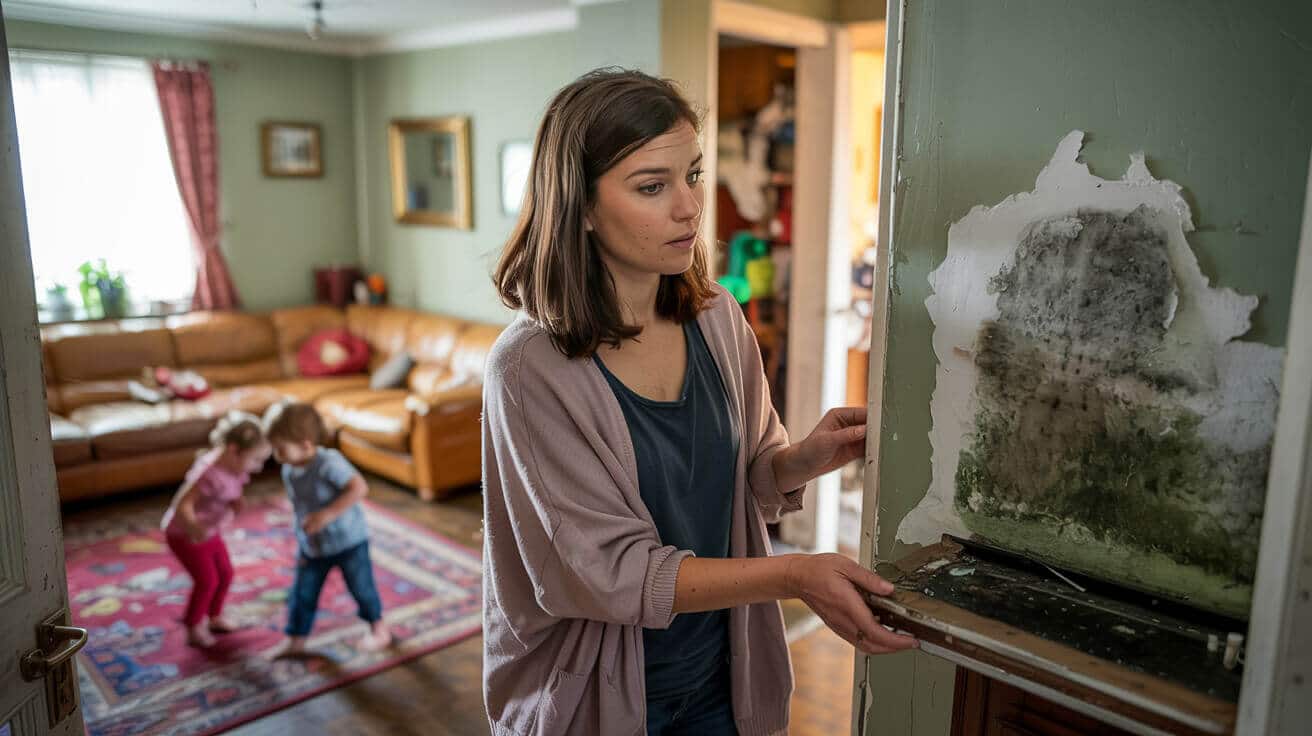
You manage damp and mould more effectively when your teams treat it as a health and safety hazard, not a lifestyle complaint.
The Housing Health and Safety Rating System treats damp and mould as a potential Category 1 hazard because of links to respiratory illness, particularly for children, older residents and those with pre‑existing conditions. That risk lens needs to appear in scripts, triage and priority decisions so damp and mould is not left competing with routine repairs.
Your staff need simple prompts to capture vulnerability in real time: very young children, anyone with asthma or COPD, anyone immunocompromised, or anyone whose disability makes it harder to heat or ventilate. Those details should change how quickly you act and who you inform.
You also need a shared way to distinguish condensation‑driven problems from penetrating damp, rising damp and leaks. If every black patch is treated as “condensation” and behaviour advice is over‑used, you risk missing structural issues and disrepair. A short, structured “significant hazard” note – what was seen, what was measured, what was concluded and what will happen next – shows that decisions were risk‑based and considered.
When you frame damp and mould this way, you can track the outcomes that matter to residents – time to first competent inspection and time to interim risk reduction – instead of just whether a job was eventually closed.
HHSRS thinking in day‑to‑day decisions
You do not need every officer to be a surveyor, but you do need them to recognise when conditions could reach Category 1 territory and trigger escalation. Visual cues, vulnerability information and any known history on the block or archetype should feed into a simple risk grading that the whole organisation understands and uses consistently.
Condensation versus ingress and leaks
You reduce repeat cases when your frontline can tell the difference between moisture driven mainly by indoor humidity and moisture driven by failed fabric, roofs, gutters, pointing, window seals or plumbing. That distinction shapes whether the next action is behaviour advice, a change to controls, a fabric repair or a full damp remedial project.
The 14‑Day Investigation‑Ready Workflow (Report → Triage → Inspect → Diagnose → Plan)
![[ALTTOKEN]](https://allservices4u.co.uk/app/uploads/2026/01/03-Damp-Mould-Risk-Management-PPM-Services-Awaabs-Law-14-Day-Compliance.jpg)
(Primary: Head of Repairs / Ops Manager / Contact Centre Lead | Funnel: MOFU)
You meet the investigation duty reliably when your organisation follows one simple, timestamped sequence from report to outcome.
Day 0: Report and triage
On the day a report is received, your contact centre or front‑door team should acknowledge it, capture basic risk information, record vulnerability and set a triage category that drives response times and pathways. The resident should receive immediate, safe interim advice, for example what to do if there is an active leak or suspected electrical risk.
You should also assign a case owner so one person is responsible for seeing the investigation through and keeping communication on track.
Days 1–7: Inspect and diagnose
Within the first week, a competent inspection should be arranged and completed. That means sending someone with the right training and tools to do more than “have a quick look”. They should:
- Take moisture readings on affected and comparison surfaces.
- Record room temperature and relative humidity to understand condensation risk.
- Check ventilation provision and operation.
- Look for signs of water ingress, plumbing leaks, cold bridges or failed fabric.
- Capture context and close‑up photos that can be understood later.
Their notes should explain what is believed to be driving the damp or mould, what has been ruled out, and what further investigation or tests, if any, are needed.
Days 8–14: Plan, communicate and escalate
By day fourteen you should have issued a clear investigation outcome to the resident and recorded it in your systems. That outcome should state what type of hazard is present, what interim measures are in place, what remedial work is planned, and the expected timescales.
If works cannot reasonably be completed quickly, the case should move into a managed programme with risk‑based oversight. Where access has not been possible, records should show attempts made, adjustments offered, and how ongoing risk has been weighed. Repeat or high‑risk patterns should trigger escalation to asset and compliance teams, not just another reactive repair.
All Services 4U configures this Day 0–14 workflow for you, including visit types, triage categories, scripts and standard letters, so your teams have something practical to run tomorrow.
What’s Included in a Damp & Mould Risk Management PPM Visit
(Primary: Asset Manager / Planned Works Lead / Surveying Manager | Funnel: MOFU)
You get more than a “mould wash” when a planned visit is built around root‑cause diagnosis and prevention.
Moisture and ventilation testing
A PPM visit should include structured moisture and indoor environment checks, typically:
- Room temperature and relative humidity readings.
- Surface and, where appropriate, in‑depth moisture readings.
- Simple dew‑point thinking to understand condensation risk.
- Verification that mechanical ventilation runs and extracts appropriately.
Readings should be logged with locations and dates so they can be compared across visits and used to support decisions about works or further investigation.
Fabric, leak and external checks
The inspection should also cover building fabric elements that commonly drive damp and mould:
- Roof coverings, gutters, outlets and downpipes.
- External walls, pointing, flashings and openings.
- Internal plumbing, wet areas, sealants and overflows.
Findings here should translate into specific work orders or planned projects, rather than generic comments such as “monitor”.
Resident guidance and follow‑up
During the visit, the inspector should give simple, safe guidance tailored to the home and the resident’s circumstances, and record what was explained. That can include how to use existing ventilation, how to report new leaks promptly, and when to contact health services if symptoms worsen. This guidance does not replace works, but it does form part of your hazard‑control storey.
Accreditations & Certifications








Reporting, Evidence Trail, and Audit Readiness
![[ALTTOKEN]](https://allservices4u.co.uk/app/uploads/2026/01/04-Damp-Mould-Risk-Management-PPM-Services-Awaabs-Law-14-Day-Compliance.jpg)
(Primary: Compliance Manager / Risk & Assurance / Insurer / Lender/Valuer | Funnel: MOFU)
You stay out of difficulty when every case file is audit‑ready by design, not reconstructed in a hurry after a complaint.
The minimum defensible case file
For each damp and mould case you should be able to produce, quickly and consistently:
- A clear record of when you became aware and how.
- Triage decisions and vulnerability information.
- Inspection notes, with dates, identity and competence of the inspector.
- Moisture and environment readings, with locations.
- A photo set showing context, detail and “after” condition.
- The investigation outcome and plan, including any exceptions.
- Resident communications and appointments, including access failures.
- Verification notes confirming that the hazard has been controlled or removed.
Designing this structure into forms and systems upfront is easier than trying to patch it in later. When a resident escalates a complaint months later, you want to open one record and see first report, inspection, photos, plan and closure checks without reconstruction. When an Ombudsman, regulator or insurer asks questions, you can share the same pack and show clearly how you moved from hazard to control.
Photo and measurement standards
Your evidence is stronger when photos and readings follow a consistent pattern. Wide shots that show which room and wall are affected, mid‑range shots that anchor the defect, and close‑ups that record detail make it harder for anyone to argue that “this could be anywhere”. Readings need units, locations and dates, and instruments need to be used and maintained in line with basic calibration and good‑practice guidance.
Portfolio reporting and QA
At portfolio level you should be able to see where damp and mould is recurring by block, elevation or archetype, and where components such as roofs, gutters, fans or particular wall constructions are driving risk. Sampling case files for quality, both on paper and on site, helps you show that competence and process are consistent rather than a patchwork of different approaches.
When every visit and report is structured to feed that case‑level and portfolio‑level picture, your assurance and audit conversations start from evidence, not anecdotes.
Service Levels, Mobilisation, and Capacity Planning
(Primary: Head of Repairs / Contract Manager / Managing Agent Ops Lead | Funnel: BOFU)
You meet the investigation duty sustainably when service levels, exceptions and capacity are all designed around the same clock.
Core SLAs that respect the clock
You need clear, realistic targets for time to acknowledge, time to triage, time to inspection booked, and time to investigation outcome issued, linked to risk categories. Those SLAs should appear in contracts and operational dashboards, not just in policy documents, so performance can be monitored and challenged.
Handling no access and exceptions
No access is inevitable, but unmanaged no access is a risk. You reduce that risk when exceptions are coded, not buried in free‑text: attempts made, adjustments offered, safeguarding concerns and when the case was escalated. Rules should be clear enough that frontline staff can apply them without guesswork and that patterns can be seen across the stock.
Mobilisation and capacity
New or improved services often fail in the first months because templates, equipment, training and data flows are not ready. You protect performance by treating mobilisation as a project in its own right, with a defined start date, training plan, instrument list, calibration schedule and QA plan. Capacity planning should draw on your own historical patterns – seasonality, stock archetypes and known hotspots – rather than an assumed “average”.
We take you through mobilisation step by step, from first pilot area through to steady‑state delivery, so the fourteen‑day investigation duty becomes routine rather than a permanent emergency.
Commercials, Procurement Routes, and Framework Readiness
(Primary: Procurement Lead / Finance Director / Commercial Manager | Funnel: BOFU)
You de‑risk procurement when deliverables, pricing and success measures are defined in operational, not abstract, terms.
Routes to procurement
You may need the service to sit under an existing framework, a dedicated lot or a direct award route. In each case, clear descriptions of outputs – inspections, reports, evidence packs, data feeds and KPIs – help procurement and legal teams understand what you are buying and how it supports your wider asset and safety strategies.
Pricing that avoids perverse incentives
You reduce unintended consequences when investigation, remedial works and planned upgrades are priced and monitored separately. If you reward volume of jobs without looking at recurrence and quality, you risk paying more for the same problems. A better approach is to track and discuss metrics such as repeat rate within a defined period, time to investigation and time to interim control alongside cost.
Contract KPIs that track real success
Traditional “volume completed” metrics alone can hide failure demand. More meaningful measures include investigation completion rates within required timescales, reduction in reopened damp and mould cases, improvement in resident satisfaction and complaint outcomes, and visibility of portfolio‑level risk trends. Those measures should be written into the contract and reviewed regularly.
We work with your procurement and finance teams to structure commercials that support compliance, quality and long‑term cost control, rather than simply shifting reactive spend into a different budget line.
Reliable Property Maintenance You Can Trust
From routine upkeep to urgent repairs, our certified team delivers dependable property maintenance services 24/7 across the UK. Fast response, skilled professionals, and fully insured support to keep your property running smoothly.

Book Your Free Consultation With All Services 4U Today
(Primary: Economic Buyer / Head of Repairs / Compliance Lead | Funnel: BOFU)
You move fastest when you start with a focused diagnostic rather than a blank sheet.
On a short consultation call you can walk through how you currently handle damp and mould – from first report to close – and where you feel time or control is being lost. When you bring a small sample of recent cases, your policies and your current contractor arrangements, you get a clear view of gaps against the fourteen‑day investigation duty and wider expectations.
During the conversation you can agree whether your immediate priority is a 14‑day investigation‑readiness check, a rebuilt workflow and SOP set, or a full PPM‑based control programme to reduce recurrence across the stock. You also identify who needs to be involved internally – from repairs, compliance and resident services through to whoever owns contractor performance – so decisions turn into action.
After the call you receive a concise action plan: where to tighten processes, what to standardise, which evidence requirements to adopt, and how to pilot changes on a defined area or block. That gives you a realistic 30–90 day path from concern to control.
Book your free consultation with All Services 4U and put a practical, evidence‑ready 14‑day damp and mould investigation model in place across your portfolio.
Frequently Asked Questions
Explore our FAQs to find answers to planned preventative maintenance questions you may have.
How does Awaab’s Law change your damp and mould process in the first 14 days?
Awaab’s Law makes your first two weeks of damp and mould handling the main thing you are judged on.
Instead of “someone went out and did some works eventually”, you are now measured on whether, within that initial window, you can show a competent investigation, a clear diagnosis, and a written plan that a regulator or court would recognise as reasonable. That sits alongside the Homes (Fitness for Human Habitation) Act 2018, the Housing Ombudsman’s damp and mould report and the Regulator of Social Housing’s Safety and Quality Standard, so nobody will accept “we didn’t realise the clock had started” as an explanation.
A resilient model spells out, for every case, when you first became aware, how you triaged risk and vulnerability, when a qualified inspection took place, what was recorded and measured, and what programme of works and interim protections you committed to. Structural repairs can follow later, but only if they sit on top of a dated clinical diagnosis and plan, not a pile of contractor notes.
If your reality today is “log a job, hope the notes hold up, reconstruct the storey later”, you are leaving yourself exposed when Awaab’s Law expectations and HFHH are brought into the room. A safer path is one simple, portfolio‑wide two‑week pattern that repairs, housing, compliance and asset colleagues all understand, baked into policy, training and PPM. That is the kind of pattern All Services 4U designs and helps you operationalise, so a Housing Ombudsman investigator, Regulator of Social Housing case officer or legal team can read any file without needing oral history to fill the gaps.
What exactly does the 14‑day window require us to do on damp and mould?
The 14‑day window runs from the moment you become aware of a possible damp and mould hazard to the point you have completed a competent investigation and communicated a written outcome and plan.
It does not require every contractor and trade to have finished by Day 14. What matters is that by that point you can show:
- a suitably trained person has inspected using appropriate equipment, not just glanced at phone photos;
- a reasoned diagnosis has been made (for example, condensation‑led, penetrating damp, structural ingress, or combined causes);
- there is a documented action plan with target dates, responsibilities and any interim measures;
- the resident has received a written update that explains what will happen next and when.
That is where organisations start to look either reassuring or risky. When All Services 4U helps you map this out, we keep the “clock rules” simple enough that a call handler, neighbourhood officer or surveyor can apply them late on a Friday, not just the policy team in a workshop.
How does this change what “good” looks like to regulators and boards?
For regulators, lenders and non‑executives, “good” now looks like predictable, evidenced behaviour in that first two‑week period, not isolated heroics when something hits the press.
When a Housing Ombudsman reviewer or Regulator of Social Housing team reads your files, they are looking for a pattern: consistent triage, timely attendance, clear diagnosis, proportionate works and sensible communication. When a lender or valuer reviews a sample in a refinance, they want to see hazards being picked up and managed in a way that lines up with Awaab’s Law, HFHH and Safety and Quality expectations.
If you want to be seen as the landlord, RP or BSM who genuinely has this under control, rather than the one who only reacts after headlines, you build a repeatable two‑week model and proof set that would still make sense if your own people were not in the room to explain it.
A workable two‑week damp and mould workflow needs a repeatable Day 0–Day 14 sequence with named owners, defined evidence, and clear escalations, not a one‑off policy slide.
On Day 0, you capture the report, acknowledge it to the resident, record any vulnerability, and grade the risk so homes with young children, known respiratory conditions or extensive spread do not sit in the same bucket as a small patch behind a wardrobe. You also book a competent inspection, not simply “a visit”, and you give basic safety guidance if there is live water, suspected electrical risk or health concern.
Within the first week, a trained person attends with a standard inspection method: moisture readings at agreed points, temperature and relative humidity, wide and close‑up photos, checks on fans and vents in real use, and fabric observations – roofs, gutters, pointing, seals, overflows, pipework. Findings are logged into a structured template so you can later slice cases by cause, building type, severity and trend.
By Day 14, each open case should have:
- a diagnosis you would be comfortable sharing with the Housing Ombudsman or your legal advisers;
- an agreed works plan with target dates and access assumptions;
- any necessary escalation to asset or compliance colleagues where risk is high, repeated or pattern‑based;
- a coherent record of what you have told the resident and when.
You also need firm rules for when repeated reports, access difficulties or safeguarding concerns require a different route – planned works, legal action, or support from resident services. All Services 4U turns this into a single operational guide that your teams can follow without renegotiating the basics on every address.
How can we stop access problems silently wrecking our timescales?
You stop access from undermining you by treating it as a formal step with its own standards, records and escalation routes, rather than a vague “no access” comment when a file becomes awkward.
In practice that means:
- agreeing how many reasonable attempts you will make and over what period;
- shaping appointment windows and adjustments that recognise vulnerability;
- recording each attempt with date, time, channel and outcome, not just a label;
- having a clear path where persistent failure to gain entry triggers safeguarding checks, legal support or neighbourhood involvement.
When an Ombudsman, board member or solicitor later looks at the history, they should be able to see a rational storey about effort and judgement on access, not a single line appearing just as the statutory expectations start to bite. When All Services 4U helps you embed this, we also tune your systems so access events are visible in reports across the stock, instead of being buried in free‑text notes.
What are the key checkpoints in a robust 14‑day damp and mould sequence?
A simple way to visualise it is as four checkpoints:
| Checkpoint | Target timing | What should be in place |
|---|---|---|
| Day 0–1 | Immediately | Report logged, risk/vulnerability triage, reply |
| Day 1–7 | Early attendance | Competent inspection, readings, photos, notes |
| Day 7–14 | Investigation close | Diagnosis, written plan, escalation where needed |
| After Day 14 | Delivery/verification | Works, interim controls, closure evidence |
Design your model so every case can be read against those four waypoints. That makes it much easier for you, your auditors and your board to see where things go right – and where they fall apart.
How do you build damp and mould risk into PPM so you are not always reacting to complaints?
You move beyond firefighting when your PPM deliberately looks for damp and mould precursors and pushes them into your two‑week model.
A PPM regime that satisfies the Housing Health and Safety Rating System and modern expectations does not stop at lifts, boilers and emergency lighting. It regularly tests for moisture routes and ventilation failure before they become category 1 hazards or disrepair claims.
Externally, that means scheduled checks of roofs, gutters, hoppers and downpipes with simple pass/fail outcomes and photo sets, so cracked tiles, blocked outlets and failed flashings are resolved before multiple homes in a block are affected. Internally, it means structured passes through wet rooms, known cold spots, window and door reveals, overflows and visible pipework, not just a quick look around.
On ventilation, you move from “is there a fan?” to “does the system actually move air, is it used as intended, and does it respond properly to controls or humidity?” Failures are raised as works orders with due dates and ownership, not casual notes in an engineer’s remarks.
Every PPM visit should leave behind:
- readings and photos following a consistent pattern;
- simple codes for type, severity and likely cause;
- direct triggers into your damp and mould two‑week process wherever hazards are found.
When that data starts to show repeating moisture and mould patterns by block, house type or construction period, it should automatically prompt planned investigations and capital plans, instead of being lost between spreadsheets and inboxes. All Services 4U helps you design those inspection routines, link them to Part C and Part F guidance, and join them up with your responsive model so prevention and response finally speak the same language.
What happens if PPM is surfacing serious issues but our capital budget is tight?
You are in a more defendable position when your risks are visible, prioritised and evidenced, even if you cannot eliminate every root cause in one financial year.
A clear picture of recurring damp and mould linked to specific components, elevations, archetypes or estates allows you to:
- build phased capital programmes your finance director and board can actually back;
- agree interim controls that are recorded and monitored, rather than assumed;
- target the most significant hazards first instead of whoever complains loudest;
- respond to insurers, lenders, the Ombudsman and residents with data, not anecdote.
All Services 4U’s role is to help you turn those PPM findings into a credible risk and investment storey – one that shows you recognise the problem, have ranked it, and are acting in a way that a regulator or adjudicator would see as proportionate.
How does PPM‑led damp and mould management improve your position with insurers and valuers?
Structured PPM with damp and mould built in reduces uncertainty, which is exactly what insurers and valuers price in.
When a broker or risk surveyor sees a track record of roof surveys, gutter maintenance, L8 controls, FRA follow‑through and damp‑related remedials pulled from PPM, they can justify premiums and terms very differently to a portfolio where those items are ad hoc. Likewise, when a valuer can see regular evidence of moisture and ventilation checks, it reduces the narrative that “hidden damp risk” should be priced into value or funding decisions.
If you want your next insurance renewal or refinance meeting to feel less like a defensive exercise and more like a calm review of a managed risk, building damp and mould explicitly into your PPM is one of the highest‑leverage moves you can make.
What kind of evidence actually protects you when damp and mould cases are challenged?
You are protected when each case file reads as a whole, dated storey from first contact to risk under control, without anyone needing to rebuild it from calendars and email trails.
For any address, you should be able to produce quickly:
- the first awareness date and how it came in (call, portal, letter, visit);
- your initial triage notes, including vulnerability markers;
- at least one inspection record by a competent person, with readings and photographs;
- a diagnosis that explains what is causing the problem and what has been ruled out;
- a set of works orders or programme entries with dates and outcomes;
- interim measures where required (for example, dehumidifiers, temporary repairs, decant decisions);
- a closure or verification note that confirms conditions have improved or are being managed;
- a clear record of how you handled access and communication with the resident.
Photos should show context as well as detail. Readings should have locations, dates, units and equipment details where appropriate. Case notes should separate assumptions from facts. Resident messages should follow a logical timeline and demonstrate both commitments and delivery.
At portfolio level, you also need reporting that exposes:
- cases that missed the two‑week investigation expectation;
- addresses that are returning repeatedly with similar issues;
- patterns in failure by contractor, team, component or building type.
Regular quality sampling – desk‑based reviews plus occasional joint visits – keeps your model from drifting, and gives you something you can put in front of the Housing Ombudsman, the Regulator of Social Housing, insurers or lenders without worrying what they will find.
All Services 4U designs this evidential structure alongside your technical and PPM changes, so you are not stuck trying to retrofit tidy files onto messy reality once a complaint escalates.
How can we tell if a single damp and mould file has “enough” evidence?
On a typical case, “enough” looks like a lean, coherent chain that an external reader could follow unaided:
| Element | Strong file shows | Weak file shows |
|---|---|---|
| First awareness | Clear date, channel, triage and vulnerability notes | Vague reference, no triage |
| Investigation | Dated inspection, readings, photos, ruled‑out causes | A visit line, no measurable data |
| Diagnosis | Written summary that explains cause in plain language | Assumptions, jargon or missing entirely |
| Plan and works | Dated plan, WOs, interim controls, completion records | Scattered jobs with no visible sequence |
| Closure | Verification step and resident outcome recorded | “Completed” status only |
If one or more of those elements is missing or obviously thin, that is exactly where investigators, legal teams and insurers will concentrate their questions. When we review real files with you, we start from that checklist and use it to close the most damaging gaps first.
How do strong damp and mould files change how you are perceived at board and regulator level?
When your files are consistently complete and legible, you stop looking like an organisation that gets lucky on individual cases and start looking like one that runs a disciplined system.
Boards and non‑executive directors can see, from a small sample, that the narrative in your reports is backed by what sits on the system. The Regulator of Social Housing and the Housing Ombudsman can read across from individual findings to an assurance that underlying controls are real, not theoretical.
If you want to be regarded as the Head of Compliance, BSM or RTM director who actually has the evidence to match your assurances, your single‑file standards need to be strong enough that you would be relaxed about an external reader picking any case at random.
How does a Damp & Mould Risk Management PPM service from All Services 4U actually run in practice?
On the ground, you get a consistent inspection and control programme that plugs into your existing people and systems instead of trying to replace them.
On each planned visit, All Services 4U engineers follow a standard method shaped around your stock profile:
- moisture and environmental readings at agreed reference points in each room;
- practical checks of fans, trickle vents and other ventilation paths in real use, not only as assets on a list;
- visual and physical checks of fabric and water paths – roofs, gutters, downpipes, seals, overflows, pipework, rainwater goods;
- clear, proportionate advice to residents, captured in the case record, so they are part of the solution rather than blamed for the problem.
Findings go straight into a structured template aligned with your data model: photos, readings, codes for cause and severity, recommendations and target timescales. Where issues are significant enough to require responsive works, they are raised into your two‑week damp and mould investigation model, not parked in a separate pipeline. Where patterns jump out across a block or estate, they are summarised for asset and capital colleagues with enough precision for them to cost and schedule meaningful interventions.
You set the scope: a focused pilot on high‑risk towers, a particular geography, or a portfolio roll‑out. Service levels for frequency, turnaround time and evidence delivery are agreed up front. Reporting is tuned so your governance forums can see investigation timeliness, recurrence, root causes and complaint volumes move in the right direction, not just the number of tickets closed.
What you feel day to day is fewer repeat jobs, fewer “cause” arguments between teams, and a much calmer footing when an executive, AP, board member or broker asks, “what is really happening on damp and mould in our homes?”
How is this different from using independent damp specialists only when problems escalate?
Occasional specialists can stabilise one property; a structured risk‑management PPM service gives you a standard way of working across the entire portfolio.
With ad hoc support:
- diagnostic methods and reports change from one contractor to the next;
- insights rarely find their way back into your two‑week investigation model or PPM regime;
- leadership and regulators cannot see a joined‑up picture of risk.
With a Damp & Mould Risk Management PPM service from All Services 4U:
- the inspection approach is consistent, so data is comparable across time and across stock;
- outputs are designed to feed your investigation process, capital planning and compliance reporting by design, not by luck;
- boards, APs, Heads of Compliance and finance leaders can see a shift from “we wait until someone complains” to “we have a portfolio‑level risk strategy and proof”.
If you want to be recognised, internally and externally, as the organisation that takes ownership of damp and mould risk and can demonstrate that fact, this kind of structured service gives you the practical backbone to match that storey.
Can you use our current contractors and systems inside this service model?
In many portfolios, that is exactly how we work: lift the diagnostic, PPM and evidence standard while keeping your existing supply chain and platforms in place.
Typically we will:
- work alongside your main contractors, standardising inspection methods, data points and reporting formats;
- configure your existing repairs and asset systems so they support your two‑week expectations, rather than fighting them;
- define the minimum evidence set every contractor must provide if they want to be part of your panel;
- give your internal teams a clear oversight view without forcing them onto unfamiliar tools.
If you later retender, you do so with a living specification – a service that has already proved itself in your environment, and evidence rules that directly support your regulatory, insurance and lending conversations.
What is the most practical low‑friction way to start if your current approach would struggle under Awaab’s Law?
The most effective place to start is a tightly scoped readiness review and a contained pilot, not a wholesale reorganisation.
You do not need a perfect slide deck. For a first working session, have ready:
- a small set of recent damp and mould cases, including at least one that ended badly;
- your current damp and mould policy, procedures and guidance notes;
- a snapshot of PPM tasks that touch moisture, ventilation and external fabric;
- a rough sense of complaint, repeat and Ombudsman exposure.
Together, we walk those live cases against the expectations in Awaab’s Law, the Homes (Fitness for Human Habitation) Act 2018 and recent Housing Ombudsman decisions. That makes it painfully clear where timing, decision‑making or evidence would be hard to defend. Your board, AP/BSM and finance colleagues can see the gaps in their own language – risk, assurance, insurability, mortgageability.
From there, you choose a first move that matches your capacity and risk appetite:
- tighten and test your Day 0–Day 14 model in one patch, then replicate;
- stand up a Damp & Mould Risk Management PPM pilot on a handful of high‑risk blocks;
- redesign your evidence standards so today’s effort turns into tomorrow’s defensible files.
Because you are controlling scope, you can show visible improvement to residents, regulators and insurers while working toward a portfolio‑wide pattern that feels sustainable, not heroic.
If you want to be the person in your organisation who can say – and prove – “we know exactly what happens in the first two weeks on damp and mould, and we can show it property by property”, a short, focused conversation with All Services 4U is the most direct next step.
What should you have to hand before that first conversation?
You do not need to over‑engineer preparation. A handful of real case files, your damp and mould policy, an extract of relevant PPM tasks, and a basic view of complaint and recurrence rates is enough to surface patterns fast and to build a practical, regulator‑ready plan you can own.
For a Head of Compliance, BSM, RTM director or asset lead who wants to be seen as the one who brought order and proof to this risk, that is a very small investment for a big shift in how your organisation is perceived.
- Turning Awaab’s Law into a 14‑Day Damp Workflow
- What the “14 Days” Actually Means Under Awaab’s Law
- Damp & Mould as a Housing Hazard: HHSRS, Category 1 Risk, and Vulnerability
- The 14‑Day Investigation‑Ready Workflow (Report → Triage → Inspect → Diagnose → Plan)
- What’s Included in a Damp & Mould Risk Management PPM Visit
- Reporting, Evidence Trail, and Audit Readiness
- Service Levels, Mobilisation, and Capacity Planning
- Commercials, Procurement Routes, and Framework Readiness
- Book Your Free Consultation With All Services 4U Today
- Frequently Asked Questions
- Related PPM Services
Related PPM Services
- Risk Management
- How to Prevent Insurance Claim Repudiation
- Electrical Risk
- Fire Safety Risk Management
- Gas Safety Risk Management
- Insurance Risk
- Lender Risk
- PPM Strategies That Reduce Insurance Premiums
- Regulator Risk
- Resident Complaint & Ombudsman Risk Management
- Free Property Risk Heatmap Template
- Structural Risk
- Tribunal Defence Evidence Packs
Case Studies


Related Articles

Your Guide To Identifying And Treating Minor Mould Outbreaks

Why Planned Preventative Maintenance (Ppm) Saves Money And Ensures Compliance