Gas Safety Risk Management – CP12, Flue & CO Prevention
Landlords, agents and block managers need gas safety risk management that goes beyond a single CP12 to keep appliances, flues and residents safe all year. We turn fragmented checks, access issues and weak records into one joined-up process, based on your situation. You finish with a clear scope, coordinated inspections, tracked follow-up actions and an evidence trail that stands up to boards, insurers and residents. The next step can be a calm review of your current risk position.



Author
Izzy Schulman

For landlords, block managers and agents, a current CP12 alone does not keep a building safe. Gas appliances, shared flues and communal plant can still leave gaps that expose residents and decision-makers to avoidable risk.

Gas safety risk management joins the dots between annual checks, access planning, defect follow-up and clear records so exposure does not build in the background. With a structured process, you can see what is in scope, what remains open and who is responsible at each step.
- Clear view of appliances, flues and responsibilities
- Joined-up inspections, follow-up and record keeping
- Practical support that reduces avoidable gas safety exposure</p>
Need Help Fast?
Locked out, leak at home, or electrical issue? All Services 4 U provides 24/7 UK locksmith, plumbing, electrical.
Testimonial & Clients Who Trust Us
With 5 Star Google Reviews, Trusted Trader, Trust Pilot endorsements, and 25+ years of experience, we set industry standards for excellence. From Dominoes to Mears Group, our expertise is trusted by diverse sectors, earning us long-term partnerships and glowing testimonials.
Super prompt service. Not taking financial advantage of an absent landlord. Kept being updated on what was going on and when. Was briefed by the engineer after the problem was fixed. Engineer was p...
Thomas who came out was honest, helpful - set my expectations and above all - did a fantastic job. What an easy service to use and would recommend. Told me the price upfront as well so no hidden su...
Had someone available to sort the lock out within the timeframe specified and the price was notified up front, the locksmith texted to confirm appointment and arrived when he said he would after co...
Our boiler stopped working, leaving us without heat and hot water. We reached out to All Service 4 UK, and they sent Kai, an engineer, who arrived promptly. Kai was professional and friendly, quick...
Locksmith came out within half an hour of inquiry. Took less than a 5 mins getting us back in. Great service & allot cheaper than a few other places I called.
Had a plumber come out yesterday to fix temperature bar but couldn’t be done so came back out today to install a new one after re-reporting was fast and effective service got the issue fixed happ...
Great customer service. The plumber came within 2 hours of me calling. The plumber Marcus had a very hard working temperament and did his upmost to help and find the route of the problem by carryin...
Called out plumber as noticed water draining from exterior waste pipe. Plumber came along to carry out checks to ascertain if there was a problem. It was found that water tank was malfunctioning an...
We used this service to get into the house when we locked ourselves out. Very timely, polite and had us back in our house all within half hour of phoning them. Very reasonable priced too. I recomme...
Renato the electrician was very patient polite quick to do the work and went above and beyond. He was attentive to our needs and took care of everything right away.
Very prompt service, was visited within an hour of calling and was back in my house within 5 minutes of the guy arriving. He was upfront about any possible damage, of which there was none. Very hap...
We are extremely happy with the service provided. Communication was good at all times and our electrician did a 5 star job. He was fair and very honest, and did a brilliant job. Highly recommend Pa...
Came on time, a very happy chapie called before to give an ETA and was very efficient. Kitchen taps where changed without to much drama. Thank you
Excellent service ! Lock smith there in 15 minutes and was able to gain access to my house and change the barrel with new keys.
Highly recommend this service 10/10
Thank you very much for your service when I needed it , I was locked out of the house with 2 young children in not very nice weather , took a little longer than originally said to get to us but sti...
The gentleman arrived promptly and was very professional explaining what he was going to do. He managed to get me back into my home in no time at all. I would recommend the service highly
Amazing service, answered the phone straight away, locksmith arrived in an hour as stated on the phone. He was polite and professional and managed to sort the issue within minutes and quoted a very...
Really pleased with the service ... I was expecting to get my locks smashed in but was met with a professional who carried out the re-entry with no fuss, great speed and reasonable price.
Called for a repair went out same day - job sorted with no hassle. Friendly, efficient and knowledgeable. Will use again if required in the future.
Even after 8pm Alex arrived within half an hour. He was very polite, explained his reasons for trying different attempts, took my preferences into account and put me at my ease at a rather stressfu...
The plumber arrived on time, was very friendly and fixed the problem quickly. Booking the appointment was very efficient and a plumber visited next day
Worcester Boilers

Glow Worm Boilers

Valliant Boilers

Baxi Boilers

Ideal Boilers

Gas Safety Risk Management for Landlords and Block Managers
You need more than a current CP12 if you want your building to stay safe, compliant and defensible between annual visits.
In rented homes, mixed-tenure blocks and communal plant, risk rarely starts with the certificate. It usually starts with unclear ownership, missed access, concealed flues, open defects, weak records or poor resident communication. Gas safety risk management is the system that keeps those gaps under control before they become a larger problem.
In practice, that means knowing which appliances, flues and pipework sit within your control, arranging annual checks on time, closing defects quickly, keeping a clear evidence trail and treating carbon monoxide prevention as part of everyday building safety.
We help you turn that into one joined-up process. We assess scope, coordinate inspections, support access planning, track follow-up actions and keep the record set clear enough for landlords, boards, insurers and residents to use.
If you want a practical view of your current risk position, book a gas safety review and start with a clear scope, not another scramble.
Why This Matters in Residential Blocks
Gas risk in a block rarely stays neatly inside one front door.
One flat can create a compliance issue. A shared flue route, communal boiler, riser void or plant room can create a building-wide problem. That is why gas safety in a block needs more structure than a single rented house.
Why annual paperwork is not enough
A valid annual record proves that a check took place on a specific date. It does not prove that follow-up works were completed, concealed flues were accessible, alarms were working, residents knew what to report or communal responsibilities were properly allocated. If your process stops when the record is issued, you can still be left with open defects, delayed access and avoidable exposure between visits.
Why blocks fail in the gaps
Most block failures do not come from one dramatic decision. They build through smaller misses: one failed appointment, one flue route nobody owns, one plant room issue nobody escalates, one resident complaint logged without technical follow-up. A flat can pass its annual check while a concealed flue on the same line remains inaccessible and no one owns the next step. The record looks current, but your exposure is still live.
That is where good management matters. You need a structure that connects technical work, evidence and decision-making, so safety issues do not become governance problems later.
Why boards and managing agents need a clearer view
If you approve budgets, instruct contractors or answer resident questions, you need more than a note saying “passed” or “failed”. You need to know what was checked, what remains open, who is responsible and what happens next.
That is what turns gas safety from a reactive headache into a controlled service line.
What You Are Responsible For
Your duty usually follows what you provide, what you control and what the lease or management structure assigns to you.
That sounds simple until you apply it to a live block. Flats, common parts, communal plant and shared flue routes often sit across different legal and operational lines. You need those lines mapped before defects appear.
Inside a rented dwelling
If you are the landlord of a let flat or house, you are generally responsible for landlord-provided gas appliances, related pipework and the flues serving them. You also need the annual gas safety check carried out by a Gas Safe registered engineer, and you need the record handled properly once it is issued.
In practice, you should be able to show:
- which appliances you provide
- when the last check was completed
- what defects were found
- what action closed them
- when the next check is due
That record should be easy to retrieve, not buried across inboxes and attachments. When an existing tenant needs a copy, or a new tenancy is starting, your process should already be ready.
In common parts and shared systems
In a managed block, responsibility for communal boilers, plant rooms, shared flues and common routes usually depends on the lease, ownership structure and management appointment. If a system serves multiple homes, it should never sit in a grey area simply because day-to-day coordination is outsourced.
You need a live responsibility map covering demised equipment, common-parts equipment, shared flue routes, communal plant and approval thresholds. That clarity cuts delay when you need access, approvals or remedial decisions.
Where agents and managers fit
A managing agent can coordinate works, book contractors and report to you, but that does not automatically remove the underlying legal duty of the landlord, freeholder, RTM or RMC. Your management agreement needs to make the operational split visible.
That is why we check scope and control first. You leave with fewer assumptions, cleaner instruction routes and a stronger record if anyone later asks who should have acted.
How CP12, Flue Checks and CO Prevention Work Together
A safe building needs these controls working as one system, not as separate jobs.
When they are split apart, you get false confidence: the record is current, but the flue route is compromised; the appliance is serviced, but the alarm is missing; the defect was noted, but nobody chased access or closure.
What the annual record proves
The Landlord Gas Safety Record, often still called a CP12, is the formal record produced after the annual gas safety check on landlord-provided gas appliances and their flues.
It matters because it creates a dated, engineer-led record of the check. It does not replace maintenance, remedials or wider risk control. You still need to manage what happens before the visit, after the visit and between visits.
What flue checks add
A flue is not a minor technical detail. It is the route that carries combustion gases safely out of the building. If that route is blocked, damaged, disconnected, poorly installed or hidden in a way that prevents inspection, your risk rises even when the appliance itself appears ordinary.
That is why flue safety needs specific attention in flats, risers, cupboards, voids and roof spaces. The real question is not only “was the boiler checked?” It is also “can combustion gases leave the building safely every time?”
Why carbon monoxide prevention is layered
Carbon monoxide prevention works best when you treat it as layered protection. You reduce the chance of unsafe combustion, confirm flues and ventilation are working properly, fit alarms where required and make sure residents know which warning signs matter.
Alarms help, but they do not replace servicing, safe flues or proper investigation. If you want fewer emergencies and a more defensible position, you need all of those layers working together.
If you want that framework tested against a live property or block, we can review your current records, scope and open risks in one pass.
How Often Checks Should Be Carried Out

Your annual date matters, but your planning window matters just as much.
Most compliance problems do not begin because the rule is unclear. They begin because booking started too late, access failed, defect follow-up drifted or the record ended up in the wrong place.
Annual checks and early renewal
For landlord-provided gas appliances and flues in rented homes, the core cycle is every 12 months. In practice, you can often bring the next check forward by up to two months without changing the renewal date, which helps when access is tight or your portfolio is large.
That early window gives you room to:
- rebook failed access
- manage remedials
- avoid expiry pressure
- keep your annual cycle stable
If you already have a tenant in place, they should receive the record promptly after the check, and if a new tenancy is starting, you should have it ready before occupation begins.
Alarm testing and follow-up
Carbon monoxide alarm provision and upkeep should sit in the same compliance view as the annual gas check, not on a separate list that gets forgotten. In England, you need to ensure alarms are installed where required, and a fault reported to you should trigger repair or replacement without delay.
For day-to-day control, routine user testing matters. Many authorities advise monthly alarm testing, and some manufacturers recommend more frequent checks. Your role is to set the expectation, record issues quickly and keep replacement dates visible.
The safest routine is the one you can track, explain and evidence.
The Main Risks in Flats, Shared Flues and Plant Rooms
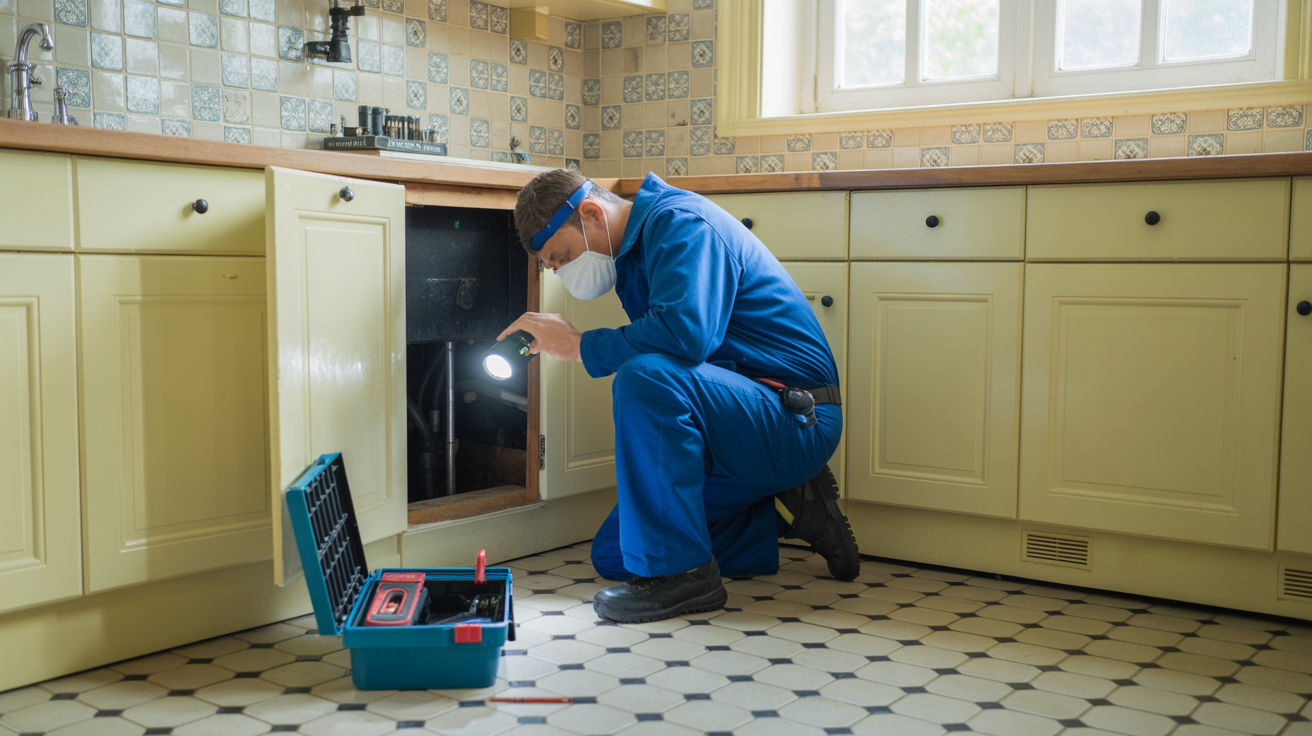
The highest gas risk usually sits where you cannot see it easily.
Boilers, fires and cookers can fail in obvious ways, but blocks create a second layer of exposure: hidden flue runs, shared routes, plant-room controls, ventilation changes and access constraints that delay investigation.
Flats and concealed flues
Inside individual dwellings, the main problems usually come from appliance defects, poor combustion, damaged components, blocked or leaking flues, poor ventilation and missed maintenance. When parts of the flue run through voids, risers or concealed spaces, the risk becomes harder to detect and easier to underestimate.
You should be especially cautious where you have:
- concealed flue routes
- repeated appliance faults
- altered cupboards or boxing
- blocked vents
- resident reports of symptoms or alarm activations
These issues need physical checking and clean records, not assumptions.
Plant rooms and shared systems
Communal plant rooms add another layer of exposure because one control failure can affect many residents at once. Unsafe combustion, flue defects, restricted access, poor ventilation and undetected gas or carbon monoxide build-up all carry wider building consequences.
That changes how you should manage the response. You need clear shutdown authority, defined escalation routes, resident communication steps and a record trail showing when the issue was found, what was made safe and what remains open.
Why flue faults deserve special weight
Flue faults often arise through design errors, deterioration, shared-system interaction, damage or lack of inspection access. Even a defect that looks minor on paper can become serious if combustion gases are not being removed safely.
That is why a strong gas safety plan gives flues their own attention rather than treating them as a footnote to the appliance check.
Accreditations & Certifications





What Good Delivery Looks Like From Inspection to Record and Resident Communication

You need a workflow that closes risk, not just a visit that creates paperwork.
Good delivery means the technical work, the access process, the defect trail and the resident updates all join up. That is where a managed service saves time and cuts exposure.
What we review first
We start by checking what you control, what sits in scope, what the last records show and where the live gaps are. That usually includes appliance coverage, flue routes, communal interfaces, access history, alarm expectations and any open remedials.
If the current picture is fragmented, we rebuild it into one usable working view rather than asking you to manage it across several contractor outputs.
What you receive after the work
You should not have to decode a contractor file to understand what happened. You need a record set that shows what was checked, what failed, what was made safe, what still needs action and who owns the next step.
A good close-out pack usually gives you:
- clear property or asset references
- dated outcomes
- defect actions
- evidence of closure
- usable notes for resident or board updates
That makes the next decision faster, whether you are approving a repair, replying to a resident, answering an insurer query or reviewing portfolio risk.
Who this suits best
This works best when you are dealing with multiple properties, mixed responsibilities, communal plant, repeated access failures or pressure from boards, insurers or residents. It also works when you are tired of running gas safety through spreadsheets, inboxes and one-off callouts.
We fit that gap by combining gas safety delivery with the planning, evidence and communication steps that keep the process stable after the engineer leaves.
If you want a managed approach rather than another isolated certificate, ask us for a scope review while the issues are still controllable.
Reliable Property Maintenance You Can Trust
From routine upkeep to urgent repairs, our certified team delivers dependable property maintenance services 24/7 across the UK. Fast response, skilled professionals, and fully insured support to keep your property running smoothly.

Book Your Free Consultation With All Services 4U Today
You need a gas safety plan that protects residents, satisfies dutyholders and holds up when someone asks for proof.
Bring your latest gas safety records, open defects, access history and any notes on shared flues or communal plant. We will review what you control, where the gaps sit and what needs attention first, so you leave with a clearer picture of timing, risk and next steps.
If your block or portfolio is close to renewal, has awkward access history or carries unresolved flue concerns, that first discussion helps you separate urgent actions from planned improvements.
Book your free consultation with All Services 4U today.
Frequently Asked Questions
What should your gas safety audit trail show when a board, insurer, or lender asks for proof?
Your gas safety audit trail should show the inspection, the finding, the follow-up, and the verified closure.
When a board, insurer, lender, or auditor asks for gas safety proof, they are rarely asking for one certificate on its own. They want to know whether your management process can withstand scrutiny. In practice, that means your file needs to show more than a completed annual visit. It needs to show what was checked, what was found, who owned the next action, how risk was reduced, and when the issue was genuinely closed.
That matters because a current Landlord Gas Safety Record, often called a CP12, only proves part of the picture. It confirms that an inspection took place. It does not, by itself, prove that warnings were followed up, that failed access was handled properly, or that an unsafe appliance did not drift into a management blind spot. HSE guidance is clear that record keeping and reasonable follow-up matter. Gas Safe Register competence matters too, because the quality of the visit depends on whether the person attending was authorised to carry out that scope of gas work.
A certificate proves attendance. A decision trail proves control.
Which documents usually carry the most weight?
Your strongest gas safety file usually includes the certificate, the surrounding records, and the closure proof that links them together.
That commonly means:
- The current Landlord Gas Safety Record for each relevant dwelling
- Engineer identity and Gas Safe Register details
- Appliance, flue, and location details
- Warning notices, isolation notes, and defect categories where relevant
- Remedial work records and completion evidence
- Access attempts and resident contact history
- Carbon monoxide alarm actions if they formed part of the visit
- Notes covering communal plant or shared infrastructure where relevant
A file becomes board-ready when each record points logically to the next. If an appliance was isolated, the next note should show what happened after isolation. If access failed, the next note should show what reasonable steps followed. If a defect was raised, the next document should show whether it was closed, escalated, or still live.
How can you test whether your file is decision-ready?
A practical test is simple: can someone unfamiliar with the property tell, within a few minutes, whether the gas risk is closed?
If the answer is no, the process may be relying too heavily on inboxes, contractor memory, or verbal updates. That is where many teams get exposed. The work may have been done, but the proof does not make that visible enough for a board pack, a lender review, or an insurance query.
The comparison below usually separates a weak file from a strong one:
| Audit point | Weak file | Strong file |
|---|---|---|
| Certificate | Present | Present and current |
| Defects | Mentioned vaguely | Categorised and tracked |
| Follow-up | Unclear | Timed and assigned |
| Closure | Assumed | Verified with evidence |
| Accountability | Implicit | Named owner visible |
For a property manager, RTM chair, compliance lead, or asset manager, this is where a structured review pays off. A gas safety evidence review can expose gaps in closure records, resident access logs, communal references, and remedial tracking before those gaps become awkward in front of your board. If your next audit pack needs to stand up without long explanation, a focused review with All Services 4U gives you a cleaner route from annual inspection to decision-grade proof.
Why does this matter beyond compliance?
It matters because weak gas records can quickly become finance, insurance, and governance problems.
An insurer may ask whether policy expectations were met before a loss. A lender or valuer may want confidence that safety records are current and unresolved issues are not sitting in the background. A board will want to know whether known defects were closed with enough discipline to defend the organisation later. In each case, the same question sits underneath: can your team prove not just that it acted, but that it stayed in control?
That is why a well-built gas safety audit trail is not administration for its own sake. It is part of how you protect asset value, insurability, and leadership credibility.
How should you manage failed access or tenant refusal without losing gas safety control?
You should treat failed access as a tracked compliance event with named next steps, not as a missed appointment.
That distinction matters because the legal duty does not relax simply because a resident was not in, refused entry, or could not be reached. HSE guidance expects landlords and managing agents to take reasonable steps to complete gas safety checks. That means your records need to show notice, attendance, follow-up, and escalation, not just a contractor comment saying no access.
In a residential block or mixed-tenure setting, failed access can create wider operational drag than teams expect. One missed gas visit can delay a whole annual cycle, disrupt remedials, weaken the board pack, and create uncertainty over who owns the next action. The problem is rarely the first failed visit. The problem is what happens after it.
A defensible workflow should show notice, attendance, follow-up, escalation, and resolution in a clear order.
A practical sequence often looks like this:
| Step | What your file should show | Why it matters |
|---|---|---|
| Notice | Date, method, appointment details | Shows fair preparation |
| Attendance | Engineer visit logged | Creates the first audit point |
| Follow-up | Prompt recontact attempt | Prevents drift |
| Escalation | Named owner informed | Keeps responsibility visible |
| Resolution | Rebook, access gained, or next lawful action | Protects the cycle |
The difference between a weak process and a strong one is usually not intent. It is visibility. Strong teams record each failed attendance, each resident contact attempt, each rebooking effort, and each management decision. Weak teams rely on scattered notes across inboxes, contractor portals, and verbal updates.
Which records should sit behind a failed-access case?
A failed-access case should carry enough evidence to prove reasonable effort and clear ownership.
That usually includes:
- Appointment notices and reminders
- Attendance logs from the engineer
- Doorstep outcome notes
- Call, text, email, or letter records
- Vulnerability or communication preference flags where appropriate
- Rebooking attempts and dates
- Escalation notes to the dutyholder, landlord, or manager
- Final outcome and closure note
Gas Safe Register competence may still matter after access is gained, but the failed-access phase is often more of a governance issue than a technical one. That is where RICS-style management discipline helps. Your board or client should be able to see who controls resident communication, who approves escalation, and who confirms closure.
When does failed access become a governance issue?
Failed access becomes a governance issue when nobody can clearly answer who owns the next move.
That happens often in block management. A landlord may think the managing agent is chasing. The managing agent may think the contractor is rebooking. The contractor may think the annual job remains open with no fresh instruction required. On paper, everyone is involved. In practice, nobody owns the risk tightly enough.
A cleaner model separates four things:
Who gives notice?
The party responsible for resident communication should be obvious.
Who records attendance?
The attending engineer or contractor should log what happened and when.
Who escalates failed access?
A named manager or dutyholder should decide what happens next.
Who verifies closure?
Someone with oversight should confirm the file is complete.
If your current route depends on repeated manual chasing, it may be time to redesign it before the next annual cycle. All Services 4U can review your failed-access workflow, tighten your escalation points, and make the evidence easier to defend. That gives your team a more reliable route to gas safety compliance than last-minute chasing and fragmented notes.
Which gas safety failures create the greatest exposure in residential blocks?
The greatest gas safety exposure usually sits between flat-level checks, communal assets, and unclear ownership.
That is why residential block gas safety needs more than a stack of tenancy certificates. A current gas safety record in one flat does not prove that wider building risk is controlled. Exposure often grows where communal plant, shared flues, concealed routes, and approval delays meet. In those spaces, each party can assume someone else is handling it.
Gas Safe Register requirements help define competence, but competence alone does not close governance gaps. A shared flue concern can remain unresolved because nobody has mapped responsibility clearly. A communal plant issue can sit outside the normal annual tenancy cycle. An urgent remedial can drift because the engineer logged the defect but the approval chain moved too slowly.
Which failures usually cause the most trouble?
The highest-risk failures tend to involve weak ownership, weak closure, or weak visibility.
The most common patterns include:
- Shared flues that are not clearly mapped or assigned
- Communal gas systems with incomplete service or remedial history
- Open defects with no verified closure date
- Urgent remedials delayed by slow approvals
- Flat-level checks treated as if they cover communal exposure
- Unsafe appliance warnings with no clear follow-on action
- Resident communication gaps during live safety concerns
These failures create concern because they raise bigger questions than the original defect. They make boards, insurers, and lenders wonder whether the building is being controlled in a disciplined way at all.
Why do communal issues create wider exposure?
Communal issues create wider exposure because they can affect several homes, several stakeholders, and more than one line of accountability.
RICS governance principles are useful here because they push you to ask who owns the communal asset, who has authority to inspect it, who can approve urgent work, and who signs off closure. In an HRB setting, the Building Safety Act context increases the importance of disciplined evidence and clear accountability, even where gas safety is only one part of a broader risk picture.
A lender may not need every technical detail, but they do need confidence that unresolved communal gas risks are not sitting unnoticed in the background. An insurer may focus on whether defects were acted on with reasonable speed and supported by a clear record. A board will want to know whether flat-level certification is being mistaken for building-level assurance.
What should your board ask about block gas exposure?
A board or asset team should be able to answer a short set of practical questions.
| Question | Why it matters |
|---|---|
| Are communal gas assets mapped? | Unmapped assets create hidden risk |
| Are shared flues assigned clearly? | Ownership gaps delay action |
| Are open defects aged visibly? | Old defects weaken assurance |
| Can urgent work be approved quickly? | Delay increases exposure |
| Are communal records separate from flat records? | Mixed files blur accountability |
If your block includes communal plant, shared flue routes, mixed tenure, or repeated remedial delays, a communal gas asset review is usually the best next move. All Services 4U can help you separate flat-level landlord gas safety checks from building-level gas control, map open exposure, and tighten the route from finding to closure. That helps reduce the kind of risk that tends to surface only when scrutiny is already uncomfortable.
When should a gas issue move from routine compliance into emergency response?
A gas issue should move into emergency response when there is a credible immediate risk to health, life, or safe occupation.
The operational risk is that teams can normalise warning signs and keep them inside routine workflow for too long. Once that happens, the process starts working against safety instead of protecting it. If a resident reports a gas smell, a carbon monoxide alarm activates, symptoms suggest exposure, or communal plant puts several homes at risk, your first task is immediate safety action. Administration follows after that.
NHS guidance matters here because carbon monoxide symptoms can look ordinary at first. Headache, dizziness, nausea, tiredness, and confusion do not always present as obvious emergency markers. That is why waiting for certainty can increase exposure. Your process needs to trigger action when risk is credible, not only when harm is already confirmed.
Which warning signs should trigger emergency treatment?
Any sign of immediate gas danger should move the case out of routine scheduling.
Typical triggers include:
- A reported smell of gas
- Carbon monoxide alarm activation
- Symptoms consistent with possible carbon monoxide exposure
- An unsafe appliance warning or immediate isolation
- A communal plant fault affecting multiple dwellings
- A flue-related concern affecting safe use or ventilation
- Any event where safe occupation is in doubt
In those moments, diary logic should stop. Planned routing, convenience, or standard queue management should not outrank an immediate safety signal.
What should your emergency gas record show?
Your emergency record should show the report, the advice, the escalation, and the outcome of the first safety action.
A strong incident record usually captures:
- Time of first report
- What was reported and by whom
- Immediate advice given
- Internal escalation route
- Contractor or emergency service activation
- Isolation, evacuation, or shutdown decisions where relevant
- Follow-on investigation and remedial steps
- Final status and reoccupation decision where applicable
HSE expectations around risk management make that timeline valuable. Insurers may request it later. Legal advisers may need it if a complaint or claim follows. Your own board may want it if the event exposed wider process weaknesses. Most of all, your next call handler or manager needs it, so nobody is rebuilding the incident from fragments.
How should you separate emergency work from later remedials?
Emergency work should make the building safe first, then hand over to a properly controlled remedial path.
That means your record should show:
What happened immediately?
Isolation, evacuation, shutdown, or attendance actions.
What remains open?
Defects, investigations, or plant issues still needing resolution.
Who owns the next step?
A named person, team, or contractor.
When is the next review point?
A date, not a vague intention.
That separation matters because many teams handle the emergency attendance well but lose clarity during the handover into permanent repair. If your incident route does not define that handover cleanly, the building may feel safe in the moment but still carry unresolved exposure afterward.
If your current gas procedure does not clearly draw the line between routine compliance and emergency response, that is worth fixing before the next live incident. All Services 4U can review your escalation route, your incident logging standard, and your closure requirements so your team knows exactly when a gas issue has moved beyond routine management.
Why do communal plant rooms and shared flue routes need separate gas safety control?
Communal plant rooms and shared flue routes need separate control because they can affect multiple homes without appearing inside one flat certificate.
This is where many otherwise tidy gas safety processes become too narrow. An individual landlord gas safety check may be current, but that does not mean the building-level gas picture is complete. Shared flues, risers, plant rooms, and linked gas infrastructure create communal exposure. If they are not separately identified, inspected, and managed, your compliance view is partial.
RICS block management discipline is useful because it pushes responsibility mapping beyond the front door. It asks who owns the communal asset, who has inspection authority, who approves remedials, and who can prove closure. In many buildings, those answers sit across more than one party. That is why communal gas infrastructure needs its own control framework.
One flat can be current on paper while the wider building still carries unmanaged gas risk.
What makes communal assets harder to manage?
Communal assets are harder to manage because access, authority, and impact sit at building level, not tenancy level.
A plant room may be access-controlled. A shared flue route may pass through spaces that no single resident fully controls. A shutdown may require authority from someone different from the person who identified the defect. A fault may affect several dwellings before it becomes visible in management reporting.
That means you are not simply arranging annual landlord gas safety checks. You are managing a communal gas system that carries operational, legal, resident, and finance implications.
Which controls should sit around communal gas systems?
Communal gas systems usually need a separate management line with specific evidence requirements.
That typically includes:
- A mapped list of communal gas assets
- Clear responsibility for plant rooms and flue routes
- Inspection and servicing cadence for communal equipment
- A route for urgent shutdown approval
- Defect logging separate from flat certificates
- A visible remedial workflow and closure sign-off
- Board or compliance reporting on open communal gas issues
The comparison below often helps boards see the difference:
| Area | Flat-level control | Communal-level control |
|---|---|---|
| Main record | CP12 or dwelling record | Plant and communal gas file |
| Responsibility | Landlord or tenancy route | Building management route |
| Impact | One dwelling | Multiple dwellings |
| Escalation | Resident and contractor | Board, manager, dutyholder |
| Closure test | Appliance safe | Building risk reduced |
Which questions should you ask now?
A practical communal gas review starts with simple but revealing questions.
- Which party controls the plant room in practice?
- Are shared flue routes fully mapped?
- Who can authorise urgent shutdowns?
- Are communal gas defects tracked separately?
- Can your board see live status quickly?
- Do communal gas records sit apart from tenancy records where they should?
- Is there a clean route from finding to funded remedial action?
If those answers feel uncertain, your process may still be relying on assumption rather than control. All Services 4U can review communal gas systems, map shared flue exposure, and tighten reporting lines so your board, AP, managing agent, or asset team can see where responsibility begins and ends. That usually gives you a stronger route to genuine gas safety control than simply collecting more flat certificates.
Who should help when your gas safety process looks compliant on paper but still feels messy in practice?
You should work with a partner who can turn gas safety activity into a controlled operating system, not just complete the next visit.
That is often the real buying decision. By this point, most boards, landlords, managing agents, and compliance teams already understand the broad duty. The problem is not awareness. The problem is that the process still feels fragile. Dates sit in too many places. Failed access creates churn. Remedials close slowly. Communal and flat-level records are mixed together. The certificate exists, but retrieving the full decision trail still feels harder than it should.
A serious review should not start with a generic promise. It should start with process clarity. You need to know where risk sits, what evidence is weak, which roles are unclear, and how the next cycle becomes more stable. That is what responsible property leadership usually looks like in practice: fewer assumptions, cleaner proof, and faster answers when questions land.
What should a useful first review cover?
A useful first review should define scope, identify weak points, and set out what good closure looks like for your portfolio.
That review should usually clarify:
- What assets and records are in scope
- Which gas records are current and which are weak
- Whether communal gas systems need separate treatment
- How failed access is handled today
- Which defects are still open or poorly evidenced
- Where emergency escalation is unclear
- What can be fixed inside this cycle
- What needs redesign before the next one
A credible partner should also explain how evidence will be captured, how resident communication will be handled, and how the output becomes board-ready, insurer-ready, or lender-ready. You are not buying noise. You are reducing blind spots.
Which next step usually makes the most sense?
The strongest next step is usually a scoped diagnostic rather than a broad procurement exercise.
Depending on your pressure point, that might be:
- A gas safety evidence audit
- A communal gas asset and shared flue review
- A failed-access workflow review
- An emergency response protocol check
- A portfolio-level gas safety compliance diagnostic
Those routes are often more useful than simply requesting another annual price. They help you understand the weakness before it turns into a claim dispute, a refinancing issue, a resident complaint, or a board problem.
What should you expect from the right delivery model?
The right delivery model should make your process easier to defend, easier to manage, and easier to explain.
That means you should expect:
- Clear ownership of each stage
- Better evidence capture at source
- Cleaner separation between flat and communal records
- More visible defect ageing and closure
- Stronger packs for boards, insurers, and lenders
- Lower dependence on memory and inbox searches
If your gas safety process looks compliant on paper but still feels unstable in practice, All Services 4U can review your position and help you build a stronger route from inspection to closure. That may start with a diagnostic, a workflow review, or a communal asset review, depending on where your pressure sits. The point is not to make the process louder. It is to make it more reliable, more defensible, and more useful to the people who have to stand behind it.
- Gas Safety Risk Management for Landlords and Block Managers
- Why This Matters in Residential Blocks
- What You Are Responsible For
- How CP12, Flue Checks and CO Prevention Work Together
- How Often Checks Should Be Carried Out
- The Main Risks in Flats, Shared Flues and Plant Rooms
- What Good Delivery Looks Like From Inspection to Record and Resident Communication
- Book Your Free Consultation With All Services 4U Today
- Frequently Asked Questions
Case Studies


Related Articles

Your Guide To Identifying And Treating Minor Mould Outbreaks
Why Planned Preventative Maintenance (Ppm) Saves Money And Ensures Compliance