Regulator & Building Safety Act Risk Management – HRB, RSH & Golden Thread
For social landlords and housing providers managing higher‑risk buildings, this service builds a regulator‑ready risk and assurance model under the Building Safety Act. It joins AP/PAP duties, Golden Thread data, RSH expectations and frontline work into one evidence‑led framework, based on your situation. You end up with clear accountability, a live Safety Case, a usable Golden Thread and retrievable proof when regulators, boards or residents ask for answers, with roles and controls agreed in writing. A focused diagnostic on one or two pilot buildings can be the first step.


Author
Izzy Schulman

Building Safety Act risk control for higher‑risk buildings
Social landlords and housing providers with higher‑risk buildings now need to prove real control, not just show activity, under the Building Safety Act. Regulators, boards and residents expect clear accountability, live Safety Cases and evidence that building safety risks are understood and managed.

The approach on this page turns scattered duties, documents and teams into a single, regulator‑ready operating model. By defining scope, mapping dutyholders, structuring risks, tightening Golden Thread data and treating the Safety Case as a living system, you gain a framework you can explain and defend under pressure.
- Clarify which buildings and risks are truly in scope
- Turn AP and PAP titles into concrete responsibilities
- Build a live Safety Case linked to usable Golden Thread data
Need Help Fast?
Locked out, leak at home, or electrical issue? All Services 4 U provides 24/7 UK locksmith, plumbing, electrical.
Testimonial & Clients Who Trust Us
With 5 Star Google Reviews, Trusted Trader, Trust Pilot endorsements, and 25+ years of experience, we set industry standards for excellence. From Dominoes to Mears Group, our expertise is trusted by diverse sectors, earning us long-term partnerships and glowing testimonials.
Worcester Boilers

Glow Worm Boilers

Valliant Boilers

Baxi Boilers

Ideal Boilers

Regulator‑ready risk management for your higher‑risk buildings
You are now being asked to prove control, not just activity, across every higher‑risk building you own or manage.
Under the Building Safety Act, you need a live Safety Case, a usable Golden Thread, mandatory occurrence reporting, and clear Accountable Person governance, on top of existing landlord compliance and, for many, RSH consumer standards. The real risk is not only enforcement; it is being unable to explain, under time pressure, how you manage fire and structural safety day to day – and what evidence you hold when someone asks.
All Services 4U helps you stand up a regulator‑ready operating model at pace: one that joins AP/PAP duties, Golden Thread information, RSH expectations, front‑line work, and board assurance into a single, evidence‑led system. You gain clarity on who is accountable, which controls matter most, and where the proof will come from when the regulator, your board, insurer, lender, or residents want answers.
If you want to move from “we think we are compliant” to “we can show it on demand”, you can use this page as your blueprint and then ask us to walk you through a focused diagnostic on one or two pilot buildings.
1. Start with plain‑English scope: what is in scope and what “good” looks like
You reduce friction, noise, and wasted effort when everyone shares the same definitions and the same finish line.
Clarify which buildings and risks are actually in scope
You start by confirming which assets genuinely fall into the higher‑risk building regime, checking thresholds, residential use, and mixed‑use quirks that may bring a building into scope. You also agree, in plain language, what “building safety risks” means for you: typically fire spread, structural failure, and any building‑specific factors.
Once you have this, you can separate HRB‑specific duties from whole‑stock landlord compliance. That lets you focus intensive controls and Golden Thread effort on the right buildings, while still maintaining proportionate standards elsewhere.
Define what “good” needs to look like for your organisation
You agree what “regulator‑ready” means in practice. In reality, this usually comes down to four outcomes: clear accountability, up‑to‑date risk understanding, controls that are designed and operated, and evidence you can retrieve quickly with a traceable audit trail.
You also decide how you will treat resident trust and feedback. Complaints, access issues, and recurring concerns become part of your risk picture, not just customer service noise. If you can explain risks, controls, decisions, and resident routes in one storey, with documents to back it up, you are much closer to being regulator‑ready.
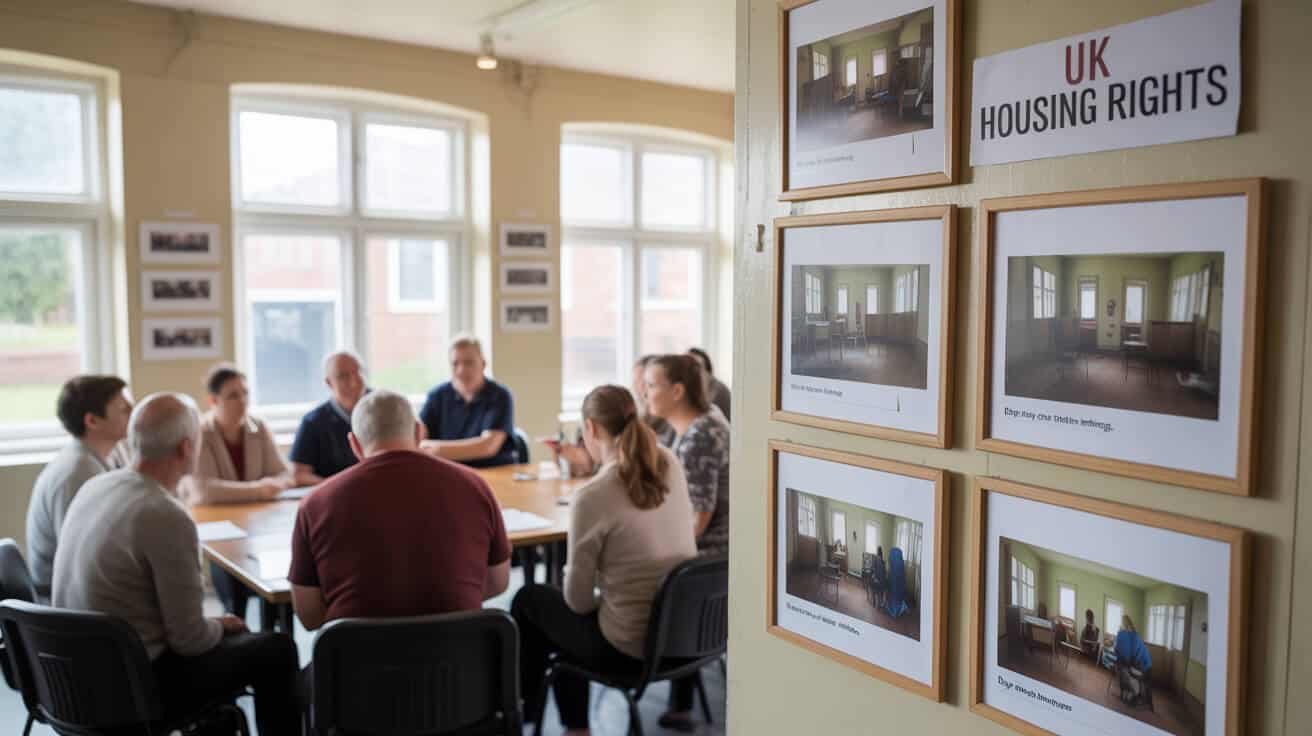
2. Map dutyholders and regulators so accountability is unambiguous
![[ALTTOKEN]](https://allservices4u.co.uk/app/uploads/2026/01/03-Regulator-Building-Safety-Act-Risk-Management-HRB-RSH-Golden-Thread.jpg)
You cannot build a credible system until you know exactly who is answerable to whom, for what, and with what proof.
If you are a registered provider, you are now answering to at least two regulatory lenses: the Building Safety Regulator for HRBs and consumer standards from the Regulator of Social Housing. You reduce duplication and blind spots when you map where these overlap: governance, health and safety, asset data, resident engagement, complaints, and assurance.
When you do this, you can design one coherent framework: a single set of controls and evidence that supports both the Safety Case and consumer regulation, rather than parallel programmes that drain time and still leave gaps.
Turn named AP/PAP roles into practical responsibilities
You then make Accountable Person and Principal Accountable Person designations concrete. That means setting out, in writing, who signs which assessments, who owns which data, who manages which actions, and who is challenged when something slips.
You map these responsibilities across in‑house teams, managing agents, and contractors. Where multiple APs share a building, you agree interfaces and escalation routes so that when a control fails, one person is clearly responsible for the output and the evidence.
3. Build a risk and assurance model that will survive challenge
A list of risks is not enough; you need a simple model that links hazards, controls, evidence, and review in a way you can defend.
From risk register to control framework
You choose a risk framework that your teams and board can understand, then anchor it to your buildings. For each building safety risk, you define the controls you rely on, who owns them, how often they should operate, and what they should leave behind as evidence.
This produces a control matrix: one row per control, with columns for purpose, frequency, owner, and proof. It becomes the backbone for your Safety Case and internal audit and stops board reports drifting into abstract scoring with no line of sight to what actually happens on site.
Design evidence that is testable and repeatable
You also define what a “good” evidence object looks like. A fire door inspection might need door IDs, dates, inspector competence, findings, photos, and sign‑off. An electrical inspection might require a current report, coded observations, and proof of remedial work.
You set decision‑log standards as well: every acceptance of residual risk records the assumptions, rationale, and next review date. If you are challenged later, you can show not only what decision you took, but why you believed it was reasonable at the time.
Accreditations & Certifications








4. Golden Thread information architecture: small, strong, and maintainable
![[ALTTOKEN]](https://allservices4u.co.uk/app/uploads/2026/01/04-Regulator-Building-Safety-Act-Risk-Management-HRB-RSH-Golden-Thread.jpg)
You do not need every possible document on day one; you need a reliable minimum that you can keep current without burning your teams out.
Define a minimum viable dataset that supports safe decisions
You identify the smallest set of information that allows you to understand each HRB and manage its building safety risks. Typically this includes a building description, key design and as‑built information for structure and fire strategy, critical systems and assets, inspection and test records, and key decisions and changes.
You agree mandatory data fields and identifiers so every critical item can be uniquely referenced. That might include building IDs, system IDs, asset IDs, drawing references, and document revision numbers. This turns your Golden Thread from a pile of PDFs into a navigable dataset.
Keep information current without drowning teams in admin
To keep this dataset live, you design simple workflows and triggers. Completion of certain works updates asset data; closing a high‑risk fire risk assessment action triggers an update to the Safety Case; starting a refurbishment prompts a change‑control review and document update.
You agree document‑control rules: who can approve, how version history is kept, how superseded documents are archived, and how access is granted. With these rules in place, frontline teams can attach evidence once, in the right place, rather than emailing versions around or saving locally.
If you want help defining a realistic minimum dataset and the workflows around it, you can ask for a short Golden Thread scoping session focused on one pilot building.
5. Safety Case delivery as an operating system, not a one‑off report
You need a Safety Case you can update and defend, not a static document that starts ageing the day it is signed.
Structure the Safety Case for ongoing maintenance
You structure your Safety Case around a handful of clear questions: what can go wrong, what prevents it, how you know those controls work, and how you will keep that position under review. Each answer points to live evidence in your Golden Thread, not to a stand‑alone annex that nobody touches.
You set review triggers: periodic reviews, plus event‑based reviews for material changes, major incidents, or new information. This makes the Safety Case a living assurance model that evolves alongside the building rather than a one‑time exercise that quickly goes out of date.
Embed control operation into day‑to‑day work
You then embed control operation into everyday processes. Fire door inspections, alarm and emergency lighting testing, water hygiene tasks, structural inspections, and resident engagement activities all feed the same evidence spine.
Each control has a named owner responsible for the output, even if contractors carry out the work. Contracts and scopes specify competence requirements, evidence formats, and acceptance criteria so that when you rely on a contractor’s work in your Safety Case, you can show why that reliance is reasonable.
6. Mandatory occurrence reporting and learning loops you can evidence
You reduce enforcement risk and improve safety when incidents drive learning and change, not just logs that disappear into a system.
Set clear thresholds, triage and escalation
You define what counts as a safety occurrence that must be reported, and what should still enter your internal learning system even if it sits below the formal threshold. You set simple decision rules for staff: what they must report, how quickly, what information is needed, and who will review it.
You design a triage process that separates immediate containment, investigation, and escalation. Serious issues move quickly to the right senior decision‑makers; lower‑level patterns feed into your risk register and control design so that repeat issues are treated as signals, not noise.
Turn occurrences into actions, follow‑up and assurance
You ensure every occurrence leads either to a documented “no further action” decision, with reasons, or to corrective actions with owners and dates. Those actions are followed through to completion and, where appropriate, include effectiveness checks.
If an alarm fault in one higher‑risk building repeatedly appears as a near miss, you log each instance, assign a named owner, and agree a fix‑by date. When the underlying cause is removed and the recurrence stops, you can show exactly how the issue moved from first report through action to closure.
You report learning and themes to residents and to your board in a proportionate way, so both can see that safety concerns are heard and acted on.
7. Implementation plan: phased delivery, tooling choices and audit‑ready dashboards
You move faster and with less disruption when you treat this as phased operating‑model change, not a single “buy a system and hope” project.
Choose a tooling approach that supports auditability, not just features
You review your current tools first: document stores, CAFM or asset systems, risk registers, and incident systems. You then decide whether to extend these or add a light workflow layer. The key tests are simple: whether you can control approvals and permissions, see who changed what and when, and export meaningful evidence packs without manual reconstruction.
You phase delivery as “pilot buildings first, portfolio later”. A small set of HRBs becomes your proving ground for the Safety Case structure, Golden Thread dataset, occurrence reporting workflow, and dashboards. Lessons from those pilots then shape a realistic roadmap for the rest of your stock.
Build dashboards that track coverage, currency and closure
You design dashboards around a handful of meaningful metrics: coverage of critical controls, currency of key inspections and certificates, closure of high‑risk actions, quality of evidence, and timeliness of occurrence triage and learning. Each metric links back to underlying records you can open and test.
You align those dashboards to the questions your board, insurers, lenders, and regulators actually ask. Dashboards then become assurance tools rather than coloured charts.
Reliable Property Maintenance You Can Trust
From routine upkeep to urgent repairs, our certified team delivers dependable property maintenance services 24/7 across the UK. Fast response, skilled professionals, and fully insured support to keep your property running smoothly.

Book Your Free Consultation With All Services 4U Today
![[ALTTOKEN]](https://allservices4u.co.uk/app/uploads/2026/01/02-Regulator-Building-Safety-Act-Risk-Management-HRB-RSH-Golden-Thread.png)
You do not have to design this entire operating model alone; you can bring in focused support to accelerate the hard parts. In a short consultation, you can walk through your current position, your deadlines, and your appetite for change, and leave with a practical view of what is realistic in the next 30–90 days.
During that conversation, you can clarify which buildings are in scope, who should sit where in the AP/PAP structure, which evidence sets matter most for your regulators and other stakeholders, and where your existing systems help or hinder. All Services 4U can then propose a light‑touch diagnostic on one or two HRBs, producing a gap map, a prioritised control and evidence plan, and an outline of the Safety Case and Golden Thread structure.
If you want board‑level confidence that you can withstand regulator scrutiny, answer insurer and lender queries without scramble, and show residents that you are managing their building safety risks transparently, this is the moment to act.
Book your free consultation with All Services 4U and set a clear, achievable course to a regulator‑ready risk management system for your higher‑risk buildings.
Frequently Asked Questions
Explore our FAQs to find answers to planned preventative maintenance questions you may have.
How do I know, beyond doubt, whether a building is an HRB under the Building Safety Act 2022?
A building is in scope when it clearly meets the higher‑risk thresholds and you can show exactly how you reached that call. In practice, you check the Building Safety Act 2022 and Higher‑Risk Buildings (Descriptions and Supplementary Provisions) Regulations 2023 against each block: height in metres, number of stories, number of residential units, and any care or institutional elements. Then you write a short, plain‑English note in your asset register for every candidate building: “in scope”, “out of scope” or “borderline – legal view required”.
You do not want to improvise that answer in front of the Building Safety Regulator or a lender. One named person in your organisation owns the HRB classification, signs off the note, and is visible in your records. Where the building is clearly over 18 metres or seven stories with at least two residential units, you mark it “HRB – in scope” and record the Accountable Person and, where relevant, Principal Accountable Person. If it is complicated – mixed use, student, care or unusual layouts – you deliberately park it as “needs legal view” instead of guessing.
If you want to be the director who never has to bluff when someone asks, “Why is this block on your HRB list?”, now is the moment to make that HRB register real rather than theoretical.
What practical tests should I apply when the classification isn’t obvious?
When you are on the fence, you treat the HRB call like any other defensible risk decision. Someone in your team verifies a small, repeatable set of facts:
- Overall height in metres and how it was measured.
- Number of stories as defined in the regulations.
- Number and type of residential units.
- Any “institutional” or “specialised housing” use.
- Interfaces with commercial, education or healthcare uses.
They log those facts, apply the statutory definition, and document why they have made an “in”, “out” or “needs advice” decision. That note sits against the building in your asset register with the date and approver. If the Building Safety Regulator, the Regulator of Social Housing, an insurer or a valuer later challenges you, you are walking them through a clear chain of logic, not a shrug.
All Services 4U can help you build that once across your stock – one simple HRB scope checklist, one pattern of wording, one place in your register – so any senior person in your organisation can stand up in a BSR meeting and talk confidently about which buildings are in regime and why.
How do I stop this turning into a one‑off spreadsheet that nobody trusts?
You make “Is this an HRB?” a standard question at the places where buildings change, not a side project. New building coming into management? Major project that changes height, stories or use? Acquisition or disposal? Each workflow includes “HRB scope check completed?” with a mandatory note and an approver.
Over time, that classification becomes just another part of your property maintenance and compliance data, not a heroic exercise you repeat every time a regulator or lender gets in touch. If you want your board to see you as the person who has quietly sorted the HRB question once and for all, a clean register and a simple process are worth more than any number of slide decks.
What does a “regulator‑ready” HRB Safety Case feel like in everyday operations?
A regulator‑ready HRB Safety Case is a live picture of your serious risks and controls, not a one‑off consultancy report. For each major hazard in a higher‑risk building – fire, structure, smoke spread, loss of power, water contamination – it should answer four plain questions: what can go wrong, which control manages it, who owns that control, and how you know it is actually working. Those answers are backed by real evidence: current fire risk assessment actions, fire door and compartmentation surveys, BS 5839 fire alarm records, BS 5266 emergency lighting tests, ACoP L8 water hygiene logs, structural reports and resident feedback.
Day to day, your team should not have to “switch into Safety Case mode”. When they complete a high‑risk FRA action or update a fire door programme, that output updates the relevant control in the Safety Case view. When they record an occurrence – a false alarm, a fire door failure, a loss of water – it lands in the same framework and shows which control was weak.
If you want to be seen by your board and the Building Safety Regulator as the accountable person who can walk an HRB in 60 seconds rather than 60 minutes, the Safety Case has to be something your people feel they are running every week, not something you only reach for when the BSR sends a letter.
How should my team experience the Safety Case in real time?
The clearest test is whether frontline staff recognise themselves in the Safety Case. A fire door contractor, a maintenance coordinator or a building safety manager should be able to open the view for one HRB and see:
- A small number of named hazards with controls they actually deliver.
- Current status for each control – green, amber, red – with dates and owners.
- Obvious links into the underlying evidence they already use.
They should not be re‑keying information into a bespoke Safety Case spreadsheet at month‑end. Instead, completion of an FRA action, a BS 5839 engineer visit, an ACoP L8 temperature run or an occurrence review becomes the last step in their existing workflow: a short, structured update to control status. That is how you keep the Safety Case current without adding another layer of admin.
All Services 4U often starts by overlaying a simple control matrix on your current property maintenance activity: one row per hazard, one column per control, and one evidence link per cell. The Safety Case grows out of that reality, rather than asking your people to live inside a document nobody has time to maintain.
How do I avoid ending up with a “paper Safety Case” that crumbles under pressure?
You avoid a paper Safety Case by refusing to let it sit apart from your Golden Thread information, your CAFM, your logbooks and your contractor reports. When the Building Safety Regulator, an internal audit committee or a valuers’ panel asks a hard question about a particular HRB, you want to share:
- The live Safety Case summary for that building.
- The specific control and evidence they are interested in.
- The occurrence history and improvement actions behind it.
Because everything is tied back to the same evidence and roles your teams already work with, you are not assembling heroic packs each time. If you want to be the accountable person who never has to say “we’ll get back to you in a few weeks with the paperwork”, building a Safety Case that lives off your day‑to‑day controls is the only sustainable route.
What belongs in a minimum viable Golden Thread of information for a higher‑risk building?
A useful Golden Thread for an HRB is a lean, reliable dataset that makes decisions safer and faster, then expands carefully. At minimum, it should cover: a dependable building description, key fire and structural design intent, “as built” and “as altered” records for critical features, a register of life‑safety systems, up‑to‑date inspection and testing records, open high‑risk actions with status, and a log of major changes and decisions tied to named people.
Golden Thread information is not about hoarding every drawing and email you can find. It is about making sure that, when someone has to decide whether a fire door can be altered, a cladding detail is acceptable, or a plant replacement affects evacuation strategy, they can find a single, trusted record of how the building is supposed to perform and what is currently in place.
If you want your organisation to be known as the team that can answer awkward technical questions calmly and quickly, a clear Golden Thread does more for your reputation than any number of policy statements.
How can I tell if our Golden Thread is genuinely usable, not just a label?
Two quick checks will usually give you the answer.
First, pick a realistic question: “How is this HRB meant to behave in a fire?” or “What is the current state of the smoke control system?” or “Where are the highest‑risk FRA actions?” If your team can get to one authoritative record within a few clicks – with an owner, status, version and timestamp – your Golden Thread is working. If they are diving between old email trails, shared drives and contractor portals every time, it is still a concept.
Second, ask whether you can slice the same dataset in different ways without hand‑building new spreadsheets. Can you see “all HRBs with overdue high‑risk FRA actions”, “all HRBs with fire door surveys older than the agreed interval”, or “all HRBs where structural reports are due within six months” from the same information? If not, the “minimum viable” piece needs tightening before you scale it.
All Services 4U often helps clients define that minimum once, then align their property maintenance and compliance activity to feed it automatically, so the Golden Thread becomes a by‑product of doing the right work, not a new burden.
How do we keep Golden Thread information current without drowning teams in updates?
The trick is to make Golden Thread updates the natural end of work people are already doing, not a separate project. Completion of a fire risk assessment, commissioning of a replacement riser, sign‑off of a significant façade change, closure of a high‑risk damp and mould case in a high‑rise – each of these should drive a very small, structured update:
- One record ID.
- One or two fields changed (status, date, owner).
- One attachment or link to evidence.
You can standardise that pattern with simple naming rules, basic version control and template forms. All Services 4U’s role is usually to design those patterns and plug them into your existing CAFM, document stores and contractor feeds, so your people touch each Golden Thread record once, correctly, and move on. If you want to be the accountable person who can honestly say “our Golden Thread is always within a few days of reality”, this kind of light‑touch discipline is what gets you there.
How should we join up Building Safety Act HRB duties with Regulator of Social Housing consumer standards?
For a registered provider, the Building Safety Act regime and the Regulator of Social Housing consumer standards are two ways of looking at the same thing: whether your homes are safe, decent, well‑managed and evidenced. The Building Safety Act 2022 and associated HRB regulations focus on higher‑risk buildings, accountable persons, HRB Safety Cases and Golden Thread information. The RSH Safety and Quality Standard, and wider consumer standards, cut across your whole stock and care about core health and safety, fitness under the Homes (Fitness for Human Habitation) Act 2018, repair performance, complaints and how you assure your board.
In practice, you do not want a “BSA project team” and an “RSH compliance project team” fighting for the same data. You want one set of risk categories – fire, gas, electrical, water hygiene, asbestos, structure, damp and mould – with controls, cadence, owners and evidence mapped once across the portfolio. Your HRBs then sit inside that framework with extra layers for Safety Case, Golden Thread and accountable person duties; your general needs stock still shows the same risks and controls at a proportionate level.
If you want your board, RSH and the Building Safety Regulator to see you as a coherent organisation rather than a set of disconnected initiatives, a single combined control framework is the clearest signal you can send.
What does a single control framework that satisfies both regimes actually look like?
A workable combined framework usually has four moving parts:
- A short list of risk headings everyone recognises.
- One or two named controls for each risk (for example, FRA and fire door inspection for fire; EICR and visual checks for electrics).
- A cadence and owner for each control, visible in your property maintenance plans.
- A clear link to evidence: certificates, logs, survey reports, complaint records and board papers.
For HRBs, you then tag which controls and pieces of evidence form part of the HRB Safety Case and Golden Thread. For non‑HRBs, you still run the same underlying duties (for example, FRAs, gas safety, EICR, L8), but you are not building full Safety Cases. Board reports, RSH assurance statements and BSR interactions all draw from the same registers and dashboards; you are changing how you explain the system, not the system itself.
All Services 4U can help you define that framework once, classify each property correctly, and plug your existing CAFM, logbooks and contractor outputs into it, so you are not maintaining parallel worlds.
What extra evidence shifts you from “just compliant” to confident under both Building Safety and RSH regimes?
Most providers already hold much of what both regulators expect; the gap is in organisation, currency and ownership rather than volume. Common elements that make the biggest difference include:
- Current FRAs with visible action closure for higher‑risk items.
- Fire alarm and emergency lighting records clearly aligned to BS 5839 and BS 5266.
- EICR and CP12 certificates in date, with remedials tracked to closure.
- ACoP L8‑compliant water hygiene records and legionella risk assessments.
- Current asbestos registers and plans of work where relevant.
- Repair and damp and mould logs that show response and learning, not just open tickets.
- Board assurance papers and RSH self‑assessments that clearly point back to this evidence.
The difference between a nervous conversation and a calm one is often that each item is tagged to a building, a risk and an owner, and you can show closure ages and currency at a glance. If you want to be seen as the provider that has joined Building Safety Act and RSH expectations into one visible system, not the one that discovers gaps mid‑inspection, this is where to focus.
Which HRB controls move the needle fastest with regulators, insurers and lenders?
The quickest trust gains on higher‑risk buildings usually come from a small group of life‑safety and statutory controls that external parties ask for first. For most HRBs, that short list includes: high‑risk FRA actions closed on time with proof, fire doors and compartmentation in good repair with inspection and remedial records, BS 5839 fire alarm tests current, BS 5266 emergency lighting tests current, EICR and gas safety certificates in date with remedials tracked, and ACoP L8 water hygiene regimes in place and evidenced.
From an underwriter or valuer’s point of view, these items are the fastest way to decide whether they are dealing with a building that is broadly under control or one where avoidable risk is building up. For the Building Safety Regulator, they are a simple test of whether your Safety Case reflects reality. From your board’s point of view, they are where the criminal, civil and reputational exposure starts.
If you want conversations with regulators, insurers and lenders to feel like adult discussions about risk and price, not interventions, making this short list visibly strong for each HRB is usually the best early move.
How can I surface these controls so difficult conversations cool down quickly?
The aim is to be able to answer three questions inside a minute for any HRB:
- Are the core certificates and logs in date?
- Are there any overdue high‑risk actions on fire, structure or damp and mould?
- Can we open the underlying evidence right now?
That means designing a simple HRB view – often a single screen per building – that shows coverage, currency, closure and evidence quality in one place. From there, your team can click straight into the FRA, the fire door survey, the alarm and EL logs, the EICR, the CP12 or the L8 records without leaving the view.
You do not need elaborate dashboards that look impressive but do not connect to real files. All Services 4U typically helps clients build the leanest possible control view that holds up in front of the regulator, an insurer’s surveyor or a lender’s consultant. When your maintenance coordinator can share that view live on a call and walk through the evidence calmly, it changes the temperature of the discussion very quickly.
How do we show underwriters and valuers that risk is genuinely improving over time?
You track improvements against that same control set and make the storey very easy to follow. A simple risk‑improvement log for HRBs might show, for each building:
- The position six or twelve months ago (for example, four overdue high‑risk FRA actions, expired EICR, missing L8 logs).
- The actions you took (remedials, programme changes, contract changes).
- The position now, supported by updated evidence.
When you can show that pattern across a group of higher‑risk buildings, insurers and lenders have a concrete reason to argue internally for better terms, and your board has a clear storey about how you are de‑risking the portfolio, not just firefighting the latest issue.
If you want your organisation to be recognised as the one that quietly reduces risk and cost over time rather than the one that only reacts when a renewal or rating is at stake, investing a little discipline in that log pays back quickly.
How can a provider like All Services 4U help us stand this HRB model up without derailing day‑to‑day work?
A useful partner does not try to drop a new platform on top of your existing world; they help you turn your current tools and routines into something the Building Safety Regulator, insurers and lenders can understand and trust. In practice, that usually means starting with one or two important HRBs and a short, focused diagnostic that respects your live workload.
You pick a building that matters – because of height, exposure, financing or politics – and pull the evidence you already hold: HRB scope notes, FRA and action trackers, fire door surveys, alarm and emergency lighting logs, EICR, CP12, L8 and asbestos information, structural reports, occurrence records, resident communications and board papers. Together we map roles (Accountable Person, Principal Accountable Person, Building Safety Manager) and controls, sketch what your Safety Case and Golden Thread should look like for that building, and identify where your existing property maintenance and compliance activity already supports that picture – and where it doesn’t yet.
If you want to be seen internally as the person who can turn a messy pile of documents into a regulator‑ready model without breaking operations, that kind of targeted pilot is the safest way to prove it.
What does a low‑disruption engagement with All Services 4U typically look like?
Most HRB engagements fall into a 30–90 day pattern anchored on real buildings:
- Week one: confirm HRB scope, map roles, gather what you already have.
- Weeks two to four: design the control matrix, define evidence standards, agree the minimum Golden Thread dataset and occurrence reporting loop.
- Remaining weeks: close the most important gaps, standardise how evidence flows from contractors and CAFM into the binder, build a simple HRB view and run internal walk‑throughs with the people who will use it.
The whole point is to use your existing CAFM, document stores, logbooks and contractor portals wherever possible. All Services 4U brings the patterns, the discipline and the extra hands to arrange them; you keep the tools and the people you trust.
What is the smartest first move if we are under real time pressure from the BSR, an insurer or a lender?
If you can see a BSR interaction, an insurance renewal, a refinance or a tough board session on the calendar, the most efficient first step is usually a readiness review on one flagship HRB. You use that building to stress‑test:
- HRB classification and roles under the Building Safety Act 2022.
- The quality of your risk controls and evidence against the short list that external parties care most about.
- Your Golden Thread information and Safety Case view.
- How easily your team can navigate and explain the model in front of a sceptical audience.
By the end of that review, you know exactly where you are thin, what can be stabilised in weeks, and what needs a longer programme. You also have a concrete example you can put in front of your board, the regulator, an underwriter or a valuer as a marker of how you intend to run all higher‑risk buildings.
If you want your organisation to be known as the one that quietly gets Building Safety Act duties right – while keeping property maintenance, residents and finance on track – rather than the one that scrambles whenever a new letter lands, taking that first, tightly scoped step with support from All Services 4U is usually the cleanest way to start.
- Building Safety Act risk control for higher‑risk buildings
- Regulator‑ready risk management for your higher‑risk buildings
- 1. Start with plain‑English scope: what is in scope and what “good” looks like
- 2. Map dutyholders and regulators so accountability is unambiguous
- 3. Build a risk and assurance model that will survive challenge
- 4. Golden Thread information architecture: small, strong, and maintainable
- 5. Safety Case delivery as an operating system, not a one‑off report
- 6. Mandatory occurrence reporting and learning loops you can evidence
- 7. Implementation plan: phased delivery, tooling choices and audit‑ready dashboards
- Book Your Free Consultation With All Services 4U Today
- Frequently Asked Questions
- Related PPM Services
Related PPM Services
- Risk Management
- How to Prevent Insurance Claim Repudiation
- Damp Mould Risk
- Electrical Risk
- Fire Safety Risk Management
- Gas Safety Risk Management
- Insurance Risk
- Lender Risk
- PPM Strategies That Reduce Insurance Premiums
- Resident Complaint & Ombudsman Risk Management
- Free Property Risk Heatmap Template
- Structural Risk
- Tribunal Defence Evidence Packs
Case Studies


Related Articles

Your Guide To Identifying And Treating Minor Mould Outbreaks
Why Planned Preventative Maintenance (Ppm) Saves Money And Ensures Compliance