Resident Complaint & Ombudsman Risk Management – Closure Logs & Comms
Housing associations, councils, managing agents and complaint teams need complaint closure that stands up to Ombudsman scrutiny, not just cases marked complete. This approach shows how to build defensible closure logs, align repairs evidence and tighten resident communications, based on your situation. By the end, you will know what a complete closure record looks like, how it links to governance and assurance, and where your current files are exposed. It’s a practical way to reduce escalation risk and move towards cleaner, more confident decisions.



Author
Izzy Schulman

For social landlords and managing agents, a complaint is not truly closed when the status changes in your system. It is only closed when the file can clearly show what happened, why you decided as you did, and what you told the resident.

Since the Housing Ombudsman Complaint Handling Code became statutory, thin records and vague updates now carry direct escalation and reputational risk. This page sets out how stronger closure logs, clearer repair timelines and aligned resident communications can turn that pressure into a practical, repeatable standard.
- Reduce Ombudsman escalation risk with clearer closure evidence
- Show fair, timely handling across complex repair journeys
- Link complaint closure quality to governance and assurance</p>
Need Help Fast?
Locked out, leak at home, or electrical issue? All Services 4 U provides 24/7 UK locksmith, plumbing, electrical.
Testimonial & Clients Who Trust Us
With 5 Star Google Reviews, Trusted Trader, Trust Pilot endorsements, and 25+ years of experience, we set industry standards for excellence. From Dominoes to Mears Group, our expertise is trusted by diverse sectors, earning us long-term partnerships and glowing testimonials.
Worcester Boilers

Glow Worm Boilers

Valliant Boilers

Baxi Boilers

Ideal Boilers

What Complaint Closure Means in Housing Ombudsman Terms
You reduce Ombudsman risk when complaint closure is treated as a reasoned decision, not a status change.
In repairs and housing management, closure is not just the moment a case leaves your system. It is the point where your record has to prove what happened, what you decided, why you decided it, and what you told the resident. Since the Housing Ombudsman Complaint Handling Code became statutory in April 2024, that standard matters even more for housing associations, councils, managing agents, RTMs, and complaint teams working around repairs.
If your closure file is strong, an independent reviewer can follow the case without guessing. If your closure file is weak, even a reasonable outcome can look careless, delayed, or unfair. That is why closure quality now sits closer to governance, assurance, and risk control than to admin tidy‑up.
All Services 4U helps you turn that pressure into a practical operating standard. We review how your complaint closure, repairs evidence, and resident communications work together, then show you where your risk is rising and how to close it cleanly.
Request a focused review of your current closure approach and see where your files would struggle under scrutiny.
Why Closure Records and Resident Communications Drive Escalation Risk
You create avoidable escalation when your records are thin and your residents are left chasing for clarity.
Residents do not experience your service through internal intentions. They experience it through attendance, updates, explanations, delays, outcomes, and what happens when something goes wrong. When communication is vague, late, or inconsistent, a repair complaint can escalate even if work has eventually been done.
Where repair complaints unravel
Repairs cases are especially exposed because they often involve several moving parts: contact centre notes, contractor attendance, surveyor decisions, access failures, follow‑on works, and complaint responses written later. If those pieces do not form one clear timeline, your file starts to drift.
That drift usually shows up in familiar ways. A resident says no one explained the delay. A contractor says access was not provided. A manager says the repair was completed. The complaint file says very little about any of it. At that point, the argument is no longer just about the repair. It is about whether your handling looked fair, timely, and organised.
Why communication failures become complaint failures
A resident who feels informed is more likely to accept delay when the reason is clear and the next step is real. A resident who feels ignored is more likely to escalate, reopen, or dispute the outcome. That is why written acknowledgements, updates, and closure notes are not a courtesy layer sitting outside the complaint. They are part of the evidence that complaint handling was reasonable.
If you want fewer reopens and fewer escalations, your records and messages have to say the same thing at the same time.
What a Defensible Closure Log Must Contain
You need a closure log that shows the whole complaint journey, not just the closing status.
A defensible closure log can sit inside your case‑management system or in a structured reporting layer. The format matters less than the discipline. What matters is whether another manager, director, auditor, Ombudsman reviewer, or legal adviser can reconstruct the case without relying on memory.
Core case identifiers
Your closure log should anchor the case clearly from the start.
- Complaint reference
- Resident and property reference
- Issues in scope
- Stage of complaint
- Responsible owner
These fields stop files from drifting into generic summaries that miss what the resident actually raised.
Chronology, evidence, and decision logic
Your closure log should show the path from report to outcome in a way that makes sense.
- Date received and acknowledged
- Repair and appointment timeline
- Evidence reviewed
- Key decisions and reasons
- Contact attempts and updates
This is the section that proves whether your handling stayed reasonable as the case changed. It also protects you from the weak but common defence of “we dealt with it somewhere else”.
Outcome, remedy, and learning
Closure is only defensible when the file shows not just the decision, but what followed from it.
- Outcome on each issue
- Remedy offered or completed
- Outstanding actions and owners
- Resident notified of outcome
- Lessons learned recorded
Once those fields exist and are used consistently, your closure log becomes more than a case note. It becomes a live control for assurance, reporting, and service improvement.
What a Closure Letter or Email Must Include
You make fairness visible when your written responses show scope, reasons, remedy, and next steps in plain language.
A strong closure letter or email does two jobs at once. It explains the outcome to the resident clearly, and it supports your file if the case is later reviewed. If either job fails, the risk goes up.
Acknowledgement and scope
Your first written response should confirm that you have recognised the complaint, understood the issues, and set a clear route for investigation. That means restating the complaint in plain terms, naming the issues in scope, giving a realistic timescale, and telling the resident who owns the case.
A vague acknowledgement makes every later message harder to defend because the resident can say, with some force, that you never properly defined what you were looking into.
Holding updates and delay explanations
Where timescales move, your updates should say what has happened, why the delay exists, and what happens next. That sounds simple, but it is where many complaint journeys start to fail. “We are still investigating” is not useful if the resident has no idea whether you are waiting on a contractor, checking records, booking access, or deciding on a remedy.
Good updates reduce heat because they replace uncertainty with sequence. They also protect your team later because they show that delay was managed, not ignored.
Final response and escalation route
Your final response should summarise the complaint, identify the evidence you reviewed, explain the decision on each issue, set out any remedy, and make the resident’s next route clear if they remain unhappy. It should also distinguish what is finished, what is still outstanding, and what sits outside the complaint.
When that structure is missing, the closure note might satisfy your system, but the resident is still left with unanswered questions. That is where avoidable escalation begins.
Common Closure Failures Seen in Ombudsman Reviews

You weaken otherwise defensible cases when your file cannot prove contact, chronology, reasoning, or remedy.
Most complaint closures do not fail because one dramatic fact is missing. They fail because several small evidence gaps combine into one weak story. By the time the case is reviewed, nobody can show clearly what happened and why the resident was told the matter was closed.
Missing contact trails
If the file does not show when you acknowledged the complaint, who updated the resident, what was said, and when timescales changed, you lose the ability to prove that the resident was kept informed. Internally, that often looks minor. Externally, it can look dismissive.
Weak closure rationale
A file that says “job complete” or “policy followed” without showing how you reached that view invites criticism. You need a short, clear rationale tied to the facts you reviewed. Without that, your response looks like assertion rather than decision‑making.
No proof that the remedy landed
If you offer an apology, inspection, compensation payment, follow‑on work, or service change, your file should show whether it happened. Closure without proof of remedy completion creates a second risk: you can be criticised not only for the original failure, but also for closing the complaint too early.
Once you start reviewing closed files through those three lenses, your biggest risk areas become much easier to see.
How to Build QA Checks, Ownership, and Handoffs Without Overbuilding the Process

You strengthen complaint closure fastest when you tighten ownership and review points before you redesign systems.
Many teams assume the answer is a bigger platform or a full complaint‑process rebuild. Sometimes that is right. Often it is not the first move. In many organisations, the quickest win comes from setting a firmer quality threshold at the point of closure.
Pre‑closure quality checks
A simple check before closure can catch most avoidable weaknesses. For higher‑risk cases, your reviewer should be able to confirm that the chronology is clear, the communications match the file, the reasoning is visible, and any remedy has been allocated or completed.
That can be a supervisor check, peer review, or risk‑based sample. It does not need to slow every file down.
Ownership across repairs and complaints
The biggest handoff risk sits between repairs records and complaint responses. If your repairs notes, contractor updates, and complaint letters do not align, your closure quality collapses. You need one named owner for the complaint outcome, even where several parties contribute evidence.
That owner does not have to do everything. But they do need authority to stop weak files being closed.
Assurance that leadership can trust
Your board, compliance lead, or managing director does not need more volume reporting alone. They need to know whether closed files are actually review‑ready. That means reporting on evidence completeness, closure rationale quality, remedy completion, and repeated failure themes, not just how many complaints were answered on time.
If you recognise gaps here, this is often the right point to bring in an external review before those gaps become formal criticism.
Book a practical diagnostic if you want your closure standard tested against real case files, not assumptions.
Accreditations & Certifications








Sample Implementation Priorities for Repairs, Complaints, and Governance Teams
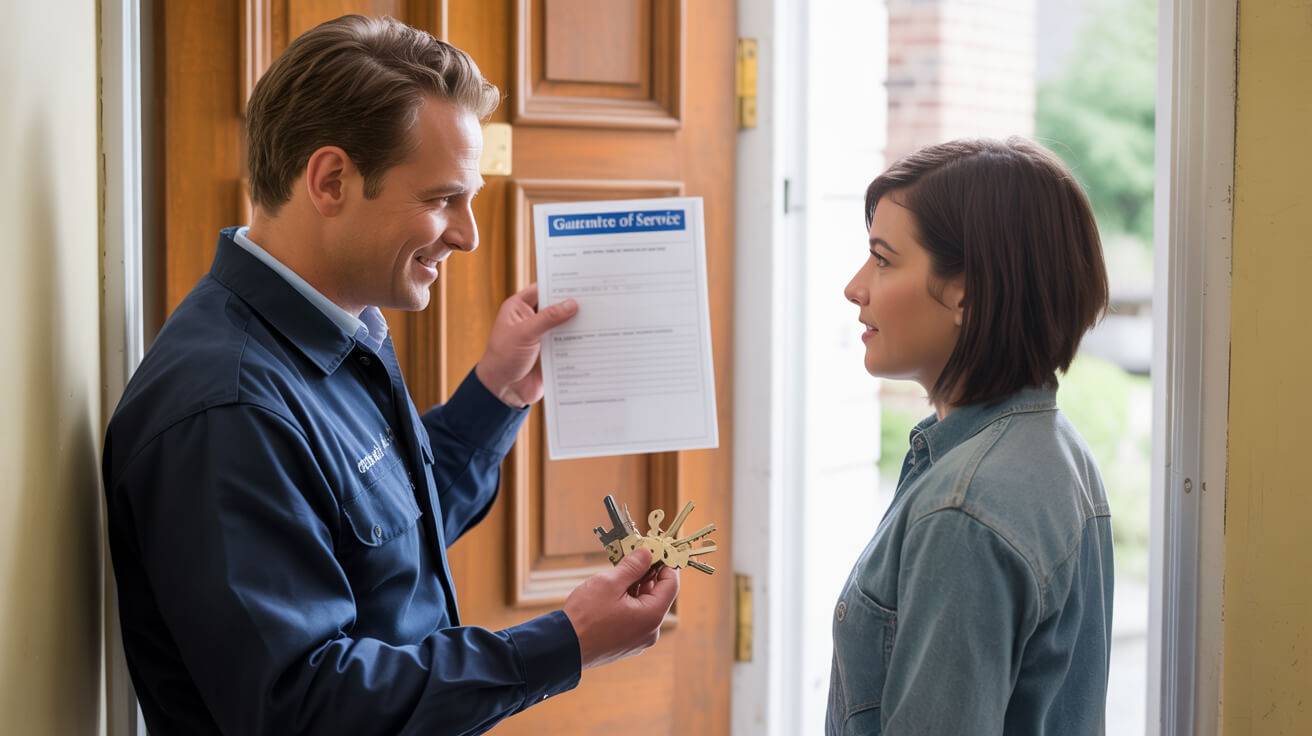
You can raise closure quality quickly by focusing first on fields, wording, samples, and ownership.
If you want progress without major system change, your first phase should be disciplined and narrow. The goal is not to create a perfect framework on day one. The goal is to stop weak closures leaving your organisation.
First 30 days
Start with the essentials.
- Define minimum closure fields
- Tighten acknowledgement wording
- Standardise holding updates
- Add closure rationale prompts
- Sample recent high‑risk files
This gives you a baseline and shows where the biggest gaps sit today.
Next 60 days
Then connect repairs evidence to complaint handling more reliably.
- Align repairs close‑out notes
- Map contractor handoff points
- Add pre‑closure QA checks
- Record remedy completion clearly
- Standardise learning capture
This is where your files start to become genuinely review‑ready rather than merely complete.
What “done” looks like
You know the first phase has worked when your closed files tell one coherent story. A neutral reader can follow the issue, the timeline, the evidence, the decision, the remedy, and the resident communication without asking for extra explanation. That is the standard that reduces escalation and strengthens your position if a case is challenged later.
Reliable Property Maintenance You Can Trust
From routine upkeep to urgent repairs, our certified team delivers dependable property maintenance services 24/7 across the UK. Fast response, skilled professionals, and fully insured support to keep your property running smoothly.

Book Your Free Consultation With All Services 4U Today
You lower risk fastest when you test your real files, real letters, and real handoffs against current complaint‑handling expectations.
If you sampled your recently closed repairs complaints today, would every file show clear scope, coherent chronology, recorded communication, a reasoned decision, and a completed remedy. If not, the safest next step is not more theory. It is a focused review of how your closure process actually performs under pressure.
With All Services 4U, you leave with:
- a documented closure‑log framework
- a resident communications structure your teams can use
- a clear set of next steps for QA, ownership, and reporting
We review a practical sample of your cases, identify where evidence is being lost, and show you how to tighten the journey across repairs, complaints, contractors, and governance. That gives you a proportionate route forward without forcing unnecessary process weight onto frontline teams.
Book your free consultation with All Services 4U today.
Frequently Asked Questions
Why can a completed repair still leave your complaint file exposed?
A completed repair can still leave your complaint file exposed because job completion is not the same as complaint closure.
Your works order may show attendance, labour, and a closed task. That proves somebody carried out a repair step. It does not prove your team closed the resident’s concern in a way that would stand up to scrutiny later. The risk appears when the file cannot show what the resident reported, how the issue changed over time, what delay or inconvenience occurred, what explanation your team gave, and why closure was reasonable at that point.
The Housing Ombudsman Complaint Handling Code pushes the same practical standard: you need a clear record of what happened, what you decided, and why. In property maintenance, that matters because one repair issue often creates a second issue. A leak becomes mould concern. A missed appointment becomes a service complaint. A completed repair becomes a challenge about fairness, delay, or communication.
A closed job can still leave an open wound if your records never explain the ending.
That is where many organisations get caught. Your operative may have done the right work. Your complaint file may still look weak because it does not connect the repair outcome to the resident’s lived complaint.
What should the file prove when you close a complaint?
It should prove issue, action, delay, decision, and communication.
A strong close-out record should show five things in plain terms:
- what the resident raised:
- what repair action took place:
- what delays, handoffs, or failed access affected progress:
- why closure was reasonable:
- what the resident was told at the end:
That is the practical difference between activity and judgement. One shows that work happened. The other shows that your organisation made a fair decision and explained it properly.
For a property manager, RTM director, or housing complaints lead, that distinction is what makes the file easier to defend later. It also gives your board a cleaner line of sight if the case escalates.
When does completed work still fail the complaint test?
Completed work still fails the complaint test when the repair is logged, but the wider complaint remains unexplained.
A familiar example looks like this. A contractor replaces a valve. The repair note is accurate. But the resident had already reported two missed appointments, mould around the leak area, and concern about a child’s bedroom. If the closure record only confirms the valve replacement, your organisation may appear to have closed against the ticket rather than against the complaint.
That is where challenge grows. Not because the operative did nothing, but because the file does not show the organisation considered the whole picture.
This is especially common in damp and mould cases, communal leaks, repeat attendance, and complaints involving several teams. Internally, those threads may sit in different systems. The resident still sees one unresolved problem. If your closure wording does not reflect that reality, stage-two pressure usually follows.
What should your closure wording say instead?
It should say what was resolved, what was not, and what happens next.
Residents escalate less when the final message is specific. A stronger close-out note usually confirms:
- the repair issue that was resolved
- any linked issue that remains open
- the reason closure is being applied now
- the next action, if one still exists
- the date or trigger for follow-up
That kind of wording reduces ambiguity. It also shows respect. A resident can disagree with your decision, but they should not need to guess what your team decided.
For organisations seeing repeat stage-two complaints after technically completed repairs, a short file review will usually show whether closure logic is breaking down at this exact point. That is often the fastest place to improve complaint handling in property maintenance without redesigning the whole process.
What should a review-ready resident complaint closure log contain?
A review-ready resident complaint closure log should contain chronology, decision logic, remedy, ownership, and resident communication in one place.
Many complaint files fail because the information exists in fragments. One detail sits in the repairs system. Another sits in an email chain. Another appears in a contractor update. A final note is added later from memory. That structure is fragile. It slows internal review and weakens external assurance.
A strong log lets another person understand the case without asking the original officer to explain it. That is the test worth using. If the file cannot stand on its own, your closure record is still doing too much work in people’s heads and not enough on the page.
For managing agents, housing providers, RTM boards, and legal reviewers, that matters because complaint risk is often decided by record quality rather than good intentions.
What fields should you standardise first?
You should standardise the fields that let a reviewer understand scope, sequence, evidence, decision, and outcome.
Before the table, one rule helps: every field should answer a real question a reviewer would ask.
| Field | Why it matters | Risk if missing |
|---|---|---|
| Complaint issue summary | Fixes the case scope | Team closes against the wrong issue |
| Key chronology | Shows progress and delay context | Reasonableness is hard to assess |
| Evidence considered | Supports the conclusion | Closure looks unsupported |
| Closure rationale | Explains the decision | “Closed” feels arbitrary |
| Remedy delivered | Confirms action landed | Promises can be disputed |
| Resident communication record | Proves transparency | Resident says nothing was explained |
This is where property maintenance complaint handling either becomes easier or harder. If these fields are standard, your cases are easier to review, sample, and defend. If they are optional, closure quality varies by officer, contractor, and pressure level.
Who should own the closure decision?
One named person should own the closure decision, even if several people worked on the case.
That field is often missed. Teams record who updated the system, not who decided the complaint was ready to close. Those are not always the same thing. When ownership is unclear, accountability becomes blurry. Under challenge, the organisation then shows activity without showing judgement.
For boards, compliance leads, and tribunal advisers, that is a familiar weakness. A strong file should make it obvious who closed the matter and on what basis.
That single field often improves internal discipline more than another policy note does.
What should stay visibly open in the log?
Anything still live should stay visibly open, especially linked issues, promised follow-up, or remedy steps not yet complete.
Residents often read closure language literally. If the repair is closed but mould monitoring, plastering, access arrangement, compensation review, or communal works remain outstanding, the log needs to say so clearly. Otherwise, your team may mean “this part is complete” while the resident hears “everything is finished.”
That mismatch drives avoidable escalation.
A cleaner structure is to separate:
- issue closed now:
- issue still open:
- owner of next step:
- date of next contact:
That approach helps your complaint closure log do what it should do: record the decision without overstating the result.
Why does field design reduce complaint risk so quickly?
It reduces risk quickly because better structure cuts ambiguity before ambiguity turns into challenge.
This is not paperwork for its own sake. A better closure log reduces repeat explanations, internal chasing, and unnecessary stage-two complaints caused by unclear wording rather than service failure. The Complaint Handling Code and wider expectations around accountable records both point in the same direction: your process should be traceable, understandable, and usable.
If your contractor close-out sits in one workflow and your complaint decision sits in another, this is usually the first place to standardise. It is also one of the safest BOFU improvement steps because it strengthens service, governance, and defensibility at the same time.
Why do residents escalate after multiple updates?
Residents escalate after multiple updates because the updates prove contact, but not certainty.
That distinction is easy to miss inside a busy repairs or housing team. Internally, several messages can feel reassuring. Externally, those same messages may feel vague, repetitive, or evasive. Residents do not judge communication by volume. They judge it by whether it answers the next practical question in their mind.
If they still do not know who owns the issue, why it changed, when the next action will happen, or what to expect next, the updates do not reduce pressure. They simply document delay in instalments.
That pattern appears again and again in damp and mould cases, communal leaks, repeat attendance, and complaints where one team handles the repair while another handles the response. Your systems may split those tasks. The resident still experiences one journey.
What are residents usually trying to understand?
They are usually trying to understand what is happening, why it changed, who owns the next step, and when they will hear from you again.
Most escalation pressure sits around four questions:
- What is happening now?:
- Why has this changed or slowed down?:
- Who is responsible for the next action?:
- When will I hear from you again?:
If your message does not answer those points, it may satisfy an internal contact standard while still leaving uncertainty in place.
That is the practical issue. Residents do not chase because they hate updates. They chase because the update did not remove the need to chase.
What kind of wording usually weakens trust?
Wording weakens trust when it sounds active but says very little.
Phrases such as “this is being looked into” or “we are progressing matters” are not rude, but they are thin. They tell the resident that work exists somewhere in the system. They do not tell them what happens next in real life.
A stronger message is usually shorter and more precise. It should state:
- the current position
- the reason for delay, if there is one
- the next action
- the owner of that action
- the date of the next update
That style of communication gives operational certainty. It also gives your file better evidence. If the case later reaches review, your organisation can show that it communicated with clarity rather than simply communicating often.
How can you test whether an update is good enough?
Ask whether the resident could explain the next step to a third party after reading it.
If they cannot, the update is probably too vague.
That test works because it focuses on usefulness rather than effort. Housing Ombudsman expectations around fairness, clarity, and accountability point toward the same discipline. An update should reduce uncertainty. If it does not, it may increase dissatisfaction even while meeting a response target.
This is one of the simplest quality checks your team can apply without changing systems or adding cost.
Why does communication quality change complaint outcomes so quickly?
It changes outcomes quickly because clear updates stop ambiguity turning into distrust.
If your closure letters, complaint notes, and contractor updates all describe the same case in different language, the resident gets mixed signals and the file becomes harder to defend. Tightening those messages often lowers chasing, improves confidence, and gives more weight to the final closure decision.
For teams under pressure, this is one of the few fixes that can improve resident experience and reduce complaint escalation at the same time. If your stage-two cases are rising even where repairs are technically complete, communication quality is one of the first areas worth diagnosing.
Which evidence gaps turn a manageable complaint into a weak file?
The evidence gaps that most often turn a manageable complaint into a weak file are missing chronology, missing rationale, missing contact proof, and missing remedy confirmation.
These are rarely dramatic failures. They are usually small omissions that stop the record making sense. A file can look competent until somebody asks basic questions. When did you tell the resident about the delay? Why did you close at that point? What evidence did you rely on? Did the promised remedy actually happen?
If the answer depends on memory, inbox searches, or calling a contractor after the event, the file is already less reliable than it should be.
This FAQ is not about field design. It is about live-case failure. The form may be sound. The actual case still breaks because key evidence never gets recorded properly.
Where do live complaint files usually break first?
They usually break first at handoffs, phone updates, missed appointments, and partial remedies.
If access was refused, appointments failed, or updates happened by phone, your record needs dated notes. Without them, fair effort can look like silence.
If your conclusion depends on survey findings, contractor reports, photos, policy position, or tenancy context, the file should show what was reviewed. A closure note that says “works completed” does not explain why the complaint issue was considered resolved.
If your team offered compensation, a follow-on inspection, a mould wash, further works, or a service improvement, the file should show completion rather than intention.
That is where scrutiny lands. A manageable case becomes weak when the evidence trail stops just before the important point.
Why do these gaps matter more in housing complaints?
They matter more because housing complaints are rarely about one fact alone.
A resident may raise vulnerability, repeat contact, access difficulty, communal impact, or contractor conduct alongside the repair itself. A missing note in that setting changes how the whole case is understood. The file needs to show not just what the contractor did, but what your organisation knew and decided.
That is why records discipline matters so much in property maintenance. The issue is not administrative neatness. It is whether the organisation can later prove it acted reasonably.
The Information Commissioner’s guidance on records management supports the same principle. Records should be reliable, retrievable, and useful for accountability. In a complaint file, that becomes very practical.
Which warning signs should you look for in a sample-file review?
Look for signs that the decision depends on assumption rather than proof.
A short sample review should test whether closed files contain:
- a dated chronology
- a visible closure rationale
- proof of resident contact at key points
- confirmation that the remedy happened
- a note of anything still open
If those elements are missing, the file may still pass internally because the people involved remember the case. That memory disappears under escalation, audit, staff change, or legal review.
A file should not need verbal reconstruction to make sense.
How can you improve evidence quality without creating more admin?
Improve the capture point, not the paperwork volume.
The safer route is to tighten the exact moments where evidence usually drops out: failed access, phone updates, closure reasoning, and remedy confirmation. That may mean better prompts in the repair system, stronger contractor note requirements, or a short manager review for higher-risk closures.
That approach is usually more reliable than rewriting policy language first. It also gives operational leaders something concrete to fix. If you want a practical next step, reviewing ten recently closed complaints against those four gaps will usually show the pattern quickly.
How can you improve closure quality without slowing frontline teams?
You can improve closure quality without slowing frontline teams by tightening the point of close-out, not by redesigning the whole process.
That is where many organisations go wrong. They respond to weak closure quality by adding more forms, more sign-offs, and more policy wording across the whole workflow. Frontline teams then experience improvement as drag. The result is predictable: uneven use, workarounds, and frustration.
A better route is narrower. Fix the few controls that stop weak files leaving the system. In most property maintenance and complaint environments, that means clearer closure fields, better final wording, a risk-based review rule, and stronger alignment between contractor notes and complaint decisions.
The best complaint process is not the one with the most steps. It is the one people actually follow well.
That is what makes your team look organised under challenge rather than merely busy.
The changes that pay off first are the ones that reduce variation at the moment of closure.
| Stage | Practical move | Likely effect |
|---|---|---|
| First 2 weeks | Standardise closure fields | Less officer-by-officer variation |
| Weeks 2 to 4 | Rewrite update and closure wording | Fewer unclear messages |
| Month 2 | Add pre-closure review for high-risk cases | Better defensibility |
| Month 2 to 3 | Align contractor close-out with complaint evidence | Fewer handoff gaps |
| Month 3 onward | Track closure themes | Better learning and governance |
This kind of sequence works because it starts where the risk is visible. It does not ask your whole operation to change at once.
Which cases should get extra review before closure?
Higher-risk cases should get extra review before closure, not every case.
A lighter process works well when you reserve extra checks for complaints involving:
- damp and mould
- vulnerability or safeguarding factors
- repeated attendance
- communal service failure
- compensation offers
- long delay histories
- dissatisfaction about communication itself
That risk-based approach is easier to run and easier to defend. It also fits better with how complaint and repair teams actually work.
What process mistake slows teams down most?
The mistake that slows teams down most is trying to solve a live workflow problem at policy level first.
If your weak point is closure wording, fix the wording. If contractor notes are too thin, fix the prompts. If cases escalate after technically completed repairs, tighten the closure decision rule. Teams usually improve faster when you correct the break point itself rather than launching a broad procedural overhaul.
ISO 10002 supports a simple version of that logic: complaint handling should be workable, traceable, and capable of improvement. In practice, that means process discipline should help the team close files well, not just create more internal movement.
When is a diagnostic review the smartest next step?
A diagnostic review is the smartest next step when your complaints are closing on time but still coming back.
If your stage-two numbers are rising, if your complaint responses look compliant but still feel fragile, or if boards are asking for clearer assurance, a targeted file review usually gives you a faster answer than another policy refresh. It shows where closure logic, resident communication, or evidence capture is breaking down in real cases.
That is often where All Services 4U adds most value: shaping a practical close-out standard around your case mix, your systems, and your governance pressure, without burying frontline teams in extra admin.
Which KPIs show whether closure logs and resident communications are reducing risk?
The KPIs that show whether closure logs and resident communications are reducing risk are the ones that measure quality after closure, not just speed to closure.
Timeliness still matters. Slow complaint handling creates avoidable pressure. But speed on its own can mislead. A team can hit response targets while still producing weak closure records, unclear resident messages, and cases that reopen under review. If you want a board-safe picture, your measures need to show whether the file is understandable, evidenced, and durable after closure.
That means combining operational indicators with quality indicators.
Which KPIs are most useful together?
The most useful KPIs combine outcome, evidence, communication, and recurrence.
A strong monitoring set usually includes:
- reopened complaint rate: after closure
- stage-two escalation rate:
- evidence completeness rate: in sampled files
- closure rationale quality score: from QA review
- resident update timeliness: against promised dates
- remedy completion rate: after final response
- complaint-contact gap rate:
- repeat issue rate: by resident, property, or defect type
These measures work because they test whether the file still holds up after the team has moved on.
For property maintenance, this matters more than raw closure volume. A fast closure that reopens is often more expensive than a slower one that lands cleanly.
What KPI do boards often miss?
Boards often miss the value of a review-ready closure rate.
That measure tracks the share of sampled closed cases that contain:
- clear chronology
- visible decision reasoning
- resident communication proof
- remedy completion evidence
It gives governance teams a cleaner signal than total closures alone. It also tells you whether process quality is improving in a way that external scrutiny would recognise.
That is what gives directors and senior managers a more credible assurance line.
How should complaint KPIs sit alongside wider housing assurance?
They should sit alongside service, compliance, and resident-risk reporting rather than in a separate silo.
If your organisation already tracks repairs SLAs, FRA action closure, compliance currency, or resident complaints, closure quality should connect to those measures. That creates one joined-up view of service risk, evidence discipline, and resident confidence.
The Complaint Handling Code supports that broader discipline. Complaint quality should not be treated as a side issue. It should be visible where your organisation already reviews operational and assurance performance.
When do the numbers show a healthier pattern?
The numbers show a healthier pattern when speed improves without quality weakening.
A stronger position usually looks like:
- fewer reopened complaints
- fewer escalations driven by communication failure
- stronger file sample scores
- fewer missed promised update dates
- clearer evidence that remedies were completed
If closure speed rises while these indicators worsen, your process may be getting faster and less defensible at the same time. That is the wrong trade.
How should KPI findings turn into action?
They should feed directly into templates, prompts, coaching, and file reviews.
Metrics only matter if they change behaviour. If your dashboard shows weak closure rationale scores or repeated communication gaps, that should trigger specific operational fixes: rewrite the closure template, improve contractor note prompts, review high-risk files before closure, or tighten ownership rules.
If your current reporting tells you how fast cases move but not how well they stand up afterward, that is usually the next sensible thing to fix. All Services 4U can help you shape a complaint and repairs dashboard that works for frontline teams, clients, and boards at the same time, while keeping the next step low-friction for teams that want stronger closure discipline without turning reporting into a second job.
- What Complaint Closure Means in Housing Ombudsman Terms
- Why Closure Records and Resident Communications Drive Escalation Risk
- What a Defensible Closure Log Must Contain
- What a Closure Letter or Email Must Include
- Common Closure Failures Seen in Ombudsman Reviews
- How to Build QA Checks, Ownership, and Handoffs Without Overbuilding the Process
- Sample Implementation Priorities for Repairs, Complaints, and Governance Teams
- Book Your Free Consultation With All Services 4U Today
- Frequently Asked Questions
- Related PPM Services
Related PPM Services
- Risk Management
- How to Prevent Insurance Claim Repudiation
- Damp Mould Risk
- Electrical Risk
- Fire Safety Risk Management
- Gas Safety Risk Management
- Insurance Risk
- Lender Risk
- PPM Strategies That Reduce Insurance Premiums
- Regulator Risk
- Free Property Risk Heatmap Template
- Structural Risk
- Tribunal Defence Evidence Packs
Case Studies


Related Articles

Your Guide To Identifying And Treating Minor Mould Outbreaks

Why Planned Preventative Maintenance (Ppm) Saves Money And Ensures Compliance