Fire Alarm Testing PPM Services for RTM Boards – BS 5839 Weekly Tests & Annual Service
RTM directors and resident‑controlled freeholders need a simple, defensible way to keep communal fire alarms compliant with BS 5839 through structured PPM, weekly tests and annual service. A planned maintenance regime turns scattered callouts into a clear schedule of user checks, competent inspections and documented defect closure, based on your situation. By the end, you have a logbook, service reports and an auditable trail that stands up to insurers, regulators and future fire risk assessors. It becomes easier to move from uncertainty to a maintenance plan the whole board can stand behind.



Author
Izzy Schulman

As an RTM board or resident‑controlled freeholder, you sit at the centre of your building’s communal fire safety, even when agents and contractors handle the day‑to‑day work. You need more than an annual visit; you need a clear, defensible routine.

A structured fire alarm PPM plan breaks BS 5839 duties into weekly user tests, periodic servicing and annual evidence that makes sense to the board. With clear roles, schedules and records, you reduce ambiguity, close gaps faster and stay ready for insurers, auditors and fire risk assessors.
- Simple weekly test routine RTM boards can delegate safely
- Planned engineer visits with clear reports and defect tracking
- Audit‑ready records that survive agent and board changes</p>
Need Help Fast?
Locked out, leak at home, or electrical issue? All Services 4 U provides 24/7 UK locksmith, plumbing, electrical.
Testimonial & Clients Who Trust Us
With 5 Star Google Reviews, Trusted Trader, Trust Pilot endorsements, and 25+ years of experience, we set industry standards for excellence. From Dominoes to Mears Group, our expertise is trusted by diverse sectors, earning us long-term partnerships and glowing testimonials.
Worcester Boilers

Glow Worm Boilers

Valliant Boilers

Baxi Boilers

Ideal Boilers

Fire alarm testing PPM for RTM boards
You want a simple, defensible way to keep your communal fire alarm compliant and to show insurers, regulators and residents that you have taken clear, documented steps, not just booked “something once a year”.
If you sit on one of the RTM RMC boards, you are effectively steering the common-parts fire safety regime, even when a managing agent and specialist contractors handle the day-to-day work. Very quickly, you face questions about who tests the system, how often competent engineers should attend, what belongs in the logbook and what evidence will stand up if something goes wrong.
A PPM arrangement turns BS 5839 duties into a year plan. You have weekly user tests in a simple rota, competent inspection at set intervals, a defect process that runs from report to closure, and records that survive board and agent changes. Instead of chasing callouts and certificates, you see one joined‑up picture you can stand behind in a board meeting or with an insurer.
All Services 4U is set up to support RTM companies and managing agents in exactly that way. We separate your governance responsibilities from our technical tasks, put weekly and periodic activities into a practical schedule and make sure every visit and fault leaves an audit trail the board can understand.
Book a short fire alarm PPM review to see exactly where you stand.
What you need to organise weekly, periodically and annually
You stay in control when you can see, at a glance, what should happen weekly, periodically and over the course of a year.
That makes it clear which duties belong on site, which belong with competent engineers, and what annual evidence you should be able to show to insurers, auditors and a future fire risk assessor.
Weekly: the user routine
Each week, someone authorised for the building should:
- Test one manual call point in rotation
- Check the panel shows the right zone and that sounders operate briefly
- Reset the system and confirm the panel is clear
- Write a concise entry in the logbook
That weekly test is a user responsibility, not an engineering overhaul. It proves that the system responds to an alarm signal and that indications are understood, and it normally takes only a few minutes. The task is straightforward but needs enough structure that it does not depend on one person’s memory.
We can help you turn that routine into a short written process and checklist that any nominated person can follow and that a fire risk assessor will recognise as credible.
Periodic and annual: competent servicing and coverage over the year
For most communal systems, current guidance typically expects inspection and servicing by a competent person at least twice a year. That usually means:
- Two planned service visits covering the full system
- Engineer reports that list tests carried out, findings and recommendations
- A running defect list showing what was found, prioritised, repaired and signed off
Viewed annually, you should be able to point to a logbook with weekly entries and service reports, plus clear evidence that faults were not left hanging between visits.
Where RTM responsibility starts, and where delegation still needs oversight
You stay safer when you are clear what stays at board level and what can be delegated under controlled oversight.
Board‑level duties that never leave the RTM
As an RTM company or resident‑controlled freeholder, you normally:
- Control the common parts and communal systems
- Commission the fire risk assessment that sets the overall strategy
- Approve the maintenance regime and the contractor that delivers it
- Receive and act on reports when things are not right
- Ensure decisions and actions are recorded and filed
You retain responsibility for ensuring the communal alarm is maintained and tested, even when a managing agent and contractor carry out the day‑to‑day work. Board minutes, contracts and schedules should make that clear, so there is no doubt if the question is raised later.
Delegated tasks that still need named owners
Weekly tests, contractor access, remedial approvals and record‑keeping can all be delegated, but only with visible ownership. In practice, you should know:
- Who runs the weekly test rota and keeps the logbook
- Who is the main contact for the service engineer
- Who authorises remedial works and tracks completion
- Who checks that reports and certificates are filed correctly
When those names are missing or vague, gaps appear during holidays, staff changes or agent handovers. A good PPM plan will surface those roles so you can see them at a glance and avoid last‑minute scrambles when you need proof.
What BS 5839 means for weekly user tests in communal areas
You protect yourself best when weekly tests follow the spirit as well as the letter of BS 5839.
Understanding the standard in plain language
For a communal fire alarm in the common parts of a block of flats, the regime usually follows the non‑domestic part of the standard. That standard distinguishes between routine user tests, periodic inspection and servicing by a competent person, and clear records of all tests, faults, disablements and changes.
Inside individual flats, a different part of the standard normally applies. You should be clear whether you are talking about a corridor panel in the common parts or standalone detectors within dwellings, because the duties and expectations are not the same.
Turning the weekly requirement into a workable routine
A compliant weekly user test in communal areas generally looks like this:
- Pick the next manual call point on your rotation plan
- Warn residents in simple, consistent wording about the test window
- If the system is monitored, notify the monitoring centre before you start
- Operate the call point and confirm the panel and sounders behave as expected
- Reset the system, check indications are normal, and make a logbook entry
If you miss a week, you do not quietly ignore it. You record the gap, explain why, and make sure the test is completed at the next opportunity. That simple honesty in the logbook is often the difference between an understandable lapse and an indefensible regime.
What annual service really means, and why “once a year” is too vague

You avoid both under‑maintenance and overspend when you treat “annual service” as a pattern of visits and tasks, not a vague label.
Separating competent servicing from the weekly routine
Where weekly tests check basic response, competent servicing digs deeper. Over a typical year, two planned visits should between them:
- Inspect and test a representative proportion of detectors, call points and sounders
- Check power supplies, batteries and chargers
- Confirm cause‑and‑effect functions, interfaces and monitoring connections
- Review the logbook, fault history and any outstanding recommendations
Those visits should be carried out by appropriately qualified engineers, using test equipment and methods suited to your system type, and following documented procedures that can be explained to the board. In practice that means the same standard is applied each time, even if individuals change.
Making sure visits, findings and follow‑up fit your building
Different buildings and systems justify different emphases. A simple, small conventional system may need less time than a large addressable system spread across several risers. The important point is that:
- The interval between visits does not exceed the standard’s expectations
- The scope of work is clear in the maintenance contract
- Any faults or improvements identified at service are costed, prioritised and either closed or recorded as outstanding with a reason
If all you see each year is a brief certificate with no context, it is worth questioning whether you have enough information to manage the risk properly, and whether that certificate alone would satisfy a future auditor, fire risk assessor or insurer.
How to build a PPM regime that survives holidays, board changes and open faults
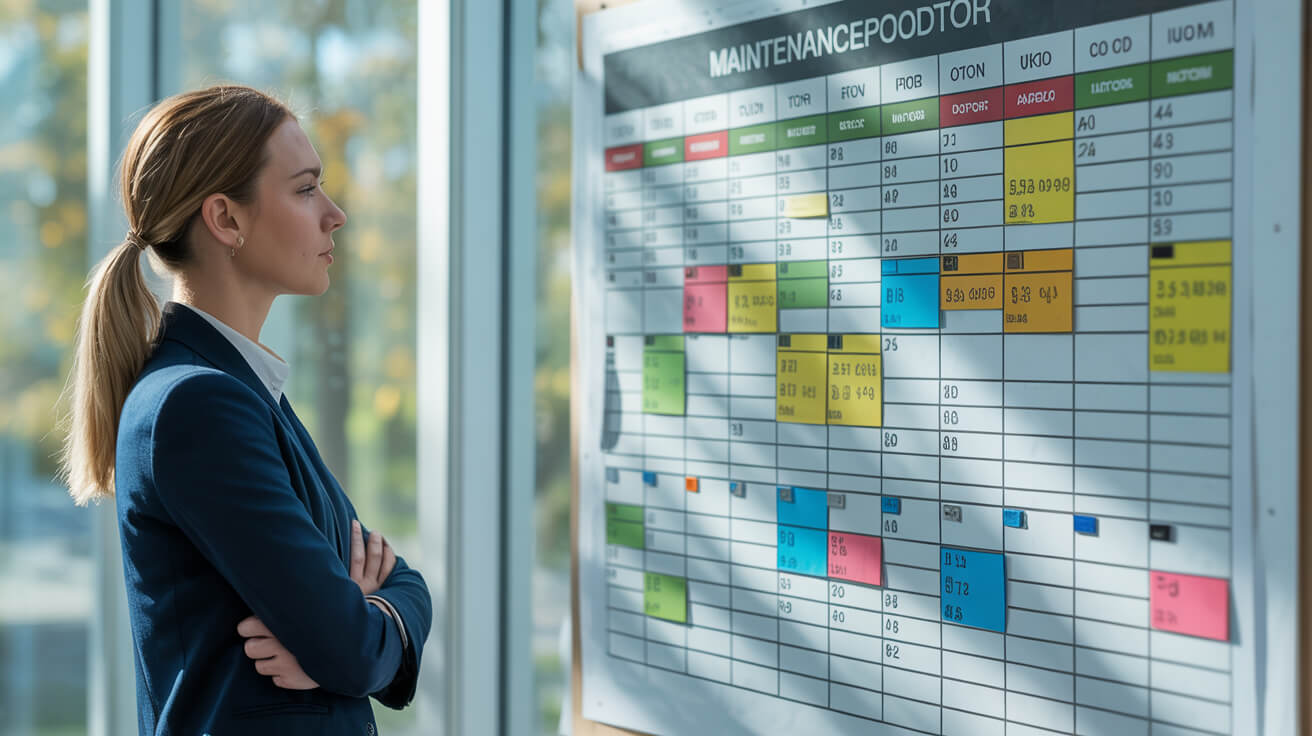
You reduce long‑term risk when your fire alarm regime is strong enough to outlive individual directors, agents and caretakers.
Designing a simple, visible maintenance schedule
A practical PPM schedule for your building should fit on a single page and show:
- Weekly user tests, with space to mark who completed each one
- Planned engineer visits, with dates and scope
- Open defects, with owners, target dates and status
- Key documents, such as the latest risk assessment and service reports
Whether you hold this in a digital system or on a shared calendar and binder, the goal is the same. Any director or managing agent should be able to see, in minutes, where things stand.
Making defect management part of everyday control
Faults and false alarms are where many regimes fall down. A clear workflow should define:
- How faults from weekly tests or engineer visits are logged
- How you decide urgency and whether temporary measures are needed
- Who is authorised to instruct remedial works and approve costs
- How you record completion, retesting and closure
When you treat defects as controlled actions rather than loose notes, you are better placed to answer questions later from residents, regulators or insurers. All Services 4U can help you turn your existing mix of logbooks, emails and certificates into a more robust schedule and defect process without forcing you to replace everything at once.
Book a short maintenance review if you want to see how your current regime measures up against this pattern.
Accreditations & Certifications





What to check before you appoint a fire alarm PPM provider

You choose better when you compare providers on scope, responsibilities, evidence and cost drivers, not just the headline price.
Clarifying roles and service inclusions
Before you sign anything, you should know:
- Whether the provider expects you to keep weekly testing in‑house, with training, or will attend weekly by agreement
- How many planned service visits are included each year and what they cover
- What reporting you will receive after each visit and in what format
- How callouts, out‑of‑hours attendance and parts are priced or packaged
That clarity avoids later arguments about who should have done what, and whether a cost was foreseeable. It also makes it easier to hold the provider to account against your fire risk assessment and board decisions.
Understanding pricing and value for your specific block
Communal fire alarm maintenance costs are usually driven by:
- Number and type of devices and panels
- Ease of access and any working‑at‑height or security constraints
- Whether the system is monitored and how that is handled operationally
- The depth and frequency of reporting you expect
A transparent provider will talk you through these drivers in relation to your building, rather than hiding behind a single “annual service” figure. This is how All Services 4U approaches proposals, so you can see what is included, what is optional, and where you will gain most in risk reduction for the spend.
Reliable Property Maintenance You Can Trust
From routine upkeep to urgent repairs, our certified team delivers dependable property maintenance services 24/7 across the UK. Fast response, skilled professionals, and fully insured support to keep your property running smoothly.

Book your free consultation with All Services 4U today
A free consultation with All Services 4U gives your board a clear, evidence‑focused view of your fire alarm regime and a structured walk‑through of how BS 5839 weekly tests and annual servicing can be turned into a simple, board‑visible plan for your building.
In that session you walk through your current paperwork, test routines and service history against BS 5839 expectations. You leave knowing what is working, where the gaps are, and how your current provider arrangement compares to a joined‑up PPM plan.
By the end of the consultation you will leave with:
- A baseline map of your weekly tests, engineer visits, open faults and key documents
- A short, prioritised list of actions and decisions for your next board or RTM meeting
- A clear view of which evidence you already hold for insurers and lenders, and what is missing
You might want help ahead of a board meeting, an insurance renewal, a fresh fire risk assessment or a contractor change. You can start with one block, test the reporting and communication style, and only extend the approach further when you are confident it fits your way of working.
Gather whatever you already hold for the communal system: recent engineer reports, logbooks, panel details, a note of faults or false alarms, and any monitoring arrangements. That will make the consultation specific, efficient and anchored in your real building, not an idealised example.
Book your free consultation with All Services 4U today and turn BS 5839 weekly tests and annual servicing into a simple, board‑visible plan for your residents, your portfolio and your evidence.
Frequently Asked Questions
What fire alarm testing PPM services should your RTM board have in place?
Your RTM board should have weekly user testing, planned engineer servicing, fault response, remedial closure, and a usable record trail.
That is the practical baseline for communal fire alarm testing in a residential block. An annual service visit on its own does not give your RTM company enough control. What protects your position is a working cycle: someone carries out the weekly test, a competent engineer services the system at planned intervals, faults are acted on quickly, defects are tracked to completion, and the board can see the evidence without chasing five inboxes.
BS 5839-1 is useful here because it separates routine user attention from periodic engineering work. That matters. It means your board is not buying a single maintenance event. You are putting a management structure around a life-safety system that has to remain visible between visits. If the arrangement only produces a certificate once or twice a year, your board may still be left guessing whether faults were recurring, whether tests were missed, or whether actions were ever closed.
A fire alarm regime is only as strong as the gap between the last test and the next question.
The right scope also depends on what sits in the building. A small communal panel in a modest block does not need the same support model as an addressable system, where each detector or device is individually identified at the panel. The more complex the system, the more your board benefits from clearer reporting, stronger fault handling, and less dependence on memory.
That is why the better buying question is rarely “Who will service the panel?” It is “Who will help your board keep control of the system all year?” In practice, that is where a provider such as All Services 4U can add value: not by making the contract sound bigger than it is, but by turning testing, servicing, and follow-up into a cleaner operating rhythm.
Which elements should sit inside a proper service scope?
A board-level scope should cover the whole control chain, not just the engineer visit.
| Element | What it does | Why it matters |
|---|---|---|
| Weekly user test routine | Checks the system between services | Reduces invisible drift |
| Planned engineer servicing | Maintains and inspects system components | Supports BS 5839-1 expectations |
| Fault attendance | Responds to panel faults and impairments | Limits unmanaged downtime |
| Remedial tracking | Moves defects from note to action | Stops open items ageing quietly |
| Record management | Keeps tests, reports, and closures visible | Supports board oversight |
If one of those pieces is absent, your board usually ends up carrying the gap. The most common weak spot is remedial follow-through. A contractor may identify defects correctly, but the board still needs a clear route from finding to approval to completion.
Why does a basic annual contract leave some RTM boards exposed?
Because a low headline fee can hide a thin control model.
An annual contract can look acceptable until your board asks practical questions. Who completes the weekly user test? Who tells the monitoring centre before a test starts? Where are false alarms recorded? How are repeated faults escalated? Which open actions are still sitting there from the last service report? If the contract does not answer those questions clearly, your RTM company is buying attendance rather than assurance.
That weakness tends to show up at awkward moments. A fire risk assessor asks for supporting records. An insurer asks what maintenance regime was actually in place. A new director joins and cannot follow the recent history of the system. A managing agent changes and half the detail sits with the outgoing contact. None of that feels dramatic until the board needs clarity quickly.
If your current arrangement already includes weekly testing, responsive engineering support, and a clean action trail, fine. If it does not, a scope review is usually more sensible than another year of hoping the paperwork will somehow tell a fuller story than the service actually delivered.
Who should carry out the weekly fire alarm test in an RTM-managed block?
The weekly fire alarm test is usually carried out by a trained site-based responsible person, not a service engineer.
That is the normal practical model in residential blocks. BS 5839-1 makes a distinction between routine user checks and specialist servicing for good reason. A weekly test is meant to confirm that the panel responds correctly, the sounders operate as expected, and the result is recorded. It does not require a specialist engineer if the person doing it has been shown the correct routine and knows when to escalate.
In an RTM-managed block, that weekly tester might be a caretaker, resident manager, site operative, managing agent representative, or another board-appointed contact. The point is not job title. The point is whether the task is defined, repeatable, and supported. If your board has no site presence at all, then you need to decide whether a managing agent representative, contracted support service, or alternative arrangement can take that role consistently.
A common objection is, “We are only a small block, so surely the annual contractor can just cover it.” They can, but that is often a commercial convenience rather than the best operating model. Weekly engineer attendance adds cost quickly, and it still does not solve the governance issue if nobody on the board understands what should happen between those visits.
What should a weekly tester actually be able to do?
They should be able to carry out a safe, simple routine without drifting into technical diagnosis.
A capable weekly tester should be able to:
- activate the next call point in the test sequence
- confirm the panel reacts as expected
- reset the system correctly
- record the test clearly
- escalate anything abnormal the same day
That is enough for the routine. Your board does not need a volunteer acting like a fire engineer. You need a controlled user check that works even when one person is away.
What should that person never be left deciding alone?
They should not be left making technical or risk-critical decisions beyond the test itself.
That includes:
- diagnosing persistent panel faults
- disabling zones without instruction
- changing system programming
- deciding whether a repeated fault is acceptable
- treating a defect as “not urgent” without support
This matters because small blocks often rely on goodwill. One helpful director or resident learns the process, keeps the logbook, and becomes the unofficial fire alarm memory of the building. That can work for a while. Then leave, illness, sale, or burnout exposes how much of the regime sat in one person’s head.
A steadier model gives your RTM board a named weekly tester, a backup, a simple site checklist, and a contractor who takes over quickly when the issue stops being routine. That is usually the cleaner line between sensible board oversight and unnecessary board stress.
How can your RTM board build a weekly fire alarm testing schedule that still works after month two?
A durable testing schedule needs a fixed day, fixed ownership, call point rotation, and a clear escalation rule.
Most weekly test routines fail for boring reasons, not technical ones. The task sits in somebody’s memory instead of a visible system. One person handles it for a few weeks. Then someone is on leave, the panel key is missing, the monitoring centre is not informed, or a board member assumes the managing agent did it. Good intentions are not the problem. Fragile process is.
A working schedule is simpler than many RTM RMC boards expect. Pick one day and one time each week. Name a primary tester and a backup. Use a call point rotation so the same device is not tested repeatedly. Put the monitoring notification step on the same checklist if the system is remotely monitored. Then add one short rule for abnormal results: log it, notify the right contact, and arrange engineer attendance if needed.
That structure is not bureaucracy. It is continuity. The Building Safety Act 2022 sharpened expectations around accountable record keeping and governance culture in residential safety. Even where your block is not operating in a higher-risk regime, the principle still lands: if a safety process depends on memory and goodwill alone, it is weaker than it looks.
Which parts of the schedule should never be left informal?
The core controls should stay fixed, even if names and access details change over time.
| Item | Keep fixed | Review when needed |
|---|---|---|
| Test day and time | Yes | Only if formally changed |
| Primary and backup tester | Yes | When personnel change |
| Call point rotation order | Yes | If the device layout changes |
| Monitoring notification step | Yes | If monitoring arrangements change |
| Escalation contact | Yes | If contractor or agent changes |
That mix gives your RTM company a routine that survives handovers without turning the weekly test into a mini project.
Why do sensible schedules break so easily?
Because most failures happen in the handover, not in the design.
If your schedule exists as an unwritten habit, it is already weaker than it feels. A new director joins. A caretaker leaves. A managing agent changes. Suddenly nobody is sure which call point is next, who logs the result, or who gets called when the panel will not reset. By the time the board notices, the evidence trail is patchy and the test routine is being rebuilt under pressure.
Another silent objection shows up here: “Our managing agent probably covers this.” Sometimes they do. Sometimes they assume the site does. Sometimes both sides assume the other one is on it. Your board should not have to guess.
A site-specific one-page schedule, a named backup, and one dependable contractor route usually solve most of this. If you want a practical next step, ask a blunt question: would your current weekly testing routine still run properly next month if the person who usually handles it disappeared tomorrow? If the answer is uncertain, the schedule needs redesign before the next fault forces the issue.
Which fire alarm records should your RTM board keep for insurers, auditors, and future handovers?
Your RTM board should keep weekly test logs, service reports, fault records, remedial proof, and clear closure dates.
That is the core record set for a communal fire alarm regime that has to stand up under pressure. Weak record keeping does not usually matter on a quiet week. It matters when an insurer asks what maintenance was in place before an incident, when a fire risk assessment review checks whether actions were closed, or when a new director needs to understand the recent history of the system without decoding three inboxes and a half-filled folder in the plant room.
The point is not to create a bigger pile of paperwork. The point is to create a clean sequence. The weekly test happened. The engineer service happened. The fault was recorded. The remedial step was approved. The repair was completed. The system was checked again. That chronology is what allows your board to answer questions quickly and confidently.
The Regulatory Reform (Fire Safety) Order 2005 supports the wider duty to maintain fire precautions. In practice, that means records should help your RTM company show continuity, not just possession of paperwork. A service report without a visible close-out trail is still incomplete from a governance point of view.
Good records do not make you look busy. They make you look in control.
This is also where retrieval matters. If the information exists but nobody can assemble it quickly, your board still feels exposed when questions arrive.
What should sit in the core fire alarm file?
Your board’s core record set should usually include:
- weekly test entries
- engineer service reports
- certificates where issued
- fault and disablement records
- false alarm history
- remedial quotations and approvals
- completion evidence and retest confirmation
That gives your board an operating history rather than a collection of disconnected files.
Why do handovers expose bad record systems so quickly?
Because handovers remove the only thing weak record systems rely on: familiarity.
A long-standing director may know that one contractor keeps service reports in email, another uploads PDFs to a portal, and weekly tests sit in a cupboard logbook. That feels manageable until the people change. A new board member, managing agent, or broker does not inherit that memory. They inherit the disorder.
That is where a more disciplined provider model becomes commercially useful. Organised records reduce admin drag, speed up renewal conversations, and make board changes less disruptive. All Services 4U can help here if the aim is not just maintenance delivery but a board-ready evidence trail that is easier to retrieve, easier to review, and easier to hand over. If your current records would not let a new director understand the last year of fire alarm activity in ten minutes, the filing system is not supporting the board well enough.
How should your RTM board close faults, false alarms, and open fire alarm actions without losing control?
Your RTM board should treat every issue as a tracked action with priority, owner, target date, and verified close-out.
That is the cleanest way to stop small fire alarm issues from becoming stale operational risk. The first problem is rarely the fault itself. The real problem is what happens next. An engineer notes a defect. Someone sends a follow-up email. A quotation appears. Then the item drifts because nobody has turned the observation into a managed action. Weeks later, the board knows there was a problem but cannot say clearly whether it was fixed, deferred, or simply forgotten.
A stronger workflow is straightforward. Record the issue the day it appears. Decide whether it affects life safety, reliability, nuisance, or administration. Name the owner. Set the target date. Approve the remedial step if needed. Confirm the repair or retest. Then close it formally. That same logic applies to false alarms. A single nuisance activation may not mean much on its own. Repeated alarms from the same detector, zone, or pattern of use are not noise. They are a warning that the board needs trend visibility.
The useful provider difference here is not just who attends fastest. It is who translates technical findings into board-usable next steps. The RICS Service Charge Residential Management Code is helpful in the background because it reinforces the wider principle of clear management, accountability, and record discipline. Your board does not need a dramatic report. It needs one that makes action obvious.
A simple five-stage model is usually enough.
| Stage | What happens | What your board should see |
|---|---|---|
| Identify | Fault or false alarm appears | Date, source, and brief description |
| Assess | Issue is prioritised | Risk level and immediate action |
| Assign | Someone owns the next step | Named owner and target date |
| Resolve | Work is completed | Repair note or remedial proof |
| Verify | System is checked again | Retest result and closure record |
If one of those steps is missing, the board is relying on trust instead of visible control.
Why should recurring false alarms get board attention?
Because repetition usually points to an underlying weakness.
False alarms can come from contamination, detector placement, environmental conditions, user behaviour, or unresolved technical faults. If your board logs each event separately but never looks for recurrence, you miss the pattern. If the reports show repeated activations by zone, date, likely cause, and follow-up action, you have something useful.
A silent objection often appears here too: “It is only a nuisance alarm, not a real failure.” Sometimes that is true. Sometimes repeated nuisance is exactly what teaches residents to ignore the system when a real incident happens. That makes trend management a board issue, not just a contractor note.
If your current reporting does not make open items, repeat faults, and closure dates obvious at a glance, a workflow review is usually worth doing. The goal is not to make every issue sound severe. It is to stop low-level drift becoming a bigger governance problem later.
What actually drives the cost of fire alarm testing PPM services for an RTM board?
The cost is driven by system complexity, visit structure, access, reporting depth, and response expectations.
That is why two quotations with similar annual totals can produce very different outcomes through the year. One contract may include structured servicing, useful reports, monitoring coordination, and clear fault follow-up. Another may include little beyond the attendance itself, with everything more useful charged as an extra. For your RTM board, the smarter comparison is total control value, not just annual label price.
The largest cost variable is usually the system itself. A simple communal setup is cheaper to support than a larger addressable system with multiple zones, interfaces, and access constraints. Planned engineer visit frequency changes the number too. So does whether your board wants straightforward maintenance reports or board-ready summaries with open-action visibility. Fault attendance terms matter as well. A contract that looks inexpensive can become expensive quickly once faults, callouts, or remedials are stripped out of the base arrangement.
Weekly testing is another point where boards can spend badly if the model is unclear. If a trained site-based user can complete the weekly routine safely, that is usually more efficient than paying for weekly engineer travel. If your block has no realistic on-site resource, then you may need a different arrangement, but it should be chosen knowingly rather than by default.
Which factors usually change the price most?
Most fire alarm PPM pricing moves with these five variables:
- number of devices and zones
- system type and panel complexity
- engineer visit frequency
- access conditions across the building
- reporting and fault-response expectations
Those factors tell your board far more than the phrase “annual maintenance”.
Which buying question matters more than the headline fee?
Ask which option gives your RTM board the safest route from weekly testing to servicing to defect closure to usable evidence.
That question usually exposes thin contracts quickly. If reporting is vague, fault attendance is narrow, or remedial closure sits entirely outside the arrangement, the lower fee may simply mean the admin burden has been pushed back onto the board. That cost rarely appears neatly on the quotation, but your directors still end up paying for it in time, uncertainty, and renewal friction.
A common objection is, “We already have an annual contract, so why change anything?” The answer is not that every contract needs replacing. It is that your board should know whether the current one genuinely supports continuity, evidence, and follow-through. If it does, keep it. If it does not, a structured comparison is justified.
All Services 4U is strongest when that comparison is practical rather than theatrical: clearer reporting, easier handover, less admin drag, and a more visible path from fault to close-out. If your board is approaching renewal, the sensible next move is usually a scope-and-cost review against your current arrangement, followed by either a contractor conversation, a compliance check, or a more detailed diagnostic. That is how careful boards buy well. Not by chasing the cheapest line item, but by choosing the arrangement that is easiest to defend when the questions get harder.
- Fire alarm testing PPM for RTM boards
- What you need to organise weekly, periodically and annually
- Where RTM responsibility starts, and where delegation still needs oversight
- What BS 5839 means for weekly user tests in communal areas
- What annual service really means, and why “once a year” is too vague
- How to build a PPM regime that survives holidays, board changes and open faults
- What to check before you appoint a fire alarm PPM provider
- Book your free consultation with All Services 4U today
- Frequently Asked Questions
- Related PPM Services
Case Studies


Related Articles

Your Guide To Identifying And Treating Minor Mould Outbreaks
Why Planned Preventative Maintenance (Ppm) Saves Money And Ensures Compliance