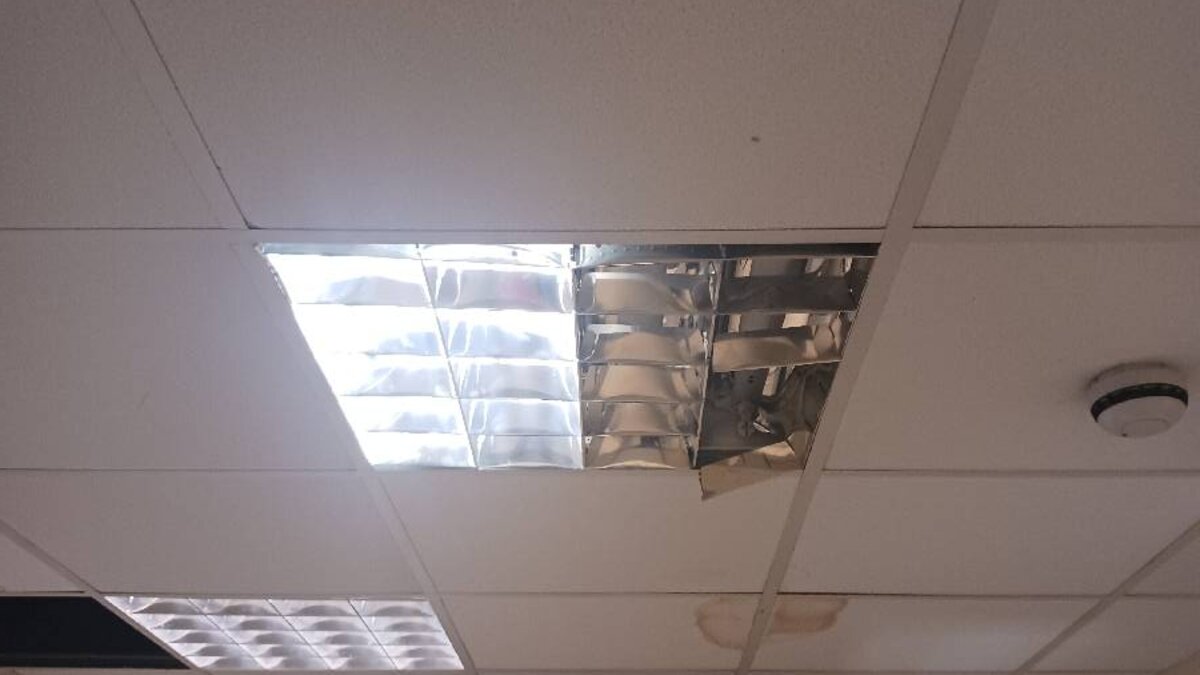
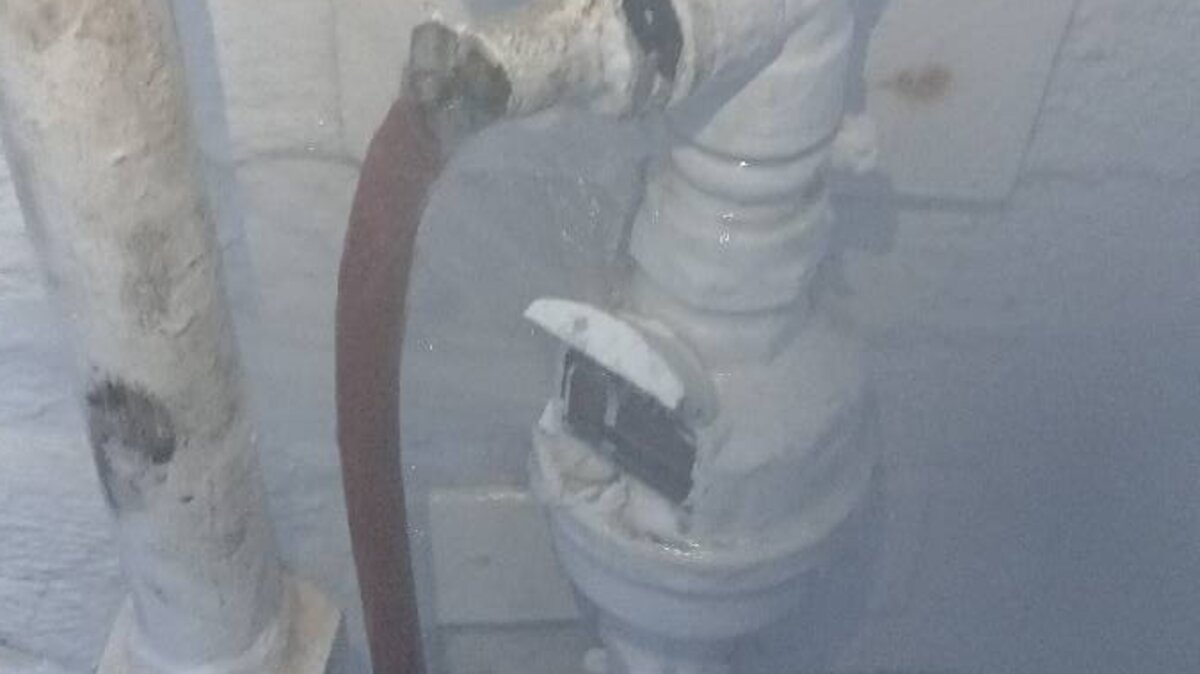
In commercial food premises, water appearing on the floor is frequently attributed to the most obvious suspect — typically a boiler or visible plumbing. But commercial kitchens and cafes contain multiple potential sources of water: boiler and heating systems, dishwashers, ice machines, chilled display units, air conditioning condensate lines, and refrigeration equipment. Each has its own failure modes, and each requires a different specialist to repair.
Refrigeration units produce condensation as a normal part of their cooling cycle. This condensate is collected in a drip tray or reservoir, typically located at the base or rear of the unit, and is either evaporated by the condenser heat or drained to a waste connection. When the reservoir overflows, the drain line blocks, or the evaporation system fails, water spills onto the floor — and it can appear to be coming from a completely different source, especially when the fridge is positioned near other equipment.
The consequences of misdiagnosis extend beyond wasted time. Under the Food Safety Act 1990 and the Food Hygiene Regulations (EC) No 843/2004 as retained in UK law, food business operators must maintain premises in good repair and condition. Standing water on a cafe floor represents a slip hazard under the Workplace (Health, Safety and Welfare) Regulations 1992, and may also indicate a food safety risk if the water is contaminating food storage or preparation areas. The Health and Safety at Work Act 1974 places a general duty on employers to protect the health and safety of employees and visitors, which includes maintaining the premises free from avoidable hazards.
Getting the diagnosis right, quickly, prevents unnecessary expenditure on the wrong trade, minimises the duration of the hazard, and ensures the correct specialist is engaged without delay.
The Emergency Call
The FM company — Ecogas Facilities Management Ltd — reported an urgent situation: the cafe boiler was leaking and flooding the premises. The severity of the report — active flooding in a food premises — warranted an emergency out-of-hours response.
The Investigation — Step by Step
Our engineer attended the same evening, arriving at 18:42 and completing the investigation by 19:07 — twenty-five minutes of focused diagnostic work.
Initial assessment. Upon arrival, the engineer assessed the extent of the water on the floor, the location of the apparent leak, and the surrounding equipment. Rather than proceeding directly to the boiler based on the reported description, the engineer followed standard diagnostic protocol: trace the water to its actual source.
Source tracing. Water on a floor migrates. It follows the path of least resistance — along grout lines, under equipment, and across gradients — meaning the point where water is visible may be some distance from the point where it is entering the space. The engineer traced the water path back from the area of greatest accumulation toward the source.
Identification of actual source. The investigation identified the leak as originating from the reservoir located behind the commercial fridge — not from the boiler or any plumbing connection. The reservoir was overflowing or leaking, with water tracking across the floor to the area where it had been observed and attributed to the boiler.
Boiler and plumbing check. To confirm that no secondary fault existed, the engineer inspected the boiler and visible plumbing connections. No boiler leak or plumbing fault was identified.
Recommendation. The engineer reported that the fault was a refrigeration issue requiring a specialist refrigeration engineer. This was communicated clearly to the FM company along with the finding details, enabling them to dispatch the correct trade without further delay.
Findings Summary
| Finding | Detail |
|---|---|
| Reported issue | Boiler leaking, flooding cafe |
| Actual source | Reservoir behind the commercial fridge |
| Root cause category | Refrigeration fault |
| Boiler condition | No leak detected |
| Plumbing condition | No fault identified |
| Additional works | None within plumbing scope |
| Recommendation | Refrigeration engineer required |
Common Misdiagnosed Water Sources in Commercial Food Premises
| Reported Source | Actual Source | Diagnostic Clue |
|---|---|---|
| Boiler leak | Fridge condensate overflow | Water located near fridge base; no visible boiler drip |
| Pipe leak | Dishwasher door seal failure | Water appears during or after wash cycles |
| Roof leak | Air conditioning condensate line | Water appears during warmer periods or when AC runs |
| Drain backup | Ice machine overflow | Water near ice machine; drain line kinked or blocked |
| Mains pipe | Chilled display unit condensation | Water beneath or behind display counter |
| Unknown internal | External rainwater ingress via cable/pipe penetration | Water appears during or after heavy rain |