Fire Door PPM Services for HRB UK – BS 8214 & Compartmentation
Higher-risk residential building owners, accountable persons and managing agents need fire door PPM that proves doors will contain fire and smoke, not just look acceptable. A structured regime built around BS 8214, HRB safety-case expectations and documented inspections turns scattered doors into a managed, test-aware asset base, depending on constraints. You end up with an evidence-backed register, planned inspection and repair cycles, and clear records showing what was found, fixed and maintained over time, with decisions traceable to recognised standards. It’s a practical way to turn fire doors and compartmentation from a hidden liability into a controlled, defensible system.


Author
Izzy Schulman

Fire door PPM that treats HRB doors as safety assets
In a higher-risk building, fire doors are moving parts in your compartment walls, not routine carpentry. If they fail to close, seal or match their tested configuration, your stair cores, lobbies and risers stop working as the fire-resisting cells your strategy relies on.

A planned preventive maintenance regime built around BS 8214 and HRB safety-case expectations replaces ad hoc repairs and walk-by checks with structured inspections, asset registers and evidence-backed decisions. Instead of hoping doors perform, you actively manage them as safety-critical components within a documented, defensible system.
- Turn scattered doors into a single managed asset register
- Plan inspections and works around risk and legal minima
- Produce clear evidence for safety cases, insurers and regulators
Need Help Fast?
Locked out, leak at home, or electrical issue? All Services 4 U provides 24/7 UK locksmith, plumbing, electrical.
Testimonial & Clients Who Trust Us
With 5 Star Google Reviews, Trusted Trader, Trust Pilot endorsements, and 25+ years of experience, we set industry standards for excellence. From Dominoes to Mears Group, our expertise is trusted by diverse sectors, earning us long-term partnerships and glowing testimonials.
Worcester Boilers

Glow Worm Boilers

Valliant Boilers

Baxi Boilers

Ideal Boilers

Fire Door PPM for Higher-Risk Buildings: BS 8214‑Aligned, BSA‑Ready
Fire door planned preventive maintenance (PPM) in higher‑risk buildings is how you prove your doors will actually contain fire and smoke when it matters. Done properly, it turns scattered doors into a managed, evidence‑backed system that underpins your fire strategy, safety case and legal duties. All Services 4U builds and runs that regime specifically for HRBs so fire doors are treated as safety‑critical assets, not just another maintenance line.
All Services 4U designs and delivers that planned regime specifically for higher‑risk buildings (HRBs), so fire doors are treated as safety‑critical assets, not just another maintenance line.
Clarity and evidence do more to protect you than hope and assumptions.
Fire doors in HRBs behave as moving parts in your compartment walls and protected routes. If they do not self‑close, have excessive gaps, or have been altered with the wrong components, your stair cores, lobbies and risers stop working as fire‑resisting cells designed to protect escape and firefighting routes.
In this context, treating fire doors as “just doors” or as a routine maintenance item is no longer tenable. Recent reforms treat them as safety‑critical elements, and that is how enforcement bodies, insurers and residents will view them when something goes wrong.
For accountable and responsible persons, any regime still built on ad hoc repairs and occasional “walk‑by” checks now carries significant risk. You are expected to show which doors you have, how they were specified, how often they are inspected, what has been found and what has been fixed, not just that “someone looks at them”.
Why fire doors and compartmentation in HRBs cannot be treated as “just doors”
In higher‑risk buildings, fire doors are active components in passive fire protection that control smoke and heat between flats, lobbies, risers and stair cores. If they do not close reliably, seal properly or match their tested configuration, the compartments they protect will not perform as intended in a fire.
Those failures are rarely obvious during day‑to‑day use. Everyday knocks, unauthorised adjustments, refits and wear gradually erode door performance until a real incident exposes the weakness. When investigations follow, they focus on whether your regime recognised doors as life‑safety assets and actively managed them, or treated them as ordinary carpentry.
This is why HRB fire strategies, safety cases and modern enforcement practice all elevate fire doors and compartmentation. They expect active management, clear responsibilities and documented, test‑evidence‑aware decisions, not simply “repairs as and when residents complain”.
How BS 8214 and other standards shape a modern PPM regime
BS 8214 is the core code of practice for timber‑based fire door assemblies and sets out what “good” looks like in installation and maintenance. It explains tolerances for gaps, hardware, sealing, glazing and fixing into different wall types so you have an objective yardstick, not just a visual impression.
Behind the scenes, EN 1634 and related test standards define how doorsets are fire and smoke tested and classified. Those tests are carried out on specific configurations of leaf, frame, hardware and glazing, and you need to keep maintenance decisions within that tested envelope wherever possible.
A credible PPM service uses these standards as the technical backdrop for every inspection and repair decision. Instead of “looks OK” versus “looks poor”, each door is assessed against defined tolerances and compatible components, and maintenance is planned so you do not accidentally undermine the fire performance the tests were intended to demonstrate.
Why PPM is different from reactive maintenance
PPM assumes that wear, damage and unauthorised alterations will occur and sets a planned pattern to find and correct them before a fire does. Reactive maintenance waits for visible failures or complaints, often discovering problems late, when risk has already increased.
For HRBs, a PPM approach means structured fire door asset registers rather than scattered spreadsheets, planned inspection frequencies tied to risk and legal minima, and clear rules for when to adjust, repair, upgrade or replace. It also means standardised reporting you can feed straight into your golden thread and safety case records.
All Services 4U’s role is to design and run that pattern with you as a risk partner, using operatives supervised and trained against BS 8214 and HRB safety‑case expectations, so your fire doors and compartments are actively managed rather than periodically rediscovered.
The Cost of Fire Door Failure and Inaction in HRBs
Weak or undocumented fire door maintenance in an HRB creates life‑safety, legal, financial and reputational risks that usually far outweigh the cost of a robust PPM regime. Understanding those risks makes it easier to justify investing time and budget in doing this properly.
In a real fire, failed doors let smoke and heat into corridors and stairs earlier than your fire strategy assumes, which directly affects occupant safety and firefighting operations. When investigations follow, enforcement bodies and other stakeholders look not only at what happened at the door, but at how it was managed over time.
Life‑safety and enforcement exposure
Fire doors that do not close or seal properly allow smoke and hot gases to enter escape routes, flats and firefighting shafts sooner than your design anticipates. That increases the chances of injury, panic, complex rescues and failure of stay‑put or phased evacuation strategies.
Where post‑incident investigations show doors were not maintained in efficient working order, or that there is no convincing evidence of a regime at all, regulators have wide powers to act against organisations and individuals. Responsible and Accountable Persons may have to explain, in detail, how doors were being managed in the months and years before the incident.
Quarterly checks of communal fire doors and annual checks of flat entrance doors are now an explicit legal minimum in many multi‑occupied residential buildings. In HRBs, the safety‑case regime goes further again, looking at how you identify, quantify and manage building safety risks over time. A one‑off survey file from several years ago is unlikely to be seen as enough on its own.
Financial, operational and insurance consequences
From a financial and operational perspective, weak fire door regimes tend to show up in three ways over time. The pattern is familiar to regulators, insurers and valuers.
- Unplanned works and decants: when overdue inspections uncover widespread issues, forcing rushed remediation, temporary boarding and resident moves.
- Insurance friction or restrictions: where underwriters see passive fire protection as poorly controlled, pushing up premiums or narrowing cover.
- Capital value and refinancing drag: when valuers and lenders see unresolved safety concerns or incomplete evidence during transactions.
Planned PPM smooths spend, builds a track record of risk improvement and gives you structured information to support conversations with brokers, lenders, boards and residents. It also reduces the likelihood of discovering major defects in a crisis, when everything is more expensive and disruptive to resolve.
Documentation gaps and legal defensibility
Many duty‑holders can point to work that has been done on doors over the years, but far fewer can easily produce a clear building‑level storey. They struggle to answer which doors were inspected, what was found, what was repaired and how quickly risk was reduced.
In an HRB context, that lack of narrative is itself a risk. A structured PPM service closes that gap by generating repeatable, door‑level records every cycle. If something goes wrong, you can show what you knew, what you decided, what you did and how quickly you acted, which is far stronger than piecing together emails, invoices and notes after the event.
Over time, this kind of documentation also helps you identify patterns – such as particular zones, door types or use patterns that drive defects – so you can adjust specifications and interventions rather than simply reacting to the same problems repeatedly. This connects directly back to your statutory duties and safety‑case obligations described later.
Your Duties Under BS 8214, the Fire Safety Order and the Building Safety Act
![[ALTTOKEN]](https://allservices4u.co.uk/app/uploads/2026/01/02-Fire-Door-PPM-Services-for-HRB-UK-BS-8214-Compartmentation.jpg)
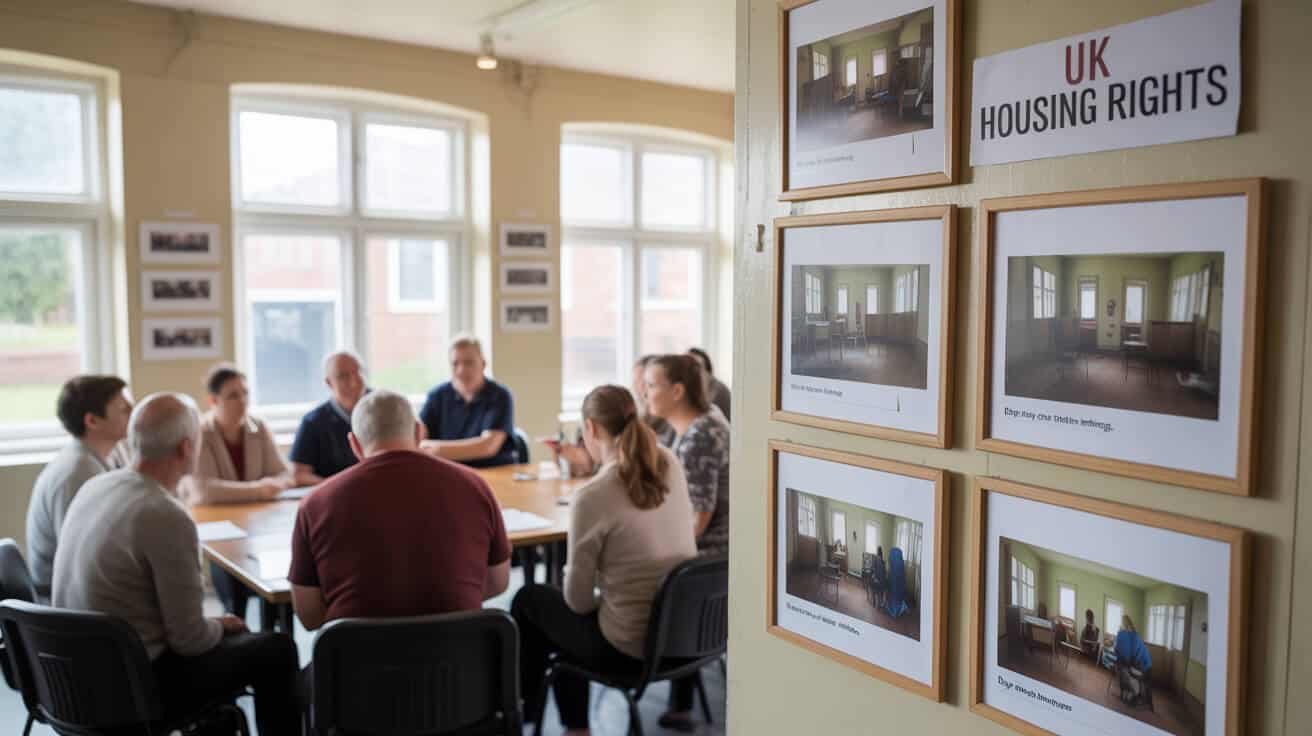
For HRBs in England, fire door PPM sits where several regimes meet – the Fire Safety Order, the Fire Safety (England) Regulations and the Building Safety Act HRB framework – and your duty is not only to provide fire doors and compartments but to maintain them so they can perform as part of the building’s overall fire strategy, with a golden thread of information that shows how you are doing that in practice instead of trying to juggle each regime in isolation.
Your duty is not only to provide fire doors and compartments but to maintain them in a condition where they can perform as part of the building’s overall fire strategy, with a golden thread of information that shows how you are doing that in practice.
Responsible Persons, Accountable Persons and where fire doors sit
In most multi‑occupied residential buildings, the Responsible Person under the Fire Safety Order must maintain fire precautions – including doors protecting common parts and escape routes – so they remain in efficient working order and good repair, while in HRBs the Accountable Person or Principal Accountable Person must manage building safety risks (fire and structural), maintain a safety case and keep a golden thread of information about safety‑critical elements, clearly including compartmentation and fire doors, and enforcement bodies will expect you to be able to name the people and teams fulfilling these roles and show how they work together.
In most multi‑occupied residential buildings, the Responsible Person under the Fire Safety Order must maintain fire precautions – including doors protecting common parts and escape routes – so they remain in efficient working order and good repair. Flat entrance doors are now explicitly in scope, which brings leasehold boundaries into the conversation.
In HRBs, the Accountable Person or Principal Accountable Person must manage building safety risks (fire and structural), maintain a safety case, and keep a golden thread of information about safety‑critical elements, which clearly includes compartmentation and fire doors. Those roles are not optional; enforcement bodies will expect you to be able to name the people and teams fulfilling them.
A clear PPM regime for fire doors shows how Responsible and Accountable Persons discharge their duties together. It clarifies who sets policy, who inspects, who is authorised to make technical decisions, who approves spend and how findings flow back into fire risk assessments and safety case documentation.
How BS 8214 supports your safety case
Because BS 8214 is widely recognised as the code of practice for timber fire doors, building safety teams, fire risk assessors and regulators often treat it as a reference point for what is “reasonably practicable”. Using it as the technical backbone for your PPM policy and specifications makes it easier to justify your approach in a safety case report.
That does not mean every existing door must be brought to brand‑new, idealised conditions overnight. It does mean you can show that your inspection and maintenance criteria reflect recognised good practice, that you distinguish between low‑, medium‑ and high‑risk deviations, and that you have a reasoned position on what is tolerable, what must be improved and by when.
What regulators expect to see in HRBs
For HRBs, enforcement teams increasingly expect to see a joined‑up picture of fire doors and compartments, not isolated actions. Common expectations include:
- A clear map of which doors are in scope, by type and location.
- A documented inspection and maintenance regime, tied to Reg 10 minima at least.
- Evidence that competent people are carrying out inspections and works.
- Records that show defects, risk ratings, remedial actions and closure.
- Integration of door findings into fire risk assessments and safety case documentation.
All Services 4U designs its fire door PPM services to match that pattern, so you are not trying to reverse‑engineer evidence from generic contractor reports. That alignment makes it easier to move from written duties to visible, auditable practice.
Understanding your duty landscape is only half the job; the next step is turning those requirements into a repeatable, building‑specific regime that your teams and residents can live with.
How All Services 4U Delivers Fire Door PPM for HRBs
Fire door PPM is not a single product that fits every building, so the service you choose must adapt to your risk profile and estate; for HRBs, All Services 4U uses a structured model that stays rooted in the same technical principles while scaling from a single block to a national portfolio, approaching this as a blend of technical assurance, resident‑sensitive delivery and evidence‑first reporting rather than as a series of isolated joinery jobs.
We approach this as a blend of technical assurance, resident‑sensitive delivery and evidence‑first reporting, rather than as a series of isolated joinery jobs.
Baseline: 100% survey and asset register
A robust PPM regime starts with knowing what you have and where it is. Most engagements therefore begin with a full fire door survey to establish a reliable baseline across your building or buildings.
- Which doors you have, where they are, and what rating or test evidence they appear to have.
- Their current condition against BS 8214‑style tolerances for gaps, hardware, self‑closing and integrity.
- Immediate life‑safety defects versus medium‑term improvements and legacy issues.
- Gaps in documentation around specification, test evidence and certifications.
From this, we build a digital asset register, defect schedule and initial action plan that you can feed directly into your fire risk assessment actions, safety case work and capital planning. The same approach can be applied across single HRBs and wider portfolios so you are not reinventing your method on every building.
Planned inspection regime and remedials
On top of that baseline, we agree a PPM pattern that reflects your risk profile, resident mix and operational realities. Typical HRB regimes combine a planned rhythm with flexibility for triggered events.
- Annual detailed inspections of all doors in scope.
- More frequent functional checks of high‑traffic or high‑risk doors such as stair cores and lobbies.
- Triggered inspections after incidents, major works or repeated resident reports.
Our teams use standardised checklists, gap gauges and functional tests, backed by photographs and clear defect coding. Minor adjustments and simple repairs can often be completed during the visit; more complex works are scoped, priced and scheduled through an agreed approval route.
All works are carried out by competent operatives working under supervisors who understand both fire door standards and the specific test evidence for the doorsets in your buildings. Inspectors and installers are trained against BS 8214 criteria and current guidance so decisions are consistent over time, and All Services 4U’s internal quality checks focus on both workmanship and record‑keeping.
If you want to see how this looks in practice, All Services 4U can walk you through a sample register, inspection output and remedial programme from a comparable building.
Resident‑friendly delivery and coordination
For occupied HRBs, even the best technical plan will fail if residents are alienated or access is poor. All Services 4U supports you with:
- Draught resident letters and FAQs explaining why door checks and works are required, referenced back to safety and legal duties.
- Scheduling around agreed access windows, building quiet hours and vulnerability considerations.
- Clear on‑site conduct standards for our teams, including identification, behaviour and escalation routes.
- Simple closure notes you can send to residents after works are completed so they know what was done and why.
For housing, PBSA, care or mixed‑use estates, this focus on communication helps keep access rates high, complaints manageable and resident trust aligned with the wider safety case message.
Accreditations & Certifications







Technical Assurance: BS 8214, EN 1634 and Compartmentation Integrity
![[ALTTOKEN]](https://allservices4u.co.uk/app/uploads/2026/01/03-Fire-Door-PPM-Services-for-HRB-UK-BS-8214-Compartmentation.jpg)
You need more than inspection counts and photographs; you need confidence that doors will actually perform as part of the designed compartments when a fire tests them, so All Services 4U’s PPM services are built to respect the tested and certified basis of your doors and the compartmentation strategy they support, rather than treating them as generic timber leaves and frames, and that technical discipline is what turns a door survey into meaningful assurance for your safety case, insurers and residents.
That technical discipline is what turns a door survey into meaningful assurance for your safety case, insurers and residents.
Linking doors to test evidence and manufacturer data
Where information is available, we link each doorset to its original test evidence or assessment, often based on EN 1634 fire and smoke tests, and to manufacturer data. That gives a clear reference for what was tested: leaf type, frame details, hardware, seals, glazing configuration and any restrictions on permitted variations.
When we propose repairs or upgrades, we do so within that framework wherever practicable. Where original evidence is missing or incomplete, we work with you and, where appropriate, fire engineers to find a sensible, documented way forward rather than ignoring the gap or making unrecorded substitutions.
Over time, this helps rebuild a tested‑basis picture of your door stock, even in older buildings where records have been lost.
Tolerances, components and proportionate repairs
Inspections focus on physical performance and compatibility so you know whether each door can be relied on. Our teams look closely at details that are easy to miss in day‑to‑day checks.
- Gaps at head, jambs and threshold relative to expected tolerances.
- Self‑closing and latching performance under realistic use.
- Integrity and suitability of seals, hinges, locks, closers and glazing.
- Evidence of unauthorised alterations, damage or incompatible component swaps.
We use BS 8214‑style tolerances to distinguish between acceptable and defective conditions, and we separate:
- Issues that can be addressed with adjustments or like‑for‑like component changes supported by compatible test evidence.
- Issues that indicate the door, frame or surrounding structure is fundamentally unsuitable and should be replaced.
This proportionate approach reduces the chance of under‑repairing unsafe doors or over‑replacing serviceable ones, helping you balance safety, disruption and capital planning. All Services 4U documents these decisions so you can see and challenge the reasoning if needed.
Working with your fire engineer and strategy
Compartmentation and doors sit inside a wider fire strategy that may assume stay‑put, phased evacuation or simultaneous evacuation. We align our recommendations with that strategy and, where necessary, with your fire engineer, so the assumptions in your modelling and your real‑world door performance stay aligned.
In HRBs, this alignment is particularly important for safety case work, where regulators may ask how you know that your fire strategy remains valid given wear, alterations and repairs over time. Being able to show that door PPM, fire risk assessments and engineering advice are joined up reduces the risk of inconsistent or untested assumptions creeping into your documentation.
Technical integrity only fully helps you if you can prove it in your records and feed it into your golden thread.
Evidence, Reporting and the Golden Thread for Fire Doors
A PPM regime is only as strong as the records it leaves behind and your ability to use them. All Services 4U’s fire door PPM services are designed to feed your golden thread, compliance registers and safety case files, not sit in a separate reporting silo that nobody can interrogate.
Over time, that record becomes one of your strongest defences: it shows that you have moved from ad hoc activity to a managed, risk‑based system.
Door‑level records that stand up to scrutiny
Each door in scope should have a simple, consistent digital record so you can answer questions quickly and confidently. Our reporting is built to support that level of clarity.
- Unique door ID and location (building, floor, flat, stair, lobby, riser).
- Door type, rating and any known certification, label or test reference.
- Inspection history with dates, inspector identity and competence indicators.
- Measured gaps, functional test results and defect codes.
- Risk rating and recommended timescale for remedial action.
- Evidence of completed repairs or replacements, including photos and job references.
That level of detail lets you answer questions quickly and consistently, whether they come from an enforcement team, insurer, board member, resident or internal audit. It also helps you avoid dependence on individual staff memory when challenged months or years after an event.
Integrating with your golden thread and asset systems
We work with the systems you already use, whether that is a full CAFM platform, a dedicated golden thread solution, a housing management system or more modest spreadsheets and document libraries. Reporting formats and data fields are agreed up front so that:
- Door data can be imported into your chosen systems without manual re‑work.
- The same IDs and descriptors are used across surveys, works orders and safety case documentation.
- You avoid duplicate or conflicting records across different contractors, projects or teams.
As you add new works, refurbishments and PPM cycles, the same data structures raise the quality of your golden thread rather than fragmenting it. For HRBs, this adds tangible weight to your safety case submissions and demonstrates that your record‑keeping is as deliberate as your physical interventions.
KPIs and management information
To support governance and continuous improvement, we can help you define and track simple, meaningful KPIs such as:
- Percentage of doors inspected on time against the agreed regime.
- Number and proportion of critical defects outstanding, by age band.
- Average time to close high‑risk actions, from identification to completion.
- Trends in recurring issues by location, door type or use pattern.
These metrics can feed into board reports, safety case reviews and internal management meetings, giving senior leaders a clear sense of progress without requiring them to read technical reports. They also provide an early warning system when performance starts to drift.
If you want a low‑friction way to test this, All Services 4U can align a trial PPM cycle with your existing systems for one building and show exactly how the data would land in your dashboards.
PPM vs One‑Off Surveys, DIY and Generic Contractors
Most organisations already have some mix of historic surveys, in‑house checks and reactive contractor visits assembled over years, and the real question is whether that patchwork gives you safe, defensible control of fire doors in HRBs or leaves gaps in performance, evidence and accountability, because moving to a specialist PPM partner is less about doing more for its own sake and more about replacing weak, hard‑to‑defend patterns with a joined‑up, BS 8214‑aware regime that can be explained and audited.
Moving to a specialist PPM partner is less about doing more for its own sake and more about replacing weak, hard‑to‑defend patterns with a joined‑up, BS 8214‑aware regime that can be explained and audited.
When a one‑off survey is useful – and when it is not enough
A one‑off fire door or compartmentation survey is invaluable when you first take control of a building, after major refurbishment or when you suspect historic non‑compliance. It shows you where you stand and what needs attention at that point in time.
However, it is only a snapshot. Doors continue to be damaged, adjusted and worn in everyday use. In an HRB, regulators and insurers are unlikely to be satisfied with a several‑year‑old survey and no ongoing PPM, especially if there is evidence of changes, incidents or complaints since.
One‑off surveys work best as the starting point for a PPM regime, not as a substitute for one. A structured programme then turns findings into actions, tracks progress and prevents the same issues re‑emerging unnoticed.
Limits of DIY and general maintenance approaches
General maintenance teams and caretakers can and should carry out simple visual and functional checks, especially for obvious damage or obvious failures to self‑close. They provide the first line of defence in spotting emerging issues between formal inspections.
For HRBs, though, there are real limits to what non‑specialists can safely judge. They are unlikely to be comfortable assessing whether a component change is compatible with a tested doorset, whether a particular gap or glazing detail undermines the rating, or whether an older door can reasonably be retained or must be replaced in light of current expectations.
Relying solely on in‑house or handyman‑level checks for HRB doors, without specialist oversight and documentation, makes it harder to show that you have exercised due diligence if something goes wrong. It also increases the risk of well‑meant but technically unsafe adjustments.
Why a specialist fire door PPM partner is safer
A specialist provider such as All Services 4U brings a PPM model that is already tuned for HRB expectations, rather than general property maintenance. In practical terms, that means:
- Competence frameworks specific to fire doors and passive fire protection, not just general trades.
- Inspection and repair methods aligned with BS 8214, EN 1634 and current guidance.
- Capacity to scale inspections and remedials after FRAs, enforcement visits or portfolio acquisitions.
- Reporting designed to satisfy enforcement bodies, insurers, lenders, boards and residents.
You retain control of policy, risk appetite, budgets and governance. What you gain is a consistent, technically supported way of managing one of the most scrutinised parts of your fire safety system, delivered by a partner whose focus is on risk and evidence rather than just task completion.
If that shift from patchwork activity to a managed regime is what you are looking for, the next section gives you a low‑risk way to test the approach on one higher‑risk building.
Reliable Property Maintenance You Can Trust
From routine upkeep to urgent repairs, our certified team delivers dependable property maintenance services 24/7 across the UK. Fast response, skilled professionals, and fully insured support to keep your property running smoothly.

Book Your Free Consultation With All Services 4U Today
All Services 4U can help you turn fire door obligations in HRBs into a structured, evidence‑backed PPM regime that supports your safety case, insurers and residents. A free consultation is a straightforward, no‑pressure way to see how your current arrangements measure up and what a proportionate improvement plan could look like.
In that discussion you can test the approach, ask detailed questions about standards and HRB expectations, and see whether the model fits the way your organisation works.
What we will cover with you
In a short session, you get a clear, building‑specific view of your current position and realistic next steps. The focus is on your assets and duty landscape rather than generic presentations.
Typical topics include:
- Mapping your current position: surveys completed, in‑house checks, contractors used and how records are held today.
- Highlighting where the main gaps are likely to sit against BS 8214, the Fire Safety Order, the Fire Safety (England) Regulations and the HRB regime.
- Showing you example inspection outputs, asset registers and dashboards from comparable buildings, anonymised where appropriate.
- Discussing how door PPM would interact with your wider compartmentation, FRA and safety case work so it adds coherence instead of creating another silo.
You leave with a clearer picture of realistic options, trade‑offs and next steps, rather than a generic sales script.
Low‑risk ways to start
If you decide to explore further, there are several low‑risk routes to move from conversation to proof without committing your whole portfolio at once. The aim is to let you see the method, disruption level and outputs before scaling.
- A pilot PPM cycle on a single HRB or a defined set of doors (for example, stair and lobby doors only) to prove the method end to end.
- Alignment of data fields and reporting with your existing systems before any large‑scale rollout, so future cycles slot cleanly into your golden thread.
- A phased programme that focuses first on high‑risk locations and critical doors, then expands to full coverage once you and your teams are comfortable with the pattern.
Step 1: Pilot on one higher‑risk building
Select a single HRB or a priority zone and run one full PPM cycle from survey through remedials and data integration, so you can see outputs and disruption levels in reality.
Step 2: Align data and reporting with your systems
Agree door IDs, descriptors, fields and formats so that future PPM outputs can flow straight into your CAFM, golden thread or housing systems without manual rework.
Step 3: Phase wider rollout by risk and capacity
Use the lessons from the pilot to phase in other HRBs or blocks, starting with those carrying the greatest fire and reputational risk, and pacing spend to match your budgets.
All Services 4U can move at the pace that is right for your organisation and your residents. If you want your fire door management to support, rather than strain, your safety case and governance, booking that initial conversation is a practical way to begin with confidence.
Frequently Asked Questions
Explore our FAQs to find answers to planned preventative maintenance questions you may have.
How can I tell if my current contractors are quietly putting my building and insurance at risk?
You’re being put at risk when issues repeat, evidence is thin, and you’re spending more time chasing than directing.
What are the clearest day‑to‑day warning signs?
You don’t need a regulator letter to know things are off. In property maintenance, your week tells you the truth long before your insurer does.
- Jobs are “done” but you never see proof.
- The same defects keep coming back.
- Insurers, valuers and solicitors ask for records you can’t lay your hands on.
- Your time is going on firefighting, not planning.
If three or more of those feel familiar, your current setup is already costing you money and headspace.
How does weak evidence turn into real financial risk?
Insurers and lenders don’t care what you meant to do; they care what you can show.
When you can’t connect “this duty” → “this regime” → “this job” → “this proof”, three things happen:
- Claims take longer and are more likely to be questioned.
- Refis and valuations come back with conditions.
- Legal teams have to defend you with “best efforts” instead of clean timelines.
Robust property maintenance isn’t just about fewer breakdowns; it’s about a storey that stands up under scrutiny.
How does All Services 4U change that risk picture?
When we come in, we start with a blunt x‑ray, not a sales pitch:
- Pull 12–18 months of work orders, certs and photos for one block.
- Map them against duties: fire, gas, electrics, water, damp, roof, security.
- Show you, in one view, where you’re watertight and where the floorboards are missing.
If you want a simple first step, an “evidence health check” on your worst block will give you more clarity than another year of hoping your luck holds.
Why do so many landlords and owners stay locked into weak Tier‑2 contractors even when they’re unhappy?
Most landlords stay stuck because changing names on vans feels cosmetic when the system underneath never changes.
What keeps you circling the same contractor problems?
There are a few patterns that show up again and again:
You’re swapping people, not fixing the model
You replace Contractor A with B, then B with C. The process stays the same:
- Ad‑hoc calls when things break.
- Vague scopes.
- Patchy reporting.
You haven’t changed how information flows, how duties are translated, or how evidence is captured. You’ve just changed who takes the blame when it goes wrong.
Your “compliance brain” is spread across inboxes
Property managers, RTM directors, trades, agents and landlords all hold different slices:
- FRA actions live in a spreadsheet.
- Gas certs are in Outlook.
- Damp photos live on someone’s phone.
Nobody can see the full picture, so holes are inevitable – and you feel them when premiums jump or residents escalate.
Risk rarely explodes out of nowhere; it leaks slowly through the cracks everyone thinks are ‘someone else’s job’.
You’re carrying Tier‑1 risk while running Tier‑2 ops yourself
You’re signing leases, dealing with lenders and insurers, sitting in board meetings – and then getting dragged into drain blockages, door closer specs and leak tracing.
You’re effectively trying to be:
- Landlord / RP / AP
- Compliance officer
- Project manager
- Complaints desk
…with Tier‑2 contractors only seeing their own narrow patch.
What mindset shift gets you out of that loop?
Stop asking “Who can fix this job cheaper?” and start asking “Who can share this risk with me and prove it?”
That’s where All Services 4U sits: as a risk partner who happens to be multi‑trade. You retain control of budgets and strategic decisions; we own:
- The duty map.
- The regimes.
- The evidence engine.
If you’re already thinking “I don’t want another contractor; I want one serious partner,” that’s exactly the point where a structured conversation with us beats another round of random quotes.
What should a modern property maintenance partner actually give me that a normal contractor never does?
A modern partner should give you a coherent operating system, not just trades on call‑out.
What does “joined‑up” property maintenance look like?
Think about it across three layers:
1. Duty map you can explain in one slide
You should see, in one place:
- Which laws and standards apply to your stock.
- How they become specific inspections, tests and works.
- Who owns what – you, your agent, your maintenance partner.
If your board or RTM committee can’t understand your compliance picture in ten minutes, your maintenance isn’t set up for scrutiny.
2. Regimes that match insurers and lenders, not just “industry best practice”
Planned maintenance should do more than stop breakdowns. It should:
- Hit the conditions insurers put in the small print.
- Remove obvious obstacles for valuations, remortgages and disposals.
- Give you a predictable calendar for high‑risk systems: fire, gas, electrics, water, roof, access.
Property maintenance that ignores insurer and lender reality just kicks the bill a year down the line.
3. Evidence that falls out of the work, not bolted on later
Every visit should create a record that helps you:
- Defend a claim.
- Close a regulator query.
- Demonstrate reasonableness at tribunal.
That means:
- Time/geo‑stamped photos.
- Readings and test sheets.
- Certificates.
- Notes logged against the right building, asset, and duty.
At All Services 4U, that’s the baseline – not a “nice to have”. If you’d like to see what that system feels like, the easiest route is to let us run one risk domain or one block and compare the evidence storey to what your current setup gives you.
How do I turn property maintenance from a rolling crisis into something my board, residents and insurers actually trust?
You do it by installing a spine: one shared view of duties, regimes, evidence and performance that everyone can recognise.
How do you build that spine without drowning in theory?
You don’t need a 200‑page manual. You need practical artefacts people will actually use.
Map duties into something everyone can see
Start with a single, simple view that answers:
- What are we legally and contractually on the hook for?
- Where do those duties sit in each building?
- Which tests and checks prove we’re paying attention?
When board members, property managers, call centres and trades share that same picture, arguments slow down and decisions speed up.
Turn duties into calendars and simple checklists
For each high‑risk area – fire, gas, water, electrics, roof, structure, damp/mould, access – you want:
- Clear frequencies (weekly, monthly, annual, risk‑based).
- Simple pass/fail definitions.
- Pre‑agreed escalation routes when something fails.
We build that into the tools you already use – CAFM, spreadsheets, or a light portal – so your team doesn’t need a PhD to log a job properly.
Make evidence the easiest part of the job
If engineers and trades can record:
- Photos.
- Readings.
- Parts used.
- Outcome (pass/fail).
…in less than a minute per job, you win twice:
- Residents see what happened.
- Audits and claims stop being a treasure hunt.
All Services 4U designs that capture process with the people holding the tools, not just the people holding the risk.
Review your own performance before someone else does
Once the spine is live, you can monitor:
- SLA performance.
- Evidence completeness.
- Compliance currency.
- Repeat fault rates.
…before insurers, lenders or regulators come knocking.
If you know there’s one building or risk area you’d be nervous presenting to a regulator tomorrow, that’s the one to map first. A half‑day on site together will tell you exactly how far you are from “trusted” and what to fix in which order.
How does All Services 4U actually reduce my insurance, tribunal and regulator exposure, beyond nicer-looking paperwork?
We reduce exposure by changing how work is designed, delivered and documented, not just how it’s presented.
How does this change the insurance conversation?
Insurers care about two things:
- Were the conditions precedent met?
- Can you prove it quickly and cleanly?
We help you by:
- Turning policy conditions (fire logs, roof checks, lock standards, L8) into specific, scheduled tasks.
- Logging those tasks in a way your broker can lift straight into a renewal pack.
- Building incident dossiers with timelines, cause/effect, mitigations and closure evidence when things go wrong.
When your broker can send a structured dossier instead of a PDF scrapbook, the tone of the conversation changes.
What difference does it make in tribunals and disrepair cases?
Courts and tribunals look at:
- How quickly you acted.
- How reasonable your response was.
- Whether your records line up with what residents say.
Because our work orders, survey logs and comms are structured to tell a coherent storey, your legal team can:
- Pull a full timeline from first report to final fix.
- Show every visit, reading and decision in order.
- Link actions to duties (HFHH, LTA, FSO, building regs).
You still need good lawyering, but you’ve finally given your lawyer something powerful to work with.
How are regulators reading this picture?
Regulators are moving away from “tick‑box” to “are you in control?”.
We support you with:
- Dashboards that show not only what’s in date, but what’s at risk.
- Safety Case‑ready evidence packs for HRBs.
- Clear rationales for regime design – not just “industry practice”.
If you have a building that would currently cause a sharp intake of breath if the regulator chose it as a sample, that’s where it makes sense to deploy us first. Fix that example, then roll the same model across your stock.
What’s the lowest‑risk way to test All Services 4U if I don’t want to rip out my existing arrangements overnight?
Start small, where the upside is obvious. You keep your current agents, frameworks and governance; we take a defined slice of risk and prove the difference.
Where do most owners and boards start?
There are three patterns that work well.
1. One “problem block” with a clear scoreboard
Pick the building that:
- Keeps surfacing in board papers.
- Generates the most resident complaints.
- Makes insurers and valuers ask more questions.
We baseline its current position, agree a target regime, and run it for an agreed window. Then we put both pictures side‑by‑side:
- Job volumes and types.
- Repeat fault rates.
- SLA performance.
- Evidence completeness.
- Complaint levels.
That gives you something you can show to peers and co‑owners, not just “it feels better”.
2. One risk domain across a small sample
You let us own a single domain across a few representative blocks, for example:
- Fire safety (FRA actions, alarms, EL, fire doors).
- Water hygiene (L8 RA, temps, flushing, TMVs, descales).
- Electrical safety (EICR, DB/RCD tests, thermal imaging).
- Roof/weather‑proofing (roof/gutter surveys, leak tracing, damp ingress).
You leave all other services unchanged. Over six to twelve months, you compare cost, reliability and evidence between “business as usual” and the AS4U slice.
3. One insurer or lender pack before a critical date
Ahead of a renewal or refinancing, you ask us to:
- Assemble all relevant evidence for the chosen asset.
- Fill gaps with targeted inspections and remedials where needed.
- Present a coherent dossier that your broker, valuer or credit committee can work from.
You see how different those conversations feel when you’re not apologising for missing documents or scrambling for last‑minute visits.
If you’re tired of firefighting and trying to glue together a risk storey from half‑finished jobs and scattered PDFs, the next move is simple: choose the single block, risk area or upcoming renewal where a better storey would change the most for you, and let us run that pilot. Once you’ve seen it work in your world, scaling isn’t a leap of faith – it’s a business decision.
- Fire door PPM that treats HRB doors as safety assets
- Fire Door PPM for Higher-Risk Buildings: BS 8214‑Aligned, BSA‑Ready
- The Cost of Fire Door Failure and Inaction in HRBs
- Your Duties Under BS 8214, the Fire Safety Order and the Building Safety Act
- How All Services 4U Delivers Fire Door PPM for HRBs
- Technical Assurance: BS 8214, EN 1634 and Compartmentation Integrity
- Evidence, Reporting and the Golden Thread for Fire Doors
- PPM vs One‑Off Surveys, DIY and Generic Contractors
- Book Your Free Consultation With All Services 4U Today
- Frequently Asked Questions
- Related PPM Services
Case Studies


Related Articles

Your Guide To Identifying And Treating Minor Mould Outbreaks
Why Planned Preventative Maintenance (Ppm) Saves Money And Ensures Compliance