AOV & Smoke Vent Testing PPM Services UK – 6-Monthly Function Tests – FSO Compliance
For housing providers, landlords and managing agents, six‑monthly AOV and smoke vent testing keeps smoke‑control strategies working and defensible under the Fire Safety Order. All Services 4U runs full cause‑and‑effect function tests, documents results and highlights defects across natural and mechanical systems, depending on constraints. You leave with clear reports, an auditable test record and a prioritised defect list aligned to your fire strategy and responsibilities. It’s a straightforward way to know your regime would stand up to regulators, insurers and internal scrutiny.


Author
Izzy Schulman

If you are the duty holder for residential blocks, mixed‑use sites or commercial premises, vague AOV and smoke vent maintenance can quickly expose your fire strategy. Missed tests, weak records or partial checks become hard to defend when regulators, insurers or auditors start asking detailed questions.

Six‑monthly AOV and smoke vent testing from All Services 4U focuses on proving the full smoke‑control sequence, not just moving a single vent. Qualified engineers exercise the system end‑to‑end, record what was tested and flag defects clearly, so you can plan remedial work and face audits with confidence.
- Full cause‑and‑effect AOV and smoke vent function tests
- Clear reports aligned to FRA, insurers and board scrutiny
- Practical defect visibility across natural and mechanical smoke‑control systems</p>
Need Help Fast?
Locked out, leak at home, or electrical issue? All Services 4 U provides 24/7 UK locksmith, plumbing, electrical.
Testimonial & Clients Who Trust Us
With 5 Star Google Reviews, Trusted Trader, Trust Pilot endorsements, and 25+ years of experience, we set industry standards for excellence. From Dominoes to Mears Group, our expertise is trusted by diverse sectors, earning us long-term partnerships and glowing testimonials.
Worcester Boilers

Glow Worm Boilers

Valliant Boilers

Baxi Boilers

Ideal Boilers

What 6-Monthly AOV and Smoke Vent Testing Actually Means
Six‑monthly AOV and smoke vent testing is about proving the whole smoke‑control sequence still works as a system, not just that one vent moves when you press a button.
You need those checks delivered as planned maintenance across your buildings, with reports that hold up in front of regulators, insurers and your own board. All Services 4U delivers six‑monthly AOV and smoke vent testing and maintenance across the UK for housing providers, managing agents and other duty holders, using qualified engineers who work with both natural and mechanical smoke‑control systems every day.
Automatic Opening Vents (AOVs) and other smoke vents sit inside a smoke‑control strategy designed to keep stairs, lobbies and corridors clear enough for escape and for firefighters to work. When smoke is detected, an input triggers the panel, the panel follows cause‑and‑effect logic, actuators or fans run, vents or dampers move, indicators show status, and the system then resets safely.
You rely on that chain even if you never see it operate in a live incident. A quick local “open/close” test on one vent is not proof that the fire strategy still runs as designed. Six‑monthly planned preventive maintenance (PPM) visits exist to exercise that sequence under controlled conditions, surface faults early and record exactly what was tested.
Done properly, those visits give you three things: evidence your FRA and audits expect to see, fewer awkward moments when something is tested in front of you, and clear defect lists you can schedule and budget against. We treat each visit as a life‑safety check, not a visual once‑over, so you leave with a clear view of how your system performed and what needs attention before your next fire risk assessment or audit.
Book a free consultation to plan how six‑monthly AOV testing would run across your buildings.
Who Must Arrange Testing and Where the Duty Sits Under the Fire Safety Order
The law expects you to keep smoke‑control systems maintained, even if you pay others to help you do it.
Responsible Person and other duty holders
Under the Regulatory Reform (Fire Safety) Order 2005, the duty to keep fire‑safety measures in efficient working order normally sits with the “Responsible Person” and, to the extent of their control, any other duty holders. In practice, that often means you if you are:
- The employer for a workplace
- The freeholder, landlord or housing provider responsible for common parts
- A managing agent with day‑to‑day control under your contract
You can delegate tasks; you do not delegate the duty. You still need to know that testing is happening on an appropriate schedule and that results are recorded in a way you could stand behind if they were examined later.
In multi‑occupied residential buildings, the focus is usually the common parts: stairs, lobbies, corridors and plant spaces, not the inside of individual flats. In workplaces and other non‑domestic premises, the duty follows whoever controls the space as a place of work.
For both, smoke‑control maintenance should be planned, documented and aligned to the building’s fire strategy. If several parties share control, you need a simple responsibility matrix so gaps cannot hide between leases, management agreements and service contracts.
What stays yours when you outsource
When you hire a contractor, you buy technical help, not legal protection. You still need to:
- Approve the testing scope and frequency
- Check that engineers are competent for your system type
- Receive and store reports, then act on defects
We can help you make those lines explicit and practical, but you remain responsible for making sure the regime is suitable and that evidence would stand up if a regulator, insurer or investigator ever asked to see it.
If you want a fast sense check on whether your current regime would hold under scrutiny, you can book a short consultation and walk through it with us in plain language.
What a Proper 6-Monthly Function Test Should Include On Site
A credible six‑monthly visit proves the system from cause to effect, not just isolated parts.
End‑to‑end functional sequence
At each visit, your engineer should:
- Trigger the system using agreed methods, for example via the fire alarm interface, manual control point or dedicated test function
- Confirm the panel receives the signal and follows the correct cause‑and‑effect logic
- Observe vents, dampers and fans travelling to their commanded position and confirm they reach that position within a reasonable time
- Check that indicators, alarms and fire‑fighter controls behave as the fire strategy describes
- Reset the system and confirm it returns to normal monitoring mode
You should not be left guessing which parts were exercised or how far through the sequence the test went.
Safety, access and interface checks
Before any testing, safe access to roofs, shafts and plant areas must be planned. During the visit, the engineer should also:
- Check mains and standby power, including batteries, chargers and supplies
- Verify key interfaces, such as links to the fire alarm, override switches and monitoring centres
- Note any inaccessible locations or panels and explain the implications clearly
If isolation or temporary impairment is required, that should be minimised in time and recorded explicitly. You should know exactly when your system was not fully available and why.
Clear findings and next steps
At the end of the visit, you should receive:
- A pass/fail outcome for each asset or zone tested
- A list of defects and non‑conformances, with risk‑based priorities
- A statement that the system was returned to normal, or details of any continuing impairment
Reports in a standard, portfolio‑friendly format let you see at a glance what passed, what failed and what you need to approve or schedule next.
How Often Systems Should Be Tested, and Which Buildings Need More Than a Basic Interval
The Fire Safety Order is outcome‑based, so you need a testing frequency you can justify, not just a pattern you have copied.
Why there is no one‑size‑fits‑all interval in law
The Order does not set a universal “test every X months” rule. It requires that fire‑safety equipment be subject to a suitable system of maintenance and kept in efficient working order and good repair. What is “suitable” depends on:
- The building’s fire strategy
- The type and complexity of the smoke‑control system
- Occupancy and vulnerability of residents or staff
- The environment the equipment operates in
Six‑monthly competent‑person function tests are widely used because they are easy to defend and align with common practice in related fire‑safety systems. You still need to check that pattern makes sense for your buildings rather than assuming it by habit.
Typical patterns for residential and commercial buildings
In many residential blocks and mixed‑use buildings, a layered regime is common:
- Routine local checks carried out more frequently by on‑site staff or caretakers, for example visual status and simple test functions
- Twice‑yearly functional testing and servicing by a competent specialist
More complex commercial or public buildings, such as those with mechanical extract, pressurisation systems or large integrated control panels, may justify tighter oversight, and extra checks after significant works, refurbishments or changes in use.
When you should tighten the regime
You may decide to increase frequency or scope when:
- The system is heavily interfaced with other plant or controls
- You have a history of recurring faults, power failures or nuisance activations
- Occupants are particularly vulnerable or evacuation is complex
- Previous tests have highlighted ageing equipment or marginal performance
If you are unsure where your building sits, an initial review with us can align your testing regime with your fire strategy, risk profile and manufacturer information instead of relying on what has “always been done”.
Common AOV and Smoke Vent Defects Found During PPM Visits
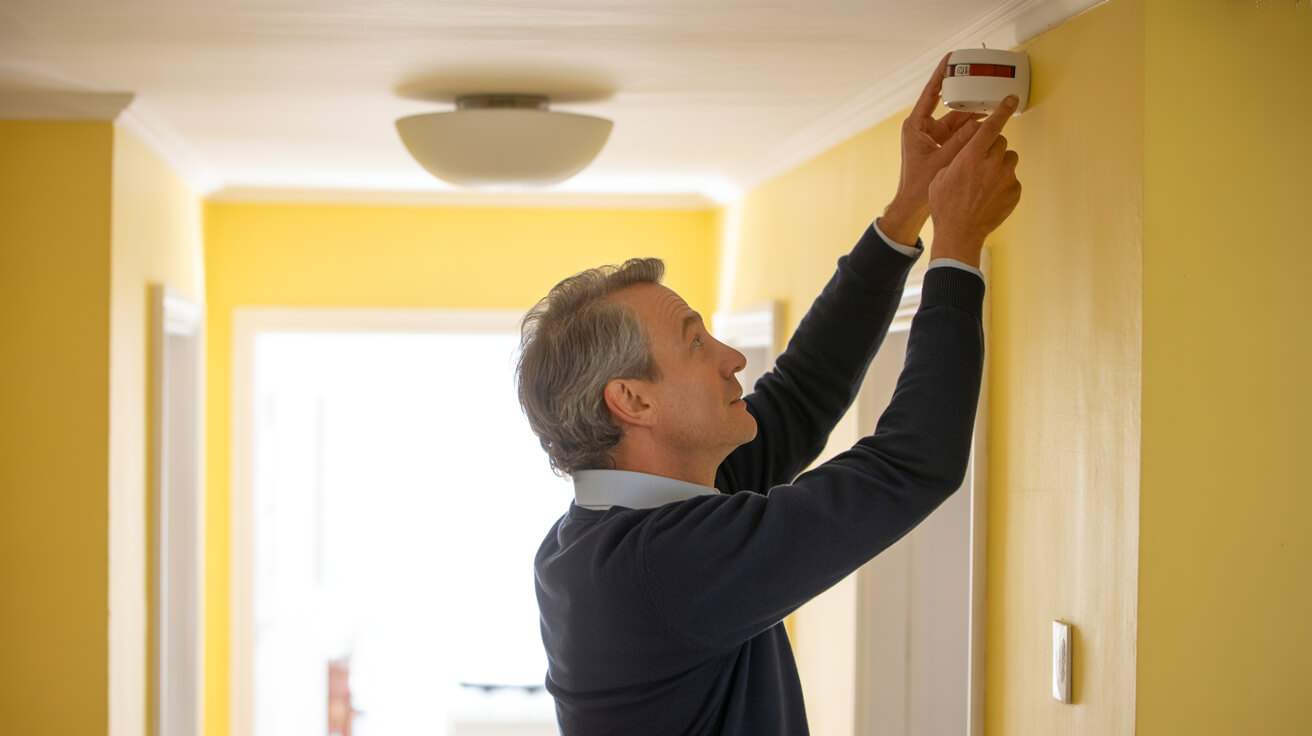
Knowing what typically goes wrong helps you read reports with the right level of concern and urgency.
Typical issues on natural AOV systems
On simple AOV arrangements, engineers often find:
- Actuators that no longer open fully or close correctly
- Vents obstructed by later alterations or stored items
- Damaged hinges, seals or fixings that affect reliability
- Control cables that are worn, damaged or modified
These issues may not be obvious in day‑to‑day use but could stop the system performing as intended when you need it most.
Issues on mechanical and hybrid systems
On mechanical and more complex systems, common findings include:
- Degraded batteries and chargers
- Fans that fail to start, run in the wrong direction or draw abnormal current
- Dampers that stick or fail to respond to signals
- Faulty interfaces between smoke‑control panels, fire alarms and building‑management systems
Because these systems rely on several components working together, a failure in one place can undermine the whole strategy and leave you thinking you are covered when you are not.
Why defects need classification, not just a list
A long defect list without priorities is hard to act on and easy to ignore. You need to know:
- Which items are safety‑critical and need urgent attention
- Which items affect performance but can be scheduled into planned works
- Which items are advisory improvements
Clear classification lets you allocate budget and resources realistically while still addressing anything that materially affects escape routes and compliance.
Testing vs Maintenance vs Remedials: What You Are Actually Buying

Clear scope stops misunderstandings, missed work and surprise costs later.
What “testing” gives you
Testing is about confirmation at a point in time. A six‑monthly function test tells you:
- What was exercised
- How the system responded
- What passed, what failed and what was inaccessible
It answers “does this system still operate as intended today?” but does not, on its own, include all adjustments or repairs.
What “maintenance” adds
Maintenance usually combines testing with routine tasks such as:
- Visual inspections and cleaning where required
- Checking fixings, seals and moving parts
- Basic adjustments and minor parts replacement within agreed limits
A good maintenance scope will be clearly set out in your contract so you know what is and is not included in the visit fee. Standard six‑monthly PPM visits can combine functional testing with these routine tasks, so you get both assurance and basic upkeep in one visit.
How remedial work is scoped and prioritised
Remedials are the corrective works that sit beyond the agreed maintenance scope. When defects are found, you should receive:
- A description of the issue and its impact
- A recommended remedial action
- A priority or target timescale
Well‑structured testing and maintenance visits feed into clear remedial proposals, so you can decide what to approve and when, rather than discovering issues informally on site when pressure is already high.
If you want this level of clarity on scope and costs, you can book a short consultation and set out how your current arrangements work today.
Accreditations & Certifications





Records, Reports and Multi‑Site Planning That Stand Up to Audit

Good evidence saves you time every time someone asks, “Can you show me what you have done here?”
What a defensible report looks like
For each visit, you should expect a report that makes it straightforward to answer:
- Which building and which assets were tested
- When the testing took place and who carried it out
- What was tested, what passed, what failed and what could not be accessed
- Whether the system was returned to normal, and what remains outstanding
If you cannot tell that story from your paperwork, you will find audits, FRAs and insurer queries slower and more stressful than they need to be.
Building an evidence trail across a portfolio
If you manage several buildings, you need more than individual PDFs buried in inboxes. A simple structure — for example, an index by site, then by system, then by visit — allows you to see:
- Which sites are up to date and which are overdue
- Where the same fault keeps recurring
- How quickly critical actions are being closed
Consistent asset naming, site identifiers and layouts mean reports can drop straight into your existing binder or digital filing approach and still work across a portfolio without you having to re‑key data.
Getting your team ready before you instruct us
You get more from a testing programme when your own information is in order. Before you appoint a specialist, it helps if you can gather:
- A list of buildings and known smoke‑control systems
- Any available drawings, fire strategies or previous reports
- Access constraints and typical quiet periods for each site
- A summary of known issues or open FRA actions
We can work from a standing start, but when you bring this material to a consultation, you move faster from discussion to a workable, documented regime that you can defend.
Reliable Property Maintenance You Can Trust
From routine upkeep to urgent repairs, our certified team delivers dependable property maintenance services 24/7 across the UK. Fast response, skilled professionals, and fully insured support to keep your property running smoothly.

Book Your Free Consultation With All Services 4U Today
You can turn overdue visits and patchy records into a structured, defensible smoke‑control maintenance programme with one focused conversation. When you are ready to reduce uncertainty around AOV and smoke vent maintenance, you can book your free consultation with All Services 4U and take a measured, documented step towards stronger Fire Safety Order compliance and more reliable smoke‑control performance across your buildings.
If you are carrying open actions from your last fire risk assessment, know that some AOV or smoke vent tests are overdue, or simply lack confidence in the quality of current reports, a short consultation can give you a clearer picture. You stay in control of the decisions. We provide the technical and practical detail that lets you move.
During your consultation, you can expect us to:
- Review your current position: buildings, system types, visit history and obvious gaps
- Discuss an appropriate testing frequency based on strategy, risk and existing practice
- Outline a proposed scope for six‑monthly function testing and maintenance
- Explain how reporting, defect classification and remedial support would work in your context
You should leave with a realistic set of next steps: which buildings to prioritise, what information to assemble, and how a programme of visits would look across the year. All Services 4U already supports duty holders across residential, mixed‑use and commercial buildings, so you benefit from tested processes rather than experimental one‑offs.
Book your free consultation and turn AOV and smoke vent testing from a background worry into a controlled, evidenced part of how you run your buildings.
Frequently Asked Questions
What do AOV and smoke vent testing PPM services cover in day-to-day building management?
AOV and smoke vent testing PPM services cover the planned inspection, function testing, fault review and reporting needed to show your smoke-control system still performs as intended.
For you, the issue is not whether a vent opens once during a visit. The issue is whether the live system still supports the fire strategy, the common escape route and the wider management duties sitting behind the Regulatory Reform (Fire Safety) Order 2005. In day-to-day property maintenance, that means planned maintenance should give you operational control, not a vague attendance note.
A proper service usually covers more than one device. It should look at the system as a sequence. That may include AOVs, SHEV controls, actuators, smoke shaft interfaces, control panels, manual overrides, standby power arrangements, fire alarm interfaces and reset confirmation. In older or altered buildings, it should also deal with a common problem: installed assets, labels, drawings and historic reports no longer align cleanly. That mismatch is often where compliance confidence starts to erode.
For a managing agent, the practical question is simple: can you explain what was tested, what failed, what was not verifiable and what happens next. If the answer is no, your maintenance regime may be active on paper but still weak in use.
A life-safety system is not maintained because it exists. It is maintained because somebody can prove it will respond.
This is where planned maintenance separates itself from reactive attendance. A contractor who leaves you with a generic sheet has not reduced much uncertainty. A contractor who leaves you with asset-level findings, sequence observations, defect priorities and evidence tied to the site has done something commercially useful. That helps when a fire risk assessor revisits, when an insurer raises a query, or when a board asks whether the system protecting the stair is genuinely under control.
If your current service still feels like a diary exercise, the next step is not more paperwork. It is a site-specific review that shows whether your existing scope reflects the actual system you are managing.
How does the live scope usually break down on site?
The live scope usually breaks down into devices, controls, interfaces and records.
In a natural smoke-control arrangement, that often means checking vent operation, actuator travel, local controls, panel status and reset behaviour. In a mechanical arrangement, it may extend to fans, dampers, control logic and alarm interfaces. In either case, the service should reflect manufacturer instructions, cause-and-effect documentation where available, and the intent of the building’s fire strategy drawings.
A useful buyer test is straightforward: if the report does not tell you which areas, vents, shafts, panels or interfaces were examined, the scope is probably too loose to defend with confidence.
Why does useful coverage matter more than broad wording?
Useful coverage matters because broad wording hides risk.
A service report should help you answer five basic questions without guesswork:
- what system you have
- what was tested
- what passed
- what remains defective or uncertain
- what action now sits with your team
For a board, that supports oversight. For a property manager, that supports contractor control. For an insurer or surveyor, that supports defensibility. If defects, access problems or unknown assets are buried in soft wording, you still carry the exposure.
If your current records do not make those answers easy to pull out, your next testing cycle should focus on report quality as much as the engineering visit itself. That is often the point where All Services 4U can help you move from generic servicing to a more accountable maintenance standard.
Why are 6-monthly AOV and smoke vent function tests widely treated as a defensible compliance baseline?
Six-monthly AOV and smoke vent function tests are widely treated as a defensible baseline because they create a regular and explainable control cycle for life-safety equipment that may sit dormant for long periods.
The logic is practical rather than arbitrary. The Regulatory Reform (Fire Safety) Order 2005 requires relevant fire precautions to be maintained in efficient working order, good repair and good condition. In that context, a twice-yearly specialist testing rhythm is often seen as a sensible minimum because it gives you repeat opportunities to detect drift, verify sequence performance and close faults before they become harder to justify.
Smoke-control systems rarely fail in a dramatic way first. More often, reliability erodes quietly. Actuators weaken. Panel faults linger. Interfaces stop behaving as expected. Labels no longer match assets. A six-monthly cycle reduces the chance that those issues stay hidden until a fire risk assessment, insurer review or live incident brings them into view.
British Standards Institution guidance in the background, including BS 7346 and BS EN 12101, helps shape how these systems are understood and maintained. Home Office fire safety guidance and the wider expectations of a suitable fire risk assessment also support the idea that passive confidence is not enough. The system needs an active testing story behind it.
For you, that makes six-monthly testing less about custom and more about defensibility. It gives you a maintenance rhythm you can explain to a board, an auditor, a surveyor or a resident without sounding improvised.
How does this testing rhythm reduce practical risk?
A six-monthly rhythm reduces practical risk by shortening the time between hidden failure and visible action.
That matters in at least four ways:
- faults are identified before they become stale
- missed interfaces are more likely to be spotted
- report gaps are easier to challenge
- remedial drift is easier to track
For a compliance lead, that improves oversight. For a facilities manager, it supports scheduling discipline. For an insurer or broker, it shows that the system is not being trusted on assumption alone.
A building with repeated faults or incomplete testing evidence does not usually fail because nobody cared. It fails because the checking rhythm was too loose to expose the problem early enough.
When should you treat six-monthly testing as only the starting point?
You should treat six-monthly testing as only the starting point when the building is more complex, more heavily occupied, more operationally fragile or more dependent on smoke-control performance.
That can apply where you have a higher-risk residential building, mixed natural and mechanical systems, unresolved panel faults, incomplete cause-and-effect records, or recurring interface issues between the alarm and smoke-control controls. It can also apply where your fire strategy places strong reliance on smoke shafts, stair ventilation or automatic opening sequences.
For a Building Safety Manager or Accountable Person, six-monthly testing may form the backbone of the regime, but not the whole regime. More frequent visual checks, tighter fault escalation and stronger document control may still be needed.
If your dates have already slipped, treat that as a governance warning rather than an admin gap. Before the next renewal, audit or refinance event, it is worth resetting the cycle and the fault-close process so that the baseline becomes visible and defensible again. That is often where a compliance calendar review with All Services 4U becomes commercially useful.
Who is responsible for arranging AOV and smoke vent testing in UK buildings?
The party with control of the relevant premises or common parts is usually responsible for arranging AOV and smoke vent testing and making sure the evidence is retained.
In practice, that responsibility often sits awkwardly across several teams. In a residential block, the Responsible Person under the Regulatory Reform (Fire Safety) Order 2005 may be a freeholder, managing agent, employer, housing association, RTM company or another duty holder with control of the common parts. In a higher-risk building, the Building Safety Act 2022 may add accountability through the Accountable Person structure. So while one person may book the contractor, responsibility does not disappear into the supply chain.
This is where confusion becomes expensive. One side assumes the managing agent controls the dates. The managing agent assumes the specialist contractor is handling the cycle. A report arrives, but nobody tracks whether defects were closed or whether the result affected the fire strategy. Later, the question is no longer who intended to manage it. The question is who can prove that it was managed.
For you, the safer position is to make the duty map explicit. That means naming who instructs the service, who receives the report, who reviews the findings, who authorises remedials and who confirms that evidence has been filed. If those roles are blurred, the risk is not abstract. It shows up in overdue actions, weak board answers and fragmented audit trails.
How does responsibility usually look in common arrangements?
Responsibility usually sits with the duty holder, but the operating route changes by management model.
| Building setup | Party commonly arranging testing | Main weakness if unclear |
|---|---|---|
| RTM or RMC block | Board or appointed managing agent | Dates drift and defects age |
| Housing association stock | Compliance or building safety team | Reports split across teams |
| Mixed-use development | Managing agent or FM lead | Boundaries in common parts misunderstood |
| Commercial occupied building | Employer or facilities manager | Testing detached from fire strategy |
The legal answer still depends on control, lease structure and building use. The operational answer depends on whether someone can show a clear chain from instruction to closure.
For a lender, incomplete responsibility lines create confidence issues. For a legal adviser, they create evidential weakness. For a resident-facing team, they make reassurance harder because nobody can state with confidence where the accountability sits.
What internal controls should you expect to see?
You should expect a simple internal control structure that shows who owns the duty and how missed actions are escalated.
At minimum, that should cover:
- duty holder
- instructing party
- report reviewer
- remedial approver
- evidence owner
- escalation route for missed dates or open faults
That level of structure helps you answer external questions calmly. It also protects against the familiar gap where everybody was involved but nobody was clearly accountable.
If your current arrangement still relies on habit, inbox chains or verbal assumptions, the fix is usually administrative before it is technical. A site-specific compliance structure review with All Services 4U can help turn a blurred process into one that stands up better under audit, insurer review and board scrutiny.
How should a proper 6-monthly AOV and smoke vent function test be carried out on site?
A proper 6-monthly AOV and smoke vent function test should follow the operating sequence methodically, record what happened clearly and confirm whether the system returned to normal or remains impaired.
That matters because smoke-control testing is not just about pressing a control and watching a vent move. A credible visit starts with context. The engineer should understand the building layout, the system type, the fire strategy dependency and any known access, labelling or interface issues before the test begins. Without that preparation, the visit can become a local device check rather than a meaningful verification of system response.
On site, the sequence should move logically through initiation, controls, outputs, interfaces and reset. In a natural system, that may include trigger testing, panel behaviour, actuator response, vent opening, local override operation and reset confirmation. In a mechanical or hybrid arrangement, it may also include fan start-up, damper response, control logic, standby power condition and linked alarm behaviour.
Manufacturer instructions matter here, and so do fire strategy drawings and cause-and-effect documentation where available. A contractor who cannot connect the maintenance method to the installed system is unlikely to give you a report strong enough for audit, board or insurer use.
For a property manager, the practical buying test is this: after the visit, are you clearer about system performance than you were before. If not, the visit may have consumed budget without improving control.
What should a serious site visit normally include?
A serious site visit should include sequence verification, not isolated motion.
That usually means some combination of:
- panel and fault-status inspection
- trigger or initiation checks
- vent, actuator or fan response
- alarm interface confirmation
- local control and manual override testing
- reset confirmation and defect recording
If access was restricted, assets were unidentified or part of the sequence could not be proved, the report should say so plainly. That is more useful than a broad pass statement that hides uncertainty.
For a fire risk assessor, incomplete verification matters because it weakens the management story around the system. For a board, it matters because a pass sheet without sequence clarity is difficult to rely on.
How should the output guide your next decision?
The output should tell you what to do next without forcing you to interpret engineering shorthand.
A useful post-visit report should show:
| Report element | Why it matters |
|---|---|
| System or zones tested | Confirms actual scope |
| Sequence or interfaces checked | Shows depth of verification |
| Faults and limitations | Supports remedial decisions |
| Status on departure | Confirms whether impairment remains |
| Recommended next actions | Helps budgeting and scheduling |
If your current provider cannot show a sample report that does this, you are buying uncertainty. If reports leave you guessing whether the system was restored, whether a defect is serious, or whether the building is carrying an unresolved impairment, that should be corrected before the next cycle. A review of your current reporting standard with All Services 4U can make that gap visible quickly.
Where should you keep AOV and smoke vent testing records to support audits, insurers and lenders?
You should keep AOV and smoke vent testing records in a structured, retrievable compliance record system that links the visit, the findings, the remedials and the closure evidence.
The storage location matters because records lose value when they are scattered across inboxes, contractor attachments and disconnected folders. In a calm meeting, memory does not carry much weight. Traceable records do. Home Office fire safety guidance, the management discipline expected under the Fire Safety Order, and the wider governance direction of the Building Safety Act 2022 all support the same principle: if evidence cannot be found and understood quickly, the maintenance regime becomes harder to defend.
For you, this is not just a legal filing exercise. It is an operational control issue. If a defect recurs, you need to see the earlier fault. If a board asks whether the system was restored, you need the answer without hunting across old emails. If an insurer, broker or valuer asks for proof, you need a coherent chain from test to action to closure.
A usable filing structure is usually simple. Store records by building, then by system, then by visit date, with linked remedials and supporting evidence beneath that. Complexity is rarely the problem. Inconsistency is.
Records are not there to remember the past. They are there to defend the next decision.
For a lender or valuer, weak records can reduce confidence. For an insurer, they can slow claim handling or renewal dialogue. For a legal adviser, they can weaken the story around reasonable management.
What should the retained record set contain?
The retained record set should contain enough information to show what happened, what changed and whether the issue was resolved.
That usually includes:
- service report
- logbook or compliance-register entry
- recorded defects or limitations
- remedial actions and closure evidence
- supporting photos or panel records where relevant
- notes on access problems, unknown assets or unverified areas
Where a fault affects the smoke-control strategy or leaves the system impaired, the record should also show who was informed and what interim control was put in place. That matters for board assurance and insurer defensibility alike.
Manufacturer instructions, fire strategy information and cause-and-effect documents should also be stored where they can be cross-checked against later reports. If those source documents are missing, the maintenance record is harder to interpret well.
Why does record location affect procurement and risk?
Record location affects procurement because scattered evidence weakens contractor accountability.
If your team cannot match the original test report to the remedial close-out, it becomes harder to challenge repeat faults, justify cost or answer external questions. That can slow renewal, complicate refinance activity and create avoidable pressure during audit or tribunal preparation.
If your current smoke-control evidence is split across inboxes and contractor-held files, the next step should be a record-structure reset before the next major trigger event. All Services 4U can help you build a reporting rhythm and filing structure that supports daily management as well as external scrutiny.
How should you choose an AOV testing contractor without ending up with a superficial service?
You should choose an AOV testing contractor by checking whether they can explain your building, your system and your evidence requirements in specific terms rather than generic maintenance language.
That is the real buyer test. Plenty of contractors can say they service smoke vents. Far fewer can explain how they verify sequence logic, how they deal with incomplete cause-and-effect records, how they classify defects, or how their reports help a board, managing agent, insurer or fire risk assessor make a decision after the visit. In practice, that is where superficial service reveals itself.
For you, the key procurement question is not only cost. It is what the visit leaves behind. A good contractor should leave you with clearer system understanding, usable evidence, prioritised next steps and a stronger compliance story. A weak contractor leaves you with another attendance line and the same uncertainty you had before they arrived.
This matters commercially because low-detail servicing often creates secondary cost. You get repeat call-outs, delayed remedials, weak records, unresolved faults and harder conversations with stakeholders who expect evidence, not reassurance. RICS-linked lender expectations, insurer survey logic, fire risk assessment scrutiny and manufacturer instructions all push in the same direction here: the service needs to be building-specific and decision-ready.
How should you test the contractor before appointment?
You should test the contractor by asking questions that reveal method, not marketing.
A useful pre-appointment set includes:
- What smoke-control system types do you maintain regularly?
- How do you verify sequence response, not just local movement?
- What do your reports show after each visit?
- How do you classify and escalate faults?
- How do you deal with undocumented or inaccessible assets?
- Can you support remedials with the same reporting clarity?
Those questions expose whether the contractor understands your actual management risk. For a building safety lead, that risk is unresolved life-safety uncertainty. For a managing agent, it is poor control. For an insurer, it is weak precedent evidence. For a board, it is governance exposure.
If the answers stay vague, broad or heavily sales-led, treat that as a warning sign.
What usually marks out a stronger provider?
A stronger provider is usually more specific, more transparent and less defensive.
| Strong sign | Why it matters |
|---|---|
| System-specific language | Suggests genuine operational competence |
| Sample reports available | Lets you judge evidence quality early |
| Clear scope boundaries | Reduces cost disputes and hidden exclusions |
| Portfolio scheduling discipline | Helps consistency across multiple sites |
| Calm defect advice | Supports board and PM decision-making |
A stronger contractor also understands that this is not just engineering. It sits inside governance, insurance, resident trust and audit readiness. That broader awareness is often what turns a technical supplier into a dependable maintenance partner.
If your current provider still feels reactive, generic or difficult to challenge, compare them against a more site-specific model before the next testing date is due. A practical review with All Services 4U can help you do that with clearer criteria, less guesswork and a safer buying decision.
- What 6-Monthly AOV and Smoke Vent Testing Actually Means
- Who Must Arrange Testing and Where the Duty Sits Under the Fire Safety Order
- What a Proper 6-Monthly Function Test Should Include On Site
- How Often Systems Should Be Tested, and Which Buildings Need More Than a Basic Interval
- Common AOV and Smoke Vent Defects Found During PPM Visits
- Testing vs Maintenance vs Remedials: What You Are Actually Buying
- Records, Reports and Multi‑Site Planning That Stand Up to Audit
- Book Your Free Consultation With All Services 4U Today
- Frequently Asked Questions
- Related PPM Services
Case Studies


Related Articles

Your Guide To Identifying And Treating Minor Mould Outbreaks
Why Planned Preventative Maintenance (Ppm) Saves Money And Ensures Compliance