Fire Safety PPM Services for Retail UK – Public Access & Evacuation
Retail leaders responsible for UK stores, shopping centres or high-street premises need fire safety PPM that keeps public access and evacuation under control. A structured programme of scheduled inspections, testing and servicing replaces ad hoc fixes, aligning with your fire risk assessment, British Standards and insurer expectations where applicable. By the end, you have a documented maintenance regime, clear records across alarms, lighting, doors and routes, and a predictable process for closing out defects. It’s a practical way to move from “best efforts” to a defensible, repeatable standard of safety.


Author
Izzy Schulman

Fire safety PPM for busy, public-access retail premises
Retail premises with high footfall, changing layouts and unfamiliar visitors cannot rely on informal fire safety routines. When alarms, lighting, signage and doors are only checked when someone remembers, both legal duties and evacuation reliability are left to chance.

A planned preventive maintenance regime turns those life-safety systems into a managed, documented programme that supports safe trading. By mapping user checks and engineer visits to British Standards and your fire risk assessment, you gain predictable performance, clearer evidence for insurers and enforcement, and less dependence on individual managers.
- Turn scattered checks into a single, structured maintenance plan
- Keep alarms, lighting, doors and routes working together under pressure
- Provide clear maintenance evidence for insurers, landlords and fire services
Need Help Fast?
Locked out, leak at home, or electrical issue? All Services 4 U provides 24/7 UK locksmith, plumbing, electrical.
Testimonial & Clients Who Trust Us
With 5 Star Google Reviews, Trusted Trader, Trust Pilot endorsements, and 25+ years of experience, we set industry standards for excellence. From Dominoes to Mears Group, our expertise is trusted by diverse sectors, earning us long-term partnerships and glowing testimonials.
Worcester Boilers

Glow Worm Boilers

Valliant Boilers

Baxi Boilers

Ideal Boilers

Why your retail premises can’t rely on “best efforts” fire safety
Fire safety in retail cannot be left to “best efforts” because high footfall, unfamiliar visitors and changing layouts create risks that only structured maintenance can control. Your legal duties, insurers and brand now expect a documented, standards‑based approach, not ad hoc testing when someone remembers, and they increasingly ask to see how you prove it in practice.
Fire safety is at its weakest when it relies on memory instead of method.
In a retail environment, you have high footfall, changing merchandising, seasonal stock, temporary displays and a constant mix of staff and visitors who do not know the building. In that context, “we test the alarm sometimes and call someone when it breaks” is no longer enough.
UK fire safety law expects your fire precautions to be kept in efficient working order. British Standards set out how often key systems should be tested and serviced, including fire alarm testing. Insurers increasingly ask to see evidence of that maintenance before they pay significant claims. If a fire and rescue service inspects your store or shopping centre, they will look not only at your fire risk assessment, but also at whether you are following it through with proper, documented maintenance.
This overview is for general information only and not legal advice; premises‑specific decisions should be taken with a competent fire risk assessor or lawyer.
All Services 4U’s fire safety planned preventive maintenance (PPM) services are built for that reality. The aim is simple: to help your stores stay open and trading while making sure alarms, emergency lighting, signage, doors, automatic opening vents (AOVs) and evacuation routes work together, every day, to protect people and your business.
If your current arrangement relies heavily on individual managers “doing their best”, this is usually the point where gaps appear. A structured PPM regime gives you a repeatable, auditable way to manage those risks across one shop or an entire estate.
Retail fire safety means life‑safety systems behave predictably under pressure, not that you simply hope they work when needed. A properly designed PPM regime creates that predictability by turning weekly, monthly and annual checks into a disciplined routine.
In practice, that means your alarms, emergency lighting, doors and escape routes are tested on a schedule, with defects logged and closed out rather than left for “when we have time”. When evacuation routes are busy with customers and trolleys, or displays change weekly, the only way to stay safe is to make those checks part of normal operations rather than sporadic “projects”.
A predictable maintenance pattern also makes conversations with insurers and landlords much more straightforward. You are no longer relying on anecdote; you can show records that match what guidance expects and give your board clearer assurance.
Why public access and evacuation change your risk profile
Public access changes your risk profile because most people in your store do not know the layout, exits or how your systems work. Your evacuation plan is only as strong as the weakest link in that chain of alarms, lighting, signage and fire doors.
For a small back‑office building, informal routines might limp along for a while. For a supermarket, shopping centre, retail park or busy high‑street store, that approach quickly breaks down. Staff turnover, extended trading hours and seasonal peaks make it unrealistic to rely on memory alone.
That is why enforcement bodies and insurers place such weight on evidence of maintenance in public‑access premises. When you can show that your systems are checked and serviced methodically, you demonstrate control, not luck, and you give everyone from directors to store managers a clearer line of sight on residual risk.
What is fire safety PPM in a UK retail setting?
Fire safety PPM in a UK retail setting is a scheduled, proactive programme of inspection, testing, servicing and minor repairs across all life‑safety systems. It turns alarms, lighting, doors and related assets into a managed programme rather than a collection of one‑off jobs when something fails.
This programme is delivered to a pre‑agreed timetable, for example weekly, monthly, quarterly and annually, instead of only after faults appear. The schedule reflects your fire risk assessment, British Standards and the way your stores actually trade, so compliance activity slots into the real world rather than fighting it.
In a shop, supermarket, department store or shopping centre unit, that typically covers:
- Fire detection and alarm systems – panels, call points, detectors, sounders and interfaces to doors, lifts or smoke control.
- Emergency lighting on escape routes, stairwells, sales floors and back‑of‑house circulation.
- Fire safety signs and notices, especially exit signs and “Fire door keep shut” signage.
- Portable fire extinguishers and fire blankets in appropriate locations.
- Fire doors, shutters and compartmentation that protect escape routes and high‑risk areas.
- Automatic opening vents (AOVs), smoke control or smoke extraction where fitted.
- Voice alarms or public address systems for evacuation messages and refuge communication points.
These elements work together to support safe evacuation; your PPM schedule is the mechanism that keeps them in step.
Core elements of a retail fire safety PPM regime
A retail fire safety PPM regime usually combines simple user checks by your team with formal maintenance visits by competent engineers. Both strands are mapped against relevant British Standards and your fire risk assessment so they reinforce, rather than duplicate, each other.
User checks might include weekly alarm call‑point tests, daily walks to confirm exits and routes are clear, and quick visual checks on extinguishers and signage. Engineer visits then build on that with detailed functional testing, servicing and calibration of equipment, together with repairs or recommendations where items are not performing as they should.
By linking both strands into one plan, you avoid duplication, fill gaps and make sure nothing depends solely on an individual’s memory or enthusiasm. The result is a living process that keeps risk under review, feeds issues into your risk register and provides evidence that you are managing premises responsibly.
PPM vs reactive maintenance in real stores
PPM differs from reactive maintenance because it prevents faults, supports legal duties and protects trading, rather than simply reacting when problems become obvious. Reactive‑only maintenance often feels cheaper until the day a fault coincides with an incident or inspection.
In a live store, reactive‑only patterns usually look like this: the alarm panel sits in fault for weeks because silencing the buzzer becomes the priority; a failed emergency light is noted but not chased; a sticking fire door is wedged open during busy trading. Each of these is easy to ignore until the day they matter.
With a PPM regime, those same issues are picked up on a timetable, recorded and closed out. Your store team still reports urgent problems, but there is also a safety net that quietly checks the systems you rely on. That balance is what UK guidance increasingly expects in public‑access premises.
If you want to move away from a cycle of “fix‑it‑when‑it‑breaks”, a structured PPM schedule is usually the most efficient, defensible way to do it.
Systems that must be on your fire safety PPM schedule
![[ALTTOKEN]](https://allservices4u.co.uk/app/uploads/2026/01/02-Fire-Safety-PPM-Services-for-Retail-UK-Public-Access-Evacuation.png)
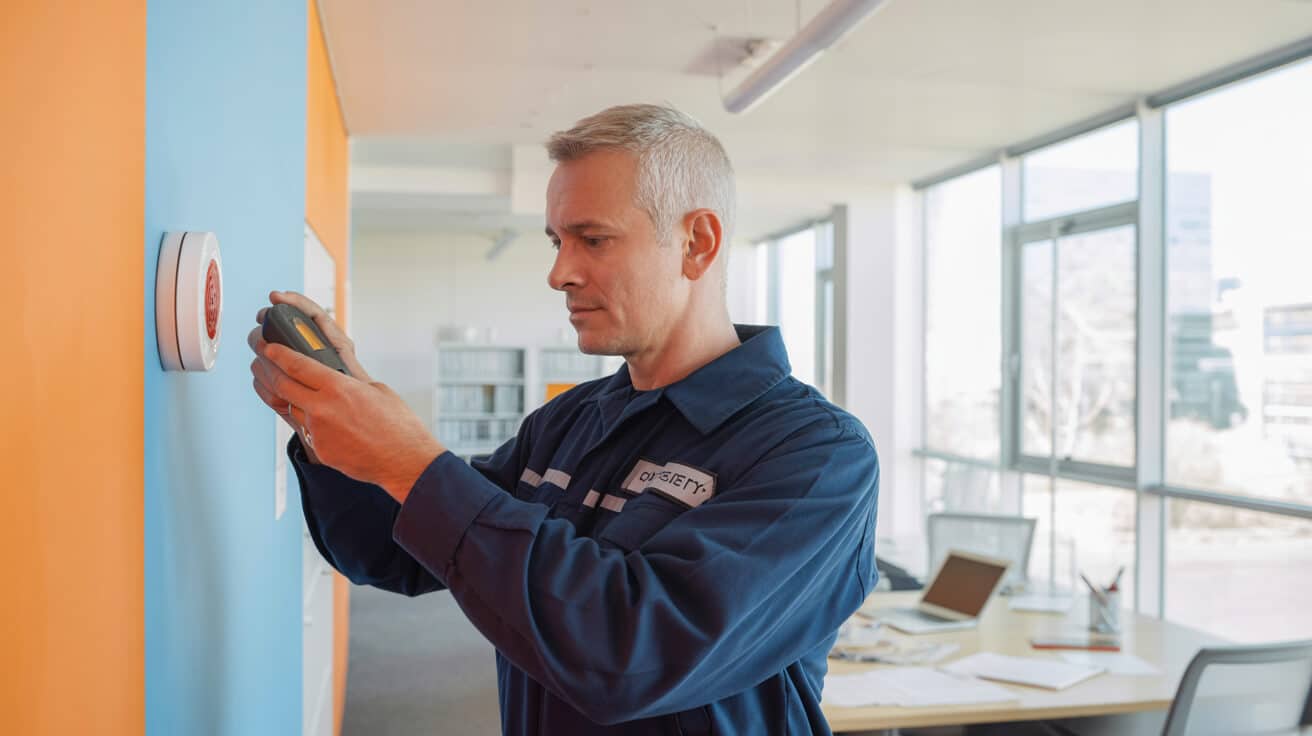
The systems that must be on your fire safety PPM schedule are those that provide early warning, safe escape and fire containment in a retail fire. In practice, that means alarms and detection, emergency lighting, signage, fire doors, smoke control and extinguishing equipment across sales floors and back‑of‑house.
Under the Regulatory Reform (Fire Safety) Order 2005 and associated guidance, the “responsible person” must maintain all measures provided for fire safety. In practical terms for retail and other public‑access premises, that means your PPM regime should cover at least the following groups of systems in a structured way.
Fire alarms and detection (BS 5839‑1)
Fire alarm and detection systems in retail premises need routine user tests and periodic servicing so you can rely on early warning and correct operation when needed. A structured PPM plan, including fire alarm testing and aligned with BS 5839‑1, gives you that assurance.
Typical good practice includes:
- Weekly user test: – operate at least one manual call point per system, rotating locations, and check that sounders and indicators operate.
- Periodic engineer inspection and servicing: – commonly every six months, to test a proportion of call points and detectors, check sound levels, verify power supplies and battery condition, and confirm correct operation of any links to doors, lifts, smoke control or plant.
- Logbook review and fault follow‑up: – confirm that previous issues have been closed, not simply acknowledged.
These activities confirm that your system will raise an alarm, be heard and behave as designed when called on, rather than leaving weaknesses hidden until an incident.
Emergency lighting, exits and signage
Emergency lighting, escape routes and signage need methodical checks so that people can find safe exits even if lighting fails or smoke obscures normal routes. In a busy store, they are often the first things to be obstructed by stock or displays.
For emergency lighting, a typical regime aligned with BS 5266 and related guidance would include monthly functional tests and an annual full‑duration test, with defective fittings repaired or replaced. Exits and routes should be checked to ensure doors open freely, routes remain clear of stock and furniture, and exit signs remain visible and illuminated where required.
Fire safety signs, including directional arrows and “Fire door keep shut” notices, should be reviewed during PPM visits to confirm they still match the layout and risk profile of the area. When shop layouts change seasonally, this review becomes critical and gives your managers confidence that evacuation information is still accurate.
A robust schedule for these items significantly reduces the risk of confusion or congestion during an evacuation, especially for customers unfamiliar with the building.
Fire doors, smoke control and extinguishers
Fire doors, smoke control systems and extinguishers need regular inspection and servicing because they provide containment and first‑aid firefighting capacity at the point of use. If they fail, fire and smoke can spread rapidly through customer and staff areas.
For fire doors and shutters, maintenance typically means checking gaps, seals, closers, latches, hold‑open devices and signage, and repairing or replacing items that no longer meet expected performance. Smoke control or AOV systems should be tested and serviced according to their design standard to confirm that vents, actuators and controls operate as intended.
Portable extinguishers require annual servicing and periodic replacement in line with relevant standards, alongside user training on safe, limited use. In a retail environment, it is especially important to keep extinguisher types matched to the risks present and well positioned without being used as doorstops.
Putting these systems onto a single PPM plan makes it far less likely that an important asset will be forgotten simply because responsibility sits between teams or suppliers.
What happens if you don’t maintain fire safety systems in retail
If you do not maintain fire safety systems in retail premises, you increase the chance of enforcement action, uninsured losses, serious injury claims and prolonged business interruption. The weaknesses often stay hidden until a fire, a near miss or an inspection exposes them at the worst possible time.
The main consequences typically show up as:
- Enforcement and restrictions: – formal notices, fines or partial closure.
- Uninsured or disputed losses: – conditions precedent not met.
- Brand and trust damage: – customers, staff and media losing confidence.
When alarms, emergency lighting and doors are left to chance, the likelihood rises that something will fail exactly when you need it. That might be as simple as an inaudible alarm during busy trading, or as serious as an exit blocked by stock while smoke fills the sales floor. This is the practical end point of a reactive‑only approach: faults remain until an incident, visit or inspection forces attention.
Regulatory and enforcement consequences
Regulators expect you to maintain fire precautions in line with your fire risk assessment and recognised standards. Failure to do so can lead to formal notices, restrictions on use of the building, fines or, in serious cases, prosecution of individuals and companies.
In retail, an inspection that finds faulty alarms, dead emergency lighting or wedged‑open fire doors may lead to immediate requirements to remedy deficiencies. In the worst cases, enforcement can close areas or entire stores until risks are reduced. That is difficult enough in a small shop; for a multi‑site estate or anchor tenant in a centre, the impact escalates quickly and may draw board‑level and media attention.
Beyond regulatory enforcement, your fire risk assessment can be challenged if it does not reflect how systems are actually maintained in practice. A good PPM programme is one of the simplest ways to show that your written assessment is being acted on rather than sitting on a shelf.
The business impact of a poorly maintained fire safety regime often dwarfs the direct repair costs. Even a small fire can lead to days or weeks of closure while damage is assessed, systems are repaired and investigations are run. If insurers take the view that conditions were not met, your organisation could face a painful financial hit.
In parallel, customers, staff and the wider public may lose confidence in a brand that appears to have neglected basic safety. Media coverage of avoidable incidents can be particularly damaging for high‑street names and shopping centres, and can trigger questions from lenders and investors as well as regulators.
For senior managers and directors, there is also a personal dimension. Where there is clear evidence that risks were ignored or maintenance was not undertaken, individuals can be held to account. A visible, well‑run PPM regime is one of the most straightforward ways to show that you took your responsibilities seriously and gave your teams the tools to manage risk.
If you are already uneasy about the state of maintenance records, now is usually the best time to tighten things before an incident or inspection forces the issue.
Accreditations & Certifications





How our fire safety PPM works in your stores
![[ALTTOKEN]](https://allservices4u.co.uk/app/uploads/2026/01/03-Fire-Safety-PPM-Services-for-Retail-UK-Public-Access-Evacuation.png)
Our fire safety PPM service for retail stores works by combining a clear mobilisation phase, a repeatable visit pattern and ongoing communication so your teams know what is happening and you have the evidence you need. The process is designed to reduce disruption while improving assurance for store managers, regional property teams and your board.
Whether you are an owner, an RTM or RMC director, a managing agent or a head of compliance, the same principle applies: your premises need a maintenance regime that reflects how your sites really trade, not an abstract checklist. From the outset, the focus is on understanding how your stores operate, how your systems are configured and where current gaps lie. That allows a PPM plan that fits your trading patterns rather than one copied from an industrial site.
Step‑by‑step mobilisation for a single site or portfolio
Mobilisation starts with an information‑gathering and planning phase, then moves into scheduled visits and continuous improvement. The aim is to make the change from “best efforts” to structured PPM feel manageable for your teams, whether you run a single flagship store or a national estate.
Step 1 – Gather information and review risks
Your team shares existing fire risk assessments, as‑fitted drawings where available, asset lists, previous certificates and any known issues. A site walk‑through then validates how systems are actually installed and used in day‑to‑day trading.
Step 2 – Build a store‑specific PPM schedule
Using that information, a PPM calendar is created for alarms, emergency lighting, doors, extinguishers and any smoke control or voice alarm systems. The plan is aligned with relevant standards and your own trading patterns so tests fall at sensible times.
Step 3 – Agree access, timing and communication
Visit windows, contact points and any restrictions on testing (for example, avoiding alarm sounders during key trading peaks) are agreed so that maintenance happens smoothly without surprising store teams or customers.
Once mobilisation is complete, the schedule becomes part of normal operations, with reminders and reports helping everyone stay aligned. For multi‑site retailers, this also gives regional and central teams a consistent picture of compliance across the estate.
What your teams can expect on a typical PPM visit
On a typical PPM visit, engineers arrive briefed on your store, follow a fixed test and inspection routine, communicate findings clearly and leave your team with updated records and clear next steps. The pattern is consistent enough that managers quickly understand what to expect.
The visit usually starts with a short check‑in with the duty manager to confirm planned work areas and any particular concerns. Engineers then carry out tests and inspections according to the agreed scope, recording results and noting any defects or recommendations.
At the end of the visit, they provide a concise verbal summary and ensure that digital reports are sent promptly. Those reports show what was tested, what passed, what needs follow‑up and any photos or readings that support the findings, so your compliance and property teams can file them straight into risk registers and board packs.
Because the process is standardised, your teams start to recognise the pattern, and disruption reduces over time. If your estate includes multiple sites, a consistent visit model also makes it much easier to compare performance and close gaps.
If you want to see how this structured model would map onto your own stores or centres, you can talk it through with All Services 4U on an initial call before you commit to any wider change.
What All Services 4U includes in a retail fire safety PPM contract
A retail fire safety PPM contract with All Services 4U typically includes technical maintenance across key systems, clear documentation, and support for your legal, insurer and landlord obligations. The exact mix is tailored to your stores, but the underlying structure is consistent across single sites and large estates.
The emphasis is always on aligning the scope with your fire risk assessment, Building Regulations and insurer expectations. That way, the work you commission has a direct line of sight to risk reduction, compliance and continuity of trading.
Technical scope tailored to your store formats
The technical scope focuses on the systems you rely on for safe public access and evacuation, with enough flexibility to accommodate different formats such as high‑street units, retail parks and enclosed shopping centres. All Services 4U is used to working with multi‑site retailers as well as individual landlords.
Depending on your needs, that can include:
- Fire alarm and detection systems, with testing and servicing aligned to BS 5839‑1.
- Emergency lighting checks and testing in line with BS 5266 and related guidance.
- Fire door, shutter and compartmentation inspection and remedial works.
- AOV and smoke control system testing where installed.
- Portable extinguisher servicing and replacement in line with relevant standards.
- Checks on escape routes, exits and associated fire safety signage.
Multi‑site retailers can standardise this scope across the estate, with allowances for particular risks at individual sites. Smaller landlords can select a subset focused on the highest‑risk elements so spend matches exposure.
If you are reviewing your current contract scope and want to see how a PPM model could work in your setting, this technical review is often the most practical place to start a conversation with All Services 4U.
Documentation, evidence and support for insurers and regulators
Alongside the physical works, the contract includes structured reporting so you have the evidence you need when insurers, landlords or fire authorities ask how systems are maintained. For heads of compliance, APs/BSMs and finance teams, this is often where confidence is won or lost.
After each visit you receive clear reports covering what was inspected or tested, the results, any defects or recommendations, and the actions required to close them. Over time, those reports build into a compliance trail that can be incorporated into your fire risk assessments, board packs and any Safety Case or Golden Thread records.
When insurers or landlords raise specific queries, having this evidence to hand can significantly shorten discussions and improve trust. If you face a more formal review, such as an audit or investigation, the same records demonstrate that maintenance was not treated as an afterthought.
If you are unsure whether your current documentation would withstand scrutiny, reviewing it against a structured PPM reporting model is often a revealing first step and can be done as a focused piece of work before any broader contract change.
Proof that your fire safety PPM is in safe hands
Evidence that your fire safety PPM is in safe hands comes from the competence of engineers, experience in similar retail environments and the quality of governance that sits behind each visit. You want more than a van and a logo; you want a partner who understands how public‑access premises really operate and can prove what has been done.
All Services 4U’s fire safety work is underpinned by engineers with relevant trade qualifications and experience in live trading environments, supported by processes that emphasise documentation, communication and follow‑through. That combination reassures store managers on the ground and directors who carry the legal and reputational risk.
Competent engineers and sector experience
Competent engineers with sector experience are crucial because they need to balance technical requirements with the realities of busy stores, extended hours and shared service areas. The wrong approach can be technically correct but operationally unworkable.
In practice, that means engineers who understand standards such as BS 5839‑1 and BS 5266, who are comfortable working around customers and staff, and who can explain what they are doing in clear language. It also means teams who are used to coordinating with centre management, landlords and other tenants where systems are shared across multiple occupiers.
All Services 4U has delivered similar PPM regimes for both single high‑street units and multi‑site retailers, so your team benefits from patterns that have already been tested in real trading environments. This blend of technical skill and retail awareness reduces friction on site and makes it more likely that your teams will see PPM as helpful rather than disruptive.
Governance, reporting and continuous improvement
Strong governance and reporting turn individual visits into a managed programme that can withstand external scrutiny and internal review. Without them, even technically sound work can still leave you exposed when regulators, insurers or boards start asking for evidence.
All Services 4U’s approach focuses on consistent job data capture, timely reporting and clear tracking of outstanding actions. This makes it easier for your compliance, finance and operations teams to see where issues sit and how quickly they are resolved, and to demonstrate that issues flagged by fire risk assessments are being addressed.
Over time, those records also provide insight into recurring issues, such as particular stores with frequent call‑outs or systems that need upgrading rather than further patching. That enables better planning and more informed capital decisions, rather than endless short‑term fixes that frustrate asset managers and finance directors alike.
If you would like to see what that level of visibility feels like, a simple starting point is to review one or two recent reports from All Services 4U side by side with your existing records.
Reliable Property Maintenance You Can Trust
From routine upkeep to urgent repairs, our certified team delivers dependable property maintenance services 24/7 across the UK. Fast response, skilled professionals, and fully insured support to keep your property running smoothly.

Book Your Free Consultation With All Services 4U Today
All Services 4U can help you move from “best efforts” fire safety to a disciplined, evidence‑backed PPM regime that protects people, trading and reputation across your retail sites. A short, no‑obligation consultation is often enough to identify gaps and outline a practical way forward.
During that conversation, you can share how your stores currently manage fire safety, what systems you have in place and where you feel least confident. In return, you receive clear feedback on priority risks, likely quick wins and what a suitable PPM regime might look like for your organisation.
What we cover in your free consultation
A free consultation focuses on understanding your risk profile, systems and pressures, then mapping those to a realistic maintenance plan that fits your retail operation rather than fighting it.
Typical topics include:
- Your current fire risk assessments and how they are implemented through maintenance.
- The state of your alarms, emergency lighting, doors, AOVs and documentation.
- Pain points with existing contractors, including responsiveness and evidence quality.
By the end, you should have a clearer view of where you stand and what improving your fire safety PPM would involve in practice, without any obligation to proceed further.
Low‑friction ways to get started
Getting started should feel manageable, so the first step is usually a focused piece of work rather than a wholesale change. That might be a single‑site PPM review, a pilot maintenance programme for a cluster of stores or a documentation and evidence check.
From there, you can decide whether to extend the approach across more sites, adjust the scope or combine fire safety PPM with other services such as electrical or water hygiene checks. This gives you room to test the model and build confidence before you commit portfolio‑wide.
If you want to explore how this could work for your stores, you can schedule a free consultation with All Services 4U and use that time to test ideas, stress‑test assumptions and decide if our approach fits your needs. It is a straightforward way to turn concern about fire safety into a concrete, workable plan that protects your customers, staff and business.
Frequently Asked Questions
Explore our FAQs to find answers to planned preventative maintenance questions you may have.
How can you tell if your current fire safety PPM is actually protecting you, not just ticking boxes?
You can tell your fire safety PPM is really protecting you when it reduces surprises, calms inspections, and reassures insurers and lenders – not just fills in logbooks. You should feel confident that, if something went wrong tomorrow, your records and decisions would stand up to outside scrutiny.
What does “real” protection look like day to day on your sites?
On a block, estate or scheme that’s genuinely protected, you’ll notice:
- Weekly tests and daily checks happen on time, without improvisation or arguments about “who owns what”.
- Engineers find and close issues early, rather than you discovering them during a complaint, valuation or fire officer visit.
- Fewer nuisance alarms, evacuations and “system fault” messages on panels.
- Local managers can explain, in plain English, what’s checked, how often and by whom.
You won’t see panels sitting on silence for days, dead emergency lights beside exits, or fire doors that only latch if someone slams them. You won’t dread the moment a fire officer, surveyor, insurer, lender or regulator asks, “Can I see your evidence for the last 12 months?”
From a property maintenance point of view, that means three things line up:
- Inputs: – FRA actions, PPM calendars, clear roles (RP, AP, RTM board, managing agent, HA, FM) are documented and live.
- Process: – BS 5839 and BS 5266 regimes actually happen when due, with readings, photos and remedials recorded.
- Outputs: – defects, near misses and resident reports feed back into actions you can see closed, not forgotten.
If those three layers tell different stories – immaculate logbooks but confused site teams, or solid engineers but no paperwork – your PPM is fragile. That’s usually when a one‑site walk‑through with a provider like All Services 4U is worth doing. Comparing what your FRA and PPM say should be happening against what is happening on the plant and with your people gives you a fast, low‑risk sense of whether you’re genuinely protected or just lucky so far.
Why do landlords and owners end up so frustrated with “ordinary” maintenance contractors?
Landlords and owners get frustrated because ordinary contractors usually fix symptoms for today and ignore your exposure tomorrow. They silence beeping panels, patch leaks and replace a closer, but don’t tie anything back to your FRAs, Building Regulations duties or future claims and disputes.
What patterns cause that frustration in practice?
Across RTM boards, HAs, institutional owners and private landlords, the patterns repeat:
- Short‑term job scoping: – works are described as “make safe” or “stop the fault” rather than “resolve the underlying risk”.
- Thin documentation: – job sheets that say “attended, tested OK” with no readings, photos, serials or references to BS 5839, BS 5266, BS 8214 or Parts B, C/F, J, P.
- No portfolio view: – each building is treated as a one‑off; nobody joining the dots on repeated leaks, recurring panel faults, chronic damp.
- No insurer, lender or tribunal mindset: – evidence isn’t collected with a claim, valuation, disrepair case or Section 20 challenge in mind.
When something serious happens, or a claim, valuation or tribunal hits, that approach leaves you carrying everything:
- Insurers: question whether conditions precedent were met or long‑term neglect exists.
- Lenders and valuers: start shading valuations or adding conditions because FRAs and remedials don’t line up.
- Tribunals, ombudsmen and courts: see gaps in records, unclear reasonableness and no clear line from defect to remedy.
You’re left saying “we thought the contractor had dealt with it” while staring at a job sheet that could belong to any asset, anywhere.
How is a risk partner different – and why does that matter for you?
A genuine risk partner doesn’t see themselves as “just another Tier‑2”. They behave like the missing spine between your governance, your property maintenance, and your evidence. Before work starts, the questions sound more like yours:
- “If this is examined in three years’ time, what will the insurer, regulator, lender or tribunal want to see?”
- “Where does this job sit in the FRA, Safety Case, Building Regs A–Q, leases and risk registers?”
- “What evidence will prove that the owner, RTM/RMC board, HA or investor acted reasonably?”
That’s why All Services 4U builds jobs around standards, law and proof as much as labour and materials. Engineers capture readings, photos and references as standard, jobs are coded back to FRAs and relevant Parts, and the outputs are designed to live comfortably inside your binders, CAFM and Golden Thread – not buried in someone else’s system.
If you’re tired of coaching contractors to think beyond today’s fault, moving to a partner who already works this way is often the simplest way to protect your assets, reputation and sleep.
What should a fire safety PPM schedule for a multi‑site landlord or RTM board actually contain?
A fire safety PPM schedule for a portfolio should be a single, readable map of who checks what, when, to which standard, and how it’s evidenced, across all your buildings. It should tie directly into your FRAs, leases, risk registers and Building Regulations duties, not sit in a vacuum.
Which technical elements must be covered as a minimum?
Across a mixed portfolio – RTM/RMC, HA, PRS/BTR, PBSA or commercial/resi – you’d normally expect:
- Fire alarms (BS 5839): – weekly user tests; 6/12‑monthly engineer service; clear cause‑and‑effect documentation and remedial logs.
- Emergency lighting (BS 5266): – monthly function tests; annual 3‑hour duration tests; failed fittings logged, not just noted.
- Fire doors & compartmentation (BS 8214 / EN 1634): – risk‑based inspections covering gaps, seals, closers and hardware; defects coded and tracked to closure.
- Extinguishers: – monthly visual checks; annual service; clear inventory tied to site layouts.
- Smoke control / AOVs: – tests and servicing as per design, FRA and any Safety Case.
- Gas (Gas Safety Regulations): – annual CP12 where relevant; remedials followed through with evidence.
- Electrics (BS 7671 / PRS): – EICR on risk‑based cycles; DB torque, RCD trip tests, and, where used, thermal imaging with follow‑up.
- Water hygiene (ACoP L8 / HSG 274): – RA, sentinel temperatures, flushing logs, TMV service and descaling.
- Roof/gutters: – bi‑annual and post‑storm inspections; photo evidence and defect lists.
Layered above that you should see:
- Clear responsibility splits: – landlord vs RTM vs managing agent vs HA, so Section 20 and HFHH conversations are grounded in facts, not feelings.
- SLA profiles: – response/containment/closure times matched to risk categories, not contractor convenience.
- Data discipline: – everything lands in one place (CAFM or equivalent) so PPM, reactive jobs, FRA and Safety Case actions, complaints and near misses sit on the same spine.
All Services 4U designs fire safety and wider property maintenance schedules to that backbone, then localises around your portfolio’s nuance instead of starting from a different baseline in every building.
How does that schedule flex between RTM boards and institutional owners?
The building blocks are the same, but the emphasis shifts:
- RTM/RMC boards and smaller landlords:
Need a schedule that stands up to leaseholders, tribunals and their own professional advisers. That means explicit law/Part references, Section 20 awareness, simple visuals for board packs, and evidence that explains why spend is “reasonable” – not just that it happened.
- Institutional owners, PRS/BTR funds, PBSA operators and HAs:
Need a schedule that can scale: same schema and KPIs across hundreds or thousands of units, feeding into RSH/BSR expectations, risk registers, ESG reporting and refinancing plans. For them, fire safety PPM has to plug into Safety Case and Golden Thread frameworks as standard, not as a bolt‑on.
A provider like All Services 4U lives in both worlds daily, so the same schedule can carry you from a single RTM block defending a Section 20 to a national portfolio facing a regulator review, insurer renewal or lending committee.
How does stronger fire safety PPM actually change your position with insurers, lenders and tribunals?
Stronger fire safety PPM changes your position from hoping “we’ll be fine” to knowing you can walk an insurer, lender, valuer or tribunal through a clear storey of control. They’re not just looking for paperwork; they’re assessing whether your behaviour over time looks like a competent owner or a risk they need to price in.
What are insurers and lenders really judging when they look at your buildings?
Whether it’s a renewal, large claim, refinancing or acquisition, they look for patterns:
- Planned regime: – a visible calendar of FRA reviews, alarm/EL testing, EICR/CP12 cycles, L8, roof and structural checks.
- Execution: – evidence that those tasks actually happen: logs, certificates, readings, photos and work orders that line up with payments.
- Follow‑through: – FRA and survey recommendations that were turned into works and then closed, not left in an “open” column indefinitely.
- Consistency: – similar standards applied across sites, not a lottery depending on which contractor or property manager happens to be involved.
When they see gaps – expired EICR/CP12s, missing FRA closure, no alarm/EL logs, no damp/mould protocol, no roof evidence – they understandably tighten up:
- Insurers add exclusions, raise deductibles or dispute claims.
- Lenders delay approvals, require conditions, or shade valuations.
- Valuers and rating agencies quietly mark you down as higher risk.
Stronger PPM and property maintenance doesn’t just cut faults; it creates a documented narrative that you run your assets like a serious owner.
How does a partner like All Services 4U help you tell that storey?
Because All Services 4U designs fire safety PPM, property maintenance, damp, water, electrical and structural work around standards + law + evidence, you can put in front of insurers and lenders:
- A clean pack per property – FRA, BS 5839/5266 logs, EICR/CP12, L8, roof/gutter surveys, fire doors and remedial evidence.
- A portfolio‑level summary – compliance currency %, evidence completeness %, FRA action age, incident/impairment minutes, repeat‑fault and complaint rates.
- A clear cause‑and‑effect storey for any incident – what happened, when, what was in place, what was done, what changed afterwards.
That often means, in practice, smoother renewals, fewer row‑backs on claims, easier valuations and more constructive conversations when things do go wrong. Instead of being the owner who turns up with a carrier bag of invoices, you look like the owner who can show exactly how they’ve been protecting both people and capital over time.
How can you move from fragmented Tier‑2 contractors to one accountable fire safety partner without losing control?
You move from fragmented Tier‑2 contractors to one accountable fire safety partner by tightening your specification, evidence standards and KPIs, not by handing over the keys. The goal is to simplify delivery and upgrade quality, while keeping financial, legal and strategic control where it belongs – with you.
What’s a realistic consolidation path that doesn’t blow up your operation?
A practical approach many owners and boards follow looks like this:
Stress‑test your current picture
Choose a small cluster (e.g. one HRB, one high‑complaint block, one “typical” site). Pull FRAs, EICRs, CP12s, L8, door and roof surveys, complaints, enforcement letters and insurance correspondence. Map them to property maintenance logs and invoices.Identify duplication and gaps
Where are you double‑paying for similar checks? Where are tasks missing or overdue? Where is evidence thin or non‑existent? Which sites always seem to be in trouble?Define your minimum common standard
Write one scope for fire and life‑safety PPM and related property maintenance: what must happen, how often, and what evidence the contractor must deliver for each job. Tie it explicitly to FRAs, Safety Cases, Building Regs and insurer conditions.Pilot with a single accountable partner
Give that scope to one provider – for example, All Services 4U – on a limited geography or asset type. Measure performance against SLAs, evidence quality, complaint volumes, repeat faults and insurer feedback.Scale deliberately, not emotionally
If the pilot delivers, expand in stepped phases, aligning your CAFM, dashboards and governance. Retain the ability to swap providers in future by making sure you own the spec, the data schema and the evidence requirements baked into your contracts.
At each step, you keep the levers that matter: DoA thresholds, conflict‑of‑interest rules, Section 20 and procurement safeguards, and your right to challenge or terminate if performance drops.
How does All Services 4U support that without becoming another “black box” supplier?
All Services 4U assumes you want more control, not less:
- You get agreed scopes and standards up front, mapped to law and Building Regs rather than generic “attend and advise” language.
- You own the data – logs, photos, certs and reports are structured so your teams, boards, insurers, lenders, auditors and advisers can read and export them easily.
- Governance is explicit – review cycles, KPIs, escalation paths and pricing are transparent and documented.
If your current contractor mix feels like a tangle of small relationships that no longer scale, a structured move to a partner who operates like this gives you one accountable line of sight – and keeps you in the position of the informed, in‑control owner your stakeholders expect.
What is the lowest‑risk way to start improving fire safety PPM if you suspect it’s not where it should be?
The lowest‑risk way to start improving fire safety PPM is to test reality on one representative site, rather than rip and replace everything on instinct. You want a quick, evidence‑led view that turns your unease into a clear plan you can stand behind with your board, residents and external stakeholders.
How do you choose the right site and what should you look at?
Pick a building that:
- Reflects common issues across your portfolio – not just your easiest or hardest asset.
- Is important enough that improvement will be noticed (HRB, high‑complaint block, key investment).
- Is politically “safe” – stakeholders will welcome intervention rather than resist it.
For that building, assemble:
- Latest FRA, EICR, CP12, L8 RA, fire door, compartmentation and roof surveys.
- Property maintenance and contractor reports for the last 12–24 months, including emergency call‑outs.
- Any enforcement, insurer, lender, tribunal, ombudsman or resident correspondence.
Then walk three straight questions:
- What should be happening here?: – based on FSO, BSA, HFHH, Awaab’s law, ACoP L8, Building Regs Parts A–Q and your own policies and service standards.
- What is actually happening?: – in terms of task cadence, defect closure, resident experience and evidence.
- What would an outsider think?: – if a regulator, insurer, lender, valuer, journalist or judge saw this bundle, would they see control or chaos?
You’ll usually discover a blend of “easy wins” (log discipline, signage, small repairs), “management fixes” (scope, roles, contractor performance), and “structural gaps” (no compliance spine, fragmented contracts, missing Golden Thread).
How can All Services 4U help you act on that without over‑committing?
A first step with All Services 4U is deliberately modest and high‑signal:
- A single‑site or small‑cluster diagnostic – walked against statute, standards, Building Regs and common insurer/lender expectations.
- A short, plain‑English report breaking down where you’re strong, where you’re thin, and where you’re exposed – with real examples from your own records and sites.
- A set of options that respect your existing relationships and governance: tighten expectations with current contractors, run a scoped pilot with us, or use the findings to brief a future tender or internal service redesign.
You’re not committing to a wholesale change on day one. You are making a clear, demonstrable move from “I think we might have a problem” to “here is the evidence, here is the plan, and here is how we’ll show progress”.
For a board, RTM/RMC, HA, investor or individual landlord who wants to be seen as proactive, not reactive, that small first step often sends a much louder signal than any policy document ever will.
- Fire safety PPM for busy, public-access retail premises
- Why your retail premises can’t rely on “best efforts” fire safety
- What is fire safety PPM in a UK retail setting?
- Systems that must be on your fire safety PPM schedule
- What happens if you don’t maintain fire safety systems in retail
- How our fire safety PPM works in your stores
- What All Services 4U includes in a retail fire safety PPM contract
- Proof that your fire safety PPM is in safe hands
- Book Your Free Consultation With All Services 4U Today
- Frequently Asked Questions
- Related PPM Services
Case Studies


Related Articles

Your Guide To Identifying And Treating Minor Mould Outbreaks
Why Planned Preventative Maintenance (Ppm) Saves Money And Ensures Compliance