AHU Maintenance PPM Services UK – Air Handling Unit Service & Filters
Facilities and estates teams responsible for air handling units need maintenance that delivers stable ventilation, clear evidence and fewer reactive failures. An outcome-led AHU PPM regime uses structured checklists, criticality mapping and data from each visit to set task frequency, document findings and prioritise remedials, depending on constraints. By the end, you have auditable records that show what was required, what was done and what remains outstanding, aligned with sector expectations. It’s a straightforward way to move your AHU portfolio onto a defensible, planned footing with All Services 4U.


Author
Izzy Schulman

Outcome-led AHU PPM that stands up to scrutiny
If you manage air handling units across a UK estate, you need more than a schedule of visits. You need AHU maintenance that keeps air quality stable, reduces complaints and produces evidence you can show to boards, clients, insurers or regulators.

An outcome-led AHU PPM regime focuses on performance trends, clear pass or fail criteria and action-focused reports instead of vague job sheets. By structuring visits around risk, sector guidance and repeatable checklists, you turn each inspection into usable data and a defensible maintenance story.
- Fewer hot, cold and “stuffy air” complaints
- Evidence-rich reports built for audits and insurers
- Clear priorities for remedials instead of repeat call-outs
Need Help Fast?
Locked out, leak at home, or electrical issue? All Services 4 U provides 24/7 UK locksmith, plumbing, electrical.
Testimonial & Clients Who Trust Us
With 5 Star Google Reviews, Trusted Trader, Trust Pilot endorsements, and 25+ years of experience, we set industry standards for excellence. From Dominoes to Mears Group, our expertise is trusted by diverse sectors, earning us long-term partnerships and glowing testimonials.
Worcester Boilers

Glow Worm Boilers

Valliant Boilers

Baxi Boilers

Ideal Boilers

Outcome-led AHU PPM: what “good” looks like (measured, repeatable, auditable)
You need AHU maintenance that gives you steady air, clear evidence and fewer nasty surprises, not just a list of visits.
A good planned preventative maintenance (PPM) regime for air handling units starts with outcomes, not just tasks. You want consistent ventilation performance, fewer hot and cold complaints, predictable spend and audit-ready records, which means each visit must generate usable data, not just a ticked job sheet. You want to see:
- Airflow or supply air temperature trends.
- Philtre differential pressure trends, where gauges are fitted.
- Clear pass or fail notes on each check.
- A short list of actions with priorities and timescales.
That level of detail turns maintenance visits into a trend you can manage, not isolated fixes. When AHUs are also mapped by criticality – life-safety routes, sensitive occupants or key trading areas versus lower-risk units – you can set visit frequency, access windows and escalation rules that reflect risk, not habit.
All Services 4U maintains AHUs across mixed portfolios using that structure, trained engineers and consistent reporting, so you can show board, client, insurer or regulator what was required, what was done and what is still outstanding.
Book an AHU PPM consultation with All Services 4U and use your next renewal cycle to move towards that standard instead of repeating the last one.
Why AHU PPM becomes urgent: failure modes, cost drivers, and proof gaps
You often feel the impact of AHU problems through complaints and invoices long after issues first appear in the plantroom.
How AHUs quietly drift out of performance
Most AHU problems develop gradually. Philtres load, coils foul, dampers stick, drives slacken and sensors drift. While the unit is still “running”, airflow can fall and outside air fractions can change, and fans can start working harder for less effect.
Without routine checks on resistance, condition and control response, you often miss these changes. The first visible signal may be a wave of temperature or “stuffy air” complaints, or an inspection finding, rather than a straightforward maintenance note.
The real cost of reactive maintenance
When an AHU fails or underperforms, the cost is rarely just a call-out charge. You can face disruption to operations, tenant dissatisfaction, short-notice access negotiations and accelerated wear on fans, bearings and belts that were already stressed.
Replacing failed components on an emergency basis is almost always more expensive than addressing emerging issues picked up during planned visits, with parts and access arranged on your timetable.
Why evidence matters when something goes wrong
If you are asked to show how ventilation has been managed, weak documentation quickly becomes a risk in itself. Sparse job sheets with “checked OK” but no readings, photos or defect history make it hard to demonstrate that you took reasonable steps. A strong AHU PPM regime makes every visit leave a clear trail:
- Who attended and when.
- What was required on the visit.
- What was found on inspection.
- What was done during the visit.
- What remains outstanding, with priorities.
That kind of record explains your decisions and stands up to external scrutiny.
Standards, compliance readiness and sector expectations
![[ALTTOKEN]](https://allservices4u.co.uk/app/uploads/2026/01/02-AHU-Maintenance-PPM-Services-UK-Air-Handling-Unit-Service-Filters.png)
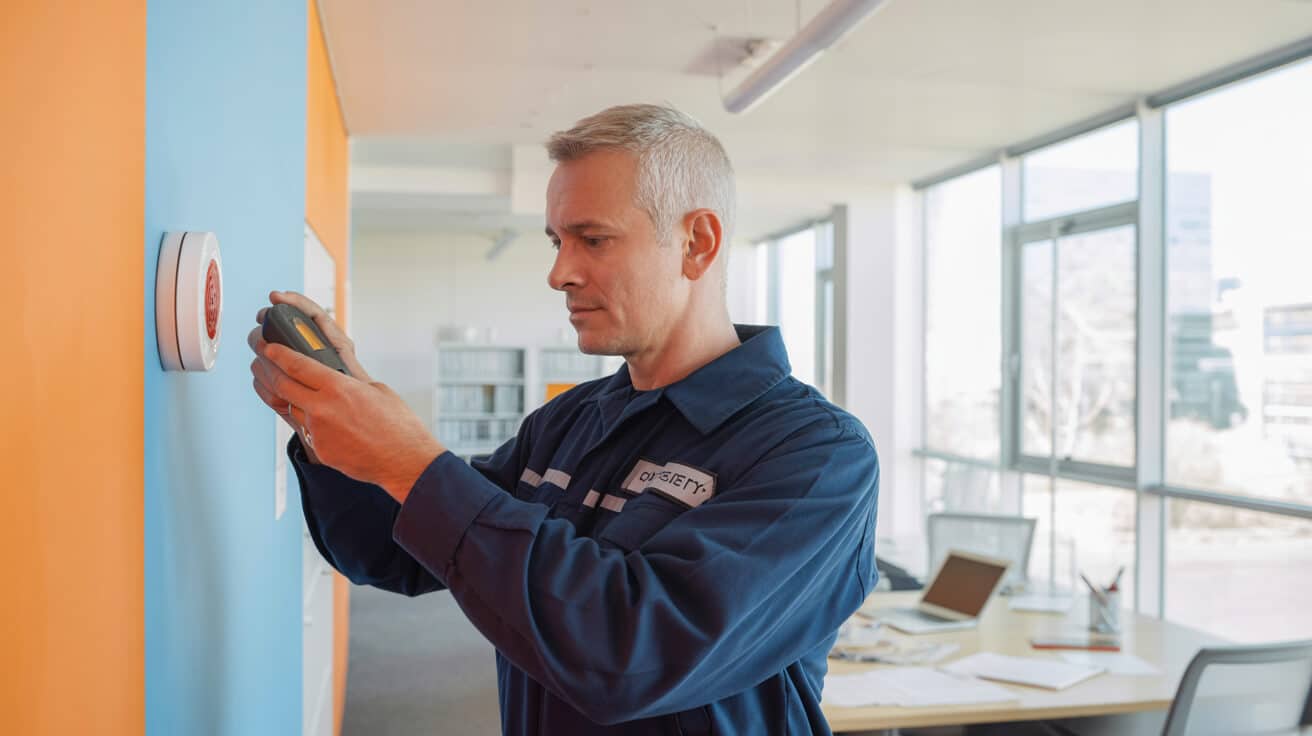
You want AHU maintenance that supports your legal duties and sector guidance without over-claiming or over-complicating the contract.
Using recognised schedules without creating vague promises
Many UK estates benchmark AHU PPM against standard maintenance schedules and original equipment manufacturer (OEM) instructions. That works best when “aligned to a standard” becomes a clear, asset-level task and frequency list. For each AHU, you should know which schedule applies, how often each task is due, and what evidence will show that it has been completed correctly.
Healthcare, laboratories, some education or high-density settings often expect tighter control of ventilation, filtration, hygiene and documentation. In those cases, your AHU PPM scope should reflect any additional guidance that applies, including access rules, hygiene thresholds and escalation routes when issues are found. That does not mean over-engineering every site. It means matching maintenance depth and frequency to the risk profile of each area.
Competence and governance
Regardless of sector, you need confidence that AHU work is carried out by competent people under safe systems of work. That typically means role-appropriate training, clear method statements and defined responsibilities where AHUs interface with other regulated systems such as refrigeration circuits or specialist ventilation. Good AHU PPM brings those requirements into the contract, permits and reporting rather than leaving them as assumptions, so you can demonstrate control if you are challenged.
With that context in place, you can focus on what actually happens on each visit.
What engineers check on each AHU PPM visit
You reduce risk when every visit is grounded in a clear, repeatable checklist with pass/fail criteria, not opinions.
On a well-run AHU PPM visit, you should expect your engineer to inspect and report on:
- Philtres: condition, seating and any signs of bypass or collapse.
- Fans and drives: belt condition and alignment where belts are fitted, pulley wear, fan cleanliness, abnormal noise or vibration.
- Coils: fouling, fin damage, leaks or corrosion, and valve operation.
- Dampers and actuators: free movement, sealing, stroke, fail-safe positions and linkages.
Each of these should be recorded as either inside tolerance or requiring attention, with a clear note of the defect and the recommended action where something is not right.
Controls and protections
Controls are often seen as “someone else’s job”, but basic checks can and should be part of AHU PPM. You can ask for confirmation that sensors are reading plausible values and that frost or low-temperature protection is functioning. The unit should respond as expected to start/stop and mode changes.
Where deeper controls optimisation or building management system strategy work is needed, that can be handled as a separate, clearly scoped activity, rather than being assumed to sit inside routine maintenance.
Defect handling and follow-up
A strong visit report does not let defects vanish inside a PDF. You should see each issue logged with a priority, an owner and a proposed timescale, so you can convert findings into remedial work orders or capital plans instead of firefighting the same fault repeatedly.
All Services 4U can deliver AHU PPM in that way: engineers follow structured checklists on site, and you receive reports built for action as well as evidence.
Once you know what a proper AHU checklist looks like, the next high-impact area is filtration.
Accreditations & Certifications








AHU philtres done properly: grades and defensible change triggers
![[ALTTOKEN]](https://allservices4u.co.uk/app/uploads/2026/01/05-AHU-Maintenance-PPM-Services-UK-Air-Handling-Unit-Service-Filters.jpg)
You protect both air quality and energy use when you choose philtres wisely and change them at the right point.
Choosing appropriate philtre grades
Most modern AHU filtration is specified in terms of particulate efficiency classes. In practice, that means deciding what fraction of smaller particles you want to remove, based on your building use and outdoor air conditions, and then selecting philtres that meet that need without excessive pressure drop.
For many general commercial buildings, a staged approach – a coarse pre-philtre followed by a finer philtre – offers a good balance of protection and service life.
Setting change points you can stand behind
Changing philtres purely on a calendar basis assumes every site and season behaves the same. A more robust approach uses a combination of:
- Differential pressure readings across the philtre bank, where available.
- Visual inspection for damage, collapse or bypass.
- Run hours and occupancy patterns.
By agreeing a maximum differential pressure and visual criteria for “end of life” in advance, you can justify philtre changes to both energy and finance stakeholders and show why a particular change was made when it was.
Avoiding bypass and installation errors
Even the best philtre grade will underperform if it is poorly installed. Good PPM practice includes checking and, where needed, correcting:
- Gasket condition and sealing surfaces.
- Frames and clamping arrangements.
- Correct orientation and staging.
You benefit when reports include brief notes and photos confirming that philtres are correctly seated and that any issues are highlighted with clear remedial recommendations, instead of relying on a generic “philtres changed” line.
With filtration and airflow under control, hygiene and moisture management round out the risk picture.
Hygiene, moisture control and IAQ-supporting inspections
You reduce avoidable hygiene and comfort risks by treating water and cleanliness inside the AHU as part of the core visit, not an optional extra.
Routine hygiene checks within PPM
An AHU PPM visit should confirm that internal sections are reasonably clean, that there is no obvious build-up of debris or growth on accessible surfaces, and that access doors and panels are sound. Where hygiene concerns are identified, your report should distinguish between what can be dealt with as part of the visit and what needs a separately scoped clean, so you can plan rather than react.
Managing condensate and moisture
Cooling coils and humidification sections can create standing water and wet surfaces if they are not managed carefully. Routine checks should cover drain pans, traps, drain lines and surrounding insulation. Any signs of standing water, blocked drains or leaks should be treated as a priority because they can lead to odours, local damage and, in some systems, increased microbial risk if they are left unresolved.
Keeping IAQ claims reasonable and accurate
Air handling units play a major role in indoor air quality, but AHU PPM alone does not turn a building into a clinical environment. It is safer and more accurate to say that, within wider HVAC services, a well-maintained AHU supports your ventilation and filtration strategy, reduces avoidable moisture and contamination risks, and gives you clearer data about system performance, rather than promising specific health outcomes you cannot directly measure.
With plant condition, filtration and hygiene under control, attention turns to how you contract, price and manage the service.
Commercial control: plans, SLAs, onboarding, and what is included
You protect budgets and relationships when AHU PPM scope, pricing and response expectations are unambiguous from day one.
Defining inclusions, exclusions and variations
A clear contract sets out, for each AHU type:
- What is included in the fixed PPM price: inspections, tests, minor adjustments, basic cleaning.
- Which consumables are included or excluded: philtres, belts and similar items.
- Which activities are treated as quoted works: deep coil cleans, duct hygiene, major component replacement, complex controls work.
By documenting variation triggers, you can avoid arguments later about whether specific tasks were “in scope” or require approval as separate works.
Pricing models and service levels
Planned AHU maintenance is often priced per AHU per visit, or as an annual rate per AHU. On some contracts it is priced per site based on a confirmed asset list and visit frequency. You gain clarity when hourly rates, call-out provisions and any management on-costs are documented alongside the fixed elements.
For critical sites, it is also worth agreeing service levels for response and communication when something fails between planned visits, so expectations are clear before you are under pressure.
Onboarding and multi-site mobilisation
A smooth start relies on good data. Before the first visit, you can expect your provider to work with you to validate the AHU list, locations, access constraints, existing philtre specifications and operating hours. That information lets the PPM plan match real conditions rather than assumptions and keeps disruption to a minimum when engineers arrive on site.
When you operate across multiple buildings, a structured mobilisation plan also helps you phase visits, align reporting and avoid overloading local teams with access requests.
Ask All Services 4U to map this out for your AHUs so you are not rebuilding the plan from scratch every year.
Reliable Property Maintenance You Can Trust
From routine upkeep to urgent repairs, our certified team delivers dependable property maintenance services 24/7 across the UK. Fast response, skilled professionals, and fully insured support to keep your property running smoothly.

Book Your Free Consultation With All Services 4U Today
You gain the most from AHU PPM when scope, evidence and commercial terms are tailored to your buildings, and your maintenance is engineered for outcomes, backed by clear proof and structured for governance rather than guesswork.
In a short consultation, you can walk through your current AHU challenges, share a high-level asset list and explain any sector-specific constraints or audit expectations. All Services 4U will use that to prepare a plain-English scope proposal that maps your units to tasks, visit frequency and reporting outputs, with clear boundaries between routine maintenance and specialist works.
You can then review that scope internally, adjust where needed and decide how you want to phase mobilisation across your estate. The first visit can be used to create a baseline condition report and prioritised defect list, giving you an immediate view of where attention is most needed.
You will leave that process with a clear view of what “good” AHU PPM looks like for your sites, a draught plan you can share with stakeholders, and a practical route from your current position to that standard.
If you want AHU maintenance that is engineered for outcomes, backed by evidence and structured for governance rather than guesswork, book your free consultation with All Services 4U today and turn AHU maintenance from a recurring headache into a controlled, auditable system.
Frequently Asked Questions
Explore our FAQs to find answers to planned preventative maintenance questions you may have.
What does a good AHU PPM visit actually include in the UK?
A good AHU PPM visit in the UK gives you component‑level checks and traceable evidence on every critical part, not just a vague “serviced” line. At a minimum, the engineer should be working to a task list aligned with SFG20 and the AHU’s OEM recommendations, and you should be able to see that discipline in the report.
Which AHU components should always be checked and recorded?
Across most commercial and residential blocks, an AHU PPM should cover the same core items every time:
| AHU component | What should be checked | What counts as proof |
|---|---|---|
| Philtres | Grade, fit, bypass, visible contamination | ΔP reading, photos, philtre type and change date |
| Fans, belts, drives | Noise, vibration, belt wear, alignment, guards | Visual notes, belt size, motor current |
| Coils | Fouling, fin damage, leaks, valve operation | Photos, temperature change across the coil |
| Dampers & actuators | Stroke, sealing, fail‑safe, linkages | Position feedback, function test notes |
| Condensate system | Pan cleanliness, falls, traps, drains | Photo of clean pan, flow test comment |
On top of that, you want simple functional checks: does the AHU start and stop under BMS control, do frost and philtre alarms operate, and are discharge/return air temperatures sensible for the conditions. That’s the difference between someone glancing into the casing and someone methodically walking the unit.
If you’re the one answering questions for an RTM board, Building Safety Manager or insurer, this is what lets you talk about that AHU with specifics instead of hoping nobody asks for detail.
How should these AHU checks be documented for governance purposes?
As a baseline, every visit should leave you with:
- AHU identifier tied to your asset register
- Date, time on site and engineer’s name
- The task list or standard followed (for example, SFG20 reference or OEM code)
- Readings taken (temperatures, differential pressure, motor current where fitted)
- Clear pass/fail against each main component, with brief comments
- Defects, interim risk controls and recommended next steps, with priorities
For higher‑risk buildings or HRBs under the Building Safety Act, you also want this indexed into your golden thread, so the Building Safety Regulator, an insurer or an internal auditor can follow the storey from risk assessment through to completed maintenance without you stitching it together from old PDFs.
How can you tell if your current AHU PPM is too light?
Three quick signals usually show up:
- Reports are one‑line “serviced” entries with no readings or photos.
- The same nuisance faults or alarms return every season.
- You can’t answer basic questions like “when were philtres or belts last changed on this unit?” without a long dig.
If that’s you, your AHU visits are probably burning labour hours without doing much for risk, energy or indoor air quality. Tightening the scope and evidence now is cheaper than trying to reconstruct what was inspected after an incident or complaint.
Where does All Services 4U fit in this picture?
All Services 4U builds AHU PPM within its wider HVAC services around that component‑level checklist, SFG20/OEM alignment and a compact evidence pack your team can drop into your CAFM or digital binder without retyping. After each visit, you can see in minutes what was checked, what was measured and what needs a decision, so you show up as the person who actually understands the condition of your air plant, not the one dodging questions about it.
How often should AHU philtres be changed in UK commercial buildings?
AHU philtres in UK commercial buildings should be changed on a simple, recorded condition rule set, not just on a fixed calendar. The smart play is to combine philtre grade, building use and measured pressure drop into timings you can explain to a surveyor or regulator.
Why is “we change philtres every quarter” not a real strategy?
CIBSE guidance and SFG20 both lean towards condition‑based thinking because it reflects how plant actually behaves in the field:
- Set inspection frequency: – quarterly is common for busy sites, six‑monthly for lighter use.
- Record differential pressure: where gauges exist, with baseline and “change at” points agreed.
- Define visual criteria: – signs of bypass, media collapse, moisture or visible contamination.
- Cap maximum run time: – for example, “no pre‑philtre runs beyond X months even if ΔP is still low.”
In an urban office with long hours, coarse pre‑philtres might need changing several times a year. Secondary philtres often run longer if air volumes and ΔP are within agreed limits and hygiene is acceptable.
When you can show an auditor that your approach lines up with CIBSE thinking on ventilation and SFG20 task sets, “this is how we manage philtres” stops sounding like a guess.
How do you stop philtres being swapped “when it feels due”?
You strip out the gut feel:
- Insist on ΔP readings, philtre grade and change dates on every visit.
- Track those readings by AHU over the year.
- Use the data to refine when each stage actually tips from “fine” to “either wasting fan energy or undermining IAQ”.
That keeps you away from two bad extremes: over‑servicing some AHUs because someone is nervous, and quietly overrunning others well past what you’d be happy to explain to the Regulator of Social Housing or a risk surveyor.
How does your philtre strategy affect energy and indoor air quality?
Philtre decisions hit both your energy bill and your duty‑of‑care storey:
- Change too late and you push fan power up or starve critical spaces of design air volumes.
- Change too early and you throw away media and labour without a real IAQ or energy benefit.
When your strategy is written down, aligned with HSE expectations on workplace ventilation and backed by real readings, you can show finance, health and safety, and resident‑facing teams that you’re balancing cost, energy and air quality with numbers you’re prepared to defend.
How do simple philtre approaches compare in real life?
A quick comparison helps when you’re challenging “we’ve always done it this way”:
| Approach | Typical behaviour | Likely outcome for your portfolio |
|---|---|---|
| Calendar‑only | Swap at fixed interval regardless of ΔP | Over‑spend on some units, under‑protect others |
| Pure “engineer’s instinct” | Change when it “looks dirty” | Inconsistent IAQ and weak audit trail |
| Condition‑based with caps | ΔP + visuals + max run time per grade | Defensible balance of cost, IAQ and energy |
The last column is the one you want to be able to talk to in a committee room.
How does All Services 4U help you design and run that philtre approach?
All Services 4U can map your estate by AHU type, risk and philtre grades, then put a CIBSE‑aligned, condition‑driven framework around it. On every visit, ΔP, philtre grades and condition photos are captured into your reports, so you can see when each stage is genuinely at end of life and adjust intervals calmly, instead of arguing about hunches.
How can AHU PPM cut energy waste as well as breakdowns?
AHU PPM can trim avoidable energy use all year simply by keeping resistance, leakage and control drift under control while you prevent failures. Most of the waste hides in boring faults: loaded philtres, fouled coils, stuck dampers and drives that no longer do what the BMS thinks they do.
Where does AHU maintenance quietly waste energy on real sites?
You see the same patterns across offices, BTR blocks and healthcare:
- Philtres left in too long push fan power up or volumes down.
- Coils foul, so you push heating or cooling harder to get the same comfort.
- Belts slip or are misaligned, so fans run inefficiently.
- Dampers stick or linkages fail, so outside air volumes drift far from design.
None of this generates dramatic alarms. You just get slightly worse comfort and slightly higher consumption month after month until somebody finally looks at the data.
Which readings turn AHU PPM into a basic energy tool?
If you want PPM to feed your energy plan rather than sit next to it, ask for a small, repeatable data set:
- Philtre differential pressures (where fitted) and philtre grades
- Motor current compared to nameplate, by duty
- Key air temperatures – off‑coil, supply and, where practical, return/outdoor
- Any damper positions that matter to your outdoor air and heat‑recovery strategy
Over time, this gives you simple trends. When you see ΔP creeping up faster on a particular site, or certain coils needing frequent deep cleans, you know where to focus cleaning and minor capital spend instead of spreading budget thinly.
When does “energy is just a controls problem” start costing you?
One belief that quietly drains budgets is the idea that energy is a controls project and maintenance is a separate chore. CIBSE’s TM guidance on energy efficiency is blunt: you cannot optimise plant that’s physically dirty, leaking or mechanically drifting.
For AHUs, that means:
- Philtres changed at the agreed ΔP and maximum run time, not months early “just to be safe”.
- Coils kept clean enough that you aren’t masking fouling with more heat or cold.
- Belts, dampers and actuators fixed promptly so the BMS is talking to plant that behaves.
If you’re holding the energy line as an Asset Manager or Finance Director, this is one of the few levers that doesn’t need a major capex line; it just needs your AHU PPM to feed you usable numbers.
How does All Services 4U bake energy thinking into AHU PPM?
All Services 4U folds those energy‑useful readings and observations into every relevant AHU visit. You see where resistance and drift are building up, and where a targeted clean, fix or small upgrade will actually move the needle on fan and heating/cooling run cost. That makes it much easier for you to pair “we are on top of compliance” with “we’re not wasting kWh in the plant room”.
How does AHU maintenance support compliance and indoor air quality duties?
AHU maintenance doesn’t replace your legal duties, but it’s the practical backbone of being able to show you’ve taken ventilation and hygiene seriously. In the UK, regulators and advisers are looking for effective ventilation, control of obvious moisture and contamination risks, and evidence that plant is maintained in line with your risk assessments.
CIBSE and HSE guidance on workplace ventilation, and BS EN 16798 on ventilation performance, all push you towards the same basics:
- You should understand which spaces each AHU serves and whether they’re receiving reasonable outdoor air.
- Philtres should be of an appropriate grade and changed before they become a hygiene or performance risk.
- Internal sections, coils and condensate drains should be clean enough that they are not likely sources of mould or microbial growth.
- Safety devices and interlocks should function so the system cannot run in obviously unsafe modes.
Your risk assessments under the Fire Safety Order, workplace health and safety law and, for higher‑risk buildings, the building safety regime set the bar. AHUs serving vulnerable residents, healthcare spaces or HRBs should have PPM depth and cadence that match that higher‑end risk profile.
What evidence should you retain for audits, complaints or investigations?
When something goes wrong – IAQ complaints, a damp and mould investigation, a Regulator of Social Housing visit or Building Safety Regulator query – you do not want to be building evidence from scratch. For each AHU, you should be able to reach for:
- Asset‑tagged job sheets with core tasks completed
- Readings and hygiene notes over time
- Photos of internal sections when issues were found and after they were addressed
- A simple schedule showing what was due when, and what was actually done
That turns a tense conversation into a structured review: “Here is the unit, here is the relevant risk assessment, here is the maintenance trail against it.”
If you’re carrying the Building Safety Manager or Head of Compliance badge, that ability to walk someone through the storey calmly is worth a lot.
How does disciplined AHU maintenance reduce IAQ reputational risk?
Comfort complaints and IAQ concerns move fast through resident groups, staff channels and social media. When people lose confidence in the air in a building, you tend to hear about it in more than one place. A disciplined AHU regime:
- Reduces the likelihood of visible contamination, odours or staining being traced back to plant
- Makes it faster to investigate and address legitimate concerns with real data
- Gives your communications and housing teams something concrete to point to when explaining what has been done
You’re not promising flawless air, but you are able to show that, within reasonable limits, you have taken ventilation and hygiene seriously and you can evidence it.
Where does All Services 4U help you hold that line under scrutiny?
All Services 4U structures AHU PPM around “show, don’t tell” evidence. When a board, regulator, insurer or resident group asks, “What have you actually been doing about ventilation here?”, you can walk them through a clear, asset‑based trail instead of leaning on memory and invoices. That puts you in the position of the accountable person who came prepared, not the one scrambling after the fact.
How should AHU PPM contracts in the UK be structured and priced?
AHU PPM contracts in the UK work best when scope, evidence and pricing are built on a confirmed asset list and agreed task sets, not on loose “per visit” promises. That’s what lets you compare providers fairly and stops smaller units subsidising large, neglected ones.
Why does a simple “per visit” price usually hide the real cost?
A low day rate or “per visit” figure looks attractive on a summary sheet. In practice, it often means:
- The written scope stays vague, so anything beyond a cursory look can be billed as an extra.
- Philtres, belts and deeper cleaning are treated as add‑ons without clear rules, leading to friction later.
- Reactive call‑outs and “small works” build up because the PPM isn’t actually closing issues.
If you sign off spend as an RTM chair, FM or Asset Manager, you already know how expensive a cheap contract becomes when it generates a steady stream of unplanned jobs and arguments.
What does a clearer AHU PPM contract structure look like?
A cleaner structure usually includes:
- A validated AHU inventory and agreed maintenance regime per unit
- An annual price per site or per AHU covering defined planned elements (inspections, routine cleaning, basic adjustments)
- Clear rules on consumables – which philtres and belts are included, at what grades and under what change criteria
- A short menu of quoted extras: chemical coil cleans, duct hygiene, major component swaps, controls work beyond basic checks
You also want response‑time bands for reactive calls, especially on critical sites, and simple reporting expectations: which readings and photos you expect back from each visit, and in what format.
That is the kind of contract a Finance Director, Building Safety Manager or Procurement Lead can look at and feel they genuinely understand the commitment, rather than hoping the small print is kind.
How can you prepare before you go to market for AHU PPM?
You make life easier for yourself – and for bidders you actually want to work with – if you can pull together:
- An AHU list with basic details (location, duty, duty/standby, approximate size)
- Any access constraints, out‑of‑hours rules or induction requirements
- Operating hours and seasonal patterns
- Any sector‑specific expectations (healthcare, education, HRB, food, lab spaces)
- Your current philtre and coil approach, and where it’s hurting (cost, IAQ, labour, complaints)
That stops reputable bidders guessing, and it reduces the room for “we assumed that wasn’t included” disputes once you mobilise.
How does All Services 4U keep AHU PPM pricing honest over time?
All Services 4U puts scope, commercial model and reporting expectations on the table in plain language from the outset. You know exactly what sits inside the fixed PPM, what triggers a quote, how philtres and belts are handled and what data lands back with you after every visit. Over time, that clarity gives you a clean view of total cost of ownership per AHU and per building, so you can talk to boards and investors in hard numbers rather than chasing why the “cheap” contract keeps inflating.
What kind of AHU maintenance evidence pack should you insist on after each visit?
You should insist that every AHU visit leaves behind a compact, consistent evidence pack your team can store, search and defend. That’s how you convert an engineer’s time in the plant room into something a board, insurer, auditor or regulator can actually rely on.
What are the non‑negotiable elements of an AHU evidence pack?
For each visit, you should see, as standard:
- AHU ID, site and location
- Date, time on site, engineer name and company
- Task list or standard referenced (for example, SFG20 code or OEM schedule)
- Readings – temperatures, ΔP, motor current where present
- Hygiene and mechanical condition notes (philtres, coils, pan, dampers, fans)
- Defects with priorities, interim risk controls and recommended next steps
- Status against previous issues – what’s closed, what’s still open
When this arrives in a structured format rather than as unlabelled PDFs, your team is reviewing and deciding, not re‑keying information into CAFM or spreadsheets just to make sense of it.
How often should you step back and review AHU evidence at portfolio level?
A quarterly scan across your estate is usually enough to spot patterns before they become problems:
- Repeated issues on particular units, buildings or contractors
- Evidence gaps – engineers light on photos or readings
- Tasks repeatedly deferred or marked N/A without explanation
For a Building Safety Manager, Compliance Officer or Non‑Executive Director on a risk committee, that regular view is the check that your dashboards and assurance statements still match the reality on plant.
How does a strong evidence pack change external conversations?
When an insurer, lender, valuer or regulator asks about a site, the tone changes quickly if you can pull up, in seconds:
- The last few visits for a specific AHU
- The issues found, how they were addressed and what remains open
- The link back to your FRA, ventilation risk assessment or safety case
You shift from “we believe it’s maintained” to “here is the documented trail that shows you how it has been maintained and why we think the residual risk is acceptable.”
What is All Services 4U’s stance on AHU reporting?
All Services 4U treats the AHU evidence pack as part of the service, not as optional admin. Reports are structured so a Property Manager, Building Safety Manager, RTM director or underwriter can follow the storey without translation. That means you spend your time using the information – to defend decisions, shape budgets and adjust risk – instead of chasing missing detail and stitching partial reports together.
How do you know when it’s the right time to rethink your AHU maintenance?
It’s time to rethink AHU maintenance when you’re already paying in complaints, call‑outs or anxiety, but still can’t give a clear account of the health of your key units. At that point the real question is not “will something go wrong?” but “when it does, can I show we took reasonable steps?”
Which signals say your current AHU approach has run its course?
Across residential blocks, BTR, PBSA and commercial portfolios, familiar warning signs appear:
- Rising comfort or IAQ complaints with no simple narrative behind them
- More unplanned call‑outs, often to the same units or spaces
- Thin, inconsistent reports from different contractors or regions
- Unpleasant surprises at renewal – from insurers, lenders or internal audit
If those patterns sound close to home, your existing regime is already draining time, money and credibility more than a structured reset would.
What does a low‑drama rethink of AHU maintenance look like in practice?
You don’t have to tear everything down at once. A sensible reset over one contract cycle usually looks like:
- A baseline survey of your main AHUs to understand condition and risk
- Mapping each unit to a clearer maintenance regime, aligned with SFG20 and your risk assessments
- Cleaning up reporting so evidence lands in a consistent, system‑friendly format
- Tightening philtre and coil strategy to balance IAQ, energy and spend
- Agreeing simple, portfolio‑level KPIs – PPM on‑time, evidence completeness, repeat fault rate, comfort complaints
For you as an RTM chair, Asset Manager or Building Safety Manager, the win is being able to answer direct questions about critical AHUs cleanly, instead of circling around the topic.
What’s a realistic first step if you’re already stretched?
You do not need a thick strategy document to start moving. In most cases, sharing three things is enough to open up useful options:
- A basic AHU list (even if you know it needs tidying)
- Your top three frustrations (for example, “no data”, “too many call‑outs”, “we get hammered at audit time”)
- Any firm dates on the horizon – insurer renewal, lender review, regulator visit, board away‑day
That’s enough to separate “broadly fine, needs tuning” from “quietly leaking risk and money”.
How can All Services 4U help you move from firefighting to control?
All Services 4U can turn that early conversation into a staged, low‑drama plan: baseline survey, a small pilot group of sites, then portfolio roll‑out if the pilot proves its value. You keep hold of risk appetite and budget decisions; we carry the engineering, scheduling and evidence work. If you want to be known – by boards, residents, lenders and regulators – as the person who got a grip on the air plant in your portfolio rather than just reacting to the next email, this is a good place to start that shift.
- Outcome-led AHU PPM that stands up to scrutiny
- Outcome-led AHU PPM: what “good” looks like (measured, repeatable, auditable)
- Why AHU PPM becomes urgent: failure modes, cost drivers, and proof gaps
- Standards, compliance readiness and sector expectations
- What engineers check on each AHU PPM visit
- AHU philtres done properly: grades and defensible change triggers
- Hygiene, moisture control and IAQ-supporting inspections
- Commercial control: plans, SLAs, onboarding, and what is included
- Book Your Free Consultation With All Services 4U Today
- Frequently Asked Questions
- Related PPM Services
Case Studies


Related Articles

Your Guide To Identifying And Treating Minor Mould Outbreaks
Why Planned Preventative Maintenance (Ppm) Saves Money And Ensures Compliance