Drainage CCTV Survey Services UK – Blockage & Condition Reports
Property buyers, landlords and facilities teams across the UK use drainage CCTV surveys to see exactly what is happening in underground pipework before they approve spend or take on risk. A camera is fed through key runs to record defects, locations and access points, depending on constraints on the day. You finish with clear footage and a written blockage or condition report that stakeholders can cost, challenge or act on with scope agreed upfront. Next steps become simpler once you know which survey type fits the decision in front of you.


Author
Izzy Schulman

How drainage CCTV surveys support clearer, defensible decisions
If you manage, buy or maintain property, guessing what is happening in underground drains can leave you with repeat blockages, disputes and unexpected repair bills. A drainage CCTV survey turns hidden pipework into evidence you can see, share and brief against.
By choosing the right level of survey and knowing what a professional blockage or condition report should contain, you can match spend to risk and give insurers, buyers and contractors the clarity they expect. The process stays practical and predictable from first symptoms to a repairable scope.
- See what is wrong, where it is and why it matters
- Choose between blockage checks and full condition reporting with confidence
- Give insurers, buyers and contractors clear evidence instead of rough notes
Need Help Fast?
Locked out, leak at home, or electrical issue? All Services 4 U provides 24/7 UK locksmith, plumbing, electrical.
Testimonial & Clients Who Trust Us
With 5 Star Google Reviews, Trusted Trader, Trust Pilot endorsements, and 25+ years of experience, we set industry standards for excellence. From Dominoes to Mears Group, our expertise is trusted by diverse sectors, earning us long-term partnerships and glowing testimonials.
Worcester Boilers

Glow Worm Boilers

Valliant Boilers

Baxi Boilers

Ideal Boilers

What a drainage CCTV survey is (and isn’t): the definition you can act on
A drainage CCTV survey is a camera inspection of underground pipework that gives you recorded footage and a written summary of what is wrong, where it is, and what that means for repairs. It replaces guesswork with evidence you can brief, cost and sign off.
In the UK you are usually responsible for private drains within your boundary that serve only your property, while shared or public sewers sit with the water company. A survey helps you understand where the practical line falls on your site, but it does not change legal responsibilities.
High water, heavy deposits, tight bends or missing access points can limit how far a camera can travel or what can be seen in one visit. Where visibility is good, distance from the start point and, if required, surface locating are recorded so a repair crew can find the same spot later without trial‑and‑error digging.
You typically commission a CCTV drain survey when you want a clear picture of condition and risk before you authorise spend, push back on claims, or commit to a purchase.
When you need a CCTV drain survey: decision triggers, not scare stories
You do not need a survey for every slow sink, but there are clear points where CCTV stops being a “nice to have” and becomes the practical next step.
Recurring or worsening problems
If you clear a blockage and the same fixture or manhole blocks again within weeks or months, you are no longer dealing with a simple one‑off obstruction. That pattern often points to an underlying defect such as roots at a joint, a displaced section, or long runs narrowed by grease and scale.
You should also think about CCTV when several warning signs sit on the same run: slow draining, gurgling, persistent odours near gullies or manholes, or wet patches over likely drainage lines. At that stage, looking inside the pipe is usually cheaper than repeat call‑outs that never quite fix the problem.
Context that raises the stakes
When you are buying a property and the main survey notes that drains were not tested, a focused CCTV survey is often the only way to understand below‑ground condition before you exchange. It is especially useful for older clay systems, homes with extensions over old drainage runs, or where there is a history of blockages.
As a landlord or property manager, CCTV also helps you separate tenant misuse from structural defects, which is useful when drainage findings sit alongside wider building inspections. That makes re‑charging, repair authorisation and insurance discussion more defensible. Pre‑ and post‑works surveys around build‑over or build‑near areas create an evidence baseline so later damage is not argued about from memory.
Blockage investigation vs full condition report: which one matches your next decision?
![[ALTTOKEN]](https://allservices4u.co.uk/app/uploads/2026/01/02-Drainage-CCTV-Survey-Services-UK-Blockage-Condition-Reports.png)
Both services use CCTV, but they are scoped and reported differently because the decisions they support are different. Choosing the right one stops you over‑buying or assuming you have full coverage when you do not.
If your priority is to get things flowing again
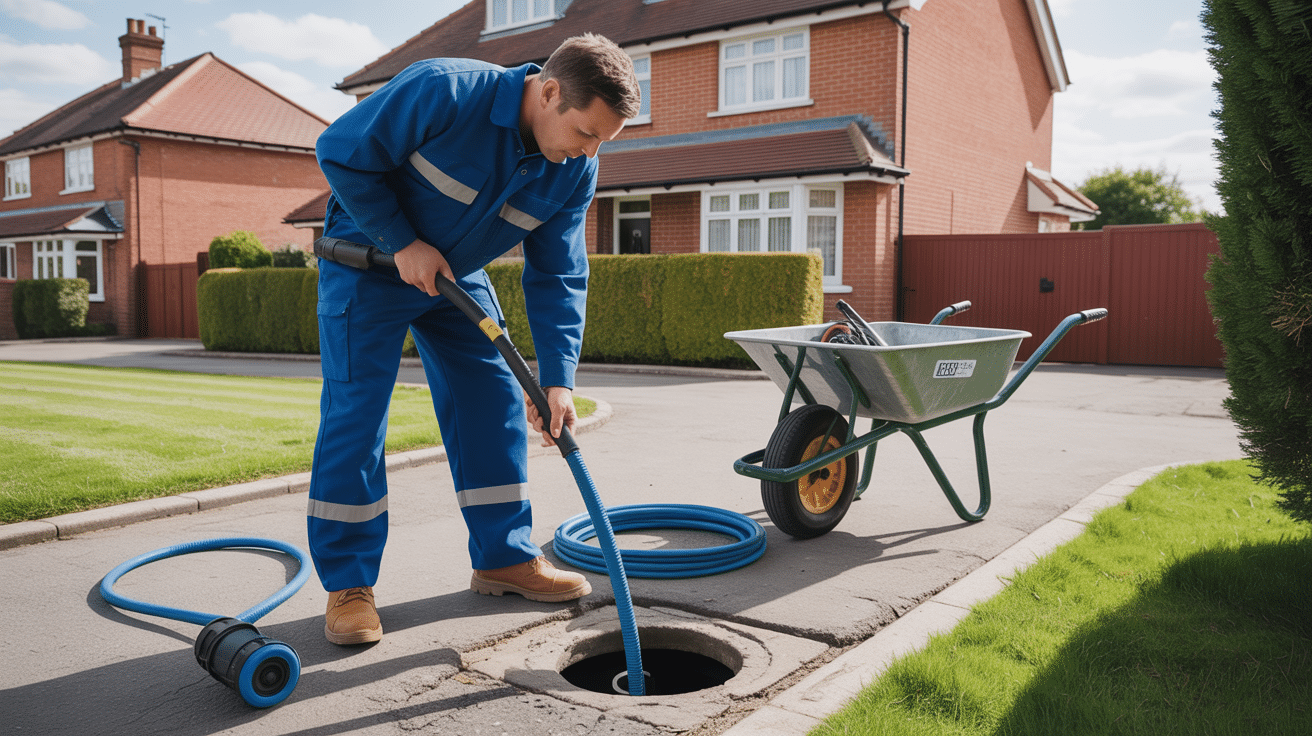
A blockage investigation survey is focused on one or a small number of problem lines. The aim is to find what is restricting flow now and where that restriction sits in relation to an access point or feature on the surface.
The engineer may clear the line first if it is totally blocked and unsafe to push the camera through, then run the camera to see whether the root cause is deposits, foreign objects, roots, a dropped joint, or partial collapse. The output is concise: which run is affected, what was found, where it is, and practical options to stop the same problem coming back.
This is the right choice when the decision in front of you is “how do we stop this specific issue repeating?” and you need enough evidence to brief a fix without paying for a full asset study.
If your priority is to understand overall condition
A condition report is broader. Runs are planned manhole‑to‑manhole, stack‑to‑manhole or gully‑to‑main to build up a picture of the accessible network. The engineer records pipe material, approximate size, direction of travel, observable defects and their severity, and may group them into priorities.
The report reads more like an asset document than a job sheet: scope, methods and limitations, findings by run, photographs of key issues, and recommendations grouped by urgency. This is the right option when you need to support a purchase, justify an insurance claim, plan maintenance, or brief future works and want a defensible view of risk.
A common and expensive mistake
A quick, blockage‑focused visit only ever speaks for the lines actually inspected. Treating that as if it were a full condition survey for the whole property is where many disputes start. Being explicit about which service you are commissioning, and which runs are in scope, avoids a false sense of security and reduces the risk of “discovering” a missed defect later.
What’s included in a UK blockage and condition report: the deliverables stakeholders expect
The value of a survey rests as much on how findings are reported as on what the camera sees. A clear, shareable report means you do not have to keep translating rough notes for every stakeholder.
A professional report sets out scope first: which property, which access points were used, which runs were inspected, and any areas that could not be reached or seen clearly. It notes any cleaning before inspection and any constraints on the day.
A plain‑language summary then separates immediate issues, medium‑term concerns, and items to monitor. That lets you, your conveyancer, your insurer or your board see quickly where attention and budget should go before they dive into the detail.
Media and location data
Behind the summary sit the observations. For each run the report lists recorded defects or notable features, along with the distance from the start point and any surface locating notes. Still images at key points show you the issue instead of asking you to rely on description alone. Video is supplied with a simple index so you can jump to relevant sections quickly.
That combination of words, images, distances and locations turns observations into a repairable scope that other contractors can price and deliver against, instead of leaving you with an unlabeled video and no clear next step.
How different stakeholders use it
If you are buying or letting property, condition reports can support negotiations, inform maintenance plans and help you avoid inheriting hidden liabilities. Insurers use them to test causation and check that proposed repairs match the evidence. Contractors use them to programme lining, patch repairs or excavations with fewer surprises. Clear structure means the same pack can serve those needs without rewriting.
Accreditations & Certifications








How the survey runs on site: access‑first, safety‑led, and predictable
![[ALTTOKEN]](https://allservices4u.co.uk/app/uploads/2026/01/03-Drainage-CCTV-Survey-Services-UK-Blockage-Condition-Reports.png)
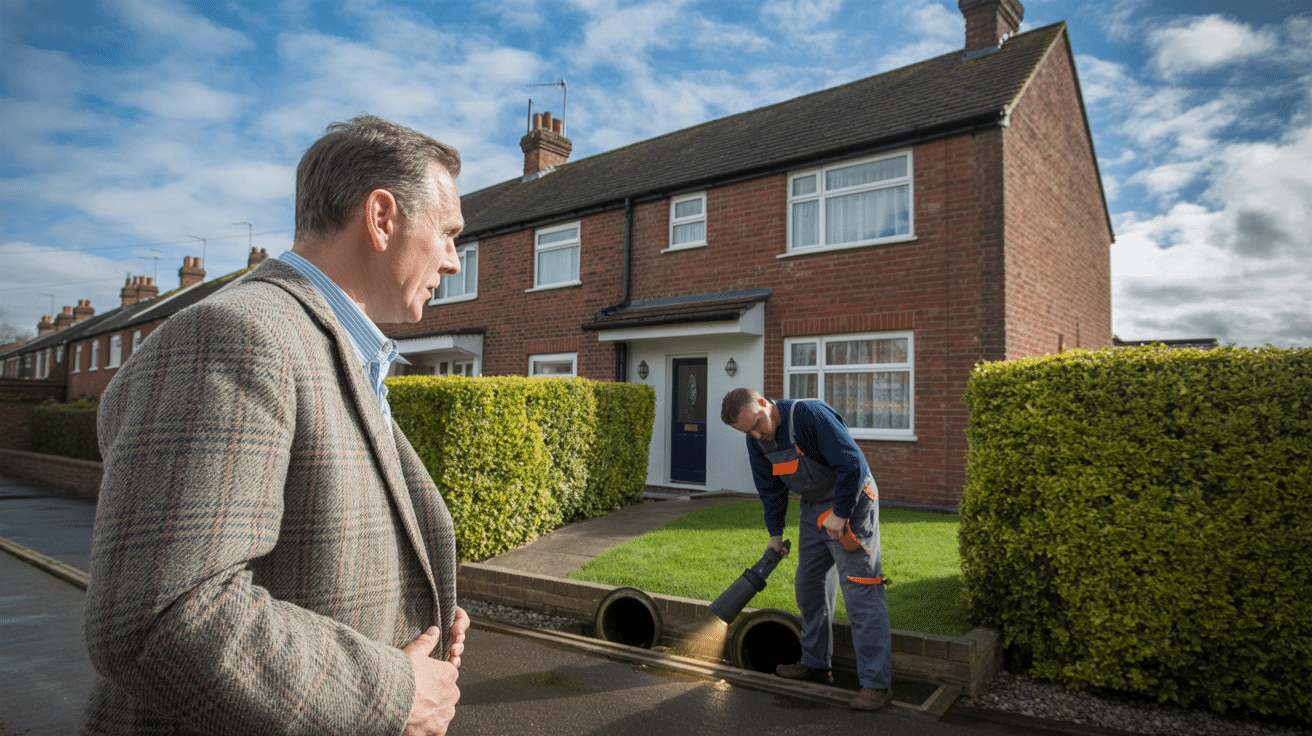
Knowing what will happen on the day helps you plan access, brief residents and avoid wasted visits.
Before the visit
Ahead of time you will usually be asked for basic information: property type, symptoms and history, known access points, prior blockages or repairs, and any site constraints such as restricted hours, parking or permits. That allows a realistic plan for which lines are likely to be in scope and what equipment to bring.
Agreeing up front whether cleaning is likely to be required is important. In drains with heavy grease or long‑standing silt, jetting or mechanical cleaning may be the only way to obtain footage clear enough to support decisions that will stand up to scrutiny from insurers, lenders or surveyors.
During the survey
On arrival the engineer confirms access, sets up a safe working area, and agrees the order in which lines will be inspected. Cameras might be push‑rod systems for smaller domestic lines or crawler units for larger or longer runs, matched to the pipe size and layout.
As the camera travels, distances and observations are logged in real time. If a defect needs to be located on the surface, a sonde in the camera head can be traced from above so the spot can be marked. Safe systems of work apply throughout; manhole entry is avoided unless there is no alternative and proper controls are in place.
After the survey
Once on‑site work is complete, footage and notes are compiled into your report. For simple blockage investigations this may be available quickly; wider condition surveys take longer to collate runs, stills and recommendations coherently. The final pack should be easy to share so your conveyancer, insurer, board or repair contractor can act on the same information without chasing you for explanations.
What CCTV can identify (and where it can’t): defects, limits and follow‑on tests
CCTV is a strong first tool, but it is not a magic device that can answer every question on its own.
What CCTV is very good at
Because it shows the inside of the pipe directly, CCTV is excellent at revealing visible defects and obstructions. Typical findings include root ingress, fractures and breaks, displaced or open joints, deformed or dropped sections, accumulations of fat, scale or silt, foreign objects, and partial collapses.
Where the view is clear, the camera can also show adverse gradients or “bellies” where water stands, as well as poorly formed or misaligned connections. Tied to distances and surface locations, these observations let you decide whether to patch, line, excavate or monitor.
Where CCTV has limits
Some questions need more than a visual check. Confirming watertightness under all operating conditions may require pressure or isolation testing. Infiltration or exfiltration can sometimes be inferred from staining, deposits or visible flows, but not always proved in a single visit.
If the camera cannot pass a point, that does not automatically mean collapse. It may be facing debris, heavy scale, a sharp bend, a protruding connection or simply a very high flow. Honest reporting sets out what was seen, what prevented further progress, and what options exist to clarify the picture, so you are not pushed towards the most expensive answer by default.
Combining CCTV with other checks
Where subsidence, repeated flooding or complex defects are suspected, you may combine CCTV with mapping, structural assessment or ground investigations. CCTV then becomes the visual layer that focuses those further checks, rather than a one‑off test you lean on for absolute certainty.
CCTV drain survey cost in the UK: what drives price and how to avoid paying twice
You can control cost and avoid surprises by understanding what you are buying and briefing it clearly at the start.
What usually drives cost
The main drivers are the number of lines and access points to be surveyed, time on site, the level of reporting detail you require, and whether the visit includes cleaning and locating. A single‑run blockage investigation with a short written summary will usually sit at the lower end. A multi‑run, formally structured condition report with mapping and extensive media sits higher because it takes longer to carry out and document.
Travel distance, difficult access, parking or permits, and out‑of‑hours attendance can also affect how a quote is structured.
Why some quotes look low but add up
Very low headline prices often assume best‑case conditions: easy access, short runs, no cleaning, and minimal reporting. If a line is heavily fouled or longer than expected, or if you later discover you need formal documentation for a buyer or insurer, supplements appear and the “cheap” survey becomes an expensive start.
The safest route is to treat the quote as a scope document, not just a number. If a quotation does not explain which lines are in scope, what level of report you will receive and whether cleaning is included, it is worth clarifying before you accept.
How to brief the job so you only pay once
When you brief the job, explain why you need a survey: recurring blockage, purchase, build‑over, insurance or planned maintenance. Describe what you know about the layout, any previous works, and who needs to see the outputs. Ask the provider to confirm whether cleaning is expected, what the report will include, and how quickly you will receive it.
That short briefing step reduces the chance that you pay once for a “quick look” and again for a proper report, and gives you a simple record of what was agreed if the scope is ever questioned.
Reliable Property Maintenance You Can Trust
From routine upkeep to urgent repairs, our certified team delivers dependable property maintenance services 24/7 across the UK. Fast response, skilled professionals, and fully insured support to keep your property running smoothly.

Book your free consultation with All Services 4U today
If you are not sure whether you need a focused blockage investigation, a full condition report, or both, a short conversation will usually make the choice clear. You can describe your symptoms, context and deadlines, and have the likely scope explained in plain language before you commit. Book a free consultation with All Services 4U and get your drainage CCTV survey scoped properly from the start so you move from guesswork to a clear, costed plan.
During that call you can also confirm what it makes sense to send over in advance, such as any previous reports, plans or photos, so your quote reflects the real work involved. You will know what you are likely to receive back, how it will be structured, and how you can share it with your conveyancer, insurer, board or repair contractor without constant re‑explaining.
Frequently Asked Questions
Explore our FAQs to find answers to planned preventative maintenance questions you may have.
When should you move from “just another unblock” to a CCTV drain survey?
You should book a CCTV drain survey when the same line blocks more than once or keeps causing smells and slow drainage. That pattern is your network telling you there’s an underlying defect, not a one‑off problem with wipes or fat.
Clear signs you’ve moved past “just clear it”
If you keep seeing any of this on the same run, stack or manhole, CCTV is the next sensible step:
- Repeat call‑outs to the same stack, branch or gully within a year:
- Persistent smells from the same gully or inspection chamber after clearance
- Toilets, basins or showers slowing again soon after an engineer visit
- Wastewater backing up indoors or surcharging from the same covers
In a genuine emergency (overflowing toilet, internal flooding), clearance still comes first so your home or block is safe. The smart move is to pair that clearance with a camera run while the line is open. That’s how you see whether the root cause is fat, silt, wipes, roots, a displaced joint, a foreign object or a partial collapse.
How a simple rule keeps your spend under control
For single homes, HMOs and blocks, a simple rule works: one‑off = clear, two or more events on the same line = clear and inspect. You stop treating symptoms and start treating causes.
For RTM boards, housing providers and asset managers, that rule takes you from reactive spend and complaints to evidence‑based decisions you can stand behind with residents, boards and insurers. It also supports Housing Health and Safety Rating System and Homes (Fitness for Human Habitation) expectations where damp and leaks are in play.
If you want that pattern turned into a clear plan by someone who lives and breathes property maintenance, All Services 4U can scope a targeted CCTV drain survey so you only buy the investigation you actually need.
What’s the difference between a blockage investigation, a condition report and a baseline CCTV drain survey?
A blockage investigation answers “why is this line misbehaving today?”, a condition report answers “how healthy is this section of the network?”, and a baseline CCTV survey gives you a mapped asset view you can drop into board papers, insurer packs or long‑term plans.
Blockage investigation: focused on the live fault
A blockage investigation is tight and tactical. The engineer will typically use jetting and CCTV together to pin down:
- What is restricting flow: – fat, scale, roots, a dropped pipe, wipes, foreign objects
- Where it is: – distance from the access point, often with a surface mark for excavation or lining
- What needs to happen next: – one‑off clearance, patching, lining or excavation
The write‑up is short and direct. It is ideal when your next decision is “how do we stop this stack, run or lateral repeatedly failing?”. Many housing providers and managing agents now expect that level of evidence before they sign off anything beyond basic clearance.
Condition report: line‑by‑line risk picture
A condition CCTV drain survey report steps back and looks at whole runs or groups of runs. It logs visible defects along each line, usually using BS EN 13508‑2 coding in the background, and groups them into “do now, do soon, monitor”, with a simple schematic.
You lean on a condition report when you are:
- Buying or refinancing and want to avoid surprises
- Planning build‑overs, extensions or structural works
- Building a drainage maintenance strategy instead of reacting to every call‑out
That format translates well for surveyors, valuers and boards because it mirrors how they already see roofs, structure and fire safety: risk‑banded, not anecdotal.
Baseline survey: asset map for serious portfolios
For portfolios, build‑to‑rent and higher‑risk residential buildings, a baseline survey goes further. It ties CCTV findings into an asset register:
- Which lines serve which blocks and cores
- Which drains are shared and where legal responsibility sits
- Where repeat or high‑consequence risks sit, and what you should budget over 5–10 years
That kind of CCTV drain baseline plays well with asset managers, lenders and insurers because it mirrors how they already think about structural, fire and water risks.
Matching survey type to the decision in front of you
Here’s a quick way to align survey type with your next decision:
| Use case | Best fit | Output focus |
|---|---|---|
| Same line blocking again | Blockage investigation | Fault cause, exact location, next fix |
| Homebuyer or single building check | Condition report | Run‑by‑run defects and priorities |
| Portfolio / HRB / long‑term planning | Baseline survey | Asset map, risk bands, capex horizon |
If you want help choosing the right CCTV drain survey for your situation, a short scoping call with All Services 4U will stop you buying a “quick look” today and then paying again for a proper report tomorrow.
What should a professional UK CCTV drain survey report include so surveyors, insurers and boards can rely on it?
A professional UK CCTV drain survey report should stand on its own in front of surveyors, insurers, lenders and boards. That means clear scope, structured findings, sensible priorities and images tied to text, not just “nice footage” and a one‑page invoice.
Core building blocks of a decision‑grade CCTV drain survey report
As a minimum, you should see:
- Scope and limitations: – address, access points used, runs surveyed, and what could not be reached or seen
- Plain‑English summary: – issues needing attention now, medium‑term items, and elements to monitor
- Findings by run: – pipe size and material if known, direction of travel, and each visible defect with distance from the start point
- Stills and media index: – key images tied to the written findings, with simple instructions for accessing the video
Where the report is supporting a purchase, refinance or safety case, a simple schematic plan is extremely helpful so surveyors and building safety leads can understand how the drainage connects without walking every cover on site.
A good report also makes it easy to see how defects relate to Building Regulations (for example, Part H for drainage) and to any HHSRS or HFHH damp risk already on the table.
Raising the bar for insurers, lenders and surveyors
For escape‑of‑water claims or damp disputes, insurer and loss adjuster expectations have shifted towards dated CCTV evidence, not just a contractor’s opinion. For homebuyer and valuation work, surveyors increasingly want a clear statement of risk instead of vague lines like “drains appear serviceable”.
That is why it pays to ask up front:
- Will the report set out scope and limitations clearly enough for someone who was not on site?:
- Will it show findings by run with distances and severity, in a way BS EN 13508‑2 can be mapped if needed?:
- Will it give a prioritised action list I can show to an insurer, lender or board without rewriting it?:
If the answers are vague, you are unlikely to get a document that stands up in front of a claims handler, valuer or tribunal panel.
When you instruct All Services 4U, you can ask for the CCTV drain survey report to be formatted specifically with surveyors, insurers or RTM boards in mind. That stops you re‑commissioning “the same” survey just because a different stakeholder wants clearer evidence.
How does a CCTV drain survey actually run on the day, and what should you line up beforehand?
On the day, a good CCTV drain survey feels controlled and predictable: residents know what is happening, your team understands the plan, and you are not guessing while someone in hi‑vis disappears between manholes.
What you can do before the crew arrives
A bit of preparation makes the CCTV survey more efficient and more valuable:
- Pull a concise history of the issue: where problems show, how often, what has already been tried, any related damp or subsidence
- Gather any drawings, photos or notes showing known manholes, stacks, gullies or previous repair sites
- Note practical constraints: access windows, parking, gate codes, quiet hours, sensitive areas or vulnerable residents
If you know from experience or old reports that your drains are heavy with fat, silt or scale (common in commercial kitchens, older blocks and student schemes), agree beforehand whether jetting or descaling is likely to be needed for a workable CCTV drain survey. That avoids paying for a visit where the only line in the report is “pipe too dirty to survey, cleaning required”.
For portfolios, build‑to‑rent and HRB work, a short scoping call lets you sequence which buildings, cores or stacks should go first, so you don’t burn survey time on low‑risk lines while high‑risk addresses sit in the queue.
What competent CCTV drain survey crews actually do on site
Once on site, you should expect the team to:
- Set up a tidy, segregated working area and open agreed access points safely
- Choose suitable kit – push‑rod cameras for smaller domestic pipes, crawler units for larger, longer or deeper lines
- Log distances and observations in real time, not from memory afterwards
- Use locating equipment if a defect needs to be marked on the surface for future excavation or patching
Where manhole entry or confined space work is unavoidable, it should sit under a documented safe system of work with the right equipment and training – not someone in everyday clothes dropping into a chamber.
If you tell All Services 4U who needs to be kept in the loop – for example, a building safety manager, housing officer, RTM director or facilities lead – we can align updates and the final CCTV drain survey pack with your reporting lines. That way you are not left stitching together emails, photos and video links when a board paper or claim lands on your desk.
What can CCTV really show you in drains, and when do you need more than a camera?
CCTV is excellent for seeing what is physically happening inside a pipe, but it is not a magic wand. You get the best value when you use CCTV drain surveys for clear visual evidence and only bring in extra tests when the questions genuinely go beyond what the camera can answer.
Where CCTV drain surveys are genuinely strong
In most domestic, block and small commercial settings, a camera survey can:
- Show root ingress at joints and cracks
- Identify cracks, fractures, missing sections and partial collapses
- Reveal displaced or open joints, misaligned connections and “bellies” where water sits
- Log deposits – fat, scale, silt, wipes, sanitary waste and other debris
- Highlight poor workmanship from earlier repairs or liners
Those findings are what let you decide whether to rely on jetting or descaling, cut roots, patch‑line a section, or plan an excavation – and exactly where to focus that spend.
Surveyors often lean on CCTV drain survey images and distances in their reports because a still of a fractured or misaligned pipe at a measured location is much harder to argue with than a line or two of description.
Where CCTV reaches its limits and other tests matter
Some questions sit beyond the camera’s reach:
- Watertightness under pressure or at peak flows: may require isolation or pressure testing
- Suspected leaks into the structure: that do not show clearly on camera sometimes need dye tests, smoke tests or investigation from other access points
- Access limits: – if the camera cannot pass a point, that might be due to deposits, a tight bend or live flow, not automatically a total collapse
A useful CCTV drain survey report will say plainly what could not be inspected or confirmed and suggest credible next steps, instead of stretching the footage to answer questions it cannot answer.
If you explain your decision context to All Services 4U – for example, “escape‑of‑water insurance claim”, “BSA safety case evidence”, or “pre‑purchase survey on a Victorian terrace” – we can tell you whether CCTV alone is enough or whether it should be combined with pressure testing, dye testing or further access.
How much does a CCTV drain survey usually cost in the UK, and how do you avoid paying for it twice?
In the UK, CCTV drain survey cost mainly tracks time on site, how many lines you include, and how deep a report you ask for. You avoid nasty surprises by matching the survey type to your decision and nailing the scope on paper before anyone rolls a van.
The levers that usually move CCTV drain survey pricing
You will generally pay less for:
- A focused single‑run blockage investigation with a brief written note and basic media
- Simple access – one or two chambers, straightforward routes, and no need for cleaning
You will pay more when:
- Multiple runs need to be surveyed across a terrace, block, estate or commercial site
- You have asked for a structured condition or baseline CCTV drain survey with priorities and mapping that third parties can rely on
- Jetting, descaling or root cutting is required to make the survey viable
- Work has to happen out of hours or in tight, high‑risk or heavily controlled environments
For portfolio owners and institutional investors, it often makes sense to agree a menu price based on run count and report type, instead of open‑ended “day rates” that are hard to benchmark between suppliers.
The real budget shocks often come from hidden assumptions – for example, a low headline price that only covers a “quick look, no formal report”, or excludes cleaning even though cleaning is clearly going to be required.
Simple ways to avoid re‑buying the same CCTV drain survey
Before you instruct anyone, force yourself to answer three questions:
- Why do you need this CCTV survey now – repeat blockage, pre‑purchase, insurance claim, build‑over, safety case, planned maintenance?
- Who needs to rely on the report – you alone, or also a surveyor, insurer, lender, building safety manager or RTM board?
- Are you buying a fault‑find (blockage investigation) or a condition/baseline survey?
Then ask for a written scope that reflects those answers:
- Which runs are in and out of scope
- What level of reporting and coding you will receive
- Whether cleaning and access equipment are included in the price
- What happens if certain lines cannot be accessed or surveyed on the day
At All Services 4U, we scope every CCTV drain survey job against those points up front. That keeps you out of the trap where you pay for a “quick camera look” today and then discover that your surveyor, insurer or lender needs a fully structured condition or baseline report tomorrow.
If you are handling budgets for an RTM, housing association, investor or corporate estate, that clarity is the difference between being the person always explaining overspend and the person who can show that each pound spent on CCTV drains was tied to a defined decision.
How can All Services 4U turn CCTV drain surveys into real risk control instead of repeat spend?
All Services 4U helps you use CCTV drain surveys to control risk and prove diligence, not just to clear today’s blockage. The goal is simple: one coherent evidence spine you can use with residents, boards, insurers, lenders and regulators.
Scoping the right CCTV drain survey for your role and decision
On a short consultation call, you can walk All Services 4U through:
- Which properties, blocks or cores are causing you the most noise, cost or reputational risk
- Where you are in the cycle – live claim, refinance, safety case, acquisition, major works, or repeated call‑outs
- Who needs to be convinced – residents, RTM board, housing committee, insurer, lender, legal team or internal audit
From there, we recommend blockage investigation vs condition vs baseline CCTV drain survey, explain likely access and cleaning needs, and set out exactly what you will receive. If you want the pack formatted specifically for insurers, surveyors, boards or safety case teams, we bake that into the brief so you only commission once and reuse the evidence everywhere it is needed.
You leave that call with a simple route: which sites to tackle first, what evidence you will generate, and how that will support your claims, valuations, safety case or board assurance work.
Building an evidence spine across your portfolio, not just fixing today’s call‑out
If you are responsible for more than one building, the real prize is not just solving one bad stack – it is building an evidence spine across your portfolio that supports clearer building inspections decisions:
- CCTV drain survey findings tied to Building Regulations parts, insurance conditions and any BSA safety case duties
- Clean, indexed reports and media you can drop straight into insurer, lender and board packs without rework
- A clear picture of repeat defects across your estate so you can target lining, patching, replacement or access upgrades where they will actually move the risk needle
That is how you move from “we responded to another blockage” to “we can demonstrate controlled drainage risk at portfolio scale”.
If you sit in the RTM chair, run compliance for a housing association, manage an institutional portfolio or carry the AP/BSM badge on an HRB, that is the level of control and proof your stakeholders quietly expect from you.
If that is how you want to show up in your role, a conversation with All Services 4U is a straightforward first move. You bring the history, the headaches and the political constraints; we bring the CCTV drain survey design, the standards discipline and the evidence architecture so your next decision on drains is something you can defend calmly, not something you hope will hold.
- How drainage CCTV surveys support clearer, defensible decisions
- What a drainage CCTV survey is (and isn’t): the definition you can act on
- When you need a CCTV drain survey: decision triggers, not scare stories
- Blockage investigation vs full condition report: which one matches your next decision?
- What’s included in a UK blockage and condition report: the deliverables stakeholders expect
- How the survey runs on site: access‑first, safety‑led, and predictable
- What CCTV can identify (and where it can’t): defects, limits and follow‑on tests
- CCTV drain survey cost in the UK: what drives price and how to avoid paying twice
- Book your free consultation with All Services 4U today
- Frequently Asked Questions
- Related PPM Services
Case Studies


Related Articles

Your Guide To Identifying And Treating Minor Mould Outbreaks

Why Planned Preventative Maintenance (Ppm) Saves Money And Ensures Compliance