

Roof Inspection PPM Services for Property Managers – Bi-Annual Surveys & Insurer Evidence
Property managers responsible for multiple roofs need a bi-annual PPM inspection regime that prevents leaks, supports budgets and stands up to insurer and board scrutiny. Structured surveys, consistent zoning, labelled photos and clear risk grading build a single, repeatable record for each roof, based on your situation. You finish with dated inspections, documented recommendations, tracked actions and evidence that issues were either completed or consciously deferred, ready to share with finance, compliance and insurance stakeholders. It’s a practical way to move from reactive call-outs to calm, evidence-led roof governance.

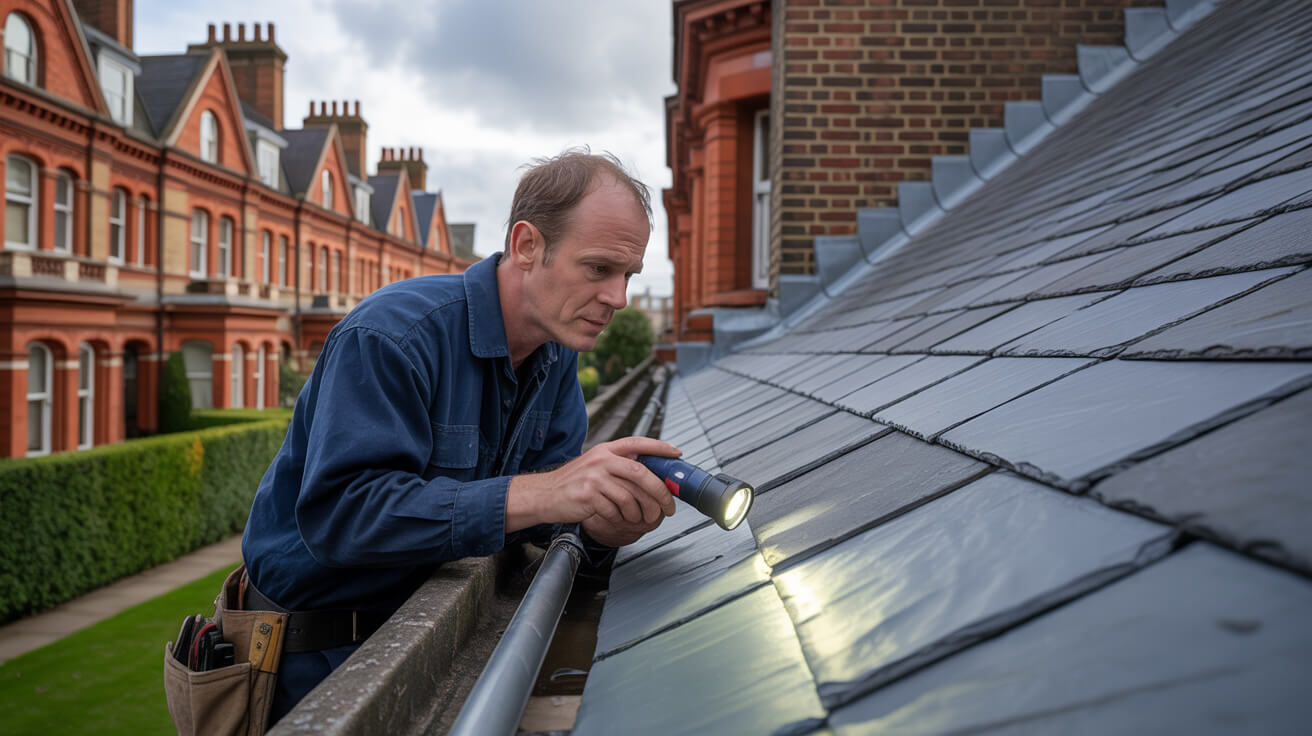

Author
Izzy Schulman

For property managers, small roof defects rarely stay small. What looks like a loose flashing or minor outlet issue can turn into saturated insulation, stained ceilings and disruption that is hard to explain to owners, boards and insurers.

A bi-annual roof inspection PPM programme replaces scattered call-outs with a consistent record of condition, risk and action. By zoning roofs, standardising reports and logging decisions, you gain a defensible chronology that supports planned repairs instead of crisis spend.
- Turn minor roof defects into planned, budgeted works
- Build inspection records insurers and boards can review calmly
- Reduce repeat complaints with clear, traceable roof maintenance history</p>
Need Help Fast?
Locked out, leak at home, or electrical issue? All Services 4 U provides 24/7 UK locksmith, plumbing, electrical.
Testimonial & Clients Who Trust Us
With 5 Star Google Reviews, Trusted Trader, Trust Pilot endorsements, and 25+ years of experience, we set industry standards for excellence. From Dominoes to Mears Group, our expertise is trusted by diverse sectors, earning us long-term partnerships and glowing testimonials.





Worcester Boilers

Glow Worm Boilers

Valliant Boilers

Baxi Boilers

Ideal Boilers

Roof inspection PPM as an operating control, not a call‑out substitute
A bi‑annual roof inspection PPM service should give you a repeatable control system, not just two extra contractor visits a year.
Instead of isolated reports, you want every survey to update a single picture of each roof: which area was inspected, what was found, how serious it is, and what happened next. That way, you can hand a building between property managers, firms, or surveyors and the record still makes sense.
In practice, that means agreeing how roofs will be named and zoned, how photos will be labelled, what priority scale will be used, and how actions will be logged. Once those basics are fixed, each spring and autumn inspection refreshes the same framework rather than depending on each surveyor’s personal style.
Reactive leak attendance still has a place, but it rarely leaves you with a clear chronology of condition, recommendation, instruction, and close‑out. A planned PPM cycle turns “we had someone look” into dated inspections, visible risk decisions, and evidence you can place in front of owners, boards, and insurers without hesitation.
Handled this way, roof maintenance stops being a series of one‑off favours and becomes an auditable process that finance, compliance, and insurance stakeholders can review with you.
The management case: how deferred defects turn into budget pressure and disruption
Small roof defects usually turn into larger problems when time and weather are allowed to work on them.
Small defects, large consequences
A loose flashing, damaged trim, lifted lap or restricted outlet may look trivial on the roof. Left alone, those details can saturate insulation, stain ceilings, damage finishes, and create mould or decay nearby. The gap between a modest scheduled repair and a costly ingress claim is often only one winter.
You feel this as unplanned spend: emergency callouts, internal making‑good, and sometimes temporary decanting. All of that is far harder to justify than a planned repair backed by survey evidence you chose to act on in good time.
Why “no leak indoors” is a weak comfort signal
Roofs often fail gradually and intermittently. Water can track through build‑ups, run along structure, or appear only under certain wind and rain conditions. A quiet period with no visible internal symptoms does not mean deterioration has stopped. If you only investigate when someone complains, you are always dealing with late‑stage problems and explaining why they were not picked up sooner.
Why complaints keep returning at the same block
Repeat ingress or recurring gutter overflows usually point to a root cause that has not been properly recorded, prioritised, or closed out. If the only record of the last visit is an invoice or a brief email, the next person to touch the file has to rediscover the same issues.
A bi‑annual survey, written to a consistent template, lets you show that you saw the risk, proposed a fix, instructed works, and verified completion. Planned, evidenced maintenance is easier to explain in service‑charge meetings than crisis spend. It changes the conversation from “we have another leak” to “here is what we saw, what we recommended, and when it was approved or deferred”.
Evidence quality: why third parties look beyond “we had someone out”
When a serious leak, claim, or renewal review lands on your desk, third parties focus as much on your records as on the physical damage.
What external reviewers actually look for
Insurers, brokers, lenders and boards tend to ask three simple questions:
- What was the roof condition before the incident?
- Was the problem foreseeable?
- What did you do about known issues and when?
If all you can show is a chain of invoices, you end up narrating from memory instead of pointing to a sequence of surveys and decisions, which can make even good work look ad hoc.
You answer those questions best with a file that shows inspection dates, roof or zone references, findings, risk grading, recommended actions, and proof that higher‑priority items were either completed or consciously deferred. That standard lets you talk through the record calmly.
Why photos alone are not enough
Unlabelled images, even in large numbers, rarely satisfy those questions. Without dates, locations, and links back to specific findings and actions, they cannot show whether you identified an issue, escalated it, and followed it through. A smaller set of well‑labelled images tied to a structured report is far more persuasive than a folder of undated pictures that nobody can place.
Chronology and governance
Boards and funders increasingly expect you to demonstrate not just that you know about risks, but that you manage them in reasonable timeframes. A clear sequence of “inspection → recommendation → instruction → attendance → close‑out” is more defensible than a bundle of isolated documents assembled after a dispute begins.
Your roof PPM output should therefore be designed from day one to support maintenance‑history review, renewal discussions and, if necessary, claim investigations. That is a design choice you can insist on when you commission the service.
What a bi‑annual roof inspection cycle should actually include
Once you are clear on why you are inspecting, you can be precise about what must be covered every cycle.
Core inspection scope
On each planned visit, you should expect the surveyor to check, as a minimum:
- Roof coverings and laps
- Flashings, terminations and edge details
- Penetrations and upstands
- Rooflights and glazing interfaces
- Plant supports and service penetrations
- Gutters, outlets, hoppers and visible sections of downpipes
- Signs of movement, cracking, impact damage, ponding or previous patching
Findings should be organised by identifiable roof zones so you can tell exactly where a defect sits when you raise a work order or obtain quotations. That keeps you out of vague “somewhere on Block B” conversations later.
Safe access and realistic exclusions
The scope must reflect how the roof can be accessed safely. Fragile materials, lack of permanent edge protection, busy plant zones or restricted working hours can all limit what is reasonable in a single visit. Those constraints and any resulting exclusions should be stated clearly so nobody later assumes that “everything” was seen when that was not possible.
Reporting and priorities
A decision‑grade report does more than describe defects. It should:
- Use a clear, simple priority structure (for example: immediate, short‑term, monitor)
- Explain recommended next steps in plain language
- Distinguish between issues that require works and issues that simply merit review at the next survey
That way, you and your colleagues can turn the report into instructions, budgets, and board papers without having to translate technical language for each audience.
Drainage and gutters: the quiet drivers of repeat failures

Most repeat roof problems are driven as much by water management as by membrane condition.
Where leaks really start
Many water‑ingress incidents begin at drainage pinch points, not in the middle of the roof field. Blocked outlets, silted gutters, choked hoppers, awkward corners, and poorly detailed parapet interfaces can all cause water to sit, overflow or track sideways into details that would otherwise cope.
If surveys pay less attention to these areas than to the main coverings, you can have a roof that “looks fine” until sustained weather exposes where water really wants to go and where your risk actually sits.
What good drainage checks cover
A useful roof PPM survey should therefore include:
- Visual checks of all gutters, outlets and hoppers
- Confirmation that downpipes appear free‑flowing where visible
- Notes on ponding, staining, or vegetation that indicate recurring water retention
- Comments on falls and any obvious design or installation issues that amplify risk
The report should spell out not only that an outlet was cleared, but whether underlying conditions such as poor falls, repeated debris loading or physical damage need a more durable solution. Clearing the same point every visit without naming the root cause simply builds repeat failures into your future workload.
Explaining the risk to non‑technical stakeholders
When you need to explain this to residents, owners or board members, a simple narrative is often enough: blocked drainage leads to overflow; overflow leads to saturated edges and details; saturated details lead to internal leaks and decay. Bi‑annual surveys are your opportunity to break that sequence early and show that you are doing so in a controlled, documented way.
Making each survey usable: what the evidence pack should contain
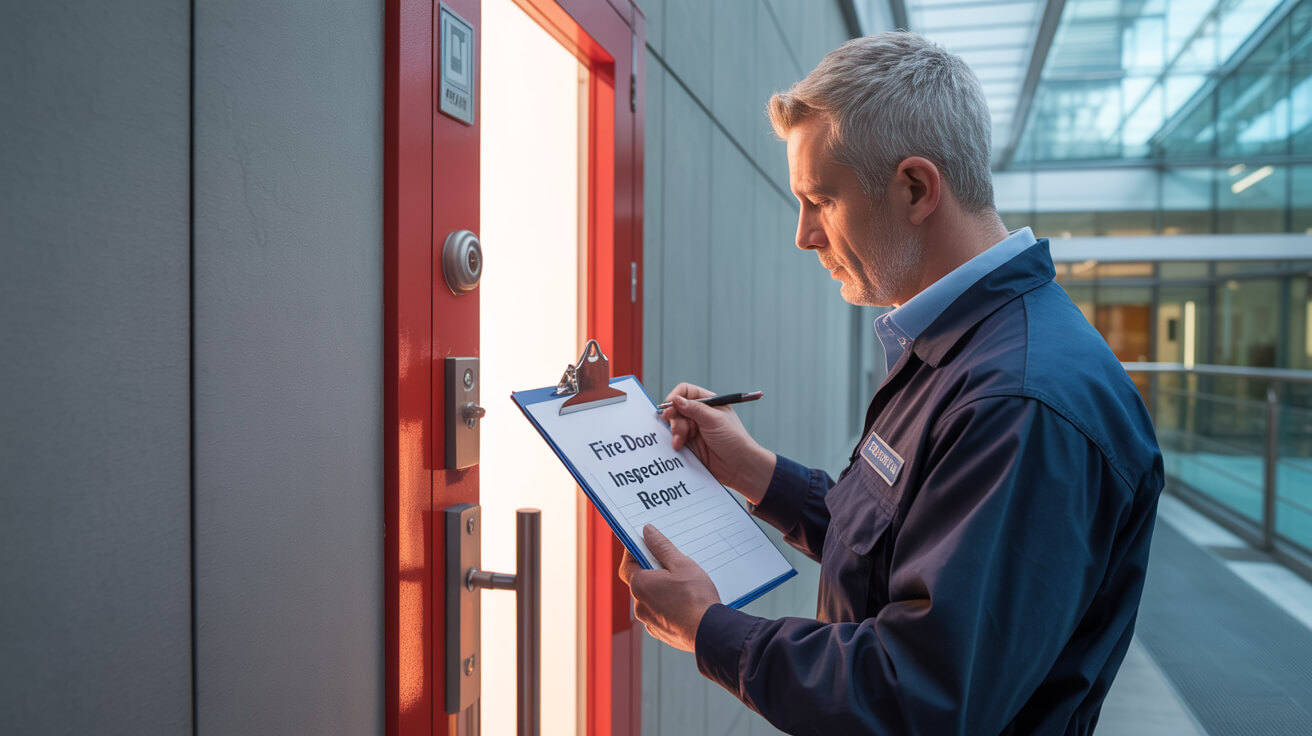
The value of a survey lies as much in the way the output is packaged as in the inspection itself.
Core contents after every visit
After each cycle you should receive, as standard:
- A dated report covering each roof area or zone
- Marked‑up plans or annotated images that show where each finding sits
- A defect schedule with brief descriptions, priorities and suggested timescales
- A concise narrative summary that non‑technical readers can follow quickly
This is the working document you will use for instructions, meetings and renewal conversations, so it needs to be clear enough that you can drop it straight into your workflow.
Action tracking and close‑out
To avoid reports becoming static files, you also need an action log that records, for each higher‑priority item:
- Who owns the next step
- Target dates for instruction or completion
- References to work orders, quotes or approvals
- Evidence that works were carried out (for example, brief notes and confirmation photos)
When inspection findings, instructions and completion proof sit in the same trail, you can answer “what happened after we saw this?” without reconstructing events from scratch. That is the point where your PPM programme behaves like a control system rather than a pile of documents.
Storms and event‑led records
When severe weather or localised events trigger additional inspections, the evidence pack should show that clearly: what triggered the visit, which roofs or zones were checked, what was found, any immediate mitigation, and follow‑up actions. Capturing that while events are fresh is far more persuasive than trying to recreate a timeline months later.
Handled this way, your roof inspection file is helpful in day‑to‑day operations and audit‑ready when you need to defend decisions.
Accreditations & Certifications








Operating discipline: frequency, post‑storm triggers and portfolio consistency

With scope and outputs defined, the final piece is how you run the programme across your estate.
Baseline frequency and sensible variations
Twice‑yearly surveys are a strong baseline for many managed roofs, especially flat or low‑slope systems. Spring tends to reveal winter damage; pre‑autumn checks confirm that coverings and drainage are ready for the next cycle of heavier weather.
You can still vary frequency by risk. Roofs with complex detailing, heavy plant, fragile materials, exposed locations, sensitive uses beneath, or a history of leaks may justify more frequent review. Simpler, lower‑risk roofs may work well with the baseline plan plus local visual checks in between, as long as you are clear about that approach.
Event‑led triggers
In addition to the calendar, it helps to define a short list of triggers for extra inspections, such as:
- Severe weather warnings affecting the site
- Reports of displaced tiles, membrane, flashings or debris on the ground
- Overflow from gutters or hoppers
- New top‑floor or stair‑core ingress complaints
Treating event‑led checks as part of your PPM logic, rather than as ad hoc reactions, keeps the record coherent. You can then show that you respond to events within a defined framework instead of “when someone has time”.
Keeping portfolios consistent
If you manage multiple buildings, consistency is what makes the programme governable. A single roof register, one reporting template, one priority scale and a regular review of open higher‑risk items give you a clear line of sight from inspection date to outstanding risk to close‑out. You can then see which roofs need attention, where repeat issues occur, and where access or safety limitations are leaving you with thinner assurance that needs to be improved.
Reliable Property Maintenance You Can Trust
From routine upkeep to urgent repairs, our certified team delivers dependable property maintenance services 24/7 across the UK. Fast response, skilled professionals, and fully insured support to keep your property running smoothly.

Book your free consultation with All Services 4U today
A short, focused consultation is often the fastest way to see whether a structured roof PPM programme will work for you.
If you bring a simple list of buildings, roof types, known trouble spots, access constraints and any insurer or owner reporting requirements, the discussion can move quickly from theory to a practical outline for your estate. You can also ask to see example reports, marked‑up plans, priority formats and action logs so you know exactly what you would be working with.
You do not have to start with every building. You can begin with a pilot group of higher‑risk or higher‑complaint roofs, prove the reporting and close‑out workflow, and then extend the cycle once your internal teams are comfortable and you have seen the impact on complaints, claims and unplanned spend.
The most useful proposals are the ones that spell out scope, exclusions, access assumptions, event‑led attendance, deliverables and how remedial works are handled. That is the level of clarity you should expect from All Services 4U, along with a survey rhythm and report format your team can retrieve and act on quickly.
If you want your roofs to be managed as a visible, defensible control rather than an occasional emergency, agree a bi‑annual roof inspection PPM programme and keep to it. Book your consultation with All Services 4U today so you can show, on paper and on site, that roof risk is firmly under control.
Frequently Asked Questions
Who should be able to read a roof inspection PPM service report and know exactly what was checked, what failed, and what happens next?
A roof inspection PPM service report should be clear enough for your board, managing agent, broker, compliance lead, and works team to act on without chasing for explanation.
That is the standard that matters. Not simple attendance. Not a folder of unlabeled photographs. What counts is whether your roof inspection report turns a site visit into a usable decision record. If a contractor has inspected the roof but your team still cannot tell what was checked, what condition it is in, what needs urgent attention, and what can wait, the inspection has not done its job.
A useful report starts with structure. Each roof area should be named or mapped clearly, so your team is not left guessing which elevation, canopy, flat roof, or plant area the comments refer to. The findings should then show what was seen around outlets, gutters, flashings, rooflights, parapets, joints, and roof-level details where water ingress often begins. Service penetrations should also be recorded in plain English, meaning pipes, cables, ducts, or plant fixings passing through the roof covering. Those are common failure points, and they are often where weak inspections become expensive later.
SFG20 supports a planned maintenance approach, not a casual walkover with vague notes. In practice, that means the report should do more than observe. It should sort findings into clear action groups, identify any limits on access or visibility, and let your team raise follow-on works without rebuilding the contractor’s thinking from scratch. If your roof maintenance records cannot support governance approval, insurer defensibility, and remedial issue in one pass, they are still too thin.
The expensive part is rarely the inspection. It is the uncertainty left behind by a weak report.
That same report serves different decisions for different people. Your board needs enough clarity to approve next steps and understand exposure. Your broker or insurer-facing team needs evidence of routine oversight and a consistent roof maintenance regime. Your repairs or projects team needs enough detail to raise a work order, seek quotations, or ringfence a later programme of works. When one report can do all three, your roof inspection PPM service is working as it should.
If you are reviewing providers, this is a sensible place to be demanding. A strong contractor should be able to show you exactly how their reporting output supports compliance, planned maintenance, and commercial decision-making before you commit to a contract.
What should the report show without anyone needing to interpret it for you?
A good roof inspection report should show condition, risk, and next steps in a format that is immediately usable.
That means the report should not read like a private notebook for the surveyor. It should read like an operational record for your organisation. A property manager should be able to scan it and know what to action this week. A board director should be able to see what can wait until the next budget cycle. A broker should be able to see that your roof inspection regime is real, repeated, and evidenced.
The clearest reports make three distinctions early. First, what was actually inspected. Second, what condition it was in on the day. Third, what should happen next. Once those three points are visible, the rest of the conversation becomes easier. Without them, every follow-up call starts from confusion.
Before you approve any roof maintenance contract, test whether the standard visit produces records like these:
- Clearly named roof zones, elevations, and access points
- Dated photographs tied to each area inspected
- Defects split into urgent make-safe, planned remedial, and monitor-only items
- Access limits, exclusions, weather issues, and visibility constraints logged on the day
- Plain-English explanation of likely failure points, including outlets, flashings, and roof penetrations
- Recommended next steps with realistic timescales and ownership
That level of clarity matters because a report is not only a maintenance record. It is also a control document. Building condition issues rarely become costly because nobody visited. They become costly because the visit did not produce a clear enough record for the next decision to happen at the right time.
A practical roof inspection PPM service should also help your team compare one cycle against the next. If the report does not make it easy to track whether a crack has widened, ponding has increased, or a temporary patch has failed again, you are not managing condition. You are just rediscovering it.
What should you test before approving the service for your portfolio?
You should test whether the report helps three teams decide three different things without extra translation.
That is the easiest buying test. If the report is only useful to the surveyor who wrote it, the service is underperforming. If it can move cleanly between governance, insurance, and repairs, it is far more likely to protect your position over time.
A board or RTM chair should be able to use the report to judge timing, urgency, and cost exposure. An insurer-facing stakeholder should be able to use it to evidence a planned roof inspection regime and support the story that your building is being managed rather than neglected. An operations team should be able to turn it into a quotation request, remedial work order, or monitoring item straight away.
That is why the strongest providers separate observation from recommendation. They do not just say the roof is worn, weathered, or uneven. They show where, how, and what should happen next. They also record where they could not inspect properly. That protects you if a later issue emerges in an area that was excluded for access or safety reasons.
If you are choosing between contractors, ask questions that force reporting quality into the open:
- Can your board read the report and understand exposure without technical translation?
- Can your managing agent raise works directly from the defect schedule?
- Can your broker use the report as evidence of planned oversight?
- Can your compliance lead compare this cycle with the previous inspection?
- Can your team defend any exclusions if a later issue appears?
- Can the provider show how their reporting aligns with SFG20-style planned maintenance discipline?
Those are stronger buying questions than price alone. A cheaper visit that leaves your team arguing over urgency, scope, and next steps often costs more in delay, confusion, and repeat attendance.
That is also where All Services 4U can add value when you need more than a visual snapshot. If your priority is not just inspection but decision-ready reporting that supports maintenance planning, insurer conversations, and practical follow-on works, a sample report review or scoped assessment is often the fastest low-friction next step. It gives your team a clear benchmark before the next inspection cycle locks in another round of vague records.
The real advantage is not theatre. It is confidence. You know what was checked. You know what failed. You know what happens next. That is how a roof inspection PPM service starts behaving like a control system rather than a diary entry.
- Roof inspection PPM as an operating control, not a call‑out substitute
- The management case: how deferred defects turn into budget pressure and disruption
- Evidence quality: why third parties look beyond “we had someone out”
- What a bi‑annual roof inspection cycle should actually include
- Drainage and gutters: the quiet drivers of repeat failures
- Making each survey usable: what the evidence pack should contain
- Operating discipline: frequency, post‑storm triggers and portfolio consistency
- Book your free consultation with All Services 4U today
- Frequently Asked Questions
- Related PPM Services
Case Studies


Related Articles

Your Guide To Identifying And Treating Minor Mould Outbreaks

Why Planned Preventative Maintenance (Ppm) Saves Money And Ensures Compliance