Mandatory Occurrence Reporting PPM Services for HRB UK – MOR Support
Principal Accountable Persons, building safety leads and FM teams for higher‑risk buildings need PPM that reliably feeds Mandatory Occurrence Reporting, not just closes defects. MOR‑ready PPM support from All Services 4U overlays your existing contracts so serious fire and structural risks are captured, screened and escalated, based on your situation. You finish with a single, auditable route from front‑line maintenance to MOR decisions, with clear thresholds, records and accountability for what was noticed and how it was handled. Exploring this support now can help you turn fragmented PPM into a defensible building safety system.


Author
Izzy Schulman

How MOR‑ready PPM changes HRB maintenance and risk control
For Principal Accountable Persons and building safety leads, routine PPM in higher‑risk buildings can hide serious fire and structural risks inside ordinary defect logs. The Building Safety Act’s Mandatory Occurrence Reporting duty makes it critical that maintenance work reliably feeds a clear, defensible safety decision process.

Without MOR‑aware logic in PPM, repeated failures on life‑safety systems may never reach formal scrutiny, leaving legal, operational and reputational gaps that surface only after an incident or investigation. Embedding MOR into existing PPM arrangements offers a practical way to spot patterns, escalate them consistently and show regulators how serious risks were handled.
- Turn routine PPM into a single MOR escalation route
- Distinguish routine defects from potential safety occurrences that matter
- Create auditable records that support Building Safety Regulator scrutiny
Need Help Fast?
Locked out, leak at home, or electrical issue? All Services 4 U provides 24/7 UK locksmith, plumbing, electrical.
Testimonial & Clients Who Trust Us
With 5 Star Google Reviews, Trusted Trader, Trust Pilot endorsements, and 25+ years of experience, we set industry standards for excellence. From Dominoes to Mears Group, our expertise is trusted by diverse sectors, earning us long-term partnerships and glowing testimonials.
Worcester Boilers

Glow Worm Boilers

Valliant Boilers

Baxi Boilers

Ideal Boilers

MOR‑ready PPM support for higher‑risk buildings: what it actually means in practice
MOR‑ready PPM means your maintenance regime is deliberately set up to spot, escalate and record serious fire and structural risks, not just fix faults. It links front‑line work to the Building Safety Act’s Mandatory Occurrence Reporting duty so that when an engineer finds something serious on a life‑safety system, the job is captured consistently, screened against MOR thresholds and escalated for a clear, time‑bound decision, turning everyday PPM into a controlled source of building safety intelligence rather than a set of isolated defects.
Serious systems are built into the routine, not added on top of it.
For many Principal Accountable Persons, building safety leads and FM teams, the Building Safety Act has landed on top of legacy contracts, fragmented records and over‑stretched staff. You are expected to run a safe, compliant higher‑risk building, respond to residents and satisfy the Building Safety Regulator, all while multiple contractors continue to “just do the PPM”. All Services 4U’s MOR‑ready PPM support is built for that reality: it sits on top of your current arrangements and turns them into a single, controllable route for safety occurrences to be captured, assessed and reported across your portfolio.
A plain‑English explanation of MOR for HRBs
Mandatory Occurrence Reporting in higher‑risk buildings is about having a reliable, repeatable way to capture, assess and report only the most serious fire and structural risks. In law, it is the duty to operate a system that captures, assesses, records and, where thresholds are met, reports serious fire or structural safety occurrences in higher‑risk buildings, not every defect or complaint, so clarity about definitions, examples and routes is critical.
During occupation, the Principal Accountable Person and any other Accountable Persons must ensure that such occurrences can be reported into the organisation, screened against the legal tests and, if they qualify, notified to the Building Safety Regulator within set timescales. That means having clear channels for residents, staff and contractors; simple definitions of what might qualify; and robust records showing how each potential occurrence was handled. MOR is not there to replace your existing incident, complaint or near‑miss systems; it is an additional, higher‑threshold route for the most serious risks, which is why the way you run PPM matters so much.
Where PPM fits into MOR in real buildings
PPM is where your teams and contractors most often uncover serious fire and structural issues, so it is the most practical place to apply an MOR lens. If inspections and tests do not carry simple prompts about MOR thresholds, dangerous patterns can sit inside ordinary defect histories instead of being treated as potential safety occurrences and brought to the attention of your building safety team.
In a real twenty‑storey block, most of the information about serious fire and structural risks does not arrive through policy meetings. It appears during routine work: a lift engineer finds that evacuation lifts have been out of service for days; a fire alarm test shows repeated total failure on one zone; a contractor opens a ceiling void and discovers missing fire‑stopping; a water hygiene test highlights a chronic scalding and legionella risk in risers.
Those events are all discovered through planned preventive maintenance and statutory inspections. If MOR is not embedded into that work, they are logged simply as “defects”, “snags” or “remedials” and closed once repaired. An MOR‑ready PPM regime, by contrast, is built so those same jobs carry simple prompts that ask: does this defect create a serious, building‑wide fire or structural risk; has it revealed a design or installation flaw; is there a pattern across past jobs? Where the answer is “yes”, the job is automatically escalated for MOR consideration instead of vanishing into maintenance history.
The unseen exposure of running HRB PPM without embedded MOR
Running higher‑risk building PPM without MOR‑aware logic means serious issues can be treated as routine defects and never reach a formal safety decision. You may feel “on top of maintenance” yet still carry legal, operational and reputational exposure that only appears when an incident, claim or inquiry looks back at your records and asks why certain patterns were never escalated.
Most HRB owners and managers already invest heavily in PPM, servicing and inspections. The unseen exposure comes from the fact that your systems often treat all failures alike, without distinguishing between routine defects and potential safety occurrences that warrant MOR consideration. When evidence lives only in contractor systems and spreadsheets, it is very hard to show, after the fact, that your organisation consistently recognised and handled the most serious risks.
Legal and regulatory exposure for Accountable Persons
From a regulatory point of view, the real test is whether you can show a credible system for noticing and escalating possible safety occurrences. For higher‑risk buildings MOR is a statutory duty under the Building Safety Act regime, so if jobs that should trigger MOR are handled and recorded like routine defects, it becomes difficult to show you discharged that duty and Principal Accountable Persons and senior managers may face corporate or even individual enforcement.
For higher‑risk buildings, MOR is not guidance; it is a statutory duty under the Building Safety Act regime. Where an occurrence meets the threshold, failing to operate a system that captures and reports it can amount to a breach of that duty. For Principal Accountable Persons and senior managers, that is no longer a purely corporate issue – there is a route to individual enforcement.
The most common failure pattern is not wilful neglect; it is that events never enter the MOR system at all. They live in contractor reports, spreadsheet logs or email chains. When an external investigation later asks, “When did you first know?” or “What did you do when you noticed repeated system failures?”, it is difficult to show that your arrangements were adequate if there was no consistent way for those events to be escalated and judged against MOR criteria.
Operational blind spots and safety risks
Operationally, the absence of MOR‑aware logic in PPM means your teams can work hard and still miss patterns that matter. Repeated failures on smoke control, emergency lighting or evacuation lifts may be fixed one by one, but the underlying fragility of the system remains until someone is explicitly asked whether the threshold of a safety occurrence has been crossed and documented.
From an operational perspective, treating every failure as a routine defect obscures patterns that matter. Multiple resets on smoke control dampers, recurring “failed” readings on emergency lighting in escape routes, or regular unavailability of firefighting lifts might each be addressed one by one. Yet together they could point to a systemic weakness that qualifies as a safety occurrence.
Without MOR embedded into PPM, those patterns remain in separate job histories and never coalesce into a single question for the building safety team. The practical result is that residents may live for long periods in buildings where critical systems are fragile, and decision‑makers may remain unaware until a larger incident or an external inspection uncovers the extent of the problem.
Financial, reputational and governance consequences
Financial and reputational consequences usually appear later, in conversations with insurers, lenders or regulators. If it emerges that your MOR arrangements relied on informal judgement and scattered records, you may face tougher terms, higher premiums or more intrusive oversight, even if you believe you “fixed issues quickly at the time” and can point to individual work orders.
Insurers, lenders and rating agencies are increasingly alert to building safety risk. Where higher‑risk buildings are concerned, they will look beyond whether a policy or procedure exists and into how effectively risks are managed in practice. If, after an incident, your MOR arrangements appear informal, undocumented or inconsistent, you may face higher premiums, tougher lending terms or more intrusive governance scrutiny.
Boards and audit committees are in a similar position. “We did not know” carries less weight when legislation and sector guidance have made MOR expectations explicit. A building safety assurance report that rests largely on verbal comfort from operational teams, without evidence that PPM is systematically surfacing and escalating potential occurrences, is unlikely to satisfy a critical audience for long.
All Services 4U’s MOR‑aware PPM support is built to close these gaps by turning maintenance activity into a structured detection and escalation mechanism. Clients have used this model to support internal audits, insurer reviews and mock regulator visits, giving them a more stable platform for risk and governance conversations.
What Mandatory Occurrence Reporting really demands in day‑to‑day operations
![[ALTTOKEN]](https://allservices4u.co.uk/app/uploads/2026/01/03-Mandatory-Occurrence-Reporting-PPM-Services-for-HRB-UK-MOR-Support.jpg)
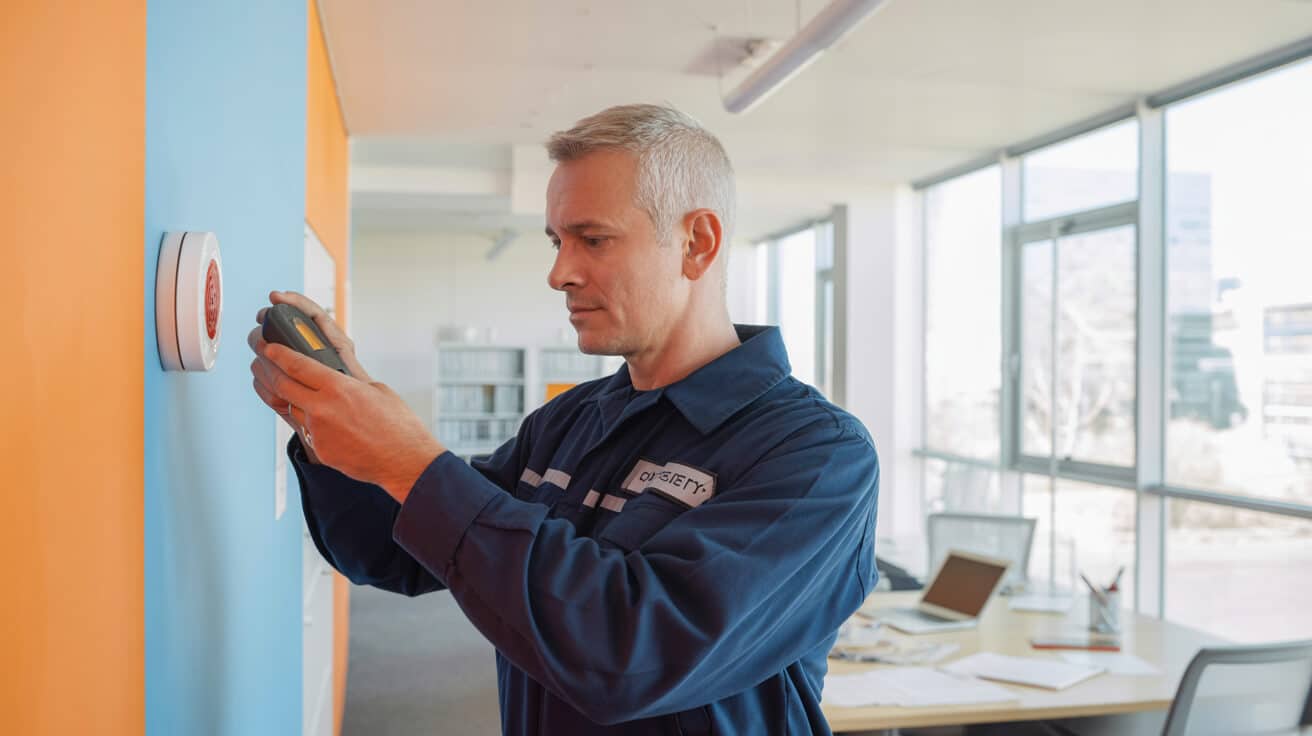
In day‑to‑day operations, MOR demands that your organisation can consistently spot, judge and document serious fire and structural issues as they emerge. It is less about writing new manuals and more about changing how people record and escalate certain problems so that the regulator can see a reliable, repeatable system in use across your higher‑risk buildings.
Most organisations already have incident logs, complaint routes and PPM regimes. The MOR question is whether those existing channels are tuned to recognise potential safety occurrences and route them into a clear, time‑bound decision process, rather than leaving events to the discretion of whoever happens to notice them on a busy day.
Understanding what counts as a safety occurrence
A safety occurrence in an HRB is a fire‑ or structure‑related situation that, if left unremedied, could realistically cause death or serious injury to many people. In higher‑risk buildings this is typically defined as an incident, situation or design aspect whose unremedied consequences are likely to risk the death or serious injury of a significant number of people, excluding most minor defects or localised issues that can be easily controlled.
For building safety and compliance managers, the critical task is to translate that abstract test into concrete categories and examples that make sense to engineers and site staff. That might include:
- Discovery of serious defects in load‑bearing elements or structural supports.
- Widespread failure of fire detection, alarm, smoke control or suppression systems.
- Evidence that external wall systems or compartmentation could allow rapid fire spread.
- Situations where essential means of escape or firefighting access are compromised.
Clear examples, combined with simple decision trees, help staff decide whether an issue remains within normal maintenance channels or should be flagged for MOR assessment. That practical framing is often the difference between a duty that works and a duty that exists only on paper.
What the regulator expects to see in an MOR system
When the regulator looks at your MOR arrangements, they are essentially asking whether plausible safety occurrences are likely to be caught, assessed and reported on time. They expect to see simple ways for people to raise concerns, a transparent triage process and records that show how each potential occurrence was handled and, if needed, reported, all aligned with your safety case and golden thread.
Regulator guidance on MOR for higher‑risk buildings consistently emphasises three things: capture, assessment and reporting. Dutyholders must have arrangements to receive concerns from a range of sources; a process to assess whether those concerns meet the definition of a safety occurrence; and, where they do, a means to notify and then submit a fuller report within defined timescales.
In operational terms, that means:
- Structured forms or digital records that capture who saw what, where, when and on which system.
- A clear allocation of responsibility for triaging potential occurrences and deciding whether they meet the threshold.
- Timers and prompts that ensure notices and detailed reports, where required, are not left until the end of a project or reporting period.
- Records showing follow‑up actions and how residual risk has been managed.
All of this needs to dovetail with your existing safety case, golden thread and resident engagement work, so that MOR becomes another lens on the same risk picture rather than a disconnected process that staff struggle to follow.
What your teams need to do differently
For your teams, MOR‑aware working means changing how they judge and record certain problems rather than learning detailed law. Engineers need to recognise repeated, widespread or design‑related failures; resident‑facing staff must know when a complaint hints at a systemic safety issue; duty managers must be confident when to escalate a cluster of issues into a formal MOR discussion and ensure that decision is recorded.
That requires training, yes, but also good design. If engineers are asked to absorb long lists of conditions or dense legal definitions, they are unlikely to change how they record jobs. If, instead, the system prompts them with a small number of targeted questions when they log certain asset failures, the “MOR lens” is much more likely to be applied consistently.
All Services 4U works with your teams to create those prompts, decision trees and briefing materials so that day‑to‑day behaviour lines up with what the regulator expects to see. The goal is that engineers experience MOR as a natural extension of their existing duties, not an extra task that competes with fixing the problem in front of them. Those same expectations are then made real, consistently, when you embed MOR inside PPM, rather than leaving it as a stand‑alone policy.
Why MOR has to be built into your PPM regime, not added as an afterthought
Embedding MOR into your PPM regime is the most reliable way to spot serious issues early and prove that you run a controlled system. If PPM remains “just maintenance”, you are depending on individuals to notice patterns and remember thresholds, which is fragile under real‑world pressure and difficult to evidence later when someone outside your organisation inspects what actually happened.
Most higher‑risk buildings already run dense PPM schedules. The question is whether those programmes have been tuned to act as MOR feeders, or whether they still treat every job as a standalone defect that starts and finishes within a contractor’s system, with no structured route into your building safety governance.
PPM as your primary detection net
PPM is already the most regular contact your organisation has with safety‑critical systems, so it is the obvious place to spot emerging safety occurrences. Every inspection or service visit is a chance to identify a pattern, design flaw or repeated failure that should trigger MOR thinking, as long as job templates and codes are designed with that purpose in mind and engineers are prompted to think beyond the immediate fix.
In a higher‑risk building, your PPM regime should already cover fire detection and alarms, emergency lighting, smoke control and ventilation, fire doors, sprinklers or other suppression systems, structural inspections where applicable, lifts (including any evacuation lifts), gas and electrical installations, and water systems for hygiene and temperature control. Each of these systems, if it fails in the wrong way, can contribute to a safety occurrence.
Treating PPM purely as a technical obligation misses its value as a detection net. By design, it brings competent people into contact with safety‑critical assets on a predictable cycle. If your job templates, inspection checklists and defect codes are built to highlight the conditions that might indicate a safety occurrence, the same work programme can act as the front end of your MOR system rather than a parallel activity.
Designing MOR prompts into PPM means deciding, in advance, which types of failure should raise a flag and what the engineer is asked at that point. The prompts should be short, specific and tied to asset type and context, so they feel natural to complete and do not slow down essential repair work or encourage “tick‑box” behaviour that adds little value.
Embedding MOR into PPM is largely a design exercise. It involves:
- Adding targeted questions or flags to job templates for safety‑critical assets.
- Defining severity or consequence codes that automatically trigger MOR screening.
- Linking certain combinations of asset type, location and defect description to escalation rules.
- Ensuring potential occurrences capture the information needed for any later MOR report.
Together, these controls mean serious, high‑consequence failures are never treated as routine defects and your team has a consistent way to pick them out from everyday work.
Avoiding duplication across reporting regimes
MOR sits alongside other reporting duties such as workplace accident reports and fire and rescue service notifications. Without a clear map of how these regimes interact, staff may either under‑report or feel they must report the same event several times through different channels, which can lead to fatigue and confusion and, in the worst case, missed duties.
Higher‑risk building operations already interact with other reporting regimes, including workplace accident reporting and fire and rescue service notifications. Without careful mapping, staff can be left unclear which route to use for which type of event, or may assume that one regime covers the other.
An effective design spells out, in plain language, how MOR interacts with those existing obligations. Some events may require both a workplace accident report and an MOR notice; others may be within scope of one but not the other. By clarifying this in training and incorporating it into job and incident workflows, you reduce both the risk of missing a duty and the burden of unnecessary duplication.
All Services 4U helps you carry out that mapping and design work, so that PPM becomes a coherent part of your overall safety reporting architecture rather than an isolated technical activity that no one can easily explain when challenged.
Accreditations & Certifications


Our specialist MOR support layer on top of your existing PPM
![[ALTTOKEN]](https://allservices4u.co.uk/app/uploads/2026/01/04-Mandatory-Occurrence-Reporting-PPM-Services-for-HRB-UK-MOR-Support.jpg)
A specialist MOR support layer lets you keep control of your duty while standardising the design, configuration and triage work that is hard to do building by building. Your organisation remains the decision‑maker; the overlay makes those decisions more consistent, efficient and easier to evidence across your portfolio, especially where you have a mix of legacy stock, HRBs and different contractors.
Most dutyholders now understand MOR conceptually but struggle to operationalise it consistently across varied buildings and supplier arrangements. The support layer exists to close that gap: it helps you convert definitions and policies into working workflows that align your PPM, building safety and governance teams.
What stays with you and what a specialist can take on
Your legal duty for MOR cannot be delegated, but much of the design, tooling and day‑to‑day triage can be supported by a specialist. By law the duty to comply with MOR remains with the Principal Accountable Person, Accountable Persons and other defined dutyholders, so you decide which events meet the threshold and how risk is managed while an overlay simply helps ensure the right events reach that decision point in a consistent format and on time, with the right information already captured.
By law, the duty to comply with MOR remains with the Principal Accountable Person, Accountable Persons and other defined dutyholders. That responsibility cannot and should not be outsourced. You remain the decision‑maker on whether an occurrence meets the legal threshold and on how risk is ultimately managed.
What can be standardised and supported, however, includes:
- Translating MOR definitions into practical trigger lists and decision trees for your stock.
- Configuring job templates, forms and fields in your PPM or CAFM system to support MOR screening.
- Operating a triage function that reviews potential occurrences flagged by your teams or contractors.
- Preparing structured internal records and, where instructed, draught notices and reports for your review.
- Aggregating data and producing dashboards or evidence packs for governance and regulator interactions.
All Services 4U’s MOR support services are designed around that split: you keep the duty and authority; a support layer provides the scaffolding that makes discharge of that duty more consistent, efficient and defensible. In practice, that means you gain capacity and structure without losing control.
How a support layer strengthens your evidence and governance
A standardised support layer means every potential occurrence is handled through the same steps, captured in the same way and reported against the same expectations. That reduces reliance on individual memory and recollection, and gives your governance forums a clear, comparable view of safety performance across buildings, contractors and time.
When PPM and incident data is fragmented across multiple contractors, spreadsheets and inboxes, it is extremely difficult to reconstruct the storey of a safety occurrence after the fact. A support overlay centralises and standardises that information. It ensures that whenever a potential occurrence is identified, the same fields are captured, the same logic is applied and the same documentation is produced.
For boards, audit committees and scrutiny bodies, that provides a much clearer line of sight. Instead of reviewing isolated case notes, they can see patterns: how many potential occurrences were considered; how many met the threshold; what actions were taken; whether there are recurring themes that warrant capital investment or policy change. For the regulator, should they visit or request information, you have a structured audit trail demonstrating both control and learning.
All Services 4U has used this operating model with organisations responsible for multiple higher‑risk buildings, helping them demonstrate consistent practice to internal audit, insurers and external reviewers. That experience is built into the support layer we deploy, so you are not starting from a blank page.
How we integrate with your AP, FM team and digital systems
Integrating MOR‑ready PPM into your organisation is a change project, but it does not have to mean replacing existing systems or suppliers. A phased, collaborative approach lets you prove the model on one or two HRBs, refine it with your teams and then scale with confidence across your wider estate.
Most clients find they already have the main ingredients: a CAFM or PPM system, defined safety‑critical assets and people who care about doing the right thing. The integration work focuses on aligning these around MOR expectations and making sure that what you already have is joined up, visible and repeatable.
A realistic integration roadmap
A realistic integration roadmap starts with understanding your baseline, then moves through design, configuration, pilot and scale‑up so that your AP, building safety and FM teams stay engaged without being overwhelmed by paperwork and parallel projects, and so that you build confidence in real‑world conditions. In early pilots we focus on one or two representative higher‑risk buildings, tracing how serious fire and structural risks are currently identified, recorded and escalated so you gain a clear view of missed triggers, unclear roles and weak evidence points before you commit to wider change.
A typical integration journey starts with one or two representative higher‑risk buildings. Together we:
Step 1 – Map assets and PPM
We map your current asset lists, PPM schedules and statutory inspection programmes, highlighting systems with MOR potential.
Step 2 – Review jobs and workflows
We review existing job templates, defect codes and workflows in your maintenance and asset systems.
Step 3 – Design MOR screening and rules
We design and agree MOR screening questions, flags and escalation rules for chosen asset types and failure modes.
Step 4 – Configure and test in your systems
We configure and test these changes in your live or staging environment, working alongside your FM team and key contractors.
Step 5 – Pilot end‑to‑end escalation
We pilot end‑to‑end escalation: from engineer job completion, through MOR screening and triage, to final decision by your building safety lead.
Step 6 – Refine and plan for scale
We refine based on feedback, document the approach and prepare a plan to scale to other buildings.
At each step, your Accountable Person, building safety manager and FM leads remain involved, so that the system reflects how your organisation actually manages risk rather than a generic template.
Aligning MOR‑ready PPM with the golden thread and safety case
Aligning MOR‑ready PPM with your golden thread and safety case means using consistent data, references and storage across all safety processes. When this alignment is in place, an MOR event automatically enriches your wider building safety picture rather than sitting in a separate bucket that has to be reconciled later under time pressure.
Higher‑risk building regulation does not exist in isolation. You may already be developing safety cases, building your golden thread of information and improving learning‑from‑incidents processes. MOR‑ready PPM should feed into those efforts, not sit alongside them.
That means:
- Ensuring that asset references and location data used in PPM match those used in your digital building records.
- Designing MOR documentation so it can be stored and retrieved as part of the building’s safety case.
- Using insights from occurrences and near occurrences to inform future maintenance strategies and capital planning.
All Services 4U works across these strands, so the work you do to strengthen MOR also improves the quality and usefulness of your wider building safety data.
Supporting people through the change
Sustainable integration depends on people understanding and accepting the changes, not just on system configuration. Brief, targeted training, clear documentation and early hands‑on support help engineers, coordinators and managers build confidence with the new workflows so they do not slip back into old habits.
New workflows and prompts are only effective if people use them. Engineers, coordinators and managers need to understand why changes are being made, what is expected of them and how the new system makes their job clearer rather than harder. That normally involves concise briefings, practical workshops, job‑shadowing and early support when the first potential occurrences are escalated under the new model.
By supporting both the technical and human sides of integration, All Services 4U helps your organisation move from design to dependable daily practice and reduces the risk that MOR‑ready PPM remains a paper exercise instead of a lived system.
De‑risking your options: DIY, generic FM module or MOR specialist overlay
Choosing how to deliver MOR‑ready PPM is itself a risk decision: you are trading internal time and capability against assurance and speed. A clear view of the strengths and weaknesses of each route helps you avoid half‑built solutions that look good on paper but fail when tested by incidents, regulators or insurers.
Most organisations are already experimenting with some mix of self‑build, generic system features and external help. The key is to be honest about what each option can and cannot realistically deliver for your higher‑risk buildings, and to be able to explain those trade‑offs to boards and audit committees.
Comparing delivery models across risk and cost
Each delivery model comes with different risk, cost and control profiles. DIY offers control but demands deep internal expertise; generic modules promise convenience but may not meet HRB‑specific expectations; a specialist overlay focuses effort where it cuts the most risk while working with what you already have and has already been tested in comparable portfolios.
A do‑it‑yourself model gives you maximum direct control, but demands significant internal expertise and time. Someone has to interpret evolving guidance, design workflows, configure systems, train staff and keep everything under review. For organisations with a mature building safety function and strong digital capability, that may be realistic. For others, the hidden cost of partial or delayed implementation may outweigh the visible saving.
Generic modules from maintenance or FM suppliers can be attractive, but they are often designed to serve a wide range of clients and may not fully reflect the specific obligations of higher‑risk buildings or the particularities of your stock. They may support incident logging and simple escalations without providing the depth of triage, governance and assurance that a regulator, insurer or board will expect.
A specialist overlay, such as the MOR‑ready PPM support offered by All Services 4U, sits between these extremes. It works with your existing contractors and platforms, bringing in focused expertise where it delivers the greatest risk reduction for the least disruption.
Questions to ask when choosing your route
Before committing to any model, it helps to test your current arrangements with a few simple, candid questions. If answers are unclear or depend heavily on one or two individuals, that is a sign MOR‑ready PPM is not yet embedded as a system and would be hard to defend if you were challenged tomorrow.
Whichever option you lean towards, there are critical questions to answer:
- Can you describe, today, how a serious safety issue would be identified, escalated and judged for MOR?
- How quickly could you produce evidence of that process for a regulator, insurer, lender or inquiry team?
- Do suppliers and systems treat MOR as a higher‑risk building duty, not just generic incident logging?
- Does your organisation have capacity to design, implement and maintain a bespoke MOR‑PPM model?
If any of those questions currently trigger uncertainty, an external support layer is at least worth testing, for example through a pilot on one or two buildings. That gives you real data on effectiveness and effort before you commit to a wider path.
When DIY is realistically viable
A DIY route is realistic only where your organisation already has strong building safety, digital and change capabilities. In that context, bringing in a specialist for design and early configuration, then taking ownership in‑house, can be an effective hybrid approach that balances control, cost and risk.
A self‑built model can succeed where you have:
- High‑quality, consistent asset and maintenance data across your higher‑risk buildings.
- A building safety and compliance team with capacity to own MOR design and oversight.
- Strong internal change and training capability for engineers, coordinators and managers.
- A culture that already supports disciplined reporting and learning from incidents and near misses.
Where those conditions are not yet present, using a specialist to accelerate design, configuration and early operation can reduce risk, with a view to transferring more responsibility back in‑house over time if that aligns with your long‑term strategy and your teams’ capacity.
Reliable Property Maintenance You Can Trust
From routine upkeep to urgent repairs, our certified team delivers dependable property maintenance services 24/7 across the UK. Fast response, skilled professionals, and fully insured support to keep your property running smoothly.

Book Your Free Consultation With All Services 4U Today
All Services 4U can give you a clear, practical view of how well your current MOR and PPM arrangements would stand up to regulator, insurer or board scrutiny, what it would take to strengthen them before they are tested by a real‑world incident or inquiry, and how to reduce the chance that the first serious incident or regulator enquiry exposes gaps under pressure. A short, focused conversation is often enough to reveal where your current processes are working, where they are exposed and how quickly those gaps can be closed.
In a typical engagement we start with a MOR‑PPM readiness review for one representative higher‑risk building. Together we trace how serious fire and structural risks are currently identified through maintenance and inspections, how they are recorded and how they are (or are not) escalated. You receive a clear view of missed triggers, unclear roles and weak evidence points, along with a prioritised set of improvements.
From there, you can choose to run a structured pilot. That usually covers a single block, your main PPM contract and your existing maintenance system. We design and configure MOR prompts, triage routes and record‑keeping, then support your teams through real jobs and potential occurrences. Within a defined timescale and budget, you can see whether an MOR overlay reduces missed occurrences, improves documentation and makes regulator interactions more predictable.
At the end of this process you will have decision‑ready outputs: risk heatmaps, governance gap analyses and costed implementation options ranging from light‑touch configuration through to a fully supported MOR service across your portfolio. You will be able to brief your board, audit committee or investment panel with greater confidence, using evidence drawn from your own buildings and early tests rather than theoretical models.
Commercial models are flexible. Depending on your portfolio size and internal capability, support can be packaged as fixed‑scope discovery and design work, phased roll‑outs linked to measurable outcomes, or ongoing framework support that adapts as guidance and your risk profile evolve. In every case, the legal duty and decision‑making authority stay with your Accountable Persons; All Services 4U’s role is to make it easier for you to meet that duty, prove it and learn from it.
If you want to understand how well your current PPM and safety management arrangements would stand up to MOR scrutiny – and reduce the chance that the first serious incident or regulator enquiry exposes gaps under pressure – a free consultation with All Services 4U is a straightforward, low‑risk next step.
What you can expect from the first call
Your first call is designed to be a structured conversation, not a sales pitch. We will ask a small number of focused questions about your higher‑risk buildings, PPM arrangements and current MOR thinking, then share an honest view of where you appear strong, where immediate risks can be addressed quickly and whether a short readiness review would add value.
You are not expected to have every answer or document to hand. The aim is to clarify your starting point, identify immediate risks that can be addressed quickly and agree whether a short readiness review would add value. By the end of the call you should have a clearer sense of your exposure, your options and how fast you can move if you choose to.
Frequently Asked Questions
Explore our FAQs to find answers to planned preventative maintenance questions you may have.
How does Mandatory Occurrence Reporting actually sit inside an HRB PPM regime?
Mandatory Occurrence Reporting works best as a decision layer sitting inside your existing HRB PPM regime, not as a bolt‑on reporting machine.
In practice you’re not creating a second CAFM or “MOR spreadsheet”. You’re adding one structured decision point to the jobs you already raise on fire, structural and life‑safety systems. When a serious defect is logged against alarms, smoke control, fire doors, lifts, structure or water systems, the job card should force a single extra check:
If we did nothing here, could this realistically change the fire or structural risk profile of the *whole* building?
If the honest answer is “possibly”, that job is pushed into your MOR lane for triage by your building safety team or Accountable Person. Everything else stays in normal PPM/reactive flow.
How should this feel day‑to‑day for your teams?
For engineers and coordinators, MOR should feel like one extra judgement on a small subset of work orders, not a new reporting job or another inbox to feed. They still:
- Raise jobs
- Attend site
- Close jobs against SLAs
They just answer one extra, targeted question when certain asset types and fault patterns appear.
For your building safety lead or AP, MOR should feel like a small, high‑quality queue of “possible safety occurrences” landing with enough context to make a clear call and leave an audit trail. No fishing through CAFM exports or Outlook archaeology — just a consistent pattern of:
- Triggered job → MOR triage → “report / don’t report” decision → documented rationale.
All Services 4U can help you wire that logic into the job templates and flows you already run. You end up with a Mandatory Occurrence Reporting system the regulator recognises, without creating a second universe of data your people quietly ignore.
Which PPM tasks in an HRB are most important for catching MOR‑level issues?
The PPM tasks that matter most for MOR are the ones where failure changes the consequences of a fire or structural problem across the building, not just in one flat.
In a typical higher‑risk building, you focus MOR checks around the assets that shape detection, compartmentation, escape routes, firefighting access and structural stability. When faults in those systems move from “annoying” to “systemic”, you’re into genuine Mandatory Occurrence Reporting territory and the Building Safety Regulator will expect to see how you handled it.
Where should you embed MOR checks in your PPM?
You don’t want MOR prompts popping up on every door closer and every lamp. You want them sitting where a miss really hurts:
- Fire detection, alarms, emergency lighting and smoke control: – repeated panel faults, disabled zones, or widespread EL failures change survivability in a fire.
- Fire doors, compartmentation and external wall systems: – patterns of failed doors, missing closers or cladding defects affect how fast fire and smoke can spread.
- Lifts, especially firefighting or evacuation lifts: – when they’re out of service, your evacuation and rescue plan is different, not just less convenient.
- Structural inspections and façade/structural works: – anything touching load‑bearing elements, movement joints or key fixings can drift towards disproportionate collapse risk.
- Gas, electrical and water systems: – persistent faults create credible risks of explosion, fire, electric shock or legionella at building scale, not just an isolated nuisance.
All Services 4U will take your asset register and PPM matrix and mark exactly where MOR prompts should live, so engineers get the right question at the right time. You get coverage in the areas regulators, insurers and lenders probe hardest, without training every operative to be a MOR lawyer OR drowning your AP in noise.
What changes in my evidence trail when MOR is properly embedded into PPM?
When MOR is properly embedded into PPM, your evidence trail moves from a messy collage of job notes and emails to a structured, repeatable record that lines up with your Safety Case.
In a MOR‑aware model, every potential safety occurrence shares a common data spine:
- Which asset failed and exactly where it sits in the building
- What the realistic fire or structural impact would be if nothing changed
- What interim controls you put in place
- Who triaged it and when
- What decision they took (report / don’t report) and why
- Whether and how you notified the regulator
That record should live against the job in your main system, then surface into your safety case, golden thread and governance packs. It should not be hiding in a contractor’s CAFM, someone’s inbox or a one‑off spreadsheet your best manager built three years ago and nobody else can explain.
What does that look like for boards and regulators?
When a board member, insurer, lender or the Building Safety Regulator asks the hard question — “Show me the serious occurrences you’ve considered in the last two years, and what you did about them” — you can respond with a calm, simple export:
- A list of all flagged events
- Which ones crossed the MOR threshold and were reported
- Which ones you judged below threshold, and the controls/remedials you put in place
- The rationale behind each decision
That turns MOR from a statement of intent into a visible system backed by live property maintenance data. All Services 4U designs your overlay so this output is a by‑product of everyday work, not a last‑minute scramble every time an auditor, inquiry or claims handler appears. Your teams capture operational facts once, in a format that stands up under forensic scrutiny.
A specialist MOR overlay reduces your risk by standardising the difficult parts: triggers, configuration and triage.
Your duty as Principal Accountable Person or Accountable Person does not move an inch. What changes is your ability to prove — quickly and calmly — that you had a system in place to notice, escalate and document qualifying occurrences.
A decent overlay does four things:
- Defines practical triggers: – which combinations of asset, defect pattern and context should raise a MOR flag.
- Embeds those triggers into job templates: – so the right questions are asked, automatically, at the coalface.
- Sets clear escalation rules: – who reviews, in what timeframe, with what authority.
- Runs a disciplined triage and documentation routine: – so borderline calls are made consistently and recorded in a way you can defend.
Why is this stronger than relying on “good people doing their best”?
Because good people leave, burn out, or make different judgement calls under pressure. Regulators and insurers don’t accept “we have great staff” as a control.
What lands better in front of the Building Safety Regulator, an inquiry or a major loss adjuster is being able to show:
- Every candidate occurrence followed the same decision path
- The same questions were asked each time
- The same minimum information was captured
- Deviations from the pattern are rare, explainable exceptions
That sharply shrinks the “who knew what, when?” arguments that wreck sleep for APs and board members. All Services 4U designs and runs that overlay alongside your existing property maintenance partners, so you move from individual heroics to a system that protects people, assets and reputations even on your worst day.
Can we realistically build MOR‑ready PPM in‑house, or is outside help the smarter move?
You can build MOR‑ready PPM in‑house if you have strong building safety, digital and change capability available at the same time across your portfolio. Most organisations don’t — or they have it concentrated on one flagship asset and nowhere else.
A blunt self‑check:
- Do you have clean, consistent asset and maintenance data for every higher‑risk building, not just the one you show visitors?
- Is there a named team with both time and skills to design MOR workflows and configure your CAFM/job system?
- Can you credibly train *every* engineer, coordinator and manager in your supply chain, and keep that training current?
- If the regulator or an inquiry team turned up tomorrow, could you calmly show how MOR works in practice on a random Tuesday, not just in slide decks?
If you’re hesitating on any of those, you’re not alone — and trying to brute‑force it solo just loads more risk onto the same handful of people who are already carrying too much.
Where does external support from All Services 4U move the needle fastest?
For most owners, RTM/RMC boards and APs, a hybrid model makes sense:
- Bring in All Services 4U to design the MOR logic, templates and flows, and to configure them inside your existing job systems.
- Run a live pilot in one or two buildings, including training and support for engineers, coordinators and building safety staff.
- Use real occurrences from that pilot as “muscle‑memory” training for your wider team and as proof for boards, insurers and the regulator.
- Decide, with data, how much of the ongoing triage and oversight you want to keep in‑house versus leaving with us as a specialist overlay.
That way you’re not betting years of risk on a blank‑sheet internal project, and you keep strategic control of your Safety Case, your golden thread and your property maintenance regime — while leveraging a partner whose day job is making MOR work in real buildings, under real pressure.
What actually happens in a first MOR‑PPM consultation with All Services 4U, and what do you leave with?
A first MOR‑PPM consultation is about clarity, not commitment. You should walk away with a clear picture of where you really are and what a realistic route forward looks like.
We typically pick one representative higher‑risk building as a working example and walk it through on paper with you:
- How PPM and reactive maintenance are organised today
- Where and how serious faults are logged, escalated and closed
- What records you can lay your hands on in minutes – and which ones take days
- Where MOR‑level events have probably appeared before, even if nobody called them that
From there, we highlight specific gaps — missed triggers, unclear roles, weak evidence chains, brittle spreadsheets — and set out a small number of ways you could close them that respect your governance, contract structure and budget.
What do you gain even if you don’t move beyond that first session?
You get:
- A sharper view of your MOR exposure in language your board, AP and investors will understand
- A practical sense of how embedding MOR into PPM would change day‑to‑day life for managers, engineers and resident‑facing teams
- A phased set of options — from “light‑touch template redesign on one block” through to “fully supported overlay across your HRB portfolio”
If you decide to go further, All Services 4U will help you pilot the model on one building so you can see the difference in live defect flows, evidence quality and board conversations before you commit to scaling. And if all you do right now is schedule that first conversation, you put yourself in a significantly stronger position the next time residents, boards, insurers or the regulator ask, “So how does Mandatory Occurrence Reporting actually work in your buildings?”
- How MOR‑ready PPM changes HRB maintenance and risk control
- MOR‑ready PPM support for higher‑risk buildings: what it actually means in practice
- The unseen exposure of running HRB PPM without embedded MOR
- What Mandatory Occurrence Reporting really demands in day‑to‑day operations
- Why MOR has to be built into your PPM regime, not added as an afterthought
- Our specialist MOR support layer on top of your existing PPM
- How we integrate with your AP, FM team and digital systems
- De‑risking your options: DIY, generic FM module or MOR specialist overlay
- Book Your Free Consultation With All Services 4U Today
- Frequently Asked Questions
- Related PPM Services
Case Studies


Related Articles
Your Guide To Identifying And Treating Minor Mould Outbreaks
Why Planned Preventative Maintenance (Ppm) Saves Money And Ensures Compliance