Emergency Lighting Testing PPM Services for RTM Boards – BS 5266 Monthly & Annual Tests
RTM directors and managing agents need emergency lighting testing that turns a fire safety duty into a structured, provable maintenance regime. A planned preventive maintenance programme delivers BS 5266 monthly functional tests, annual duration tests and defect tracking in communal areas, based on your situation. You end up with a clean asset list, dated test records, clear remedial actions and board-ready summaries that stand up to fire risk assessors and insurers. It’s a straightforward way to move from uncertainty to documented control over your block’s emergency lighting.



Author
Izzy Schulman

If you sit on an RTM board, “lights working on normal power” is not enough to prove compliance. Emergency fittings in stairs, landings and corridors must be tested, recorded and maintained so you can show they will perform when mains power fails.

Without a planned preventive maintenance regime, records fragment across agents, contractors and old reports, leaving gaps when assessors, insurers or buyers ask for evidence. A structured BS 5266 testing programme replaces guesswork with a clear cycle of checks, remedials and concise summaries your board can actually use.
- Fixed monthly and annual BS 5266 test schedule
- Clear asset lists, records and remedial tracking
- Board-ready summaries that simplify fire safety oversight</p>
Need Help Fast?
Locked out, leak at home, or electrical issue? All Services 4 U provides 24/7 UK locksmith, plumbing, electrical.
Testimonial & Clients Who Trust Us
With 5 Star Google Reviews, Trusted Trader, Trust Pilot endorsements, and 25+ years of experience, we set industry standards for excellence. From Dominoes to Mears Group, our expertise is trusted by diverse sectors, earning us long-term partnerships and glowing testimonials.
Worcester Boilers

Glow Worm Boilers

Valliant Boilers

Baxi Boilers

Ideal Boilers

Emergency lighting testing PPM for RTM‑managed buildings
You need emergency lighting testing that turns a paper duty into a simple, provable maintenance routine.
In an RTM block, emergency lighting in stairs, landings and corridors keeps escape routes usable if the normal supply fails. This service focuses on communal areas, not wiring or fittings inside individual flats. Your board is expected to show that those fittings are maintained and tested, not just installed. A planned preventive maintenance (PPM) service gives you a fixed cycle of monthly functional tests, annual full‑duration tests and clear records instead of hoping the system will work when you need it.
With a structured programme you move from “we think this is covered” to “we know what was tested, what failed, what was fixed, and when”. That makes fire risk assessments, insurer questions and director handovers easier, and lets you budget for remedials instead of discovering problems in an emergency.
All Services 4U already supports RTM RMC boards and managing agents with BS 5266 emergency lighting programmes in occupied residential common parts. Our emergency lighting PPM service typically includes:
- An initial asset survey and schedule tidy.
- Monthly functional testing of communal emergency fittings.
- An annual full‑duration discharge test.
- Defect tracking through to completion.
- Concise, board‑ready summaries after each cycle.
We run that cycle for you with competent engineers, usable reports and a logbook trail that is straightforward to review at each meeting, so you spend less time chasing and more time deciding.
Book a short consultation to see how this PPM regime would work for your building.
Why emergency lighting compliance fails in RTM‑managed blocks
You may feel the block is fine because lights come on normally, but hidden failures are common.
What typically goes wrong in RTM blocks
You often inherit emergency lighting from previous managers along with scattered certificates, unlabeled fittings and no clear asset list. Short monthly tests may never have been set up, or relied on an on‑site caretaker who has since changed. In practice, nobody can say with confidence when each luminaire was last proven on battery.
When a fire risk assessor, buyer’s solicitor or insurer asks for evidence, you end up reconstructing years of activity from old emails and partial reports. Gaps become obvious and confidence drops quickly.
How records quietly fall over
Records usually degrade at change points: a new agent, a new RTM board, or a new contractor. Logbooks are left on site but never updated. Reports list “emergency lights” without locations, so you cannot tell which fitting is which. Certificates are filed as PDFs but not linked to a simple schedule of dates and results.
Typical symptoms include:
- Different reports using different descriptions for the same fittings.
- Defects appearing on several reports without a clear close‑out.
- No single place where you can see dates for monthly and annual tests.
Without a controlled record set, you cannot tell whether defects found last year were ever closed, or whether today’s “new” failures are repeat issues. That makes it hard to challenge contractors or reassure residents and directors.
Why ad hoc testing leaves you exposed
Ad hoc visits tend to focus on the annual test, because that feels more significant. Monthly checks become “when someone remembers” or are skipped entirely. Faults may be mentioned on site but not written down in a way that can be tracked through to completion.
Technically, fittings may not operate or may fail early during a real outage. Governance‑wise, you struggle to show that you have maintained fire precautions in efficient working order if you cannot produce a clean trail of tests and remedials.
RTM board legal and practical responsibilities
You cannot avoid your oversight role just because contractors and agents handle day‑to‑day work.
Where your duty actually sits
Right to Manage does not turn you into the freeholder. It does put management functions for common parts into your company’s hands. In practice, the organisation that controls the premises day to day is usually treated as the “responsible person” for fire safety. That includes ensuring emergency lighting is kept in service and tested at appropriate intervals.
Your leases and any managing‑agent agreement may split tasks, but when something goes wrong in common parts, others will still look to your board. You are expected to be able to show what was done, when, and by whom.
What you can sensibly delegate
You can delegate scheduling visits, arranging keys and notices, and issuing work orders. You cannot delegate the need for someone on your side to read reports, approve remedials where appropriate and check that defects are actually closed.
A simple pattern works well: the agent or site contact receives the report; a named director or sub‑group reviews a summary; the board sees defect lists and status at meetings. We structure reports and summaries around that pattern so you always have a board‑level view without wading through technical detail.
What “competent provider” means in practice
Competence is about whether the contractor can demonstrate appropriate qualifications, BS 5266 training, experience with residential common parts and an understanding of testing patterns. Reports should be clear enough that you can see which fittings were tested, which failed and what is recommended.
Your role is to appoint a provider who can explain in plain language what they will do each month and year, and then hold them to that standard. We align our emergency lighting testing service within broader electrical testing services, using BS 5266-trained engineers who work routinely in RTM-managed blocks and who write findings in board-safe language.
BS 5266 monthly functional tests vs annual full‑duration tests
You need to control both the quick monthly check and the more demanding annual test, because they answer different questions.
Monthly functional test in plain language
The monthly test is a short functional check. Power to the circuit is interrupted using a test key or control so that emergency luminaires and exit signs run briefly on emergency supply. You are checking that each unit comes on, that its indicator status is as expected, and that any obvious damage or misalignment is spotted.
The test is kept short so that batteries are not heavily discharged and can recharge quickly. The outcome should be a dated log entry and, if your contractor performs it, a list of any units that failed to light or showed fault indications.
Annual full‑duration test in plain language
The annual test is a full‑duration discharge. The system is run on emergency power for its rated period to prove the batteries can support that duration. During and at the end of the test, the engineer checks that illumination remains acceptable and notes any fittings that drop out early or noticeably dim.
This test is more disruptive and more revealing. It often exposes weakening batteries that appeared fine during short monthly checks, and it needs to be planned so residents know what to expect and fittings can recharge afterwards.
Why both tests must sit in your calendar
Monthly tests answer “does this fitting work when the power fails today?”. Annual tests answer “will it still be lighting the escape route long enough for people to leave safely?”. Skipping either leaves a gap: you may have batteries that will not last when needed, or units that have silently failed since the last annual visit.
A proper PPM calendar locks in both intervals, usually with monthly checks spread over the year and one planned annual discharge window where resident communication and remedials are built into the plan. We build both tests into every emergency lighting PPM plan, so you do not have to manage two separate arrangements.
What a proper PPM visit includes in your communal areas

You should be able to picture what happens before, during and after every visit.
Before the engineer arrives
Your testing provider should hold, or help you build, a simple asset list: where each emergency luminaire and exit sign is, how it is identified, and what its rated duration is meant to be. Without that, you cannot reliably compare one visit to the next or prove that all fittings were covered.
You should also agree how access will work, what hours are acceptable for testing in communal areas, and how residents will be informed when an annual full‑duration test is planned. We can handle the initial survey and schedule tidy, then work with your agent or site contact so tests run with minimal disruption.
What happens during each visit
On a monthly visit, the engineer operates the test facility, walks the escape routes, confirms that every recorded fitting operates in emergency mode, and notes any failures, damage or obstructions. On the annual visit, they simulate mains failure for the full rated period and check performance over time, not just at the start.
Any obvious non‑compliances, such as missing or poorly positioned fittings, should be highlighted, even if they are beyond the strict scope of testing. You should not be left with only a tick against “attendance” and no sense of whether the escape routes are practically usable.
What you should see in the report
Every visit should leave you with a report that you can understand without being an engineer. At minimum, you should see:
- The date and type of test carried out.
- The areas covered and any limitations.
- A list of defects with locations and simple descriptions.
- A clear indication of which actions are urgent and which are advisory.
That report should tie back to your logbook and asset list, so the same issues do not reappear as “new” every year. You should then be able to ask for a quote for remedials or have the work bundled into an agreed schedule.
If you want a provider who works this way across your blocks, you can ask All Services 4U for a sample emergency lighting report and a draft BS 5266 testing schedule for your building before you commit, alongside details of any related electrical testing services.
Faults, logbooks, certificates and close‑out evidence you should expect
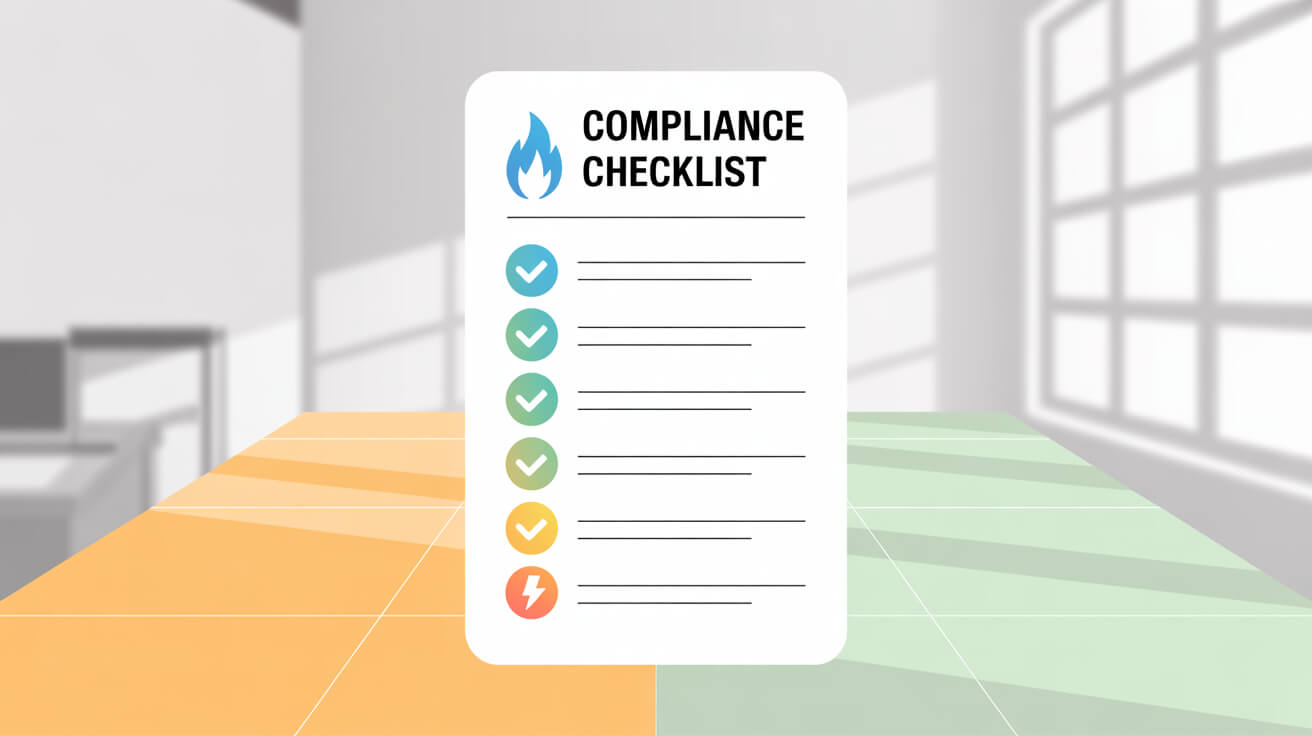
You reduce risk and board workload when each defect is followed from discovery to closure in your records.
Core documents you should always have
For each building, you should have:
- An emergency lighting logbook or register, current and accessible.
- An asset or luminaire schedule for the communal system.
- Monthly and annual test records, whether carried out in‑house or by contractors.
- Commissioning or periodic inspection certificates from competent firms.
These documents do not need to be complex, but they do need to be complete enough that a new director or assessor can see what has happened over time without guessing.
Common fault patterns you want to see closed out
Typical findings in older systems include lamps that do not light in emergency mode, indicators showing battery or charger faults, inadequate coverage in certain stair runs, and fittings that no longer match the recorded schedule. If the same items appear on multiple reports, it suggests that testing is happening but close‑out is not.
Your provider should mark each defect with a status such as newly identified, quoted, authorised, completed and retested. A simple status model lets you see, at a glance, how many items remain open and how many have been cleared.
How strong records help you at audit or sale
When an insurer, auditor, fire risk assessor, buyer’s solicitor or future managing agent asks for evidence, you are in a much better position if you can produce a concise pack: logbook extracts, recent test reports, certificates and a summary of open and closed defects.
If you take over an RTM block where the only records are scattered PDFs and an old, half‑used logbook, a year on a simple PPM regime gives you a clean bundle instead of a hunt through email archives. That reduces friction and uncertainty for everyone involved and makes it easier to justify service charge spend and demonstrate reasonable management steps.
Accreditations & Certifications





How to compare scope, reporting, remedials and cost

You will approve a better service if you compare what you are getting, not just what it costs.
Scope questions to ask before you look at price
Before you put numbers side by side, you should know:
- Whether monthly functional tests and the annual full‑duration test are both included.
- Which communal areas and plant spaces will be covered.
- Whether asset identification or schedule tidying is included at the start.
If a quote is cheaper because it includes only annual testing, or only covers part of the building, that should be a conscious choice, not a hidden compromise. We normally include both monthly and annual tests for relevant communal areas and will spell out clearly if any part of the block is outside scope.
How to judge reporting and remedial handling
Ask to see a sample report. Check whether you can immediately see which fittings failed, where they are, and what next action is recommended. Confirm whether remedial works will be quoted and agreed before they are carried out, and how evidence of completion will be returned.
You want a service where you can follow each issue from test report, through approval, to completion and retest, without digging through multiple channels. We structure remedial quotations and completion evidence so you can track that path easily and file it straight into your binder.
Picking a visit pattern that fits your block
Some blocks benefit from strict monthly visits; others may combine internal monthly checks with contractor‑led rounds and one annual duration test. The right cadence depends on your size, risk profile and on‑site presence. You can use a common pattern across several blocks if you manage a portfolio, while still adjusting details where that makes sense.
A good provider will help you choose a pattern that keeps you inside expected testing intervals while fitting around resident access and board meeting cycles, rather than pushing a one‑size‑fits‑all model.
If you want to move from ad hoc tests to a predictable, documented regime, this is a good point to line up a consultation and see how that pattern would look for your block.
Reliable Property Maintenance You Can Trust
From routine upkeep to urgent repairs, our certified team delivers dependable property maintenance services 24/7 across the UK. Fast response, skilled professionals, and fully insured support to keep your property running smoothly.

Book Your Free Consultation With All Services 4U Today
When you book a consultation, you get a practical, decision‑ready view of your emergency lighting, without needing perfect records in place.
A short discussion is often enough to work out whether your immediate priority is routine PPM, a baseline review of the existing system, or closing known defects. You can then decide how quickly you want to move and what level of board involvement feels realistic.
You will get more from the call if you gather whatever you already have: any logbook pages, recent test reports, notes from your fire risk assessment, lists of known faults, and practical information about access and resident sensitivities in the block. Even if those documents are incomplete, they give us a starting point that reflects your real position.
By the end of the consultation, you leave with:
- A clear view of where you stand today and which risks matter most.
- An outline of a proportionate BS 5266 testing pattern and visit rhythm for your block.
- A simple picture of the reports and evidence you would see after each visit.
There is no obligation to proceed, and you stay in control of the pace and scope of any next steps. If you want to be ahead of your next fire risk assessment or insurance renewal, it makes sense to start that conversation now.
Book your free consultation with All Services 4U today.
Frequently Asked Questions
What should your RTM board check in an emergency lighting maintenance contract?
Your RTM board should check scope, testing cadence, reporting, remedial follow-up, and who owns the evidence trail.
A contract for communal emergency lighting should do more than promise a visit. It should show exactly what will be tested, how often it will be tested, how failures will be reported, and how your board will track repairs to closure. If those points are vague, the board often ends up doing the missing admin itself.
That matters because emergency lighting in common parts is part of the wider fire safety picture. Under the Fire Safety Order, the focus is not simply whether a contractor attended. The focus is whether the system that supports escape routes is being maintained and recorded properly. BS 5266 points in the same direction. It supports routine inspection, testing, and record keeping, not just a once-a-year certificate.
The cheapest quote often leaves the board paying in time, uncertainty, and repeated follow-up.
Which parts of the contract should be defined before your board signs?
Your board should insist on clear wording about assets, visits, records, and defect handling before approving the service.
The contract should state which communal areas are included, how fittings are identified, and whether the provider is working from a live asset list or correcting an inherited one. That sounds basic, but many blocks carry old labels, moved fittings, and mixed records from previous contractors. If the starting point is unclear, the reports that follow are usually unclear too.
Your board should also be able to see whether the contract includes:
- monthly function testing
- annual full-duration testing
- logbook updates
- defect reporting against clear locations
- remedial quotations
- retest evidence after repair
- confirmation of the next due date
That level of detail helps directors make service-charge decisions that are easier to explain later. The RICS Residential Management Code supports a documented, reasoned approach to management, and this is one place where that principle matters in everyday practice.
Which warning signs usually show the contract is too soft?
A contract is too soft when it describes attendance clearly but leaves responsibility unclear after a failure is found.
That usually shows up in phrases like “testing carried out as required” or “report provided after visit” without any detail on what happens next. If a fitting fails, your board should not have to guess whether a quote will follow, whether the defect will be tracked, or whether the contractor will retest the item once repaired.
Ask one direct question during review: If a fitting fails next month, who records it, who proposes the fix, and how does the board see when it is closed? If the answer is vague, the service model is vague.
A simple contract comparison helps:
| Contract point | Weak wording | Strong wording |
|---|---|---|
| Scope | “Emergency lighting tested” | Areas, fitting references, and test types listed |
| Defects | “Issues reported” | Cause, location, priority, and next step defined |
| Close-out | “Remedials available if needed” | Quote, approval, repair, and retest path set out |
Why does this contract affect more than the lights themselves?
It affects how confidently your board can answer later questions about safety, spend, and oversight.
If the contract creates weak reporting, every later decision gets harder. Directors spend more time decoding old reports. Managing agents inherit unclear files. Residents ask whether faults were fixed, and the board cannot answer quickly. That is when a routine maintenance contract turns into a recurring management burden.
NFCC guidance and board-level good practice both favour a simple principle: if something safety-related is tested, the record should help the responsible people understand what happened and what still needs action. A contract that supports that is worth more than one that only looks competitive on day one.
If your board wants to compare providers on control as well as cost, a contract review with All Services 4U can help you test whether the service on offer will genuinely reduce board workload rather than quietly shifting it back onto volunteers.
How often should communal emergency lighting be tested in an RTM block?
Communal emergency lighting usually needs monthly function tests and annual full-duration tests.
Those two tests are not interchangeable. A monthly test checks whether fittings respond when the normal supply is interrupted. An annual test checks whether they can stay on for the required emergency duration. For an RTM board, that difference affects planning, budget timing, reporting, and how seriously to treat a failure.
BS 5266 is the main reference point here. It supports a short routine test during the year and a longer endurance test annually. In practice, one tells you whether the fitting changes over. The other tells you whether it can keep an escape route lit for long enough if the building loses power.
A fitting that flicks on for a moment has not yet proved it can protect the route out.
What does the monthly test actually tell your board?
The monthly test shows whether each recorded fitting responded properly on the day of inspection.
That is more useful than it first sounds. Many faults stay hidden under normal power. Residents see the fitting every day and assume it works. A monthly routine reduces the gap between a fault appearing and the board finding out about it.
A good monthly visit can help your board spot:
- fittings that do not illuminate
- obvious battery or charger faults
- damaged or missing exit signs
- mismatched asset labels
- defects that keep appearing without proper closure
That gives your board earlier visibility and a cleaner trail into the annual test.
Why does the annual test create more pressure?
The annual test shows endurance, and endurance failures usually lead to more decisions.
A full-duration test will often expose weak batteries, failed fittings, and gaps in the asset list that monthly checks do not fully reveal. It can also create resident questions if recharge periods or repeat visits are not explained well. In blocks with mixed records, the annual test often reveals two problems at once: the technical issue and the poor quality of past reporting.
That is why annual reports tend to carry more weight with directors. They do not just show whether the lights responded. They show whether the system can perform for the full emergency period that the building depends on.
What is the practical difference between the two tests for your board?
The practical difference is that one supports early fault spotting, while the other drives heavier remedial planning.
A simple comparison makes the distinction easier to follow:
| Test type | What it proves | What usually follows |
|---|---|---|
| Monthly function test | The fitting responds on emergency supply | Routine log updates and early fault spotting |
| Annual full-duration test | The fitting can sustain the rated duration | More failures exposed and more remedial decisions |
The annual test also has a recharge consequence. After a full discharge, fittings may need time to recover. That affects timing, resident communication, and any follow-up visits.
When does this stop being routine and start becoming strategic?
It becomes strategic when regular testing reduces surprise, repeat faults, and rushed approvals.
That is usually the moment boards stop seeing monthly testing as a chore and start seeing it as a control tool. A reliable monthly rhythm means fewer unexplained failures at the annual stage, cleaner records, and less time spent asking what happened last quarter.
If your board wants to check whether your current monthly and annual testing rhythm is helping or simply generating paperwork, All Services 4U can review the cycle with you and show where the pattern is breaking before the next annual window creates more pressure.
Why does planned emergency lighting maintenance usually cost less than ad hoc testing?
Planned maintenance usually costs less because it reduces repeat visits, unclear defects, and reactive approvals.
Ad hoc testing can look cheaper when your board first compares quotes. The annual figure is low, the contractor promises support when needed, and the service appears flexible. The cost problem usually shows up later, when defects are rediscovered, reports are vague, and directors spend time approving small pieces of reactive work that should have been grouped and managed as part of a routine programme.
SFG20 is useful here because it supports structured planned maintenance rather than improvised response. In a residential block, that matters because the visible invoice is only part of the true cost. The other part is the time spent chasing, clarifying, re-attending, and explaining repeated failures to leaseholders.
Where does ad hoc testing become false economy?
It becomes false economy when the board pays more than once to identify or explain the same defect.
A common pattern is easy to recognise. The annual test finds several failures. The report is unclear. A quotation follows, but one location needs clarification. One item gets repaired, another is deferred, and another returns in the next report because the reference was too vague to track properly. Your board has now paid for attendance, clarification, and rediscovery.
That is not just a contractor cost. It is also director time, managing-agent follow-up, and a weaker explanation if leaseholders question repeated spend.
How does planned maintenance make service-charge decisions easier to defend?
It creates a visible chain from inspection to defect to approval to confirmed closure.
Leaseholders and advisers tend to challenge costs when the file looks disjointed. They are less likely to challenge where the sequence is clear. Planned maintenance helps because it shows that the block was tested regularly, a defect was identified, approval was given, and closure was evidenced afterwards.
That is much easier to explain than a bundle of separate call-outs and partial notes. It also fits the broader discipline expected by the RICS Residential Management Code, where the reasoning behind procurement and oversight should be visible rather than guessed.
What does the cost difference look like in practice?
In a planned model, your board pays for rhythm. In an ad hoc model, it often pays for interruption.
A small or medium block may not notice the difference immediately. But over time, repeated small inefficiencies add up: extra visits, unclear reports, delayed approvals, and defects that drift from one cycle into the next. Those costs are often spread across different invoices and different months, which makes them less visible but no less real.
A simple comparison helps:
| Approach | What your board pays for | What usually happens over time |
|---|---|---|
| Planned maintenance | Routine cadence and grouped decisions | Fewer surprises and cleaner records |
| Ad hoc testing | Individual interventions and follow-up | More rework and more management time |
When should your board move from reactive to planned?
Your board should switch when the annual test keeps producing surprises or the same defects keep coming back.
That is usually the point where the issue is no longer the fitting alone. The issue is the management model around it. If your directors are spending more time interpreting reports than approving sensible next steps, the block has probably outgrown the ad hoc route.
If you want to compare the true cost of the two approaches using your own reports rather than generic promises, All Services 4U can review your current pattern and show which route gives your board cleaner control and lower admin over time.
Which emergency lighting records should your RTM board keep after each test?
Your RTM board should keep records that show what was tested, what failed, what was fixed, and when closure was confirmed.
A certificate on its own rarely gives enough continuity. It proves something happened on a date, but not always what the live status of the system is now. Good records should help a new director, managing agent, insurer, valuer, or adviser understand the present position without rebuilding the history from old emails.
BS EN 50172 supports ongoing inspection and record keeping. That matters for RTM RMC boards because directors change, contractors change, and inherited files are often mixed. The aim is not to build a perfect archive. It is to keep a working record set that is clear enough for the next decision and the next handover.
Which records should be easy to retrieve quickly?
Your board should be able to retrieve the current asset list, test history, defect status, and close-out evidence within minutes.
A practical emergency lighting file should include:
- the current fitting or luminaire schedule
- monthly function test records
- annual full-duration test reports
- current logbook entries
- an open and closed defect tracker
- remedial quotations or approvals
- completion evidence and retest confirmation
If those items sit in separate places with different naming styles, the board still has a records problem, even if the testing itself has happened.
Consistent fitting references stop the same defect from being described three different ways.
That is one of the most common points of failure in inherited records. One report says “upper stair light.” Another says “exit fitting on landing.” A third says “stairwell emergency unit.” Directors cannot tell whether the same asset failed three times or whether three different assets failed once each.
A stable naming model fixes that. Once each fitting or location is consistently referenced, defect history becomes easier to trust, approvals become easier to defend, and retests become easier to match back to the original fault.
What should a future reviewer be able to understand at a glance?
A future reviewer should be able to see scope, test history, open defects, actions taken, and proof of closure.
A compact file structure should answer five basic questions:
| Question | Record needed | Why it helps |
|---|---|---|
| What assets are covered? | Current schedule | Confirms scope and location logic |
| What was tested? | Monthly and annual results | Shows routine and timing |
| What failed? | Defect tracker | Shows risk and trend |
| What was approved? | Quotes or decisions | Shows governance and spend logic |
| Was it fixed? | Retest evidence | Shows closure, not assumption |
That kind of continuity is useful not only for board handover. It also helps in insurer reviews, refinancing questions, and routine management changes.
How should your board improve inherited records without turning it into a major project?
Start with naming, chronology, status, and closure proof before trying to tidy everything else.
Boards often delay record improvement because they imagine a full archive rebuild. Usually the first gains come from simpler steps: one current asset list, one clear defect tracker, one filing order, and one naming convention. Once those are in place, older reports become easier to interpret.
NFCC guidance and practical fire safety management both favour records that help responsible people take action, not records that simply sit in a folder. If your current file set is usable but untidy, All Services 4U can help you standardise the core records first, so future directors inherit something workable rather than something mysterious.
What happens if your RTM board misses emergency lighting tests or leaves defects open too long?
Missed tests and open defects weaken both your safety position and your ability to show proper oversight.
The immediate issue is practical. If testing slips or faults stay open, your board knows less about whether the emergency lighting on escape routes will perform when needed. The slower issue is administrative. Once the record trail starts thinning out, later decisions become harder, reports feel less reliable, and resident or insurer questions take longer to answer.
This does not need dramatic language. It needs clear sequence. The board’s role is to show that known issues are identified, prioritised, and closed in a way that can be followed later. That is consistent with the Fire Safety Order, with NFCC guidance on maintaining precautions, and with broader good practice in block management.
Which delays usually create the most pressure later?
The most damaging delays are the ones where the technical problem and the record gap appear together.
That usually means:
- failed fittings with no retest evidence
- monthly checks missing for several periods
- annual failures with no approval trail
- defects that stay open across handovers
- reports that cannot be matched cleanly to locations
Those gaps tend to surface at awkward moments: a resident complaint, a fire risk assessment review, an insurer query after an incident, or a managing-agent handover.
Why does a small technical fault become a bigger management issue?
Because uncertainty around the history often grows faster than the defect itself.
A failed battery may be simple to replace. What becomes expensive is not knowing when it first failed, whether it was quoted, whether it was approved, or whether anyone confirmed the repair. That uncertainty creates extra visits, more emails, and slower board decisions.
It also makes recurring faults harder to spot. If your records are weak, the board may keep treating the same issue as if it were new.
How can your board explain the risk without sounding alarmist?
The clearest explanation is that delay makes future decisions slower, weaker, and harder to evidence.
That is usually enough. A director inheriting a patchy file is less confident approving new spend. A managing agent spends more time reconstructing history. Leaseholders are more likely to question repeat costs. A lender or insurer may ask for documents that should be easy to retrieve but now require detective work.
The Building Safety Act adds extra context where higher-risk buildings are involved, because record continuity and accountable oversight matter even more in that setting. But even outside HRBs, the basic management lesson stays the same: open issues should not be allowed to drift.
When should your board treat this as a reset point?
Treat it as a reset point when the same gaps are appearing across more than one testing cycle.
At that stage, the problem is no longer one missed test or one failed fitting. It is a broken management rhythm. The right response is to rebuild the sequence: live asset list, live defect tracker, current testing calendar, and clear close-out rules.
If your block has reached that point, a gap assessment with All Services 4U can help your board see what needs fixing first, what can be standardised quickly, and how to get back to a routine that is easier to defend and easier to manage.
How should your RTM board prepare for an emergency lighting contractor review?
Your RTM board should prepare enough information to show the current condition, likely gaps, and the right starting point.
You do not need a perfect file to have a useful contractor review. Most productive reviews begin with incomplete records. The real purpose is to avoid buying the wrong type of service. Some blocks need a clean move into routine PPM. Others need a baseline tidy-up first because the asset list is unreliable. Others need a remedial-first programme because known defects are already open and overdue.
A good review should leave your board with a clearer answer to one practical question: what should happen first in this block, based on the evidence already in hand?
The right programme starts with the real condition of the file, not the polish of the proposal.
Which information should the board gather before the review?
Your board should gather enough to reveal pattern and gaps, not every document ever created.
A useful starter pack usually includes:
- the latest annual test report
- recent monthly test records, if available
- current logbook pages
- any open defect list
- fire risk assessment actions that relate to lighting
- notes on access issues in communal areas
- recurring resident concerns, if relevant
If those records are scattered or inconsistent, that is useful in itself. It tells the reviewing contractor that the first job may be to stabilise the records before launching into routine cadence.
Which questions should the board ask during the review?
Ask questions that reveal workflow and judgement, not just price.
Useful questions include:
- how will fittings be referenced in future reports
- how will open and closed defects be tracked
- who updates the logbook
- what happens after a failed annual test
- how are monthly and annual outputs kept distinct
- how are inherited record gaps dealt with
- what does closure proof look like after remedials
These questions reveal whether the provider is thinking only about attendance or about helping a board run a reliable process.
Which outcomes should a good review produce?
A good review should point your board to one of three starting routes.
Those routes are usually:
| Starting point | What it means | Best next step |
|---|---|---|
| Baseline tidy-up | Records or asset list are unreliable | Standardise records before routine PPM |
| Straight to PPM | Core records are usable and defects are controlled | Start regular monthly and annual programme |
| Remedial-first | Open failures or overdue issues are material | Correct weaknesses, then stabilise testing |
That gives directors something practical to decide. It is far better than leaving the meeting with a generic quote that assumes every block needs the same thing.
Why does this preparation make the final decision safer?
It helps your board choose the right sequence rather than the most persuasive sales pitch.
That matters because emergency lighting management is not just about technical attendance. It is about buying the level of structure your building actually needs now. Some blocks need discipline. Some need reconstruction. Some need urgent clean-up before discipline has any value.
If your board wants a structured review that leads to a realistic next step rather than a generic proposal, All Services 4U can help you compare the options, match the programme to your actual records, and move forward in a way that gives directors more control from the first visit.
- Emergency lighting testing PPM for RTM‑managed buildings
- Why emergency lighting compliance fails in RTM‑managed blocks
- RTM board legal and practical responsibilities
- BS 5266 monthly functional tests vs annual full‑duration tests
- What a proper PPM visit includes in your communal areas
- Faults, logbooks, certificates and close‑out evidence you should expect
- How to compare scope, reporting, remedials and cost
- Book Your Free Consultation With All Services 4U Today
- Frequently Asked Questions
- Related PPM Services
Case Studies


Related Articles

Your Guide To Identifying And Treating Minor Mould Outbreaks

Why Planned Preventative Maintenance (Ppm) Saves Money And Ensures Compliance