Gully Cleaning PPM Services UK – Bi-Annual Maintenance
Facilities, estates and property managers across UK sites use bi‑annual gully cleaning PPM to keep surface water moving and compliance questions under control. A planned six‑monthly programme schedules spring and autumn jet‑vac visits, clears each gully to a defined standard and captures waste and asset records, depending on site constraints. By the end you have visibly cleared gullies, reduced reactive flooding issues and a clear audit trail covering attendance, arisings and noted defects agreed in scope. It’s a straightforward way to bring drainage, risk and paperwork under one predictable routine.


Author
Izzy Schulman

Why UK sites benefit from bi‑annual gully PPM
If you manage UK sites, blocked gullies, surface ponding and awkward audit questions can turn drainage into a recurring headache. You need water to clear quickly in bad weather and a simple way to show you have managed surface‑water risk responsibly.

A twice‑yearly gully cleaning PPM plan ties maintenance to real seasonal loading, cutting avoidable call‑outs while keeping insurers, boards and regulators satisfied. With defined visit tasks, safe working methods and clear waste and asset records, you gain predictable control over drainage performance and compliance.
- Reduce flooding complaints and emergency tanker call‑outs over time
- Align drainage maintenance with seasonal leaf, grit and silt loading
- Hold clear records to evidence risk management and Duty of Care
Need Help Fast?
Locked out, leak at home, or electrical issue? All Services 4 U provides 24/7 UK locksmith, plumbing, electrical.
Testimonial & Clients Who Trust Us
With 5 Star Google Reviews, Trusted Trader, Trust Pilot endorsements, and 25+ years of experience, we set industry standards for excellence. From Dominoes to Mears Group, our expertise is trusted by diverse sectors, earning us long-term partnerships and glowing testimonials.
Worcester Boilers

Glow Worm Boilers

Valliant Boilers

Baxi Boilers

Ideal Boilers

Bi‑annual gully cleaning that keeps water moving and your records inspection‑ready
You want gullies to cope with heavy rain without constant emergencies or awkward audit questions, and you want drainage that is almost invisible day‑to‑day but fully visible on paper.
In a twice‑yearly gully cleaning PPM (planned preventive maintenance) programme you agree spring and autumn visits, we attend with a jet‑vac unit, clear each gully properly, manage the waste and leave you with a clear, portable record. On site that means grates and surrounds cleared, covers lifted safely, silt and debris removed from pots, outlets flushed where needed, flow checked where practicable, and obvious defects recorded for follow‑up. In the background, you hold the waste paperwork, attendance logs and asset‑level records you need if an insurer, board, regulator or resident asks how you have managed surface‑water risk. Put a six‑monthly gully programme in place so you know both the drainage and the paperwork are under control.
Why a 6‑monthly gully cleaning plan makes sense for UK sites
A six‑monthly plan works because it matches how gullies actually load and fail over a year, instead of reacting every time you see ponding.
Match maintenance to seasonal loading
Most sites see the heaviest loading in two bursts: autumn leaf‑fall and winter grit and sediment. If you leave gullies untouched, grates blind over, pots fill with silt and outlets narrow until even moderate rain can cause ponding. Cleaning in spring clears what winter has left behind and confirms outlets are still performing before summer storms; cleaning again in autumn removes leaves and debris before the main leaf‑fall and pre‑winter rainfall period. Writing “every six months, spring and autumn” into a PPM schedule gives everyone a simple, shared expectation.
Cut reactive call‑outs and complaints
Without a plan, drainage appears only as a problem: standing water in car parks, slippery entrances, odours around yard gullies and flooded low points. Those issues then become emergencies, often at the worst time and in the worst weather. A 6‑monthly regime tackles predictable build‑up before it reaches that point, so over time you normally see reactive call‑outs drop because weak points are being cleared before peak rainfall, not after. Tenants, residents and site teams experience fewer visible issues, while you regain control over when tanker work happens and how it is budgeted.
Support your risk and compliance duties
Guidance for highways, housing, commercial and public‑sector portfolios all points to the same idea: you should understand your flood and slip risks, put reasonable controls in place, and be able to show what you did and when. A risk‑based gully PPM is a straightforward way to evidence that you have considered likelihood and consequence, especially where you already know there are low points, historic ponding or vulnerable areas such as basements, plant rooms or accessible routes. When those visits sit alongside your other compliance activities, surface‑water drainage stops being a blind spot in your governance.
What is included in each bi‑annual gully cleaning visit
![[ALTTOKEN]](https://allservices4u.co.uk/app/uploads/2026/01/01-Gully-Cleaning-PPM-Services-UK-Bi-Annual-Maintenance.png)
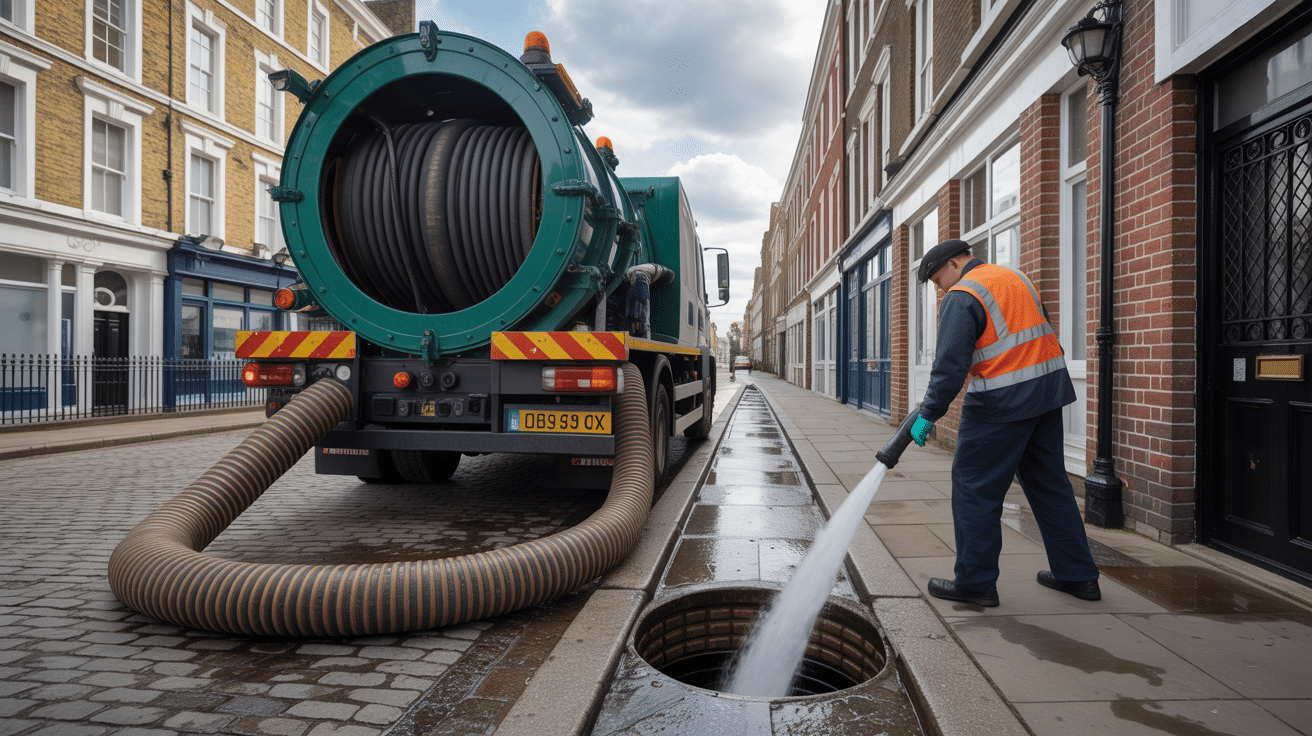
Each visit follows a defined set of tasks so you know what is being delivered and paid for, not just that “a tanker attended”.
Pre‑start checks and site set‑up
Before work starts, our team checks in with your site contact, confirms the live risk picture and sets up a safe working area. That includes applying the agreed traffic or pedestrian management, verifying access and parking positions for the jet‑vac unit, and confirming which gullies are in scope that day. Where you have specific constraints – school start times, loading bay curfews, basement ramps or residential quiet hours – we build those into the visit plan so cleansing happens with minimal disruption and fewer aborted visits.
Cleaning each gully properly
For each gully in scope, the operative safely lifts the grate or cover, inspects the condition and measures or estimates the silt level in the pot. The jet‑vac nozzle is used to mobilise and vacuum out silt, grit, litter and organic debris, and where appropriate the outlet and short length of connecting pipework are flushed or lightly jetted to help restore flow. The grate or cover is reinstated so it sits correctly and does not present a trip or rocking hazard. For channel drains and linear systems, we apply the same principles across the agreed length.
Defect notes and agreed exclusions
Not every issue can or should be fixed within a routine PPM visit. If we find broken or sunken grates, collapsed pots, dislodged covers, badly cracked channels or persistent slow drainage that suggests a downstream defect, we record those in the report with photos where agreed. We also respect the exclusions you have set: for example, highway‑adopted gullies, areas outside your red line, or chambers that would require confined‑space entry. Your stakeholders can see that problems were identified and escalated, not hidden, and you can raise follow‑on works through the right route.
If you want confidence that “PPM completed” really means “gullies attended and cleared to a defined standard”, you should insist on this level of task clarity in every visit.
How we work safely on live sites
Safe delivery is as important as a clear sump, especially on busy or public sites where one careless move can undo a year of good work.
Planning access and working windows
Gully work involves vehicles, lifting covers and operating hoses in areas where people or traffic move. Ahead of mobilisation we agree parking and standing locations, turning routes, any permit requirements and working windows that avoid critical times such as school runs or peak trading. On the day, our team checks that the real‑world situation matches the plan and adjusts with your site contact if needed, preventing aborted visits caused by blocked access, parked vehicles or unexpected closures.
Keeping people and vehicles safe around open covers
Once work starts, the priority is to keep operatives, pedestrians and drivers away from hazards created by open covers, hoses and equipment. That typically means barriers or cones around the working area, clear visual warnings and, where required, banksmen or lookouts. On mixed‑use or residential sites we pay particular attention to routes used by children, vulnerable residents and cyclists, so people are aware of the work but not forced into unsafe desire lines or sudden manoeuvres to avoid equipment.
Non‑entry as the default for gully cleansing
Routine gully PPM should not involve anyone entering a chamber. Our standard method treats gullies as non‑entry assets: covers are lifted, the pot is cleaned and outlets are flushed from surface level. If a structural defect, major blockage or unusual configuration ever makes entry a consideration, that becomes a separate scope under a different control regime, with appropriate confined‑space risk assessment, rescue provision and authorisations. Keeping that boundary clear protects your organisation from the risks of informal entry practices.
Accreditations & Certifications








Waste handling, classification and Duty of Care
![[ALTTOKEN]](https://allservices4u.co.uk/app/uploads/2026/01/02-Gully-Cleaning-PPM-Services-UK-Bi-Annual-Maintenance.png)
What is removed from your gullies is waste, and you are expected to handle it responsibly, not hope no one ever checks.
What comes out of a gully and why it matters
Arisings from gully cleansing are usually a mix of water, silt, grit, organic matter and litter, and sometimes traces of hydrocarbons or other pollutants from vehicles and hardstanding. Once removed from the infrastructure, that material is a waste stream that needs to be identified, contained and transported appropriately. Treating it as “just mud” and allowing uncontrolled discharge or unrecorded tipping exposes you to avoidable environmental and legal risk, even if the immediate cleaning work was technically sound.
Legal responsibilities we take care of for you
Under UK waste Duty of Care requirements, you are responsible for ensuring waste is only passed to authorised carriers and permitted facilities, and that it is described accurately. As part of a bi‑annual gully PPM, we classify the waste using appropriate codes, move it using registered carriers, and tip only at licenced sites suitable for that waste type. We also ensure that the paperwork chain – from job through to disposal – is complete, so you can demonstrate that you selected a competent contractor and that the onward handling was properly controlled.
Disposal documentation you keep on file
After each visit you should expect a clear record of what waste was removed, how it was classified, who carried it and where it went. In practice that means a waste transfer note for non‑hazardous material (and a consignment note where material is treated as hazardous), with quantities, descriptions, dates, site details and signatures, cross‑referenced to your job or work‑order number. Keeping those records alongside your maintenance logs gives you a single, audit‑ready trail if an environmental inspector, insurer or internal auditor reviews how you have managed gully waste.
The evidence pack you receive after every visit
A good PPM is as much about the proof as the cleaning itself, because you cannot stand in front of a board or insurer with “we think it was done”.
Job and attendance record
For each visit, you receive a job or work‑order completion sheet capturing site details, date and time on and off site, operative names, plant used and any access issues. This record makes it clear that the visit happened when promised and, combined with your own CAFM or work‑order system, helps you track performance against agreed service levels. Where you require local sign‑off, we include space for your representative to confirm that works were completed or to note any concerns.
Asset‑level maintenance log
Alongside the job sheet, you get an asset‑level schedule listing the gullies and linear drains attended. For each asset we record its identifier or location reference, the action taken, any visible defects, and notes on silt levels or unusual conditions. Over time this log lets you see which areas are stable and which repeatedly show high silt or damage, helping you adjust frequency or plan remedial works based on evidence rather than anecdote.
Photos and usable trends
Where agreed, we capture before‑and‑after photos for representative assets or for problem locations, using consistent framing and including markers that make the location clear. Those images, combined with the logs, provide a quick way for non‑technical stakeholders to see that work has been completed and that obvious issues have been raised. At portfolio level, repeated visit data can be turned into simple trends – such as sites with increasing silt loads, recurring defects or persistent access issues – so you can make decisions about drainage improvements, frequency changes or tenant management with more confidence.
A six‑monthly gully plan backed by this level of evidence means you are not relying on memory if anything goes wrong.
What drives the cost of bi‑annual gully PPM – and how to control it
Understanding the main cost drivers helps you budget fairly and avoid surprises when the first tanker arrives.
Scope, volume and method
The first driver is how many gullies and linear drains you have, where they are, and what standard of clean you are buying. A programme that includes only basic emptying will cost less than one that also includes jetting outlets and short runs but may lead to more repeat issues. Sites with very heavy silt loading or known problem areas will take longer and may need more jetting time. Being precise about the number and type of assets, and the standard you want each one cleaned to, is the starting point for predictable pricing.
Access, traffic management and timing
The second driver is how easy it is to bring plant to the work and keep everyone safe. Wide, open car parks with simple access usually support efficient working and higher assets‑per‑hour figures. Tight residential estates with narrow roads, complex parking arrangements, time‑restricted loading bays or work near live carriageways can require more time, traffic management measures or formal permits. These are legitimate costs, but they are manageable if identified at survey stage and written into the proposal.
Waste chain and reporting requirements
The final major driver is what happens after the cleaning: how far waste has to travel to a suitable facility, what disposal route is used, and how detailed a completion pack you require. Removing all waste from site, using licenced facilities and providing full waste notes carries different costs to on‑site disposal options where those are available and appropriate. Likewise, a basic record is cheaper to produce than a structured evidence pack with asset‑level logging, photos and defect narratives. By agreeing up front which level of reporting you need, and how waste will be managed, you can choose a cost profile that fits both your budget and your governance needs.
Ask us to review your sites and turn your current mix of reactive call‑outs and ad‑hoc cleans into a clear, costed six‑monthly programme.
Reliable Property Maintenance You Can Trust
From routine upkeep to urgent repairs, our certified team delivers dependable property maintenance services 24/7 across the UK. Fast response, skilled professionals, and fully insured support to keep your property running smoothly.

Book your free consultation with All Services 4U today
A short, focused conversation is usually enough to see whether a 6‑monthly gully PPM will genuinely reduce risk and cost on your sites. In that consultation you share your site types, rough gully counts, known problem areas and any hard constraints such as trading hours, resident sensitivities or interface with public highways. In return, we outline a practical approach to spring and autumn visits, the level of cleaning and evidence that makes sense for you, and how to integrate gully work into your existing PPM and compliance calendars.
If you decide to move forward, the next step is typically a light‑touch survey or use of existing site plans to confirm asset numbers, access routes and any areas that need special handling. From there we provide a written proposal that sets out scope, frequency, assumptions, access arrangements, waste handling and the exact contents of your completion pack, along with transparent pricing. You then have everything you need to brief internal stakeholders and make an informed decision.
You stay in control of when visits happen and what they include, while we take responsibility for the delivery, safety, waste chain and evidence.
Book a free consultation with All Services 4U and turn gully maintenance into a predictable, documented part of your risk plan.
Frequently Asked Questions
Explore our FAQs to find answers to planned preventative maintenance questions you may have.
How do we design a bi‑annual gully cleaning PPM that actually protects our sites and our reputation?
A bi‑annual gully PPM should deliver free‑flowing drainage on site and a clean evidence trail you can lean on under scrutiny.
What should your teams see happening on site, not just “the tanker turned up”?
On a grown‑up gully maintenance visit, operatives are working to a live asset list, not wandering around “cleaning what they can see”. Every gully, channel drain and slot drain in scope is:
- Located and confirmed against your plan or CAFM
- Opened safely with the right lifting gear
- Emptied of silt, grit, litter and organic build‑up
- Flushed or lightly jetted so outlets are moving water, not pretending to
Lids go back flat and stable, and anything that will bite you later – cracked pots, collapsed channels, missing gratings, ponding around ramps or basement approaches – is captured as a specific defect, not just shrugged at.
Behind that, you should see proper RAMS in play: traffic and pedestrian routes protected, exclusion zones respected, safe systems for lifting, and crews working to windows that respect school runs, trading peaks and resident parking patterns. That’s how you turn “gully cleaning” from a vague task into a repeatable, low‑drama property maintenance routine.
If you want that discipline without having to design it line by line, you can hand All Services 4U a basic plan and asset count and let us convert “drain clean” into a structured gully maintenance programme your operations and compliance people both recognise.
What should an audit‑ready gully maintenance record look like after each visit?
From a board, insurer or lender point of view, “job done” in an email is noise. A useful record for bi‑annual gully cleaning PPM usually includes:
- A visit log: date, arrival/departure, plant used, named operatives, supervisor
- Asset‑level notes: each gully or channel, where it is, what was done (empty only, empty + rinse, empty + light jet), basic flow check, and any follow‑on actions
- Access commentary: bays blocked, vehicles parked over covers, locked compounds – so you can see what was genuinely treated and what was deferred
- Representative images for higher‑risk locations, time‑stamped and tied back to the right asset IDs
When that drops into your system every six months, you stop guessing which parts of the estate are quietly loading up risk and which are under control.
All Services 4U builds that evidence into every gully maintenance run, so your teams aren’t chasing photos and notes after the fact just to answer a straightforward “what was done where?” question.
How should gully cleaning PPM integrate with your CAFM and wider property maintenance regime?
For most RTM boards, housing providers and institutional owners, the real win is when gully maintenance stops living in its own little world and plugs neatly into everything else you track:
- Each asset has a unique ID that matches your CAFM or spreadsheet, not a mystery “near Block B”
- Work orders carry Part H or internal risk tags so drainage sits cleanly alongside FRA actions, EICR registers and roof inspection packs
- Exceptions – blocked access, suspected downstream issues, repeat silting – drop onto the same defect or capital planning lists you already use
That’s when your gully PPM starts supporting your flood, damp and claims narrative instead of being another orphaned spreadsheet.
If you want your drainage data to feel as solid as your fire, electrical and roof records, All Services 4U can align our gully maintenance reporting with the way you already track property compliance and capital planning, rather than asking you to bolt on “one more system.”
How often should you really be cleaning gullies if you want to avoid floods and complaints, not just tick a box?
Twice‑yearly gully cleaning works well for many estates, but the right frequency comes from risk, loading and history – not copying last year’s diary.
When does a six‑monthly gully maintenance cycle genuinely work?
For a lot of residential blocks, business parks and retail car parks, gully PPM in spring and autumn lines up with reality:
- Winter grit, tyre silt and cold‑weather debris build through the darker months
- Autumn leaf‑fall and heavier rain then start stressing the system again
Cleaning at those points keeps most pots away from full, keeps outlets from choking off and sharply reduces those “lake in front of the entrance” photos landing in your inbox.
If your hardstanding is moderate, vehicle movements are sensible and tree cover is modest, six‑monthly gully maintenance is usually enough to keep surface water off the risk register and gives you two fixed opportunities a year to spot damage around covers, channels and ramps before it becomes capital spend.
The estates that sit calmly through yellow‑weather‑warning headlines are usually the ones where someone has actually matched gully cleaning frequency to exposure, rather than leaving it on autopilot.
When do you tighten to quarterly cleaning or add targeted extra visits?
There are clear signals that say “twice a year on its own is optimistic”:
- Heavy tree cover over key areas and persistent leaf‑fall or wind‑blown litter
- Constant silt loading from busy approaches, construction traffic or local ground conditions
- Gullies protecting sensitive points – basement car parks, plant rooms, key entrances, HRB approaches
- A history of ponding, minor flooding or near‑misses between cleans
When a gully blinds or backs up again shortly after a proper clean, that isn’t bad luck; it is telling you the cycle is too relaxed for that location, or that the restriction sits further down the line in the pipework. Keeping the calendar the same and expecting different results is how you end up explaining repeat incidents to insurers and residents.
If you want a clear map that shows exactly where six‑monthly is enough, where quarterly cleans are cheap insurance, and where you need targeted extras before and after high‑risk seasons, All Services 4U can walk your sites, overlay those risk indicators and give you that view in plain English.
How do HRBs and higher‑risk blocks change the gully cleaning conversation?
On higher‑risk residential buildings and complex estates, the bar is simply higher:
- Approaches to basements, fire‑service access routes and escape paths attract more regulatory and insurer focus
- Flooding around HRB entrances quickly becomes a Building Safety Act conversation, not just a “maintenance issue”
- Safety case reports and Golden Thread evidence expect you to show how you manage external water risk, not only internal systems
Here, gully PPM isn’t just a nice‑to‑have. It underpins your storey about safe access, resilient escape routes and protection of plant spaces.
All Services 4U can flag where your drainage regime needs to be more conservative on these sites and align gully maintenance with the way you already think about safety case actions, not as an afterthought.
What evidence should you store after each gully cleaning visit so insurers, lenders and auditors stop circling back?
After every gully PPM visit, you should be able to show who attended, what they did, which assets they treated, and how that supports your wider risk position.
What does a “ready to forward” gully maintenance pack actually contain?
When a drainage job surfaces in a claim, complaint or committee meeting, the room moves quickly past intentions and straight to documentation. For a twice‑yearly gully programme, a solid pack typically contains:
- A completed job sheet: date, start/finish times, named operatives, plant, access or safety constraints
- An asset schedule: each gully or channel drain, its reference or description, action taken, basic flow result, and recommended follow‑ons
- Focused before‑and‑after images for higher‑risk or historically troublesome spots, time‑stamped and clearly tied to the right assets
- Waste records linked to the job – not floating around as unlabelled PDFs – so Duty of Care lines up with what actually happened
Kept together, this turns awkward questions like “What did we do about surface water on that site last year?” into a twenty‑second exercise instead of an afternoon of forensics.
If your current gully paperwork lives in individual inboxes and takes a small excavation every time someone asks for it, tightening this with All Services 4U is one of the fastest ways to make your drainage storey feel grown‑up and defensible.
How does gully PPM evidence plug into compliance, governance and Section 20 defence?
In UK residential and mixed‑use portfolios, drainage isn’t judged on its own; it shows up inside wider conversations:
- Fire and building safety: ponding and repeat ingress feed straight into damp, mould and HHSRS risk, and often sit next to FRA actions
- Insurance and finance: insurers want to see you managing external water risk; lenders and valuers want a coherent picture when looking at EWS1, safety case material and building condition
- Leaseholder and resident challenges: when works are recharged, having gully maintenance evidence aligned with your Section 20 files and reserve planning makes value‑for‑money arguments far easier
A tidy, repeatable gully evidence line often becomes a quiet hero in tribunal packs, Building Safety Regulator engagement, and lender reviews. It signals that you take “boring” infrastructure seriously, not just headline items.
All Services 4U designs gully PPM reporting to sit alongside your FRA trackers, EICR registers, roof photo packs and Section 20 records, so when legal, finance or governance ask for “the full picture”, you are not scrambling to find the drainage piece.
How can you avoid evidence gaps when teams or providers change?
Turnover in internal teams or external contractors is one of the main ways drainage records disappear. To keep continuity:
- Make sure gully maintenance evidence is filed to a stable location structure (property → asset group → date) rather than to individual names
- Standardise the minimum data you expect – dates, IDs, actions, photos, waste note references – and apply it across providers
- Tie gully PPM into your existing audit or ISO routines so missing records are picked up early, not when a claim lands
If you want a drainage evidence standard that survives staff changes and contract renewals, All Services 4U can help you define that template once and then deliver against it visit after visit, so your archive feels the same even when the people change.
How should gully waste be classified and moved so your Duty of Care storey stands up later?
Gully waste is controlled waste, and you share responsibility for its description, transport and destination, not just the contractor who turns up with a tanker.
What does compliant gully waste management look like on a normal maintenance run?
Once that heavy mix of silt, grit, organic material and litter comes out of a gully, it sits firmly under the Environmental Protection Act 1990 and its Duty of Care Code of Practice. In practice, that means:
- The material is correctly described and coded under the relevant waste catalogue
- It is contained so it cannot wash back onto the highway, parking decks or landscaped areas during transit
- Only a registered carrier removes it, and only to a facility permitted to accept that category of gully waste
- Each movement is recorded with quantity, description, collection point, destination, dates and parties involved
For many estates on a bi‑annual gully PPM, that results in a sequence of waste transfer notes for non‑hazardous loads, with consignment notes where contamination nudges material into hazardous territory.
Handled this way, gully maintenance stops being a Duty of Care blind spot and starts lining up with the same environmental discipline you already apply to general waste, recyclables and hazardous streams.
If you would rather not be the person explaining to an environmental officer that “the drainage people handled all that”, All Services 4U can bake correct classification, carrier checks and disposal evidence into every gully visit.
What waste documentation should sit alongside the gully maintenance log?
For each gully cleaning run, a simple, traceable Duty of Care chain keeps you comfortable under questions from regulators, insurers or investors:
- Waste transfer or consignment notes that accurately describe the gully arisings, quantities, dates and destinations, and clearly reference your site or job identifiers
- Up‑to‑date evidence of the carrier’s registration and the receiving facility’s permit scope
- A cross‑reference back from those waste records into your gully maintenance schedule, so anyone can follow the path from individual assets to final disposal
When this is in place, conversations about environmental compliance move away from “we’ll have to dig that out” to “here’s the pack.”
All Services 4U can hold that whole chain on your behalf – from tanker door to treatment facility – and present it in the same tidy structure as your other property maintenance evidence, instead of leaving it scattered across cabs and inboxes.
How does gully waste management connect to your ESG and ISO ambitions?
For many boards and asset owners, drainage isn’t just a technical duty; it touches sustainability narratives:
- Poorly managed gully waste undermines ISO 14001 stories about environmental control and responsible waste handling
- Clear documentation of volumes, destinations and carriers supports ESG reporting and climate‑risk disclosures where surface water is a factor
- Demonstrating clean Duty of Care practice in “unseen” streams like gully arisings sends a strong signal to lenders and institutional investors that you manage the boring risks as carefully as the visible ones
If part of your role is keeping ESG claims honest as well as impressive, folding gully waste into your existing environmental management system with All Services 4U removes one more area where questions could appear later.
The real drivers of bi‑annual gully PPM cost are asset scope, access conditions, safety controls, waste routing and the standard of reporting you ask for.
How do scope decisions move your drainage budget up or down without anyone noticing?
Headline daily or visit rates hide a lot of choices. Quiet cost levers include:
- Asset scope: Are you covering all gullies, channels and slot drains, or just obvious pots near entrances?
- Service depth: Is the spec “empty to freeboard only”, or does it include flushing, light jetting and simple functional checks?
- Evidence expectation: Are you happy with a visit note and a tick‑box, or do you expect asset‑level logs that your compliance and finance people can actually use?
Loose scope can look cheap on a quote and expensive in practice: missed assets, inconsistent delivery, repeated call‑outs to the same wet corners, and no paperwork you can attach to an insurer or lender pack. Tight, written scope makes it much easier to compare drainage partners honestly and to understand what you are genuinely paying for.
If you want to walk into a budget meeting and be able to explain exactly what your gully maintenance line covers, working through that scope with All Services 4U once pays you back every year you renew.
How do access, safety controls and waste routing affect the rate you see on paper?
Two estates with the same number of gullies can carry very different gully maintenance costs:
- Easy access, sensible parking controls and daytime working windows mean more assets cleaned per shift and a lower unit rate
- Complex traffic management, escort requirements, night or early‑morning slots and constant parking over covers burn time on logistics instead of cleaning
- A nearby, competitively priced disposal facility keeps waste contributions modest; longer hauls or specialist routes push them up
- Basic “tick‑box” reporting is fast but not very useful; structured, CAFM‑ready packs take more effort but radically reduce time you spend building insurer, lender or internal packs later
Well‑run property maintenance programmes look at total cost of risk, not just the cost of getting a tanker to site. Saving a few pounds by stripping out reporting or cutting corners on access can be expensive once a claim, complaint or surveyor challenge arrives.
If you want gully cleaning costs that behave year after year, All Services 4U can map each site, show you how those access and waste factors shape the rate, and lock them into a transparent model your finance team can stand behind.
How can you structure pricing so your finance director isn’t surprised every wet winter?
Drainage budgets typically wobble when too much is left in “reactive” buckets and not enough sits in clean, predictable PPM lines. To stabilise:
- Fix an agreed gully PPM scope and frequency with clear inclusions: cleaning method, basic checks, standard reporting, normal‑route waste
- Define ahead of time what counts as extra: downstream jetting, CCTV diagnostics, capital repairs, special traffic management
- Tie the PPM to performance reviews: if reactive call‑outs or repeat issues fall, you can show value; if they don’t, everyone has the same data to adjust scope or frequency
That structure turns “flood season surprises” into a managed conversation about whether the current regime is doing its job.
All Services 4U can help you build that structure once, across your portfolio, so every winter your drainage line feels less like a guess and more like another part of a controlled property maintenance plan.
How do you know if All Services 4U is the right partner for your gully PPM – not just another tanker on the books?
The right gully partner should shorten your risk conversations, calm your inbox and clean up your evidence, not just send a vehicle twice a year.
What should you hear when you talk to a serious gully PPM provider?
When you sit down with a potential partner, pay attention to where they focus after the first two minutes. If the conversation never leaves tanker sizes and hourly rates, you already know how the relationship will feel later. A grown‑up drainage partner will:
- Offer to baseline your current drainage position – assets, hotspots, near‑misses – instead of quoting blind
- Talk comfortably about how gully maintenance supports building regulations, damp and mould strategies, flood risk and safety case narratives, not just “keeping the car park tidy”
- Show you a redacted completion pack that looks like something you could attach straight to a board report, insurer review or lender query without editing
- Be honest about where six‑monthly cleaning is appropriate and where history or risk means you should start with something tighter
You are not buying a commodity tanker run; you are buying control over a quiet but expensive slice of flood, damp, claims and reputational exposure.
If you want a drainage partner who naturally speaks in terms of risk, duty, evidence and budgets, All Services 4U has built our gully PPM offer around that exact way of thinking.
What does working with All Services 4U on gully PPM look like week to week?
When you move your gully maintenance to us, you can expect a straightforward pattern:
- Onboarding: we turn rough gully counts into a live asset register with risk notes for basements, ramps, plant rooms and known trouble spots, and align IDs with your CAFM or registers
- Programme design: we agree a bi‑annual or risk‑tiered schedule that respects trading hours, school times, resident parking habits and shared access with highways
- Delivery: our teams attend under agreed RAMS, treat each gully as both a hydraulic and safety asset, and work to the scope you actually signed off
- Evidence: each visit generates a pack that can slot directly into your systems and binders without reformatting – job logs, asset schedules, images, waste notes and simple KPIs
- Review: we sit with you periodically to look at incidents, near‑misses and repeat issues and adjust frequency or scope where it makes financial and risk sense
If you see yourself as the person stakeholders call when they want a clear, calm answer on drainage, handing All Services 4U a simple brief – site types, approximate gully numbers and any known hotspots – is a practical next step. We can come back with a mapped, risk‑aware gully PPM plan that fits the way you already manage property risk and governance, so surface water becomes something you manage quietly in the background instead of firefighting in public.
- Why UK sites benefit from bi‑annual gully PPM
- Bi‑annual gully cleaning that keeps water moving and your records inspection‑ready
- Why a 6‑monthly gully cleaning plan makes sense for UK sites
- What is included in each bi‑annual gully cleaning visit
- How we work safely on live sites
- Waste handling, classification and Duty of Care
- The evidence pack you receive after every visit
- What drives the cost of bi‑annual gully PPM – and how to control it
- Book your free consultation with All Services 4U today
- Frequently Asked Questions
- Related PPM Services
Related PPM Services
Case Studies


Related Articles

Your Guide To Identifying And Treating Minor Mould Outbreaks

Why Planned Preventative Maintenance (Ppm) Saves Money And Ensures Compliance