Cooling Tower PPM Services UK – Legionella & Water Treatment
Facilities, engineering and compliance teams running evaporative cooling towers in the UK need PPM that actually controls Legionella risk, not just records visits. A structured programme of inspections, water treatment checks, on-site corrections and clear escalation turns legal duties into a repeatable control loop, depending on constraints. You finish with a stable tower, agreed limits and frequencies, and reports that show what changed, who acted and how control was restored, with authority levels and responsibilities defined. It’s a practical way to replace “attendance only” with a service that stands up when people start asking hard questions.



Author
Izzy Schulman

How effective cooling tower PPM really controls Legionella
If you run an evaporative cooling tower in the UK, your PPM is not just housekeeping; it is the backbone of your Legionella control regime. You are judged on how you assess, control and evidence risk, not simply on whether someone turned up.
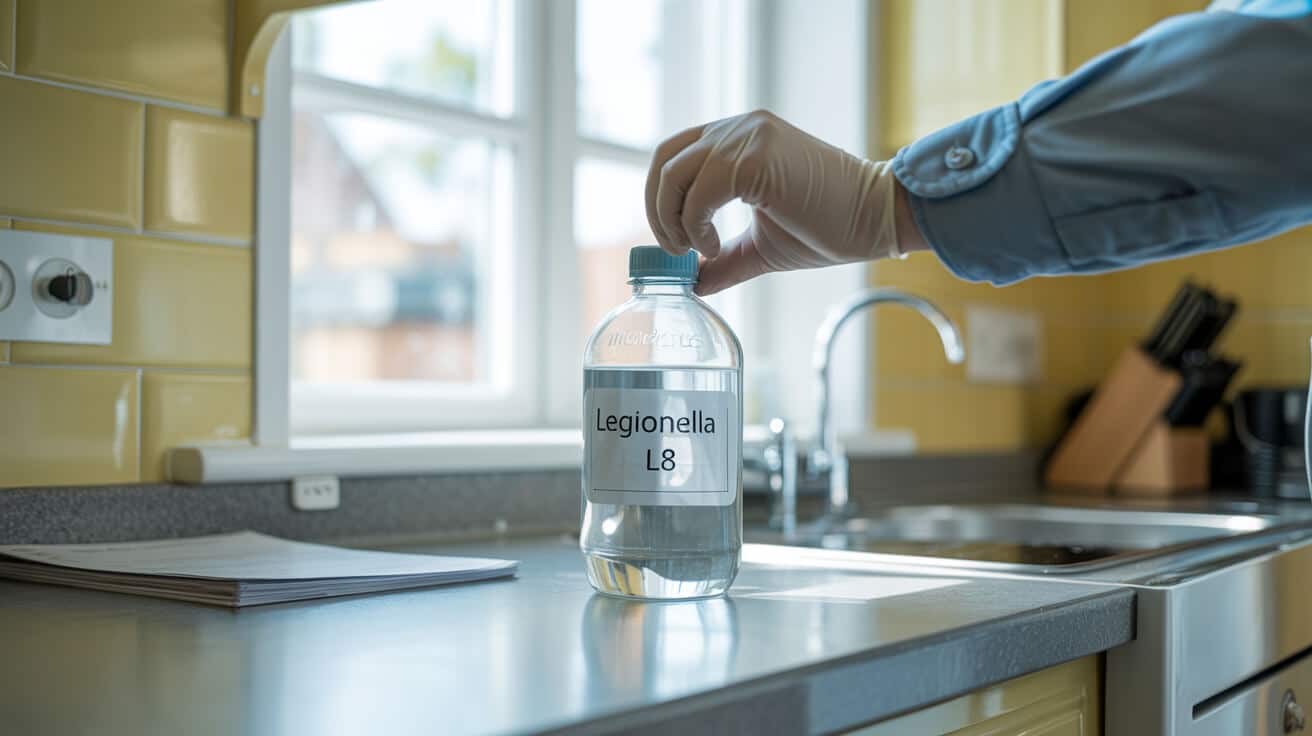
That is why a serious PPM programme starts with a realistic survey, defined control limits and the first 30–90 days focused on stabilising the system. From there, routine visits, on-site corrective actions and clear escalation rules keep the tower inside its safe envelope and leave an audit trail that withstands scrutiny.
- Turn legal Legionella duties into a repeatable control loop
- Stabilise cooling tower operation in the first 30–90 days
- Get reports that explain trends, actions and restored control
Need Help Fast?
Locked out, leak at home, or electrical issue? All Services 4 U provides 24/7 UK locksmith, plumbing, electrical.
Testimonial & Clients Who Trust Us
With 5 Star Google Reviews, Trusted Trader, Trust Pilot endorsements, and 25+ years of experience, we set industry standards for excellence. From Dominoes to Mears Group, our expertise is trusted by diverse sectors, earning us long-term partnerships and glowing testimonials.
Worcester Boilers

Glow Worm Boilers

Valliant Boilers

Baxi Boilers

Ideal Boilers

Cooling tower PPM in the UK – what you are actually buying
Cooling tower PPM is not just a maintenance visit; it is your day‑to‑day Legionella control regime.
When you run an evaporative cooling tower in the UK, you carry a duty to assess and control Legionella risk, implement a written scheme of control, and keep evidence that the scheme works. Planned preventative maintenance is how you turn those duties into a repeatable control loop instead of memory and last‑minute firefighting.
In practice that means a defined programme of inspections, cleaning and housekeeping, water treatment checks, monitoring and sampling, and clear reporting into your risk assessment, written scheme and logbook. Each visit should follow the same pattern: measure, interpret, act, verify, record, then review at management level.
All Services 4U builds cooling tower PPM around that loop, with coordination where needed alongside wider HVAC services. You get a schedule aligned with HSE expectations, a realistic split between site checks and contractor tasks, and reports that show what changed, who acted, and how control was restored. If your current PPM feels like “attendance only”, this is your chance to replace it with a programme that proves control and stands up when someone starts asking hard questions.
Why cooling towers become high‑risk assets
Cooling towers and evaporative condensers are treated differently because they can spread contaminated aerosols well beyond the plant room.
How exposure actually happens
When warm recirculating water passes through the tower, fine droplets are generated and carried in the exhaust air. If Legionella has been allowed to grow in the system, people may inhale those droplets on site, in adjacent buildings, or further away depending on plume behaviour and local conditions.
Risk is highest when the tower provides all three ingredients at once: water in the right temperature range, nutrients and biofilm for bacteria to live in, and a means to disperse aerosols. Poor bleed control, inadequate biocide, scale, corrosion and sludge all support growth and make it harder for disinfectants to work.
Operational conditions that drive loss of control
Problems often build quietly during shoulder seasons or intermittent operation. Cycles of concentration creep up because bleed is not verified, biocide dosing drifts due to probe or pump issues, and pack or basin fouling increases between cleans.
Without clear limits and escalation rules, small deviations in pH, conductivity, residuals or microbiological indicators are noted but not addressed. Over time, that normalises a higher‑risk operating state and sets the stage for an adverse result.
Business and regulatory consequences
When control slips, you face investigation work, emergency cleaning and disinfection, potential shutdown of plant, insurance scrutiny and difficult conversations with regulators and senior leadership. If your evidence trail is weak, it becomes harder to demonstrate that you did what was reasonably practicable.
A robust cooling tower PPM service is there to keep you out of that position by catching drift early, restoring control quickly, and leaving an audit trail that shows how you managed the risk rather than how you reacted to the crisis.
Getting the baseline right – survey, data and the first 30–90 days
![[ALTTOKEN]](https://allservices4u.co.uk/app/uploads/2026/01/00-Cooling-Tower-PPM-Services-UK-Legionella-Water-Treatment.png)
You cannot design an effective PPM programme for a cooling tower if you do not understand the system as it actually exists today.
Establishing the as‑found condition
A proper mobilisation starts with an engineering and hygiene survey: condition of fill and pack, basin and drift eliminators, structure, access, guards, dosing points, bleed valves, strainers and side‑stream filtration. You need to know where fouling, dead legs, poor hydraulics or damaged components could undermine water treatment.
At the same time, volumes, flow paths, operating modes and any seasonal shutdown patterns should be confirmed against drawings and reality. Many unstable towers are running on assumptions about volume or flow that do not match the plant.
Designing sample points and control limits
Once you understand the system, you can define representative sampling and measurement points: make‑up water, basin or sump, return lines, and pre‑ or post‑treatment locations as appropriate. Safe, repeatable access to those points must be planned up front, not improvised each visit.
From there you set initial control limits for key parameters such as conductivity or cycles of concentration, pH, and biocide indicators where applicable. These go into the scheme with an expectation that trends in the first few weeks will be reviewed and limits fine‑tuned based on how the system actually behaves.
The first 30–90 days of stabilisation
The initial quarter is about stabilising the tower and proving that the control loop works. That means verifying bleed operation, confirming dosing pump output and stock usage, checking probes and controllers, and dealing with any obvious remedial needs such as heavy fouling or damaged drift eliminators.
During this period, reports should highlight excursions, actions taken on site, and any additional work recommended. By day 90 you should expect to have an agreed set of frequencies, control limits, escalation criteria and a prioritised remedial list grounded in real observations rather than generic templates.
What a routine cooling tower PPM visit should actually deliver
Once the baseline is in place, every planned visit should reinforce control in a predictable way, not simply repeat measurements.
Core checks every visit
Each visit should confirm that conductivity and cycles are within the agreed window, pH is in range for both treatment chemistry and asset protection, bleed is functioning correctly, and any oxidising or non‑oxidising biocide indicators being used are on target. Where applicable, temperature and visible signs of stagnation should also be noted.
These readings only have value if they are trended and compared with previous data. A good report does not just list numbers; it explains whether the system is stable, improving or drifting, and why.
On‑site corrective actions and verification
A competent engineer should leave your site having taken reasonable corrective actions within an agreed authority: adjusting controller setpoints, recalibrating probes, flushing or cleaning strainers, checking and reprime dosing pumps, clearing obvious blockages at injection points, and recording any immediate housekeeping interventions.
Where larger work is required – for example, a clean and disinfection, pack replacement, or extended shutdown – the visit should generate a clear recommendation with risk rationale, rather than simply noting an issue and moving on.
Service levels and escalation
Service levels are part of PPM, not an optional extra. Your schedule should define how quickly excursions must be reviewed, what interim actions are acceptable, when additional sampling is triggered, and when a tower must be taken out of service for cleaning or engineering work.
All Services 4U structures visit scopes, authority levels and escalation rules in advance, so you know what is handled within the routine programme and what will be brought back for approval, along with the evidence that underpins those decisions.
Accreditations & Certifications








Monitoring and testing – chemistry, microbiology and Legionella
![[ALTTOKEN]](https://allservices4u.co.uk/app/uploads/2026/01/01-Cooling-Tower-PPM-Services-UK-Legionella-Water-Treatment.png)
Testing only adds value if you are clear what each test is for and how the results will change your actions.
Chemistry and operational monitoring
Routine chemistry and operational checks give you immediate feedback on whether the system is running inside its design envelope. Conductivity and cycles of concentration show whether bleed is controlling dissolved solids. pH affects corrosion, scaling and the effectiveness of many treatment chemicals. Where oxidising biocides are used, residuals or equivalent indicators help to confirm that dosing is achieving the desired contact conditions.
These measurements can often be taken by trained site staff between contractor visits, with the contractor providing target ranges, test methods and interpretation so readings become decisions, not just numbers on a sheet.
Microbiological trending
Dip slides and similar tests for general bacterial levels are useful as a trending tool. They indicate whether overall microbial activity is being held within your agreed expectations and whether biocide programmes and cleaning interventions are working.
They do not, on their own, tell you whether Legionella is under control. They should be interpreted alongside chemistry, fouling observations and operating conditions, and any upward trend should trigger commentary and, where appropriate, actions rather than being filed quietly.
Legionella sampling and result‑driven actions
Legionella sampling is there to validate the effectiveness of your overall regime. It should follow your risk assessment, written scheme and relevant sampling standards, and be carried out by competent personnel with appropriate laboratory arrangements.
More important than the sampling itself is the decision tree attached to the results: who is notified, what interim controls are put in place at different result bands, when additional cleaning or disinfection is mandated, and how you document the steps taken and their outcomes. Your PPM provider should help you design and operate that decision tree, not leave you to interpret results on your own.
Making L8 and HSG274 Part 1 executable on your site
Saying you are “working to L8 and HSG274” only helps if those documents are translated into a clear control scheme and evidence set on your site.
Turning guidance into a written scheme
Your risk assessment identifies where and how Legionella risk arises in your cooling system. The written scheme describes how you will control it: control measures, responsibilities, monitoring points, frequencies, limits and records. PPM is one of the main mechanisms for delivering that scheme.
A simple matrix that links each risk finding to specific tasks, test points, pass/fail criteria, escalation steps and required records turns abstract guidance into something your team and contractors can follow.
Risk‑based frequencies and justified deviations
HSE technical guidance offers typical inspection and monitoring frequencies for evaporative systems but emphasises that they are risk‑based. Intermittent operation, seasonal shutdowns, unusual water quality, high‑risk locations and plant changes all justify adjustments, as long as you can explain them and demonstrate that overall control is at least as good.
Your PPM schedule should record where you follow, exceed or deviate from the typical frequencies, why that decision was taken, and when it will next be reviewed. That protects you from both over‑servicing and unjustified gaps.
Governance, competence and change triggers
Someone has to own the scheme. The dutyholder remains legally responsible, but the Responsible Person manages day‑to‑day delivery and contractor oversight. Cooling tower PPM should make it clear who checks trends, who authorises changes, and who signs off corrective actions.
Certain events should automatically trigger a review of the risk assessment and scheme: significant plant modification, recurring excursions, repeated abnormal microbiological results, changes in treatment regime, or a change in the Responsible Person. Building those triggers into your governance prevents the scheme drifting out of step with reality.
Documentation that survives audits and incidents
Good records make your life easier every day; they also protect you when something goes wrong.
The cooling tower audit pack
An audit‑ready pack for your tower should make it easy to answer four questions: what risks you identified, what you said you would do, what you actually did, and whether it worked. That usually means a current risk assessment, written scheme, asset and sampling diagrams, monitoring and test records, deviation logs, corrective actions and verification notes.
The structure matters as much as the content. If it takes hours to assemble these pieces from multiple systems, it will not be maintained, and confidence in the scheme will drop.
Per‑visit record quality
Every visit record should show who attended, when, what they checked, what they found, what they did, and how they verified that control was restored or maintained. Attendance‑only notes or reports that simply repeat the same wording month after month give little protection.
Clear, concise entries with readings, observations and actions make trend analysis meaningful and make it much easier to brief auditors, insurers and senior leaders.
Closing the corrective‑action loop
Corrective actions need a named owner, due date and evidence of completion. That might include photos, follow‑up readings, replacement or repair documentation and updated scheme references. Without that loop, the same issue can reappear for months and you will struggle to show that you have controlled the risk.
All Services 4U designs reporting and follow‑up so that issues are systematically logged, tracked and closed, and so that your Responsible Person and governance team can see at a glance which actions are outstanding and why.
Reliable Property Maintenance You Can Trust
From routine upkeep to urgent repairs, our certified team delivers dependable property maintenance services 24/7 across the UK. Fast response, skilled professionals, and fully insured support to keep your property running smoothly.

Book your free consultation with All Services 4U today
If you are not sure whether your current cooling tower PPM truly delivers control rather than attendance, a short, focused review can make the picture much clearer.
In a free consultation, you can walk through your existing risk assessment, written scheme, schedules and sample reports with a specialist who understands both the guidance and day‑to‑day site realities. You leave with a simple list of gaps, overlaps and quick wins that will reduce risk in the next 30 to 90 days.
If you are preparing to retender or change provider, you can use the session to firm up a scope: what should be in the base PPM, what stays as optional work, how visit frequencies and monitoring align with your risk profile, and what you expect to see in every report.
When uptime and access are constraints, the discussion can focus on how to plan isolations, sampling points and shutdown or start‑up support around your operational thresholds, without diluting control. Where audit resilience is the priority, the focus can move to record structure, retention and traceability.
Use the consultation to agree what success looks like for your tower or portfolio – stable control, fewer excursions, stronger evidence and fewer surprises – then set dates and owners to make it happen so you are not relying on hope the next time someone opens your logbook.
Frequently Asked Questions
Explore our FAQs to find answers to planned preventative maintenance questions you may have.
What is cooling tower PPM in the UK, in plain terms?
Cooling tower PPM is simply the repeatable, logged work that turns your paper Legionella scheme into real control. In UK terms, it is how you take an ACoP L8 / HSG274 Part 1 risk assessment and convert it into scheduled inspections, dosing checks, hygiene routines, sampling and follow‑up actions that you can evidence to an HSE inspector, insurer or board.
Without that structure, you’re trusting that “the tower is probably fine” until a lab result, a complaint or an incident proves otherwise. With it, you have a clear trail that shows what was done, when, by whom, against which limits, and what happened when you were out of range. That is what gives a Responsible Person, building safety manager or RTM director the confidence to sign their name on a Safety Case or board paper without bluffing.
How does planned maintenance actually change day‑to‑day Legionella risk?
PPM keeps the conditions Legionella loves from lining up long enough to cause you trouble. Day to day, that means you are constantly pushing back against warm water, nutrients, stagnation and uncontrolled aerosols. Weekly chemistry checks, bleed and dosing verification, pack and basin housekeeping, and routine microbiological trending work together to stop a “slightly dirty” tower drifting into a system that can seed an outbreak.
Instead of discovering a problem only when a Legionella result comes back high, you see the drift early: bleed valves that are not holding, biocide pumps under‑dosing, strainers loading up, drift eliminators failing. When that whole storey is in your cooling tower PPM logbook, you can show an HSE inspector or insurer that you spotted the issue, acted, and verified it worked. That is what current UK Legionella guidance expects from a serious dutyholder.
How does proper PPM change life for your Responsible Person and board?
A structured cooling tower PPM regime gives your Responsible Person a simple narrative: “Here is the risk assessment, here is the written scheme, and here is the evidence that we followed it.” For a building safety manager, asset manager or head of compliance, that means fewer last‑minute scrambles before board meetings, fewer arguments with water treatment suppliers, and far less scope for anyone to claim “we didn’t know this was our job.”
If you want to be the person who can answer cooling tower questions in minutes instead of days, you build that discipline in now. All Services 4U designs cooling tower maintenance so that law, tasks and proof line up cleanly, and your name on the front of the file feels like a statement of control, not a risk.
How often should UK cooling tower PPM tasks be carried out, and how do you keep the schedule site‑specific?
Cooling tower PPM should run on a layered weekly, monthly, quarterly and annual rhythm, tuned by your Legionella risk assessment. Most UK sites use weekly checks for quick “is it behaving?” signals, monthly visits for deeper mechanical and treatment review, quarterly work to validate instrumentation and sampling plans, and at least one full clean and disinfection per year to reset fouling and biofilm.
If you stop at a generic schedule, you get generic control. The real goal is a cadence that matches how your towers actually run: seasonal or continuous, high or low load, healthcare‑adjacent or light commercial, older plant or recent upgrade.
What does a sensible UK cooling tower PPM schedule look like?
A typical pattern many insurers and water hygiene auditors recognise looks like this:
| Frequency | Typical focus | Main purpose |
|---|---|---|
| Weekly | Chemistry, bleed, visible condition, drift | Keep control on track, spot drift |
| Monthly | Fans, pumps, strainers, dosing plant, trends | Catch reliability issues early |
| Quarterly | Calibration checks, deeper inspections, reviews | Validate monitoring and responses |
| Annual | Clean / disinfect, scheme and records review | Reset fouling, tighten whole regime |
This table is not a substitute for an HSG274 Part 1 risk assessment, but it reflects the cadence that reassures most surveyors and compliance teams. All Services 4U then adjusts the detail so an intensive data centre, a healthcare‑adjacent office and a light industrial estate do not end up with the same tick‑sheet.
How do you stop your PPM becoming a useless tick‑list?
You avoid a dead tick‑list by designing the schedule from your risks outwards, not from a contractor’s template inwards. Open versus closed circuit, duty/standby arrangements, heat rejection profile, pack condition, bleed design and treatment regime all change what “good” looks like. If you simply copy another site’s cooling tower maintenance table, you will collect readings no one uses and run tasks nobody really owns.
A better approach is to start with the cooling tower Legionella control hazards and failure modes identified in your risk assessment, then agree which weekly, monthly and quarterly tasks actually reduce those risks. That is the approach All Services 4U takes when we sit down with a Responsible Person or asset manager: a site-specific cooling tower PPM matrix that aligns with wider HVAC services, still sits comfortably within UK guidance and insurance wording, and feels like it was written for your plant, not for someone else’s.
How should weekly and monthly work be split between your team and the contractor?
Weekly “eyes‑on” checks often sit best with your own maintenance or engineering team: quick chemistry spot checks, confirming bleed valves operate, checking for obvious fouling, drift or noise, and raising work orders when something looks wrong. Monthly and quarterly work—such as more detailed inspections, validation of probes and controllers, and interpretation of trends—is usually better handled by a competent water treatment partner who lives in these numbers every day.
The point is not to offload responsibility; it is to organise effort. If you want your internal team focused on running the building, All Services 4U can shoulder more of the routine cooling tower maintenance while still structuring the regime so your Responsible Person can see clearly who did what, when, and why, without reading between the lines.
When do you need a Legionella risk assessment for cooling towers, and how should it drive your PPM?
You need a Legionella risk assessment before you bring a cooling tower or evaporative condenser into use in the UK, and you need to review it whenever anything material changes. That includes new plant, significant modifications, shifts in operating profile, recurring poor results, management changes or changes in HSE guidance. Under the Health and Safety at Work etc. Act and COSHH, this is not a nice‑to‑have; it is the legal starting point for cooling tower Legionella control.
Once the assessment is done, it should not sit in a folder gathering dust while your written scheme and cooling tower PPM drift away from it. The assessment is supposed to be the map that everything else follows.
Who is realistically “competent” to assess cooling tower Legionella risk?
Competence here means a lot more than “has attended a one‑day Legionella course.” A competent assessor for cooling tower maintenance needs to understand ACoP L8 and HSG274 Part 1, evaporative cooling design, water treatment chemistry, microbiology basics and how towers behave in real‑world operation. They should be able to walk your system, challenge assumptions, identify reasonably foreseeable failure modes, and turn that into a practical written scheme of control.
In some organisations you have that skill set in‑house; in many, you do not. There is nothing wrong with using an external specialist, but you still need a clear separation between “assessing the risk” and “selling you chemicals.” All Services 4U will often lead joint assessments where your Responsible Person stays involved and understands the logic, so they can defend the document to a regulator or board instead of just filing it.
A good cooling tower Legionella risk assessment naturally becomes the front of your audit pack. Each significant risk should map to specific control tasks, frequencies and response actions. Your written scheme should show that mapping clearly, and your PPM schedule should then mirror the written scheme. If you cannot trace a straight line from “risk” to “task” to “evidence” for cooling tower maintenance, you will struggle in any serious review.
In practice, you want to be able to sit with an HSE inspector, insurance surveyor or internal non‑executive and open one path per tower: assessment → scheme → monitoring and cleaning records → deviations → corrective actions. All Services 4U structures assessments and cooling tower PPM so that trail is obvious, so you are not trying to reverse‑engineer logic from a pile of PDFs later.
How long should you retain cooling tower Legionella assessment and PPM records?
For higher‑risk systems such as cooling towers, many UK organisations now hold at least five years of Legionella risk assessments, reviews, monitoring data, cleans and corrective actions together. Some safety case regimes go further, especially in complex finance structures where due diligence cycles are long.
The real test is simple: if someone challenged your cooling tower Legionella control decisions from three or four years ago, could you show what you knew, what you did and what happened? If the honest answer is “not without a week of archaeology,” your record‑keeping strategy needs strengthening. All Services 4U helps you design cooling tower maintenance records so those answers are ready in minutes, not days.
What testing and monitoring should sit inside UK cooling tower PPM, and how do you avoid pointless tests?
A robust cooling tower PPM programme in the UK will include routine chemistry monitoring, microbiological indicator tests and a defined Legionella sampling plan, all anchored in your risk assessment. On the chemistry side, typical parameters are conductivity or TDS for cycles of concentration, pH for corrosion and treatment performance, and specific inhibitor and biocide checks to confirm dosing. Most serious sites aim for at least weekly checks, with additional spot tests by site staff between contractor visits.
On the microbiology side, simple dip slides or similar tools give you a weekly or fortnightly view of general bacterial activity, while formal Legionella samples—analysed by an accredited laboratory—are taken less frequently, often quarterly or bi‑annually, to confirm that your overall cooling tower water treatment services are working. Together, they give you a layered picture: quick indicators for day‑to‑day steering and slower, more precise confirmation that your control philosophy holds.
How do you make chemistry checks drive real decisions, not just graphs?
Every chemistry test should answer a specific operational question. Conductivity tells you whether bleed is controlling concentration; pH shows whether your metallurgy and treatment are in a safe band; inhibitor and biocide tests reveal whether dosing equipment and stock levels are keeping up with tower loading. When readings sit inside agreed ranges, you have reassurance. When they do not, cooling tower maintenance tasks should trigger clear follow‑up: inspect, adjust, retest.
This is where many low‑cost cooling tower PPM contracts quietly fail you: they collect long lists of numbers but never define what happens when a value is out of range. All Services 4U works with your Responsible Person to set practical normal ranges, alert levels and actions so that weekly testing actually protects people, plant and reputation instead of just filling a spreadsheet.
How do microbiological and Legionella tests fit day to day?
Indicator tests like dip slides are there to show patterns over time. A single high count might be noise; a steady upward drift usually points to fouling, poor bleed, under‑dosing or mechanical issues. Legionella samples exist to validate that your combined cooling tower Legionella control strategy works; they are not meant to be your only line of defence.
If every Legionella result feels like a surprise and triggers a scramble, that is a sign your routine monitoring is not doing its job. A better pattern is: weekly chemistry to steer, regular dip slides to see direction, scheduled Legionella sampling to demonstrate to auditors and insurers that your overall regime stands up. All Services 4U sets up that layered approach so your Responsible Person is not left guessing what each result really means.
How do you avoid paying for tests that never change anything?
If a test result never changes behaviour, either you do not need the test, or you are missing the action rule. Before you agree any cooling tower water treatment services package, insist on a simple map for each parameter: what you measure, what “normal” looks like, what triggers concern, what action follows, and who owns it.
For a finance director or asset manager, this is where discussions about cooling tower PPM cost become more mature: less about how many samples someone will take, more about which tests genuinely cut outage risk, enforcement risk or asset damage. All Services 4U is comfortable cutting redundant tests and focusing investment where it will actually move your risk profile.
How should you think about UK cooling tower PPM cost, and how can you phase improvements without gambling on risk?
Cooling tower PPM cost in the UK is driven by tower count, configuration and risk profile, plus how much work sits inside a fixed scope versus as extras. A single small open‑circuit tower with monthly contractor visits, site‑run weekly checks and a straightforward treatment regime can often be covered for a few hundred pounds per month. A multi‑tower, high‑load portfolio with sensitive occupancies, enhanced sampling, online monitoring and routine deep cleans will sit much higher.
You also pay for access complexity, out‑of‑hours work, reporting expectations and integration into your CAFM, safety case tooling or corporate dashboards. Focusing only on headline price and a one‑line “cooling tower maintenance UK” description is how you end up with contracts that look cheap and feel expensive once you start filling the gaps yourself.
What should you compare when reviewing cooling tower PPM quotes?
Strip each proposal back to the same core buckets so you can compare like with like:
- Time on site: how long will the engineer realistically be at each tower?
- Monitoring and sampling: which tests, at what frequency, and which lab fees are included?
- Cleaning and remedials: what level of clean and disinfection is covered, and what sits as a variation?
- Reporting and integration: how usable are the reports, and how do they feed into your existing systems?
Many cheaper proposals quietly push deep cleans, extra samples and root‑cause investigations into a long list of chargeable extras. That may suit a low‑risk, single‑tenant building. It is rarely a good fit for a higher‑risk, multi‑stakeholder estate. All Services 4U writes cooling tower PPM scopes in plain language so a property manager, compliance lead or finance director can see exactly what is and is not genuinely covered.
How do you define “value” beyond the monthly number on the invoice?
Value shows up when your towers stay out of the news, your audits are dull in the best way, and your assets last. A contract that helps you avoid one enforcement notice, one major unplanned shutdown, or one big insurance dispute usually pays for itself several times over. A contract that leaves you chasing evidence, commissioning emergency cleans and explaining “we assumed the contractor was doing that” does not.
If you want to be seen inside your organisation as the person who runs cooling towers that insurers and lenders quietly trust, you select partners on that basis. All Services 4U builds cooling tower maintenance packages around risk reduction, not just task counts, and we are happy to walk your board or finance team through how the scope and cost line up with your exposures.
Can you phase cooling tower PPM improvements without leaving yourself exposed?
You can often phase improvements if you are honest about what has to change now and what can wait. One pragmatic approach is to stabilise monitoring and dosing first, then phase in heavy cleans, refurbishment and instrumentation upgrades over the next one or two budget cycles. Another is to pilot a more rigorous regime on a representative tower, show the impact on results and unplanned events, then extend it.
Phasing only works if everyone understands the interim risk. That means documenting which cooling tower Legionella control gaps remain, what temporary mitigations are in place, and when each will be addressed. All Services 4U is used to working inside real‑world constraints while keeping your Responsible Person, board and insurers comfortable that you are moving fast enough in the right direction.
Who holds legal responsibility for UK cooling tower PPM, and what documentation should you expect from a competent provider?
Legal responsibility for cooling tower PPM in the UK sits with your organisation and its dutyholders, not with the contractor. Under the Health and Safety at Work etc. Act, COSHH, ACoP L8 and HSG274 Part 1, you must assess Legionella risk, put a scheme of control in place, appoint competent people and maintain suitable records. Contractors help you discharge that duty; they do not take it away.
That is why documentation quality matters as much as the physical work. A cooling tower maintenance regime that you cannot evidence is a regime that will not stand up to serious scrutiny from HSE, an insurer, a lender or a tribunal.
What records should your cooling tower PPM provider supply as standard?
As a baseline, you should expect:
- Structured visit reports with readings, tasks completed, observations and recommendations.
- Chemistry and microbiological results in a format that supports trend review.
- Legionella lab certificates, linked clearly to sample points and dates.
- Clean and disinfection certificates, with scope and methods.
- A deviation log showing what went wrong, who owned the fix and how it was closed.
Over time, you should be able to see how parameters such as conductivity, pH, inhibitor performance, bacterial counts and cleanliness move and how specific interventions changed that pattern. All Services 4U builds cooling tower maintenance reporting around that level of traceability so you are ready for HSE, an insurance survey or internal audit without repackaging raw data from scratch.
How should PPM records be structured so you can answer tough questions fast?
The audit‑friendly pattern is one trail per tower, per period. For each system you hold the current Legionella risk assessment, the written scheme, monitoring and sampling data, cleaning records and a log of deviations and corrective actions together, all date‑stamped and signed. Many higher‑risk portfolios now keep at least five years’ worth for each cooling tower; some keep more where safety cases and long‑term finance are involved.
If an HSE inspector, insurance surveyor, lender or non‑executive asks, “Show me how you controlled Legionella on this tower last year,” you should not need a week of forensic email searches. All Services 4U structures cooling tower PPM outputs so that answer is a few clicks away, not a project.
How should roles be split between your Responsible Person and the contractor in practice?
Your Responsible Person should own risk and decisions; the contractor should own defined tasks and technical input. In practice, that means your internal lead signs off the Legionella risk assessment, approves the written scheme, reviews trends, chairs review meetings and decides on major changes. The contractor executes cooling tower PPM tasks, flags deviations promptly, proposes remedial actions and supplies evidence.
When you ask a contractor to “just handle it” without that split, you get grey areas: uncontrolled tasks, unreviewed results and unclear accountability when something goes wrong. All Services 4U is upfront about this from day one. We expect to be challenged, we expect to brief your board or compliance committee when needed, and we design cooling tower maintenance so you can lead with confidence instead of hoping nothing is hiding in the paperwork.
If you want to be known as the person who keeps high‑risk plant boring, safe and off the regulator’s radar, it starts with how you structure roles, records and cooling tower PPM. That is exactly the space where All Services 4U does the heavy lifting so you can spend your time leading, not chasing logbooks.
- How effective cooling tower PPM really controls Legionella
- Cooling tower PPM in the UK – what you are actually buying
- Why cooling towers become high‑risk assets
- Getting the baseline right – survey, data and the first 30–90 days
- What a routine cooling tower PPM visit should actually deliver
- Monitoring and testing – chemistry, microbiology and Legionella
- Making L8 and HSG274 Part 1 executable on your site
- Documentation that survives audits and incidents
- Book your free consultation with All Services 4U today
- Frequently Asked Questions
- Related PPM Services
Case Studies


Related Articles

Your Guide To Identifying And Treating Minor Mould Outbreaks

Why Planned Preventative Maintenance (Ppm) Saves Money And Ensures Compliance