Roof Access Safety PPM Services UK – Fall Protection & Edge Systems
Facilities, estates and health and safety leads use roof access safety PPM to keep UK roofs usable, compliant and ready for inspection. A structured programme of inspection, testing, recertification and remedials covers guardrails, mansafe lines, anchors, ladders, hatches and walkways, aligned with your risk profile and legal duties where applicable. You end each cycle with a trusted live asset register, clear access status for every protected route and an audit-ready evidence pack agreed against defined scope. A short consultation can clarify what a tailored PPM cycle would look like for your sites.


Author
Izzy Schulman

How roof access safety PPM keeps UK roofs compliant
If you manage estates, facilities or health and safety, you need roof access available for planned work without unmanaged fall risk or missing paperwork. Unstructured inspections and scattered certificates make it hard to prove compliance or confidently authorise people onto the roof.

A planned preventative maintenance programme for roof safety brings every guardrail, mansafe line, anchor, ladder and access route into a single, structured regime. Clear scope, agreed inspection intervals and risk-rated findings help you control access, brief auditors and insurers, and plan remedials without relying on guesswork.
- Live, accurate roof safety asset register across your portfolio
- Clear, defensible access status for every protected route
- Audit-ready evidence packs aligned with legal and insurer expectations
Need Help Fast?
Locked out, leak at home, or electrical issue? All Services 4 U provides 24/7 UK locksmith, plumbing, electrical.
Testimonial & Clients Who Trust Us
With 5 Star Google Reviews, Trusted Trader, Trust Pilot endorsements, and 25+ years of experience, we set industry standards for excellence. From Dominoes to Mears Group, our expertise is trusted by diverse sectors, earning us long-term partnerships and glowing testimonials.
Worcester Boilers

Glow Worm Boilers

Valliant Boilers

Baxi Boilers

Ideal Boilers

Roof access safety PPM services (UK): keep roofs usable, compliant and audit‑ready
You want roof access available for planned work without unmanaged fall risk or last‑minute searches for paperwork.
Planned preventative maintenance for roof safety moves you from “we think it is fine” to “we know what is installed, what condition it is in and whether it is safe to use today”. Instead of ad‑hoc checks and scattered certificates, you have a structured programme of inspection, testing, recertification and remedials built around your buildings and risk profile.
At All Services 4U, every guardrail, mansafe line, anchor, ladder, hatch and walkway is treated as an asset with a live status, so you can authorise roof access confidently and respond to auditors, insurers and internal stakeholders without chasing multiple contractors. You leave each cycle with:
- A live roof safety asset register you can trust.
- A clear access status for every protected route.
- An audit‑ready evidence pack you can share without re‑work.
Book a short, no‑obligation consultation to map your current roof access safety position and what a structured PPM cycle would look like for you.
What roof access safety PPM actually covers on your sites
Clarity about which roofs, routes and systems sit inside your maintenance regime keeps risk visible and decisions explainable.
What sits in scope
Start by listing the roofs where you allow, or intend to allow, access for maintenance, inspection, cleaning or project work. For each, you define:
- Roofs and zones where access is permitted.
- Permitted tasks on each roof or route.
- Permitted roles and authorisation levels.
- Standing constraints, such as “authorised contractors only” or “no access in high winds”.
That scope drives which safety systems are included, how strict inspection needs to be, and where access is explicitly not permitted.
Typical roof safety assets
Most UK portfolios include a mix of collective and personal fall‑protection measures and access equipment, for example:
- Guardrails, edge protection and safety gates.
- Mansafe or other lifeline systems, single‑point anchors and posts.
- Abseil anchors and rigging points where rope access is permitted.
- Fixed access ladders, ladder‑mounted fall‑arrest and internal access stairs.
- Hatches, doors, walkways, step‑overs, platforms and demarcation lines.
- Protective measures around fragile areas such as rooflights and thin sheet coverings.
Each should have a unique ID and precise location so findings and certificates are never generic or ambiguous. Your register and reports then mirror the way your contractors and internal teams talk about each roof.
Integrating with roof and gutter maintenance
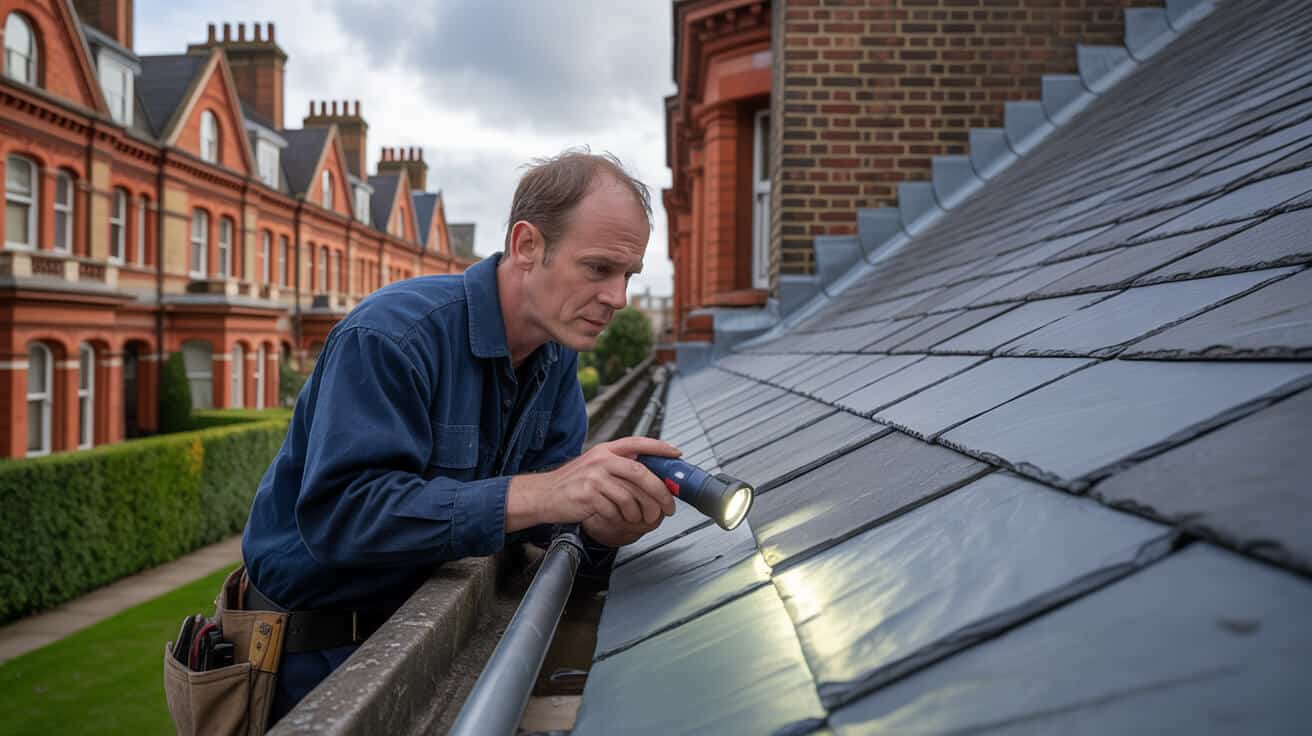
Roof access safety sits alongside roof fabric maintenance. Where you already have roof and gutter PPM, or other contractors in place, roof safety visits can be aligned with those attendances. That reduces repeated access, supports better leak and ingress control through shared photo packs and defect logs, and lets you see safety and condition together while minimising disruption and access costs.
How an inspection and recertification visit works in practice
![[ALTTOKEN]](https://allservices4u.co.uk/app/uploads/2026/01/02-Roof-Access-Safety-PPM-Services-UK-Fall-Protection-Edge-Systems.jpg)
Knowing what happens on the day makes it easier for you to approve visits, defend spend and brief colleagues.
Before we attend
Ahead of each visit we agree the asset list, access arrangements, permit‑to‑work requirements and any restrictions around tenants, plant shutdowns or noise. You receive a clear scope showing which systems are due for visual inspection, which require functional checks and which are scheduled for testing or recertification in line with manufacturer instructions and recognised practice.
A planner confirms details with your estates, facilities or site team so roof access, keys, plant isolation and other controls are ready before the engineer arrives. That preparation protects time on site and supports safe, efficient work.
On the roof
On site, a competent engineer works through the asset register, confirming each ID and location. For each asset they check, as appropriate:
- Fixings, supports and substrates.
- Corrosion, deformation and visible damage.
- Missing or incorrect components and obvious misuse.
- Configuration against the intended mode of use.
Where required, they carry out functional checks or load tests on anchors and lifelines using calibrated equipment, recording measured values against each tagged asset. Signage, demarcation and user instructions are checked for legibility and suitability so actual use matches the intended design.
Dealing with defects and follow‑up
Findings are risk‑rated so you can distinguish between items that can be addressed within the visit and more significant defects that require quoted remedial works. Typical “within visit” items include tightening, cleaning and replacing labels and fasteners within agreed limits.
Where there is doubt about safety, assets are clearly marked as restricted or “do not use” and this is reflected in the report and roof access summary. When remedials and re‑tests are completed, you receive updated records and, where appropriate, refreshed certification so you can reopen access without repeating the entire process.
The UK regulations and standards your programme needs to support
You do not need to become a standards expert, but you do need to know what “good” looks like and be able to show it.
Legal duties around work at height
At the core is the duty to avoid work at height where possible. Where it cannot be avoided, you must plan and supervise it, prioritise collective protection over personal protection and ensure that equipment and safety systems are inspected and maintained so they remain safe.
Roof safety PPM helps you show that you have identified relevant equipment, set inspection arrangements, used competent people and responded to defects in a timely way. Reports are structured so that, when an internal auditor or regulator asks how you meet these duties, you can point to specific entries rather than generic statements.
Anchor devices and lifeline systems are normally specified and assessed against recognised product standards and guidance on the maintenance and periodic examination of personal fall‑protection equipment. Codes of practice set out how anchors and connected systems should be designed, installed, inspected, tested and documented over their life.
A well‑designed PPM regime reflects these expectations without suggesting that a single visit guarantees compliance in every respect. Your reports make clear which elements have been examined and tested, and which depend on design, installation or structural assumptions outside the scope of routine inspection.
Edge protection and access equipment
Edge protection, guardrails and temporary edge systems have their own product and performance standards. Fixed access ladders and similar equipment are treated as work equipment and must be suitable and inspected.
Your programme should state which standards and manufacturer requirements each class of system is being inspected against, and where the limits of inspection lie—for example, when a structural engineer, principal designer or manufacturer must be consulted before changes are made. All Services 4U flags these boundaries explicitly so you can see what sits within scope and where further specialist input is required.
Accreditations & Certifications







Inspection intervals and when to bring visits forward
![[ALTTOKEN]](https://allservices4u.co.uk/app/uploads/2026/01/03-Roof-Access-Safety-PPM-Services-UK-Fall-Protection-Edge-Systems.jpg)
A frequency plan that is defensible, practical and aligned to real‑world risk keeps scrutiny manageable and proportionate.
Typical intervals for roof safety systems
A common baseline for many fall‑protection systems in the UK is a periodic inspection and, where appropriate, recertification at intervals not exceeding twelve months by a competent person. Some dutyholders adopt shorter intervals for certain assets because of manufacturer instructions, high usage, harsh environments or criticality to operations.
Annual inspection is a starting point, then refined by evidence. You document why each interval has been chosen so you can explain it to health and safety teams, insurers and auditors.
When to increase frequency or trigger extra inspections
You may set shorter planned intervals, or call out out‑of‑cycle visits, where systems:
- Protect heavily used plant routes or access points.
- Sit in coastal, industrial or other harsh atmospheres.
- Show a history of issues or repeated remedials.
- Have been subjected to severe weather or impact.
- Have been modified, relocated or extended.
- Are suspected of overload, damage or misuse.
In those situations you should treat the last certificate or report as provisional until a competent person has re‑checked the system in its new context. Making these triggers explicit in your policy and in your contract avoids unhelpful debates when pressure is high.
Aligning inspection with your wider maintenance calendar
Roof access safety PPM works best when it is integrated with roof fabric surveys, gutter clearing, plant servicing and other scheduled work. Combining visits where it is safe and practical reduces access costs, minimises disruption to occupants and helps you manage safety and condition together.
At portfolio level, having a single calendar and status view for all roofs—showing which systems are in date, restricted or awaiting remedials—gives estates and health and safety teams a clear picture of where attention is most urgent. All Services 4U can provide that consolidated view as part of your roof safety PPM.
What you receive after each visit: a usable, audit‑ready evidence pack
Outputs need to be usable by colleagues, auditors and insurers, not just filed away.
Roof safety asset register
After the first cycle, you should expect a reconciled asset register for each roof, listing safety‑critical systems and access routes with, at minimum:
- A unique asset ID and clear description.
- A precise location reference on the roof.
- The installed intent, such as restraint or fall arrest.
- The last inspection date and next‑due date.
- The current status (in date, restricted, do not use, pending remedials).
On subsequent cycles, this register is updated so you can see what has changed and where open actions remain. The format can align with your existing CAFM or asset system so you do not have to duplicate effort.
Inspection and test records with photos
For each asset there is a record of what was inspected, how it was inspected, what was found and any tests performed. “Context” photographs show where the system sits on the roof and “close‑up” images show fixings, hardware and any defects.
Where measurements are taken—such as pull tests, torque checks or other defined tests—the values and acceptance criteria are recorded. That means another competent person can understand and, if necessary, repeat or challenge the result.
Remedial tracker and close‑out
Defects are logged with priorities, recommended actions, interim controls, target dates and responsibility for close‑out. When works are completed, fresh evidence—photos, updated records, test results—is attached to the original finding so there is a clear line from issue to resolution.
Over time this gives you a view of recurring issues, improvement trends and remaining weak spots. For example, you may spot a pattern of corrosion on coastal roofs or repeated misuse of certain ladders and treat that as a design or briefing issue, not just isolated repairs.
Making audits and insurer queries easier
Because everything is indexed by asset and date, you can respond quickly when an internal auditor, external assessor, insurer or lender asks for evidence. Instead of manually searching for certificates or emailing multiple suppliers, you can export a focused pack for the roof, site or asset class in question.
If you want this level of evidence on every roof, you can ask All Services 4U to scope a PPM cycle for your priority sites.
How All Services 4U manages competence, risk and remedials
You need confidence that the people inspecting your systems, and the way the service is run, will stand up to scrutiny.
Competent people and clear scope
Inspections are carried out by technicians who are trained and authorised for the specific systems they work on, supported by documented procedures that set out what is in scope and what is not. Reports state who attended, what competence basis they acted under, which standards and manufacturer instructions were used as references and where specialist input is required—for example, where there are structural concerns or unusual configurations.
That structure helps you demonstrate that work at height controls are designed, delivered and reviewed by competent people, not left to ad‑hoc judgement on the day.
Multi‑site and multi‑system capability
If you manage a mixed portfolio with different manufacturers’ systems, you need a partner who can work across that variety without forcing premature replacement or relying on a single brand. All Services 4U is used to dealing with estates that have evolved over many years, rationalising asset registers, aligning inspection approaches and helping dutyholders standardise their expectations.
That includes planning multi‑site schedules, coordinating with other contractors and presenting information in a consistent format so board reports and dashboards make sense. You see the same structure whether the roof is at a small block or a complex, high‑risk site.
Clear commercials and remedial governance
You also need clarity about what is included in the PPM visit and what is not. Inspection, reporting and minor agreed maintenance are separated from larger remedial works, and the steps for quotation, approval, completion and re‑test are made explicit.
That helps you control spend, avoid perceived “upsell bias” and still move quickly when priority defects must be closed to keep roofs open for critical work. You retain visibility of which works are mandatory, which are risk‑reduction options and how each affects roof access decisions.
Reliable Property Maintenance You Can Trust
From routine upkeep to urgent repairs, our certified team delivers dependable property maintenance services 24/7 across the UK. Fast response, skilled professionals, and fully insured support to keep your property running smoothly.

Book your free consultation with All Services 4U today
You can de‑risk roof access far more easily when you have a clear picture of where you are starting from and what “good” will look like for your portfolio.
On a short consultation call you can walk through your current position—recent reports and certificates, any roof drawings or O&M information, known safety assets, recent works or incidents—and we will outline where a structured PPM programme would add value. You stay in control of scope, frequency and commercials; All Services 4U provides a practical view of how inspection, testing, recertification and remedials can be delivered on your sites.
You will leave that conversation with a view of:
- Which roofs and systems should be brought into a formal PPM regime first.
- What a first‑cycle survey and evidence pack would look like for your sites.
- How roof access decisions, audits and insurer queries would become easier to handle.
When you are ready to move ahead, the next step is simple: share a list of sites and known roof systems, and All Services 4U will propose a PPM plan and first‑cycle survey that turns those assets into a live register, a clear inspection calendar and an evidence pack you can rely on.
Take the first step towards safer, better‑documented roof access by booking your consultation with All Services 4U today.
Frequently Asked Questions
Explore our FAQs to find answers to planned preventative maintenance questions you may have.
How does roof access safety PPM actually reduce your downtime on critical roof works?
Roof access safety PPM reduces downtime by making every access route “known and ready” before anyone even books the shutdown.
Instead of discovering a failed mansafe line or out‑of‑date ladder certificate on the morning of a critical closure, you already know which systems are safe, which are restricted and which are locked out. A planned roof safety inspection programme takes each anchor, lifeline, guardrail, ladder and hatch, gives it an asset ID and drops it onto a calendar. Findings are logged against that ID with clear “safe to use / restricted use / do not use” decisions, so your permits to work and method statements are built on real status, not guesswork.
Over a year, that usually shows up in hard numbers: fewer aborted HVAC or solar visits, fewer duplicated scaffold or MEWP hires, and fewer panicked calls asking for a “competent person” to sign off work at height. One property manager we support saw aborted rooftop visits fall by roughly a third once roof access safety maintenance was aligned with plant PPM and roof inspections.
The real cost isn’t the inspection; it’s the shutdown that never starts because nobody can get onto the roof safely.
A structured roof access safety maintenance regime also lines up with your duties under the Work at Height Regulations 2005 and relevant standards like BS EN 795 and BS 7883. Regulators and insurers expect you to plan and supervise work at height; “we found out the system was unsafe on the day” is not a storey anyone wants to tell in an incident review.
If you are the person who gets blamed when “the job couldn’t start”, this is your chance to change that pattern. Put the highest‑risk roofs onto a predictable roof safety PPM cycle, insist on photo‑rich reports tied to asset IDs, and let a partner such as All Services 4U own the technical checks so your team can simply say, with confidence, “yes, that roof is ready for you this week.”
What changes day to day when downtime really drops?
You notice the change in the noise level around your roofs:
- Contractors stop phoning from site saying they “can’t get on the roof today”.
- Your team stops hunting through inboxes for “the last roof report” before a shutdown.
- Plant shutdowns increasingly start on time because roof safety systems were checked and fixed weeks earlier.
As that pattern beds in across your estate, you stop firefighting and start planning: instead of apologising for cancelled visits, you become the person who can point to a clean roof safety inspection programme and a combined calendar for access, fabric and plant works.
How does this help you look in front of board, insurers and residents?
A clear reduction in aborted visits and emergency access issues is exactly the kind of operational storey board members, insurers and residents expect from a competent dutyholder. When you can point to a roof access safety PPM regime that has cut wasted plant shutdowns and made disruptive works more predictable, you are not just “keeping people safe”; you are protecting business continuity and reputation at the same time.
If you want to be seen as the person who quietly removed “we couldn’t get onto the roof” from everyone’s excuses, start with your three to five most critical roofs and have All Services 4U build the first combined roof safety maintenance calendar and evidence pack with you.
How should you set inspection intervals for roof safety systems without over‑ or under‑servicing?
You set inspection intervals for roof safety systems by risk profile, not by copying the last contractor’s favourite template.
As a baseline, many portfolios work to an annual inspection rhythm aligned with manufacturer instructions, BS EN 795, BS 7883 and the Work at Height Regulations. You then flex that roof safety inspection programme where usage, exposure or history demands it. High‑use plant roofs, harsh coastal or industrial atmospheres, complex multi‑span lifelines and routes serving critical plant often justify six‑monthly or even quarterly checks. Low‑use roofs with robust collective protection can usually stay on a 12‑month cycle, backed by clear rules for pulling inspections forward after storms, alterations or incidents.
A simple way to explain your roof safety PPM logic to auditors, insurers or building safety managers is to write it down once and reuse it. That stops interval drift driven by habit (“we just do everything six‑monthly”) and lets you show that every decision on frequency links back to risk, not guesswork or sales pressure.
What factors actually drive the right frequency?
For each roof, walk through four questions:
- Usage: – how often are people on this roof and what kind of work are they doing?
- Exposure: – is it coastal, industrial, heavily polluted or relatively benign?
- Complexity: – simple guardrail, or multiple spans, corners and terminations?
- Consequence: – does this route serve critical plant or a higher‑risk façade, or is it rarely used?
If you capture those answers in a short note per roof, you can justify “why this frequency” in under a minute to anyone who asks.
How do you avoid paying for “yet another set of visits”?
The risk is not inspecting too often; the real risk is paying for plant shutdowns or roofing works that never start because access fails on the day.
The practical answer is to align roof safety visits with existing roof and gutter PPM or plant shutdowns wherever it is safe and sensible to do so. The same MEWP, scaffold or access route can then support multiple tasks: roof access safety maintenance, fabric inspections and plant servicing. All Services 4U can help you design that combined calendar so:
- High‑risk routes receive six‑monthly or quarterly checks with written justification.
- Lower‑risk routes stay annual, but with defined “trigger events” that pull the next inspection forward.
- Access, fabric and plant inspections share dates wherever you are not increasing risk.
If you are responsible for both budgets and building safety, this is how you can look your finance director in the eye and say “we are compliant on roof safety PPM, and we are not throwing money at duplicate visits.”
How does a written rule‑set help you defend decisions later?
When something does go wrong, people look backwards. A short, portfolio‑wide rule‑set that explains how you set roof safety inspection intervals gives you a calm, defensible answer long after individual staff have moved on. It shows that you did not “forget” roof access; you deliberately designed a regime that balanced risk, cost and operational reality.
If you want that storey on your side, take your top tier of roofs, agree a risk‑based frequency model with All Services 4U, and bake it into your contracts and calendars now rather than during the next incident review.
What should you do when a roof safety inspection fails but you still need access for critical works?
When a roof safety inspection fails, you treat it as non‑negotiable risk data and build your access decisions around it.
The first move is to freeze use of the failed system in your roof access rules and permits; that keeps you aligned with the Work at Height Regulations and the way insurers expect you to control work at height. Then you use the inspection report as a plan: look at the risk rating, any immediate controls (“do not use”, “restricted use under supervision”) and the remedial options proposed under BS EN 795, BS 7883 or manufacturer guidance.
In many cases, a competent contractor can complete targeted remedials and a re‑test in the same mobilisation, restoring a safe roof access route before the planned works date. Where that is not realistic, you decide whether to reroute trades via an alternative safe path, introduce temporary access (such as scaffold) or reschedule the underlying works. The point is that every decision is anchored in written defects and a documented sign‑off, not in pressure from a contractor who “really needs to get it done today.”
How do you keep momentum without cutting corners?
A closed‑loop pattern keeps you moving and defensible:
- Defect logged: against an asset ID with clear “do not use / restricted / safe” language.
- Interim rule applied: in your permits to work and rooftop rules.
- Remedial plan agreed: with scope, cost and target date.
- Work completed and re‑tested: , ideally within the same visit for high‑priority failures.
- Status updated: in your asset register with new photos and a dated sign‑off.
All Services 4U builds this loop into every roof safety PPM visit, so you are not left stitching it together through email and memories. For an Accountable Person, Head of Compliance or Property Manager, that means essential plant and roofing projects can keep moving without anyone being asked to “just be careful” on a red‑tagged system.
What options do you have if access is genuinely urgent?
Sometimes the uncomfortable truth is that the safest option is to delay the underlying works until the access route is safe again. When that is not acceptable, you look for alternatives that still respect your duties:
- Can you bring a compliant temporary access solution to site quickly?
- Can you re‑scope the work to avoid exposing people to the failed system?
- Can you sequence tasks so that remedials and high‑risk work sit in the same carefully controlled window?
A good roof safety PPM partner will not just hand you a “fail” and walk away; they will help you model these options, document your choices and make sure that, if anyone ever asks “why did you let people on that roof?”, you have a clear, rational answer.
If you want to be the person who never has to defend a decision made on a “gut feel” about failed roof access, start by putting your top three to five roofs onto a structured inspection and remedial plan with All Services 4U and insist that every failure triggers the full loop.
How can a structured roof safety evidence pack help with insurers, lenders and internal auditors?
A structured roof safety evidence pack turns difficult risk conversations into straightforward file‑sharing that you can handle in minutes.
When an insurer, lender or internal auditor asks how you manage roof access and work at height, you are not forwarding a random bundle of PDFs. You send a coherent roof safety evidence pack built around asset IDs, dates and decisions: what is installed on each roof, when it was last inspected and tested, what was found, how defects were closed, and what the live status is. For insurers, that lines up with conditions precedent around work at height and access control. For lenders and valuers, especially on higher‑risk blocks, it shows how you manage access to roofs carrying plant, photovoltaic arrays or cladding interfaces. For internal audit or building safety reviews, it demonstrates that your Work at Height policy is backed by structured data.
When this roof safety PPM evidence sits in a standard format across your estate, renewal meetings, lender questionnaires and governance reviews become calmer. You are no longer explaining how you “think” access is controlled; you are pointing at the same kind of pack every time.
What does a “good” roof safety pack actually contain?
At minimum, expect to see:
- A reconciled roof access asset register with IDs, locations and system types.
- Inspection and test records for each system over at least two cycles.
- Photo evidence of condition, failures and completed remedials.
- Clear “safe to use / restricted / do not use” decisions with dates and sign‑off.
- References to applicable duties or standards such as BS EN 795, BS 7883 and the Work at Height Regulations.
All Services 4U structures roof safety inspection evidence so you can slice it by site, roof, system type or date range. That means you can answer precise questions like “show the last two cycles for the mansafe lines on these three roofs” without a week of chasing.
How does this change insurer and lender conversations?
When you can drop a roof safety evidence pack on an insurer or lender’s desk that already answers their questions, the tone shifts. Instead of being interrogated about gaps, you are having a grown‑up discussion about risk and investment:
- Insurers see that conditions precedent are actively managed, not just written into policies.
- Lenders see how roof access interacts with cladding, plant and façade risk for higher‑risk buildings.
- Boards and audit committees see that roof access safety maintenance is being handled with the same rigour as fire alarms, emergency lighting and EICRs.
If you want to stop dreading surveys and questionnaires, define what your “standard roof safety PPM evidence pack” looks like and ask All Services 4U to help you backfill gaps across your highest‑risk sites first. Once you have that standard for three to five key roofs, scaling it across the portfolio is an operational exercise, not a reinvention.
How do roof safety PPM services fit alongside your existing roof, gutter and plant maintenance contracts?
Roof safety PPM works best when you treat it as the access backbone that everything else on the roof hangs from.
In most estates, you already have contractors looking after roof fabric, gutters, HVAC, solar and other plant. The recurring headache is that these teams often arrive to find access systems out of date, defective or undocumented. By giving roof safety its own structured roof access safety maintenance regime and aligning its dates with your existing roof, gutter and plant PPM, you make life easier for everyone.
Shared access means fewer separate mobilisations, fewer permit cycles, fewer escort visits and a clearer picture of how leaks, ponding or structural movement are affecting the very systems people clip onto. You also start to see cause‑and‑effect properly: corrosion from standing water undermining mansafe baseplates, new cable runs compromising guardrail fixings, or minor roof repairs disturbing anchor layouts.
How can integration reduce noise for your team and residents?
Today, a typical roof might see:
- A fabric contractor escorted up one week.
- A roof safety inspector back a month later.
- HVAC or solar technicians a few weeks after that.
Each visit triggers access arrangements, keys, notifications and, often, resident disruption. When All Services 4U plugs roof safety PPM into your existing roof, gutter and plant maintenance contracts, we work with you to:
- Coordinate dates: so roofs are opened once for multiple disciplines where it is safe to do so.
- Build shared photo sets that capture safety hardware and roof fabric condition together.
- Flag where roof integrity or drainage issues are starting to affect roof safety systems, so remedials become planned projects instead of Saturday emergencies.
For a Property Manager, Facilities Manager or Asset lead, that means fewer diary collisions and cleaner records. For residents and commercial occupiers, it often means fewer short‑notice access requests and a clearer explanation of why people are on the roof this time.
How do you keep existing partners and still close the access gap?
You do not need to rip out your fabric or M&E partners to get roof safety under control. The simplest move is to keep the specialists you trust for roofing, HVAC and solar, and add All Services 4U as the access and evidence layer that underpins their work:
- We confirm and maintain the roof safety systems they rely on.
- We align roof safety PPM dates with their planned visits.
- We hand back structured evidence that supports your wider compliance, insurance and lending storey.
If you want your roof maintenance, plant PPM and roof safety inspection programme to finally tell one joined‑up storey instead of three conflicting ones, start by mapping your top roofs, your current contractors and your pain points with us, then design a single integrated plan around them.
What should you expect from a competent roof safety PPM provider beyond just issuing certificates?
You should expect a competent roof safety PPM provider to give you control of the whole regime, not just a stack of certificates you file and forget.
That starts with confirming what is actually installed on each roof, mapping it into a usable roof access asset register and making sure every ladder, hatch, anchor line and guardrail has an ID, location and owner. From there, you agree sensible inspection intervals based on usage and risk, aligned with manufacturer guidance, the Work at Height Regulations and standards such as BS EN 795 and BS 7883. A good provider will help you embed that roof safety PPM logic in your CAFM, permits to work and building safety processes, not just in their own paperwork.
On each visit, inspections and tests should follow manufacturer instructions and recognised practice, with defects risk‑rated and written in plain language. Output needs to work for facilities teams, health and safety, finance, risk and, on higher‑risk buildings, the Accountable Person and building safety case teams as well.
What are the real markers that you’re getting more than a paper exercise?
Look for signs that your roof safety PPM service is driving decisions, not just ticking boxes:
- Reports spell out “safe to use”, “restricted use” or “do not use” on each system, with reasons and photos.
- Asset registers in the report match what people actually see on the roof, not an old drawing or wish list.
- Defects are given clear options: make‑safe only, like‑for‑like remedial, or “design review required”.
- Interim controls and re‑inspection dates are explicit, so permits to work and rooftop rules can reflect reality.
- When needed, your provider is willing to brief your board, audit committee, insurer or lender on how the regime supports your duties, rather than hiding behind technical jargon.
All Services 4U’s job is to shoulder that technical and evidence burden so your teams can focus on decisions: can you allow access, do you need to restrict it, what level of remedial work are you approving, and how will you explain that choice to stakeholders who were never on the roof with you?
How do you choose a provider who protects your reputation as well as your roofs?
In a crowded market, it is tempting to see roof safety PPM as a commodity and choose the cheapest certificate. The test is simple: which provider will make you look credible when something goes wrong?
- Do they understand both Tier‑1 governance and Tier‑2 execution realities?
- Can they talk fluently to RTM boards, Heads of Compliance, Building Safety Managers, insurers and lenders?
- Will their roof safety inspection evidence stand up in an inquest, tribunal or refinancing meeting?
If you recognise that your current “certificate‑only” approach leaves you exposed on roof access, this is the moment to step into the role your board and residents already assume you are playing: the person who can show, at any point, that work at height on your roofs is planned, controlled and evidenced. Start with your three to five highest‑risk roofs, let All Services 4U build the asset register, inspection intervals and first roof safety PPM evidence pack, and then decide whether this is the standard you want across your estate.
- How roof access safety PPM keeps UK roofs compliant
- Roof access safety PPM services (UK): keep roofs usable, compliant and audit‑ready
- What roof access safety PPM actually covers on your sites
- How an inspection and recertification visit works in practice
- The UK regulations and standards your programme needs to support
- Inspection intervals and when to bring visits forward
- What you receive after each visit: a usable, audit‑ready evidence pack
- How All Services 4U manages competence, risk and remedials
- Book your free consultation with All Services 4U today
- Frequently Asked Questions
- Related PPM Services
Related PPM Services
Case Studies


Related Articles

Your Guide To Identifying And Treating Minor Mould Outbreaks
Why Planned Preventative Maintenance (Ppm) Saves Money And Ensures Compliance