Accessibility PPM Services for Public Buildings UK – Part M & Equality Act
For UK public bodies responsible for public buildings, accessibility PPM keeps step-free routes, doors, lifts, WCs and communication systems usable and defensible under Part M and the Equality Act. A structured, risk-based maintenance regime defines critical assets, tasks, frequencies and records, depending on constraints. You end up with clear ownership, evidence of control and fewer disruptive failures across your estate, with legal duties supported rather than left to complaints. Exploring this approach now can stabilise budgets, reduce risk and strengthen governance around disabled people’s access.



Author
Izzy Schulman

Structuring Accessibility PPM for UK Public Buildings
Public bodies across the UK rely on lifts, doors, step-free routes and accessible WCs to keep buildings usable for disabled people, yet these assets often drift out of safe, independent use. Design sign-off under Part M does not protect you if everyday failures undermine Equality Act duties.

Accessibility PPM treats those features as a defined, safety-critical asset class with clear tasks, frequencies and ownership. By moving from ad hoc repairs to a planned, evidence-based regime, you reduce outages, stabilise costs and show boards, auditors and regulators that access is being managed deliberately.
- Reduce disruptive access failures and reactive maintenance spend
- Demonstrate clear ownership, records and Equality Act control
- Support disabled users’ independence across your public estate
Need Help Fast?
Locked out, leak at home, or electrical issue? All Services 4 U provides 24/7 UK locksmith, plumbing, electrical.
Testimonial & Clients Who Trust Us
With 5 Star Google Reviews, Trusted Trader, Trust Pilot endorsements, and 25+ years of experience, we set industry standards for excellence. From Dominoes to Mears Group, our expertise is trusted by diverse sectors, earning us long-term partnerships and glowing testimonials.
Worcester Boilers

Glow Worm Boilers

Valliant Boilers

Baxi Boilers

Ideal Boilers

Keep Your Public Buildings Access‑Compliant, Open and Defensible Throughout the Year
Accessibility PPM is the planned maintenance regime that keeps your step‑free routes, doors, lifts, WCs, signage and hearing systems working as intended for disabled people. By treating access features as safety‑critical assets with clear tasks, frequencies and records, you keep buildings usable, open and defensible, and All Services 4U helps public bodies put this structure in place. This is general information only, not legal advice, and you should always seek qualified guidance for specific decisions.
Accessible design only succeeds when the maintenance storey is just as strong.
What “Accessibility PPM” Actually Means in a Public Estate
Accessibility PPM (planned preventive maintenance) is the structured programme of inspections, servicing and remedial works that keeps access‑critical features safe, usable and reliable over time. It defines which items matter most for disabled users, how often they should be checked, what “good” looks like and how evidence is captured, so accessibility is managed deliberately rather than left to chance or complaints.
In a typical public building that includes:
- External approaches: step‑free routes, gradients, surfaces, kerbs, accessible parking and lighting.
- Entrances and circulation: doors, thresholds, door closers, handrails, guarding and lobbies.
- Vertical transport: passenger lifts, platform lifts, refuge communications and evacuation aids.
- Sanitary provision: accessible WCs, showers and changing places, including alarms and fittings.
- Communication and wayfinding: signage, visual beacons, hearing loops and other hearing systems.
Instead of treating these as incidental items scattered across different contracts, an accessibility PPM regime groups them as a defined asset class. Each asset has a clear maintenance specification, a risk‑based frequency and an owner in your estates or FM team.
Why Design Compliance Is Not Enough Under Part M and the Equality Act
Design compliance proves your building met Part M and BS 8300 guidance at handover, but it does not guarantee that disabled people can still use it safely and independently years later. Part M of the Building Regulations focuses on design and construction – gradients, widths, clearances, fittings and other dimensional criteria – while the Equality Act looks at real‑world experience: whether physical features and practices put disabled people at a substantial disadvantage, and what reasonable adjustments you have sustained in practice.
A building can be signed off as “Part M compliant” on day one and still drift into Equality Act risk over time:
- Door closers are adjusted so heavily that some people cannot open them.
- Lifts on step‑free routes are frequently out of service.
- Accessible WC alarms are tied up out of reach or disconnected.
- Tactile and visual signage fades or is obscured by later changes.
Accessibility PPM is the mechanism that stops that drift. By scheduling checks for both technical performance (does it operate?) and usability (can people actually use it independently and safely?), you maintain the conditions Part M assumed and support your reasonable‑adjustment duties.
Who Typically Owns Accessibility PPM Responsibilities
Accessibility PPM responsibilities usually sit with the organisation that controls the premises, but effective delivery depends on several parties who influence budgets, day‑to‑day decisions and record‑keeping. In most public buildings the controller of the premises (a council, trust, university, government department or landlord) carries the primary duty, but other organisations and teams shape how well that duty is delivered in practice, so you need clarity on who owns which decisions, budgets and records if you want access features to be maintained consistently rather than on an ad hoc basis.
Legally, the organisation that controls the premises usually carries the primary duty: a council, trust, university, government department or landlord. In practice, responsibility is shared:
- Landlords/building owners: overall control, capital planning, major upgrades.
- Occupiers and service providers: day‑to‑day management, incident response, user communication.
- FM providers and subcontractors: delivery of inspections, servicing and remedial works.
- Equality and governance teams: oversight of reasonable adjustments and Public Sector Equality Duty.
Without a clear accessibility PPM framework, these parties often assume someone else is dealing with access. A well‑designed regime clarifies who does what, when, and how evidence is captured, so you can demonstrate control when boards, auditors or regulators ask the question.
Operational, Financial and Governance Impact of Accessibility Failures
Accessibility failures disrupt services, increase unplanned costs and weaken confidence in your governance, because they show that disabled people cannot rely on your buildings working for them day to day. They affect far more than individual users on a bad day: they disrupt core services, drive up reactive maintenance costs, generate complaints and can damage your organisation’s standing with regulators, insurers and the public. When you view these impacts together, a structured accessibility PPM programme becomes a core risk‑management tool rather than just a maintenance preference.
How Access Failures Disrupt Services and Stretch Budgets
Access failures disrupt services because they remove the very features that allow disabled people to use your buildings independently, forcing staff to improvise and driving up reactive costs. Over time, this creates a pattern of firefighting that is more expensive and stressful than planned maintenance would have been.
When a key lift, powered entrance door or accessible WC fails, the direct repair cost is often the smallest part of the impact. The real burden can include:
- Cancelled or delayed appointments, classes or hearings.
- Staff diverted to escort duties, manual handling or improvised workarounds.
- Temporary moves of activities to alternative rooms or buildings.
- Additional transport, taxi or escort costs for service users.
- Overtime or emergency call‑out rates for engineers.
When this pattern repeats, you end up with a high volume of reactive works, unpredictable spend and growing dissatisfaction from users and staff. Accessibility PPM stabilises this picture by reducing unplanned outages, extending asset life and giving you data to plan capital works instead of firefighting.
Complaints, Ombudsman Cases and Reputational Risk
Complaints and Ombudsman cases often treat repeated accessibility failures as evidence of unfairness and poor culture, not just technical lapses. When disabled people repeatedly encounter blocked routes, broken facilities or unusable systems, it is easy for them to conclude that their needs are not taken seriously, and oversight bodies often agree.
Recurrent themes in complaints and Ombudsman decisions include:
- Disabled visitors turned away because step‑free routes were blocked or lifts out of service.
- Tenants and patients unable to use accessible WCs due to broken alarms, fittings or door closers.
- Students or staff struggling with signage, wayfinding or hearing systems that no longer work as intended.
When these issues are isolated and resolved quickly, they tend to remain at informal levels. When they repeat or appear systemic, they are more likely to be framed as failures of fairness, governance and culture. That can lead to public reports, recommendations and closer scrutiny from regulators or funders.
A robust accessibility PPM regime, backed by clear records, shows that you are managing these risks systematically rather than reacting only when complaints become acute.
Legal and Insurance Consequences of Neglected Accessibility
Neglected accessibility can escalate into legal claims and insurance challenges because it suggests you have not maintained reasonable adjustments over time. If disabled people are routinely disadvantaged by heavy doors, out‑of‑service lifts or unusable WCs, it becomes harder to show that you have taken proportionate, proactive steps to meet your duties.
If disabled people are consistently put at a disadvantage because physical features are not maintained, your organisation may face:
- Equality Act claims for failure to make reasonable adjustments.
- Requirements to carry out remedial works within specified timeframes.
- Compensation and legal costs, even where there was no intent to discriminate.
- Tougher questions from insurers about premises risk and risk controls.
Insurers will often want to understand your inspection and maintenance regimes when assessing liability and property risks. Being able to describe a coherent accessibility PPM programme – with risk‑based frequencies, competent contractors and good records – supports a more constructive insurance dialogue than an ad hoc, reactive approach.
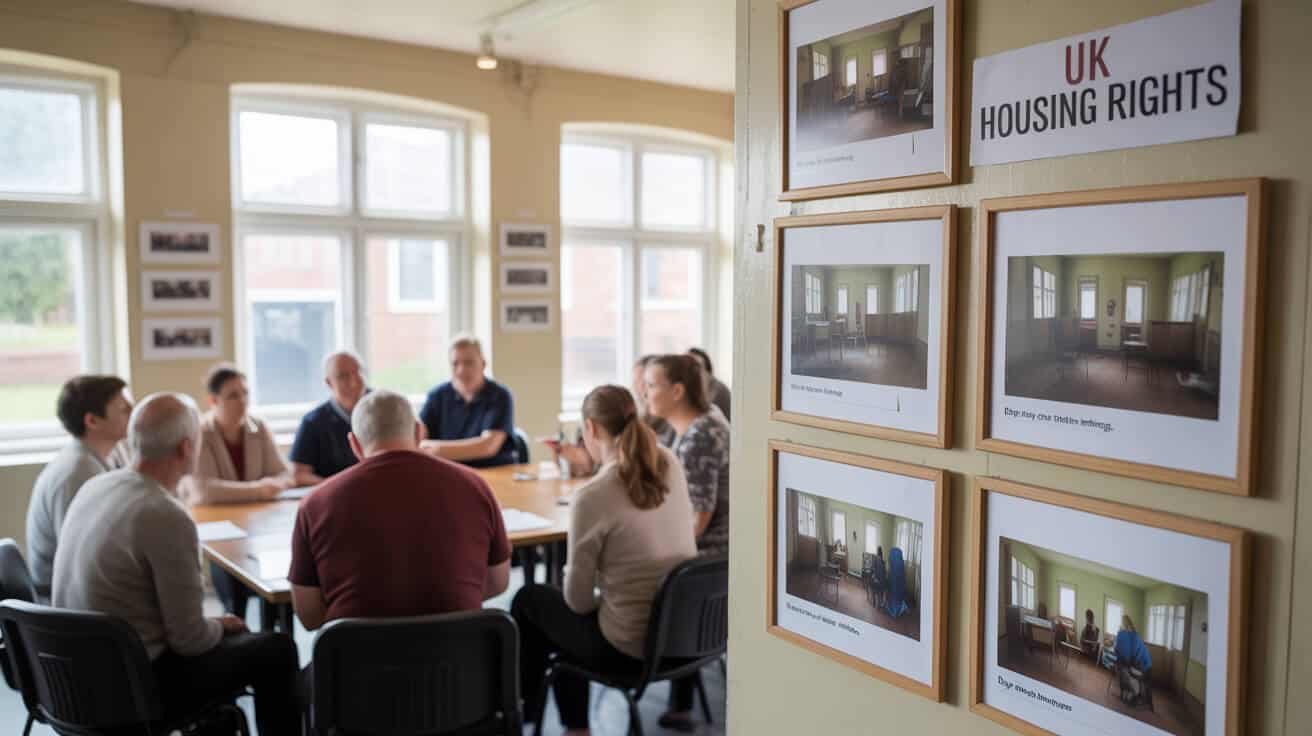
Navigating Part M, the Equality Act and BS 8300 in Practice
![[ALTTOKEN]](https://allservices4u.co.uk/app/uploads/2026/01/00-Accessibility-PPM-Services-for-Public-Buildings-UK-Part-M-Equality-Act.jpg)
Navigating Part M, BS 8300 and the Equality Act in a real estate portfolio means turning overlapping technical and legal expectations into simple routines your estates, FM and governance teams can follow. Accessibility PPM provides that bridge by translating abstract requirements into specific checks, tasks and review points that keep your buildings usable and defensible over time.
Consistent access often depends more on routines than on regulations.
Estates and FM teams are often caught between technical standards and legal duties, while governance colleagues focus on fairness and outcomes. You need a simple, shared picture of how Part M, BS 8300 and the Equality Act fit together, and what that means for your maintenance plans.
Joining Up the Technical and Legal Frameworks
Joining up the technical and legal frameworks starts with recognising that design sign‑off is only the beginning. Part M and BS 8300 describe what an accessible building should look like at handover, while the Equality Act and Public Sector Equality Duty describe what an accessible organisation should deliver every day. Your accessibility PPM plan has to keep both perspectives in view.
In broad terms:
- Part M (Approved Document M) sets functional requirements and design guidance on providing reasonable access to and use of buildings.
- BS 8300 gives detailed, best‑practice design guidance for inclusive environments.
- The Equality Act requires you to avoid discrimination and make reasonable adjustments where disabled people would otherwise be at a substantial disadvantage.
- The Public Sector Equality Duty requires public bodies to embed these considerations in policies and everyday decisions.
Accessibility PPM becomes the operational glue between them. Your PPM tasks, frequencies and checks should be informed by:
- The design assumptions in Part M and BS 8300 (gradients, widths, heights, reach ranges, forces, signage, alarm locations).
- The need to avoid recurring disadvantage in practice (for example, not routinely closing the only step‑free entrance for cleaning at peak times).
- The equality and governance frameworks you report against.
A simple example makes this concrete. An entrance corridor can be Part M compliant at handover, but over time the door closer may be tightened, a bin might be left in the clear width and a new keypad added at an awkward height. An updated PPM checklist that measures opening forces, checks clear widths and confirms heights against guidance turns that drifting situation back into a controlled one.
When you translate these expectations into a compliance register and practical checklists, your teams no longer have to interpret standards from first principles on every visit.
Clarifying Duty Holders and Avoiding Gaps
Clarifying duty holders for accessibility PPM means making it explicit which organisation owns each element of the building, who controls each area day to day and whose name ultimately appears on risk registers, safety case files and legal documents. Without that clarity, access‑critical tasks can be quietly dropped whenever roles change or budgets tighten.
Responsibility for accessibility is often fragmented:
- A landlord may provide the structure and common parts.
- A tenant or public body may control internal layouts and day‑to‑day operations.
- FM providers may hold contracts for lifts, doors, WCs, alarms, cleaning and security.
- Digital, equality and governance teams may sit elsewhere in the organisation.
Unless you map who is the legal duty holder, who is the contractual duty holder and who is the operational lead for each building and asset type, it is very easy for accessibility PPM to fall between stools. A simple matrix – building by building – that assigns responsibilities for key elements (routes, doors, lifts, WCs, signage, hearing systems) is often the first practical step towards a joined‑up regime. Typical column headings might include “Landlord / building owner”, “Occupier / service lead”, “FM provider”, “Equality / governance lead” and “Evidence owner”.
Turning Obligations into Working Tools for Estates and FM
Turning your obligations into working tools for estates and FM teams means packaging the essentials of each duty into registers, checklists and triggers that fit neatly into existing workflows. Rather than expecting site teams to interpret legislation and standards from scratch, you present them with concise tools they can use on every visit.
Your teams do not need a legal treatise; they need tools:
- A building‑level compliance register that lists relevant regulations, standards and internal policies that affect access‑critical assets.
- Checklists for each asset type that include both safety and accessibility criteria (for example, is the door self‑closing reliably and is the opening force acceptable?).
- Trigger points for review, such as refurbishments, security changes or emerging complaint patterns.
When you present accessibility PPM as a structured set of tasks and reviews – grounded in these frameworks but expressed in operational language – it becomes much easier for managers and engineers to own their part of the duty.
What Our Accessibility PPM Service Covers Across Your Estate
Our accessibility PPM service turns these concepts into a practical, repeatable programme for your buildings by combining access expertise with multi‑trade delivery and structured reporting. All Services 4U works with you to identify access‑critical elements, define inspection and servicing routines around real user journeys and embed them in your existing maintenance systems.
Building a Journey‑Based Accessibility Asset Register
A journey‑based accessibility asset register re‑organises your data around the paths disabled users actually take, rather than around trade packages or plant rooms. It highlights the specific doors, lifts, WCs and systems that must work for someone to travel from the boundary to the key services your building provides.
The starting point is a clear view of what you have. Rather than maintaining a generic list of “doors” or “lifts”, we work with you to build a tagged register of access‑critical items, linked to the user journeys they support. For example:
- Step‑free routes from boundary or car park to each principal entrance.
- Main entrance doors, lobby doors and security barriers on accessible routes.
- Primary passenger lifts, platform lifts, evacuation lifts and refuge communication systems that form your step‑free core.
- Accessible WCs and changing rooms serving key floors and departments.
- Wayfinding, statutory and safety signage that supports those routes.
- Alarm beacons, hearing loops and other aids in receptions, counters, meeting and assembly spaces.
This register sits alongside your existing asset data, rather than replacing it. It simply gives you a new way to see and manage the parts of your estate that are essential to inclusive access and evacuation.
If you would find it useful to sense‑check a single building against this kind of journey‑based view, All Services 4U can walk through one or two representative routes with you as a low‑commitment starting point.
Standardised Inspection Templates That Look at Use as Well as Function
Standardised inspection templates make sure every visit records both safety performance and ease of use, so you are not left with logs that say “tested OK” while disabled users still struggle. By specifying what must be measured, observed and photographed, you give everyone a consistent way to capture accessibility information.
We then help you create or refine inspection templates for each asset group. These go beyond “does it switch on?” to capture:
- Measured values where relevant (door forces, gradients, lighting levels).
- Observations on visibility, contrast, reach ranges and clearances.
- The condition and placement of alarms, grab rails, handrails and signage.
- The ease with which a person using a wheelchair, guide dog or mobility aid can use the feature independently.
For example, a main entrance door template might check the opening force, threshold profile, handle position, visibility strips and whether the lobby layout allows turning and passing. Templates are designed so caretakers, FM engineers and specialist contractors can all capture data consistently, while still allowing them to note local context. Over time, this builds a rich picture of both technical condition and user experience across the estate.
Integrating Accessibility Checks with Existing Safety Regimes
Integrating accessibility checks with existing safety regimes allows you to strengthen access control without multiplying visits or paperwork. By weaving access‑relevant questions into lift servicing, fire, water, gas and electrical inspections, you gain richer evidence from work you already have to do.
Wherever possible, accessibility checks are integrated with existing statutory or best‑practice regimes, such as:
- Lift servicing and inspections.
- Fire alarm tests and evacuation drills.
- Fire door and compartmentation surveys.
- Water hygiene, gas safety and electrical testing where access fixtures are involved.
This reduces survey fatigue and disruption, while ensuring that each visit produces evidence that supports both safety and accessibility objectives. PPM tasks are scheduled and recorded through your CAFM or work‑management systems in the same way as other building services, so accessibility becomes part of business‑as‑usual.
Accreditations & Certifications





How All Services 4U Reduces Accessibility Risk Across Your Estate
![[ALTTOKEN]](https://allservices4u.co.uk/app/uploads/2026/01/02-Accessibility-PPM-Services-for-Public-Buildings-UK-Part-M-Equality-Act.jpg)
All Services 4U reduces accessibility risk by giving you one accountable partner to coordinate trades, interpret duties and deliver evidence, so your access‑critical routes and facilities stay available more of the time. Instead of juggling fragmented suppliers, you gain a coherent accessibility framework that sits across design, maintenance and governance.
Coordinating Multiple Trades Under One Accessibility Framework
Coordinating multiple trades under one accessibility framework ensures that every contractor works to the same access‑focused standards, visit patterns and reporting expectations. Rather than hoping separate door, lift, fire and cleaning providers align by chance, you set a clear common approach and hold everyone to it.
Accessibility cuts across traditional trade boundaries. A typical PPM plan might involve:
- Door and ironmongery engineers.
- Lift and lifting‑equipment specialists.
- Fire and life‑safety contractors.
- General building, roofing or civil contractors.
- Signage and graphics providers.
- Audio‑visual and hearing enhancement specialists.
Without coordination, each does their piece, but no one owns whether the building is actually easy to use. All Services 4U provides a unifying accessibility framework that:
- Defines common standards and checks for all access‑critical assets.
- Aligns visit schedules to minimise disruption.
- Ensures findings and defects from one trade are visible to others where relevant.
- Gives you a single set of reports and dashboards instead of siloed documents.
You still keep the suppliers and frameworks that work for you where appropriate; All Services 4U can operate as a specialist overlay, a design and assurance partner or a principal contractor depending on your structure, so existing FM relationships are supported rather than undermined.
Sector‑Aware Support for Public Services
Sector‑aware support means accessibility PPM is shaped around the realities of your services, not imposed as an abstract ideal. Health, education, civic and cultural buildings all operate to different rhythms and risks, and your maintenance regime must respect those differences while still delivering reliable access.
Public buildings are not generic; they serve specific purposes and users:
- Health settings where anxiety, pain and clinical risk are high.
- Schools, colleges and universities serving diverse age groups.
- Civic buildings serving residents, elected members and partner agencies.
- Museums, libraries and cultural venues with fluctuating visitor numbers.
All Services 4U works across these environments, so we understand the constraints you operate under: safeguarding, security, infection control, exam timetables, clinical risk and public scrutiny. We shape accessibility PPM programmes to fit these realities, not to fight them, while still aligning with Part M, BS 8300 and Equality Act expectations.
Multi‑Disciplinary Expertise, Single Point of Accountability
Multi‑disciplinary expertise with a single point of accountability gives you one place to go when you have concerns about accessibility risk, whether they start as a design issue, a mechanical fault or a governance question. Instead of mediating between architects, engineers and FM providers, you receive integrated recommendations and coherent reports.
Our teams bring together building surveyors, engineers, access specialists and experienced FM practitioners. That means:
- Problems are not bounced between “architectural” and “mechanical” silos.
- Defects are interpreted in terms of both technical risk and user impact.
- Recommendations consider short‑term fixes and longer‑term capital triggers.
All Services 4U already supports multi‑site public‑sector and institutional clients, with vetted, DBS‑checked operatives and recognised health and safety and quality accreditations. For you, the benefit is simple: one accountable partner you can talk to about accessibility risk, confident that we understand both the technical and organisational dimensions.
How We De‑Risk Compliance: Our Process, Reporting and Governance
We de‑risk compliance by turning accessibility PPM into a transparent process that you can explain in board papers, safety case documentation, internal audit reports and regulator meetings. Each stage is structured, evidence‑backed and traceable, so you can show not just what is done but why it is done that way.
Diagnostic: Understanding Criticality, Likelihood and Impact
The diagnostic phase builds a baseline view of your most important access routes, assets and risks, so PPM frequencies and checks are based on evidence rather than guesswork. It helps you see where critical failures are most likely, who they affect and how often they currently occur.
We typically begin with a diagnostic phase focused on:
- Identifying access‑critical routes and spaces in each building.
- Classifying assets by their role in those routes.
- Assessing current condition, failure history and incident data.
- Evaluating existing PPM tasks, frequencies and records.
From this we build a risk‑based view that considers:
- How likely a given feature is to fail or degrade.
- What the consequences would be for disabled users and for your services.
- How the pattern of failures could be seen in Equality Act terms, including whether reasonable adjustments are being sustained.
- How quickly failures are likely to be noticed and addressed.
Inspection and service frequencies are then set using these factors, rather than as arbitrary intervals. This gives you a logic you can stand behind when challenged.
Execution: Accessible PPM in Day‑to‑Day Operations
Execution is where accessibility PPM becomes part of everyday work orders, rather than a special project. Your teams and contractors follow updated checklists and method statements, your CAFM system records the outcome and your buildings quietly remain easier for disabled people to use.
Once the framework is agreed, we embed it into your operations:
- Updating or creating method statements and checklists with access‑relevant measures and observations.
- Training caretaking and FM teams on what to look for and how to escalate potential access issues.
- Aligning work orders and PPM tasks in your CAFM system with the new accessibility asset register.
Engineers and operatives record their visits digitally, capturing:
- Checks performed and results (including any measurements).
- Photographs where they add clarity (for example, alarm cord positions or key signage).
- Defects, temporary mitigations and recommended remedial works.
This produces a live, auditable record of what has been inspected, when, by whom, and with what outcome.
Reporting: Turning Data into Assurance and Action
Reporting converts raw inspection findings into the operational dashboards and governance artefacts your organisation actually uses. When accessibility appears alongside fire, water, health and information risks in familiar formats, it becomes much easier for leaders and auditors to see that it is being managed seriously.
Raw data is only as useful as the decisions it informs. All Services 4U structures reporting on several levels:
- Operational dashboards for estates and FM teams showing overdue tasks, outstanding defects and access‑critical outages.
- Risk and incident views linking PPM findings with complaints, incidents and near misses to highlight hotspots.
- Governance‑ready summaries for boards and audit committees, focusing on trends, emerging risks and recommended investments.
Accessibility findings can also be fed into your corporate risk register, safety case file for higher‑risk buildings and internal audit recommendations, alongside fire safety, health and safety, information governance and other core risks. This helps you demonstrate that equality and access considerations are embedded in your mainstream risk management, not treated as a separate, optional agenda.
Commercial Models, Measurable Value and Risk‑Adjusted Decisions
Commercially, the aim is to put accessibility PPM on the same footing as your other major risk controls: clear scope, measurable outcomes and predictable costs, with more stable budgets and measurable reductions in access‑related risk instead of volatile reactive spend and hard‑to‑defend failures. All Services 4U helps you build a baseline, test scenarios and choose a level of investment that matches the risk appetite your board and finance colleagues have set.
Building a Credible Baseline and Business Case
A credible baseline and business case for accessibility PPM show your board and finance colleagues that this is a targeted risk‑reduction investment, not an open‑ended cost. By comparing current reactive spend and disruption with modelled improvements, you can justify planned maintenance as a way to avoid specific losses and volatility.
We work with your estates and finance teams to establish a baseline that typically includes:
- Historic reactive spend on lifts, doors, WCs, alarms and related access features.
- Downtime statistics for critical assets, where available.
- Complaints and incidents that can reasonably be linked to access issues.
- Known capital pressures related to ageing access‑critical assets.
Against this baseline, we can model different accessibility PPM scenarios. These show the likely reduction in unplanned outages with improved maintenance, the potential impact on complaints and service disruptions, and how PPM could defer or clarify timing for capital replacements. You gain a clear, shared picture to discuss with budget holders, risk owners and governors.
Aligning With Procurement and Contract Structures
Aligning accessibility PPM with your procurement and contract structures avoids creating parallel, hard‑to‑manage arrangements. Instead, you bring accessibility expectations into existing FM contracts and frameworks, so procurement and legal teams can commission and oversee the work using familiar tools.
All Services 4U can shape engagements to fit within:
- Existing FM or TFM contracts, as a specialist overlay.
- Framework call‑offs and mini‑competitions.
- Direct award routes where permitted by regulations and thresholds.
We specify deliverables, measures and governance arrangements clearly, so procurement and legal teams have a solid basis for evaluation and contract management. Where you prefer, our team can support incumbent FM providers with design and assurance, allowing them to remain the visible delivery partner while you benefit from specialist input.
Linking Commercials to Outcomes, Not Just Activities
Linking parts of the commercial model to agreed outcomes, as well as to activity volumes, keeps everyone focused on the reliability and fairness disabled users experience. Where practical, these outcome measures can sit alongside standard KPIs in your contract management and performance reviews.
Where appropriate, elements of the commercial model can be tied to agreed outcomes, such as:
- Uptime targets for key lifts and accessible routes.
- Maximum allowable durations for critical access‑related outages.
- Reductions in access‑related complaints or escalations over an agreed period.
These parameters are always set pragmatically, recognising the complexity of real estates and the influence of external factors. Combined with regular joint reviews, this keeps everyone focused on the experiences of disabled users and the risk profile of your estate, rather than just on the number of tasks completed.
Reliable Property Maintenance You Can Trust
From routine upkeep to urgent repairs, our certified team delivers dependable property maintenance services 24/7 across the UK. Fast response, skilled professionals, and fully insured support to keep your property running smoothly.

Book Your Free Consultation With All Services 4U Today
All Services 4U gives you a practical way to turn accessibility from a one‑off design ambition into a living, auditable maintenance regime that supports your Equality Act duties, risk register and service standards every day. A free consultation is the simplest way to see how an accessibility PPM approach could work across your estate without committing budget upfront.
What You Can Expect From a Consultation
A consultation with All Services 4U is a focused working session, not a sales presentation. In under an hour, you can explore how accessibility PPM would apply to your buildings, services and governance structures, and leave with a clearer view of realistic options, even if you are not ready to proceed immediately.
In a short, structured call we will:
- Map your current PPM coverage against a simple accessibility checklist for routes, doors, lifts, WCs, signage and hearing systems.
- Discuss where incidents, complaints or internal audits suggest access‑related risks.
- Explore how existing access audits, building surveys or equality impact assessments could be converted into a phased PPM plan.
- Outline possible starting points – from a pilot on a small group of sites to a portfolio‑wide diagnostic.
You will leave the conversation with a clearer picture of where you stand today and what practical options exist, regardless of whether you choose to proceed.
Low‑Risk Ways to Move From Insight to Action
Low‑risk ways to move from insight to action allow you to build confidence in accessibility PPM before committing your entire estate or budget. By starting with a pilot, proving the reporting and integration, and involving your existing FM partners, you can test the approach in the real world while maintaining full control over pace and scope.
If you decide accessibility PPM is a priority, we can help you move at a pace that fits your capacity and budget by:
- Running a time‑boxed pilot on one contract or cluster of high‑priority buildings.
- Testing integration with your CAFM, health and safety, complaints and risk systems.
- Co‑designing a transition plan that clarifies how responsibilities will be shared between internal teams, existing FM providers and All Services 4U.
- Agreeing how performance, incidents and improvements will be reported to boards, regulators and service users over the first year.
That way, you gain real evidence and early improvements without committing your entire estate from day one.
If you would like to explore how a structured approach to accessibility could protect your organisation, your service users and your budget, book your free consultation with All Services 4U today and start turning obligations into a manageable, measurable part of your estates strategy.
Frequently Asked Questions
Explore our FAQs to find answers to planned preventative maintenance questions you may have.
What is the single biggest sign my current contractor is damaging me as a landlord or owner, not just annoying me?
The strongest single sign is this: you’re spending more, seeing more complaints, and can’t show clean evidence when anyone asks hard questions.
When higher spend + higher noise = “time to change model, not just contractor”
If you’re fed up with your current Tier‑2, it usually isn’t because of one bad visit. It’s because the pattern now looks like this:
- Reactive spend keeps climbing:
You’re signing off more call‑outs and “emergency” repairs, yet:
- The same leaks, damp patches, lift failures or alarms keep coming back.
- There’s no clear storey about what’s actually been fixed at root.
- Complaints and escalations are getting louder:
Leaseholders, tenants, RTM directors or resident groups:
- Chase you for updates you don’t have.
- Forward photos that don’t match the contractor’s job notes.
- CC in MPs, councillors, the Ombudsman or the press more often.
- You freeze when insurers, lenders or lawyers ask for proof:
Simple requests like:
- “Send FRA + action closure for this block.”
- “Send EICR and CP12 status for all units.”
- “Show roof/gutter inspections for the last two years.”
turn into inbox archaeology instead of you opening a clean binder.
That’s not just “contractor friction”. It’s your risk profile quietly getting worse.
A contractor running on a labour and invoice model will always push you there. A partner like All Services 4U reshapes the whole thing around risk and evidence – every visit, every test, every remedial logged so that when your insurer, valuer or tribunal asks for proof, you’re not sweating, you’re sending a pack.
If you read that and recognise your world, you’re not overreacting. You’re seeing the early indicators that it’s time to change the model, not just shout louder at the same supplier.
How should I redesign property maintenance if I want to reduce risk, not just “get things fixed faster”?
If you want to de‑risk as a landlord or owner, you have to stop buying isolated jobs and start buying duties, assets, and proof. That means reorganising everything around what law and finance actually care about.
Start with duties, then map assets, then fix the calendar and proof
A practical, portfolio‑friendly structure looks like this:
1. Anchor maintenance in clear duty lines
Tie each line to specific laws, Building Regs Parts and obvious evidence:
- Fire & life safety: – FSO 2005, Part B; FRA, fire doors, alarms, emergency lighting, compartmentation, drills.
- Health & habitability (damp/mould): – HFHH Act 2018, Awaab expectations, HHSRS; protocol, moisture readings, re‑inspection, resident comms.
- Gas & electrical: – Gas Safety Regs, PRS 2020, BS 7671, Part J/P; CP12, EICR, remedials, test sheets.
- Water hygiene: – ACoP L8/HSG274; RA, temps, flushing, TMV services, sampling.
- Structure/roof/façade: – Part A, EWS1 where relevant; engineer reports, roof/gutter photo surveys.
- Access & equality: – Part M, Equality Act, BS 8300; lifts, powered doors, ramps, accessible WCs, wayfinding.
- Finance & governance: – LTA 1985, Section 20, insurer conditions, MEES; tender files, reserve models, claim dossiers.
When you view your estate through those lenses, you see where risk really lives.
2. Build an asset register that knows “who and why”, not just “what and where”
Every meaningful asset should carry:
- Property / block.
- Type (boiler, panel, door, lift, roof area, stack, pump, fan, etc.).
- Criticality (life safety / statutory / insurer / lender / comfort).
- Relevant law/Part/standard.
- Linked duty line(s) and next‑due dates.
This is the difference between “we have some kit” and “we understand exactly what keeps us safe, insurable and mortgageable.”
3. Design your PPM calendar from statute + OEM + risk appetite
Instead of “what the last guy set up,” build intervals from:
- Legal minimums (annual CP12; EICR ≤5 years or more frequent by risk; FRA ≥ annually or on change).
- OEM/SFG20 guidance (service patterns for boilers, lifts, pumps, alarms, EL, etc.).
- Your tolerance for:
- Claim repudiation.
- Regulator interest.
- Tribunal disputes.
- Resident press stories.
You can tighten intervals on high‑risk buildings or where your insurer is nervous, and keep them lean where risk and complexity are lower.
4. Make “no proof, no close” a non‑negotiable rule
A job is not truly finished until it has:
- Before/after photos where appropriate, with timestamps and locations.
- Key readings and values (temperatures, resistances, flows, door forces, ramp gradients, log entries).
- A line of text tying it to the relevant law/Part/standard (“FRA action 3.2 – fire door remedial per BS 8214 / Part B”).
- Plain‑English notes: what was found, what was done, what remains, and anything escalated.
When you push your contractor into that frame, one of two things happens:
- They step up and start behaving like a risk partner.
- Or they expose themselves as a pure “man with van” play that can’t survive scrutiny.
All Services 4U lives in that second world by design. You still choose strategy, budgets and where you’re taking the asset. We make sure every action below that supports your storey when someone external wants to test it.
How do I know if poor maintenance is already putting my insurance, refinance or sale at risk?
You’re at risk the moment you can’t quickly produce coherent, current evidence across fire, damp, gas/electrics, water, structure and façade for a building that matters financially to you.
Look at your “hard questions” – if you’d dread them, you’re exposed
Imagine any of these calls tomorrow:
- Broker: “Before renewal, send FRA, fire door evidence, alarm/EL logs, and last two roof inspections for Blocks A–D.”
- Valuer: “Ahead of refinancing, send EWS1 (if applicable), EICR/CP12 register, damp protocol evidence and golden thread for the HRB.”
- Solicitor: “For this dispute, send Section 20 file, HHSRS/damp evidence and FRA action closures for the last 24 months.”
If your first reaction is “we’ll have to get the contractor portal login, ring three people and dig through six inboxes,” that’s your answer.
More concretely:
- Fire & life safety:
- FRA older than 12 months without documented reason.
- Action trackers with “open” entries and no dated closure proof.
- Alarm/EL logs with gaps, handwriting that looks backfilled, or no linkage to specific assets.
- Fire doors with no recent survey, gap/ironmongery checks, or remedial logs.
- Gas & electrical:
- CP12s missing for some units, or out of sequence with tenancy changes.
- EICR dates all over the place; C1/C2/C3 actions with no closure notes.
- No underlying test readings — only summary PDFs.
- Damp, mould & habitability:
- The same flats appear repeatedly in complaints.
- No 14‑day response trail referencing HFHH/Awaab guidance, moisture readings, photos, and re‑inspection.
- Bulk “paint and go” works with no cause analysis.
- Water hygiene & Legionella:
- No current RA, no clear temps/flush/TMV evidence per asset.
- Regime held in engineer notebooks instead of a structured register.
- Structure, roof, façade:
- No regular roof/gutter photo surveys.
- Structural issues handled piecemeal with no engineer sign‑off.
- For HRBs, no EWS1 or Safety Case material ready for inspection.
Any one of these, on its own, is a weakness. Several together become the storey an underwriter or valuer tells about you when they explain why a claim is reduced, a premium jumps, or a valuation is cautious.
Working with All Services 4U means flipping that. We build from the question set insurers, lenders and regulators already use, then make sure every visit generates the sort of evidence they expect to see when everything goes under the microscope.
What does a genuine “risk‑partner” property maintenance relationship with All Services 4U give me that a normal contractor never will?
A true risk‑partner relationship gives you three things a normal contractor can’t: a map of your duties, a live picture of your risk, and a defence file you can stand behind.
You’re not buying hours; you’re buying a system that makes you look in control
Day‑to‑day, here’s how that shows up for you:
1. Different conversations from the first briefing
With a standard contractor, the first call is about rates, call‑out windows and coverage.
With a risk partner, the first call is:
- “Show us your duty lines by building – where are fire, damp, gas/electrics, water, structure, access and finance today?”
- “Which insurers, lenders, boards or regulators are you most worried about upsetting?”
- “Which buildings or portfolios will move the needle most if we clean them up first?”
We build your view of the world into how we schedule, scope and document from day one.
2. Evidence‑first thinking built into every job
Traditional model:
- Engineer attends.
- Fixes what’s in front of them.
- Writes a short note.
- Sends an invoice.
Risk‑partner model with All Services 4U:
- Engineer attends with duty, law/Part, asset and history visible.
- Diagnoses, references FRA/damp/EICR/L8/Part data where relevant.
- Fixes or makes safe and escalates clearly if structural or strategic.
- Captures photos, readings and references that drop into the right binder tab automatically.
- Triggers clear follow‑on actions when something touches insurer/lender/regulator concerns.
You don’t get a mystery “attended, made safe” line; you get a storey that stands up when someone hostile reads it cold.
3. A single, landlord‑defensible maintenance and evidence spine
Rather than ten different contractor portals and a mess of PDFs, you see:
- Per‑building binders with standard tabs (Fire, Gas/Electrics, Water, Structure/Roof, Access, Damp/Mould, Insurance/Lender, Section 20, Resident Comms).
- Registers and trackers that show currency and completeness at a glance.
- Dashboards that let you say “here is exactly where we stand and what we’re doing next.”
That doesn’t replace your managing agent, HA, FM or legal teams; it equips them. You become the landlord or owner who can answer hard questions calmly instead of scrambling.
If you’re serious about stepping into that role, the upside is big: calmer board sessions, more predictable premiums, smoother refinancing and a noticeable drop in “we’re not being listened to” noise from residents.
What is a low‑risk, politically safe way to replace an underperforming contractor without blowing up my whole estate at once?
The safest route is to treat the change as a 90‑day controlled experiment on one visible problem area, then make decisions based on outcomes instead of opinions.
Use one building as your test bed and let the data argue for you
Here’s a pattern that works repeatedly for RTM boards, freeholders, HAs and investors:
Step 1 – Choose a block where everyone already feels the pain
Pick a building where:
- The same leaks, damp issues, lift failures, alarm faults or door problems keep cropping up.
- Premiums have crept up, or a refinance/sale is coming.
- Residents are noisy, or the board is nervous.
You’re not trying to prove a point in a quiet corner – you’re going straight to where improvement will be obvious.
Step 2 – Run a simple evidence and risk audit before you switch
With All Services 4U, you start by mapping:
- FRA status and action closures.
- EICR/CP12/L8 position.
- Damp/mould cases and response trails.
- Roof/gutter inspections and history.
- Access issues (lifts, doors, accessibility features).
- Complaints and repeat fault data.
That’s your baseline and your honesty check. It also gives you a tight spec for “what good must look like here”.
Step 3 – Hand over defined duty lines, not a vague “give it a go”
Instead of “you do everything now”, agree a clear slice:
- Fire & life safety.
- Gas/electrics.
- Water hygiene.
- Damp/mould.
- Roof/structure.
- Access.
We design and run the PPM, clear obviously risky items, and build the evidence spine you’ll need when the next renewal, valuation or dispute shows up.
Your existing contractor can stay on other buildings or lower‑risk categories during this period. You’re not slamming a door; you’re running a side‑by‑side model test.
Step 4 – Compare the metrics that actually matter to you
After 60–90 days, stack old vs new:
- Complaint volumes and escalation levels.
- Repeat fault counts and time to closure.
- FRA/EICR/CP12/L8/roof evidence completeness and currency.
- Feedback from brokers, valuers, auditors, board members and residents.
- OPEX impact when you include fewer repeats and clearer scopes.
If the numbers and stories are clearly better, you have a calm, data‑driven basis to:
- Phase the old contractor out by category or region.
- Expand the All Services 4U model block by block, duty line by duty line.
- Explain your decision to boards, leaseholders, residents and insurers with evidence instead of anecdotes.
You don’t need a leap of faith. You need one well‑chosen building, a defined 90‑day window, and a partner prepared to be judged on the outcomes that matter to you, not just on how quickly they send a van.
If you’re ready to explore that test, share one problem building and the three things about it that worry you most. From there, it’s straightforward to sketch what a “prove it” project with All Services 4U would look like – and whether you want that level of control across the rest of your estate.
- Structuring Accessibility PPM for UK Public Buildings
- Keep Your Public Buildings Access‑Compliant, Open and Defensible Throughout the Year
- Operational, Financial and Governance Impact of Accessibility Failures
- Navigating Part M, the Equality Act and BS 8300 in Practice
- What Our Accessibility PPM Service Covers Across Your Estate
- How All Services 4U Reduces Accessibility Risk Across Your Estate
- How We De‑Risk Compliance: Our Process, Reporting and Governance
- Commercial Models, Measurable Value and Risk‑Adjusted Decisions
- Book Your Free Consultation With All Services 4U Today
- Frequently Asked Questions
- Related PPM Services
Related PPM Services
Case Studies


Related Articles

Your Guide To Identifying And Treating Minor Mould Outbreaks

Why Planned Preventative Maintenance (Ppm) Saves Money And Ensures Compliance