Building Envelope PPM Services for Asset Directors – Roof, Facade, Drainage & Part C Compliance
Asset directors and estate leads need building envelope maintenance that treats roofs, facades and drainage as one moisture‑management system, not scattered repairs. A portfolio‑level PPM approach links each zone and interface to risk, spend and service continuity, depending on constraints. You end up with an asset register, inspection cadence, defect coding and closure rules that show how ingress is traced, controlled and verified. The next step is to decide where to start building that baseline across your estate.



Author
Izzy Schulman

Asset directors are judged on service continuity, cost control and compliance, yet moisture getting past the building envelope can quietly undermine all three. Treating each leak or stain in isolation hides the real risk pattern across roofs, facades and drainage.

A joined-up envelope PPM programme reframes those issues as one moisture‑management system you can see, measure and justify. By defining assets, access, inspection cadence and defect handling in advance, you gain a defendable structure for spend, risk acceptance and Part C alignment across the estate.
- Link roofs, facades and drainage to clear risk decisions
- Build a defendable inspection, recording and closure structure
- Support Part C expectations with practical, repeatable estate actions</p>
Need Help Fast?
Locked out, leak at home, or electrical issue? All Services 4 U provides 24/7 UK locksmith, plumbing, electrical.
Testimonial & Clients Who Trust Us
With 5 Star Google Reviews, Trusted Trader, Trust Pilot endorsements, and 25+ years of experience, we set industry standards for excellence. From Dominoes to Mears Group, our expertise is trusted by diverse sectors, earning us long-term partnerships and glowing testimonials.
Worcester Boilers

Glow Worm Boilers

Valliant Boilers

Baxi Boilers

Ideal Boilers

What Building Envelope PPM Covers At Portfolio Level
You take real risk out of your portfolio when you treat the building envelope as one moisture‑management system, not a stream of unrelated leaks and repairs.
At portfolio level, planned preventative maintenance for the envelope becomes a control system that links roofs, façades, rainwater goods, below‑ground interfaces and moisture‑risk junctions directly to risk, spend and service continuity. Instead of scattered roof or gutter contracts, you have one view of how rain is meant to land, move and leave your buildings without getting inside.
To get a defendable baseline, you need more than a diary of visits. You need an asset register by roof zone and elevation, a practical access plan, a risk‑based inspection cadence, simple defect codes, a route for minor remedials, clear escalation rules and a visible link into lifecycle planning. That is what turns “maintenance” into a programme you can stand up in front of a board, a broker or a regulator. If that baseline does not exist yet, choose one priority building and begin assembling it now.
The key shift is this: governance follows the water path, not contractor labels. Defects do not respect trade boundaries, so your oversight cannot either. Once you define, up front, what will be inspected, how findings are recorded, what was done, and how closure is verified, it becomes much easier to justify where you spend, where you wait and where you accept residual risk.
How Roof, Facade And Drainage Defects Escalate Into Cost And Compliance Exposure
Water ingress escalates when you only ever see the last link in the chain – the damp patch inside the building.
Most repeat issues start at interfaces: parapets, outlets, thresholds, balcony upstands, window perimeters, roof‑to‑wall junctions and changes in material. When every visit is scoped as “a roof leak”, “a gutter clean” or “a bit of mastic”, you rarely see how the system as a whole is either letting moisture in or failing to get it away.
A leak that “comes back” is usually a symptom that was treated before the source, route and discharge constraint were understood. You may patch an internal stain, but the real problem is a blocked hopper, a split joint in a concealed gutter, or a failed movement joint in the façade. Without a joined‑up envelope view, those root causes survive each repair and keep turning up on a different line of the ledger.
Local exposure then compounds the risk. Wind‑driven rain on one elevation, coastal conditions, heavy tree cover, freeze–thaw cycles and more intense rainfall all change how quickly details fail. If inspection frequencies and scopes do not reflect that reality, deterioration continues between visits and the first signal you see is an internal failure.
While that is building in the background, hidden damp can undermine insulation performance, finishes, timber elements and internal air quality. At that point you do not just carry a maintenance problem; you carry a compliance and wellbeing problem that is slower and more expensive to fix. The most common blind spot is drainage: if gullies, connections and below‑ground sections sit outside your envelope PPM, they can keep forcing water back to thresholds and façades no matter how often you “fix” the leak.
How Part C And Related Guidance Translate Into Estate Actions
You cannot replay Building Control on a live estate, but you can prove that you manage moisture risk in the spirit of Part C.
In design and construction, Approved Document C sets the expectation that walls, floors and roofs resist moisture from the ground and from precipitation, and are not damaged by condensation. In operation, your role is to show that you are maintaining the fabric so that intent continues to be met as far as reasonably practicable.
That means your envelope PPM needs clear, repeatable actions aimed at moisture‑sensitive details: junctions at ground level, cavity trays and weep holes, flashings, damp‑proof courses, basement and podium waterproofing, roof coverings and upstands, balcony interfaces and drainage paths. It also means your records show that when ingress or damp is reported, you trace it back through those details, not just treat the visible symptom.
There is an important governance line here. Routine maintenance records should not be described as formal “Part C certification”. They should be described as evidence that you are inspecting and maintaining the building in line with moisture‑resistance expectations, closing defects, and revisiting higher‑risk areas when conditions change or issues reoccur.
For each significant finding, a reviewer should be able to see where it is, what you believe is causing it, what control you put in place, what permanent action was taken, and when you went back to confirm that it worked. Once that structure exists, the same records support your internal risk register, your capital planning and any external questions that arrive later.
What A Risk-Based Building Envelope PPM Programme Includes Across A Live Portfolio
A credible programme gives you one language for moisture risk across every roof, façade and drainage line in the estate.
You start by building the register: roof zones and build‑ups, façade systems by elevation, balconies and terraces, outlets and overflows, gutters, downpipes, gullies, thresholds and below‑ground transitions. You also log access constraints, warranties, known defects and leak history. Without that map, inspections stay generic and hard to compare asset by asset.
You then break delivery into workfaces that mirror how water behaves. One stream looks after roof waterproofing and edge details. Another covers façades, openings and movement joints. A third focuses on rainwater goods, surface channels and their connections into the below‑ground network. Ground‑level moisture details – such as paving falls, thresholds, vents, cavity trays and weep holes – sit alongside, instead of disappearing into general “grounds” or “civils” budgets.
Across all of those workfaces, you standardise how information is captured: location references that another person can find, photographs before and after, short notes on the probable moisture path, severity ratings and clear recommendations. You also decide in advance how this will work in occupied buildings: how you communicate with residents or commercial occupiers, how you sequence access, how you minimise disruption, and how you escalate if an active leak is affecting vulnerable people or critical spaces.
Inspection Frequencies, Prioritisation Logic And Budget Forecasting

A risk‑based cadence is far easier to defend than a uniform calendar.
For many roofs and rainwater systems, a twice‑yearly baseline – typically spring and autumn – is a strong starting point. You then tighten or relax that interval based on exposure, blockage risk, asset criticality and the patterns emerging from your own data. A flat roof under trees on a coastal site serving sensitive occupiers will justifiably see more frequent attention than a sheltered pitched roof over low‑risk storage.
Cyclical visits on their own are rarely enough. You also need trigger rules for inspections outside the normal programme: after severe storms or exceptional rainfall, after new service penetrations or façade works, and when you receive repeat complaints from the same elevation, stack or unit line. That avoids waiting half a year to inspect something you already know has changed.
Prioritisation then has to move beyond what looks worst today. You ask what happens if this detail fails and what it will cost you when it does. Healthcare and supported housing, high‑rise residential, mixed‑use assets with retail or plant on the ground floor, and buildings with a history of claims or complaints all merit a higher position in the queue, even if the immediate defect appears modest.
The same patterns feed your forward view. When you see recurring defect types across multiple assets – the same parapet detail failing, the same balcony connection leaking, the same gutter arrangement blocking – you have the basis for a programme‑level fix and a capital forecast, not just another long list of small repairs.
Outputs, Reports And Audit Trail Needed For Board, Insurer And Lender Scrutiny

You reduce scrutiny pain when your reports are written for decisions, not just for filing.
At board level, a good envelope report lets you see, at a glance, where the highest moisture risks sit, what has been done about them, what remains open, and what the financial bands look like for near‑term remedials and medium‑term renewals. You are not reading pages of narrative; you are seeing risk‑ranked items, clear locations, recommended next steps and status.
For insurers and lenders, the priority is a traceable chain. For any material incident or defect, they should be able to see the initial finding, photographs and marked‑up plans, your understanding of the cause, any temporary controls you put in place, the permanent works you instructed, and the reinspection that confirmed closure. Alongside that, context records – such as warranties, product information, access constraints and prior incident history – show how you manage the asset rather than simply react to it.
Internally, the same data becomes a management engine. When you track where closure is slow, where emergency visits keep repeating, and which details keep failing, you have the evidence to change scopes, renegotiate service models, target capital and, where required, challenge contractor performance. Your audit trail then underpins both compliance conversations and commercial ones.
Accreditations & Certifications








When To Escalate From PPM To Targeted Remedial Works And How Delivery Models Change Accountability
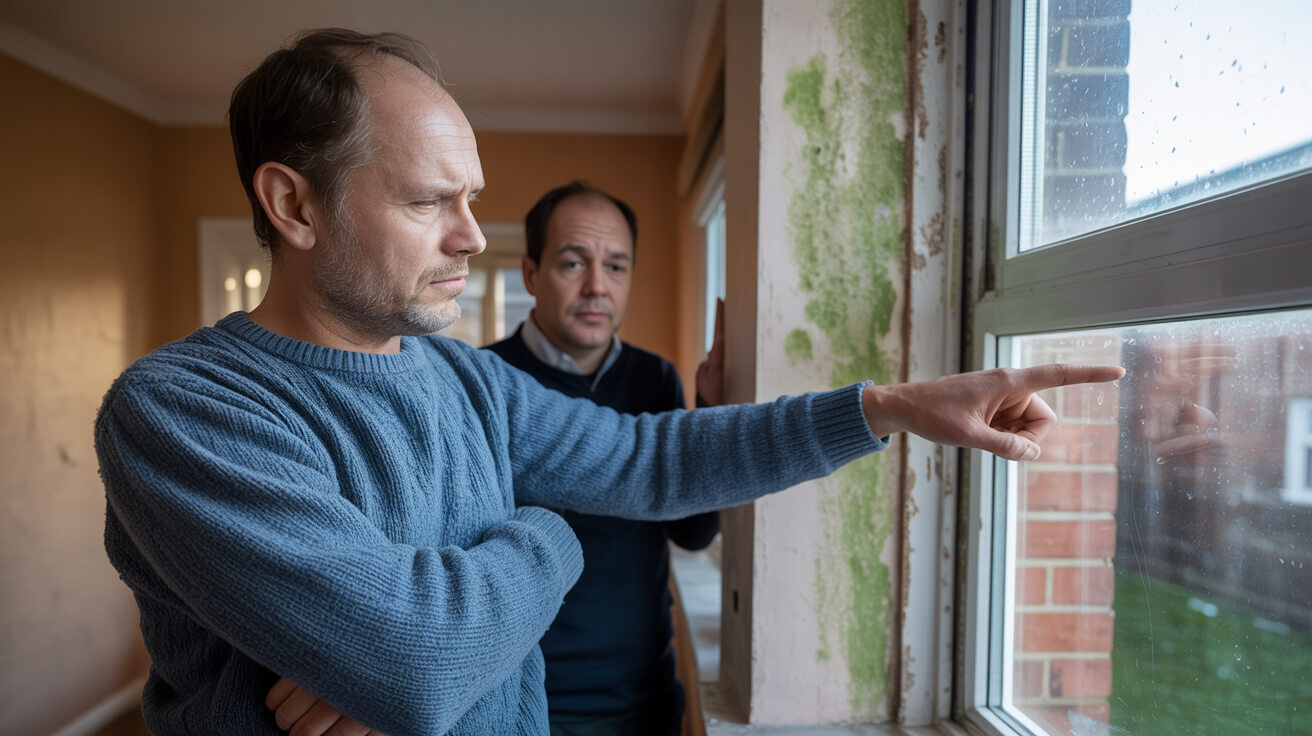
At some point, sending more inspections to the same failing detail is not control – it is drift.
A risk‑based programme needs clear rules for when a recurring issue moves from maintenance to a targeted remedial project. That tipping point is usually reached when you see the same defect type across multiple locations, when repeated local repairs do not hold, or when the consequence of failure has increased because of changing use, regulation or occupier profile.
How you buy and structure delivery has as much impact as the technical scope. A coordinated model – where one provider or programme lead is responsible for inspection, cleaning, minor repairs, reinspection and reporting – tends to create fewer handoff gaps than a fragmented model in which nobody owns root‑cause diagnosis or closure. An “inspection‑only” or “cleaning‑only” contract often leaves you carrying unresolved risk and an incomplete evidence trail.
Within whatever model you choose, it helps to define response bands in plain language: routine PPM, urgent make‑safe, planned minor remedial works, and specialist investigation or capital scheme. Each band should have its own approval thresholds, timescales and record requirements. For occupied assets, you also need mobilisation rules that cover communication, access approvals, safeguarding and how you will handle live leaks. Once those are written down, accountability becomes much easier to enforce.
Reliable Property Maintenance You Can Trust
From routine upkeep to urgent repairs, our certified team delivers dependable property maintenance services 24/7 across the UK. Fast response, skilled professionals, and fully insured support to keep your property running smoothly.

Book Your Free Consultation With All Services 4U Today
You do not need to redesign your entire estate programme before you take the first step.
You start by choosing one high‑risk building, one persistent leak pattern, or one group of assets that you already know is causing disproportionate concern. In a short consultation, you put that live operational issue on the table alongside your strategic drivers – insurer pressure, resident complaints, budget stress or upcoming capital decisions – and explore how a joined‑up envelope PPM approach would change the picture.
During that conversation, you ask All Services 4U to walk you through sample outputs: inspection reports, risk‑ranking logic, inspection cadence, closure workflow and example dashboards. You also use it to agree boundaries in advance: what will sit within routine PPM, what will trigger specialist escalation, and how evidence around moisture and Part C intent will be described.
If you need to move in stages, you agree a phased route – starting with diagnostics and priority remedials, then building toward a full risk‑based programme as results and internal confidence grow.
Book a consultation with All Services 4U and turn water ingress from a recurring incident into a managed, documented portfolio risk you can explain and defend.
Frequently Asked Questions
What should you ask for in a sample building envelope PPM report before appointing a contractor?
Ask for a sample report that shows location, cause, risk, action and closure without guesswork.
That is the fastest way to tell whether you are buying real control or just buying attendance with photos. A credible building envelope PPM report should let your team see what failed, where it sits, how serious it is, what needs approval and whether the matter was actually closed. If it cannot do that, it will not help much when a board questions spend, a broker asks for evidence or a lender wants comfort that defects are being managed properly.
RICS-aligned reporting standards matter here because they favour records that support decisions, follow-up and accountability. In plain terms, the sample should read like a working management document, not a tidy diary entry from site. That means exact asset references, defect classification, likely moisture route, recommended next step and a visible status line that distinguishes found, attended and closed.
A contractor can attend a roof and still leave your risk exactly where they found it.
A useful sample also shows how the contractor thinks. That is often the hidden test. Two reports may contain the same photos, but one gives your team a route to approval and the other creates more admin. If the report forces your property manager, surveyor and finance lead to hold three extra calls just to work out what the defect means, the reporting model is already too weak.
Which details should appear before you take the sample seriously?
A decision-ready sample report should include the basics in a way that your operations team can use without translation.
- Exact location references by roof zone, elevation, outlet, parapet, threshold or junction
- A severity rating tied to likely consequence
- The probable cause, not just the visible symptom
- A recommended next step with a clear owner
- Before-and-after evidence where work is complete
- A reinspection date or verified closure note
That final item is where weaker contractors often fall away. Many reports stop at “issue attended” or “repair completed.” Those phrases sound reassuring, but they do not prove that the risk has gone. A sound report shows whether the defect was checked again after action and whether the outcome held.
Which warning signs should make you cautious?
This comparison usually reveals whether you are reviewing a proper control document or a basic site note.
| Weak sample report signal | Why it creates risk | What better reporting looks like |
|---|---|---|
| Generic wording like “roof defect noted” | You cannot track patterns across assets | Precise defect category and location |
| No severity or priority rating | Funding decisions become reactive | Risk band tied to impact |
| Symptom only, no likely cause | You pay to revisit the same problem | Moisture route or failure hypothesis |
| No closure evidence | Repeat defects stay hidden | Reinspection and verified status |
| Photos without labels | Later review becomes guesswork | Marked-up images or plan references |
| No route to action | Approval drifts between teams | Named next step and budget path |
Chartered Institute of Building thinking on information quality also supports this approach: records should make it easier to govern work, not harder. If the sample cannot support a clean handoff from inspection to action, the live service is unlikely to improve after mobilisation.
Why should you test reporting quality before procurement, not after?
Because reporting habits tend to be structural. Contractors who produce vague sample packs rarely become disciplined once the contract starts. They may attend on time and still leave your team exposed to repeat questions, weak evidence and avoidable spend.
That matters more on portfolios with recurring leaks, insurer scrutiny or refinancing pressure. In those settings, the report is not just a technical document. It becomes part of your governance trail. A weak sample is therefore an early warning that your defect handling may look active while staying hard to defend.
A sensible procurement step is to compare each sample against your internal approval path. Can your board read it? Can your property manager raise the right order from it? Can your broker follow the evidence chain? Can your surveyor tell whether the issue was genuinely closed? If the answer is no, the report is not doing enough.
Where All Services 4U tends to add value is by producing reports that work across those audiences without extra interpretation. That is less about writing longer reports and more about building reports your team can approve, file, revisit and defend later.
How should you set inspection frequency across different buildings without forcing one calendar onto the whole portfolio?
Set inspection frequency by risk, exposure and defect history, not by habit.
A portfolio-wide calendar may look neat, but neat is not the same as controlled. A sheltered low-rise block with stable performance should not usually sit on the same inspection rhythm as an exposed building with recurring overflows, complex drainage runs or difficult access. If both assets receive the same attention simply because the programme is easier to administer that way, the easy buildings often get too much time and the difficult ones get too little.
SFG20 supports a risk-based maintenance logic, and that is the right starting point. You may begin with a common baseline for roofs and rainwater goods, but the real test is how quickly the programme changes when the building starts telling you a different story. A stronger contractor can explain not just the starting interval, but the trigger points that tighten it.
One useful way to think about inspection frequency is this: you are not trying to create symmetry. You are trying to match attention to consequence. If failure on one building creates resident disruption, claim exposure or repeated access cost, that building should attract more scrutiny than a stable asset that has shown little deterioration over time.
Which factors should actually change the cadence?
Inspection intervals should tighten when the building shows evidence that risk is rising.
The most common trigger factors are:
- Repeated leaks on the same elevation, roof zone or outlet line
- Post-storm failures or blockage history
- Height and exposure to wind-driven rain
- Known design details with a poor performance record
- Difficult access that makes late intervention more expensive
- Higher consequence where vulnerable occupiers or critical uses are present
Approved Document C supports the broader principle that moisture resistance depends on build-up, detailing and exposure, not just on whether a roof exists. That is why static scheduling often underperforms. It ignores context.
Which practical model is easier to defend?
A simple risk-led model is often more useful than a complex master calendar.
| Asset profile | Planned cadence logic | Extra trigger inspections |
|---|---|---|
| Stable and sheltered | Base cyclical inspections | Severe weather events |
| Moderate exposure or defect history | Seasonal reviews with targeted scope | Complaints or overflow events |
| High-risk or failure-sensitive | Tighter planned cycle | Storms, repeat leaks or major works |
The exact numbers will vary by building type, access method and contract scope. What matters is whether the logic is visible. If your team can explain why one asset is inspected more often than another, the programme looks controlled. If it cannot, the calendar starts to look administrative rather than risk-led.
When does the wrong frequency start costing real money?
Usually when reactive activity begins covering the gaps left by weak planned maintenance. You see repeat callouts, repeat access costs, repeat resident disruption and repeated debate about whether a defect was avoidable. The spend may still sit in separate budget lines, but it often points back to the same issue: the inspection model was too blunt.
This is where frequency becomes a financial decision as much as a technical one. A better cadence can improve reserve planning, reduce repeat attendance and create a cleaner insurer narrative. It also helps your board because the rationale for spend becomes easier to explain.
If you are reviewing a contractor, ask how they move an asset from baseline inspection into enhanced inspection and how they record that decision. If they cannot explain the trigger logic, you are probably looking at a scheduler rather than a risk-led maintenance partner.
All Services 4U can help reset inspection logic around actual building behaviour rather than around a tidy but weak annual calendar. That gives your team a programme with fewer blind spots and better reasons behind the spend.
Why do some leak problems keep returning even after repairs have been signed off?
Leaks keep returning when the water path survives the repair.
That is the plainest explanation, and it is usually the right one. A stain inside a flat may be the last visible point in a much longer route. Water can track from a blocked outlet, parapet joint, failed flashing, balcony threshold or façade interface before appearing far from the true entry point. If the repair fixes the visible symptom rather than the actual route, the leak often returns under the next spell of weather.
CWCT guidance is useful here because it treats the external envelope as a system rather than as isolated elements. That distinction matters. A roof, parapet, joint, rainwater outlet and wall interface do not fail independently in real life. They fail in relation to one another. If the contractor only inspects the most obvious trade package, the diagnosis may still be incomplete.
The commercial cost comes from false closure. One attendance may look successful on paper, but if the route was not proven and removed, the next visit becomes a second cost for the same unresolved failure.
Which failures sit behind most repeat leaks?
Recurring leaks usually come from one of four patterns.
- The visible damage was repaired, but the entry point stayed live
- Drainage restrictions sat outside the repair scope
- Only one connected element was checked
- The job was signed off before meaningful reinspection
CIRIA-style defect investigation principles support a systematic approach here: observe the pattern, test the hypothesis, trace the route and verify the outcome. Without that sequence, the repair team can be busy without being right.
When should a leak stop being treated as a routine callout?
It should stop being routine once the pattern becomes visible. If the same location, same weather trigger or same complaint family appears again, the issue has already moved beyond normal reactive handling. At that point, the organisation needs a more structured investigation, not just another attendance.
That may mean closer access inspection, trace testing, coordinated review between trades or a revised scope that addresses the interface rather than the symptom. The goal is not to create process for its own sake. It is to stop paying for repeat uncertainty.
Which response is more likely to hold?
A stronger response usually follows a simple sequence.
| Stage | What a weak response does | What a stronger response does |
|---|---|---|
| Diagnosis | Assumes the source | Tests the route |
| Scope | Repairs one visible defect | Checks connected elements |
| Closure | Signs off on attendance | Verifies outcome after action |
| Learning | Treats each visit in isolation | Reviews incident history first |
That difference is why repeat leaks are rarely just a repair problem. They are usually a diagnosis problem, an evidence problem or a scope problem.
Why does this matter beyond maintenance?
Because recurring leaks damage trust quickly. Residents lose confidence in updates. Property managers spend more time on complaint handling. Surveyors question whether the diagnosis is credible. Brokers become alert when the same pattern sits behind several incidents. Finance teams stop believing the line item is under control.
A contractor should therefore be able to explain how they prove the moisture route, how they distinguish symptom treatment from real closure and when they would escalate a repeat leak into planned remedial or capital review. That conversation tends to reveal capability faster than a generic discussion about “responsive service.”
If the same leak keeps appearing in your records, it is worth testing whether the issue is still a maintenance problem or whether it now needs a better diagnostic strategy. All Services 4U can review repeat failures in that way and help your team stop paying for the same unresolved route twice.
Which records matter most when an insurer, lender or board asks how moisture risk is being managed?
The most important records are the ones that prove finding, action and closure in one clear chain.
That is what external scrutiny usually looks for. An insurer wants to know whether you managed the condition sensibly before the loss. A lender or valuer wants to know whether known issues are isolated, understood and controlled. A board wants to know whether funding decisions are being made against evidence rather than optimism. In all three cases, “we inspect regularly” is too vague to carry much weight.
Approved Document C gives the technical context for moisture resistance, but it is your records that show whether control exists in practice. A useful file should make it easy to trace a defect from first observation through mitigation, permanent repair and verified closure. If that chain breaks, the organisation starts to look reactive even when work has happened.
The strongest records are therefore not simply detailed. They are structured. They let another person follow the logic without needing verbal explanation from the original team.
Which evidence chain should always be present?
At minimum, the record set should show the following.
- Exact asset and defect location
- Inspection or complaint date
- Condition evidence
- Probable cause or working hypothesis
- Temporary controls, if used
- Permanent action taken
- Reinspection date and closure status
That is the baseline. Without it, later scrutiny tends to produce more questions than confidence.
Which additions make the file stronger for outside audiences?
A better evidence chain often includes supporting detail that helps external readers understand the risk quickly.
- Marked-up plans or elevation references
- Prior incident chronology by location
- Product or material references where relevant
- Access notes that explain delay or sequencing
- Photographs linked to a consistent location system
- A note showing whether the issue sat in reactive, planned remedial or capital work
RICS and ICAEW-style governance thinking both support the same principle here: information used for oversight should help others test whether control is real. Unlabelled photos and generic notes rarely achieve that.
Which record patterns usually weaken confidence?
This comparison highlights why some files support scrutiny better than others.
| Weak record pattern | Why it causes concern | Better evidence practice |
|---|---|---|
| Generic defect wording | Patterns cannot be tracked | Exact location and defect type |
| No likely cause | The issue looks unmanaged | Cause hypothesis or moisture route |
| “Attended” only | Closure is uncertain | Reinspection and verified outcome |
| Photos without context | Review becomes guesswork | Referenced images with location |
| No chronology | Repeat failures disappear | Incident history by area |
The key point is simple: a record should not merely prove someone visited. It should prove that the organisation stayed in control while the issue moved from detection to resolution.
When do these records become commercially important?
Usually before you expect them to. Insurance renewals, lender checks, valuation reviews, board approvals and resident disputes all tend to move faster when the evidence chain already exists. Files assembled only after pressure appears often look thin, fragmented or overly dependent on memory.
That is why insurer-ready records should be a routine output of the maintenance model, not a special exercise at year-end. If the structure is built into the live service, your organisation carries less admin pressure when scrutiny turns up.
For teams trying to improve this now, the practical question is not “do we have records?” It is “could a broker, valuer or board member follow them without us in the room?” All Services 4U can help shape reporting that answers that question more clearly and with less back-and-forth.
When should you stop treating envelope defects as routine maintenance and move them into capital planning?
Move defects into capital planning when repeat repair no longer changes the outcome.
That is usually the real threshold. If the same parapet, threshold, roof area, balcony edge or façade joint keeps failing after proper repair, the issue may already have crossed out of routine maintenance. At that point, another reactive order may feel cheaper in the moment, but it is often only delaying a more sensible asset decision.
ISO 55000 is relevant here because it frames maintenance as part of asset value and lifecycle control, not as an endless series of small fixes. Once defect patterns start affecting reserve confidence, repeat access cost, claim exposure or resident disruption, the conversation should shift. The right question becomes whether the asset detail has reached the point where repair is preserving performance or merely preserving appearances.
This distinction matters because many organisations classify work by budget habit instead of by defect behaviour. That is how revenue budgets become clogged with repeat spend that never removes the underlying risk.
Which signs show the issue has crossed the line?
A defect usually belongs in capital planning when one or more of these conditions appears.
- Proper repairs have already failed in the same place
- The same detail is failing across several buildings
- Access cost is becoming disproportionate to local repair value
- Temporary measures have become normal operating practice
- The consequence of failure is rising for residents or occupiers
- The repeat pattern is making annual spend harder to explain
That last point matters to finance teams. A low-value work order can still be a poor decision if it repeats often enough.
Which test helps a team make the decision cleanly?
A simple decision screen is often enough.
| Question | If the answer is yes |
|---|---|
| Has the issue returned after proper repair? | Review for capital escalation |
| Is the same detail failing on multiple assets? | Consider programme-level renewal |
| Is access cost now disproportionate? | Reassess revenue versus capital |
| Would one more failure cause major disruption? | Bring intervention forward |
| Are temporary controls now routine? | Treat the issue as underlying renewal |
This gives boards and procurement teams something firmer than opinion. It moves the discussion from “it feels like a bigger issue” to “the defect trend now meets a different threshold.”
Why do organisations delay this move?
Because a capital route often feels slower, more political and harder to approve than another small reactive instruction. But the delay can create a worse result: repeated attendance, resident frustration, insurer concern and budgets that look stable month by month while weakening over the year.
There is also a common but risky belief that keeping the works “small” keeps them cheaper. Once repeat access, admin time, complaint handling and disruption are included, that assumption often fails.
Which questions should you ask before escalating the budget route?
Before moving a defect into planned renewal, ask:
- Are we removing the failure or just reducing the symptoms?
- What is the total repeat cost, not just the next job cost?
- Is the pattern time-based, asset-based or detail-based?
- Would planned renewal reduce risk more cleanly?
- Is the issue now affecting insurance, valuation or resident confidence?
Those questions usually create a better audit trail than simply stating that the work “feels capital in nature.”
A useful contractor will not push every defect into a capital programme. The value lies in distinguishing three different states: poor maintenance discipline, weak diagnosis and genuine lifecycle failure. All Services 4U can help make that distinction so your next budget line reflects the real problem rather than the most convenient category.
Who should own building envelope PPM decisions inside your organisation, and how should accountability be split?
One named owner should hold the risk, while other teams hold delivery, evidence and approval tasks.
That is the cleanest way to stop defects drifting through the gaps between property management, surveying, compliance and contractors. Many organisations do not fail because nobody cares. They fail because everyone owns a small piece of the issue and nobody owns the whole route from finding to closure. The result is slow escalation, weak records and repeated defects that stay alive longer than they should.
A strong building envelope PPM model does not require one department to do everything. It requires a visible split between strategic ownership, technical judgement, operational coordination and proof. NCSC governance principles, although developed in another field, still apply well here: accountability should be explicit, documented and reviewable.
That means your organisation should be able to answer four questions quickly. Who owns the risk? Who validates cause? Who approves escalation? Who signs closure based on evidence rather than on attendance?
Which accountability model tends to work best?
A simple ownership model usually performs better than a complicated one.
| Function | Main responsibility | What good accountability looks like |
|---|---|---|
| Asset or portfolio lead | Risk appetite and funding route | Owns strategy and escalation decisions |
| FM or property operations | Scheduling, access and coordination | Owns attendance and immediate follow-up |
| Technical or surveying team | Cause validation and scope advice | Owns diagnosis and escalation logic |
| Compliance or assurance team | Record quality and audit line | Owns file discipline and assurance |
| Contractor | Inspection, remedial delivery and closure proof | Owns evidence-backed completion |
This structure becomes much safer when approval thresholds are written down. For example, teams should know when a repeat leak must leave reactive handling, when a defect moves to capital review and when a board or client sign-off is required.
Which controls make the split defensible?
To make accountability work under pressure, the operating rules should include:
- named approval thresholds for reactive, remedial and capital decisions,
- a decision log for escalated defects,
- a closure standard that separates *attended* from *resolved*,
- a rule for when repeat issues must be reviewed at a higher level,
- a reporting route that ties evidence to the accountable owner.
Those controls matter because good intentions do not usually survive a busy period without structure.
What tends to go wrong when ownership is blurred?
The symptoms are normally familiar.
- Slow approvals
- Repeat defects
- Incomplete files
- Disputes over whether the issue is technical or operational
- Revenue overspend hidden inside normal activity
- Frustrated residents and overworked property teams
The issue is not just internal efficiency. Boards, lenders and insurers all read blurred ownership as weak control. They may not care which job title owns the issue, but they do care whether the organisation can prove that the issue could not drift unattended.
How should you test your current model?
A useful test is to take one live defect and map the full route. Who receives it first? Who decides if the cause is proven? Who approves the next spend? Who checks closure? Who could explain the entire history to a broker, valuer or board member without guessing? Any uncertain step in that route is an accountability gap.
That makes the next move fairly clear. Before you rewrite a tender, define the control model that the tender must support. All Services 4U can help shape that model so the contract covers not only attendance, but also ownership, proof and clean escalation. That is the kind of structure that holds up when the next failure arrives and somebody senior asks who is actually in charge.
- What Building Envelope PPM Covers At Portfolio Level
- How Roof, Facade And Drainage Defects Escalate Into Cost And Compliance Exposure
- How Part C And Related Guidance Translate Into Estate Actions
- What A Risk-Based Building Envelope PPM Programme Includes Across A Live Portfolio
- Inspection Frequencies, Prioritisation Logic And Budget Forecasting
- Outputs, Reports And Audit Trail Needed For Board, Insurer And Lender Scrutiny
- When To Escalate From PPM To Targeted Remedial Works And How Delivery Models Change Accountability
- Book Your Free Consultation With All Services 4U Today
- Frequently Asked Questions
- Related PPM Services
Case Studies


Related Articles

Your Guide To Identifying And Treating Minor Mould Outbreaks

Why Planned Preventative Maintenance (Ppm) Saves Money And Ensures Compliance